

Forum des Vestiges A Contemporary Interpretation of the Roman Forum in Rome
A temporary wooden forum in Rome reinterpreting Roman architecture through modular columns, social spaces, and contemporary public life.


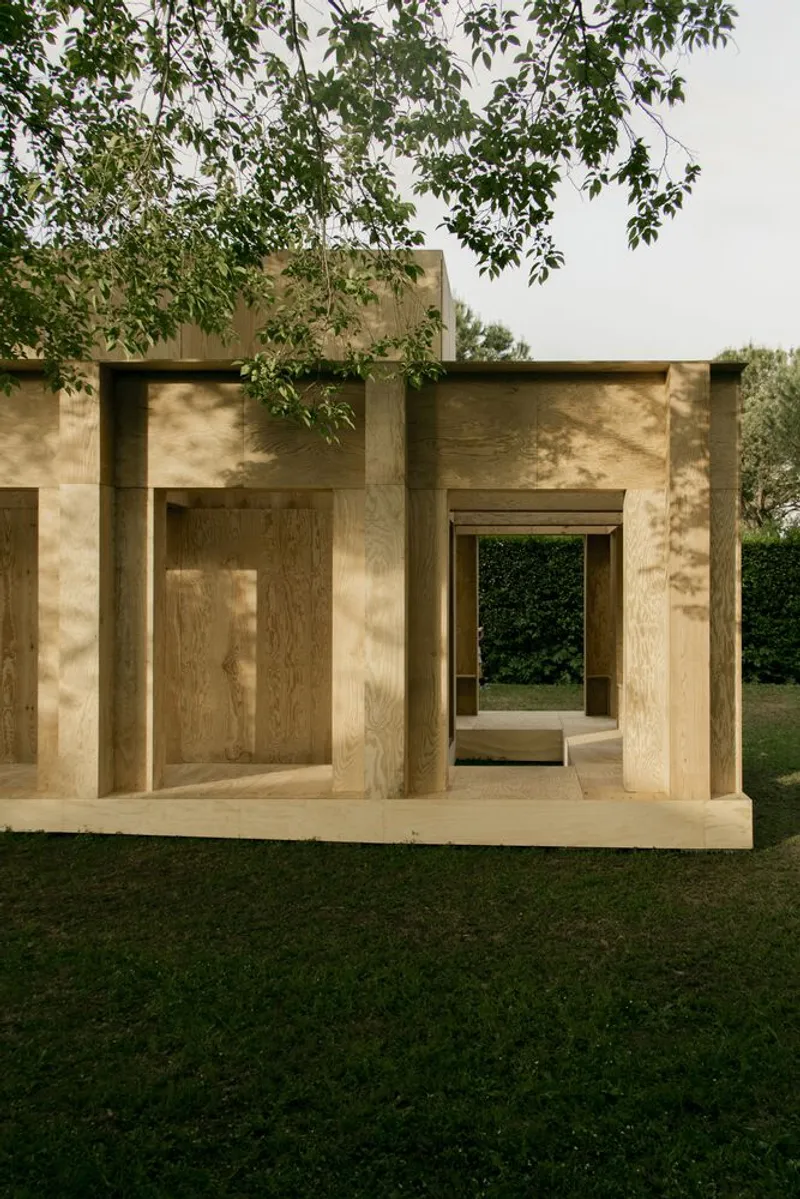
Forum des Vestiges is a contemporary architectural installation by Pratique Architecture and fanum architecture, located in Rome, Italy, that reinterprets the enduring spatial principles of Roman architecture through a temporary yet deeply symbolic structure. Rooted in the cultural and urban legacy of the ancient forum, the project explores architecture not as a static object, but as a living framework for social exchange, debate, and collective experience.
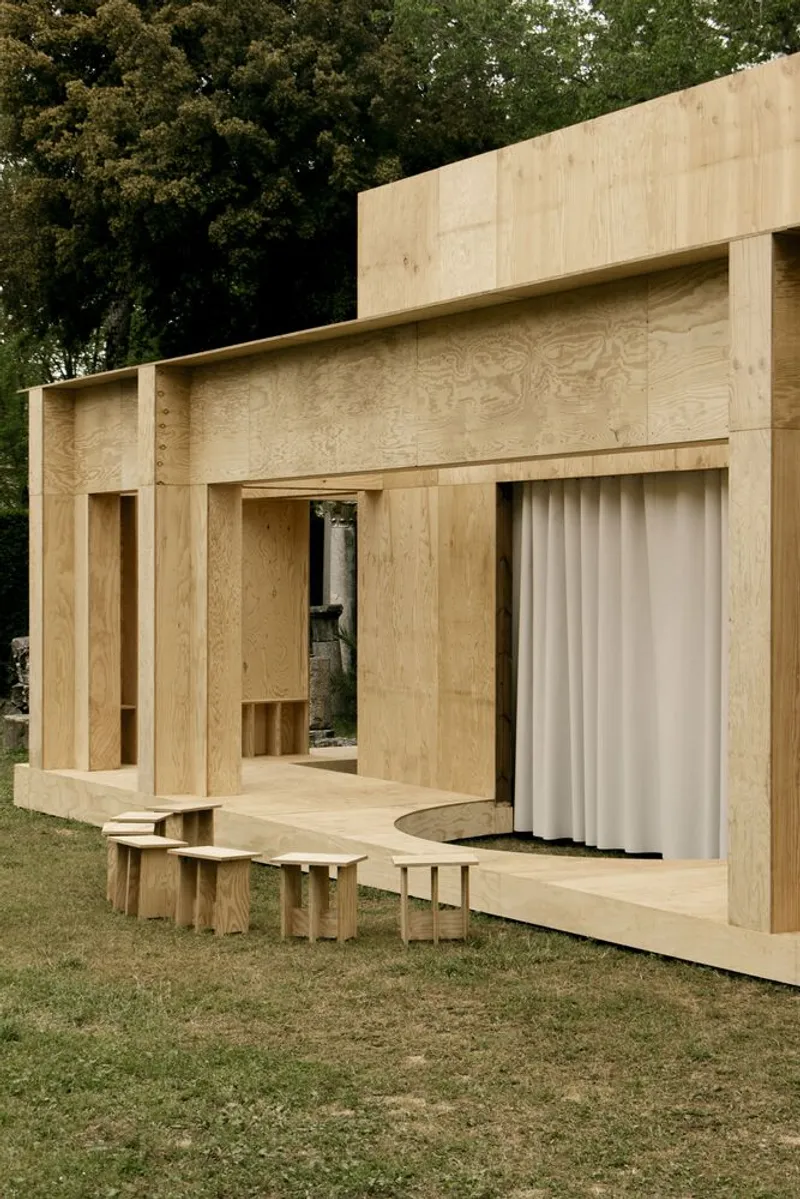
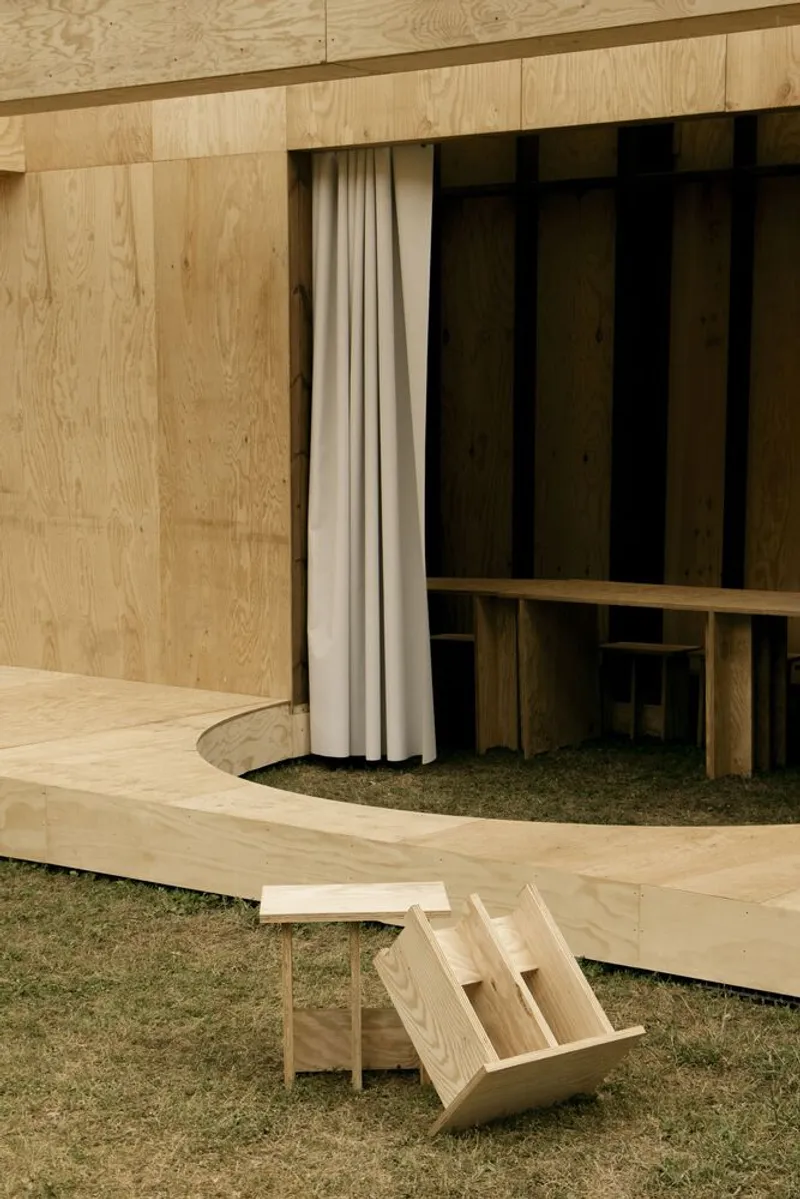
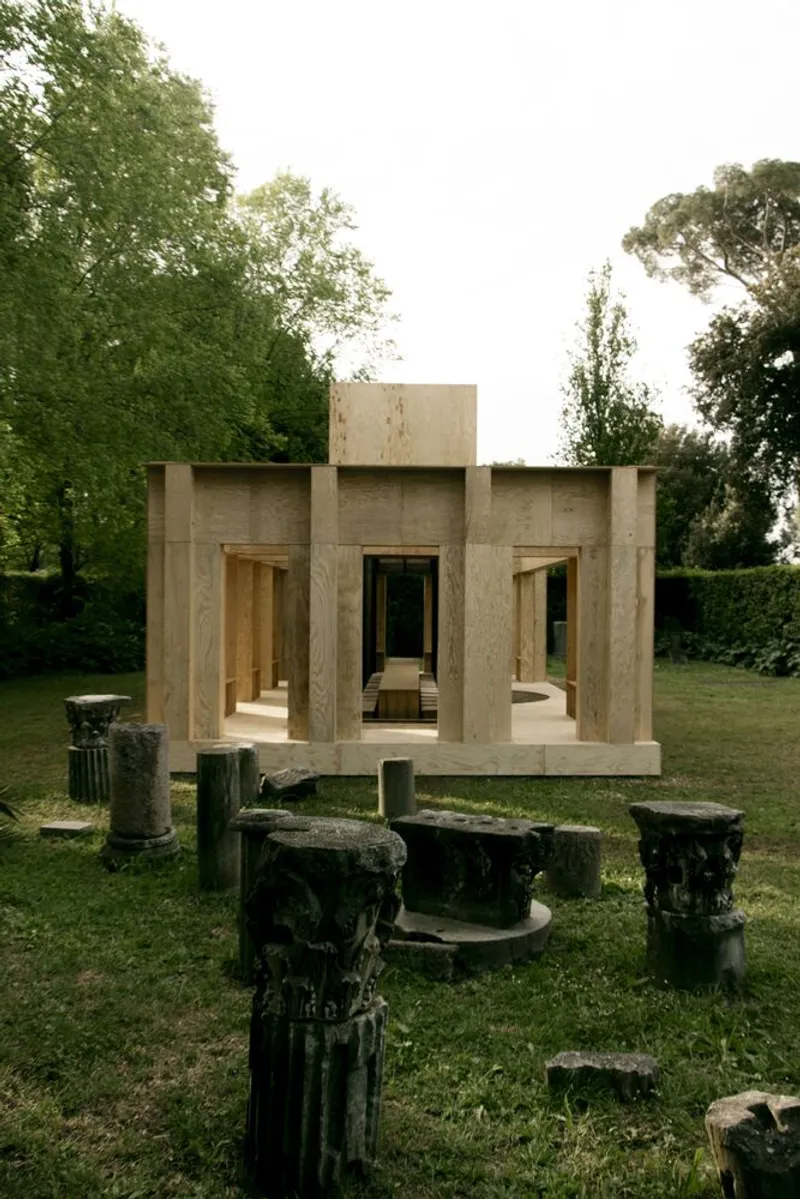
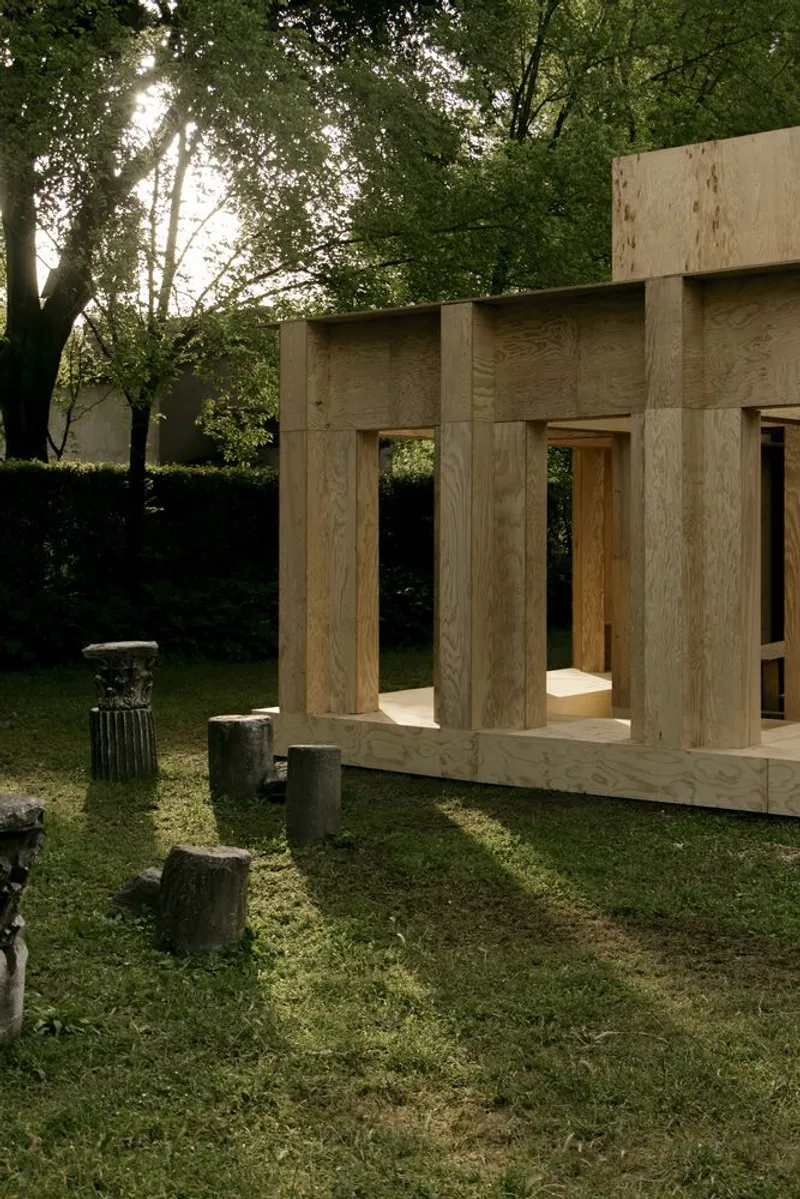
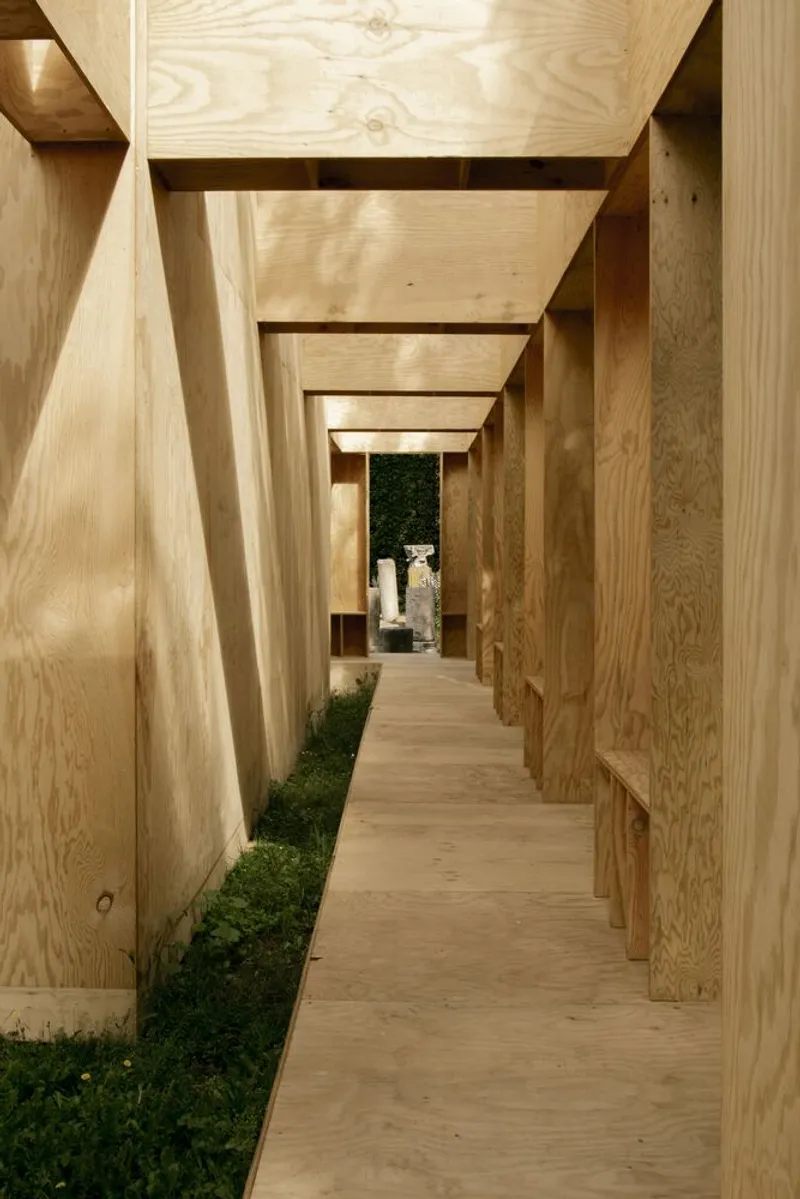
Rather than replicating historical forms, the installation extracts the conceptual essence of the Roman forum: a civic space of interaction, trade, and dialogue, and translates it into a lightweight, modular wooden architecture. Set within a public square where fragments of ancient stone columns still stand, the structure establishes a poetic dialogue between permanence and ephemerality, placing contemporary timber columns alongside historic ruins. This juxtaposition creates a timeless architectural conversation between the immutable legacy of Roman construction and the evolving nature of modern public space.
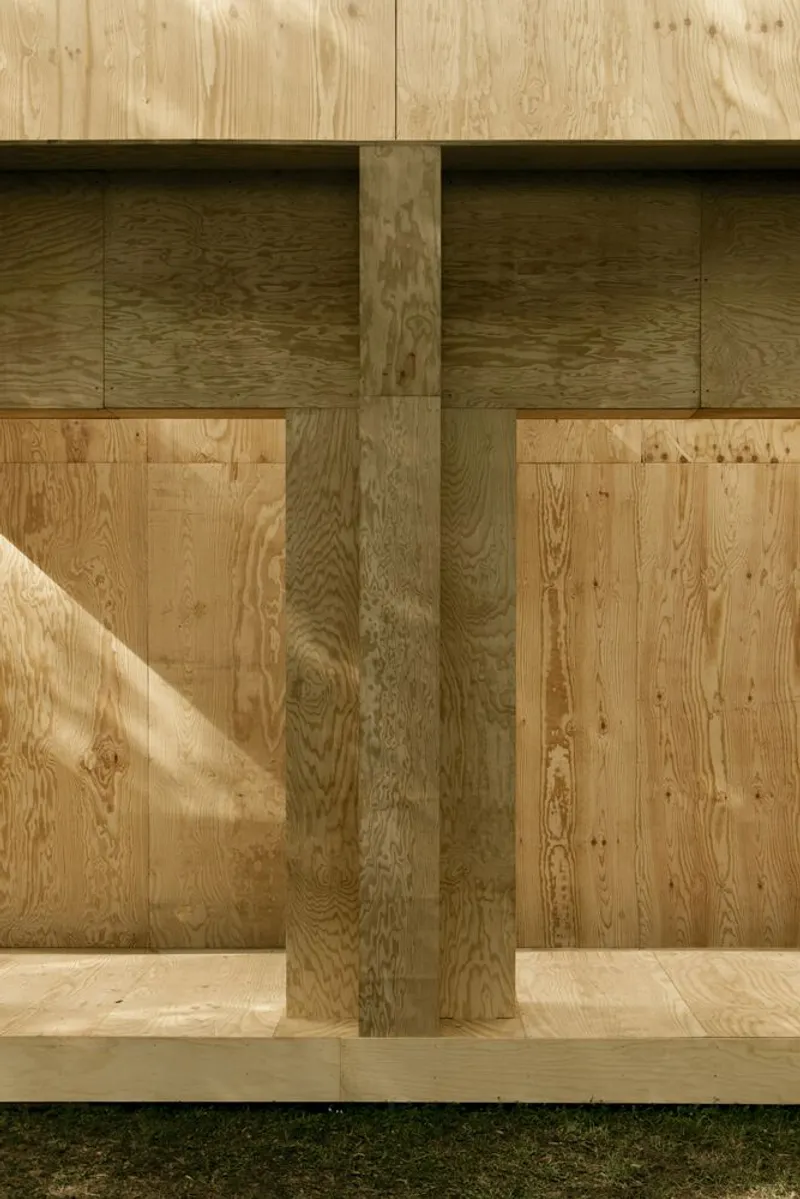
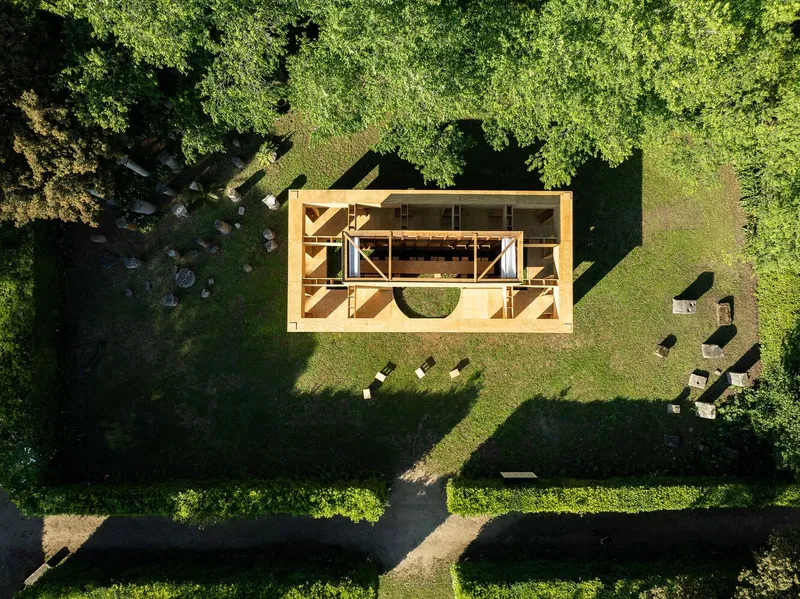
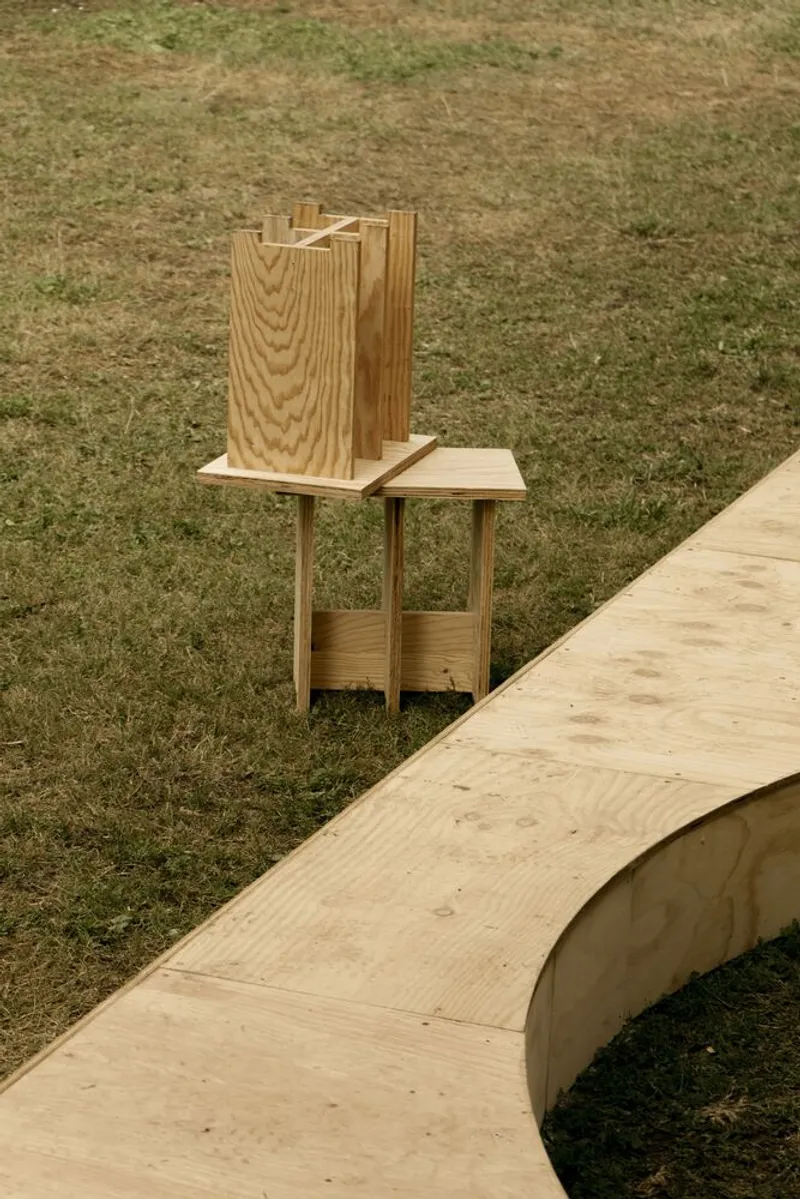
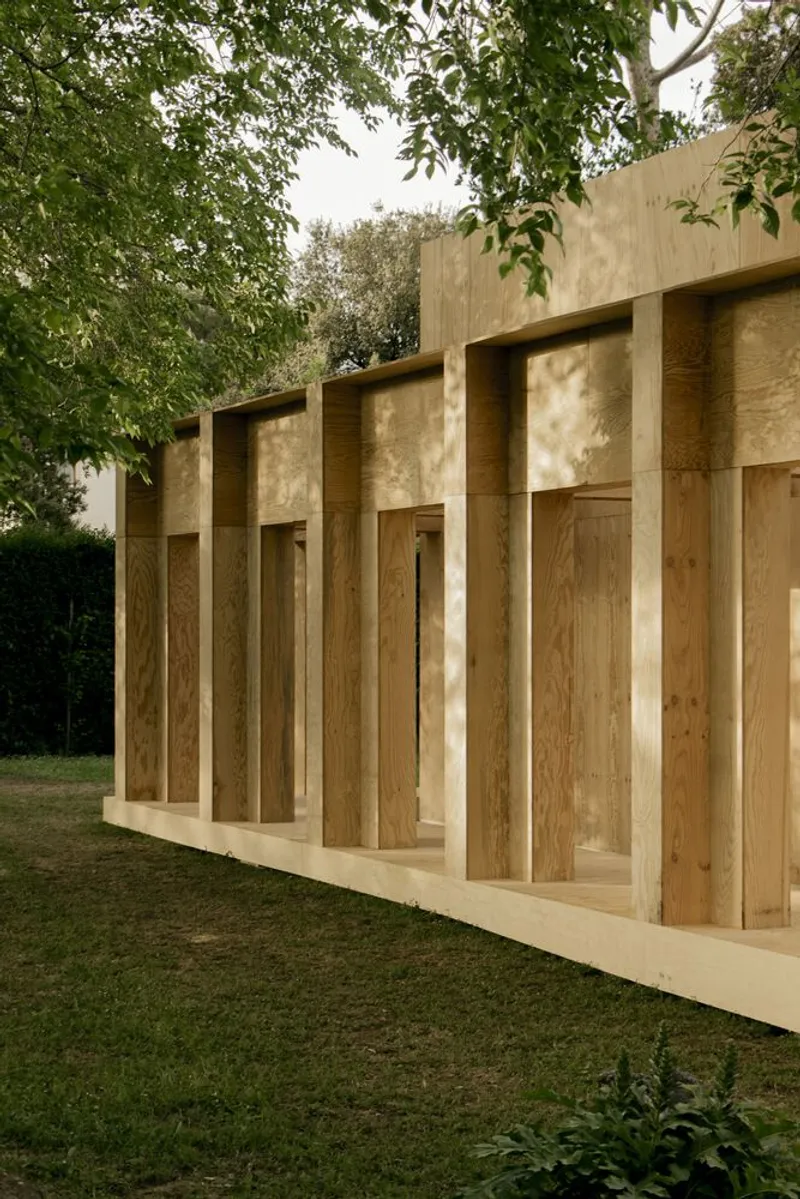
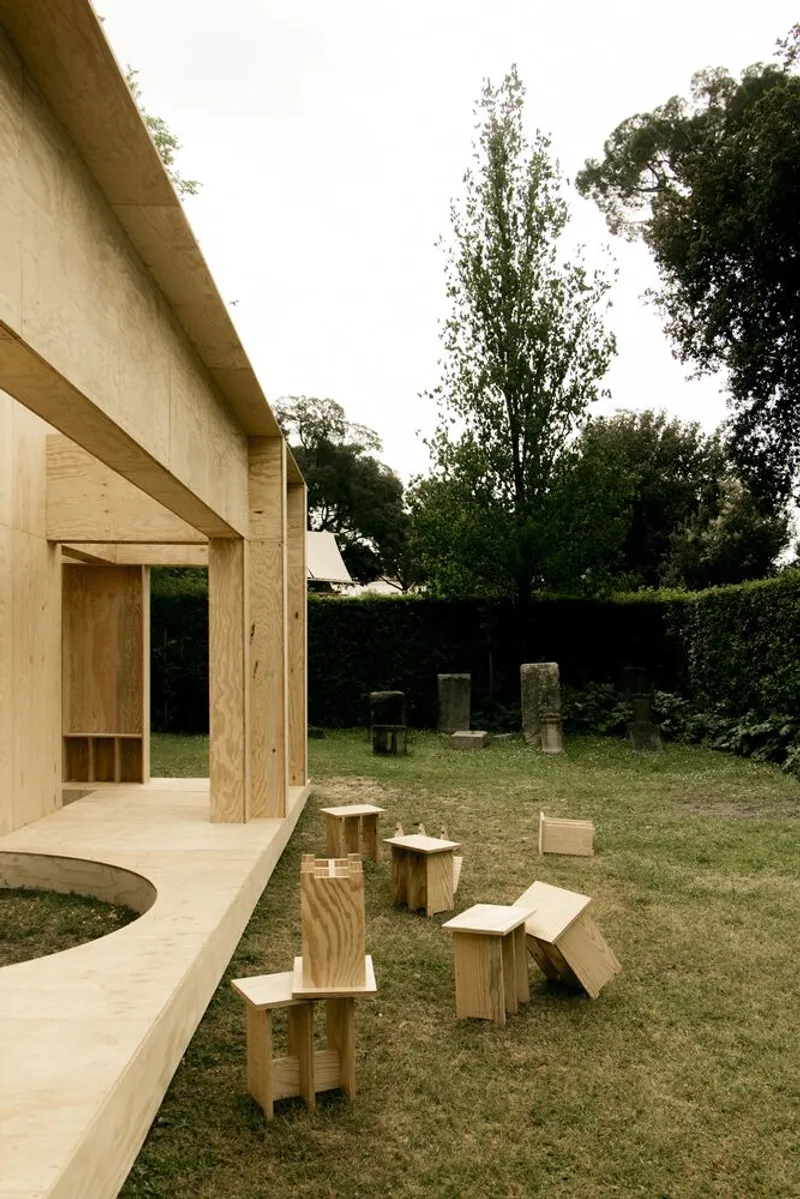
Conceived as a place of life and encounter, Forum des Vestiges adopts the spatial logic of a classical temple. A rhythmic wooden colonnade defines a peristyle that mediates between interior and exterior conditions, encouraging movement, pause, and contemplation. As visitors circulate along this threshold, shifting shadows and framed views animate the experience, while discreet seating integrated within the hollow of the columns offers moments of retreat and introspection within the collective setting.
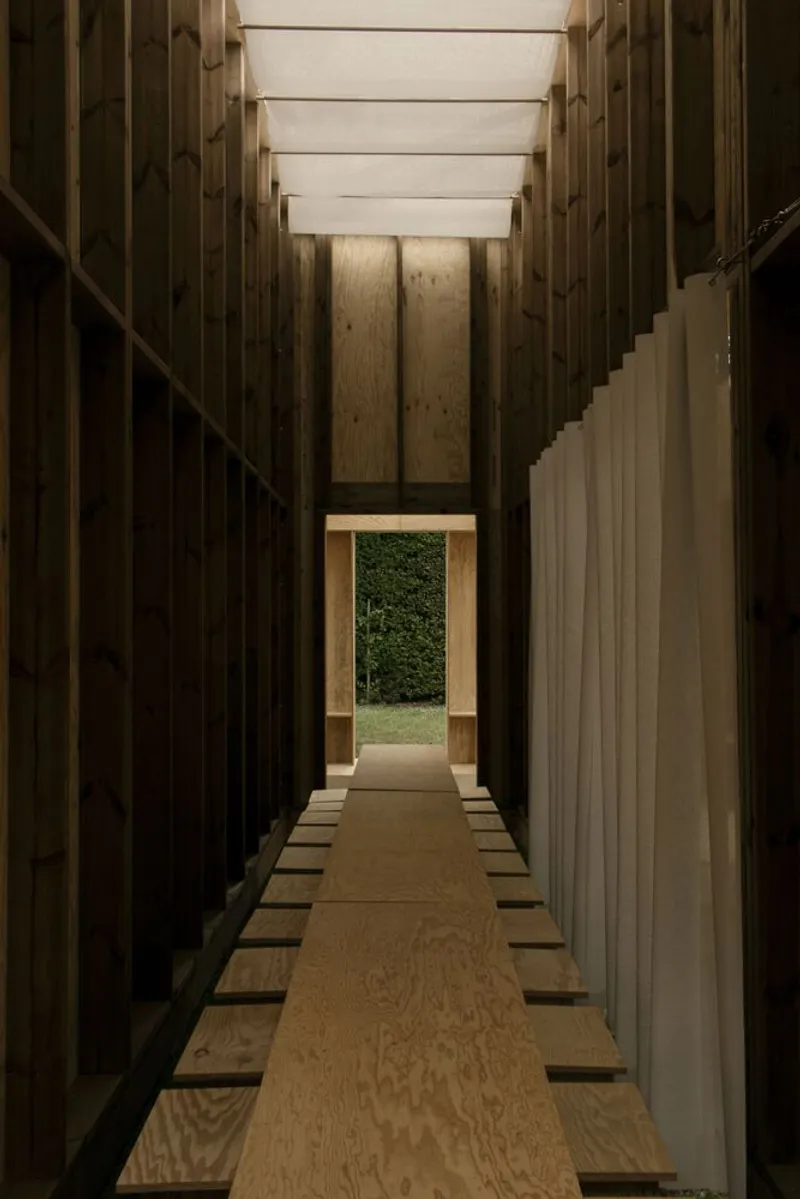
At the center of the installation stands a monolithic wooden volume housing a long communal table. This central element functions as both architectural anchor and social catalyst, reinforcing the project’s ambition to foster conviviality, discussion, and shared use. The table becomes an object of exchange, transforming the forum into an open-ended platform capable of hosting multiple forms of gathering, representation, and public life.
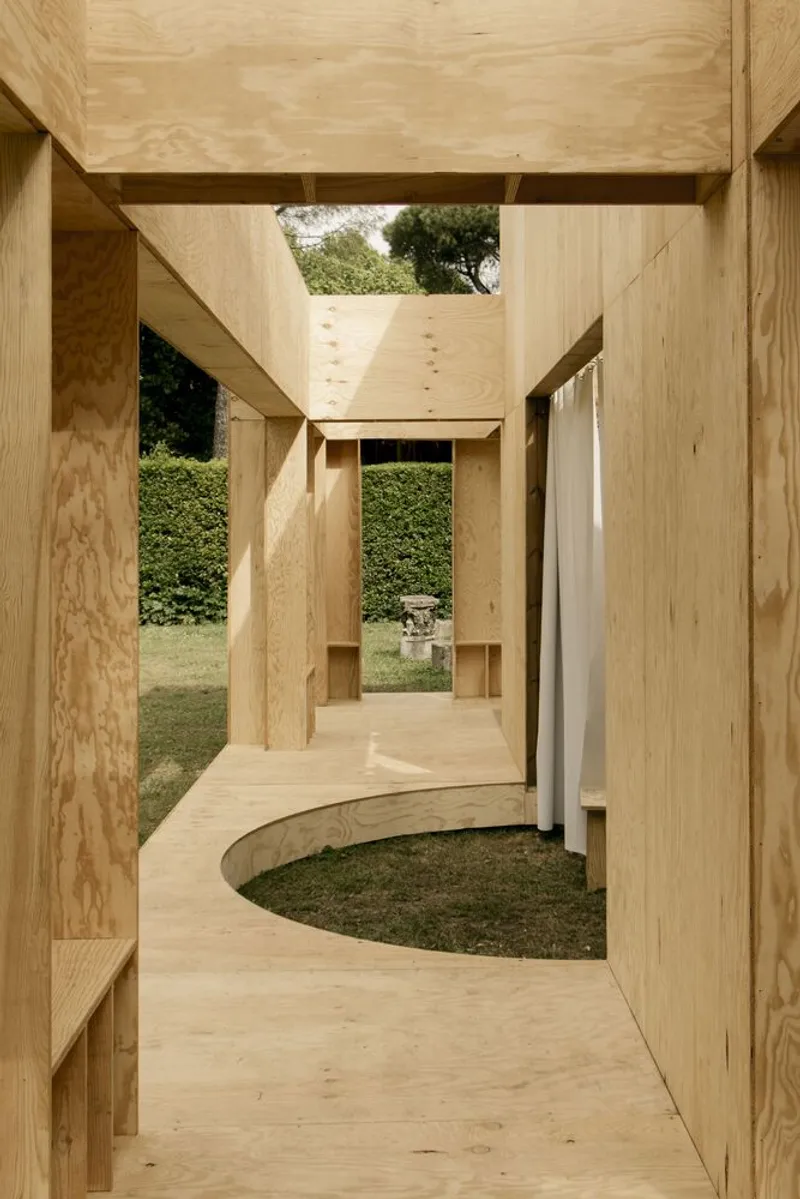
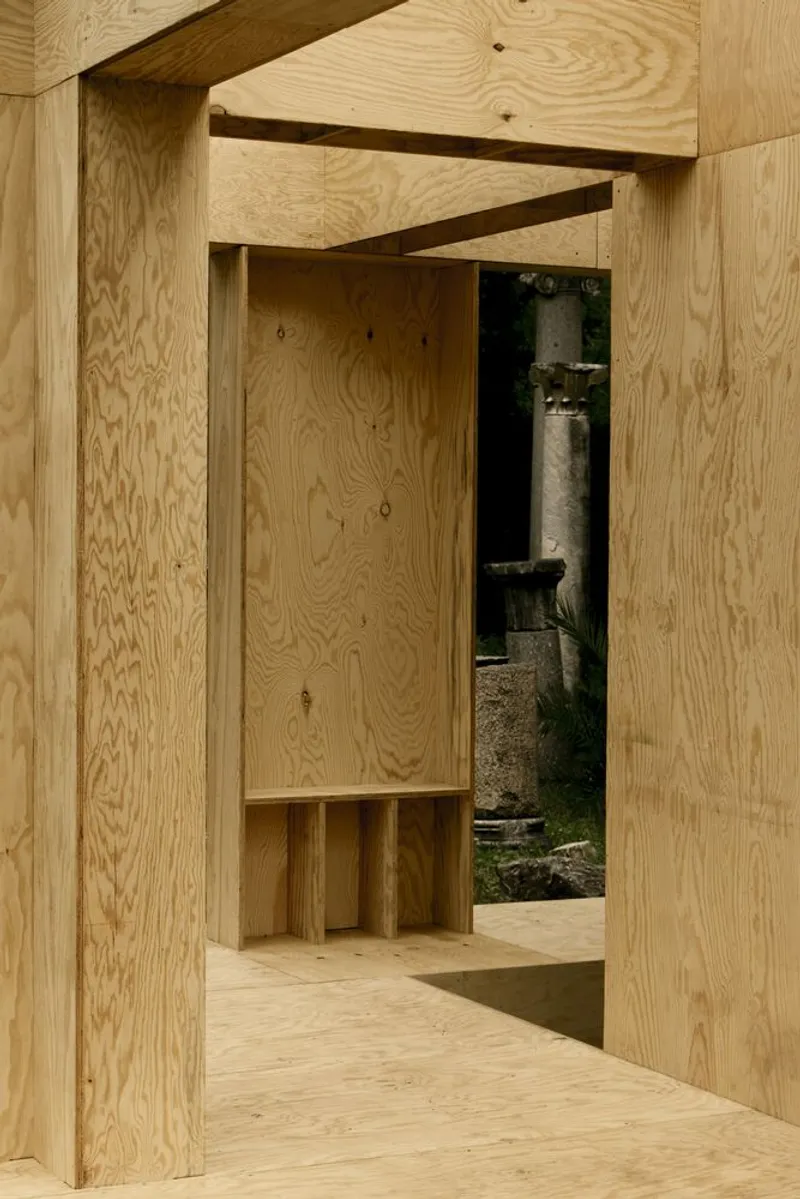
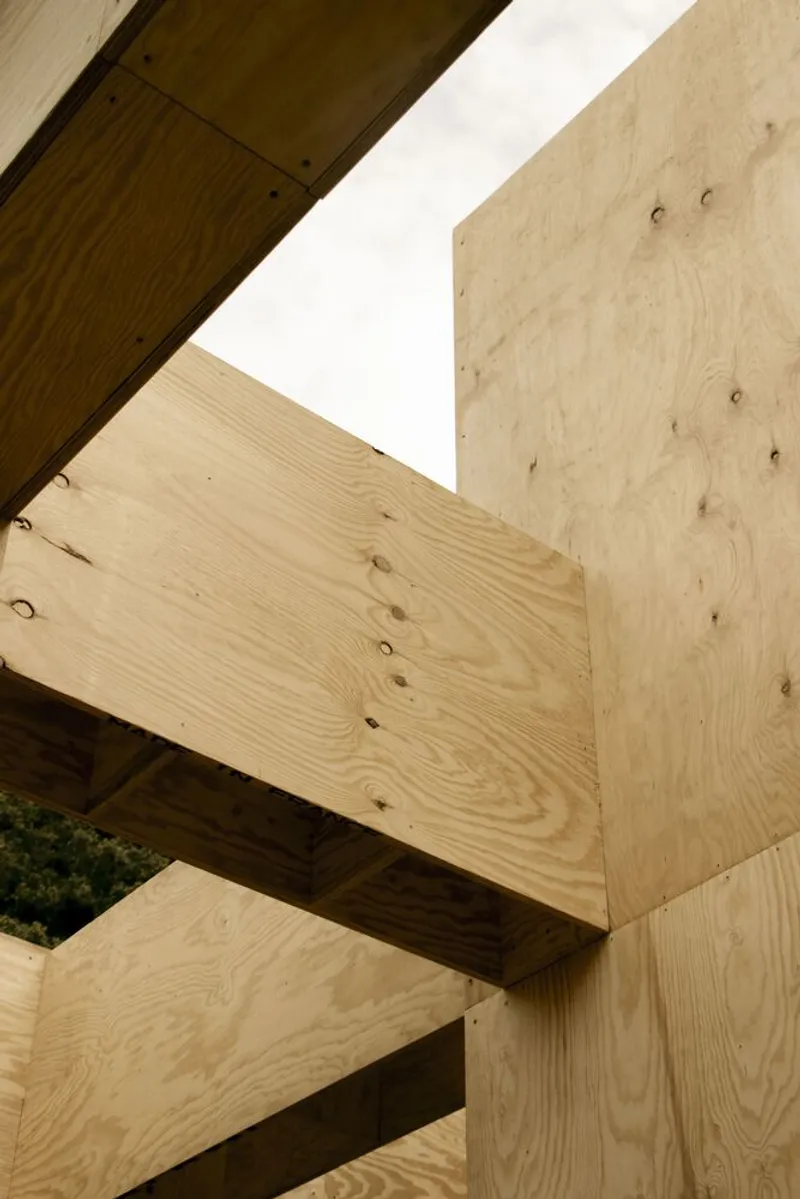
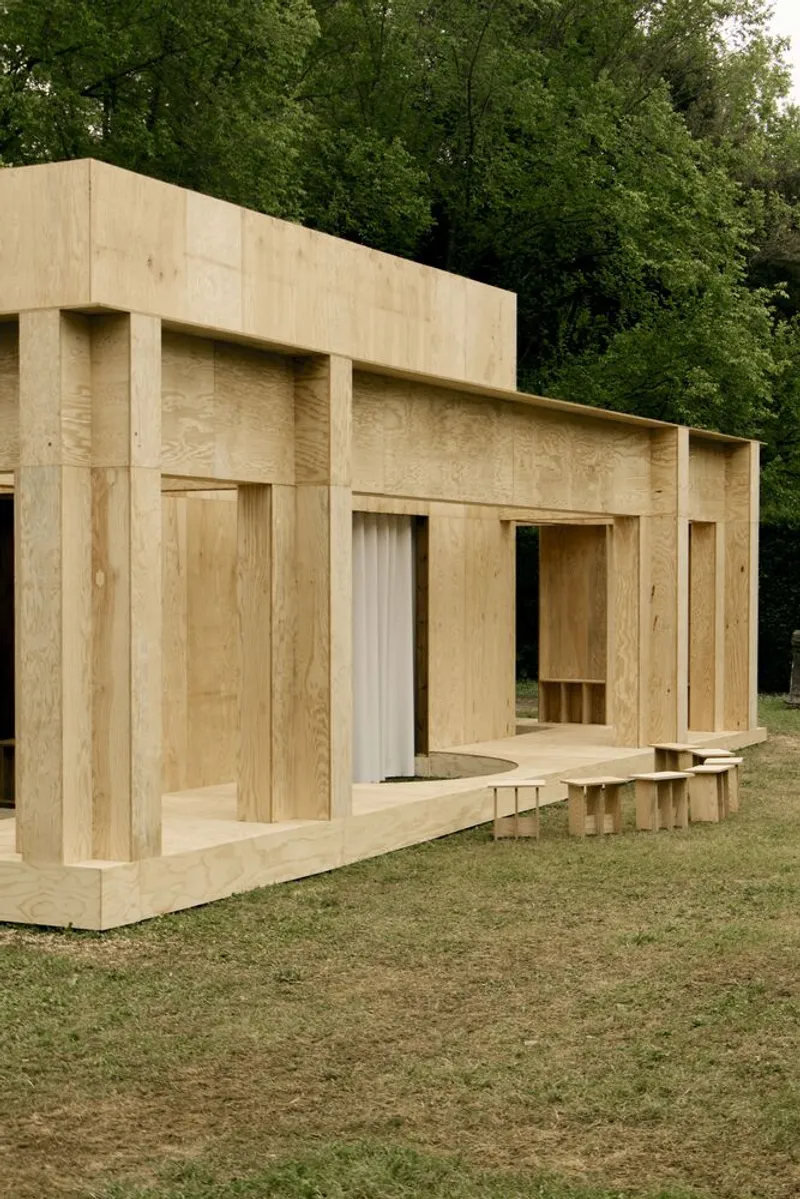
The proportions and limits of the structure are carefully calibrated in response to the surrounding formal garden, whose rigorous hedgerow geometry contrasts with the tactile warmth of timber. The architecture is defined by the repetition of a single column module topped by a lintel, creating a clear structural rhythm and reinforcing the clarity of the design system. Constructed entirely from maritime pine plywood sourced from the Landes region, the installation demonstrates a commitment to sustainable material use and efficient construction methods.
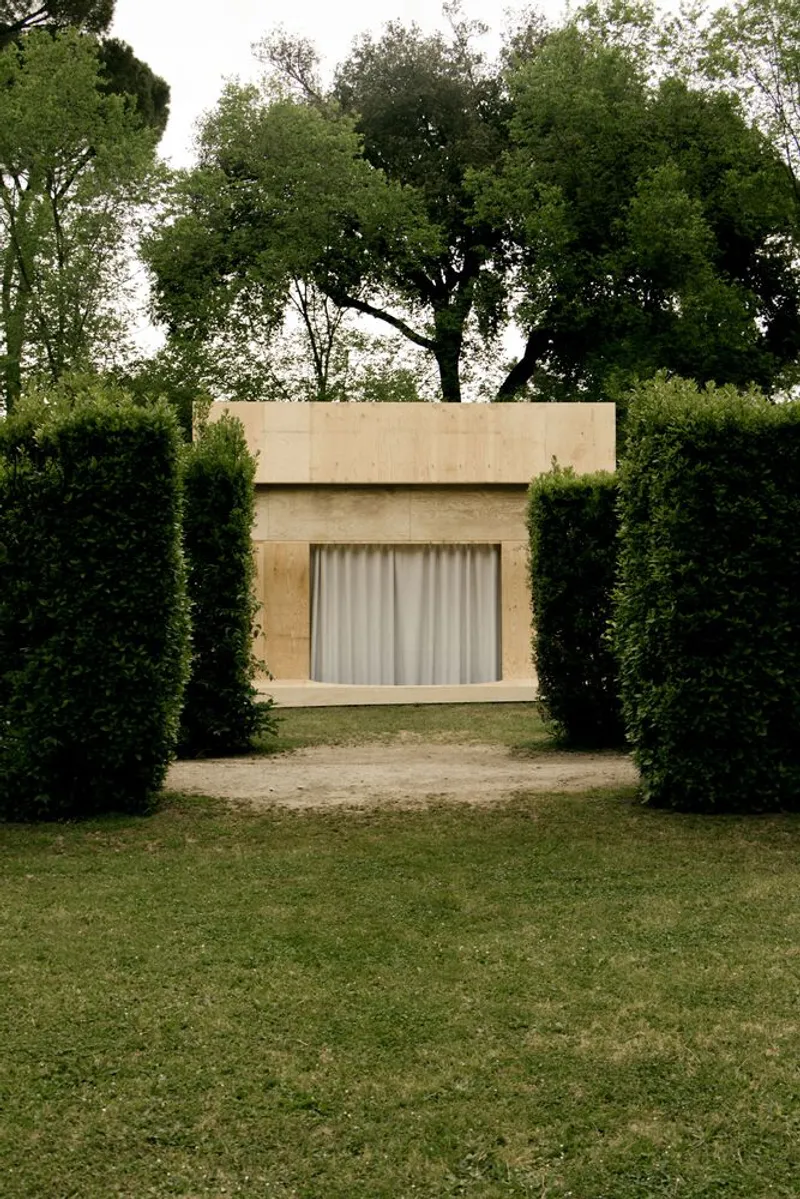
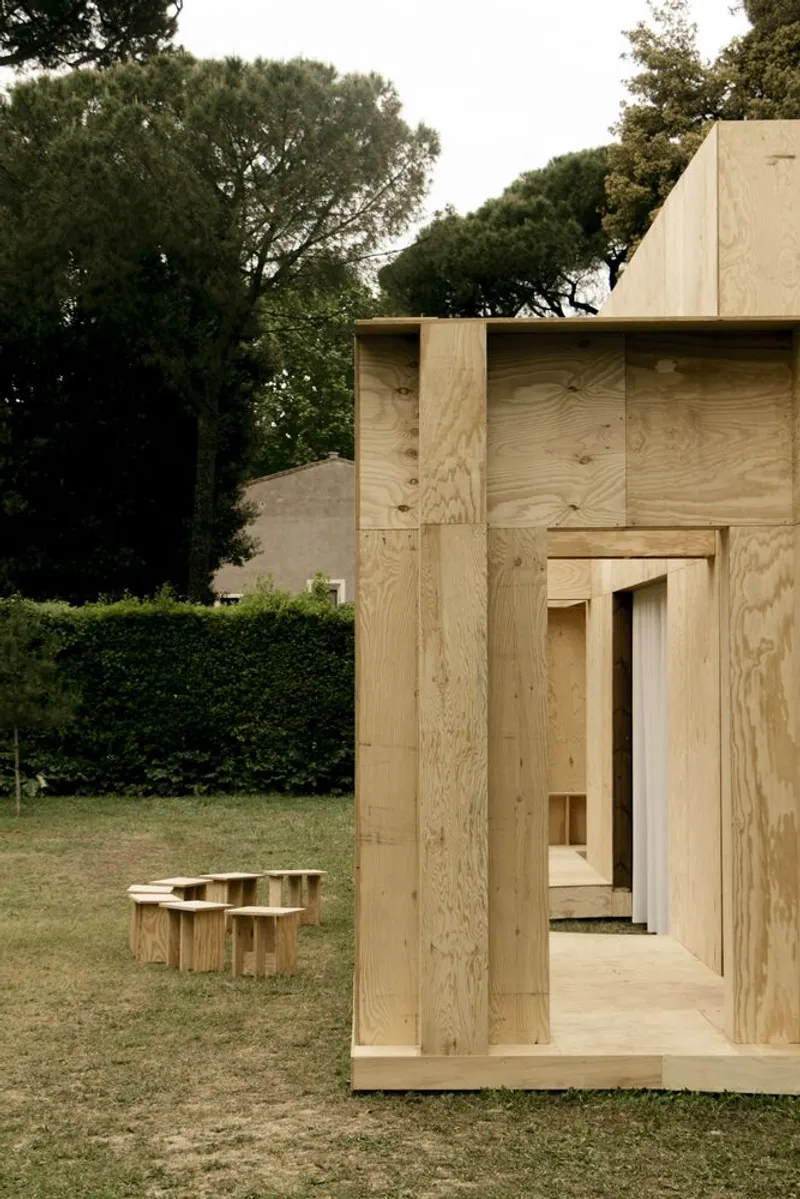
All components are assembled through a precise notched joinery system, allowing the structure to be erected quickly and without complex mechanical fixings. This rational construction strategy significantly reduced on-site assembly time for the 12.5-meter-long, 6.25-meter-wide, and 5-meter-high pavilion, while also emphasizing reversibility and adaptability, key qualities for temporary architectural installations.
The building process itself became an integral part of the project’s narrative. Assisted by three carpenters, the architects took on the dual role of designers and builders, transforming construction into a moment of collaboration, experimentation, and shared authorship. This collective act of making reinforces the project’s core values, positioning architecture as both a physical structure and a social practice.
Forum des Vestiges ultimately stands as a contemporary interpretation of Roman civic space, where heritage, craftsmanship, and public life converge. Through its modest scale, precise construction, and strong conceptual clarity, the installation reaffirms architecture’s capacity to create meaningful places for interaction: bridging past and present through material, form, and shared human experience.
All photographs are works of
Gautier Baufils


Popular Articles
Popular articles from the community


The Amber Palace Opera: A Geological Fiction Surfaces on Tallinn's Baltic Waterfront
Pierre Brillard reimagines a Baltic legend as a public landscape, opera house, and waterfront promenade rooted in Tallinn's coastal identity.

Cloaked Colonization: A Mobile Underwater Habitat That Moves Like a Fish
Micah Abaya's shortlisted EHC Pacific entry reimagines ocean settlement as a dispersed network of self-sustaining architectural organisms.

Opera on the Sea: Driftwood Logic Shapes a Timber Opera House on Estonia's Coast
Trevor Orgill's opera house translates the entangled drift of floating timber into a civic building where wood, water, and music converge.

Faces of the Soviet Avant-Garde: Turning Moscow's Street Names into an Open-Air Museum
A network of sculptural installations across a Moscow residential district transforms forgotten architect names into spatial encounters with cultural memor

Similar Reads
You might also enjoy these articles


Hodi-Mandai Geram
Project Function: Preservation and revitalization of the Intangible heritage and socio-spatial identity of the Hodi by Housing, Cultural Memory Center, Sacred Grove, landscape, local tourism economy


Olio Towers: A Mid-Rise for Performers That Fuses Housing, Rehearsal, and Stage
Located blocks from Houston's Theater District, this modular tower stacks living units around a central performance atrium.

Oasis: Modular Green Housing Carved into Dhaka's Urban Fabric
A shortlisted Plugin Housing entry reclaims unauthorized settlements in Dhaka with stepped concrete volumes, green roofs, and ventilation-driven design.

Black Hole: A Floating Megastructure for the Post-Physical Era
Emiliano Mazzarotto envisions a spherical, self-scaling arena where e-sports, digital hotels, and holographic stadiums replace traditional public space.

Explore Romanian Architecture Competitions
Discover active competitions in this discipline

Challenge to reimagine the Iron Throne

Photograph architecture without architects

Illustrate the lost glory of Angkor Wat - Render Challenge

Design challenge to reuse E-waste
Comments (0)
Please login or sign up to add comments
No comments yet. Be the first to comment!