
Fotografiska Shanghai: Adaptive Reuse of an Industrial Warehouse into a Contemporary Cultural Landmark
Adaptive reuse transforms a historic Shanghai warehouse into Fotografiska, blending industrial heritage, immersive photography, curated light, social spaces, and contemporary cultural life.


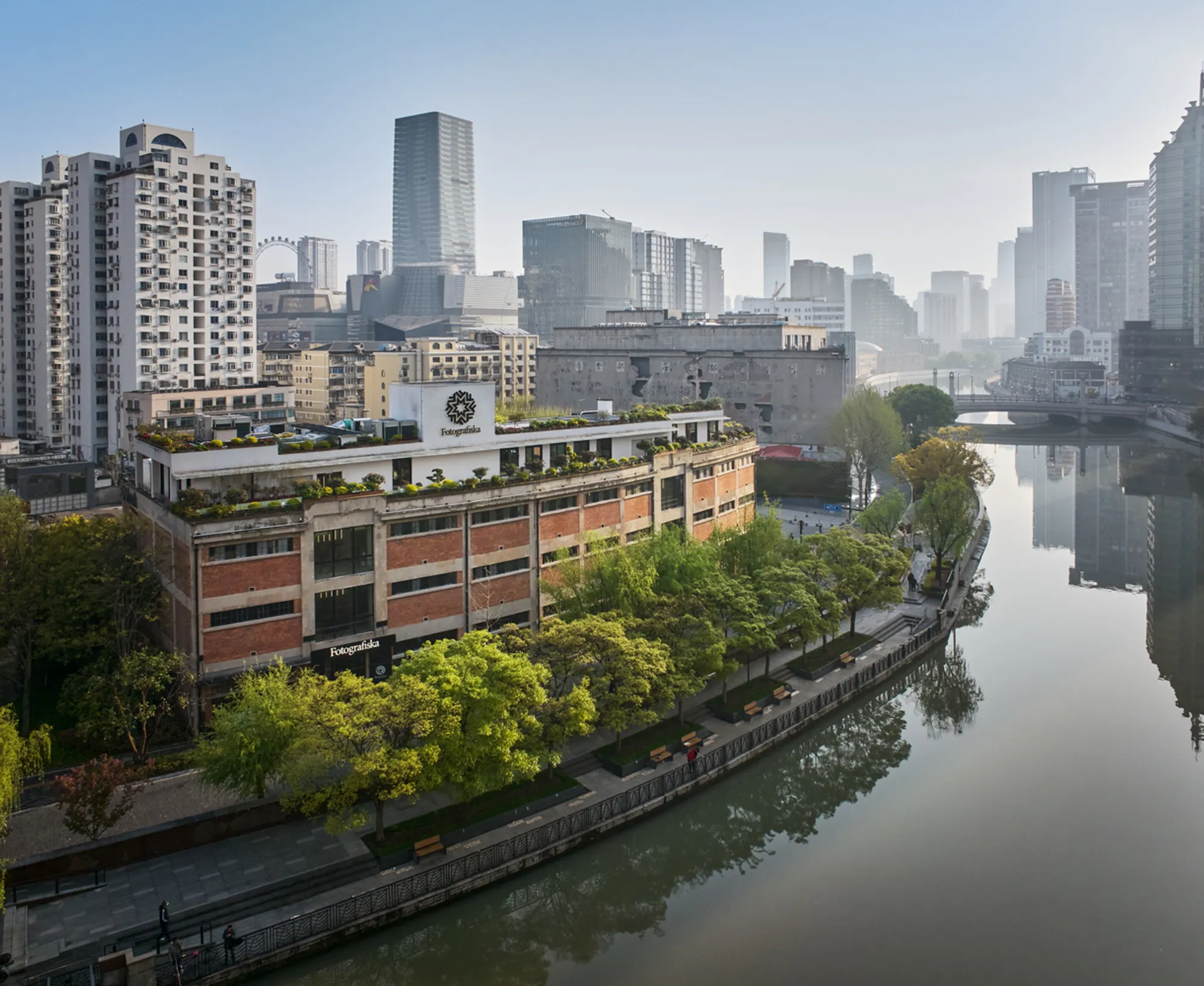
Set along the historic banks of Suzhou Creek, Fotografiska Shanghai redefines the museum experience through a sensitive architectural transformation that bridges industrial heritage, contemporary design, and immersive visual storytelling. Designed by AIM Architecture, the project converts a former bank warehouse into a vibrant cultural destination, reinforcing Shanghai’s evolving identity as a global hub for art, architecture, and creative exchange.
Located in Shanghai, the 4,637-square-meter project, completed in 2023, demonstrates how adaptive reuse architecture can preserve historical character while enabling new cultural programs. Fotografiska Shanghai is not conceived as a conventional museum; instead, it functions as a multi-layered social and artistic platform where photography, dining, retail, and public engagement coexist.
Industrial Heritage as Architectural Narrative
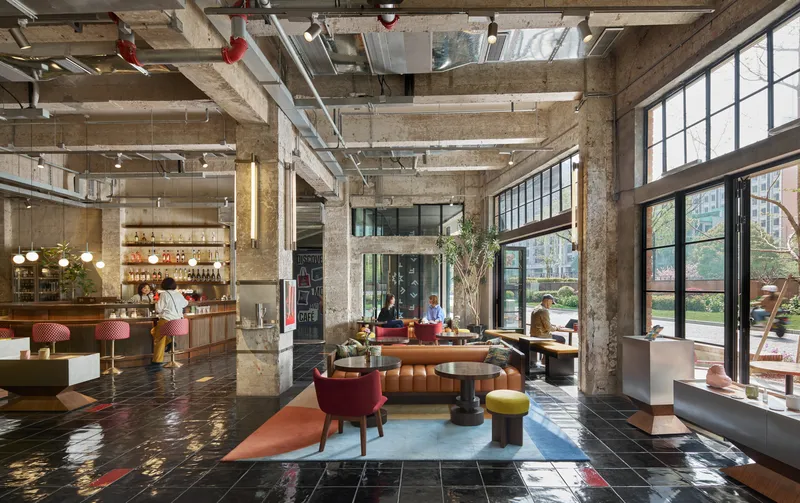
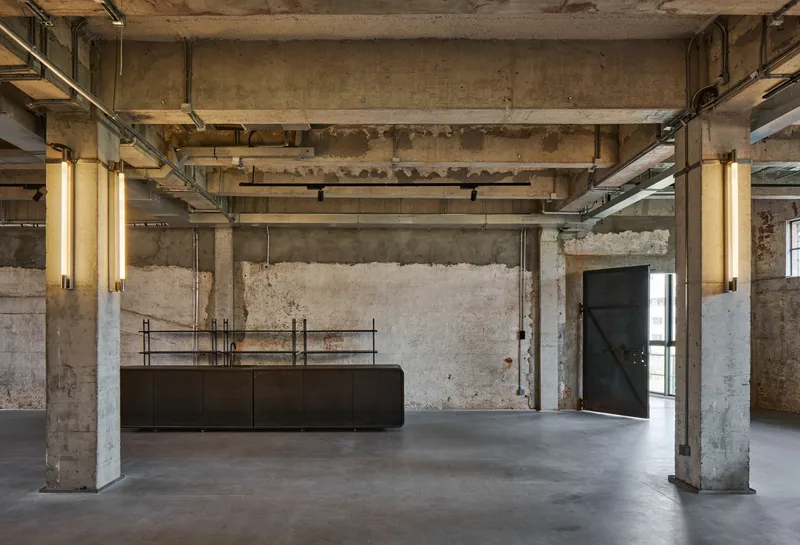
The architectural strategy centers on preservation through transformation. AIM Architecture retains the building’s original industrial fabric: exposed brick walls, robust concrete beams, and utilitarian structural rhythms, using these elements as narrative anchors throughout the interior spaces. Rather than masking the warehouse’s past, the design amplifies it, allowing material authenticity to shape spatial experience.
Minimal yet precise interventions introduce contemporary layers without overpowering the existing structure. This balance between old and new creates a richly textured environment where visitors continuously sense the building’s former life while engaging with new visual and cultural content. The project also acts as a catalyst for urban regeneration, reactivating a once-underutilized site into a dynamic public destination along the waterfront.
Ground Floor as Urban Living Room
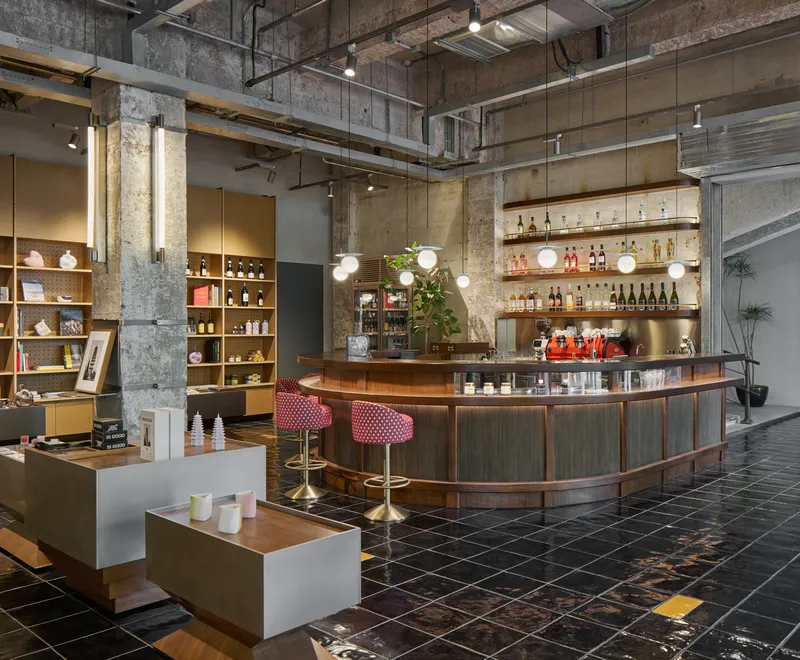
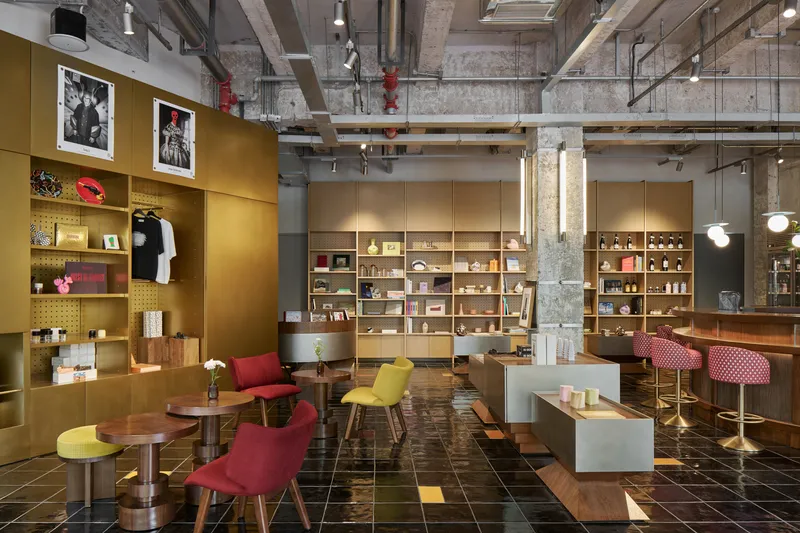
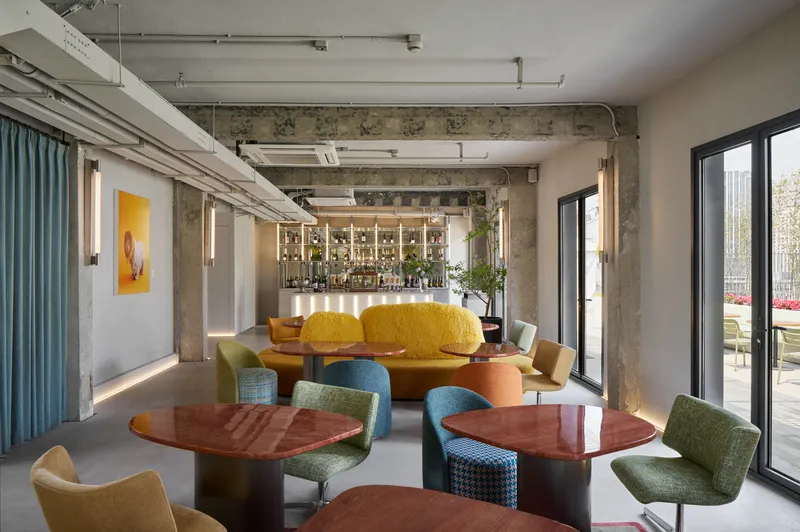
The first floor is conceived as an open, fluid landscape inspired by Shanghai’s layered urban culture. Public functions are interwoven rather than separated, encouraging movement, interaction, and discovery. Restaurant spaces, a bar, retail zones, and an ice cream shop coexist within a single spatial sequence, blurring boundaries between cultural institution and everyday urban life.
Original industrial elements remain visible throughout, grounding the experience in history, while contemporary finishes and curated lighting introduce warmth and accessibility. This hybrid program transforms the museum threshold into an active social interface between the city and the exhibitions above.
Circulation, Light, and the Experience of Photography
Vertical movement through Fotografiska Shanghai is defined by two sculptural staircases that recall the building’s industrial origins. These staircases function not only as circulation devices but also as spatial landmarks, reinforcing the building’s internal spine. Along these paths, custom-designed vertical lighting elements guide visitors intuitively through the museum.
Lighting plays a critical role in shaping the exhibition experience. In gallery spaces where natural light is intentionally excluded, carefully positioned ceiling spotlights draw attention to photographic works while enhancing the atmosphere of immersion. The interplay of shadow, texture, and controlled illumination allows photography to become the primary spatial protagonist.
Exhibition Rooms and Spatial Transitions
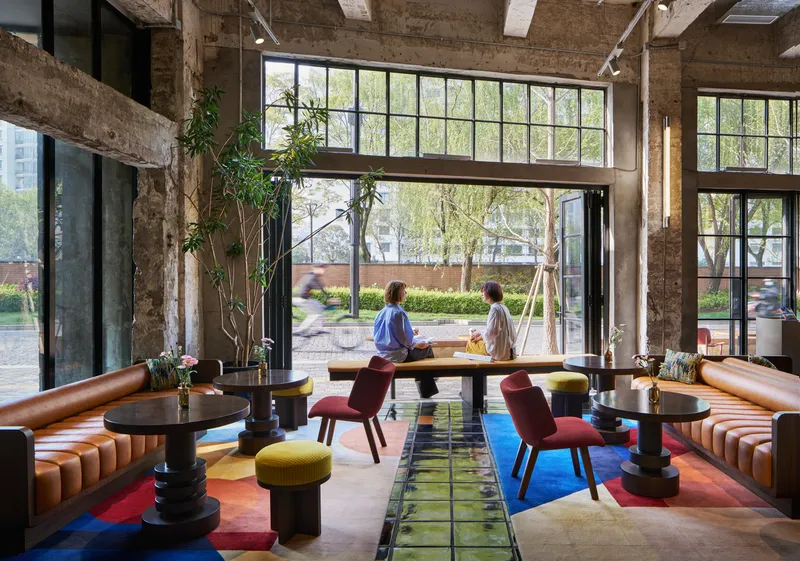
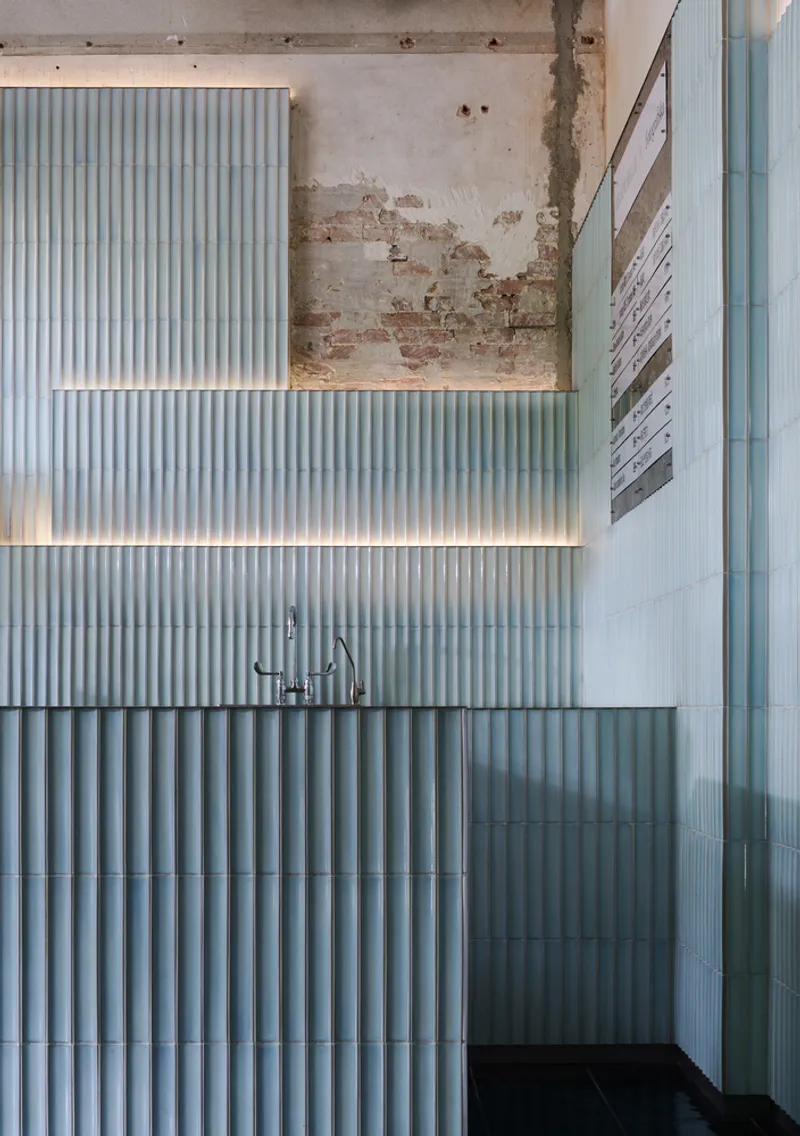
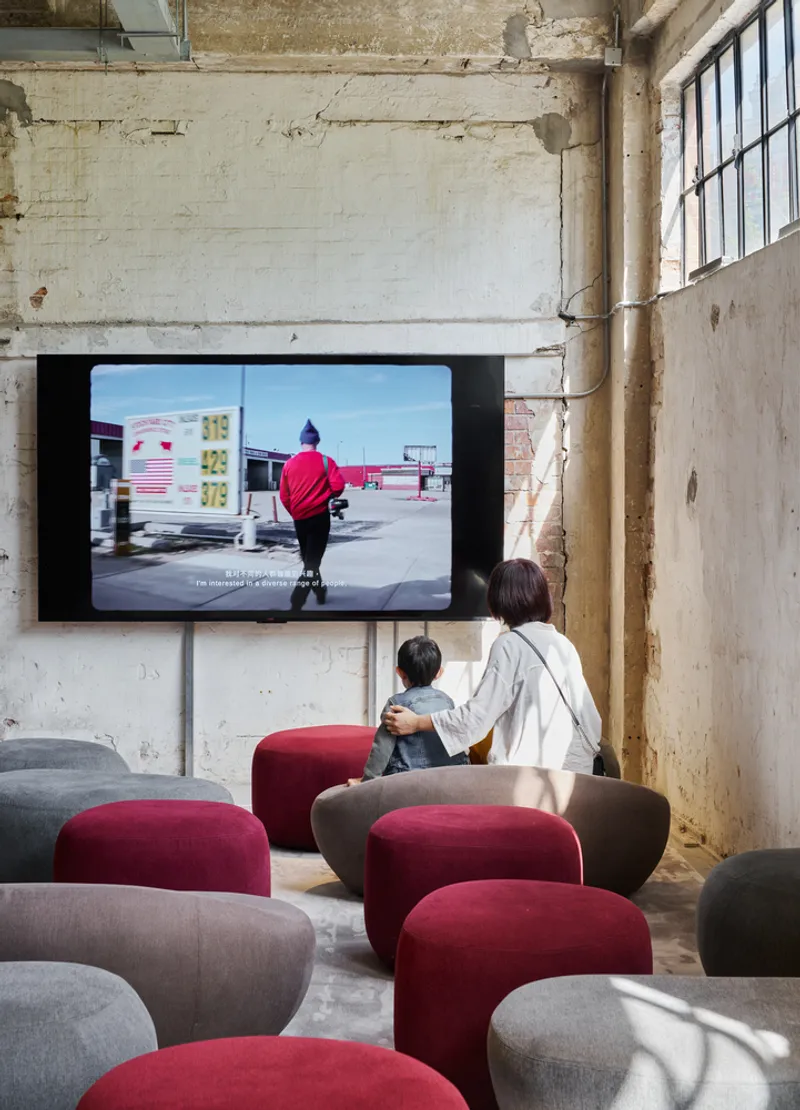
The exhibition journey unfolds as a sequence of rooms, each defined by Fotografiska’s curated color palettes and atmospheric lighting strategies. Concrete walls and exposed surfaces preserve the rawness of the original structure, ensuring continuity between past and present.
Transition zones between galleries act as moments of pause, reconnecting visitors with the building itself. These interstitial spaces emphasize restraint, where architectural interventions are reduced to essentials, reinforcing the authenticity of the adaptive reuse approach and allowing the artwork to take precedence.
A Contemporary Interpretation of the Garden Room
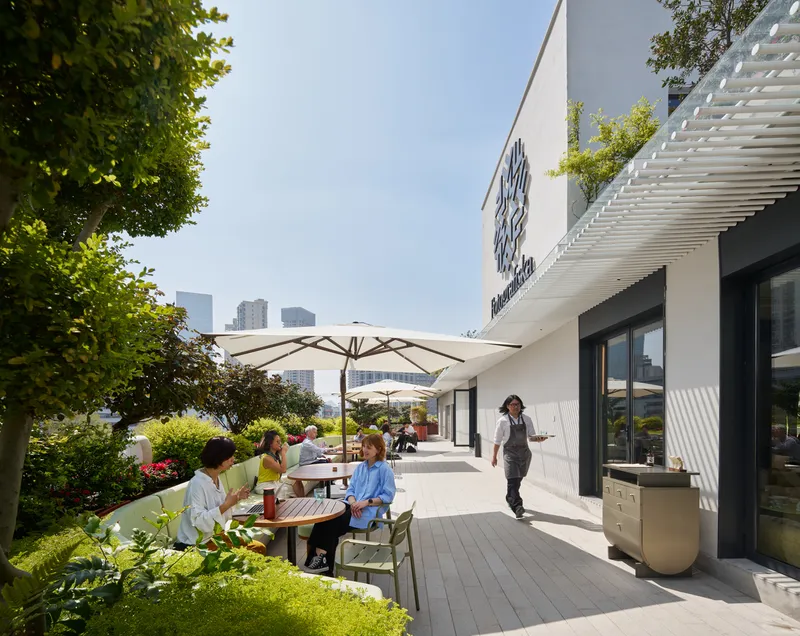
At the top level, Fotografiska Shanghai introduces a contrasting spatial character. Drawing inspiration from the traditional Chinese garden room, this floor merges indoor and outdoor experiences through generous access to a panoramic terrace overlooking the city. The space accommodates a bar, lounge areas, a VIP room, and social gathering zones that extend seamlessly into the open air.
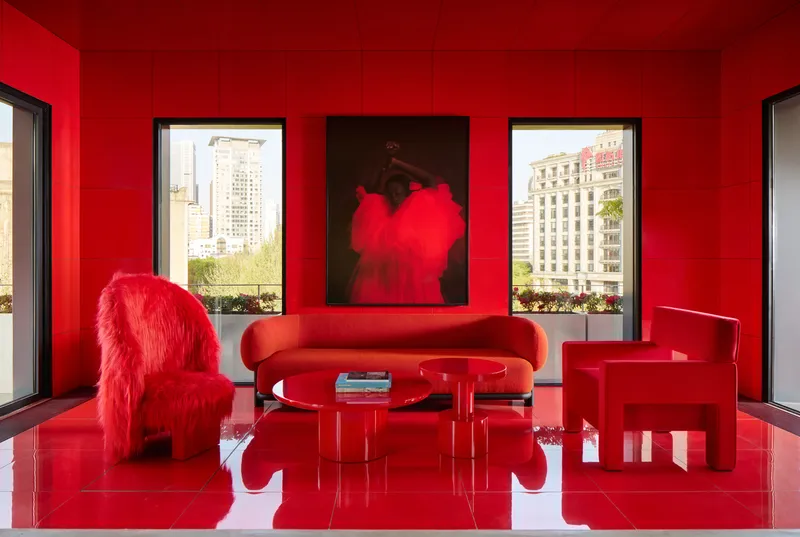
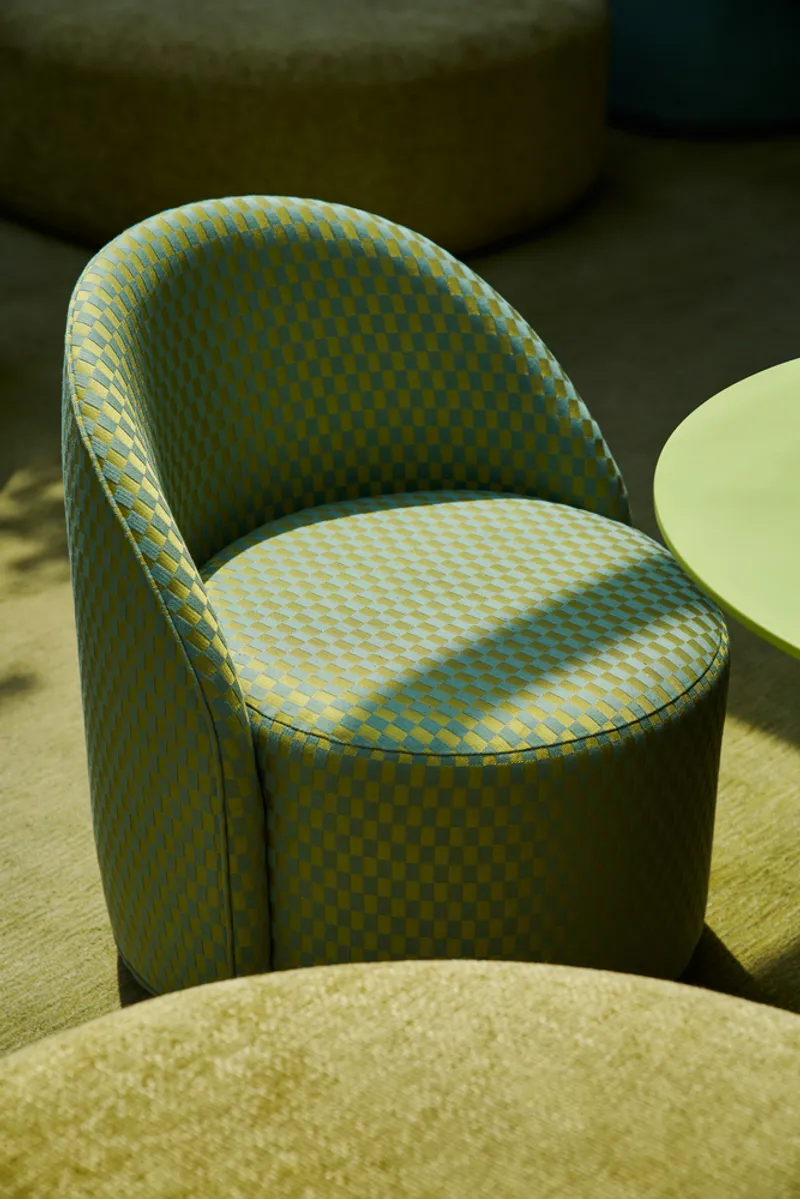
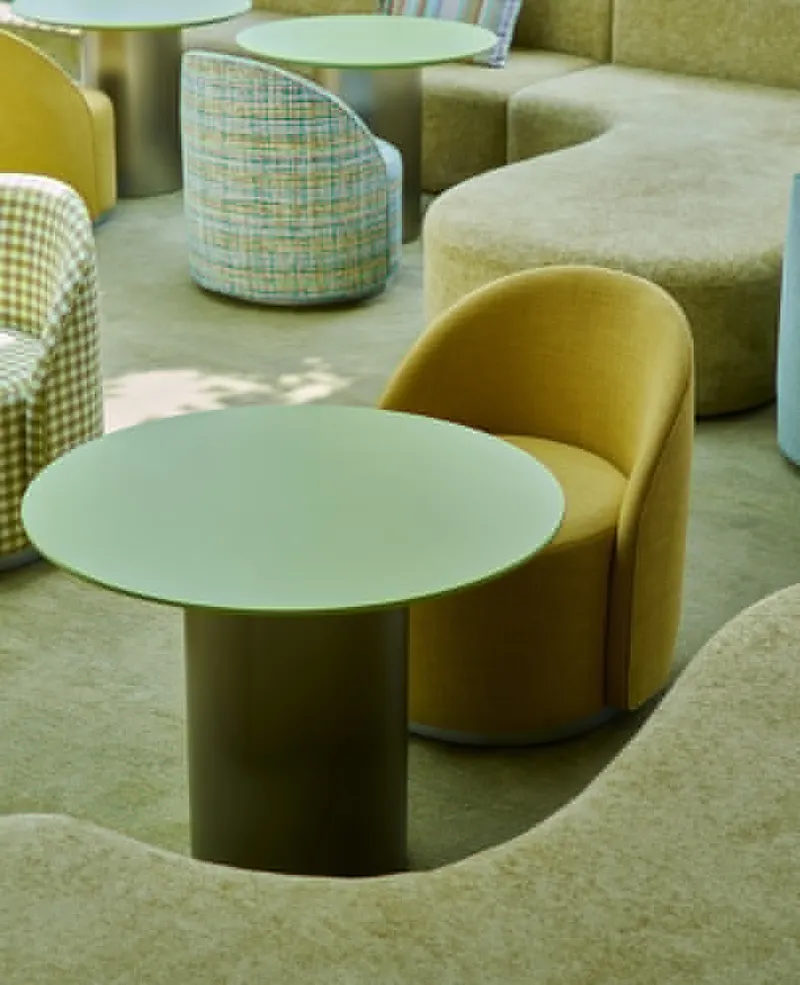
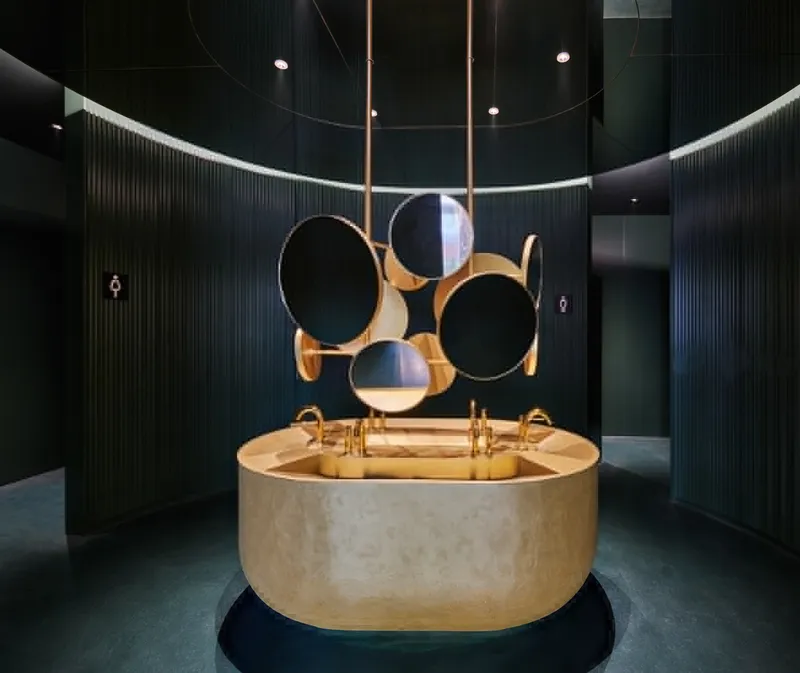
Interior elements reference retro aesthetics through green and yellow tones, textured surfaces, oversized floral seating islands, and sunken lounges. This playful yet refined environment creates a temporal dialogue, blending nostalgia with contemporary design language and offering visitors a moment of relaxation beyond the galleries.
A Cultural Hub Beyond the Museum
More than an exhibition venue, Fotografiska Shanghai is envisioned as a living cultural hub. In addition to rotating photography exhibitions, the institution hosts workshops, lectures, performances, and community events that foster dialogue among artists, designers, and the public.
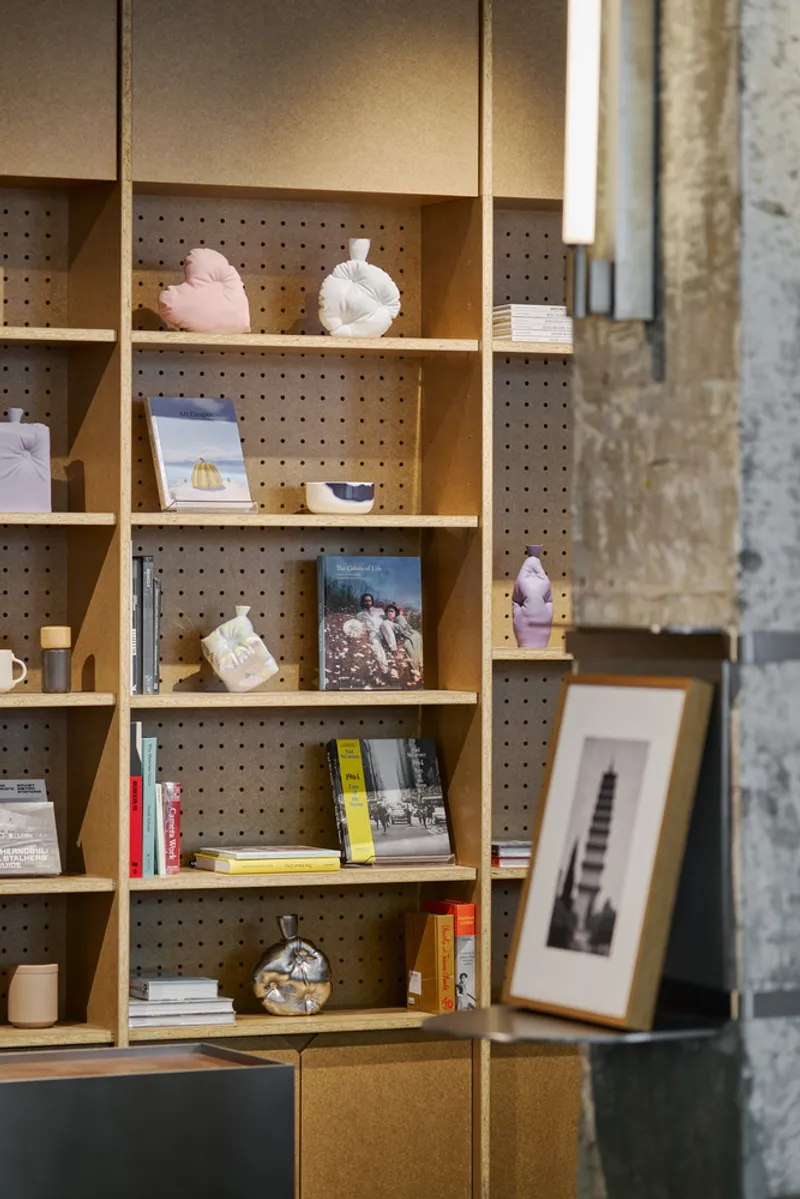
By integrating architecture, visual culture, hospitality, and urban life, Fotografiska Shanghai exemplifies how adaptive reuse can extend beyond preservation to actively shape contemporary cultural ecosystems. The project stands as a compelling model for sustainable cultural architecture in dense urban contexts, where history and innovation coexist through thoughtful design.
Project Information
Architects: AIM Architecture Location: Shanghai, China Program: Museum, exhibition spaces, restaurant, bar, retail, cultural venue Area: 4,637 m² Year: 2023 Photography: Seth Powers
All photographs are works of
Seth Powers




Popular Articles
Popular articles from the community


The Musturak Paradise: Senior Living Architecture for a Connected Future in Temara, Morocco
The Musturak Paradise reimagines senior living architecture in Temara via private homes, social spaces, culture, community, and shared care.

Lunar Spiral: Space Architecture Shaped by the Mathematics of the Universe
Lunar Spiral reimagines space architecture through Fibonacci geometry, lunar regolith, levitating habitats, and self-sustaining Moon living.

The Ocean Hive: Sustainable Architecture for a Self-Sufficient Civilization at Sea
The Ocean Hive imagines sustainable architecture at sea, where modular habitats, algae, wave power and ocean waste sustain a growing colony.

Co-life: Sustainable Architecture for Age-Friendly Community Living
Co-life reimagines sustainable architecture for seniors through courtyards, rammed earth, shared gardens, and spaces designed for belonging.


Similar Reads
You might also enjoy these articles


FAMM Arquitectura Organizes Ten Villas Around Courtyards and Jungle in Nosara, Costa Rica
El Molino pairs two elongated volumes with deep overhangs and timber louvers to build a compact coastal community five minutes from the beach.

Oscar Niemeyer's Ibirapuera Park Pavilions Define São Paulo's Cultural Identity in Concrete and Curve
A constellation of modernist volumes set within São Paulo's most important urban park, conceived for the city's 400th anniversary in 1954.
How Henri Picq's 1889 Paris Pavilion Traveled 11,000 Kilometers to Become Santiago's Artequín Museum
A prefabricated iron and glass pavilion built for the Paris Universal Exposition found a second life as a children's art museum in Chile.

Sanjay Puri Architects Wraps a Jaipur Office Tower in Capsule-Shaped Green Buffers
A nine-level climate-responsive workplace near Jaipur Airport uses stacked planter terraces and aluminium screens to fight 40°C heat.
Explore Cultural Architecture Competitions
Discover active competitions in this discipline



Challenge to reimagine the Iron Throne


Photograph architecture without architects


Illustrate the lost glory of Angkor Wat - Render Challenge


Bring back Drive In's
Comments (0)
Please login or sign up to add comments
No comments yet. Be the first to comment!