

Foundations House by Holger Cuadrado: A Structural Manifesto of Flexibility and Urban Living in Loja, Ecuador
Foundations House by Holger Cuadrado in Loja, Ecuador, features exposed concrete, flexible multi-level spaces, cantilevered design, and strong landscape integration.


Foundations House, designed by Holger Cuadrado and completed in 2024, redefines residential architecture in the dense urban fabric of Loja, Ecuador. Located in a residential neighborhood at 2,060 meters above sea level in the lower Andes, the project transforms a compact 7.60 m by 13.50 m site into a highly versatile, structurally expressive home. Through the strategic use of exposed reinforced concrete and a philosophy rooted in spatial adaptability, the house becomes both an architectural statement and a flexible living system capable of evolving with its inhabitants.
Architecture Defined by Structure
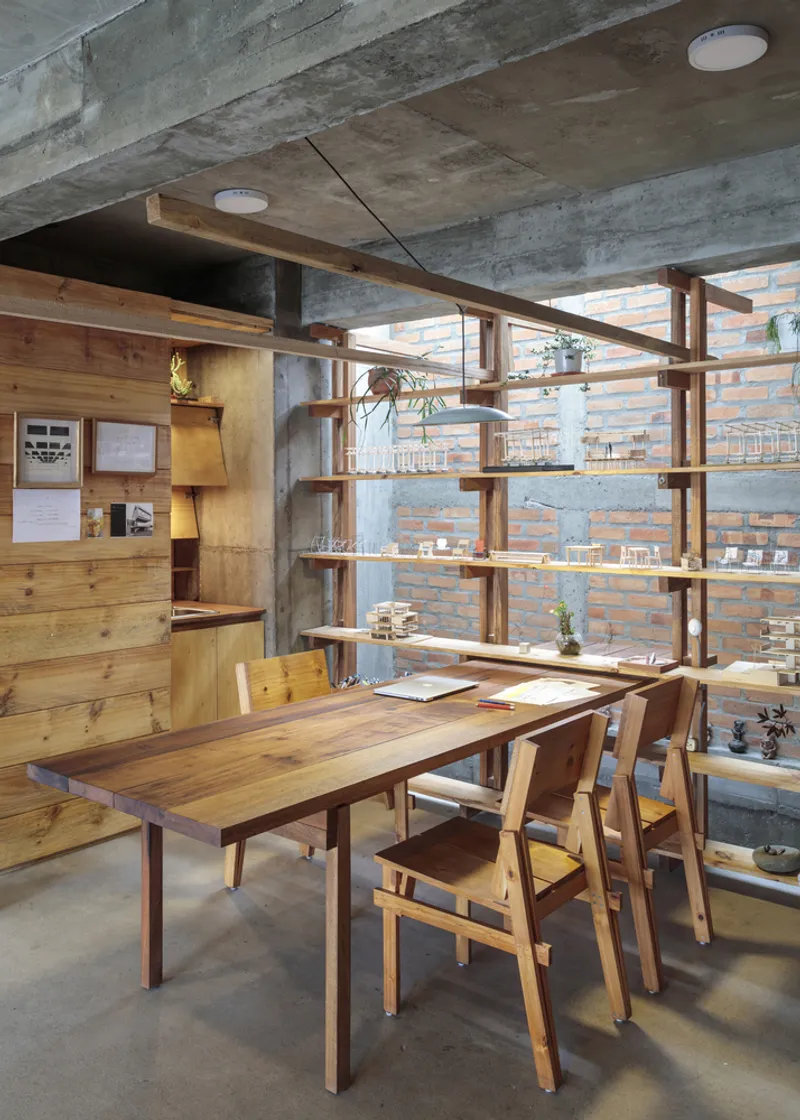
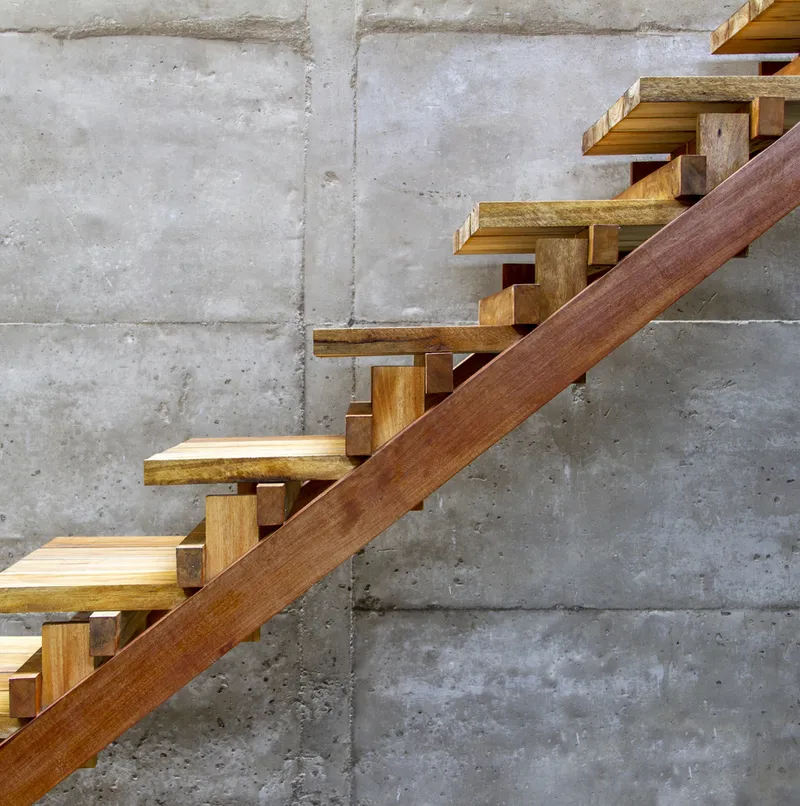
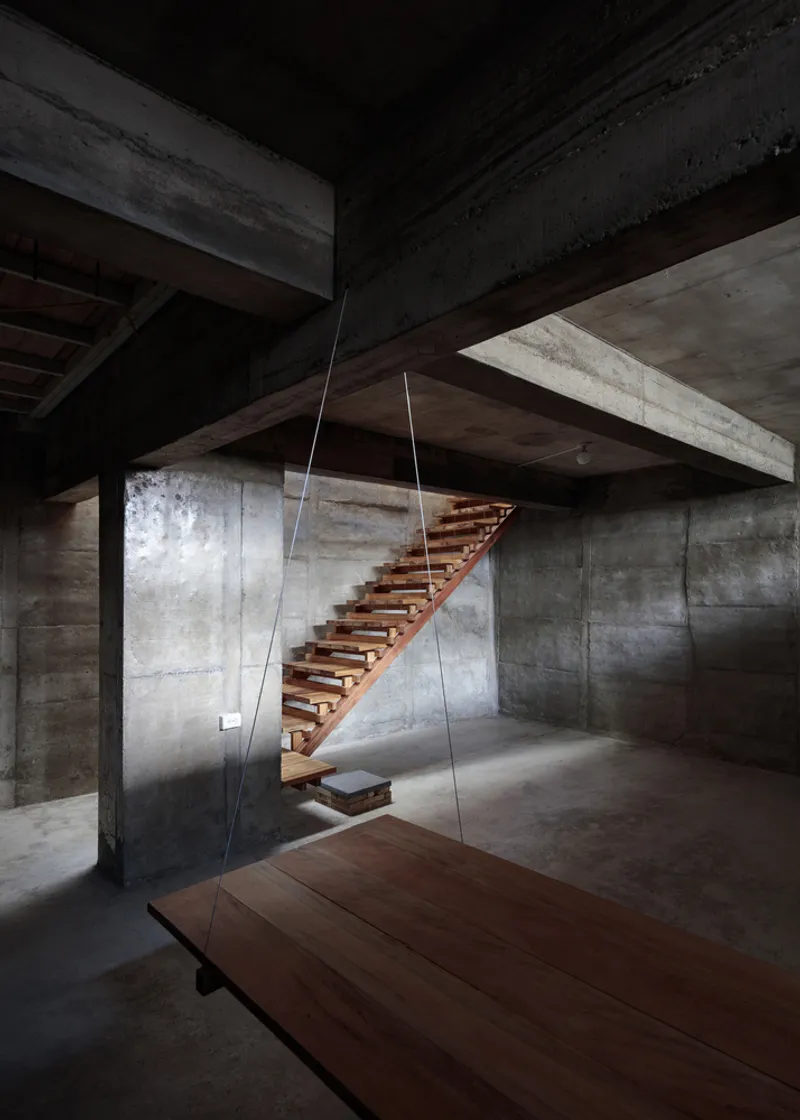
At the core of Foundations House is a design strategy that allows structure to become the generator of space. The home is built entirely in exposed reinforced concrete, which not only articulates the aesthetic identity of the building but also organizes its internal logic. Two lateral shear walls and two intermediate diaphragms form a minimal yet highly effective structural system. This clarity in load-bearing elements reduces unnecessary construction complexity, establishing generous, fluid interior spaces across all levels.
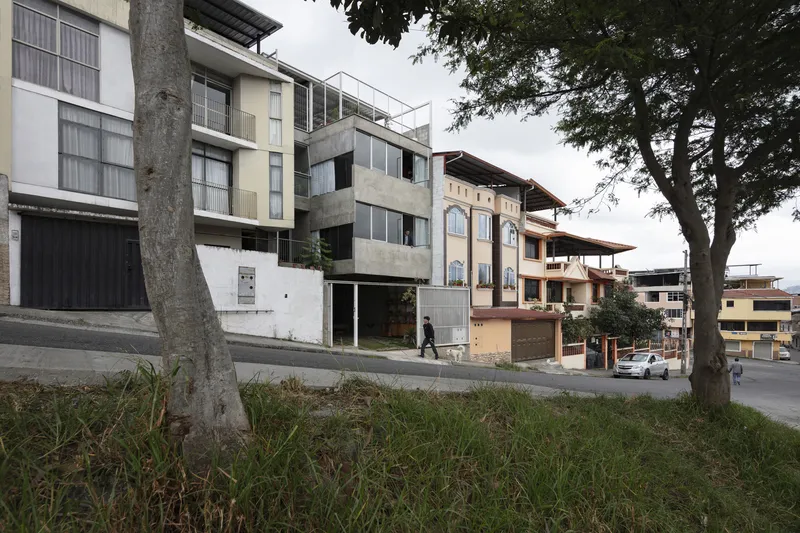
From the street, the architecture is defined by a striking 5-meter-wide volume, anchored by a dramatic 3-meter cantilever. This gesture creates a sheltered patio on the ground level — a multifunctional outdoor area that supports children’s play as well as the productive activities integrated into the lower floors of the home.
A Multi-Level Container for Flexible Living
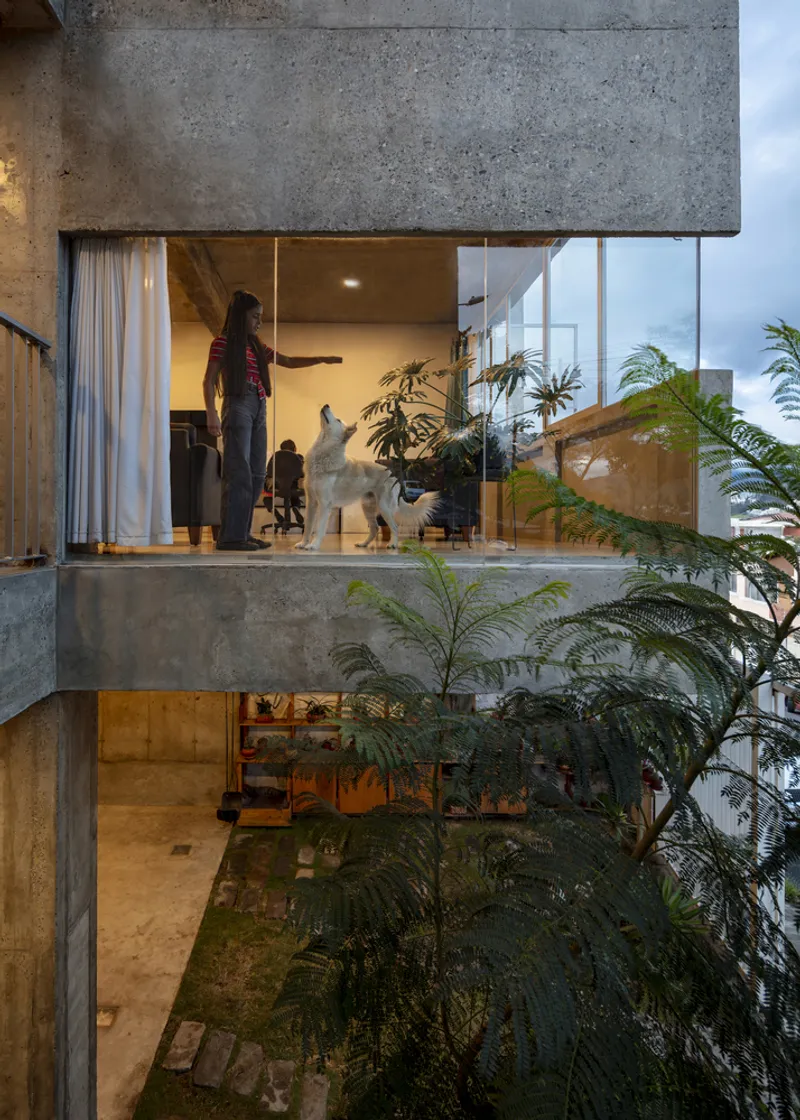
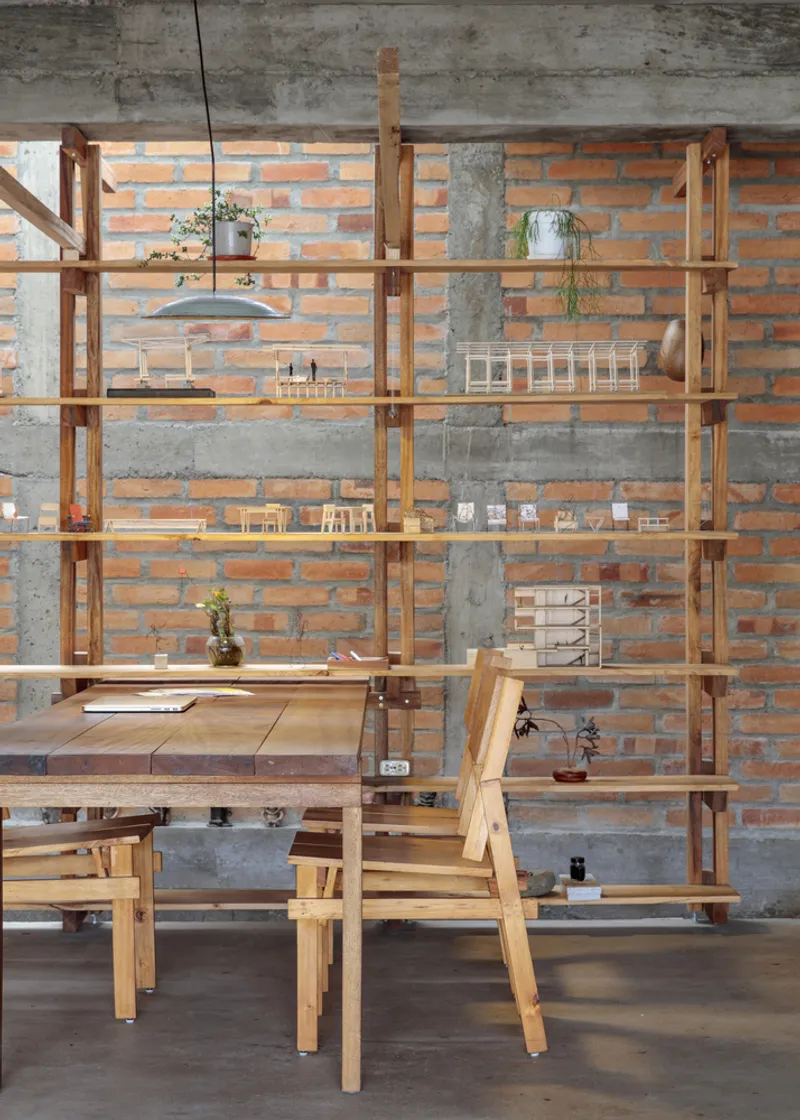
The project is conceived as a four-level spatial container, carefully designed to support changing patterns of work, living, and family dynamics. The ground floor and basement operate as independent workspaces with direct access to the street, enabling residents to carry out entrepreneurial or productive activities while keeping the domestic environment private and undisturbed. This separation supports evolving models of hybrid living, which have become increasingly relevant in contemporary urban life.
The upper levels, dedicated to residential use, are purposely designed for future adaptability. Their open-plan configuration allows the possibility of being reprogrammed as additional studios, workrooms, or even standalone living units. This adaptability ensures long-term relevance, allowing the architecture to evolve alongside its inhabitants’ needs over decades.
Spatial Framing, Light, and Landscape Integration
Although built within a tight urban plot, the house maintains a deep connection with its natural surroundings. Thoughtfully placed openings, parapets, and viewpoints create visual and spatial relationships with the Andean landscape.
From the top floors, a low parapet aligns perfectly to frame sweeping views of the surrounding mountains, transforming the horizon into a living backdrop. Laterally, an inverted parapet installed beneath the ceiling directs views toward a tree planted in the ground-floor patio, generating a surprising connection between vertical levels and reinforcing the centrality of nature within the home.
This interplay of framed views, controlled light entry, and spatial orientation maximizes the home’s morning sun exposure, enhancing comfort while grounding the structure within its climatic and geographic context.
An Urban Prototype for Contemporary Ecuadorian Living
Foundations House embodies a growing architectural movement in Ecuador that embraces density, multifunctionality, and sustainable urban growth. By prioritizing structural honesty, spatial flexibility, and site-responsive design, Holger Cuadrado delivers a home that is at once robust, adaptable, and intimately connected to its environment.
More than a residence, the project serves as a prototype for future urban housing — demonstrating how architecture can support entrepreneurial activity, evolving family structures, and shifting lifestyle patterns without requiring a larger footprint or excessive resources.
All photographs are works of Bicubik Photography


Popular Articles
Popular articles from the community


longwave studio Reorganizes a 112 m² Tainan Apartment Around the Daily Routines of a Family and Two Cats
In Tainan, Taiwan, birch plywood, rust-red furniture and a freestanding plaster wall link arrival, storage, work and family life in one apartment.

GROUP A Strips a 1969 Rotterdam Harbor Headquarters to Its Frame and Wraps It in Timber Louvers
In Rotterdam's M4H harbor district, Ferro Offices reuses a 1969 frame, adds one timber storey and reaches BREEAM-NL Outstanding.

Cube Design Draws an Ecological Corridor Between Two Shenzhen Hills with the Nankai Building
Beside Shenzhen's container docks, the Nankai Building pairs stacked balconies with a climbing green screen to connect two hillsides across its height.

Juan García Correa, John González and Claudia Rueda Sink a Circular Amphitheater into a Manizales Engineering Building
On the La Nubia campus in Manizales, Colombia, the S1 Building folds labs and offices into a hillside of ramped lawns that double as a campus route.

Similar Reads
You might also enjoy these articles


Hodi-Mandai Geram
Project Function: Preservation and revitalization of the Intangible heritage and socio-spatial identity of the Hodi by Housing, Cultural Memory Center, Sacred Grove, landscape, local tourism economy


Olio Towers: A Mid-Rise for Performers That Fuses Housing, Rehearsal, and Stage
Located blocks from Houston's Theater District, this modular tower stacks living units around a central performance atrium.

Oasis: Modular Green Housing Carved into Dhaka's Urban Fabric
A shortlisted Plugin Housing entry reclaims unauthorized settlements in Dhaka with stepped concrete volumes, green roofs, and ventilation-driven design.

Black Hole: A Floating Megastructure for the Post-Physical Era
Emiliano Mazzarotto envisions a spherical, self-scaling arena where e-sports, digital hotels, and holographic stadiums replace traditional public space.

Explore Housing Competitions
Discover active competitions in this discipline

Challenge to reimagine the Iron Throne

Photograph architecture without architects

Illustrate the lost glory of Angkor Wat - Render Challenge

Design challenge to reuse E-waste
Comments (0)
Please login or sign up to add comments
No comments yet. Be the first to comment!