
Free Spirit Community Center: Therapeutic Architecture That Refuses to Feel Clinical
A shortlisted mental health center embeds therapy rooms, art studios, and public life into a single glulam-framed urban building.

Mental health facilities have a reputation problem. Too many of them look and feel like institutions first, places of healing second. The Free Spirit Community Center takes that tension head-on, proposing a building that folds art therapy, group counseling, yoga studios, a library, a cafeteria, and public workshops into a single three-storey volume that reads from the street not as a clinic but as a neighborhood anchor. The architecture argues that treatment spaces should participate in urban life rather than retreat from it.
Designed by Andrey Uskreev, the project was shortlisted in the Live Laugh Love 2020 competition, which asked entrants to rethink how architecture supports emotional wellbeing. Uskreev's response is a multi-functional community center sited within an urban context, where existing trees are preserved, pedestrian paths weave through planted landscape, and a glulam timber frame holds the whole thing together with visible structural logic.
A Glass Corner That Invites Rather Than Screens
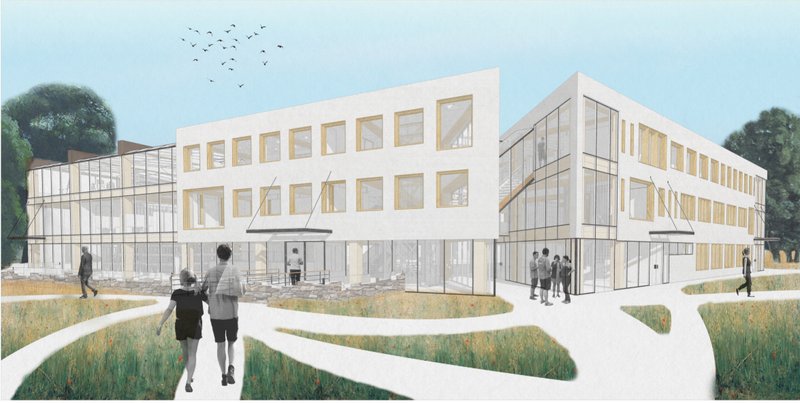
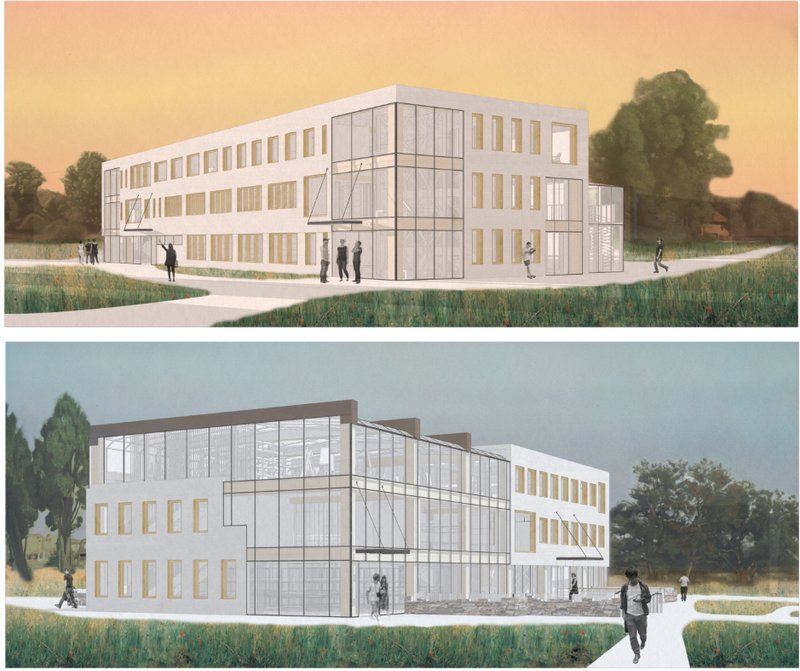
The most immediate move is the building's corner entrance: a fully glazed volume that dissolves the boundary between interior and street. Curving pedestrian paths approach through new and existing tree plantings, so the act of arriving already feels therapeutic before anyone crosses the threshold. The gridded fenestration across the remaining facades provides rhythm and scale without defaulting to the blank walls that characterize so many healthcare buildings. Two exterior renderings show the same entrance volume under different sky conditions, confirming that the transparency holds up regardless of weather or time of day.
Juror Juanjo Otero specifically praised the plot utilization and the way the structural logic remains visible from outside, allowing passersby to read the building's function. That legibility matters. A mental health center that signals openness through its architecture, rather than hiding behind euphemistic signage, begins to destigmatize its own program.
A Triple-Height Atrium Stitched with Timber Bridges
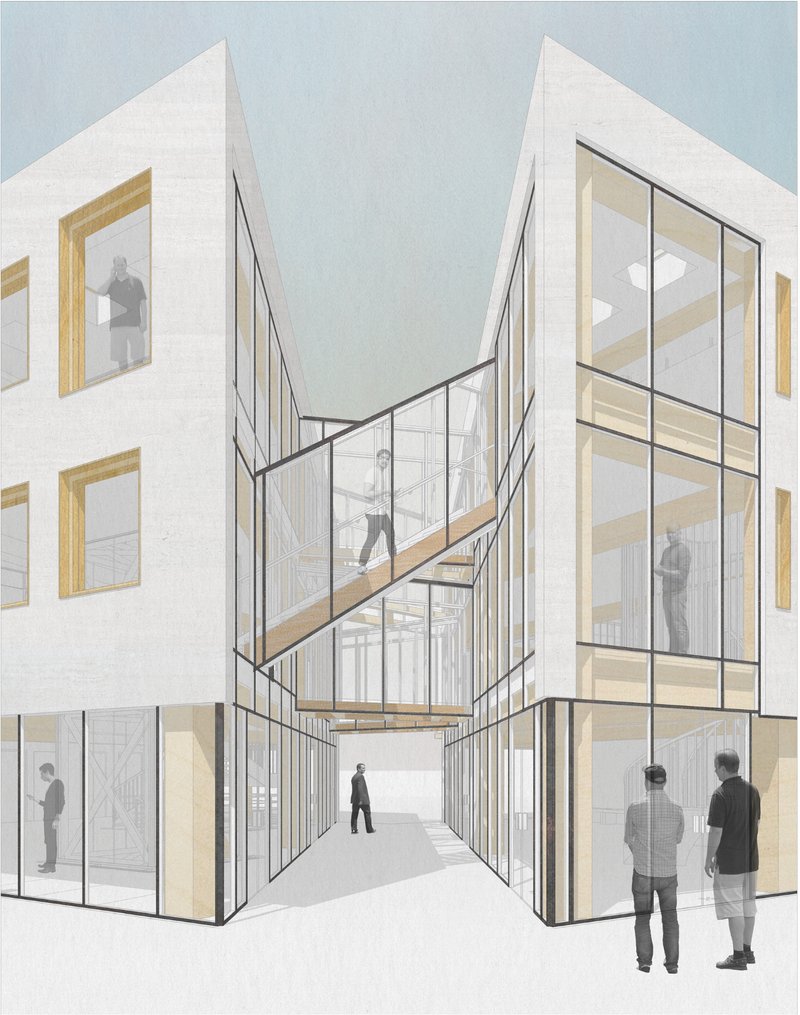
The cutaway rendering reveals the project's spatial engine: a triple-height atrium crossed by timber and steel bridge stairs that connect white-framed volumes on each level. This is where the building breathes. Rather than isolating programmatic zones behind corridors, the atrium keeps visual connections alive between floors. Someone heading to a group therapy session on the second floor can see the cafeteria below, the art studios across the void, people moving through the building with purpose. That visibility normalizes the act of seeking help by embedding it in the flow of daily activity.
Color-Coded Programs Across Four Levels
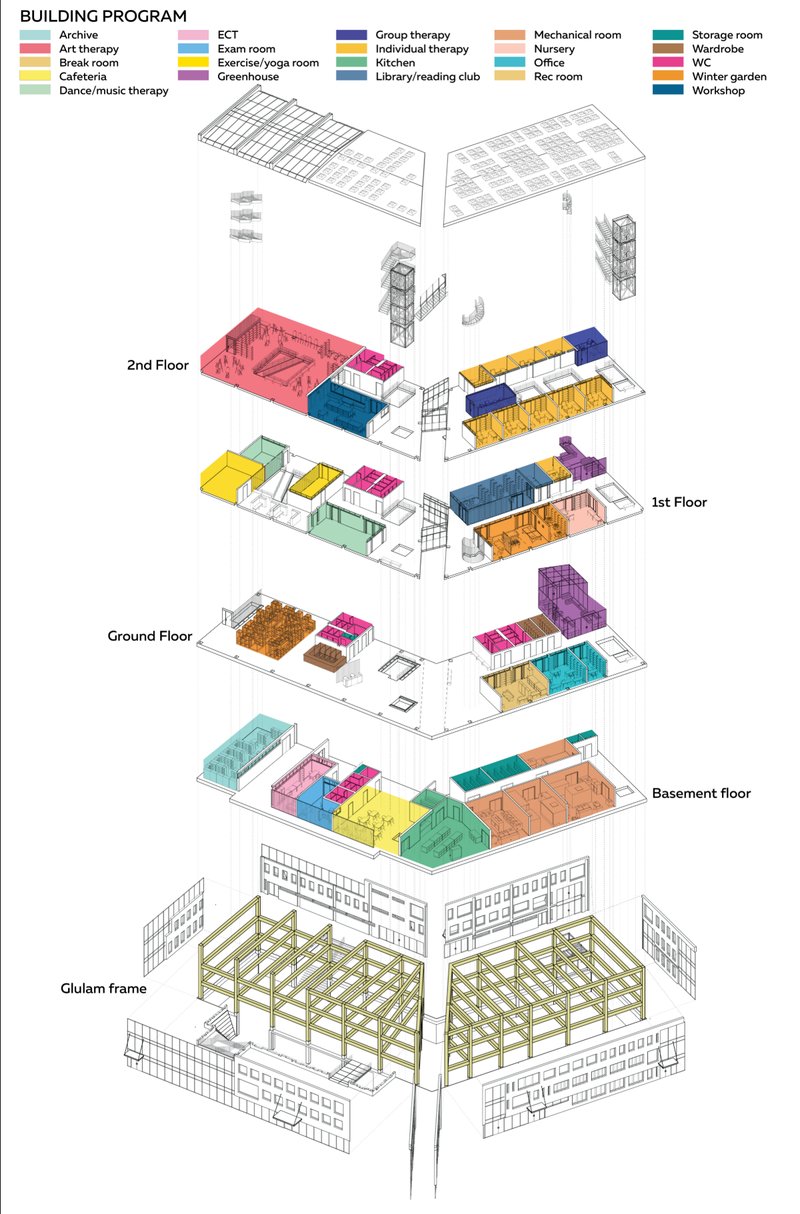
The exploded axonometric is the drawing that does the most analytical work. It breaks the building into color-coded programmatic zones across four levels, with the glulam structural frame pulled out below to show how it all stands up. The basement holds utilities and workshops. The ground floor opens to shared and public spaces. The first and second floors host art and dance therapy rooms, individual and group therapy spaces, yoga and exercise zones, and a library. Each level caters to specific needs while promoting fluid movement and natural light throughout.
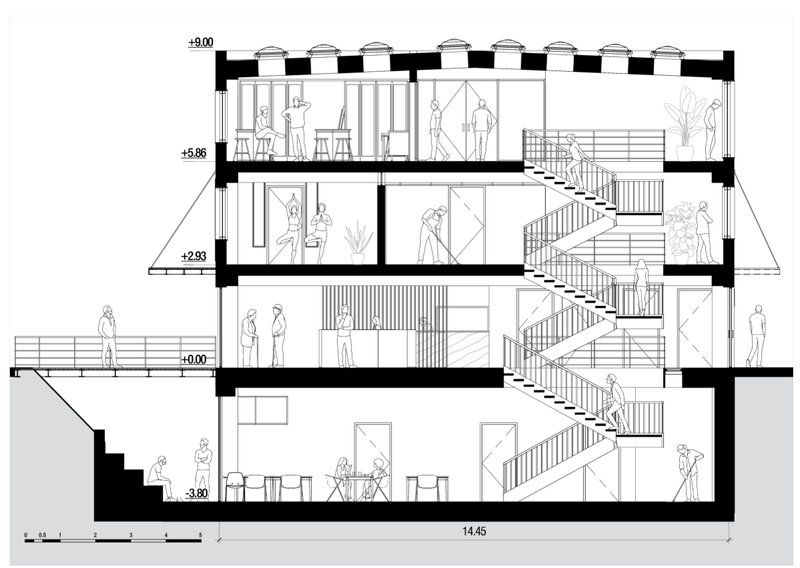
The building section reinforces this vertical logic, tracing a multi-level staircase from basement to rooftop through occupied spaces. Figures populate every landing, which is a small detail in representational terms but an important one conceptually: the building is never empty, never purely clinical. It is always in use by a mix of people with different reasons to be there. Underground connectivity and cuts through the section facilitate the openness Uskreev is after, making the vertical circulation itself a therapeutic sequence rather than a utilitarian afterthought.
Timber Balconies and Interior Warmth
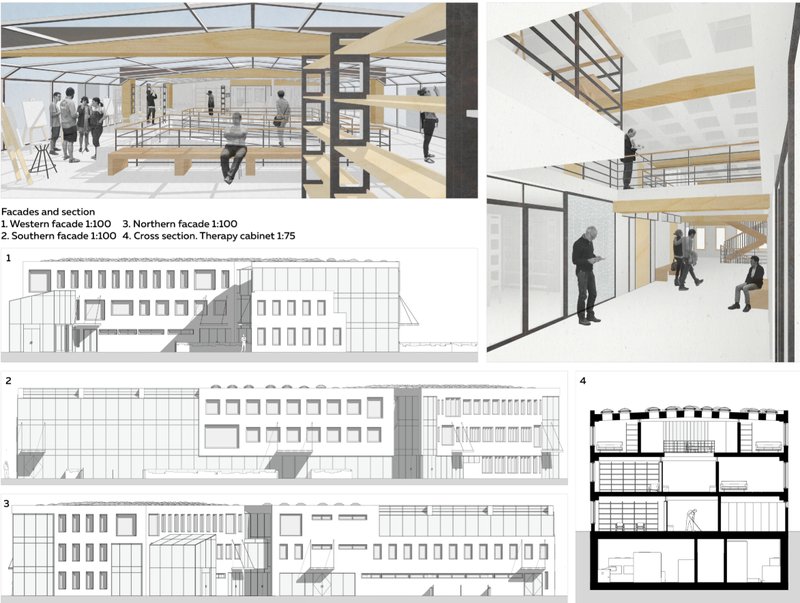
The final sheet compiles elevation drawings, a floor plan, and two interior perspective renderings showing atrium spaces lined with timber balconies. The material palette leans on the warmth of the glulam structure, using exposed timber surfaces to counterbalance the white-framed volumes and glass. Juror Eleena Jamil noted that the project could push further toward a softer, more humane material language to fully break away from institutional rigidity. The timber balconies suggest Uskreev is already thinking in that direction; the challenge is carrying that warmth consistently through every corridor and threshold, not just the showcase atrium.
Why This Project Matters
The Free Spirit Community Center matters because it reframes mental health architecture as a civic proposition. By loading the program with public-facing uses (cafeteria, library, workshops) alongside clinical ones (therapy rooms, counseling spaces), Uskreev creates a building where the line between patient and visitor blurs productively. People come for coffee, stay for a workshop, encounter therapy as one activity among many. That spatial strategy directly confronts stigma in ways that no amount of signage or branding can achieve.
The jurors' feedback points toward the project's next evolution: refining the volumetric language and material palette to match the ambition of its program. The structural clarity and urban integration are already strong. What remains is the sensory dimension, ensuring that every surface, joint, and threshold communicates care as clearly as the plan does. As a conceptual framework for what therapeutic architecture can be when it refuses to hide, this is compelling work.
View the Full Project
About the Designers
Designer: Andrey Uskreev
Enter a Design Competition on uni.xyz
uni.xyz runs architecture and design competitions year-round that reward proposals with spatial conviction and real site intelligence.
Project credits: Free Spirit Center by Andrey Uskreev Live Laugh Love 2020 (uni.xyz).




Popular Articles
Popular articles from the community

gru.a Builds a 70 m² Timber Shelter That Opens Like a Farm Door in Brazil's Valley of the Vines
In the mountainous region near Rio de Janeiro, a compact retreat uses plywood panels and deep eaves to blur the line between inside and out.
Foster + Partners Wraps a 200-Meter Shanghai Tower in Stainless Steel and Industrial Memory
The Suhe Centre Office Tower anchors a regenerated waterfront district in Shanghai with an all-steel structure that nods to local warehouse heritage.
IDIN Architects Wraps a Hua Hin Hotel Around a Private Courtyard to Escape the City
Dusit D2 Hua Hin turns an urban infill site in Thailand's family vacation heartland into a self-contained resort through courtyard planning.
OMCM arquitectos Builds a Summer House in Paraguay from Quarry Waste Blocks and Three Sacred Trees
In the young hillside neighborhood of Altos, a 696-square-meter concrete volume hovers on six pillars around three preserved native Yvyraju trees.
Similar Reads
You might also enjoy these articles
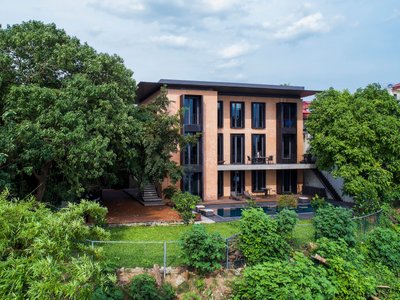
D and P Associates Build a Pi-Shaped House of Rammed Earth Memory on Vietnam's Red River
A 640-square-metre residence in Ngoc Thuy channels the pisé wall traditions of Vietnam's northern highlands into a riverfront family home.
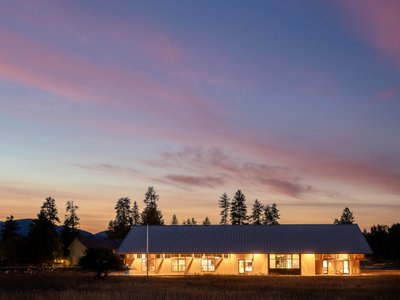
Johnston Architects Reimagines the Methow Valley Hay Barn as a Small-Town Library in Winthrop
A 7,300-square-foot timber library channels the region's agrarian vernacular to serve a rural Washington community of 400 year-round residents.
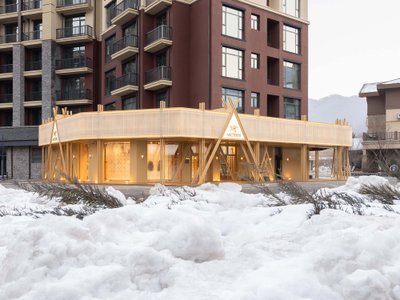
STILL YOUNG Builds a Glowing Campfire in the Snow for ARC'TERYX at a Chinese Ski Resort
A timber-framed pavilion at Beidahu Ski Resort in Jilin wraps warmth and glacier-like resin around outdoor retail.
gru.a Builds a 70 m² Timber Shelter That Opens Like a Farm Door in Brazil's Valley of the Vines
In the mountainous region near Rio de Janeiro, a compact retreat uses plywood panels and deep eaves to blur the line between inside and out.


Explore Residential Building Competitions
Discover active competitions in this discipline




The Global Benchmark for Architecture Dissertation Awards


The Global Benchmark for Graduation Excellence


Challenge to design mud housing for contemporary communities


Bring back Drive In's
Comments (0)
Please login or sign up to add comments
No comments yet. Be the first to comment!