
ROOVICE Renovates a 1970s Kamakura Home Around Cats, Light, and Exposed Timber
In the Fueda neighborhood of Kamakura, a modest wooden house becomes a bright, open sanctuary for a young couple and their pets.


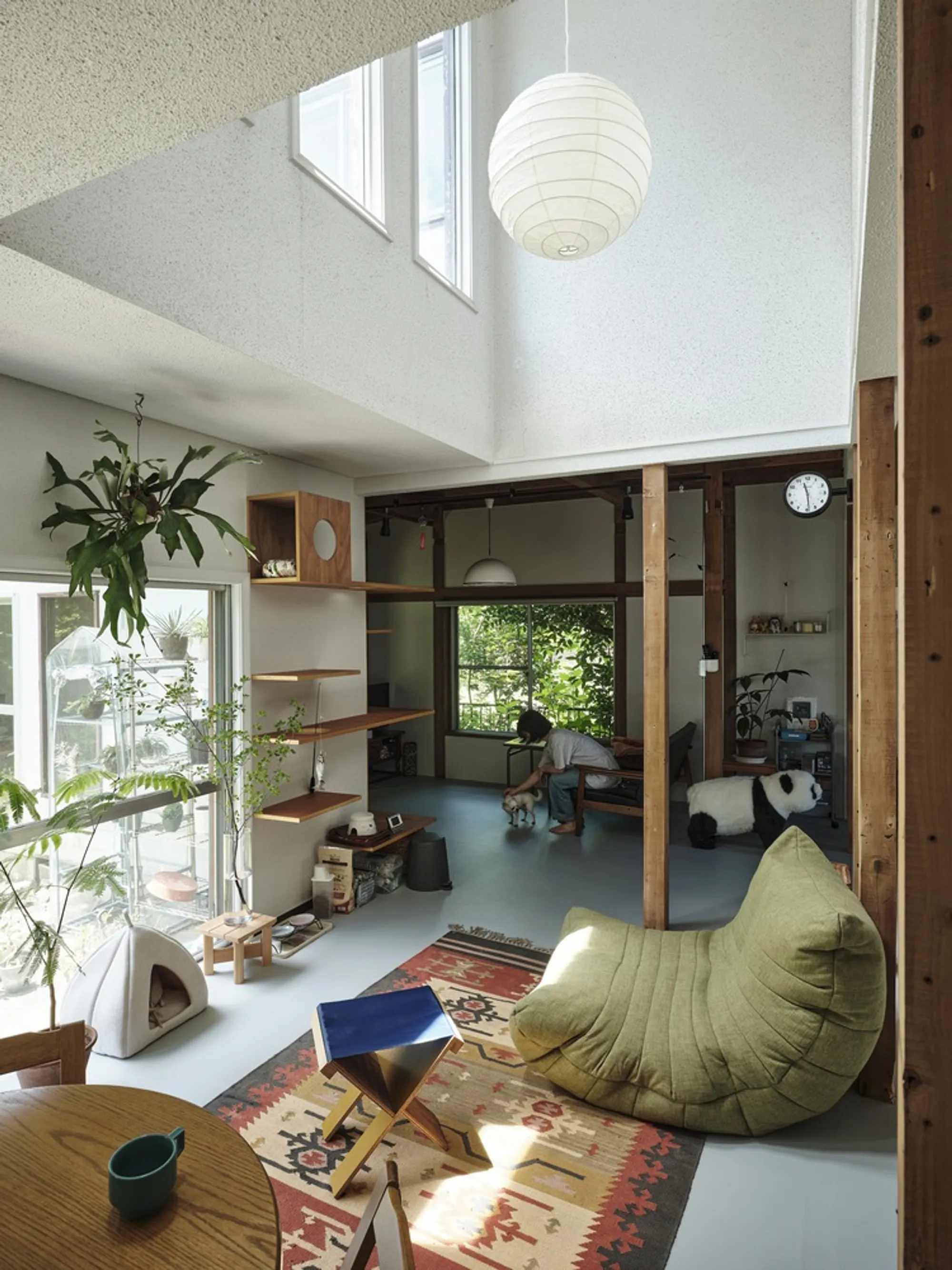
There is a quiet kind of ambition in taking a fifty-year-old wooden house in Kamakura and deciding not to replace it but to reveal it. ROOVICE, led by architects Maoko Sato and Masaki Yamada, has done exactly that with Fueda House, a 110-square-meter renovation of a two-story timber structure built in the 1970s. The project strips the interior back to its bones, exposing pillars and beams that had been hidden for decades, then reorganizes the plan around a double-height lightwell that turns a previously compact home into something generous and luminous.
What makes Fueda House genuinely interesting is the specificity of its brief: the clients are a young couple with cats, and the design takes that cohabitation seriously. Custom catwalks allow vertical exploration for the animals, doorways incorporate dedicated pet pathways, and every flooring choice was made with claws and paws in mind. Rather than bolt pet-friendly features onto a conventional renovation, ROOVICE wove them into the spatial logic of the house itself, producing something that feels considered rather than compromised.
Opening the Ground Floor
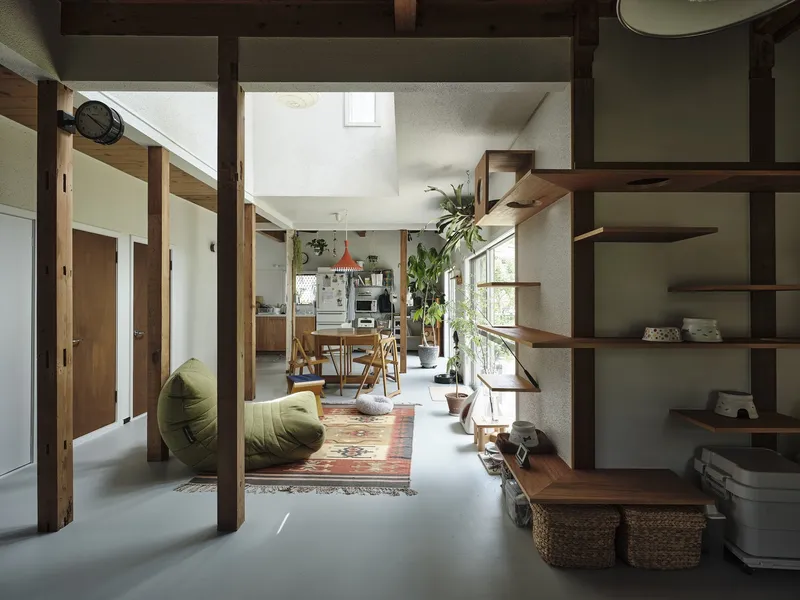
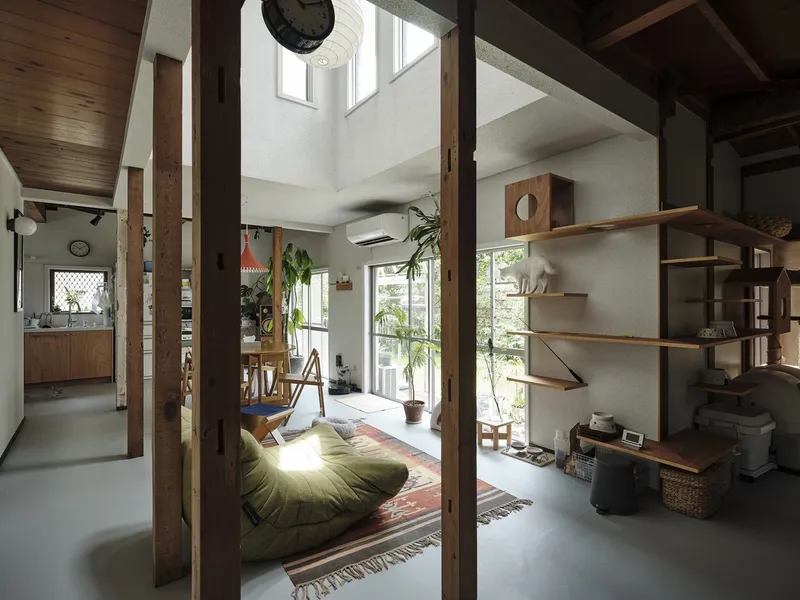
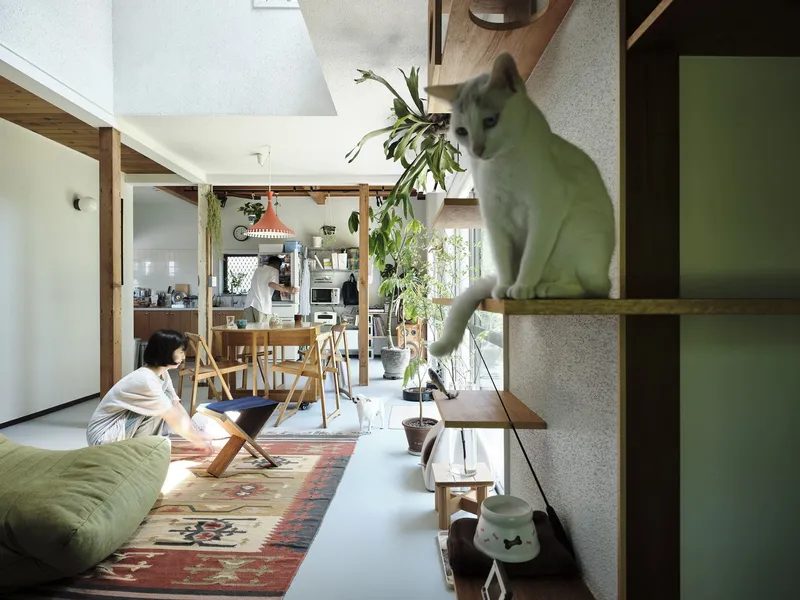
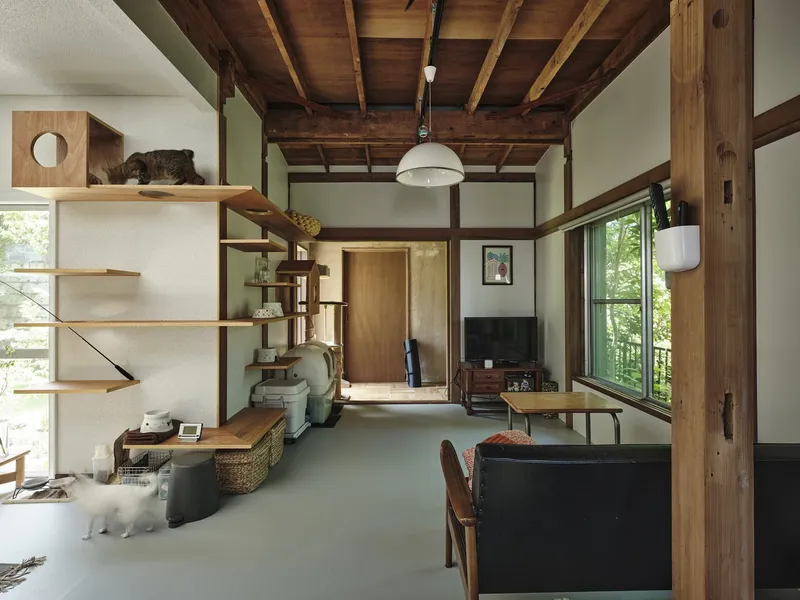
The most significant move in the renovation is the removal of first-floor walls to merge the living room, kitchen, and former tatami room into a single continuous space. Exposed timber columns remain, doing the structural work while also providing a rhythm that subtly defines zones without enclosing them. The result is a floor plan that reads as one room but functions as several, with the columns acting as soft boundaries between cooking, dining, and sitting.
Freestanding shelving units reinforce this logic. Placed near the columns, they create pockets of storage and display without blocking sightlines or light. It is a strategy that makes 110 square meters feel substantially larger than the number suggests.
The Lightwell as Engine
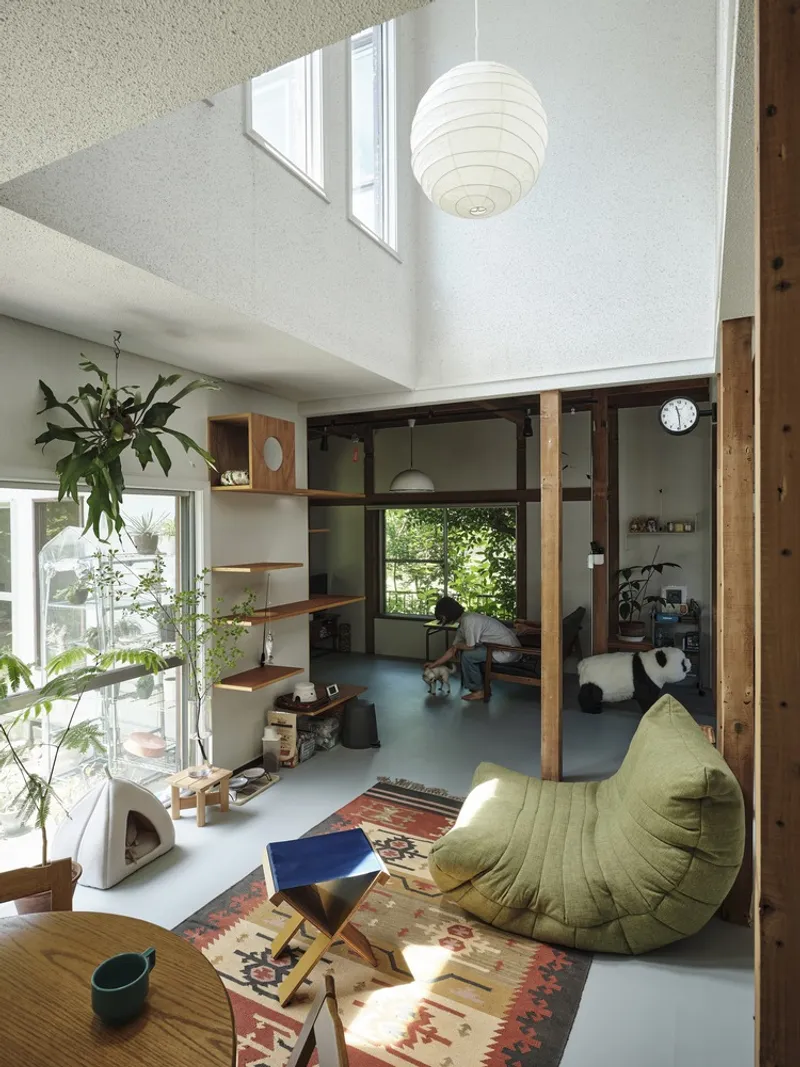
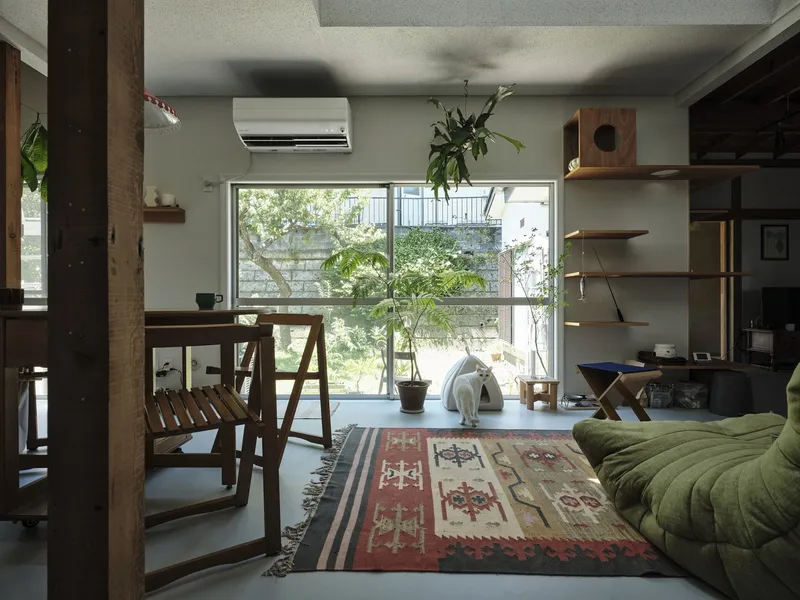
The double-height lightwell in the living room is the project's central architectural gesture. Narrow clerestory windows at the top draw daylight deep into the plan, creating a bright vertical core that the rest of the house orbits around. A paper globe pendant hangs in this void, its soft form a counterpoint to the hard geometry of the timber frame.
From below, the lightwell makes the living room feel tall and airy. From the second floor, it connects the upper rooms visually to the life of the ground floor. For the cats, it likely offers something else entirely: a column of moving light to track through the day. The narrow window proportions are smart. They pull in daylight without the heat gain or privacy loss that larger openings would introduce in a dense residential neighborhood.
Living with Animals
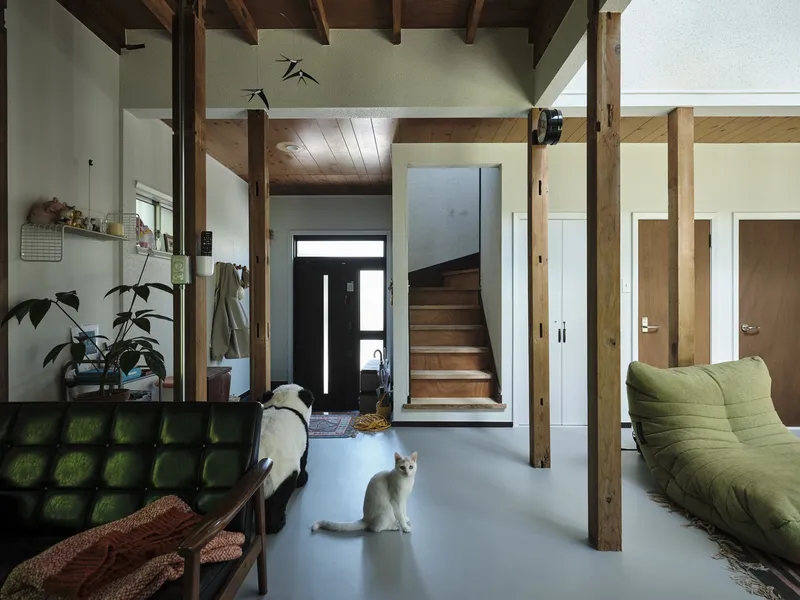
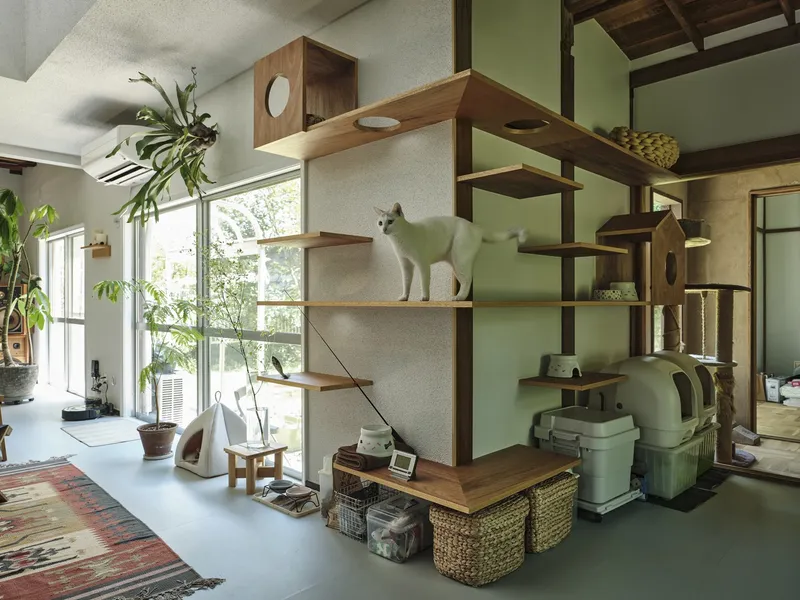
Two cats appear in the photographs, and they look entirely at home. One perches on a shelf at mid-height, surveying the room from a vantage point that was clearly designed for exactly this purpose. The other sits on the polished floor of the entry hall near the timber staircase, unbothered. These are not afterthought additions. The shelving units double as catwalks, the doorways include low openings for pet movement, and the PVC long sheet flooring in the living-dining-kitchen area was chosen specifically because it is easy to clean and resistant to scratching.
Pet-friendly design is often reduced to novelty: a cat door here, a scratching post there. ROOVICE's approach is more integrated. The vertical circulation that the catwalks provide mirrors the double-height spatial ambition of the lightwell. The animals experience the architecture as a three-dimensional landscape, not a flat plane interrupted by furniture.
Kitchen and Material Choices
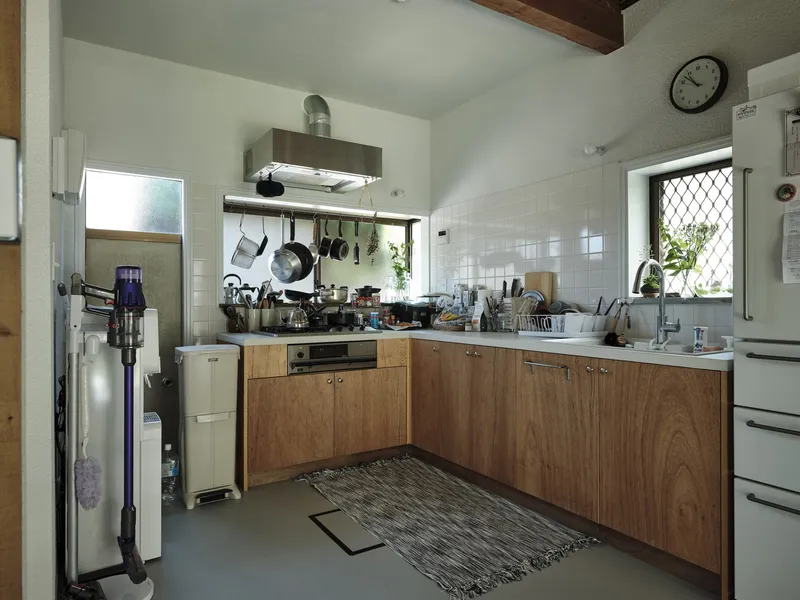
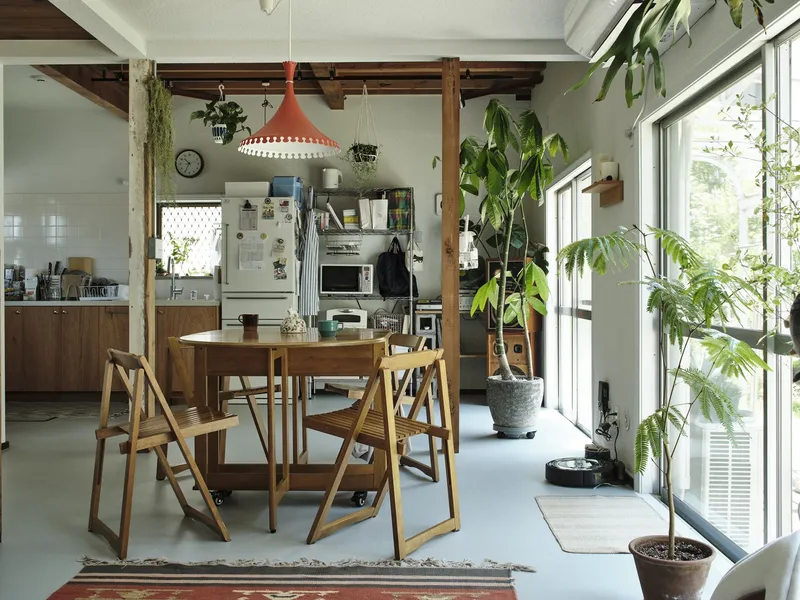
The original 1970s kitchen was compact and enclosed. ROOVICE expanded it into an L-shaped configuration that wraps around a corner, with a hard-plaster countertop selected for its durability and its capacity to develop patina over time. White subway tile lines the backsplash, and the timber cabinetry below matches the exposed beams overhead. The ceiling was removed in this area to reveal the original roof structure, a move that adds height and visual warmth.
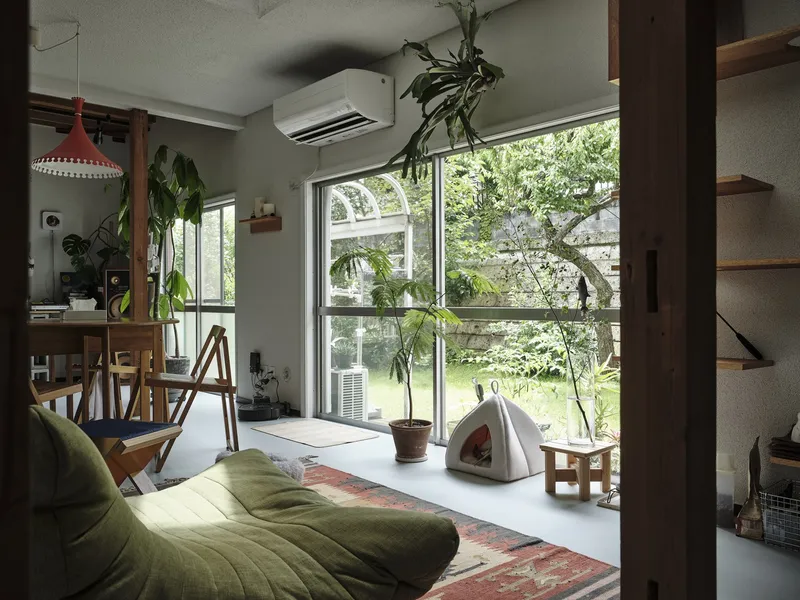
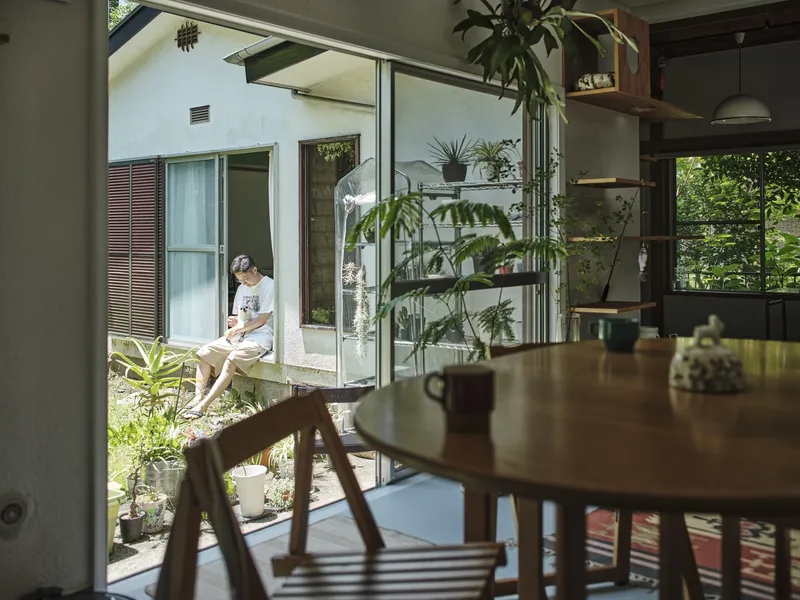
The dining area opens directly onto the garden through floor-to-ceiling windows, collapsing the boundary between interior and exterior. A raised threshold at one doorway catches the light and creates a stage-like quality, with the planted courtyard beyond acting as a green backdrop. Oak flooring on the second floor and PVC sheeting on the first represent a pragmatic split: the ground floor prioritizes ease of maintenance, while the upper level favors warmth and texture underfoot.
Texture, Finish, and the Art of Leaving Things Alone
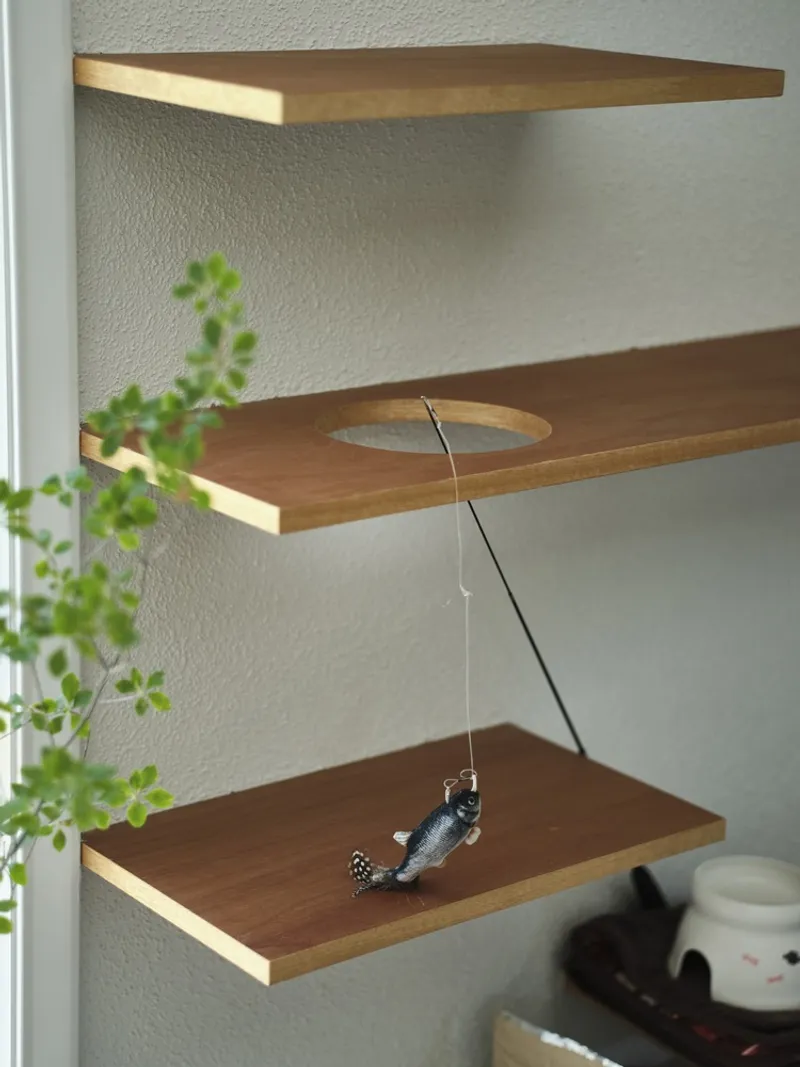
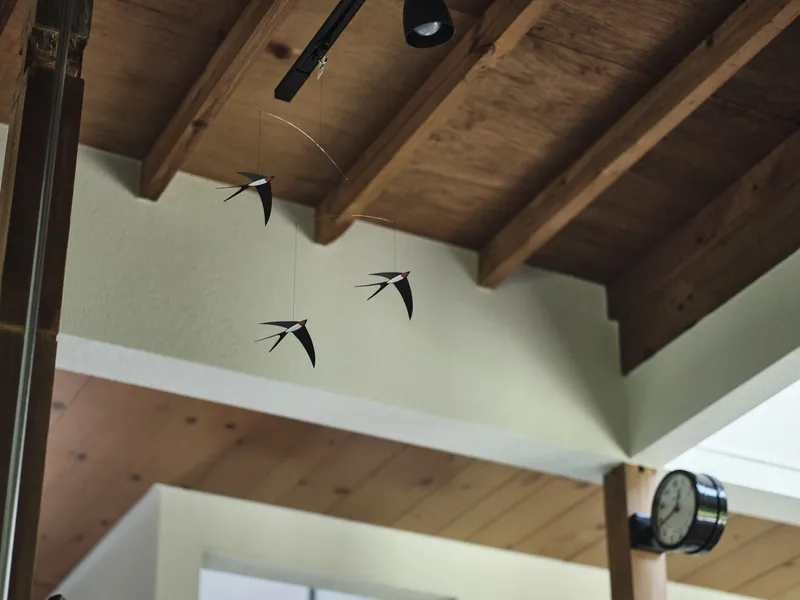
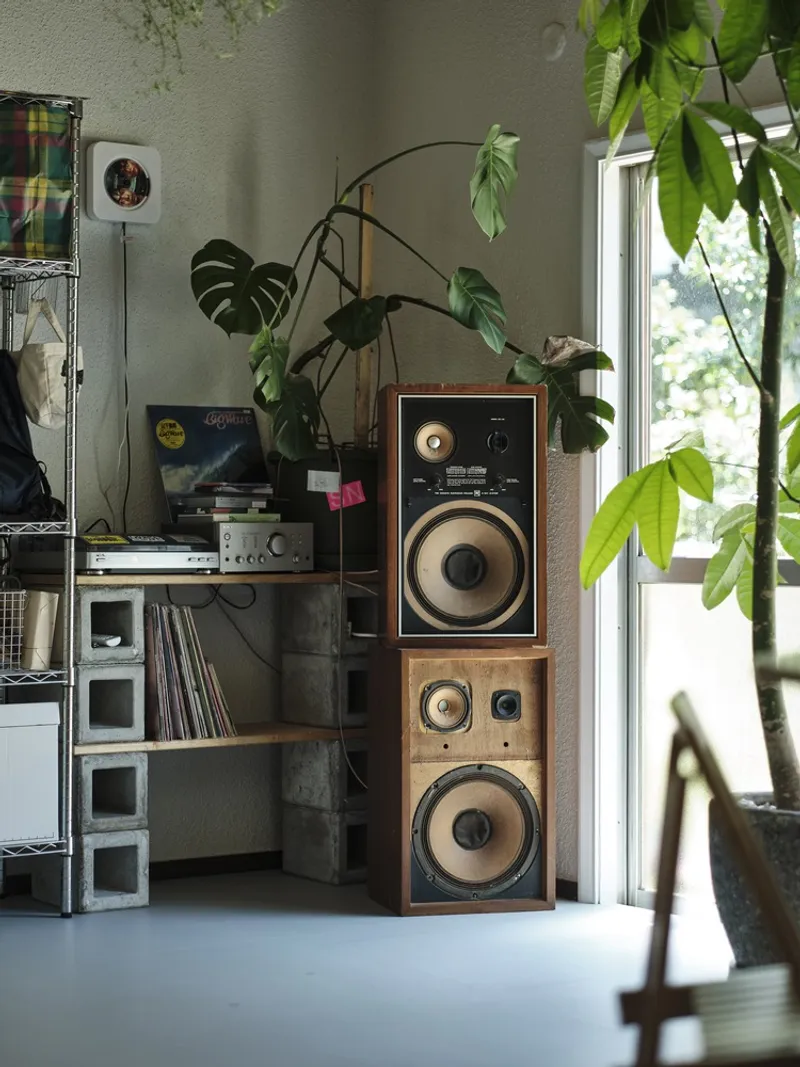
Not every surface in Fueda House has been renovated, and that is a deliberate choice. The walls combine spray-textured coatings with sections left in their original state, producing a slightly mismatched quality that avoids the sterile uniformity of a complete overhaul. Floating timber shelves sit against white plaster; bird mobiles hang from exposed ceiling beams alongside a wall-mounted clock. Trailing plants, a monstera near a window, and vintage speakers on wire shelving complete the picture.
The aesthetic is relaxed without being careless. There is a clear hierarchy of intervention: structural elements are exposed and celebrated, functional surfaces are upgraded, and decorative finishes are allowed to carry the history of the original house. It is a renovation philosophy that respects the building's age rather than trying to erase it.
Garden and Context
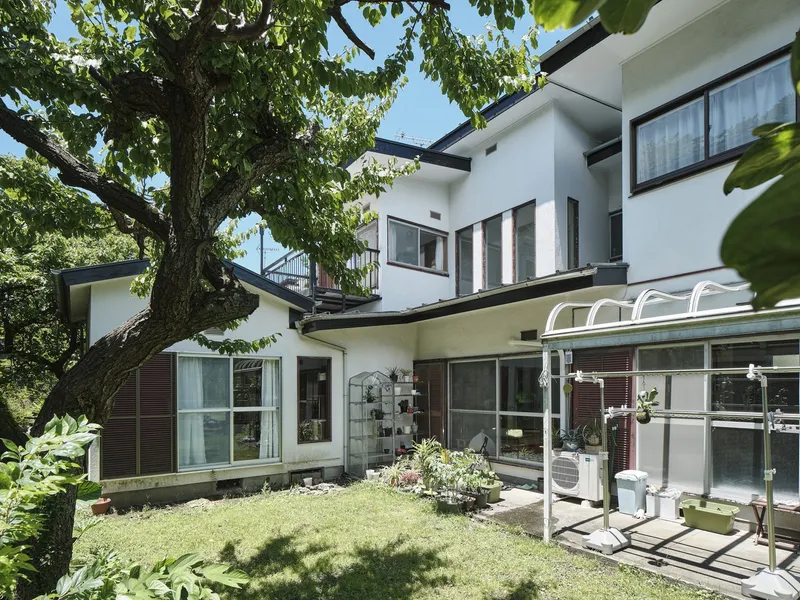
From the garden, Fueda House reads as a modest white-rendered structure beneath mature trees, its curved roof canopy offering a gentle profile against the Kamakura streetscape. The spacious garden is integral to the design: it provides the views that the large ground-floor windows frame, the greenery that filters into the interior through potted plants and trailing vines, and the outdoor space that a pet-owning household needs.
Kamakura's Fueda neighborhood is residential and leafy, and the house sits comfortably within it. The renovation does not announce itself from the outside. The real work is all internal, a rethinking of how a mid-century wooden house can serve a contemporary life.
Plans and Drawings
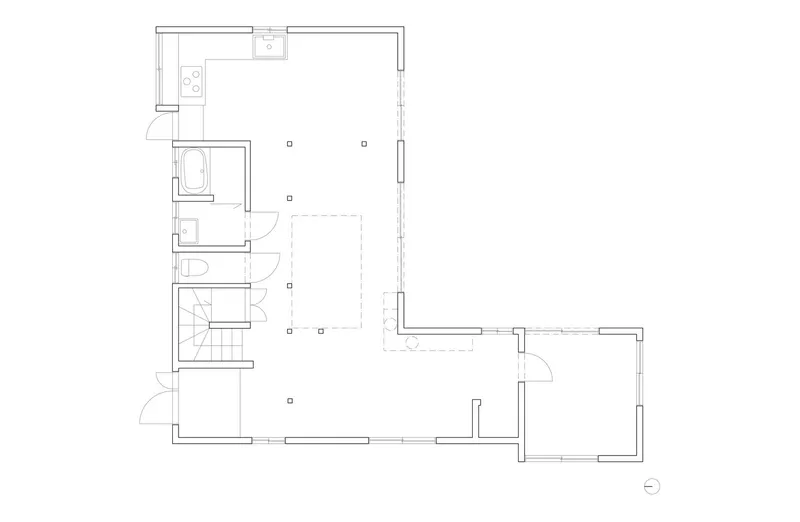
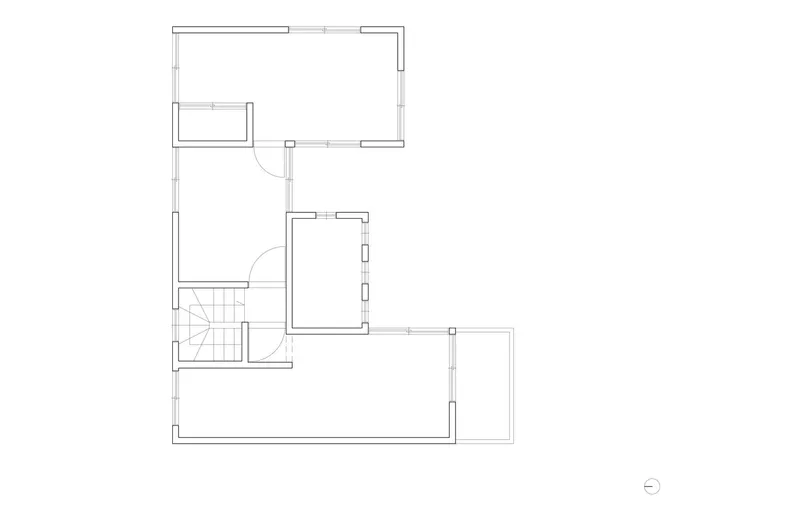
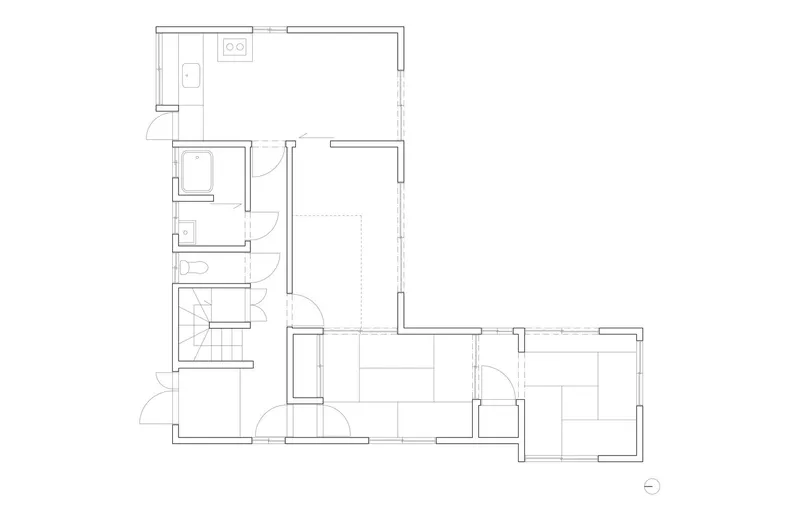
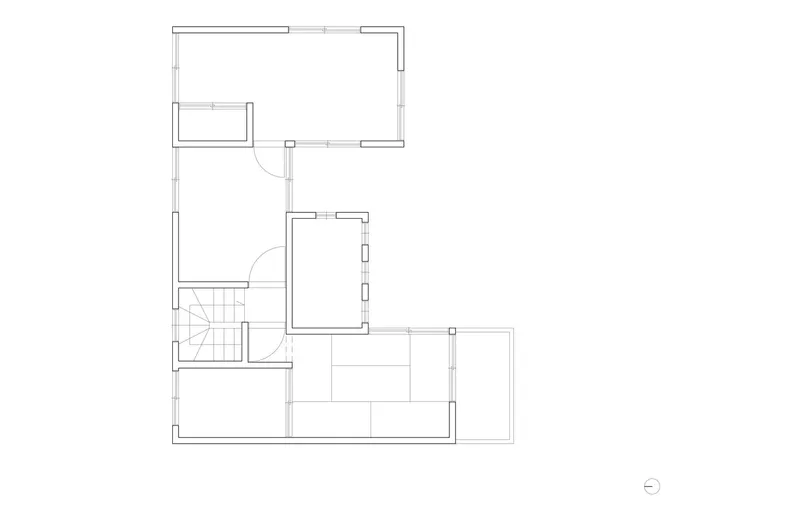
The floor plans reveal the before-and-after logic of the renovation. On the ground floor, the L-shaped kitchen wraps around the stair core, and the open living space reads as a single fluid zone punctuated by columns. The upper-level plans show how redundant partitions were removed to consolidate bedrooms and create a more generous circulation. Comparing the two sets of drawings, the degree of wall removal on both floors is striking: ROOVICE essentially hollowed out the interior while keeping the timber skeleton intact.
Why This Project Matters
Fueda House is a small project, but it addresses a real question that a growing number of households face: how do you design a home that genuinely accommodates animals without turning the architecture into a novelty act? ROOVICE's answer is to treat pet-friendly features as spatial opportunities rather than practical concessions. The catwalks enrich the vertical dimension of the house, the floor material choices are driven by function rather than fashion, and the open plan benefits both human and animal circulation. It is an approach that other renovation practices could learn from.
Beyond the pet-friendly brief, the project is a measured example of how to renovate a mid-century timber house in Japan. The selective exposure of structure, the lightwell as a daylight strategy, and the willingness to leave some surfaces untouched all demonstrate restraint and confidence. In a market that often equates renovation with total replacement, Fueda House argues for something more nuanced: work with what is already there, and only change what needs changing.
Fueda House by ROOVICE (Maoko Sato and Masaki Yamada), Fueda, Kamakura, Japan. 110 sq.m. Completed 2023. Photography by Akira Nakamura.
About the Studio
Share Your Own Work on uni.xyz
If projects like this are the kind of work you want to make, uni.xyz is a place to publish your own, find collaborators, and enter design competitions.




Popular Articles
Popular articles from the community


Lunar Spiral: Space Architecture Shaped by the Mathematics of the Universe
Lunar Spiral reimagines space architecture through Fibonacci geometry, lunar regolith, levitating habitats, and self-sustaining Moon living.

Co-Life: Senior Housing Design That Reconnects Older Adults With the City
Co-Life reimagines senior housing design through healing gardens, shared streets, workshops, and a sustainable community across generations.

The Earth Pod: 3D Printed Homes for Resilient Refugee Communities
The Earth Pod reimagines refugee housing through 3D printed homes made from clay, combining resilience, self-sufficiency, and rapid shelter.

The Ocean Hive: Sustainable Architecture for a Self-Sufficient Civilization at Sea
The Ocean Hive imagines sustainable architecture at sea, where modular habitats, algae, wave power and ocean waste sustain a growing colony.


Similar Reads
You might also enjoy these articles


Hodi-Mandai Geram
Project Function: Preservation and revitalization of the Intangible heritage and socio-spatial identity of the Hodi by Housing, Cultural Memory Center, Sacred Grove, landscape, local tourism economy


Olio Towers: A Mid-Rise for Performers That Fuses Housing, Rehearsal, and Stage
Located blocks from Houston's Theater District, this modular tower stacks living units around a central performance atrium.

Oasis: Modular Green Housing Carved into Dhaka's Urban Fabric
A shortlisted Plugin Housing entry reclaims unauthorized settlements in Dhaka with stepped concrete volumes, green roofs, and ventilation-driven design.

Black Hole: A Floating Megastructure for the Post-Physical Era
Emiliano Mazzarotto envisions a spherical, self-scaling arena where e-sports, digital hotels, and holographic stadiums replace traditional public space.


Explore Architecture Competitions
Discover active competitions in this discipline



Challenge to reimagine the Iron Throne


Photograph architecture without architects


Illustrate the lost glory of Angkor Wat - Render Challenge


Design challenge to reuse E-waste
Comments (0)
Please login or sign up to add comments
No comments yet. Be the first to comment!