

Garden No. 2 House in Limburg: Marble-Clad Garden Pavilion and Pool by Camarim Arquitectos
A marble-clad garden pavilion and pool in Belgium, blending classical bathhouse inspiration with serene landscape integration and refined contemporary minimalism.


A Contemporary Garden Retreat in Genk, Belgium
Garden No. 2 in Limburg reimagines a private Belgian garden as a refined architectural retreat, designed by Camarim Arquitectos. Located in Genk, this 327 m² residential garden extension transforms a modest existing cabin into a sculptural marble pavilion surrounded by lush greenery. The project creates a serene outdoor living environment anchored by a new swimming pool and expansive terrace, framing nature as part of the architectural experience.


This project continues the studio’s sensitivity to sustainable craftsmanship, material authenticity, and timeless residential design, echoing a refined European garden culture with contemporary minimalism.


Preserving Character While Enhancing Experience
The clients envisioned a place for summer leisure—a modern garden hideaway paired with a pool. Rather than replacing the existing garden cabin, Camarim Arquitectos retained its rectangular footprint and open-gable roof, preserving the memory of the previous structure while elevating its spatial and material quality.

A mature rhododendron, standing close to the cabin, becomes a natural protagonist in the composition. The elongated pool aligns with a generous terrace, centering views toward the pavilion and garden, creating a calm visual axis across the outdoor landscape.


Monumental Materiality Inspired by Ancient Baths
Drawing inspiration from classical Roman and Ottoman bathhouses, the architects envisioned the cabin, pool, and terrace as a continuous marble environment. This bold decision creates an impression of carved stone architecture set within a forested garden.
“We decided from the outset that the pool should be clad in stone; or rather, that the pool, terrace and cabin, inside and out, should be marble,” note the architects.
Portuguese marble defines the sanctuary-like atmosphere:
- Grey marble lines the interior of the pool, producing blue-green reflections
- White marble covers the terrace, outdoor walls, and interior finishes, refracting natural light and creating sculptural clarity
The stonework, quarried and crafted in Portugal, was installed with precision despite early concerns about adapting construction techniques to Belgium’s climate. Collaboration with the builder of Garden No. 1 – Delgada ensured a seamless execution.
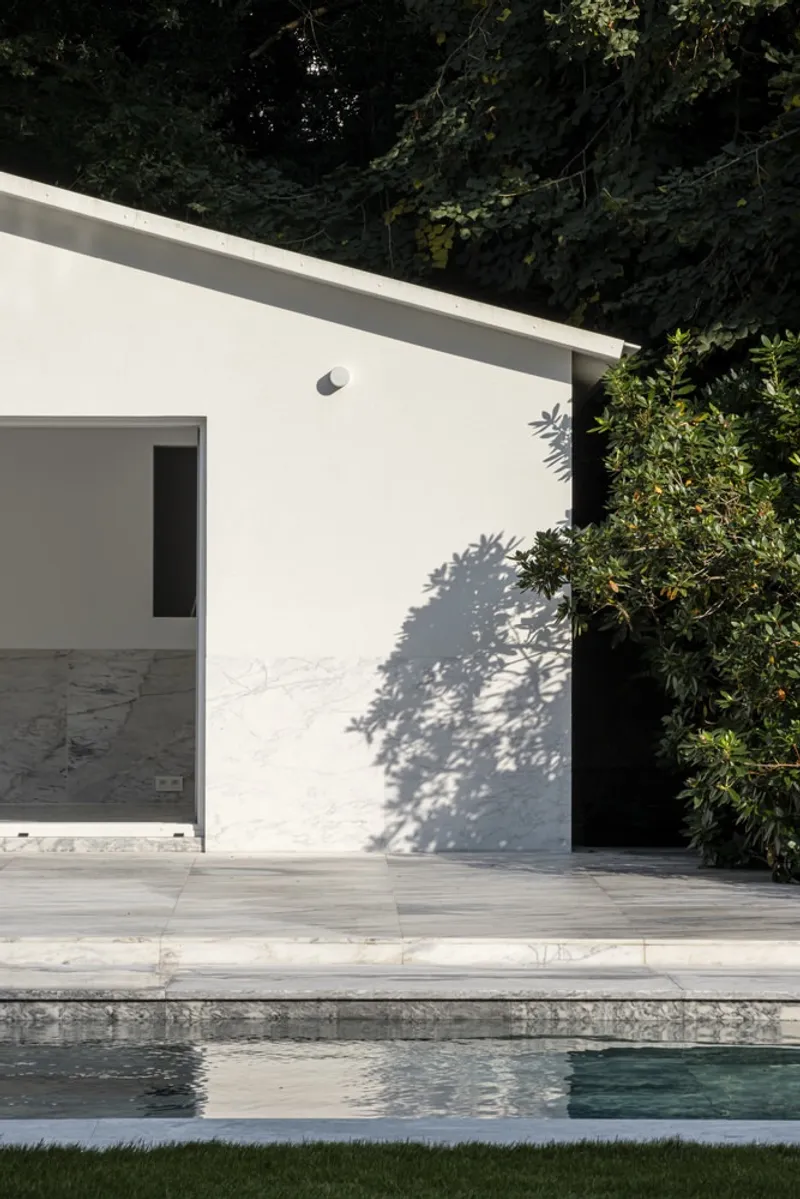
A Quiet Dialogue Between Architecture and Landscape
Set against a deep green garden backdrop, the marble pavilion appears sharp yet unobtrusive, allowing the surrounding planting and mature trees to dominate the sensory experience. The water surface serves as a reflective element, introducing movement and softened light.
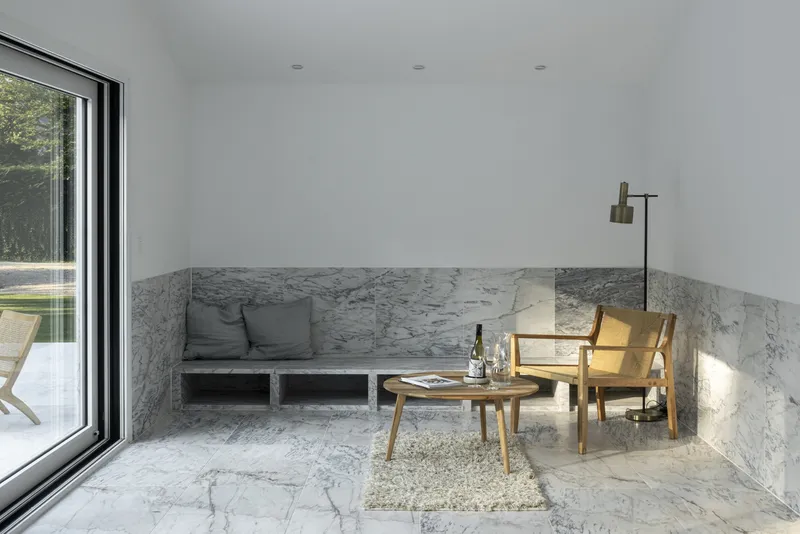
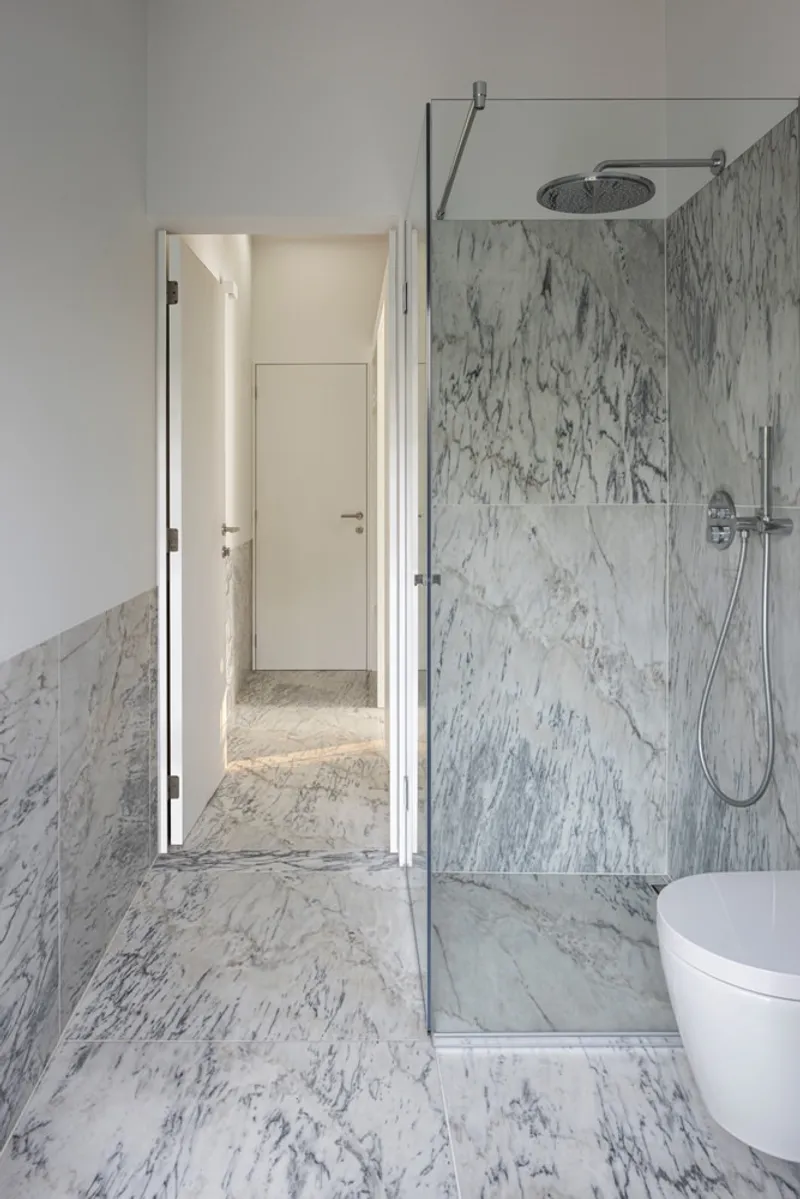
All photographs are works of Tim Van de Velde




Popular Articles
Popular articles from the community


Co-Life: Senior Housing Design That Reconnects Older Adults With the City
Co-Life reimagines senior housing design through healing gardens, shared streets, workshops, and a sustainable community across generations.

Riyadh For All: Intergenerational Urban Design for Active Aging in Rabat
Riyadh For All reimagines urban design in Rabat with intergenerational co-living, adaptive courtyards, and Moroccan cultural exchange today.

Hill & Cross Opera: Sculptural Opera House Architecture Shaped by Tallinn’s Landscape and Identity
Hill & Cross Opera reimagines opera house architecture in Tallinn through its sculptural hill, civic plaza, glass wave and a luminous cross.

The Musturak Paradise: Senior Living Architecture for a Connected Future in Temara, Morocco
The Musturak Paradise reimagines senior living architecture in Temara via private homes, social spaces, culture, community, and shared care.

Similar Reads
You might also enjoy these articles


Hodi-Mandai Geram
Project Function: Preservation and revitalization of the Intangible heritage and socio-spatial identity of the Hodi by Housing, Cultural Memory Center, Sacred Grove, landscape, local tourism economy


Olio Towers: A Mid-Rise for Performers That Fuses Housing, Rehearsal, and Stage
Located blocks from Houston's Theater District, this modular tower stacks living units around a central performance atrium.

Oasis: Modular Green Housing Carved into Dhaka's Urban Fabric
A shortlisted Plugin Housing entry reclaims unauthorized settlements in Dhaka with stepped concrete volumes, green roofs, and ventilation-driven design.

Black Hole: A Floating Megastructure for the Post-Physical Era
Emiliano Mazzarotto envisions a spherical, self-scaling arena where e-sports, digital hotels, and holographic stadiums replace traditional public space.


Explore Garden Competitions
Discover active competitions in this discipline


Challenge to design mud housing for contemporary communities


Challenge to reimagine the Iron Throne


Photograph architecture without architects


Illustrate the lost glory of Angkor Wat - Render Challenge
Comments (0)
Please login or sign up to add comments
No comments yet. Be the first to comment!