
GEMPOT Interior Design by Projject – A Contemporary Curio of Culinary Design and Architecture
GEMPOT by Projject blends culinary art and spatial design, inspired by treasures and Curio boxes, creating layered, light-filled experiences.


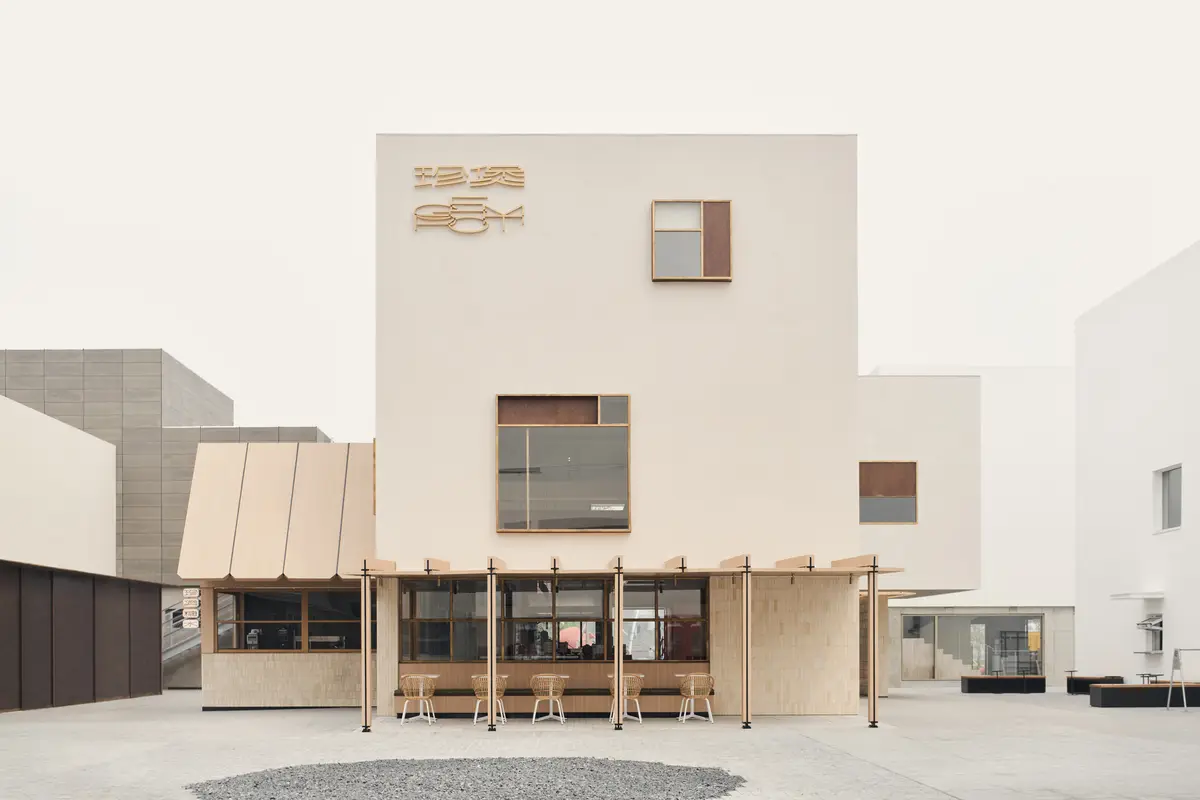
Nestled along the tranquil riverbank of Anaya’s North Shore in Qinhuangdao, GEMPOT Restaurant by Projject redefines interior architecture through a poetic fusion of craftsmanship, cultural symbolism, and modern minimalism. Occupying a 220-square-meter space within a cluster of futuristic white structures, the restaurant stands as a hidden gem—an experience of discovery and delight, much like unearthing a rare treasure within an intricately crafted Curio box.

A Hidden Gem on Anaya’s North Shore
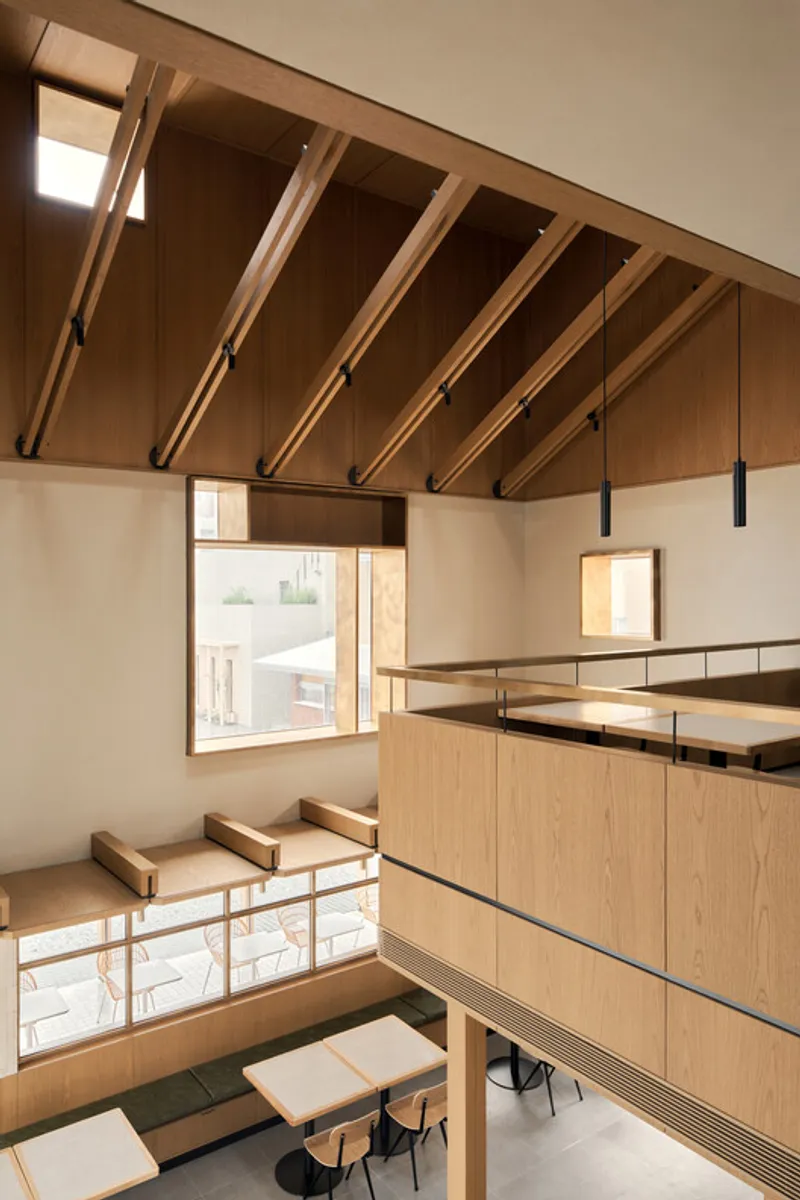
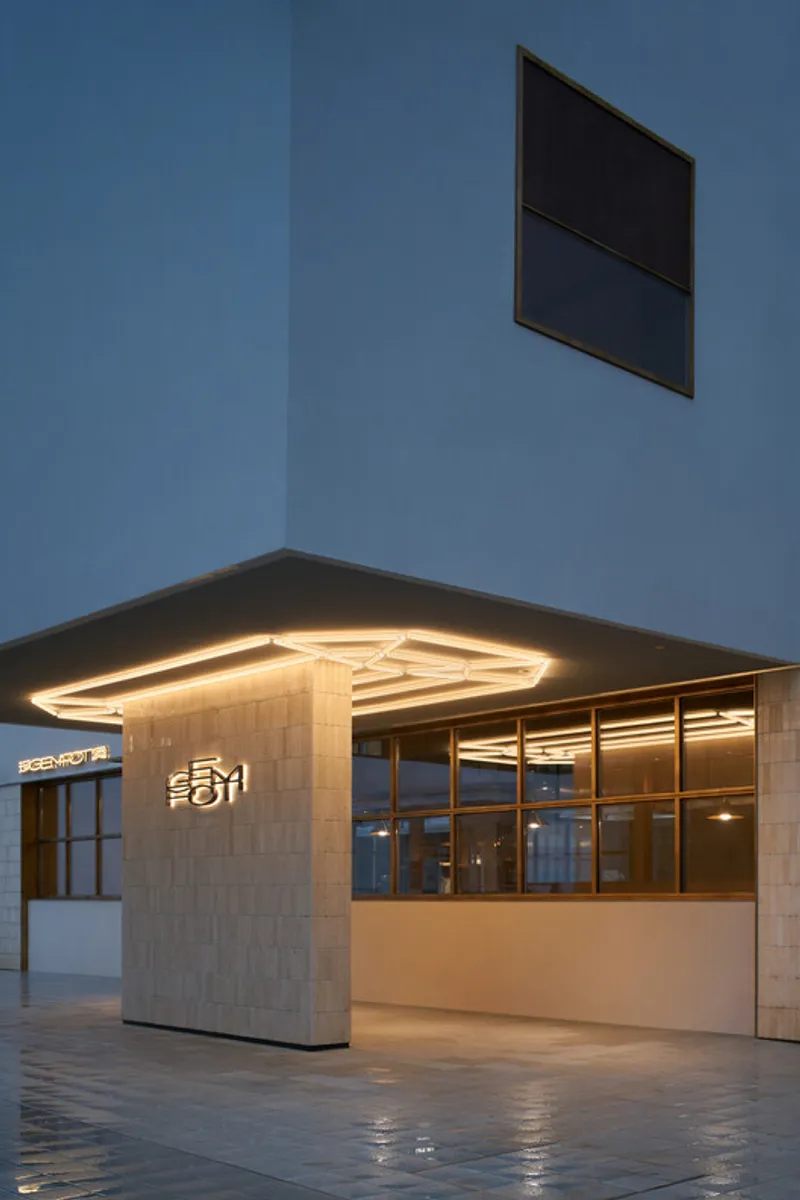
The North Shore community, characterized by its low-rise white geometric architecture, evokes a dreamlike charm. Among these sculptural forms, GEMPOT reveals itself gradually—its soft facade textures, carefully proportioned windows, and subtle play of light creating an atmosphere of mystery and invitation. Visitors wandering the streets encounter glimpses of its intriguing form from different angles, and as they turn a corner, the restaurant unfolds before them like a secret waiting to be discovered.
Design Concept – The Art of Treasure and Taste
The very name GEMPOT draws inspiration from the concept of treasures—rare gems, pearls, and artifacts symbolizing delicacies from both land and sea. The design team at Projject, led by Keer Zhang, translated this metaphor into an immersive spatial journey. By extracting the essence of ancient treasure artifacts—their refined shapes, delicate textures, and layered craftsmanship—the team crafted an interior that feels precious yet natural.
The design language extends beyond ornamentation. The space embodies the process of exploration—opening, revealing, and rediscovering. Every element, from the layout to the lighting, echoes the ritual of uncovering beauty, much like lifting the lid of a Curio box to reveal hidden gems within.
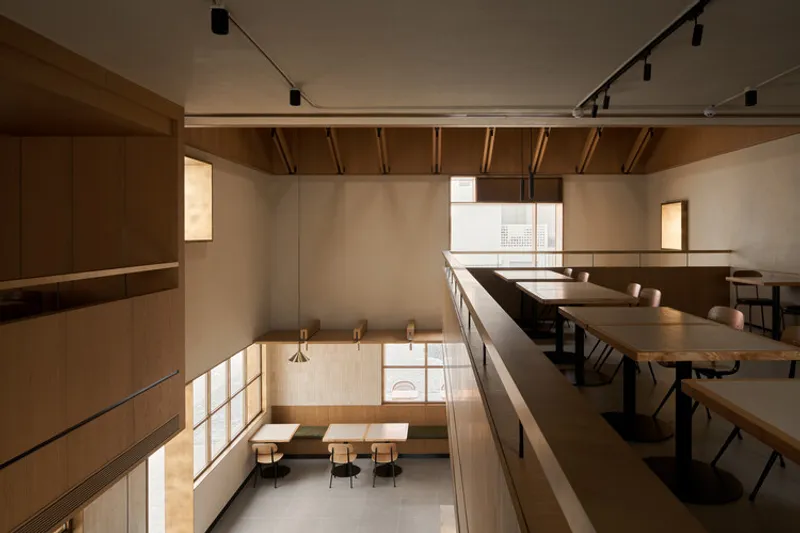
Spatial Narrative – The Curio Box Reimagined
The Curio box, a traditional Chinese object for collecting miniature treasures, served as the project’s conceptual foundation. Within its 28x32 cm frame, countless drawers, sliding panels, and hidden compartments unfold to reveal surprises. GEMPOT translates this miniature wonder into architecture. The restaurant’s spatial rhythm—its interlocking boxes, open voids, and staggered vertical connections—creates a layered environment that invites exploration.
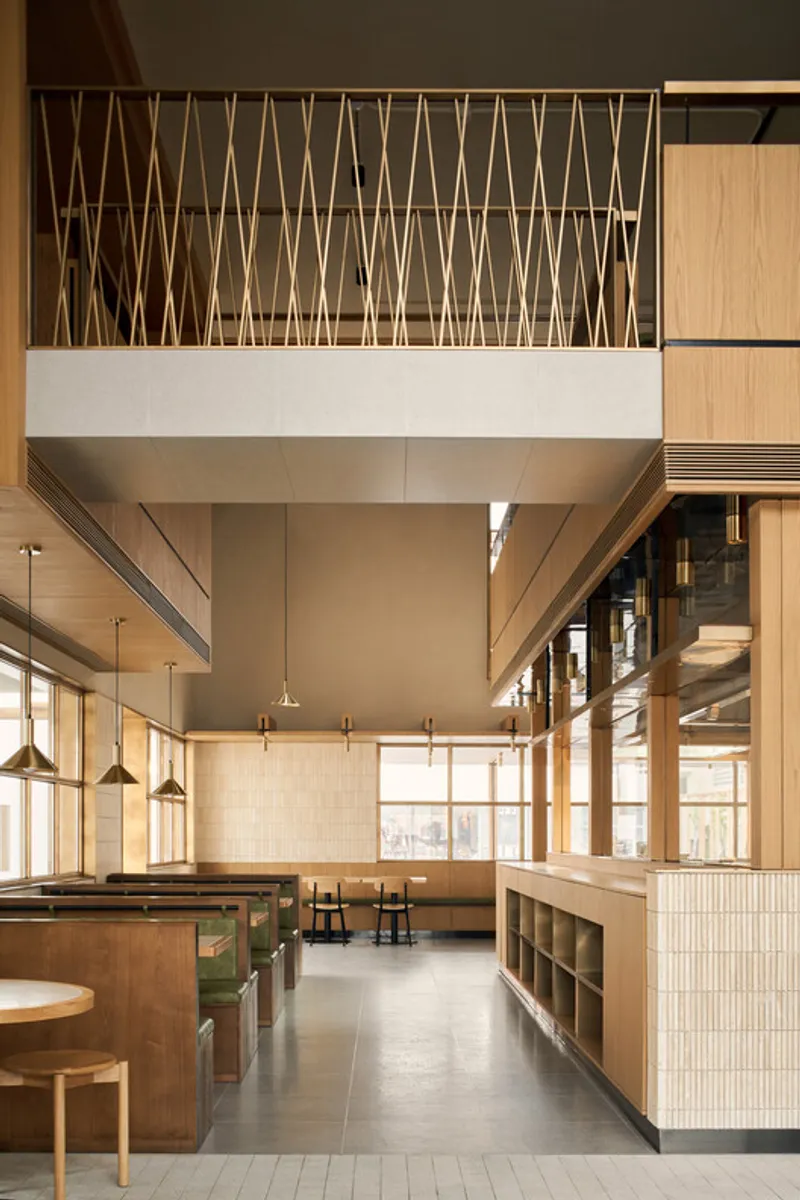
Each corner offers a unique sensory encounter: textured stone, polished wood, and soft light filtering through small apertures. These architectural gestures emulate the drawers, doors, and flaps of a Curio box, designed to guide visitors through sequences of revelation.
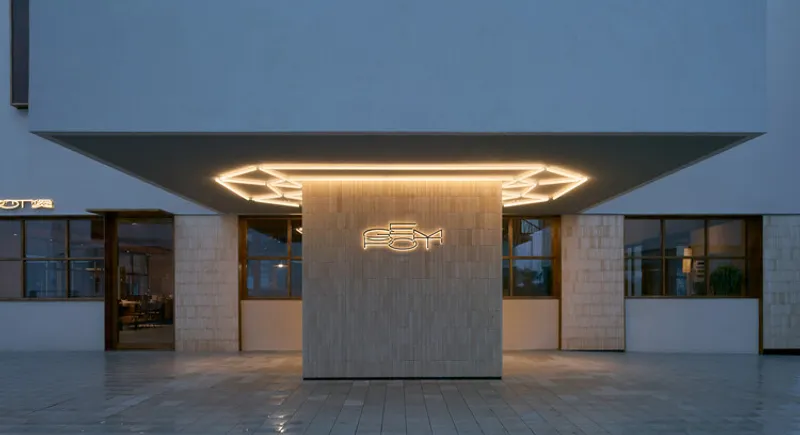
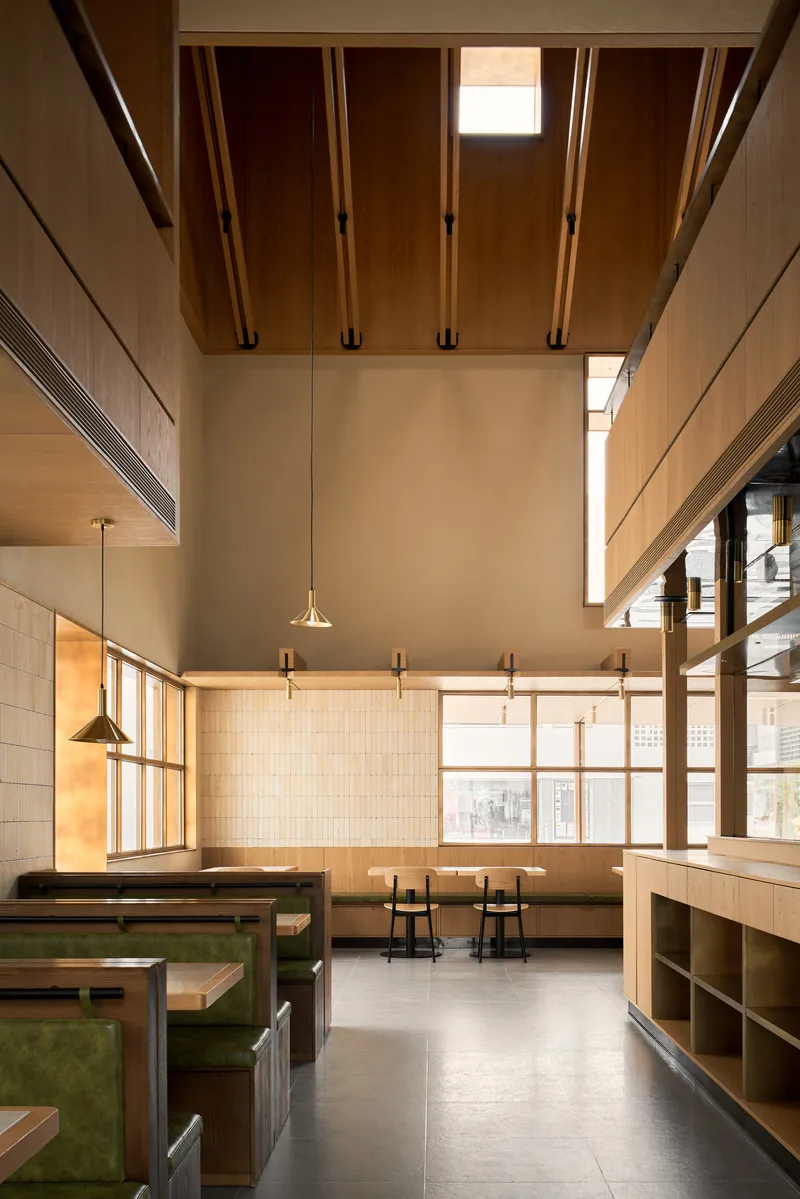
Architectural Continuity and Composition
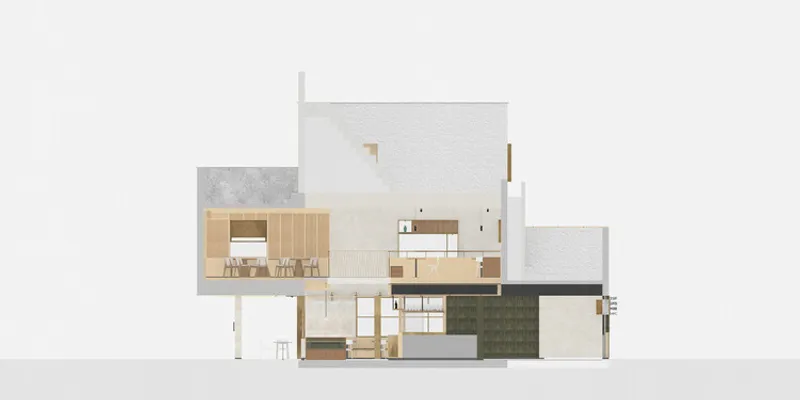
The building housing GEMPOT mirrors the same principle as the Curio box—a stacking of volumes that play with alignment, enclosure, and void. Openings are carefully positioned to create framed views, both inward and outward. Windows act as curated “display cases,” transforming every framed scene into an artwork.
Projject maintained the existing three-story structure, respecting its natural light and dynamic geometry. New interventions—such as the open kitchen, dessert bar, and dining areas—were strategically inserted within the existing framework. The connection between these areas is achieved through sleek corridors, staircases, and sculptural lighting, ensuring fluid circulation while enhancing the visual narrative.
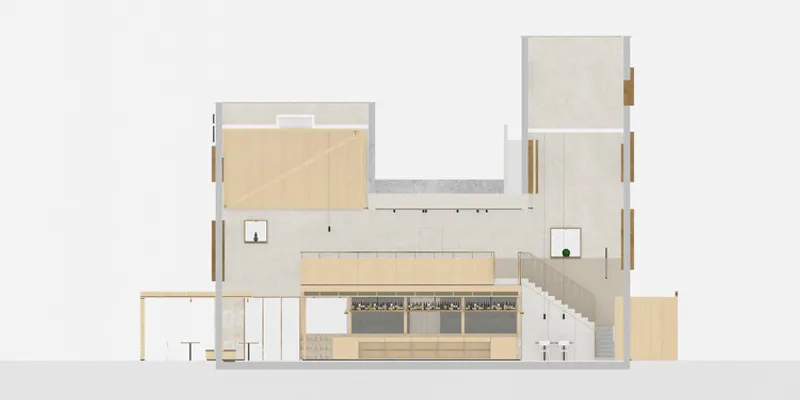
Materiality and Atmosphere
The interior palette reflects the aesthetic of ancient treasures—warm wood, soft stone, and glowing metal accents form a tactile landscape that feels both modern and timeless. Light plays a central role: indirect illumination highlights surfaces with a gem-like luster, while carefully placed apertures allow daylight to cascade across textures, amplifying the sense of depth and discovery.
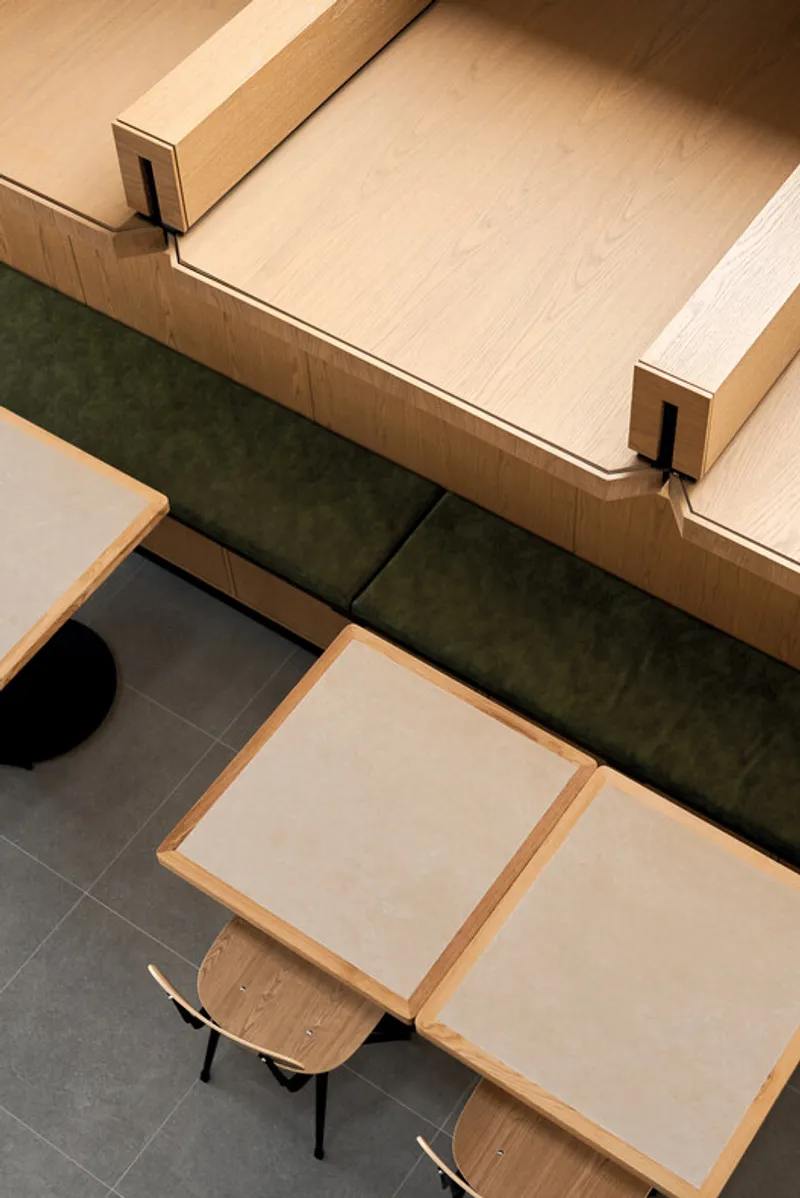
A Journey of Discovery and Design
More than a dining destination, GEMPOT is an architectural experience—a sensorial dialogue between design, craftsmanship, and culinary art. It bridges the boundary between architecture and object, between space and story. Every moment inside the restaurant captures the essence of uncovering a treasure: curiosity, reflection, and delight.
All the photographs are works of Junning Yang


Popular Articles
Popular articles from the community


Opera by the Sea Estonia: Three Shells Dissolving Architecture into Tallinn's Coastline
A winning opera house proposal replaces monumental form with interconnected shells that blur the boundary between building, park and Baltic Sea.
Extended Shell: Retrofitting Kolkata's Balconies as Living Urban Thresholds
A modular retrofit system recovers the social and environmental intelligence of Kolkata's historic verandas for contemporary Park Street residents.
Tsunami Convergenics: Turning Catastrophic Ocean Forces into Underwater Housing Infrastructure
A speculative underwater settlement off the coast of Onagawa, Japan, treats tsunamis and typhoons as energy sources rather than threats.

The Amber Palace Opera: A Geological Fiction Surfaces on Tallinn's Baltic Waterfront
Pierre Brillard reimagines a Baltic legend as a public landscape, opera house, and waterfront promenade rooted in Tallinn's coastal identity.

Similar Reads
You might also enjoy these articles


Hodi-Mandai Geram
Project Function: Preservation and revitalization of the Intangible heritage and socio-spatial identity of the Hodi by Housing, Cultural Memory Center, Sacred Grove, landscape, local tourism economy


Olio Towers: A Mid-Rise for Performers That Fuses Housing, Rehearsal, and Stage
Located blocks from Houston's Theater District, this modular tower stacks living units around a central performance atrium.

Oasis: Modular Green Housing Carved into Dhaka's Urban Fabric
A shortlisted Plugin Housing entry reclaims unauthorized settlements in Dhaka with stepped concrete volumes, green roofs, and ventilation-driven design.

Black Hole: A Floating Megastructure for the Post-Physical Era
Emiliano Mazzarotto envisions a spherical, self-scaling arena where e-sports, digital hotels, and holographic stadiums replace traditional public space.

Explore Spatial & Interior Design Competitions
Discover active competitions in this discipline

Challenge to reimagine the Iron Throne

Photograph architecture without architects

Illustrate the lost glory of Angkor Wat - Render Challenge

Design challenge to reuse E-waste
Comments (0)
Please login or sign up to add comments
No comments yet. Be the first to comment!