
Georges House – A Vertical Transformation of a Brussels Townhouse by hé! architectuur
A narrow Brussels townhouse transformed with light-filled vertical spaces, reclaimed materials, exposed brick, and a sustainable, family-centered design by hé! architectuur.


Located in the historic district of Anderlecht in Brussels, Georges House by hé! architectuur is a sensitive yet bold renovation that reimagines a traditional narrow townhouse for a contemporary family of five. The project, completed in 2023, transforms a once-fragmented home into a light-filled vertical dwelling that balances raw material expression, adaptive reuse, and spatial clarity.
Reclaiming Space in a Dense Urban Fabric
The homeowners—Kaat, an art conservator, and Thomas, who works for VRT—purchased a typical Brussels row house characterized by narrow proportions, outdated extensions, and a constrained garden. Despite its limitations, the property had one exceptional asset: a long visual corridor extending toward the monumental 19th-century former Veterinary School. This framed view, together with generous morning and afternoon sunlight, became the project's guiding element.
The existing structure included a series of small, haphazard outbuildings that blocked ventilation, daylight, and functional organization. The architectural brief focused on reconnecting the living spaces, introducing natural light across the lower floors, and creating a dedicated studio for Kaat. The family’s affinity for raw, unfinished aesthetics and townhouse typologies shaped the design direction, while hé! architectuur introduced fresh material strategies and spatial interventions.
Vertical Reorganization and Spatial Clarity
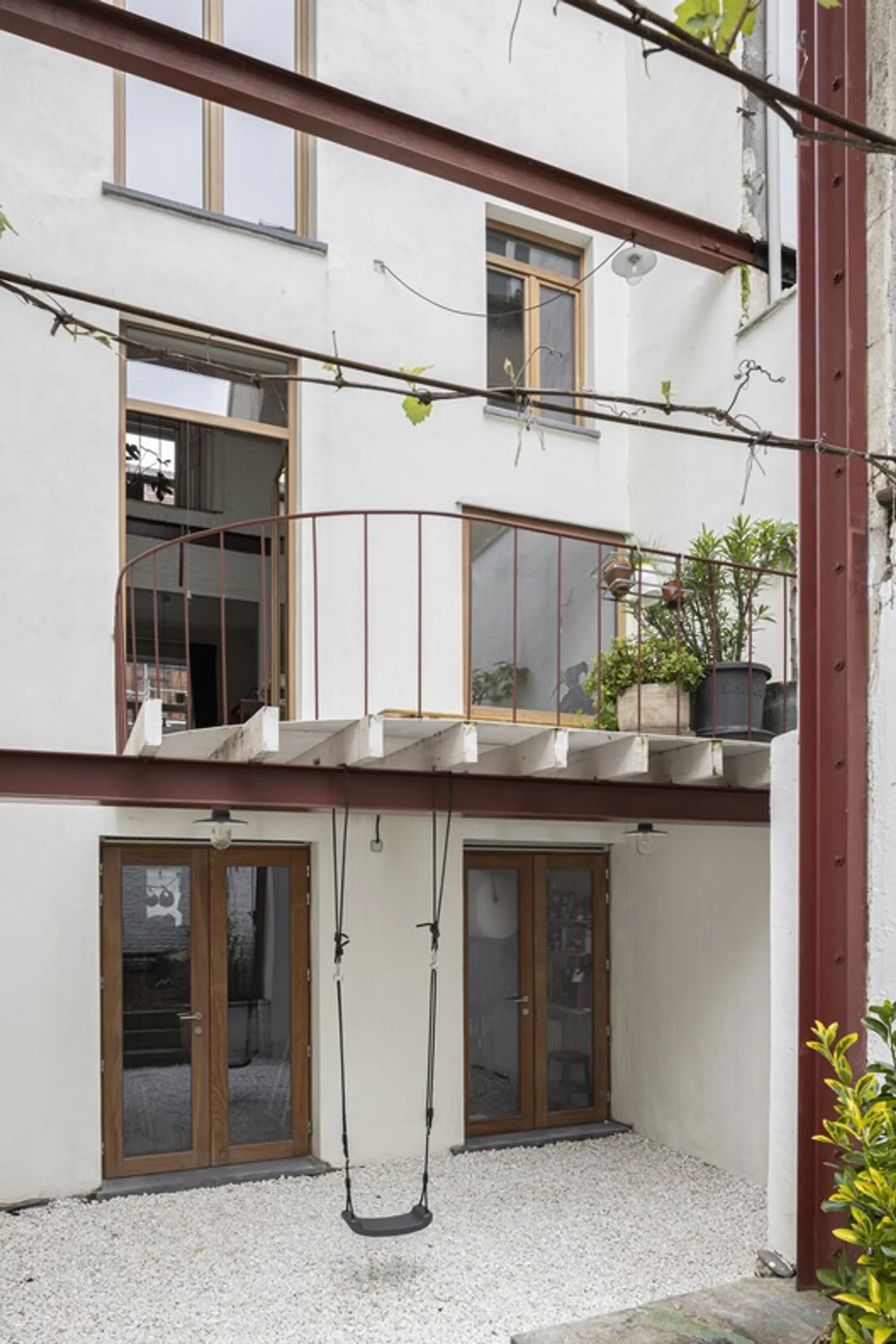
A key decision was the demolition of the outdated annex, which liberated the rear façade and allowed light to permeate deeper into the home. This also made space for a new outdoor terrace and an improved ground-floor garden connection.
Hé! architectuur redistributed day and night functions across five levels to create a more balanced vertical habitat. The bel étage, or elevated ground floor, now houses the open kitchen and dining room—spaces that act as the vibrant heart of the home. The living room was relocated to the second floor for enhanced privacy.
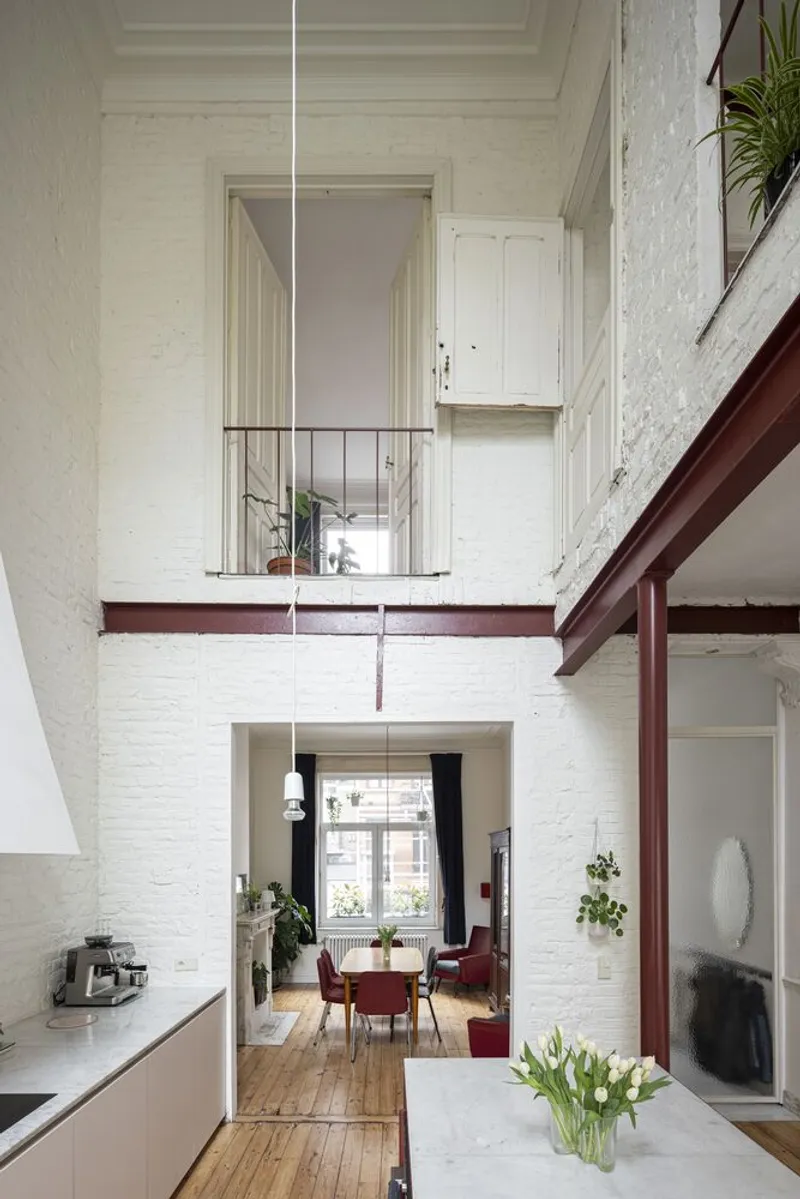
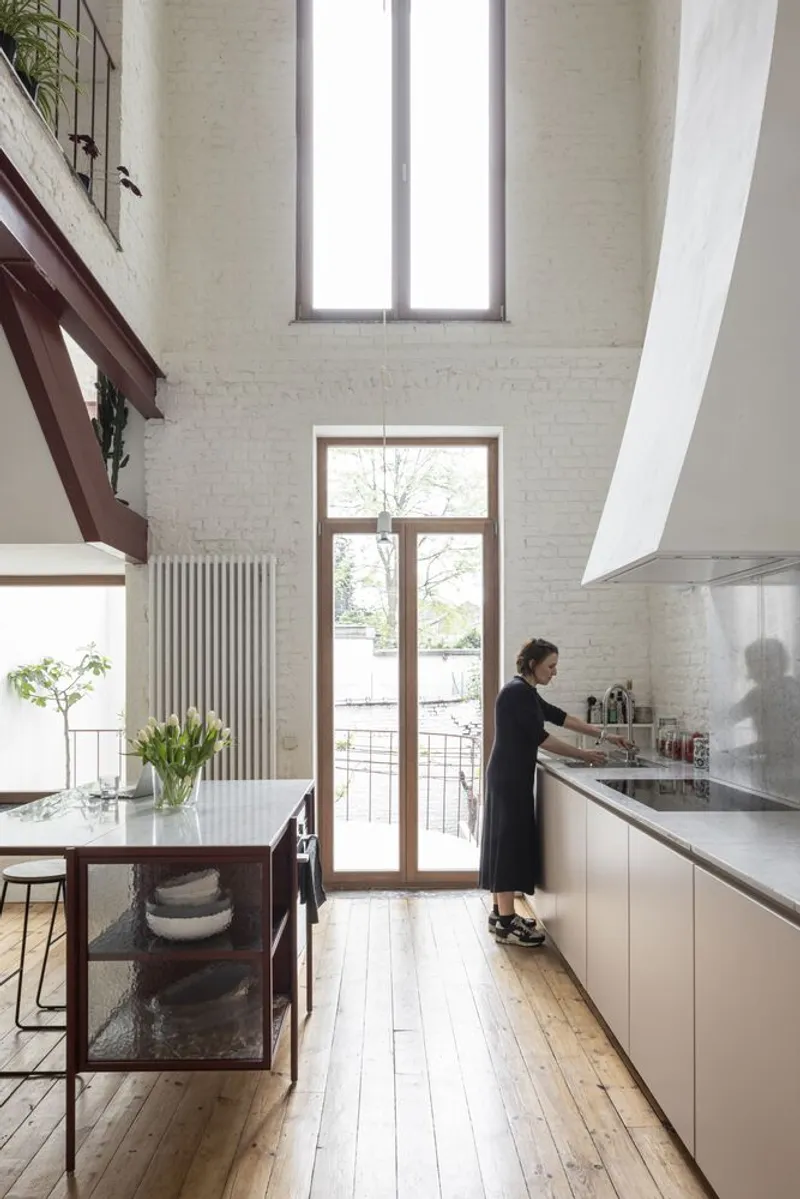
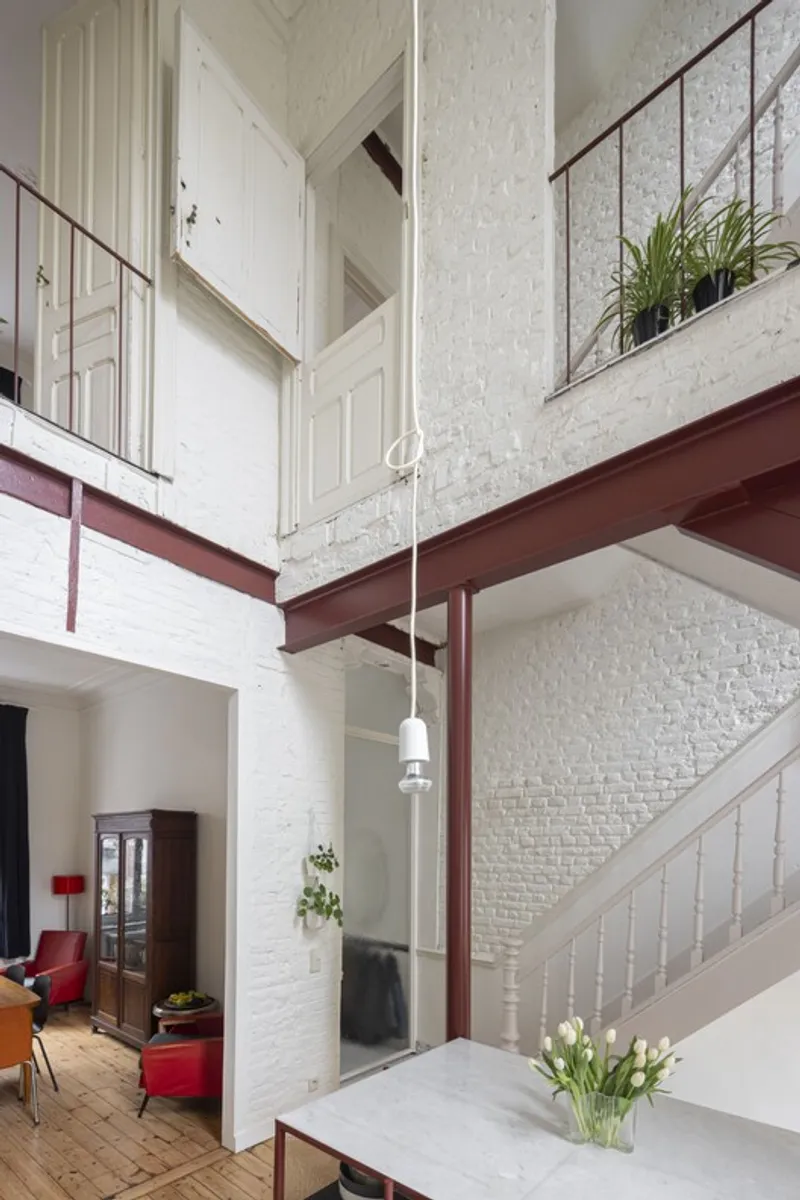
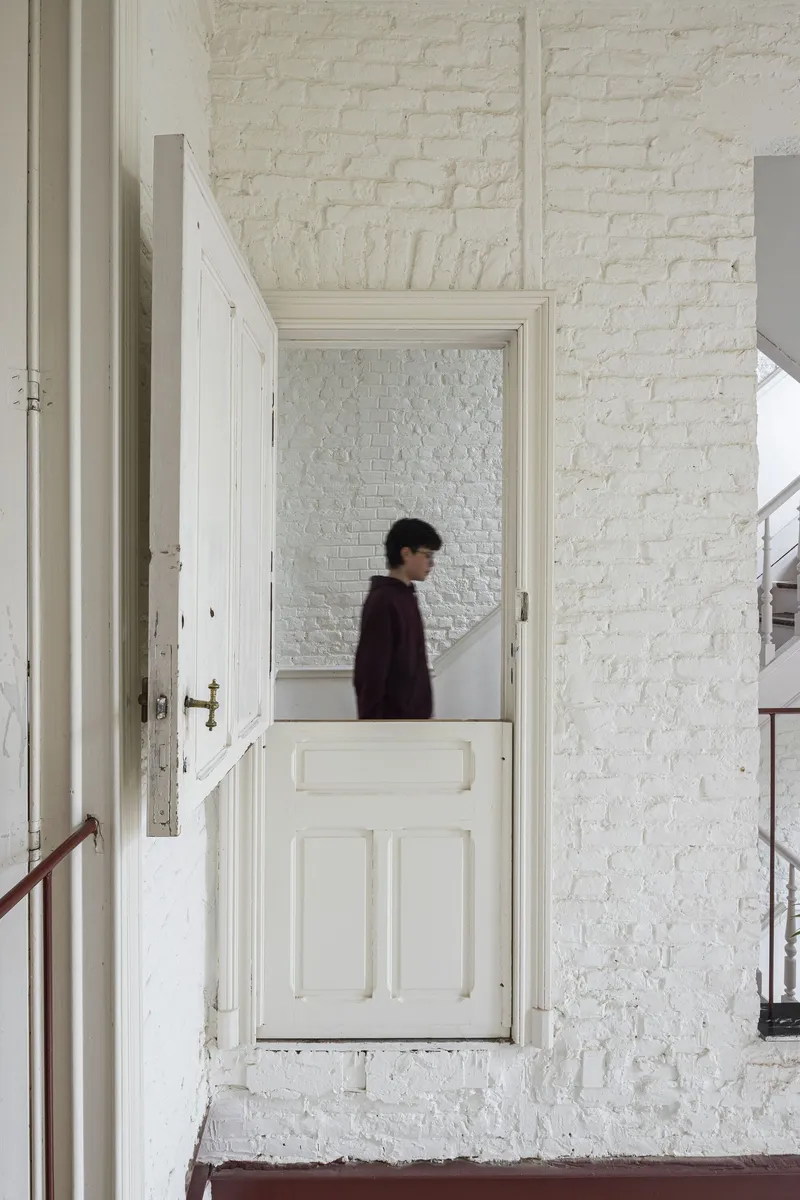
One of the most impactful gestures was the removal of the room above the kitchen, generating a dramatic double-height void. This diagonal visual connection allows evening sunlight from the street-facing façade to illuminate the core of the house, reinforcing spatial continuity between the social levels.
Structural Expression and Material Reuse
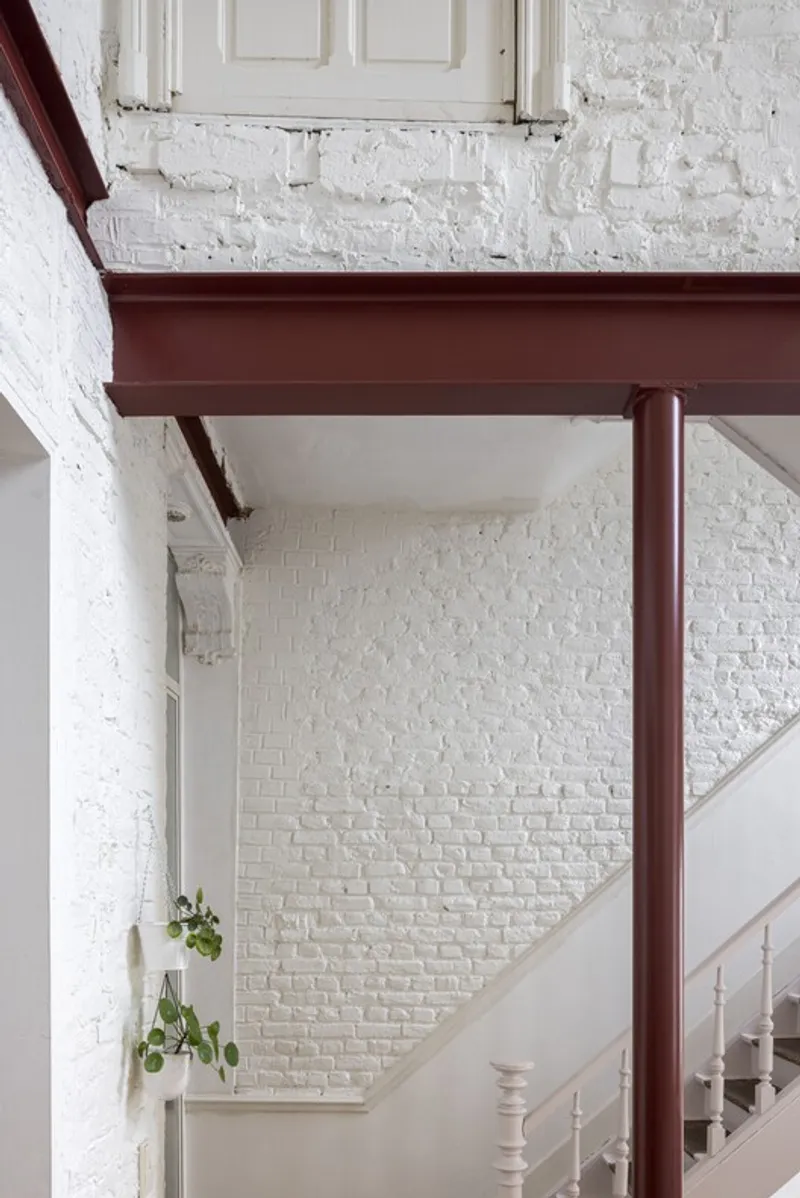
The architects employed a series of strategic structural adjustments to widen the stairwell and improve circulation on the ground floor. Throughout the project, the design embraces a raw material palette where exposed brickwork, limewash finishes, and reclaimed structural elements create an honest architectural language.
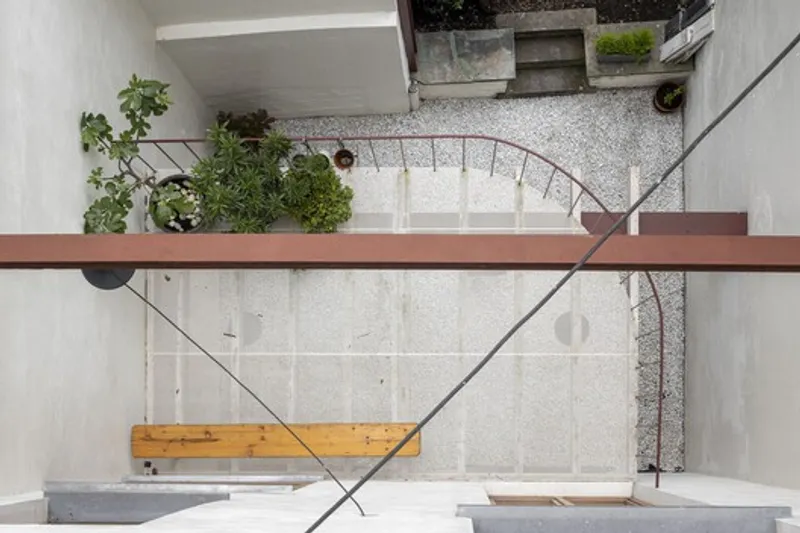
A standout feature is the reuse of transverse steel beams salvaged from the former outbuildings. Rather than discard them, hé! architectuur repurposed the beams to support outdoor lighting, climbing vegetation, and shading devices. This approach directly inspired the construction of the new terrace: a reclaimed steel beam supports wooden joists recovered from the demolished first floor, topped with a perforated steel plate that filters daylight into the garden and studio below.
A Collaborative Reuse Philosophy
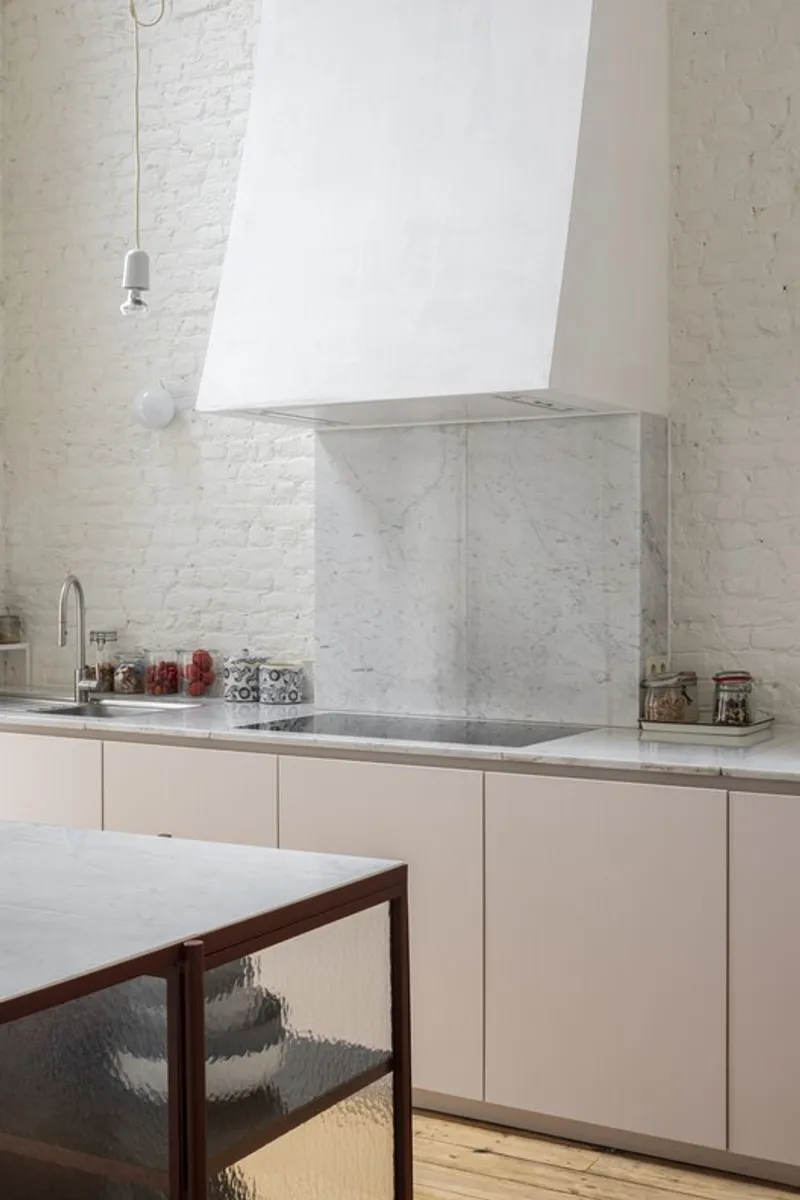
Kaat and Thomas fully embraced the project’s circular design ethos. Through collaboration with RotorDC, they curated and stored marble slabs salvaged from Brussels North Station. These materials now form the refined cladding for the bathroom and the kitchen worktop, adding layers of texture, history, and sustainability.
Inside the double-height kitchen and stairwell, the exposed brickwork—finished with a breathable limewash—accentuates the contrast between the existing structure and the new interventions. This treatment enhances thermal performance while preserving the home’s material authenticity and staying within budget.
A Contemporary Townhouse Rooted in Context and Craft
Georges House stands as a thoughtful example of urban renovation, blending reuse, budget-conscious design, and spatial reorganization. The project restores coherence to a once-fragmented dwelling through a careful interplay of natural light, structural honesty, and family-centered living. With its handcrafted atmosphere and layered materiality, the house embodies a contemporary Brussels townhouse grounded in sustainability, character, and architectural restraint.
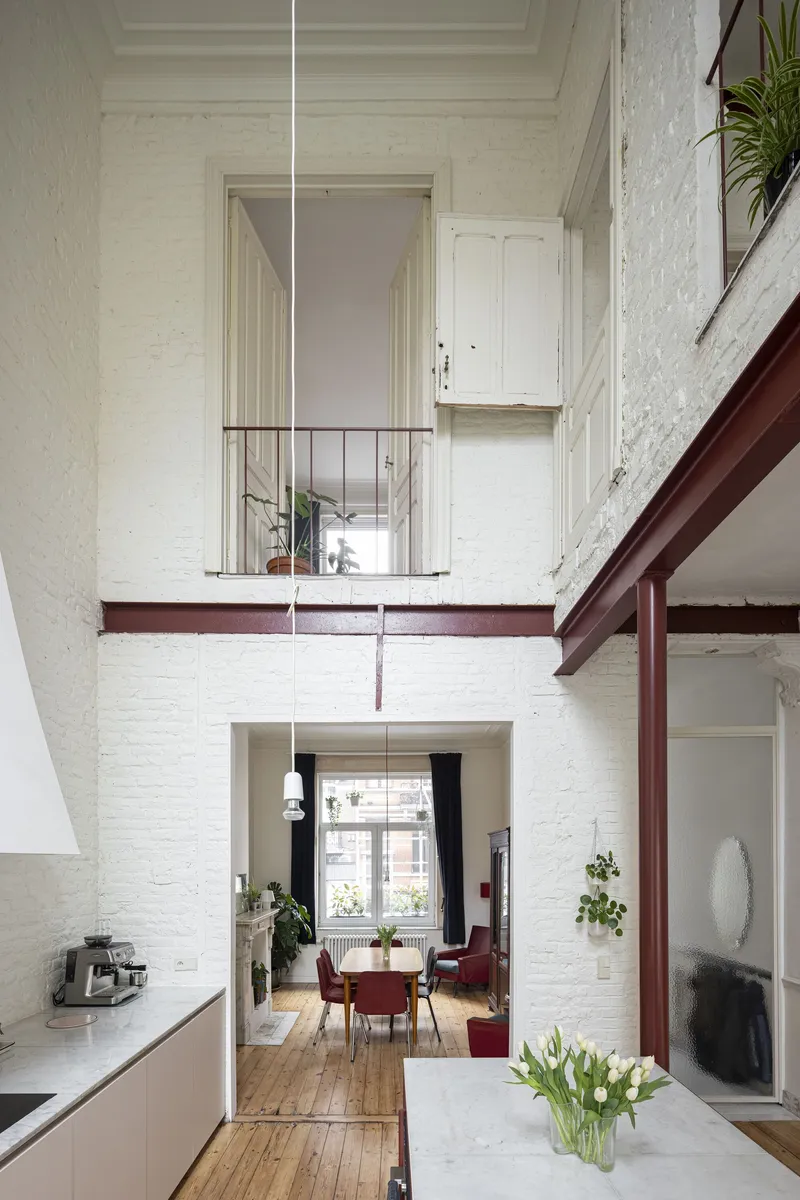
All photographs are works of Tim Van de Velde



Popular Articles
Popular articles from the community


The Musturak Paradise: Senior Living Architecture for a Connected Future in Temara, Morocco
The Musturak Paradise reimagines senior living architecture in Temara via private homes, social spaces, culture, community, and shared care.

Co-Life: Senior Housing Design That Reconnects Older Adults With the City
Co-Life reimagines senior housing design through healing gardens, shared streets, workshops, and a sustainable community across generations.

Lunar Spiral: Space Architecture Shaped by the Mathematics of the Universe
Lunar Spiral reimagines space architecture through Fibonacci geometry, lunar regolith, levitating habitats, and self-sustaining Moon living.

Play: Fragments of Their World
Familiar architecture becomes modular playground design, creating safe spaces where displaced children can learn, connect, imagine and play.

Similar Reads
You might also enjoy these articles


Hodi-Mandai Geram
Project Function: Preservation and revitalization of the Intangible heritage and socio-spatial identity of the Hodi by Housing, Cultural Memory Center, Sacred Grove, landscape, local tourism economy


Olio Towers: A Mid-Rise for Performers That Fuses Housing, Rehearsal, and Stage
Located blocks from Houston's Theater District, this modular tower stacks living units around a central performance atrium.

Oasis: Modular Green Housing Carved into Dhaka's Urban Fabric
A shortlisted Plugin Housing entry reclaims unauthorized settlements in Dhaka with stepped concrete volumes, green roofs, and ventilation-driven design.

Black Hole: A Floating Megastructure for the Post-Physical Era
Emiliano Mazzarotto envisions a spherical, self-scaling arena where e-sports, digital hotels, and holographic stadiums replace traditional public space.


Explore Geurst & Schulze Architecten Competitions
Discover active competitions in this discipline



Challenge to reimagine the Iron Throne


Photograph architecture without architects


Illustrate the lost glory of Angkor Wat - Render Challenge


Design challenge to reuse E-waste
Comments (0)
Please login or sign up to add comments
No comments yet. Be the first to comment!