

'Giant' restaurant: Reimagine a restaurant themed on Jack and the Beanstalk story
Result Story - 'Jack and the giant hotel' - Hospitality building competition


While walking down the streets, we are overwhelmed by the aromas emanating from the gastronomic establishments we pass through. Be it the cafes, lounges, or restaurants, we can see people celebrating, and enjoying social activities.
The restaurant industry has evolved into one of the most important industries in urban landscapes. Globalization and urbanization have been the forces that have led to its popularity. Restaurants have always been more than a place that serves food and drinks, they were social centers of cities.
Restaurants, in the contemporary era, have far more reaching effects than their social features. This industry is capable of shaping the city, its culture, and the overall economy. Vibrant city streets with restaurants make good neighborhoods.
Today, these forms of restaurants have been experimenting with the foods and ambiances of their joints, creating innumerable possibilities for an immersive dining experience. Technology has enabled us to customize the user experience, bringing theme-based establishments into the market.
‘Jack and the Beanstalk’ is a well-known fairytale, originated in Britain. It is a story of Jack, and how he discovers the land of a ‘Giant’ in the sky, that is reached by stalks from magic beans. As Jack moves through the giant’s world, we see how he sees and experiences things in a new manner.
Giants are common ‘otherworldly’ creatures of British folklore, believed to be human ancestors. Although a myth, it is exciting to envision how the world, our cities, would look like if we existed with the Giants. This idea is similar to the concept of the worm's eye view.
When we view things with our eye level on the ground (like a worm), we see the world from a three-point perspective. Every object looks mighty and structures look endless. With the change in scale, our understanding of elements will change as we start viewing them from the bottom up. Our way of perceiving and experiencing the world and its elements will transform drastically.
Can you imagine a scenario where Jack climbs to the top of the giant beanstalk and finds a restaurant there, what would it look like to him?
Brief: The challenge was to design a ‘Giant’ restaurant, based on the story of ‘Jack and the Beanstalk’, where everything is gigantic, compared to the human scale.
This challenge was to play on perception. Using the right tools, the scale of elements can be altered with a skew vision and the image they create. The idea is for visitors to experience navigation and eating in a colossal environment, where all sense of privacy and security may feel lost.
One of the major aspects of creative projects comes with the usage of space. Taking that as the focal point and distorting it, we can create a space where the size is disproportionate to the living elements of the place.
With this theme, challenges of breaking normal anthropometry of the space would come up. These projects require an open mind that would handle structural anomalies with feasible solutions, without changing the initial idea. Taking one of those possibilities onto butcher boards, we will be able to analyze the dos and don’ts for the project, without limiting the creative aspects.
The jury for the competition consisted of esteemed designers, professionals, and academicians from around the world. The Lead Jurors for the competitions were as follows:
Reutov Dmitry, Chief Designer, ReutovDesign studio, Russia

Some of the Best of competition projects are as follows:
Winning Project: The Faba Restaurant
By: Natalia Suchy, Ewelina Palka & Monika Marszoł
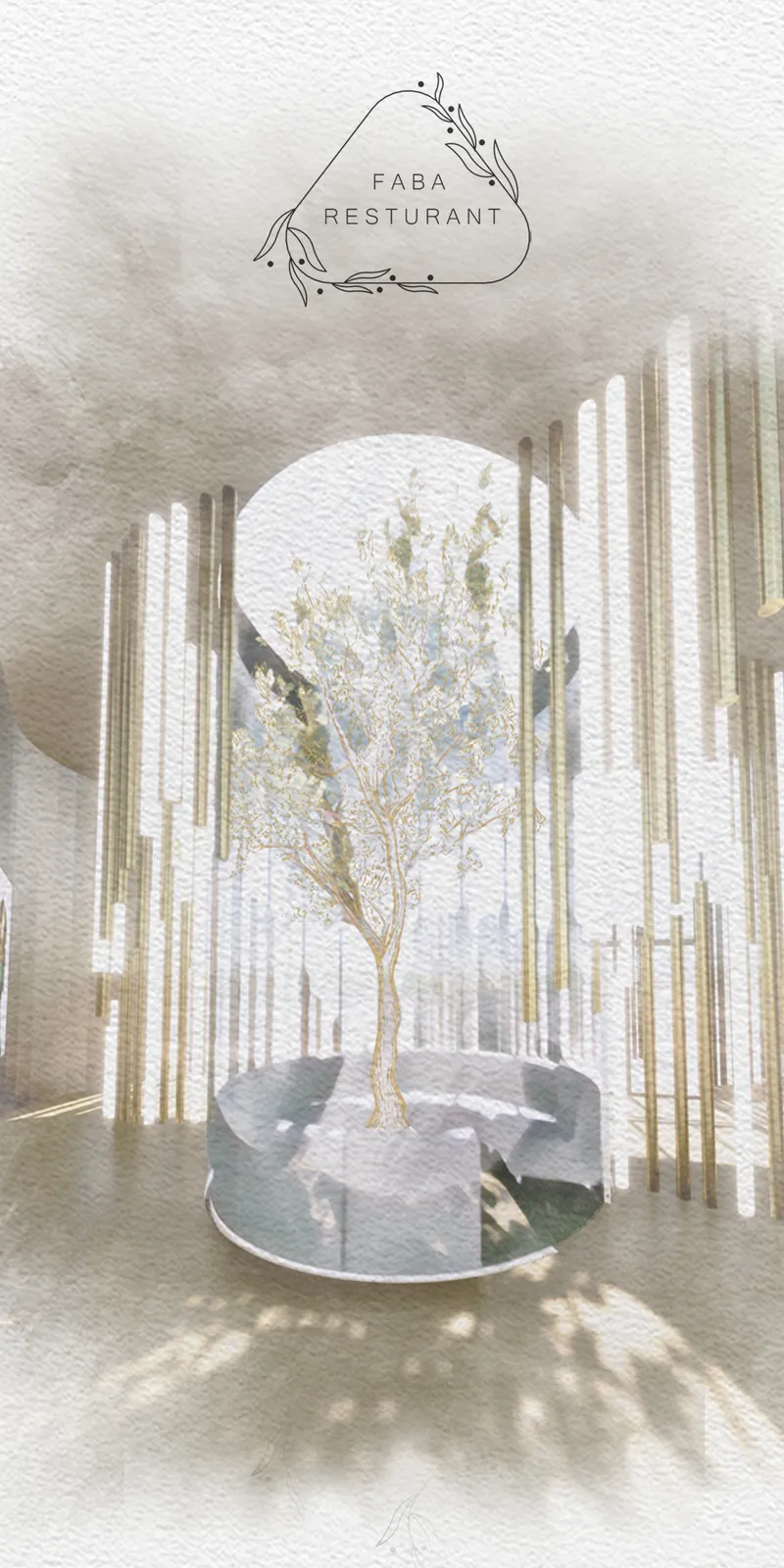
Fig: 1 Cover image
Description: The Faba restaurant was created with accommodations for guests of any age. In the project, we paid special attention to the human-nature relationship and its impact on the human body. The story of Jack and the Magic Beans was an important aspect, as we felt extremely inspired by the young hero's climbing over the plant and the way he experienced the space.
Jury Comments: Very nice concept and appropriate for the users- fun and playful. Nice presentation. The modular systems offer good clustering of spaces, although scalar variations could have provided more functional spaces for various programs.
---------------------
People’s Choice: The Jungle
By: Yoojin Kim & Cathy Dong

Fig: 2 Interior View
Description: 'The Jungle' addresses the giants’ kingdom with the play of the scale of a day-to-day object, and thereby creates an intimidating fantasy world. The gigantic qualities of the building and the bridge are intended to draw people in by activating curiosity and evoking just enough intimidation.
Jury Comment: Very convoluted and unresolved building but it results in new interesting places that would be kids appropriate. Complex and ambitious concept and form that could use more developed drawings and representations.
----------------------
Editor’s Choice: Scaled Up
By: Angy Elderiny & Yara Hesham
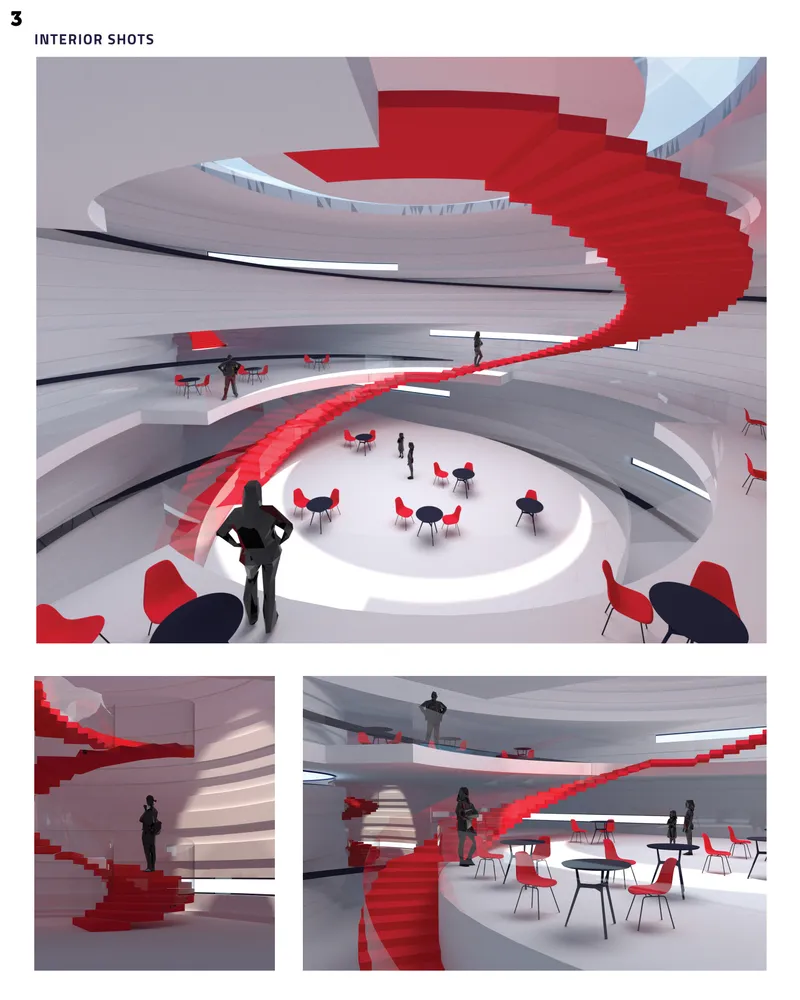
Fig: 3 Interior View
Description: An architectural interpretation of a restaurant inspired by Jack and the Beanstalk. The curiosity of exploring a new world, and the reality of not perfectly fitting into it.
Jury Comment: the interiors we interesting and design with children in mind. Well-developed details but not as well-developed overall concept and spaces.
Follow us on social media: Facebook | Instagram | LinkedIn | Twitter | Youtube
References (3)


Popular Articles
Popular articles from the community


The Ocean Hive: Sustainable Architecture for a Self-Sufficient Civilization at Sea
The Ocean Hive imagines sustainable architecture at sea, where modular habitats, algae, wave power and ocean waste sustain a growing colony.

Co-life: Sustainable Architecture for Age-Friendly Community Living
Co-life reimagines sustainable architecture for seniors through courtyards, rammed earth, shared gardens, and spaces designed for belonging.
EW PARK: Sustainable Architecture Reimagines the Future of Urban Parking
EW PARK reimagines city parking as a modular wooden tower combining automation, solar energy, electric mobility, and adaptable urban design.

The Earth Pod: 3D Printed Homes for Resilient Refugee Communities
The Earth Pod reimagines refugee housing through 3D printed homes made from clay, combining resilience, self-sufficiency, and rapid shelter.
Similar Reads
You might also enjoy these articles

The Musturak Paradise: Senior Living Architecture for a Connected Future in Temara, Morocco
The Musturak Paradise reimagines senior living architecture in Temara via private homes, social spaces, culture, community, and shared care.

The Leaf Center: Cultural Center Architecture for Social Integration in Amsterdam
Cultural center architecture becomes a bridge at The Leaf Center, connecting international students with Amsterdam through art and exchange.

Conexión: Biophilic Design Reimagines High-Rise Living in Hong Kong
Conexión reimagines high-rise living in Hong Kong through biophilic design, green facades, shared spaces, daylight, water and nature within.

Wander to Wonder: Modular Playground Design for Children in Kutupalong Refugee Camp
Wander to Wonder uses modular playground design to create flexible, imaginative play spaces for children in Kutupalong refugee camp.

Comments (0)
Please login or sign up to add comments
No comments yet. Be the first to comment!