

Google unveils an innovative new campus in Silicon Valley designed by BIG and Heatherwick Studio
The futuristic Google Campus boasts sustainable features and cutting-edge design, creating a collaborative hub for tech innovation

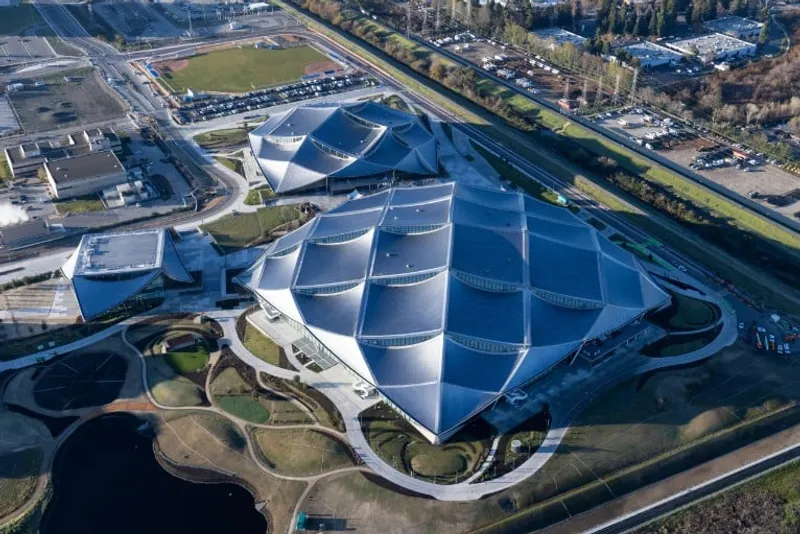
Google's first-ever ground-up campus, BAY VIEW, was designed by BIG - Bjarke Ingels Group and Heatherwick Studio in close collaboration with Google. The campus has a mission to operate on carbon-free energy, 24 hours a day, seven days a week by 2030, and has been created to deliver on Google's ambition to create human-centric, sustainable innovations for the future of its workplace. The campus also aims to provide scalable, replicable solutions for the construction industry and beyond.
Situated on a 42-acre site at the NASA Ames Research Center in Silicon Valley, the Google Bay View Campus comprises three buildings, totalling 1.1 million sq ft, with 20 acres of open space, two workspace buildings, a 1,000-person event centre, and 240 short-term employee accommodation units. The three buildings are constructed as lightweight canopy structures optimized for interior daylight, views, collaboration, experiences, and activities.

The design of the campus is anchored in three themes defined by Google's design brief at the beginning of the project - innovation, nature, and community. The design is focused on flexibility and providing an extraordinary user experience that inspires collaboration and co-creation. The team spaces are located on the upper level, and gathering spaces are situated below, separating focus and collaborative areas while still providing easy access to both. The second-floor design includes variations in floorplates to give teams a designated "neighbourhood" area that is highly flexible to change with their needs.

“Our design of the new Bay View campus is the result of an incredibly collaborative design process. Working with a client as data-driven as Google has led to an architecture where every single decision is informed by hard information and empirical analysis. The result is a campus where the striking dragon-scale solar canopies harvest every photon that hits the buildings; the energy piles store and extract heating and cooling from the ground, and even the naturally beautiful floras are in fact hardworking rootzone gardens that filter and clean the water from the buildings. All in all, a campus where the front of house and back of house, technology and architecture, and form and function have been fused into a new and striking hybrid,” says Bjarke Ingels, Founder and Creative Director, BIG-Bjarke Ingels Group.


Popular Articles
Popular articles from the community

Cloaked Colonization: A Mobile Underwater Habitat That Moves Like a Fish
Micah Abaya's shortlisted EHC Pacific entry reimagines ocean settlement as a dispersed network of self-sustaining architectural organisms.
Temporary Home for Dogs: A Reversed Zoo Rethinks Animal Shelter Architecture
In Bucharest, a sinuous corridor and freed landscape flip the logic of containment, designing a shelter that works to make itself unnecessary.
Tsunami Convergenics: Turning Catastrophic Ocean Forces into Underwater Housing Infrastructure
A speculative underwater settlement off the coast of Onagawa, Japan, treats tsunamis and typhoons as energy sources rather than threats.
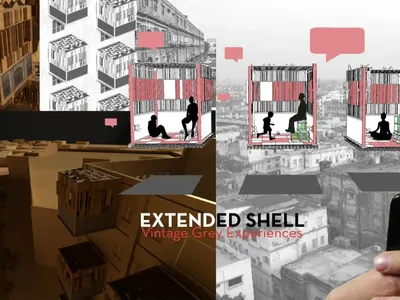
Extended Shell: Retrofitting Kolkata's Balconies as Living Urban Thresholds
A modular retrofit system recovers the social and environmental intelligence of Kolkata's historic verandas for contemporary Park Street residents.

Similar Reads
You might also enjoy these articles
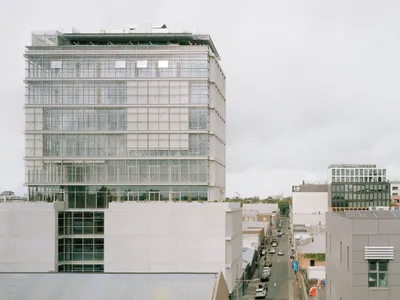
116 Rokeby Building, Collingwood
Sustainable Collingwood office building featuring double-skin façade, natural ventilation, rooftop amenities, and carbon-neutral design focused on wellbeing and longevity.
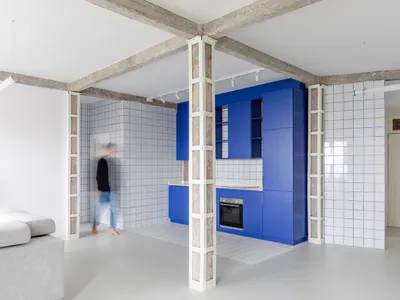
Contemporary Apartment Renovation in Spain: RV House by BIAN Opens Up to the Sea
A minimalist 1930s apartment in Santander is transformed into a flexible, sea-facing home through contemporary Spanish renovation.
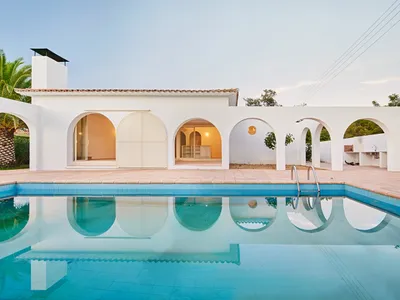
3 Marías House: A Contemporary Mediterranean Courtyard Retreat by Bajet Giramé + Burckhardt
Mediterranean courtyard home blending traditional architecture with modern design, terracotta flooring, flexible interiors, sustainable climate strategies, and garden integration.
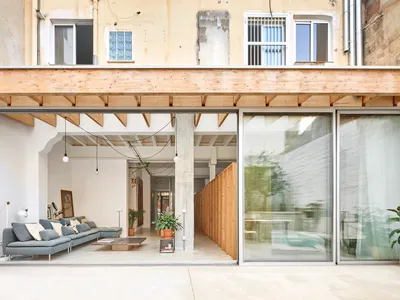
NZ10 Apartment by auba studio: Adaptive Reuse in Palma de Mallorca
Adaptive reuse apartment transforms bakery into light-filled home with patios, privacy layers, and wood interiors enhancing urban living experience.

Explore Educational Building Competitions
Discover active competitions in this discipline


Challenge to design public laboratory

Challenge to reimagine the Iron Throne

Photograph architecture without architects

Illustrate the lost glory of Angkor Wat - Render Challenge
Comments (0)
Please login or sign up to add comments
No comments yet. Be the first to comment!