

Green Seedling Project by CSWADI: A Timber Landmark Rooted in Rural Chengdu
A timber-structured cultural complex in Chengdu integrating rural heritage, sustainable design, and agricultural innovation within a scenic, flood-resilient landscape.


Location: Chengdu, Sichuan, China Architect: CSWADI (China Southwest Architectural Design and Research Institute) Lead Architect: Liu Yi Project Area: 18,482 m² Completion Year: 2022 Photographers: Arch-Exist, Yi Liu, Xiaojun Zhuang
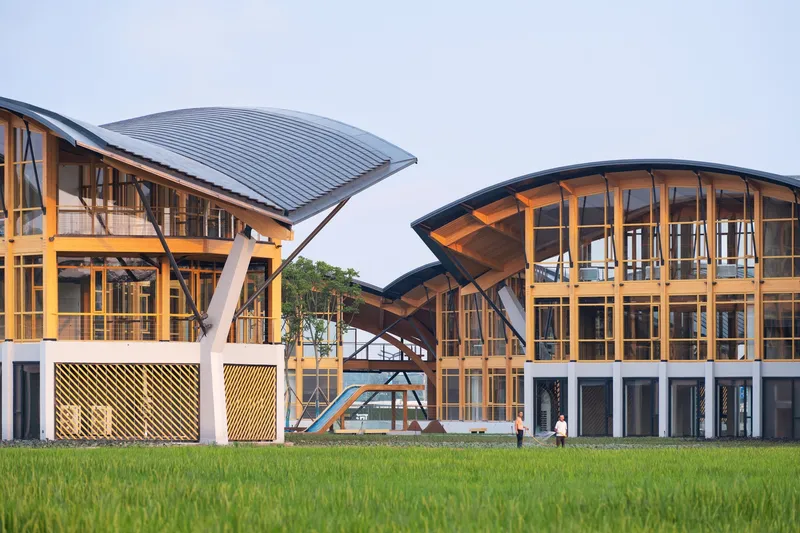
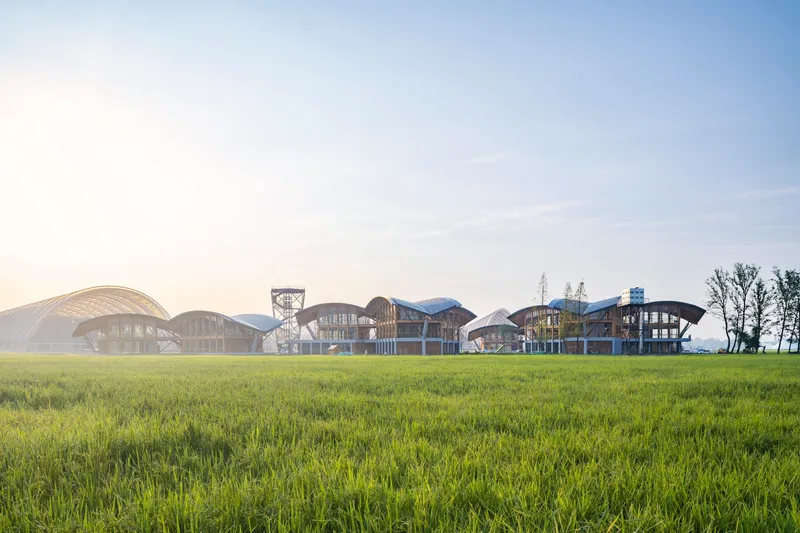
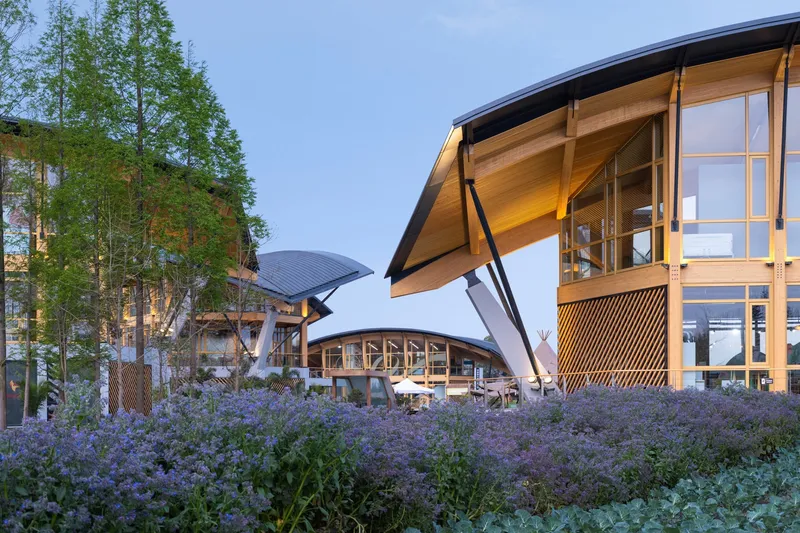
In the heart of Tianfu Agricultural Expo Garden, nestled within the fertile plains of Xingyi Town in Chengdu’s Xinjin District, the Green Seedling Project emerges as a poetic expression of rural revival and architectural innovation. Designed by CSWADI, this ensemble of five timber-structured buildings blends seamlessly with Sichuan’s pastoral landscape, creating a hybrid space for agricultural research, scientific innovation, and cultural exchange.
Architecture Inspired by Linpan Landscapes
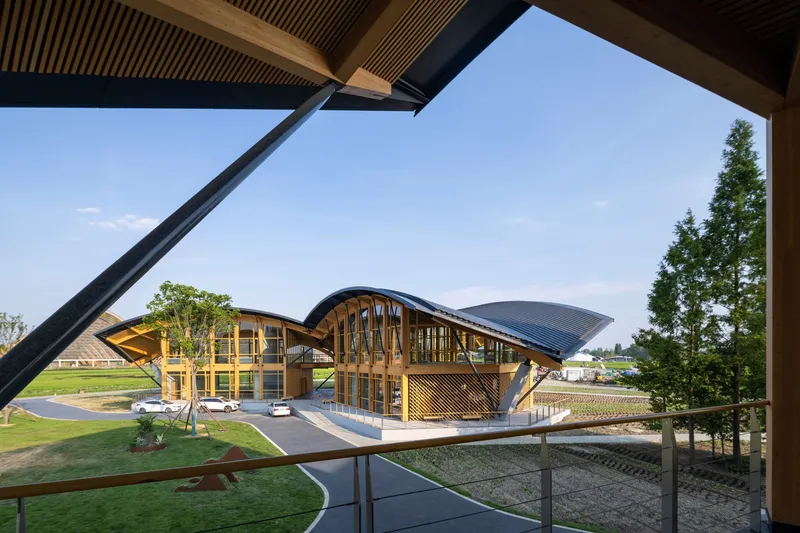
Set within an expansive site once used as a homestead, the project occupies 10,500 square meters at the center of Agricultural Expo Island. Its modular, fragmented layout cleverly responds to the site’s irregular redline boundary. Drawing inspiration from the traditional “Linpan” settlement patterns of western Sichuan, the architects created a dispersed architectural cluster that integrates effortlessly with the surrounding rice paddies, meandering paths, and native trees.
The project restores the rural memory of the land, literally grounding the architecture within the fields. Each structure appears to grow from the earth, emphasizing the deep connection between built form and nature.
Biomimicry and the Clover Form: Architectural Concept
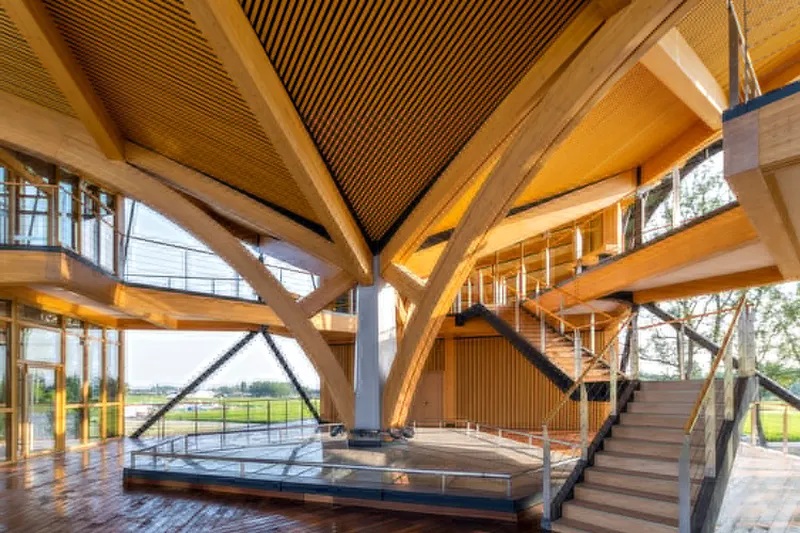
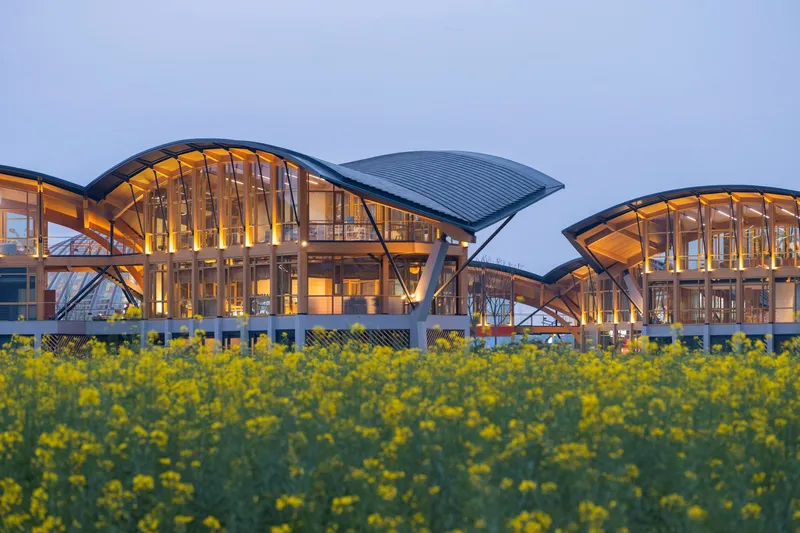
The architectural form reflects the spirit of growth, hence the name “Green Seedling.” Each of the four primary buildings adopts a clover-shaped floor plan, formed by three radial arms extending from a central atrium. These dynamic shapes not only echo plant morphology but also maximize adaptability to wind, sun, and rain. The open, semi-outdoor central halls are sheltered by broad eaves, offering a climate-responsive space that accommodates gatherings, exhibitions, and informal activities.
This biophilic design approach reflects the philosophy that architecture, like nature, should adapt and evolve in harmony with its environment.
Sustainable Material Palette and Structural Dialogue
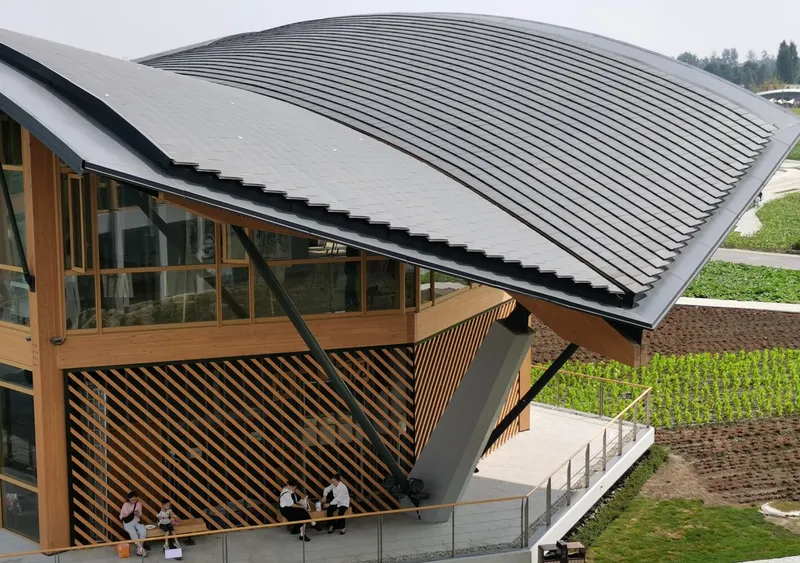
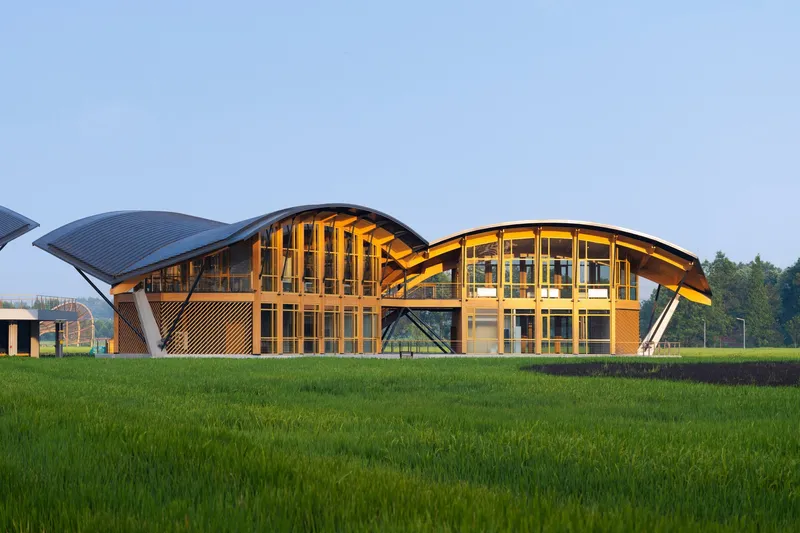
The material strategy reinterprets local vernaculars using modern, industrial-grade materials. Glulam timber beams, dark gray ceramic tiles, and gray-painted walls reference traditional western Sichuan farmhouses while adopting prefabricated, eco-conscious solutions. The glulam arch structure—a standout feature—frames large, column-free interiors with 33-meter spans, ensuring functional flexibility and visual drama.
Each building’s wooden arches are perched atop concrete bases, protecting the structure from the region’s seasonal flooding and damp conditions. This hybrid structural system—concrete at the base, timber above—balances resilience, sustainability, and aesthetic clarity.
Transparency in Structure and Function
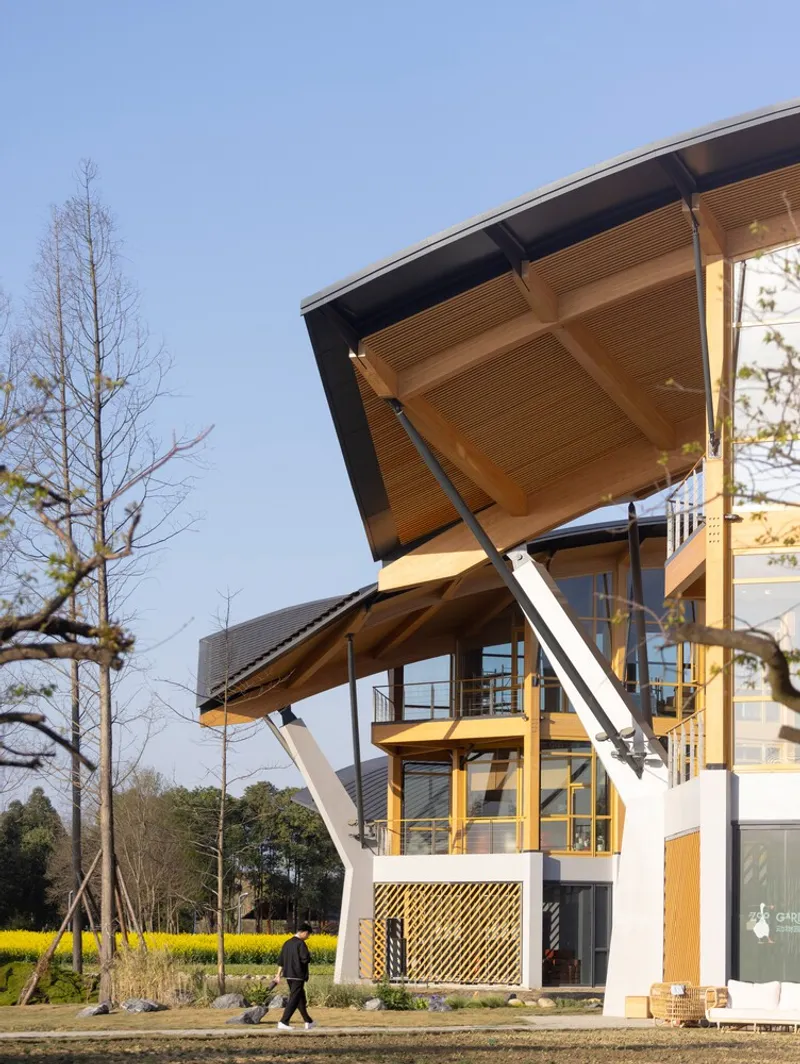
Exposed wooden beams and inclined steel columns support the elegant, wing-like roofs that overhang to create shaded balconies. The design emphasizes “structural transparency”, where each material—wood, concrete, or steel—clearly communicates its functional role.
Rainwater management is seamlessly integrated into the form. The curved V-shaped roofs channel water through hidden downpipes embedded in concrete columns, collecting it into an underground reservoir. This rainwater is reused for irrigation and maintenance, enhancing the project’s environmental performance and contributing to its sustainable water strategy.
An Agricultural Campus for Innovation and Culture
From ground to roof, the Green Seedling Project supports a variety of programs. The three-story buildings house zones for agricultural technology, breeding research, and cultural exhibitions. The large-span interiors and semi-outdoor spaces allow for easy adaptation and future reconfiguration.


Popular Articles
Popular articles from the community

Faces of the Soviet Avant-Garde: Turning Moscow's Street Names into an Open-Air Museum
A network of sculptural installations across a Moscow residential district transforms forgotten architect names into spatial encounters with cultural memor

Cloaked Colonization: A Mobile Underwater Habitat That Moves Like a Fish
Micah Abaya's shortlisted EHC Pacific entry reimagines ocean settlement as a dispersed network of self-sustaining architectural organisms.

The Amber Palace Opera: A Geological Fiction Surfaces on Tallinn's Baltic Waterfront
Pierre Brillard reimagines a Baltic legend as a public landscape, opera house, and waterfront promenade rooted in Tallinn's coastal identity.

Temporary Home for Dogs: A Reversed Zoo Rethinks Animal Shelter Architecture
In Bucharest, a sinuous corridor and freed landscape flip the logic of containment, designing a shelter that works to make itself unnecessary.

Similar Reads
You might also enjoy these articles


Hodi-Mandai Geram
Project Function: Preservation and revitalization of the Intangible heritage and socio-spatial identity of the Hodi by Housing, Cultural Memory Center, Sacred Grove, landscape, local tourism economy


Olio Towers: A Mid-Rise for Performers That Fuses Housing, Rehearsal, and Stage
Located blocks from Houston's Theater District, this modular tower stacks living units around a central performance atrium.

Oasis: Modular Green Housing Carved into Dhaka's Urban Fabric
A shortlisted Plugin Housing entry reclaims unauthorized settlements in Dhaka with stepped concrete volumes, green roofs, and ventilation-driven design.

Black Hole: A Floating Megastructure for the Post-Physical Era
Emiliano Mazzarotto envisions a spherical, self-scaling arena where e-sports, digital hotels, and holographic stadiums replace traditional public space.

Explore Forest Garden Competitions
Discover active competitions in this discipline

Challenge to reimagine the Iron Throne

Photograph architecture without architects

Illustrate the lost glory of Angkor Wat - Render Challenge

Design challenge to reuse E-waste
Comments (0)
Please login or sign up to add comments
No comments yet. Be the first to comment!