

Green store
concept idea

The rethinking of the space for a florist brings us to the reflection that flowers and plants are not just a product, as it resumes the affirmation of a deep human need for connection with nature.
The project’s answer arises from the constraints of bringing the user to an immersive experience close to the environment in which they are cultivated, born and flourish, revealing the real value of what is essential. The result is an architectural space that enhances the natural atmosphere, communicating lightness, breathing, contemplation and simplicity.
When I refer to materials, it’s not just the finishes, but everything that fills the space, that transforms the user’s experience. Green, flowers, and colors are the real protagonists. When a reflective material is applied to the interior of this skin, the interior space is filled only by the natural.
This latent urgency to remember that we are part of nature is manifested in the user’s walk in contact with the earth, which is the true floor of space and we need to be barefoot to connect with it and regenerate ourselves from it.
In this way, architecture is not only made for people, but also for insects, nature, and the landscape.
A natural white skin seems to float over an immense green screen that is structured internally by a thin white metallic mesh, which makes reference to the stems of plants, which, in addition to structural function, function as the plant’s organ that makes the communication between the root and leaves. While the root normally grows towards the earth, in the direction of gravitational force, the stem, on the contrary, grows against the gravitational force. This is part of this natural atmosphere that is created.

Popular Articles
Popular articles from the community

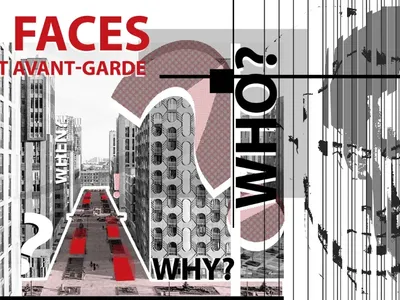
Faces of the Soviet Avant-Garde: Turning Moscow's Street Names into an Open-Air Museum
A network of sculptural installations across a Moscow residential district transforms forgotten architect names into spatial encounters with cultural memor
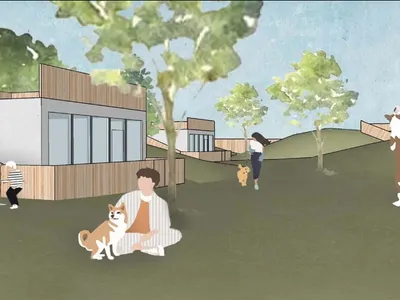
Temporary Home for Dogs: A Reversed Zoo Rethinks Animal Shelter Architecture
In Bucharest, a sinuous corridor and freed landscape flip the logic of containment, designing a shelter that works to make itself unnecessary.

Singing Woman: An Opera House That Performs Before the Curtain Rises
Ovidiu Cristian Pavel's conceptual opera house translates Estonia's choral identity into a sculpted waterfront landmark facing the Baltic Sea.
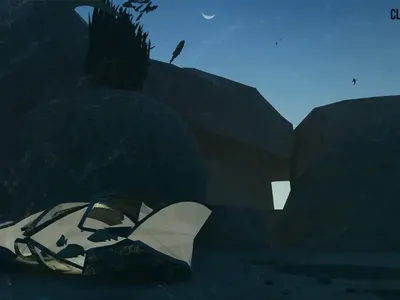
Cloaked Colonization: A Mobile Underwater Habitat That Moves Like a Fish
Micah Abaya's shortlisted EHC Pacific entry reimagines ocean settlement as a dispersed network of self-sustaining architectural organisms.

Similar Reads
You might also enjoy these articles

Shakur's House: Exposed Brick as an Interior Organiser in a 168 m² Mashhad Residence
Brick moves indoors in this Mashhad residence, where masonry walls, glass partitions and teal planes sequence a compact home without closing it off.

Day and Night Park: A Time-Based Urban Newsstand in Beijing
A temporary urban newsstand in Beijing blending travel, light, and reading through poetic colors, compact form, and community-focused design.

Modernist Patio Renovation in El Masnou, Barcelona by Oliver Segura Arquitectura + Cebrià Arquitectura
Modernist patio renovation blending tradition and innovation with a movable pool, leveled floors, and Catalan materials in El Masnou.
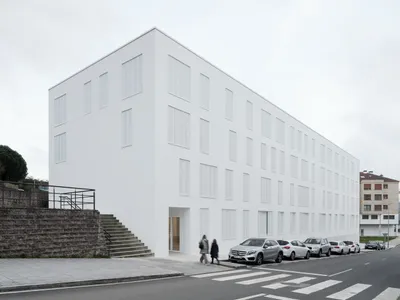
Alto Residencial Coop: Cooperative Housing Development in Santiago de Compostela by Carbajo Barrios Arquitectos
A linear cooperative housing complex blending white volumes and perforated metal façades, enhancing community living, natural light, privacy, and urban integration.
Explore Spatial & Interior Design Competitions
Discover active competitions in this discipline


Challenge to design luxury tourism on rails

VR headsets Storefront design competition

Designing a staircase for a client
Comments (0)
Please login or sign up to add comments
No comments yet. Be the first to comment!