

Guayacán Pavilion by Ambrosi I Etchegaray
Guayacán Pavilion by Ambrosi I Etchegaray is a half-underground nursery in Mexico, blending wabi-sabi design with conservation of endangered Guaiacum trees.


The Guayacán Pavilion, designed by Ambrosi I Etchegaray, is a subtle yet impactful architectural intervention within the Casa Wabi complex. Strategically positioned at the entrance, this pavilion serves as a nursery for the endangered Guaiacum coulteri, an endemic tree species recognized on SEMARNAT’s endangered list. Blending into its forested and garden surroundings, the pavilion’s half-underground design allows it to merge harmoniously with the natural landscape, offering visitors a serene and immersive experience.
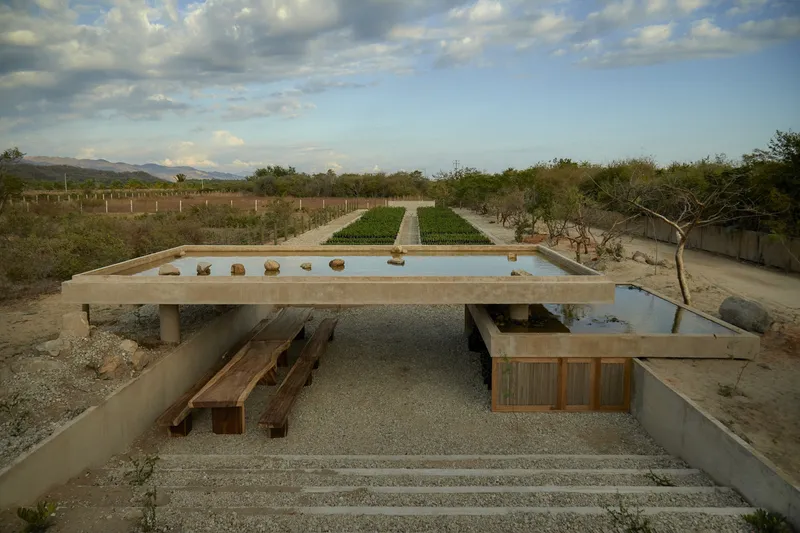

Design Concept
Rooted in the philosophy of wabi-sabi, the pavilion celebrates imperfect beauty, material authenticity, and the passage of time. Constructed with minimal materials, the architecture emphasizes space, light, and natural integration, ensuring that the structure itself does not overshadow the delicate Guayacán trees it protects. Visitors are invited to explore paths below ground level, where they can feel the temperature, humidity, and airflow, forging a direct sensory connection with nature.
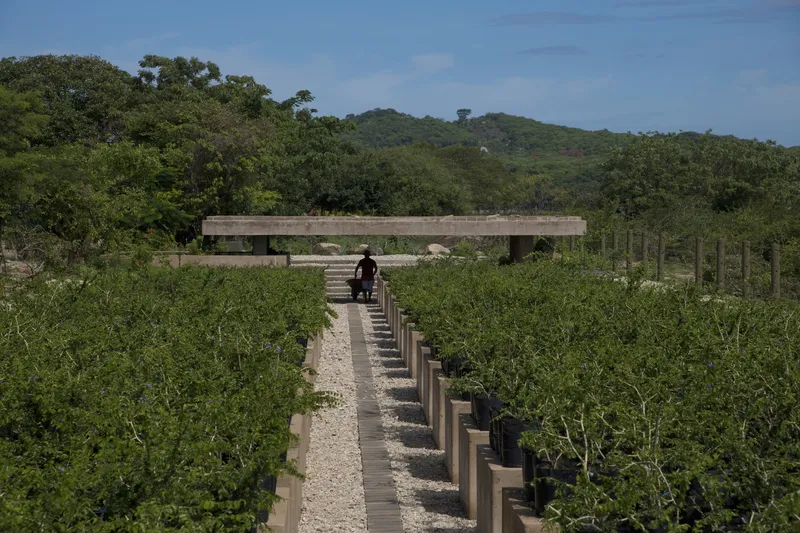
Architectural Experience
The pavilion’s large shaded entrance serves both as a welcoming threshold and a resting space for visitors and staff. Work tables, formed from the excavated ground, create ergonomic surfaces for caretakers, minimizing physical strain while allowing hands-on care of the seedlings. This thoughtful design encourages observation and interaction, offering a multi-sensory experience that connects people to the rhythms of nature, including changes in weather, light, and seasonal cycles.

Sustainability & Purpose
More than just an architectural project, the Guayacán Pavilion is a conservation effort. Developed with support from the Environmental Management Unit (UMA), the pavilion facilitates the care and reproduction of the Guaiacum Sanctum L. Zygophyllaceae, ensuring the species’ survival while respecting the surrounding ecosystem. The design reflects a commitment to ecological ethics, sustainable practices, and integrated landscape architecture.

The Guayacán Pavilion is a testament to contemporary architecture that harmonizes with nature. It transcends conventional design by emphasizing environmental stewardship, material honesty, and immersive spatial experience, making it a model for sustainable, landscape-integrated architecture.



Popular Articles
Popular articles from the community


AL-JANNAH: Sustainable Architecture and Permaculture for Afghan Widows
AL-JANNAH uses sustainable architecture and permaculture to create resilient oasis of housing, learning, work and renewal for Afghan widows.

The Musturak Paradise: Senior Living Architecture for a Connected Future in Temara, Morocco
The Musturak Paradise reimagines senior living architecture in Temara via private homes, social spaces, culture, community, and shared care.

The Earth Pod: 3D Printed Homes for Resilient Refugee Communities
The Earth Pod reimagines refugee housing through 3D printed homes made from clay, combining resilience, self-sufficiency, and rapid shelter.

Co-Life: Senior Housing Design That Reconnects Older Adults With the City
Co-Life reimagines senior housing design through healing gardens, shared streets, workshops, and a sustainable community across generations.


Similar Reads
You might also enjoy these articles


Hodi-Mandai Geram
Project Function: Preservation and revitalization of the Intangible heritage and socio-spatial identity of the Hodi by Housing, Cultural Memory Center, Sacred Grove, landscape, local tourism economy


Olio Towers: A Mid-Rise for Performers That Fuses Housing, Rehearsal, and Stage
Located blocks from Houston's Theater District, this modular tower stacks living units around a central performance atrium.

Oasis: Modular Green Housing Carved into Dhaka's Urban Fabric
A shortlisted Plugin Housing entry reclaims unauthorized settlements in Dhaka with stepped concrete volumes, green roofs, and ventilation-driven design.

Black Hole: A Floating Megastructure for the Post-Physical Era
Emiliano Mazzarotto envisions a spherical, self-scaling arena where e-sports, digital hotels, and holographic stadiums replace traditional public space.


Explore Architecture Competitions
Discover active competitions in this discipline



Challenge to design a portable theatre


Challenge to design a portable music platform


Challenge to design an open learning module for the elderly


Challenge to reimagine the Iron Throne
Comments (0)
Please login or sign up to add comments
No comments yet. Be the first to comment!