
Hackett Gardens House: A Masterpiece of Sustainable Residential Architecture in Australia
An in-depth look at Hackett Gardens House, a standout example of sustainable residential architecture in Australia by Ben Walker Architects.


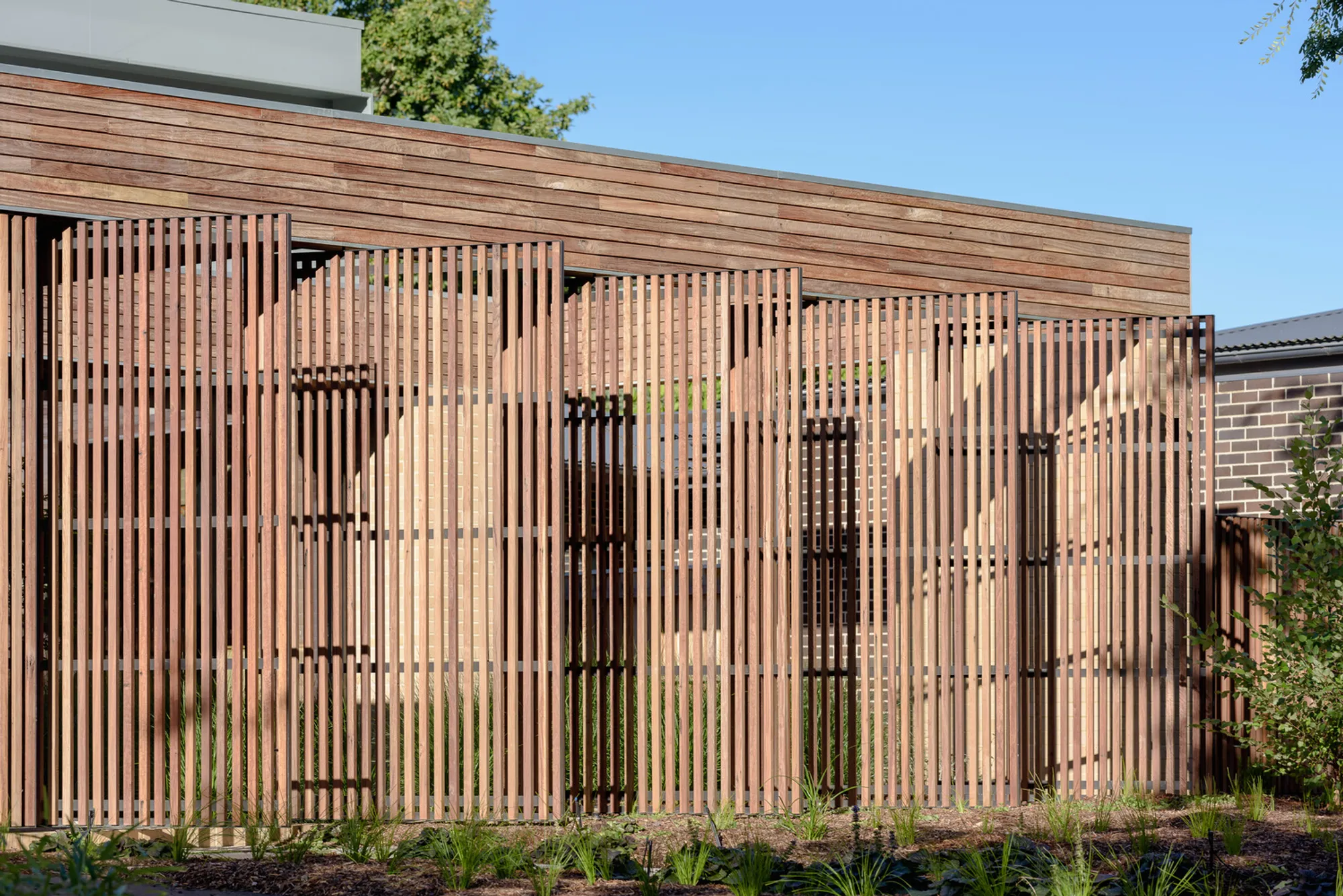
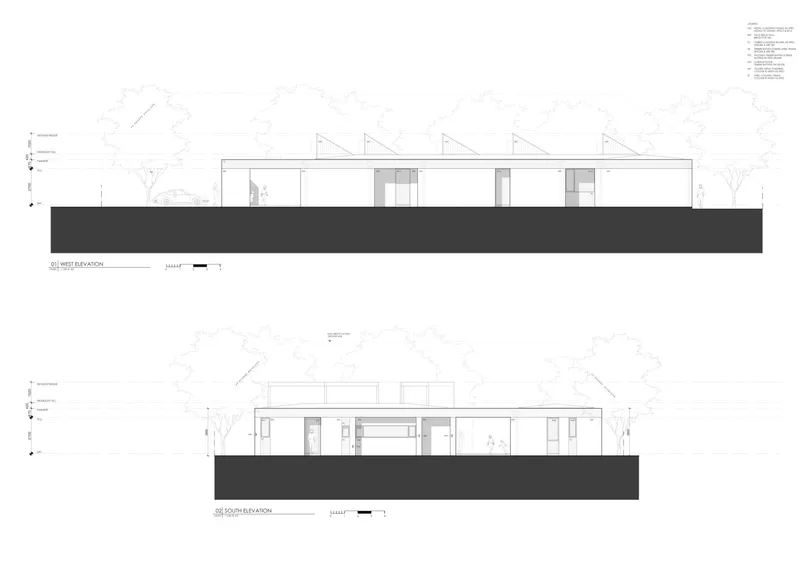
The Hackett Gardens House by Ben Walker Architects is a shining example of sustainable residential architecture in Australia. Located in the northern Canberra suburb of Turner, near the bustling city centre and university precinct, this newly designed single-storey home covers 393 m² and embraces sustainability at every level. Its thoughtful “U”-shaped plan is wrapped around a generous central courtyard, crafting private yet open living environments that perfectly balance family life with environmental responsibility.



Thoughtful Spatial Planning Centered on Courtyards
The home’s plan is divided into distinct zones: the parents’ area to the north, a living spine along the west, and a children’s area to the south. These are unified around the central courtyard, which provides light, openness, and privacy away from the public realm. Additionally, a north-facing courtyard equipped with operable pivoting privacy screens creates flexible connectivity between the house and the adjacent street park, while a third private courtyard is reserved for the main bedroom behind the garage pod. A separate studio forms the southeastern edge of the U-shaped layout, enhancing the multifunctionality of the house.


A Minimalist Material Palette Rooted in Local Connection
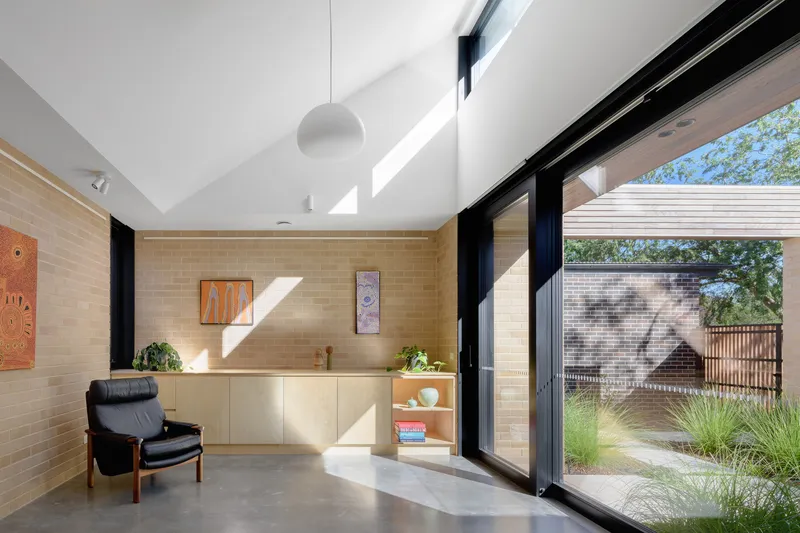
The interior finishes embrace simplicity and authenticity: cream-colored brick walls, white plastered ceilings, honed concrete floors, birch plywood joinery, and natural brass fixtures. This restrained palette allows the client’s personal items, including furniture and art, to shine within the uncluttered space. Externally, the house is characterized by brick walls and recycled timber-clad parapet beams, emphasizing clarity and coherence in the geometry.
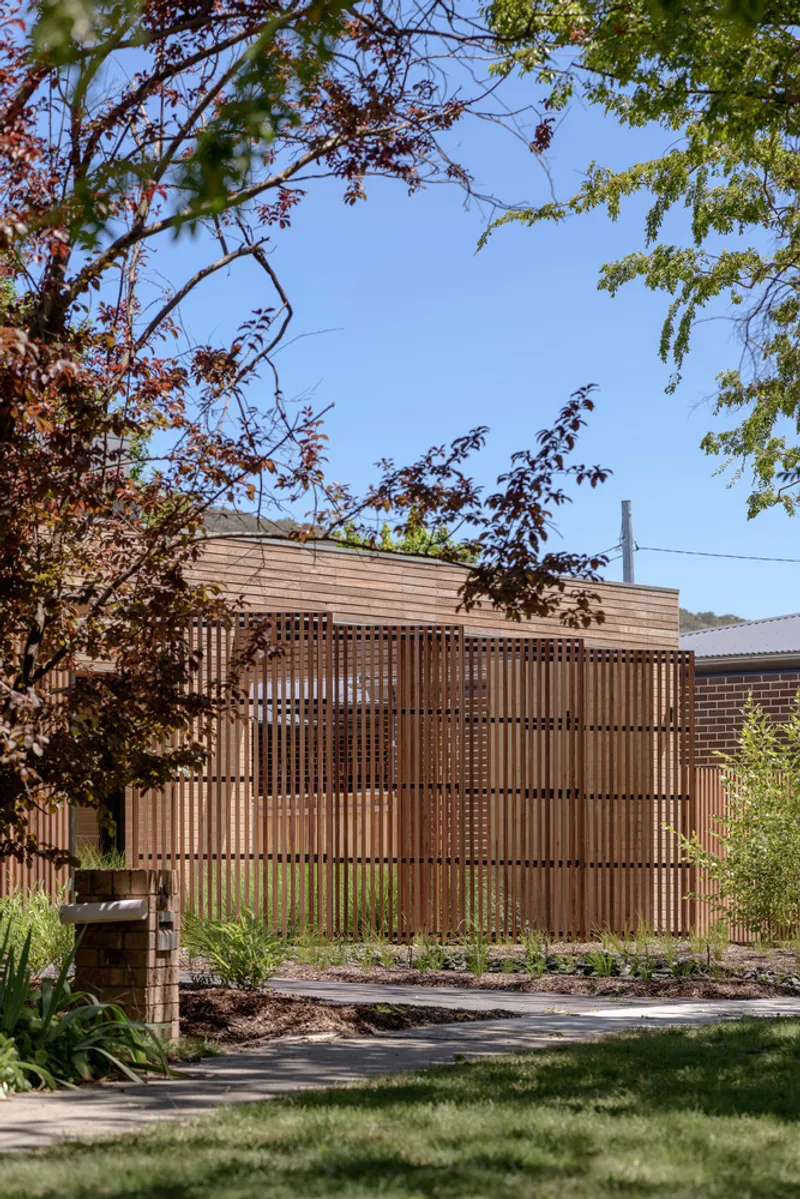

An especially meaningful detail lies in the choice of materials — the dry pressed bricks were sourced from a factory in northern New South Wales, approximately 50 kilometers from the client’s family farm. This material selection bridges the house’s construction to the client’s heritage, embedding a strong sense of place and memory within the architecture.

Passive Solar Design and Energy Efficiency
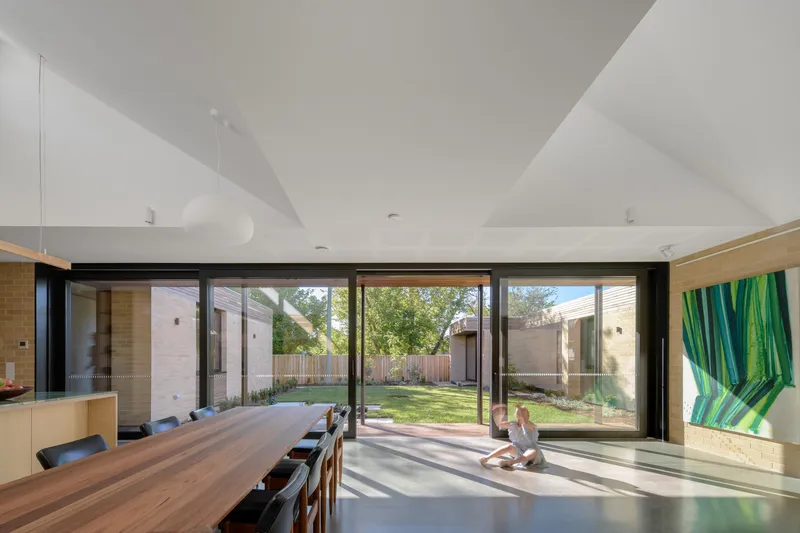
Sustainability is deeply embedded in both design and performance. The building’s layout incorporates small solar courts that bring light into transition spaces and help demarcate the three primary wings. A series of saw-tooth roof forms with highlight windows further optimizes northern sunlight penetration, enhancing passive solar gain and sky views while creating spacious, light-filled interiors.
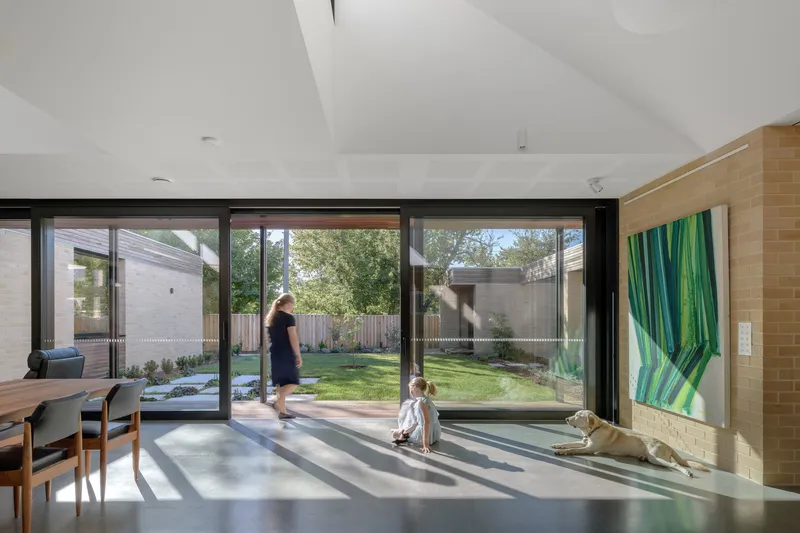
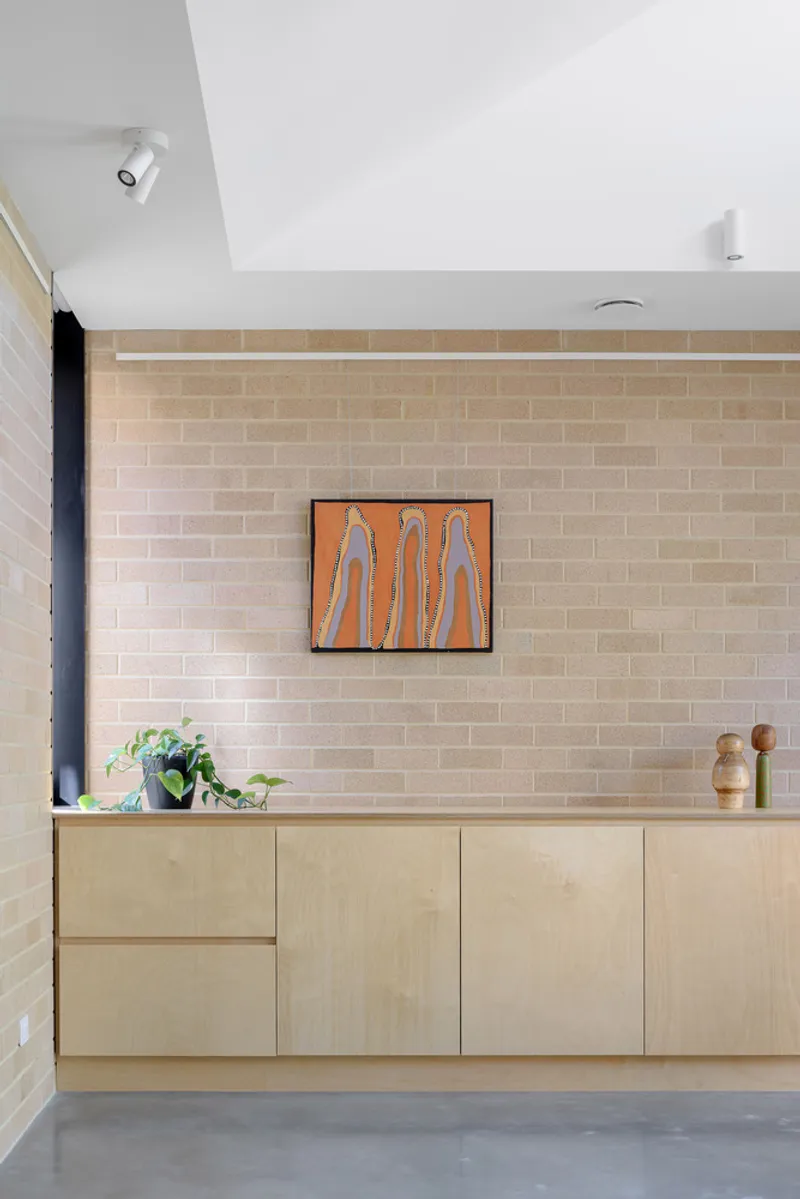


The house’s construction features heavily insulated triple-layered walls, ceilings, and burnished concrete slabs, paired with both internal and external membranes that ensure superior air tightness. Composite frame windows with high-performance triple glazing further boost the building’s energy efficiency. A photovoltaic (PV) system supplies a significant portion of the home’s energy, while a centralized heat recovery ventilation (HRV) system regulates internal temperatures, purifies air, and controls humidity.


Architecture That Embodies Sustainability and Family
Hackett Gardens House is more than just an energy-efficient dwelling — it’s a thoughtful expression of sustainable residential architecture in Australia, combining material authenticity, local connection, and technical innovation. Through careful spatial organization, passive design strategies, and low-impact material choices, Ben Walker Architects have crafted a home that supports a sustainable lifestyle while providing a rich, beautiful environment for family life.




All Photographs are works of Ben Guthrie




Popular Articles
Popular articles from the community


Co-Life: Senior Housing Design That Reconnects Older Adults With the City
Co-Life reimagines senior housing design through healing gardens, shared streets, workshops, and a sustainable community across generations.

Co-life: Sustainable Architecture for Age-Friendly Community Living
Co-life reimagines sustainable architecture for seniors through courtyards, rammed earth, shared gardens, and spaces designed for belonging.

EW PARK: Sustainable Architecture Reimagines the Future of Urban Parking
EW PARK reimagines city parking as a modular wooden tower combining automation, solar energy, electric mobility, and adaptable urban design.

AL-JANNAH: Sustainable Architecture and Permaculture for Afghan Widows
AL-JANNAH uses sustainable architecture and permaculture to create resilient oasis of housing, learning, work and renewal for Afghan widows.


Similar Reads
You might also enjoy these articles

FAMM Arquitectura Organizes Ten Villas Around Courtyards and Jungle in Nosara, Costa Rica
El Molino pairs two elongated volumes with deep overhangs and timber louvers to build a compact coastal community five minutes from the beach.
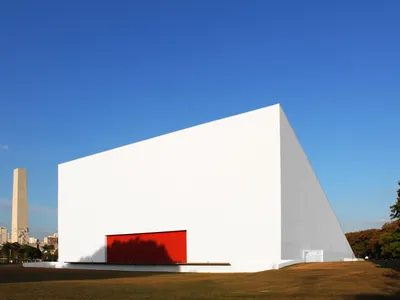
Oscar Niemeyer's Ibirapuera Park Pavilions Define São Paulo's Cultural Identity in Concrete and Curve
A constellation of modernist volumes set within São Paulo's most important urban park, conceived for the city's 400th anniversary in 1954.
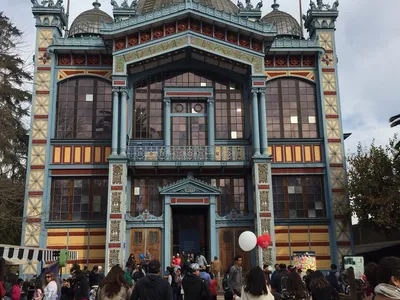
How Henri Picq's 1889 Paris Pavilion Traveled 11,000 Kilometers to Become Santiago's Artequín Museum
A prefabricated iron and glass pavilion built for the Paris Universal Exposition found a second life as a children's art museum in Chile.
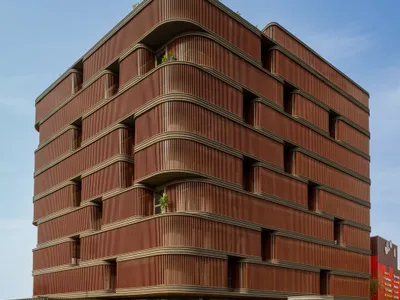
Sanjay Puri Architects Wraps a Jaipur Office Tower in Capsule-Shaped Green Buffers
A nine-level climate-responsive workplace near Jaipur Airport uses stacked planter terraces and aluminium screens to fight 40°C heat.


Explore Architecture Competitions
Discover active competitions in this discipline



Challenge to reimagine the Iron Throne


Photograph architecture without architects


Illustrate the lost glory of Angkor Wat - Render Challenge


Design challenge to reuse E-waste
Comments (0)
Please login or sign up to add comments
No comments yet. Be the first to comment!