

Hakodate Sensyuan Sohonke Café by Jo Nagasaka and Schemata Architects
Renovated Hakodate Sensyuan Sohonke Café blends Japanese wooden traditions with Western brick materials, adaptive reuse, shaku proportions, and local identity.


Located in the historic Motomachi district of Hakodate, the renovation of Hakodate Sensyuan Sohonke Café reinterprets the city’s unique architectural identity through a careful balance of tradition and contemporary intervention. Designed by Jo Nagasaka and Schemata Architects, the 197-square-meter project transforms a long-established Japanese confectionery shop into a hybrid space that seamlessly integrates retail, café culture, and architectural heritage.
Hakodate’s urban fabric is deeply influenced by its history as one of Japan’s earliest port cities open to international exchange. Brick warehouses, Western-style buildings, and wooden Japanese houses coexist throughout the city, often merging stylistic languages within a single structure. This architectural duality forms the conceptual foundation of the Sensyuan Sohonke Café renovation.
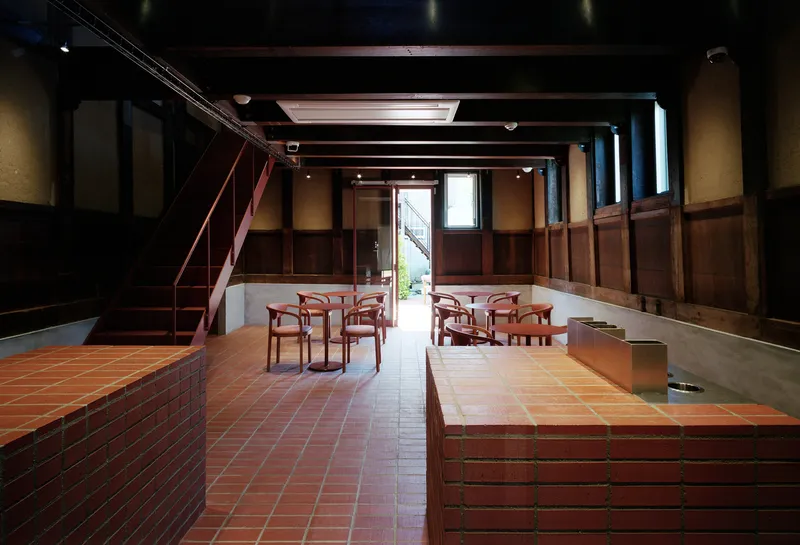
Contextual Architecture Rooted in Local History
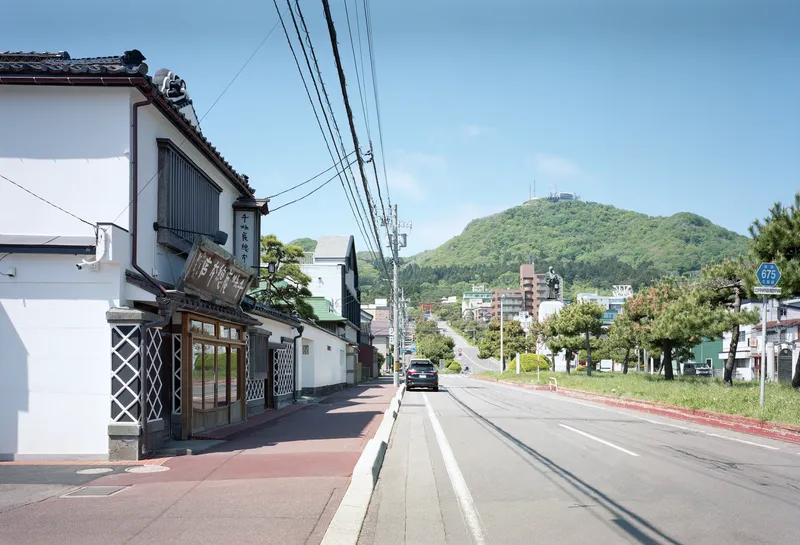
The original Sensyuan building is a traditional wooden Japanese structure with a central storehouse, long recognized as a local landmark. While many Hakodate buildings incorporate Western elements primarily as decorative façades, the architects sought a deeper spatial integration, one that extends beyond surface aesthetics.
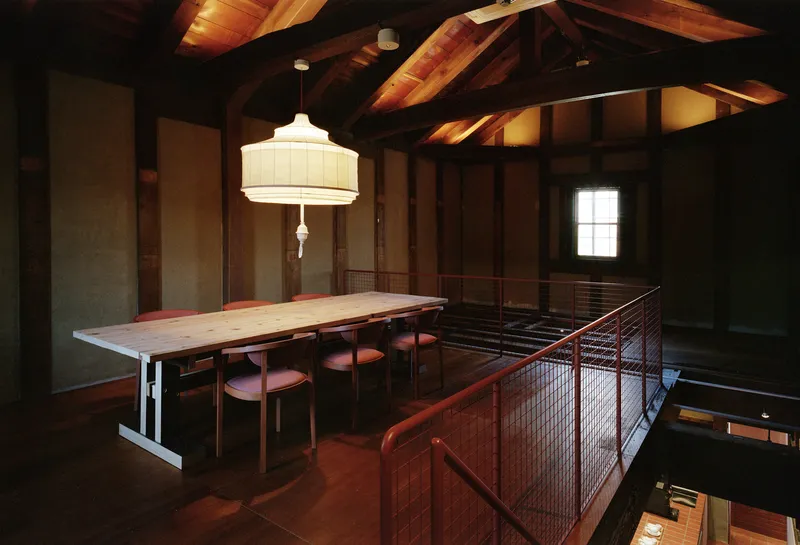
Rather than altering the familiar exterior, the renovation preserves the appearance of a traditional Japanese confectionery shop, respecting its cultural presence within the neighborhood. The architectural transformation unfolds primarily inside, where a former warehouse used for storage and packaging is converted into a café, complemented by renovations to the existing shop and office spaces.
Brick as a Cultural and Spatial Connector
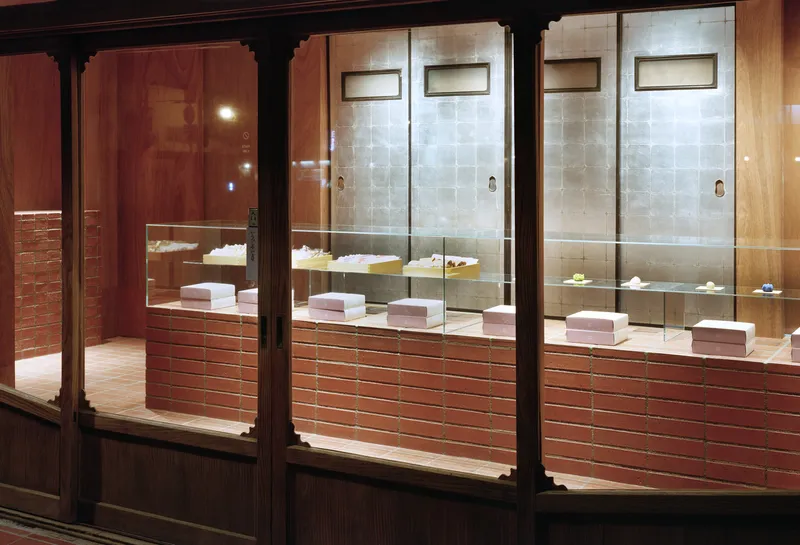
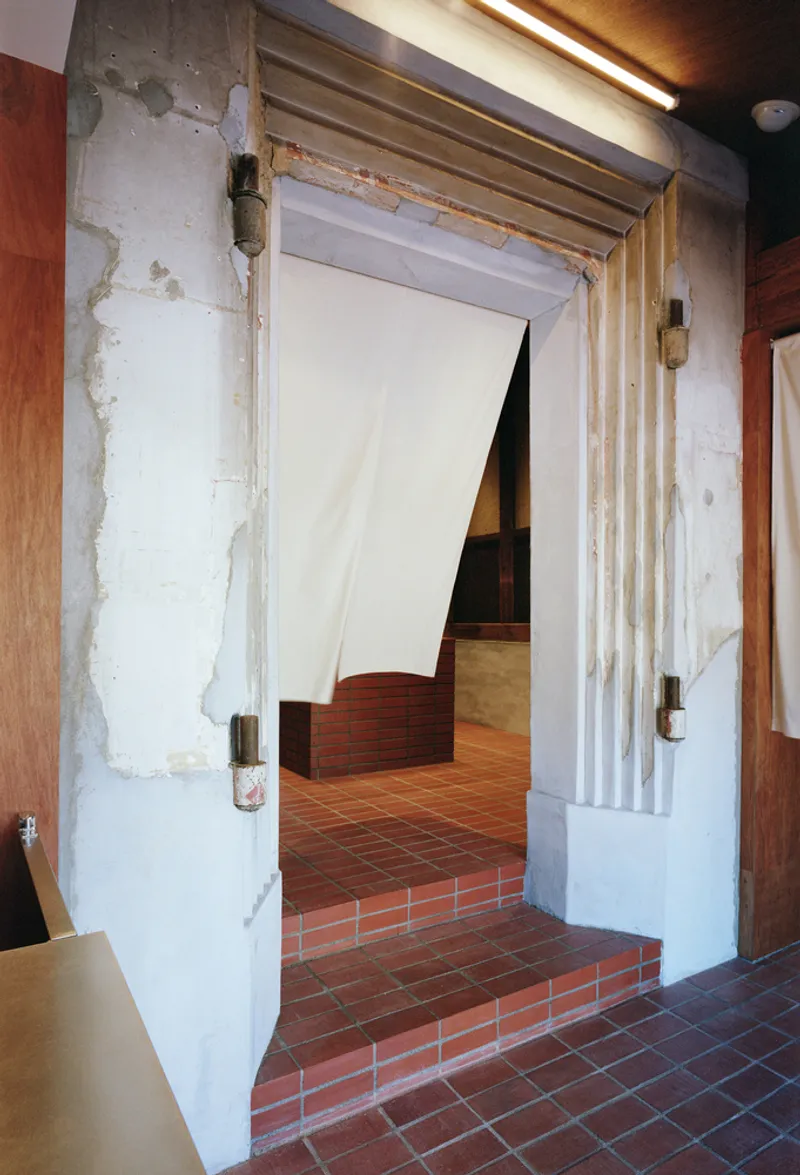
During the renovation process, the architects identified traces of brickwork on the building’s exterior, an understated Western material presence characteristic of Hakodate. This discovery became a key design driver. Brick was introduced into the interior of the wooden structure, not as an applied finish but as a spatial and structural device.
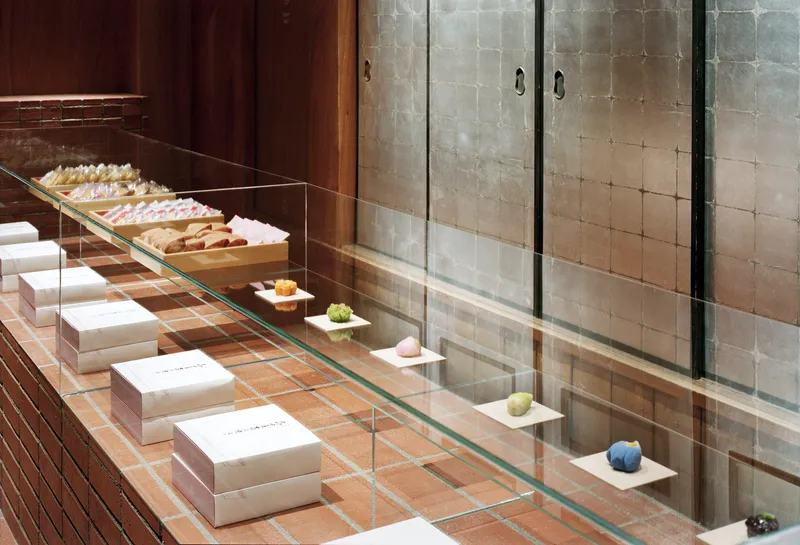
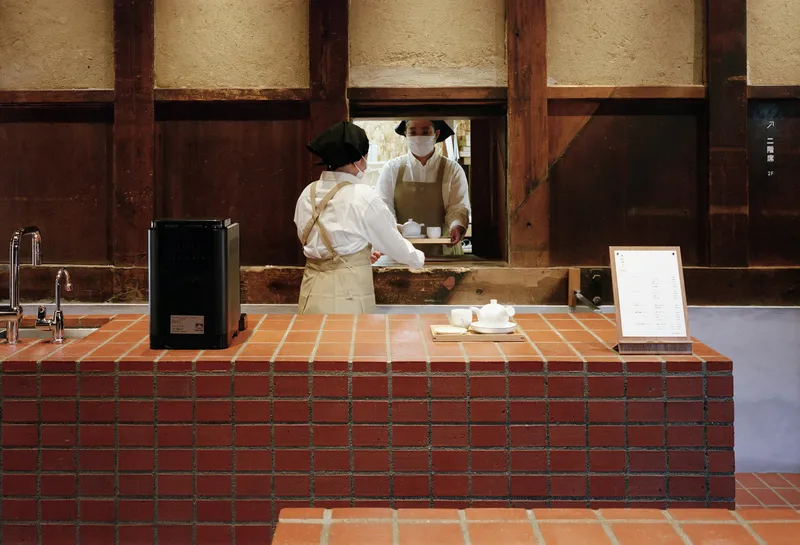
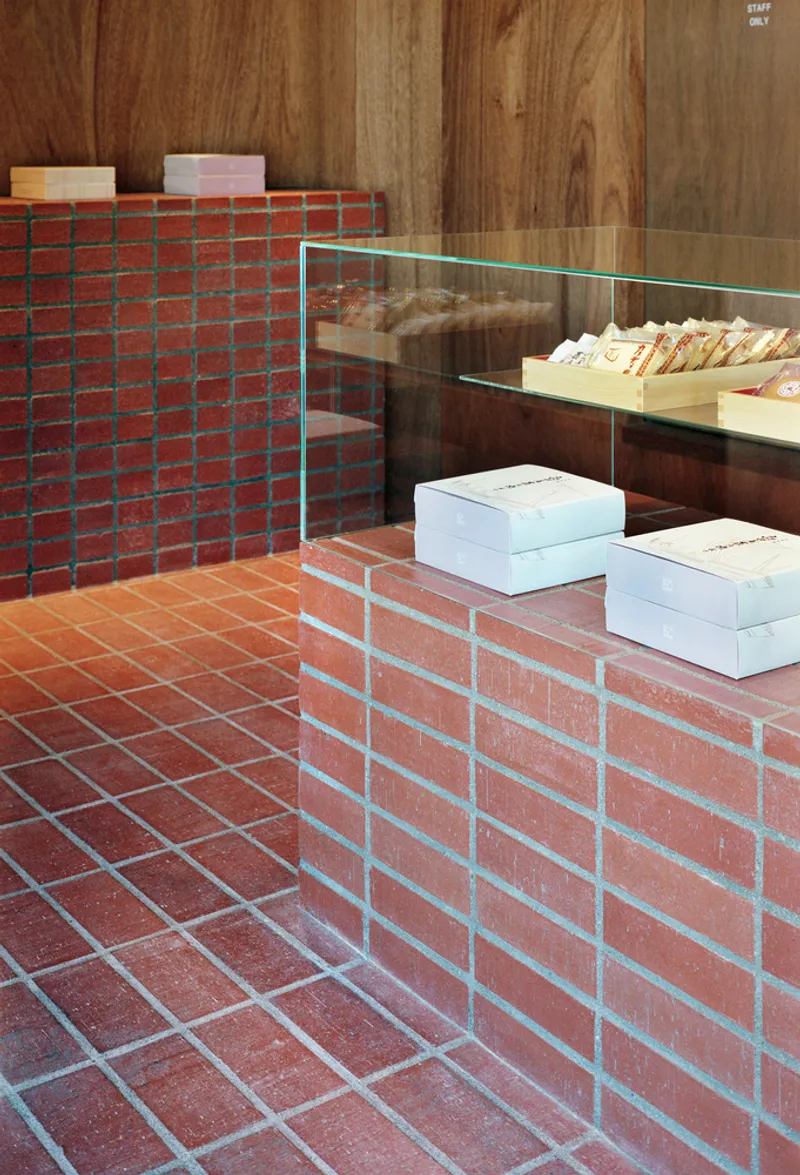
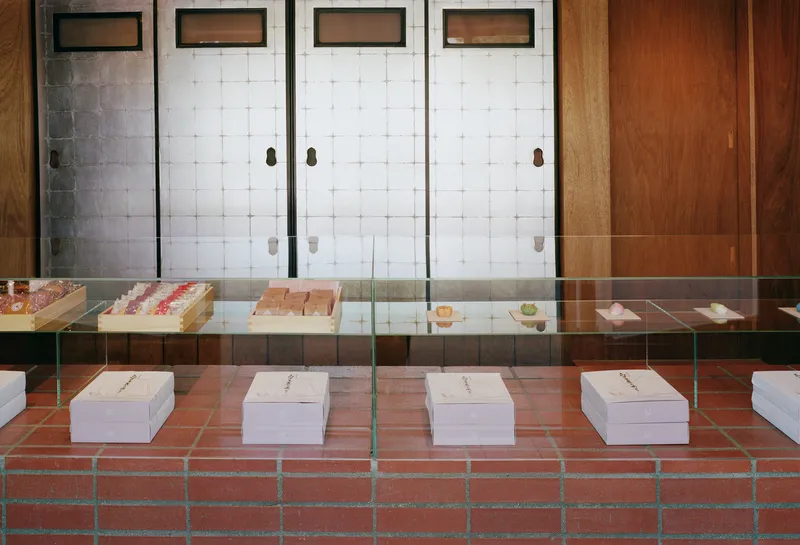
The brick extends across the earthen floor and rises organically to form counters, benches, and integrated furniture. This approach dissolves the boundary between architecture and interior design, allowing material continuity to define both function and atmosphere. Brick, familiar and locally resonant, becomes the medium through which Japanese and Western architectural traditions are interwoven.
Precision, Proportion, and the Shaku Module
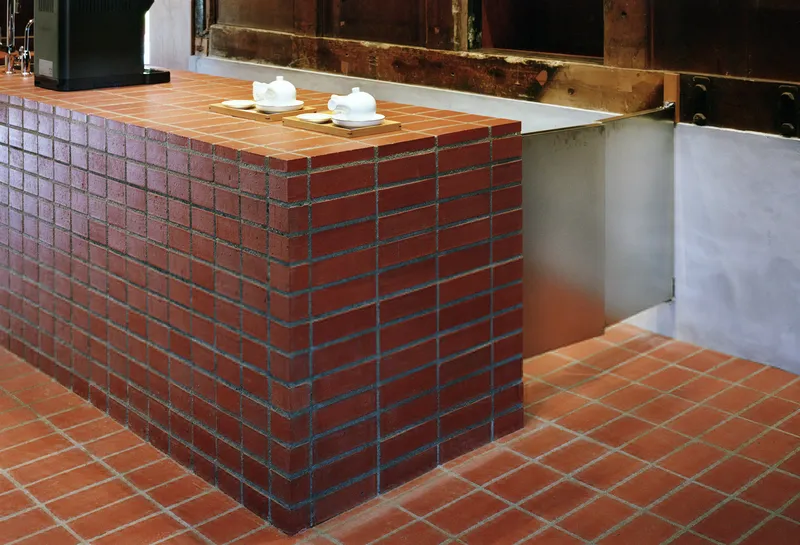
The raised brick elements are meticulously cut according to the shaku module, approximately 30.3 centimeters, derived from traditional Japanese wooden construction. This precise dimensional logic ensures that the Western material aligns harmoniously with the proportions of the existing Japanese structure.
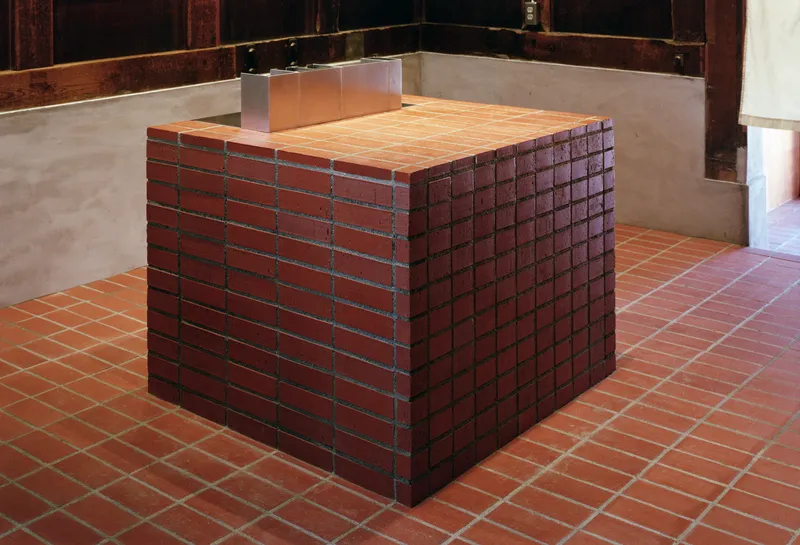
At the edges, the exposed cross-sections of the cut brickwork reveal layers of craftsmanship and construction logic, reinforcing the tactile quality of the space. The result is an interior where material honesty and structural rhythm enhance the everyday experience of drinking coffee or purchasing traditional confectionery.
A Contemporary Café Embedded in Tradition
Rather than imposing a contrasting modern aesthetic, the café unfolds as a natural extension of the original building. The design introduces a new mode of spatial coexistence, where brick and wood, Western and Japanese, old and new operate as a unified architectural composition.
This restrained yet innovative renovation demonstrates how adaptive reuse can strengthen cultural continuity while accommodating contemporary lifestyles. By converting a utilitarian warehouse into a welcoming café, the project encourages visitors to linger, rest, and engage more deeply with a place that has long been part of Hakodate’s collective memory.
Enduring Local Identity Through Architecture
Hakodate Sensyuan Sohonke Café proposes a nuanced model for architectural renovation in historic urban contexts. By employing familiar materials, respecting traditional proportions, and prioritizing spatial continuity over visual novelty, the project preserves the identity of a beloved local confectionery while introducing new social functions.
The result is a space that feels both timeless and current, an architectural dialogue between Japanese and Western influences that resonates with Hakodate’s past and present, and one that is poised to remain a cherished destination for generations to come.
All photographs are works of Yurika Kono


Popular Articles
Popular articles from the community


Cube Design Draws an Ecological Corridor Between Two Shenzhen Hills with the Nankai Building
Beside Shenzhen's container docks, the Nankai Building pairs stacked balconies with a climbing green screen to connect two hillsides across its height.

Jaramillo Van Sluys Arquitectura and Urbanismo Turn a Demolished Registry Lot in Quito into an Orchard Plaza
In Quito's Centro Histórico, a 2,800 m² plaza exposes the San Agustín convent wall and redraws its lost Augustinian orchard in volcanic stone.

David Macias Steps a Doorless Stone and Plaster House Down a Tropical Colombian Hillside
In the humid hills of Colombia, Threshold House replaces the front door with an open void and terraces its 850 m² down the slope instead of fighting it.

U.GA Architects Wraps an Oval Rooftop Pool in Curved Board-Formed Concrete on Busan's Jeollidan-gil
In Busan's Jeonpo-dong, a 454 m² mixed-use block stacks a neighborhood facility, guest rooms and an oval rooftop pool inside spiraling concrete walls.

Similar Reads
You might also enjoy these articles

Gil Mello Arquitetura Tilts a Single Roof Toward the Waterfalls on a Plateau Above Aiuruoca, Brazil
In Aiuruoca, Minas Gerais, a 200 m² house of local labor and reclaimed poles pairs a low valley veranda with a tall mountain one.
U.GA Architects Wraps an Oval Rooftop Pool in Curved Board-Formed Concrete on Busan's Jeollidan-gil
In Busan's Jeonpo-dong, a 454 m² mixed-use block stacks a neighborhood facility, guest rooms and an oval rooftop pool inside spiraling concrete walls.

Felipe Hess Arquitetos Turns a Blind Stone Wall to the Street and Opens a Brazilian House onto a Courtyard and Canal
A canal-front house in Brazil hides behind painted stone and planting, then opens to an olive-tree courtyard, a reed-ceilinged porch and a curving pool.
David Macias Steps a Doorless Stone and Plaster House Down a Tropical Colombian Hillside
In the humid hills of Colombia, Threshold House replaces the front door with an open void and terraces its 850 m² down the slope instead of fighting it.

Explore Architecture Competitions
Discover active competitions in this discipline

Challenge to reimagine the Iron Throne

Photograph architecture without architects

Illustrate the lost glory of Angkor Wat - Render Challenge

Design challenge to reuse E-waste
Comments (0)
Please login or sign up to add comments
No comments yet. Be the first to comment!