

Indiesalon Turns a Seoul Bank Branch into an Urban Shelter Beneath a Floating Parabolic Roof
Hana Bank's Seoul-Forest branch in Seongsu-dong reimagines the banking experience through soaring ceilings, warm wood, and city views.


Banks are among the most architecturally conservative building types. Their interiors tend to signal authority through cold surfaces, drop ceilings, and fluorescent lighting, all designed to move people through transactions as quickly as possible. The Hana Bank Seoul-Forest branch in Seongsu-dong, designed by Indiesalon, rejects every one of those conventions. At 353 square meters, this is a modest footprint, but the spatial ambition is anything but modest: a parabolic timber roof floats above a daylit hall, framing views of the neighborhood through floor-to-ceiling glass, and the act of waiting for a teller becomes something closer to sitting in a well-designed café.
What makes this project genuinely interesting is not just the aesthetic upgrade but the argument it makes about program. Indiesalon's lead architect Seokjoon Jang and design team treated banking as a hospitality problem. The central move, a detached roof structure called the "Roof of Hana," creates variable ceiling heights that choreograph mood across the plan. You enter under compression, pass through a transitional threshold, and arrive in an open hall where the ceiling lifts toward a wall of glass. It is a sequence borrowed from sacred and civic architecture, deployed here for a retail bank. The result proposes a genuinely new standard for financial space in South Korea.
A Compressed Entry That Sets the Tone
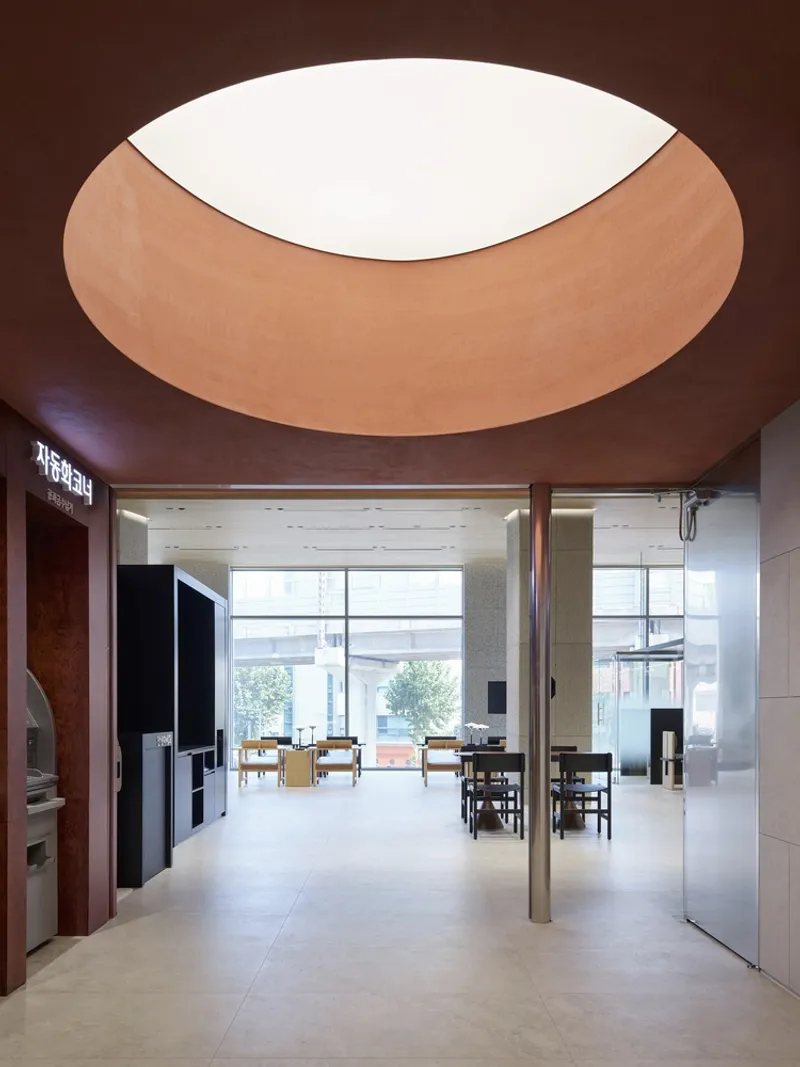
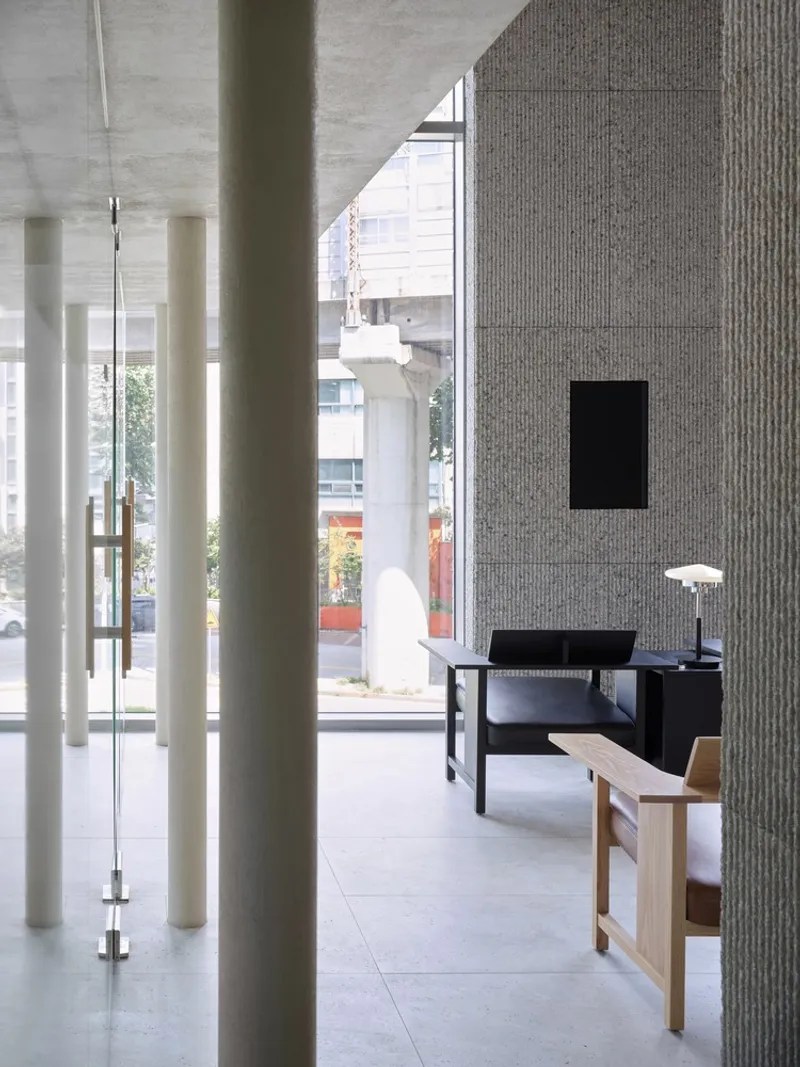

The entrance sequence is deliberate. A low-rise ceiling greets visitors with an intimate, almost domestic scale. A circular ceiling opening lined in warm wood veneer introduces the material language that will carry through the rest of the interior. Slender white columns at the glass entry keep the threshold visually open to the street while signaling a clear boundary between the city and the interior world.
Step past the lobby and you encounter a narrow corridor defined by terracotta-toned plaster walls and a vaulted ceiling with recessed lighting. The palette shifts from the neutrality of polished stone to something earthier and more enveloping. The compression here is strategic: it makes the release into the main hall feel dramatic without relying on monumental scale.
The Floating Roof and the Main Hall
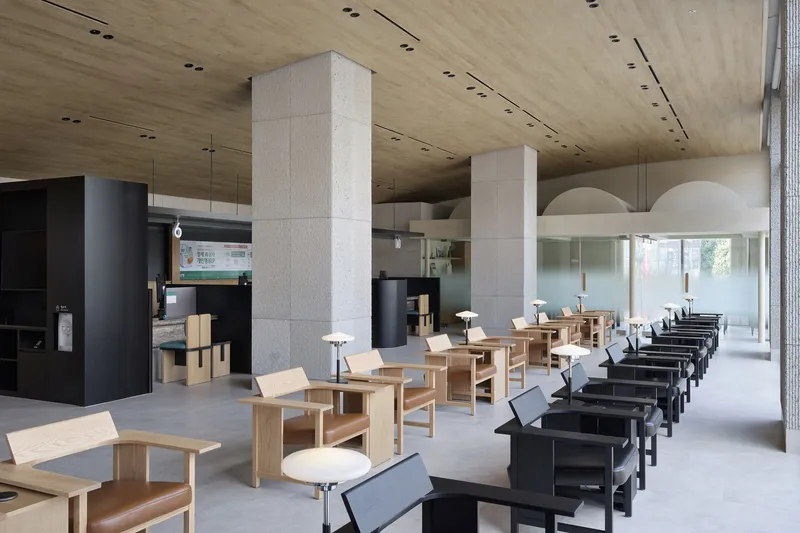
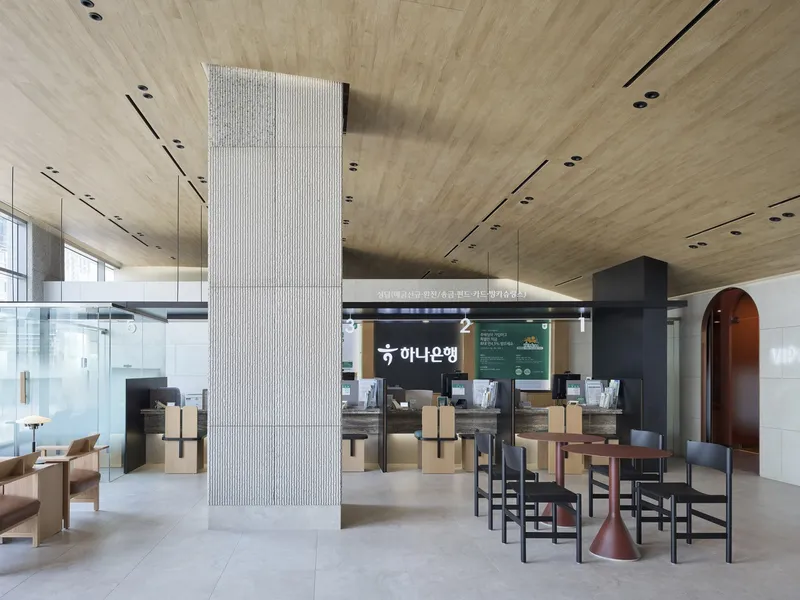
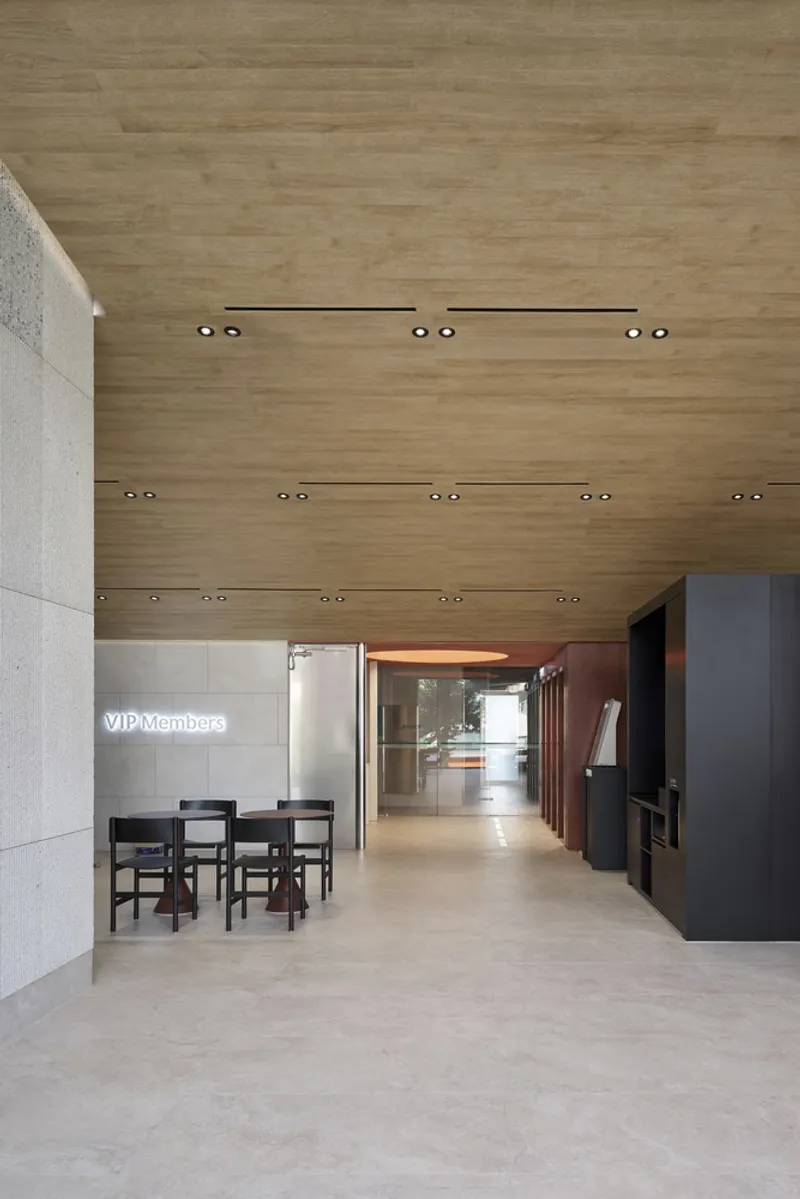
The "Roof of Hana" is the project's signature gesture. A parabolic timber ceiling sweeps upward from the compressed zones toward the expansive glazed wall, drawing the eye outward to the urban landscape. The key detail is the gap between the roof's edge and the surrounding walls: the structure appears to hover, with diffused light washing through the seam. It is a ceiling that behaves like a canopy, sheltering without enclosing.
Hardwood patterns on the roof's underside wrap around the space with a warmth that conventional banks simply do not offer. The curvature does real work here, directing sightlines toward the windows and creating an almost gravitational pull toward the views of Seongsu-dong. Four textured concrete columns at the center support the high-rise portion of the roof while doubling as digital display stations where customers can check queue status. Structure and program collapse into a single element.
Daylight, Glass, and the Seongsu Streetscape
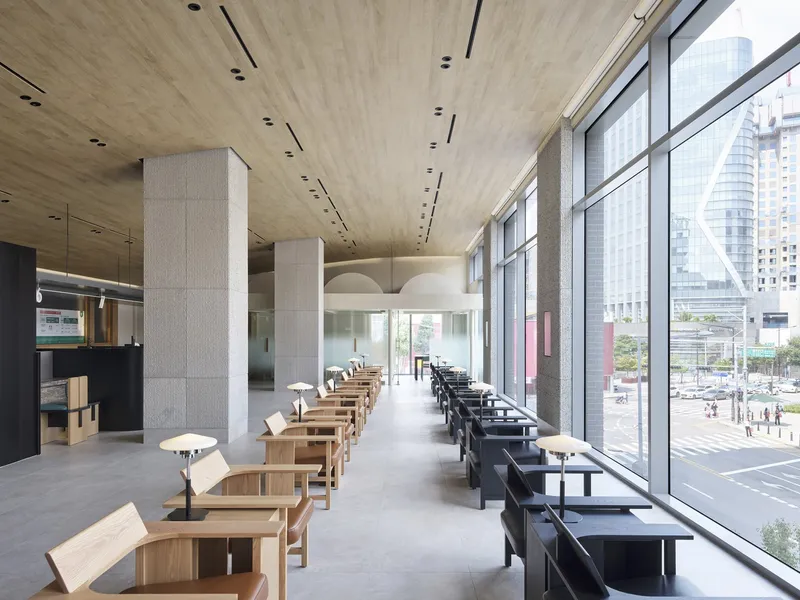
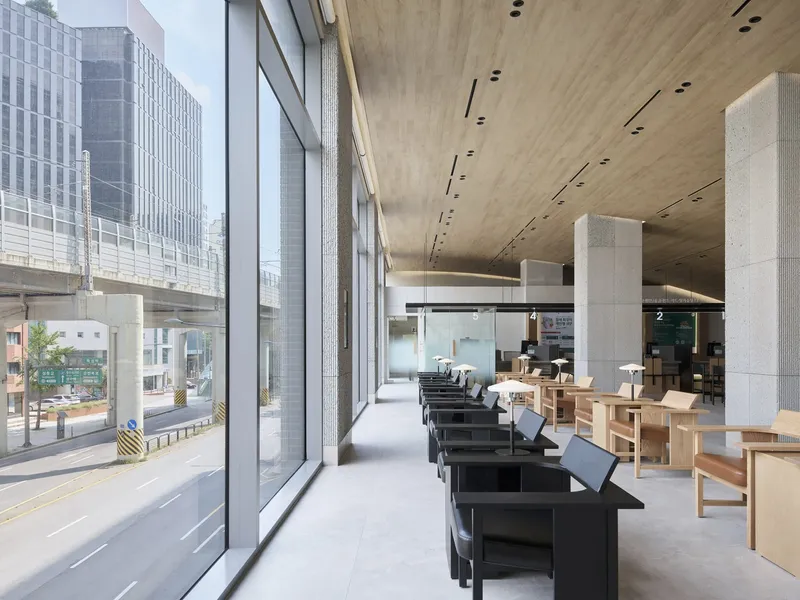
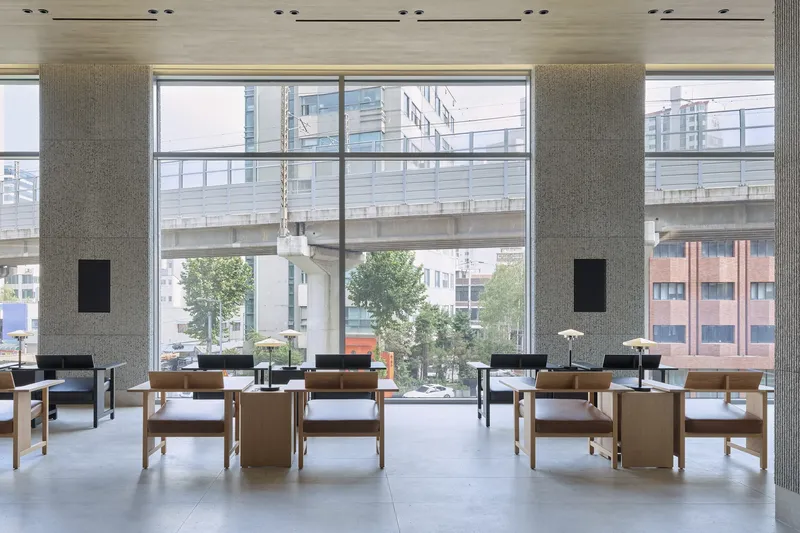
The full-height glazed facade is not just a window; it is the project's primary spatial anchor. Rows of timber and black seating line the glass wall, arranged so that customers face outward rather than inward. The effect is closer to an airport lounge or a reading room than a bank branch. You sit, you wait, and you watch the city. Seongsu-dong's elevated pedestrian bridge and streetscape become a constantly shifting backdrop.
The decision to orient seating toward the exterior inverts the typical banking layout, where customers face counters and screens. Here, the urban context becomes part of the service. Natural light enters deep into the plan, reducing dependence on artificial illumination during daylight hours and connecting the interior to the rhythms of the neighborhood.
Materiality: Concrete, Timber, and Hana Green
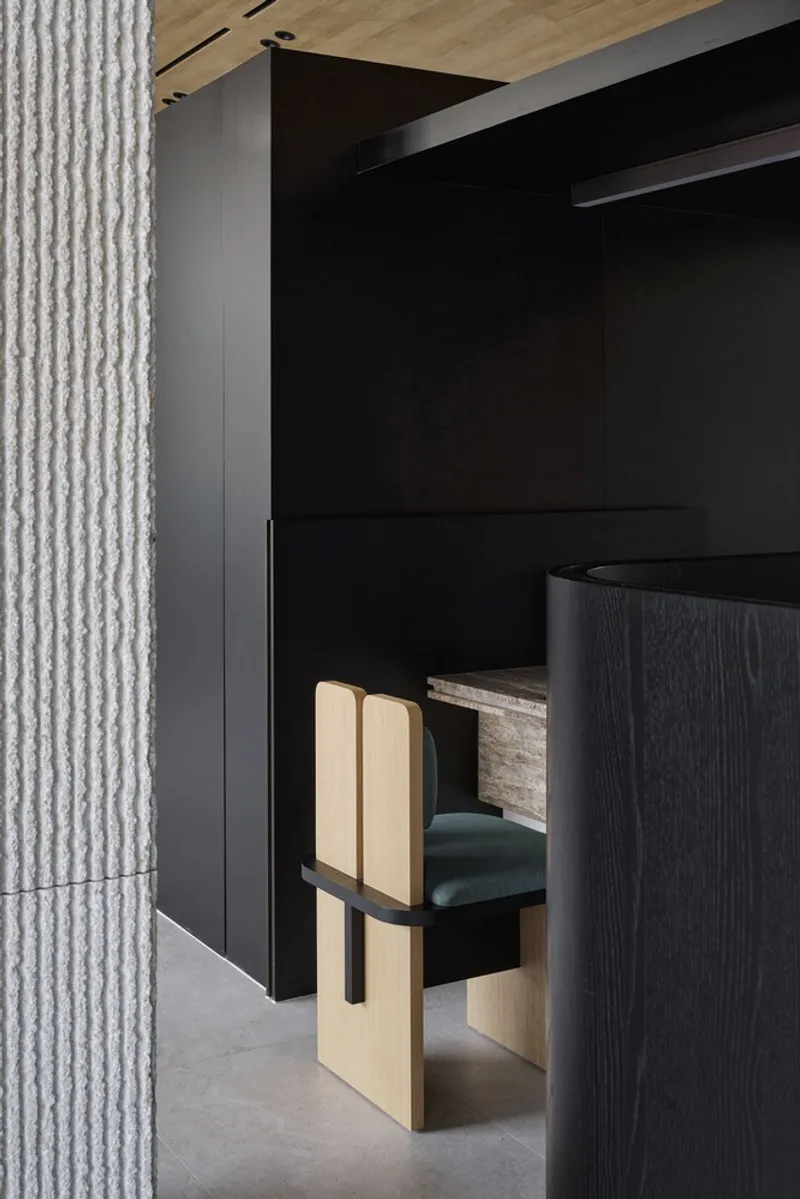

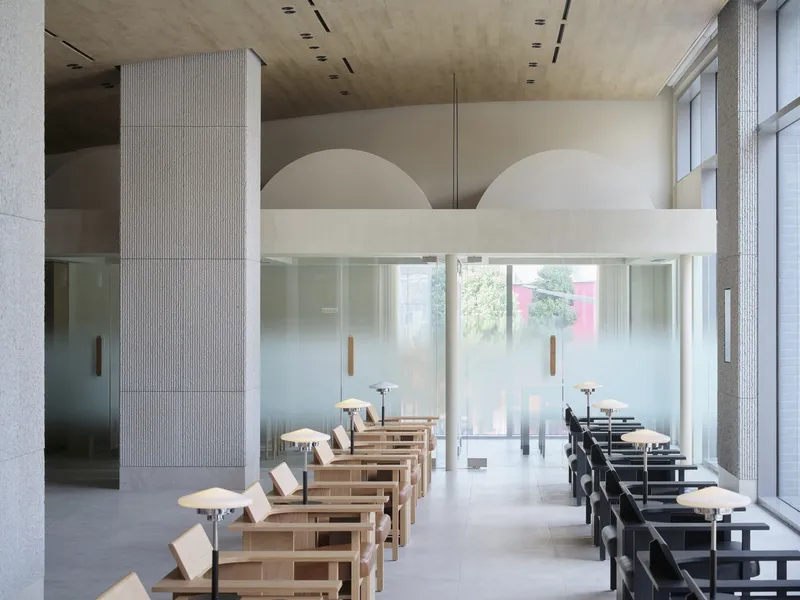
The material palette is restrained but layered. Ribbed concrete columns carry a handcrafted texture that softens their structural presence. Translucent glass partitions introduce privacy without blocking light, creating zones within the open plan that feel distinct but connected. Light wood chairs with upholstered seats, sourced from manufacturers including HAY and Ondarreta, bring a domestic quality to a commercial program.
Arched alcoves above the glass partitions echo the parabolic geometry of the roof, tying the smaller details to the building's governing form. The material consistency, concrete at the structural core, timber overhead, translucent glass at the edges, gives the space a legibility that is easy to navigate without signage.
Service Counters and the Back-of-House

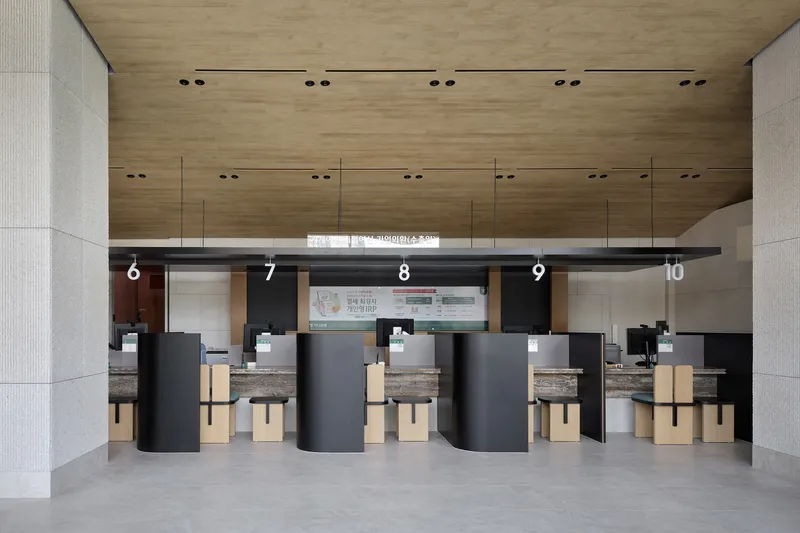
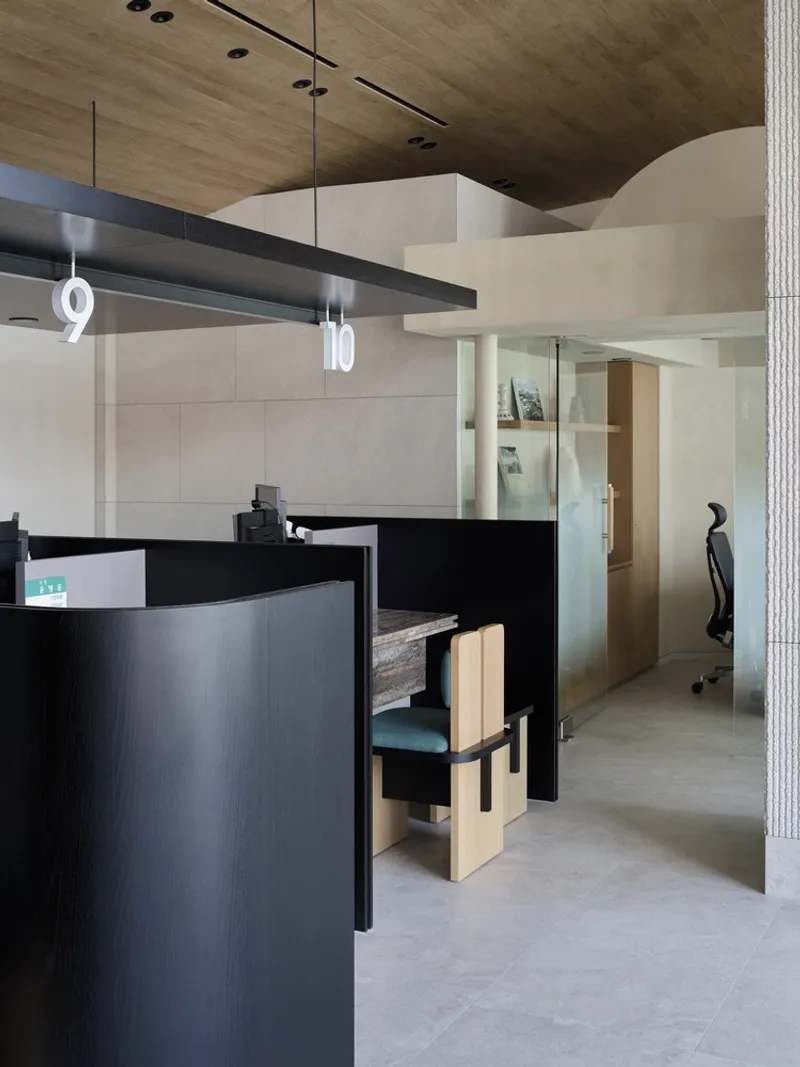
The bank windows are positioned under a deliberately lower ceiling height. The logic is practical: reduced ceiling-to-counter distance controls luminous intensity and creates a more focused atmosphere for transactions. Custom-designed furniture in Hana Bank's iconic green reinforces brand identity without resorting to wall graphics or signage overload. The numbered black partitions at the service counter bring order and clarity.
Behind the public hall, a series of purpose-driven rooms, including counseling spaces, a VIP room with antique red tones, document storage, and an employee lounge, are organized with varied ceiling heights calibrated to each function. The branch manager's office features a dome-shaped ceiling and large windows, with folding doors that allow the room to be reconfigured for different meeting sizes. These are not afterthoughts; they are evidence that the design ambition extended to every square meter of the plan.
Thresholds and Transitional Moments

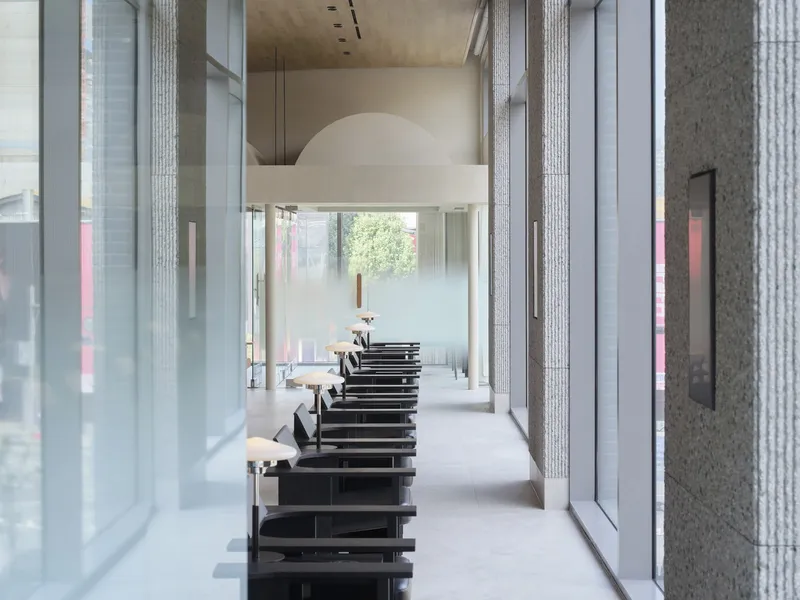
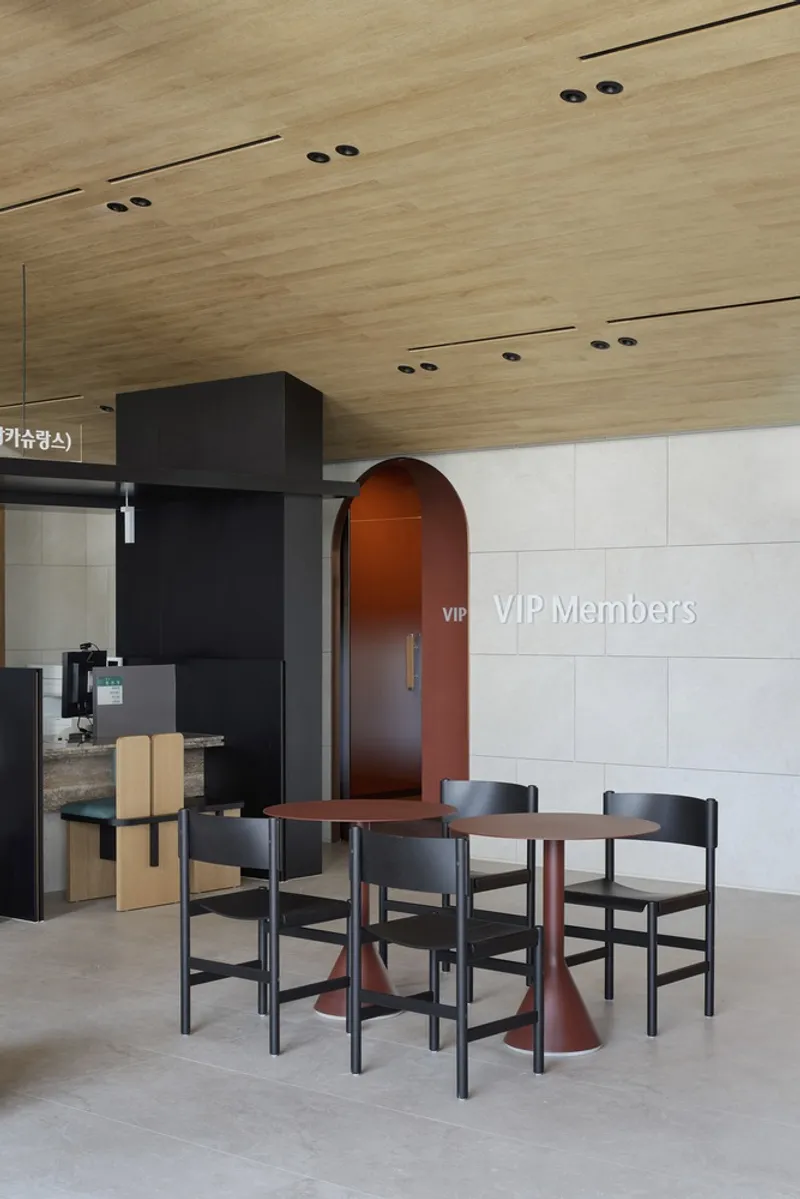
Indiesalon's attention to thresholds elevates the experience. A doorway framed by curved ceiling panels opens into a glazed seating area bathed in natural light. Corridors flanked by textured columns and dark millwork create moments of pause between programmatic zones. An arched doorway near a seating cluster under track lighting recalls the vaulted entry corridor, creating a sense of return and continuity.
These transitions are the architecture's secret weapon. They prevent the plan from reading as a single open room and instead offer a sequence of spatial events that unfold as you move through the building. Each threshold resets your expectations and recalibrates the atmosphere, a technique more commonly associated with museum design than retail banking.
Furniture and Atmosphere
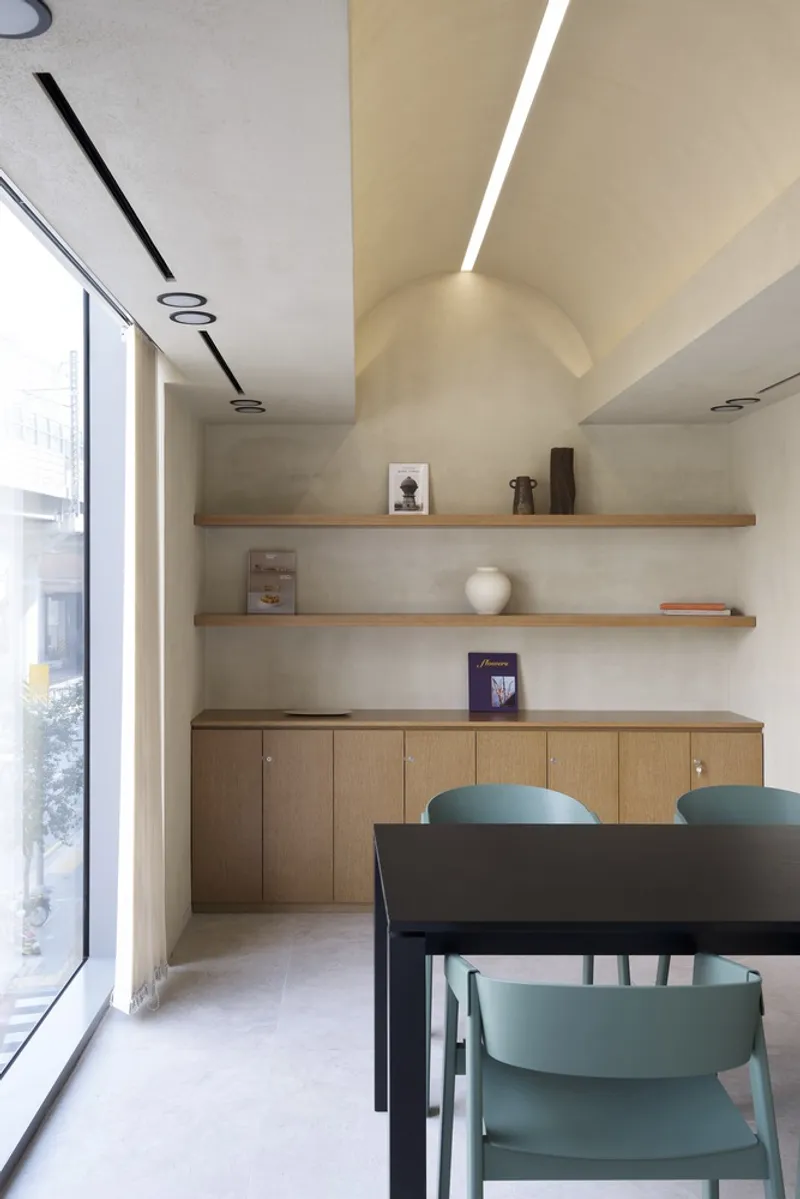
A dining-scale seating area with timber shelving and a vaulted ceiling lit by a recessed linear slot reads as a staff lounge or breakout zone. The furniture selections, from STANDARD.a Furniture Studio, Thomas Bentzen, and jackson chameleon among others, avoid the generic contract pieces that populate most commercial interiors. Each chair and table was chosen to reinforce the idea that this is a space worth inhabiting, not just passing through.
Plans and Drawings


The floor plan reveals the organizational clarity behind the experiential richness. A central waiting zone occupies the heart of the layout, surrounded by service counters, private rooms, and support spaces along the perimeter. The section drawing exposes the parabolic ceiling's relationship to the columns and the glazed facade: the timber roof lifts away from the structural grid, and the gap at the wall junction is clearly legible as a deliberate detail rather than an accident. The human figures in the section help calibrate the scale, showing how the compression at the entry gives way to a generous volume at the glass wall.
Why This Project Matters
Retail banks face an existential question: if most transactions can happen on a phone, why should anyone visit a branch? Indiesalon's answer is that the physical branch must offer something a screen cannot. The Hana Bank Seoul-Forest branch provides atmosphere, spatial generosity, and a relationship to the city that justifies the trip. The design reframes waiting, traditionally a negative experience, as a moment of rest inside a carefully constructed environment. In a neighborhood like Seongsu-dong, where design-forward cafés and studios set a high bar for interior quality, this bank does not just keep up; it competes.
The broader lesson is about typological ambition. Every building type has inherited conventions that go unquestioned for decades. Indiesalon questioned all of them: the ceiling height, the orientation of seating, the relationship between structure and finish, the division between public and private zones. The result is a branch that functions impeccably as a bank while operating, architecturally, as something closer to a civic pavilion. If other financial institutions take note, the Seoul-Forest branch could mark the beginning of a genuine shift in how we design the places where money meets everyday life.
Hana Bank Seoul-Forest by Indiesalon. Seongdong-gu, Seoul, South Korea. 353 m². Completed 2024. Lead Architect: Seokjoon Jang. Design Team: Yongsuk Kim, Sunghyun Hong. Construction: Kiyeno. Photography by Donggyu Kim.
About the Studio
Share Your Own Work on uni.xyz
If projects like this are the kind of work you want to make, uni.xyz is a place to publish your own, find collaborators, and enter design competitions.




Popular Articles
Popular articles from the community

How Henri Picq's 1889 Paris Pavilion Traveled 11,000 Kilometers to Become Santiago's Artequín Museum
A prefabricated iron and glass pavilion built for the Paris Universal Exposition found a second life as a children's art museum in Chile.

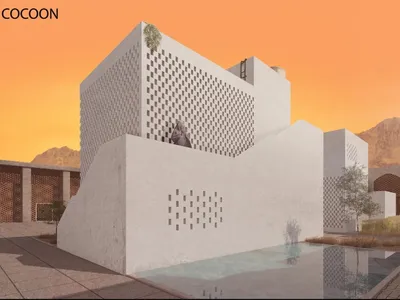
A Reinforced Cocoon: Vernacular Architecture for Security, Healing and Community in Qandahar
A Reinforced Cocoon reimagines Afghan vernacular architecture as secure community space for widowed women, families, healing and resilience.

Pangolin Can Help Mining: Biomimicry Architecture for an Asteroid Mining Habitat
Pangolin Can Help Mining explores biomimicry architecture through a modular 3D-printed habitat designed for asteroid mining and future life.

Riyadh For All: Intergenerational Urban Design for Active Aging in Rabat
Riyadh For All reimagines urban design in Rabat with intergenerational co-living, adaptive courtyards, and Moroccan cultural exchange today.


Similar Reads
You might also enjoy these articles

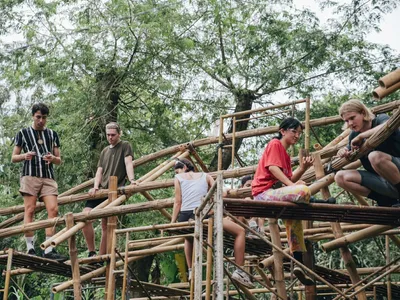
Bamboo Housing Challenge 2026: Design Affordable, Sustainable Homes Using Bamboo
An international design competition by Bamboo U and IBUKU inviting architects and designers to reimagine affordable housing using bamboo — with the winning design built full-scale in Bali.
Computational Design & Education: Beegraphy Design Awards Introduces 7th Category (Featuring Jiyun's Innovative Approach)
Dive into Beegraphy’s 7th Design Awards category, where computational design meets education to create immersive, interactive learning tools, inspired by Jiyun’s work.
From Parametric Lighting to Urban Furniture: Join the 2nd Workshop in Beegraphy’s Computational Design Series
Dive into Cutting-Edge Design Techniques and Practical Applications with Industry Experts

Last Call: Unleash Your Architectural Genius in SHAK's Kindergarten Design Competition
Urgent call for architects to join SHAK's kindergarten design competition before the looming deadline
Explore Architecture Competitions
Discover active competitions in this discipline



The International Standard for Design Portfolios


The Global Benchmark for Architecture Dissertation Awards


The Global Benchmark for Graduation Excellence


Challenge to reimagine the Iron Throne
Comments (0)
Please login or sign up to add comments
No comments yet. Be the first to comment!