
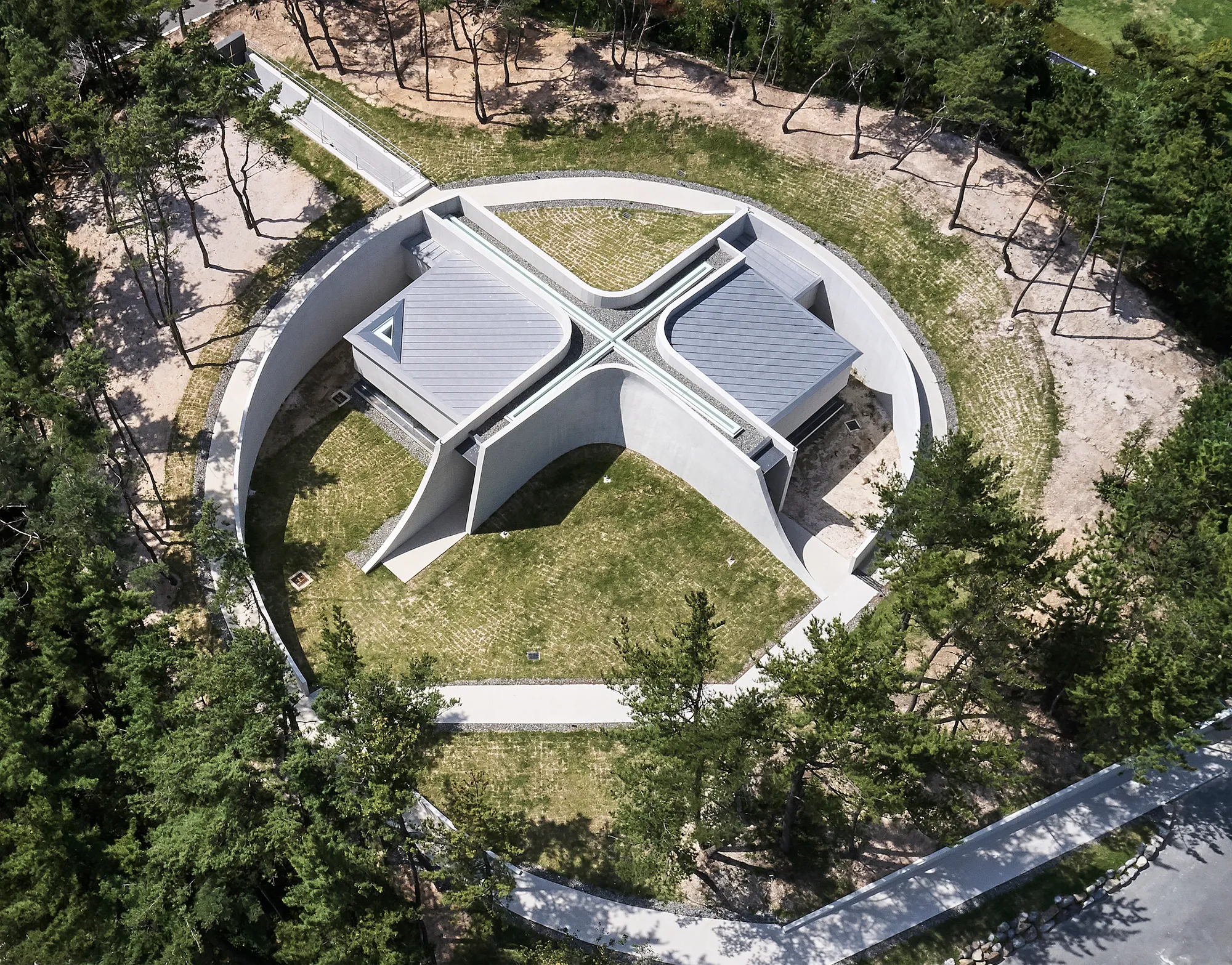
Handong University Prayer Room “Heaven’s Voice” By Itm Yooehwa Architects | Pohang, South Korea
Heaven’s Voice prayer room uses light, form, and movement to express the cross, creating a contemplative spiritual refuge within Handong University.


The Handong University Prayer Room “Heaven’s Voice”, designed by Itm Yooehwa Architects, is a deeply contemplative work of worship and educational architecture that expresses faith through form, light, and movement. Completed in 2023 on the campus of Handong University in Pohang, South Korea, the 190 m² chapel offers a quiet place for prayer, meditation, and spiritual restoration within an academic environment.
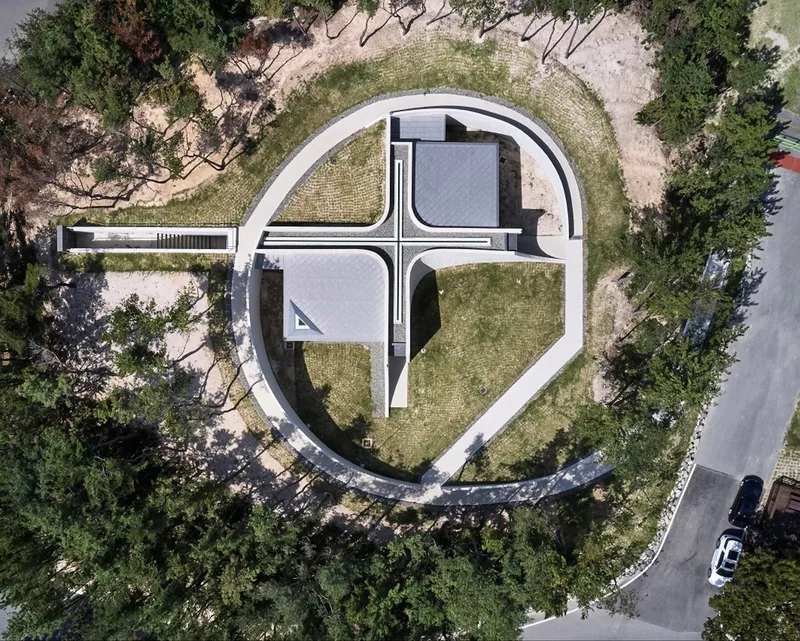
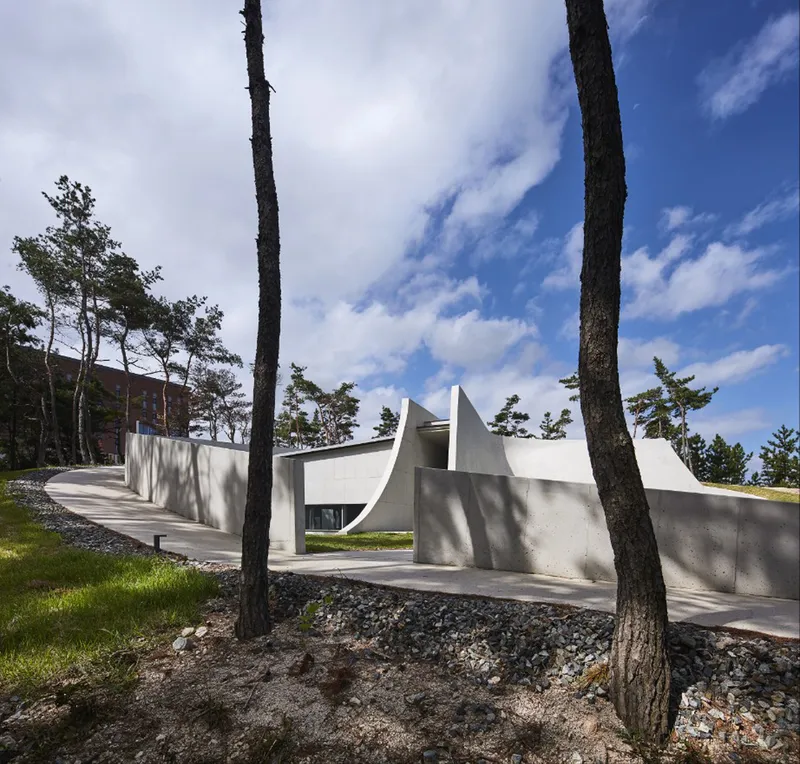
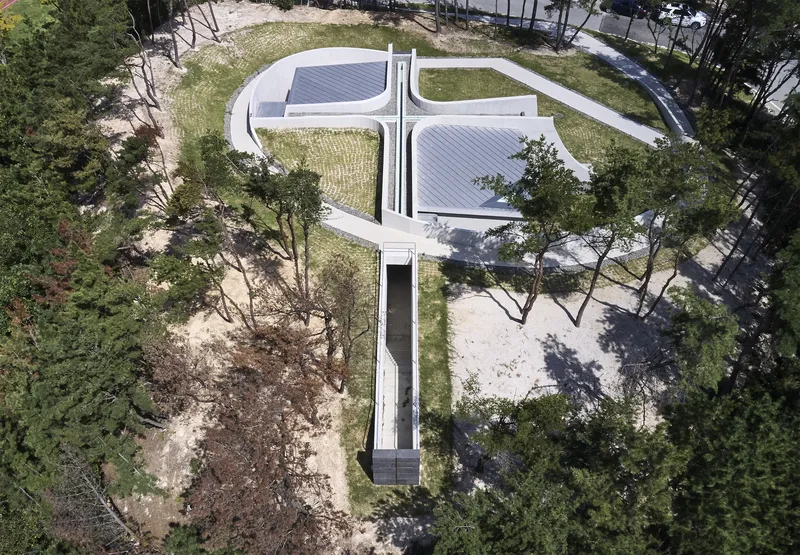
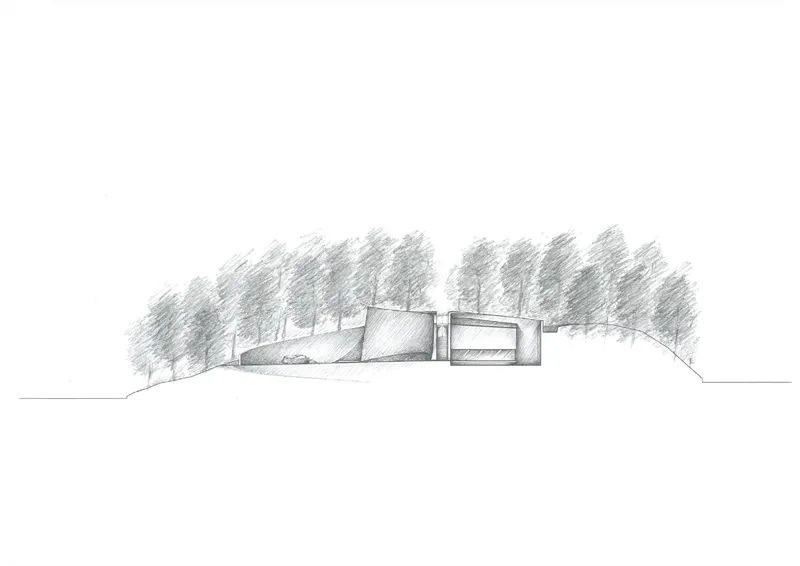
The project originated from a donation by an elder of a local church, carrying with it a strong sense of purpose and devotion. While multiple sites were considered, the chosen location, a small hill at the heart of the campus, was selected instinctively. To the architect, who is also a Christian, the overall campus form resembled a sheep, and this central hill became a symbolic heart. Positioned to remain visible from surrounding buildings, the chapel was conceived not to display the cross at human eye level, but to inscribe it from a heavenly perspective, emphasizing spiritual meaning over visual symbolism.
Architecture Shaped by Meaning and Restraint
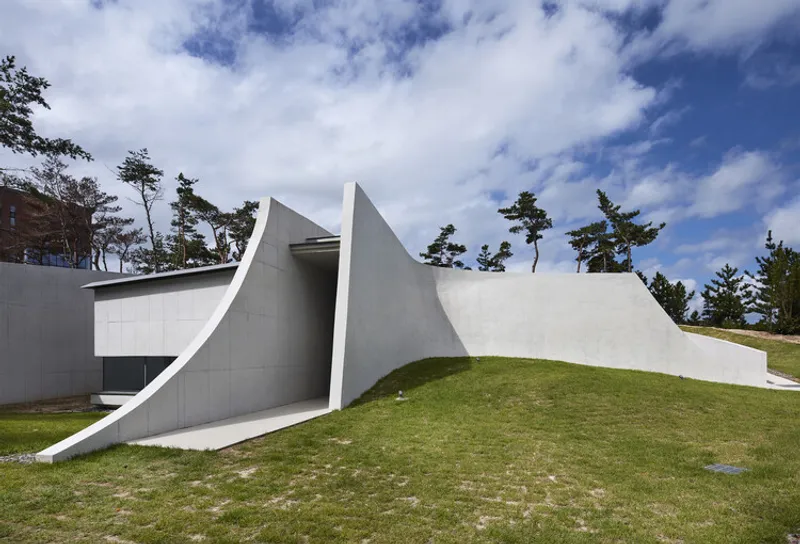
Working within a very limited budget, the design deliberately avoids decorative finishes. Instead, meaning is conveyed through pure architectural form and spatial sequence. Rather than accommodating multiple functions, the building is reduced to its essential role as a prayer room, allowing focus, silence, and contemplation to define the experience.
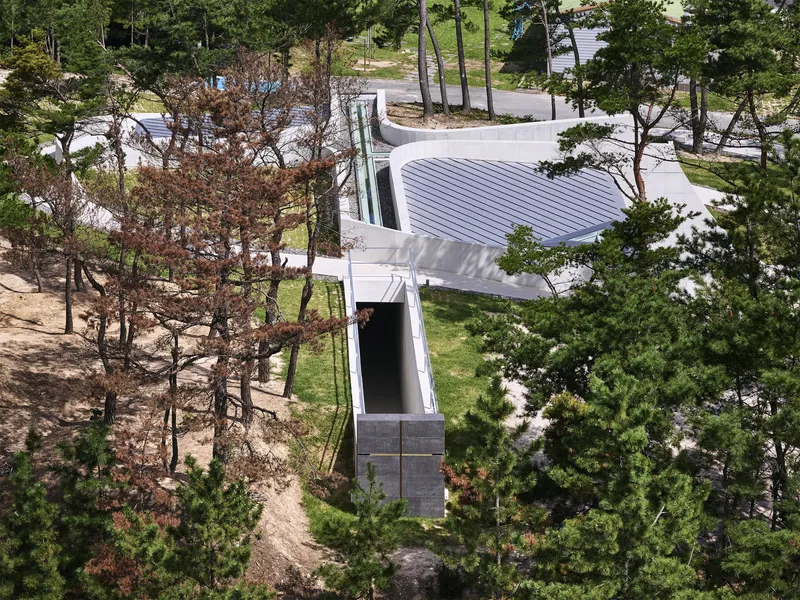
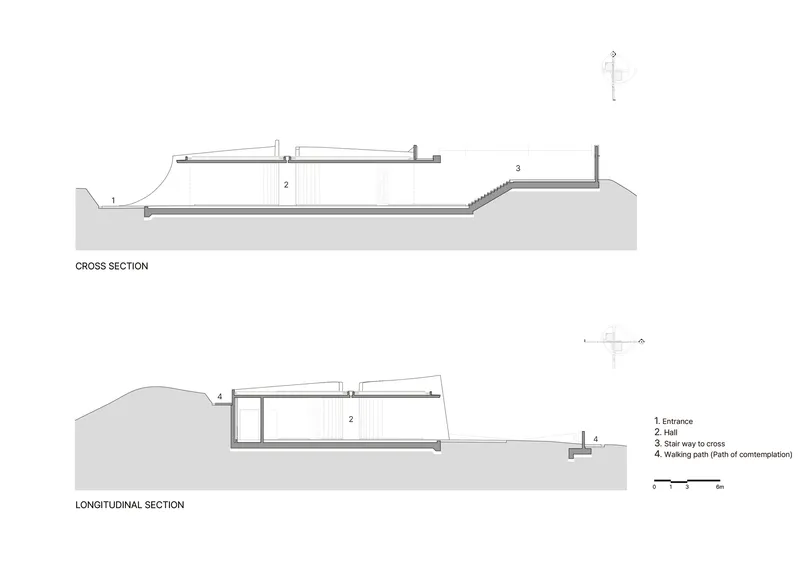
A meditative path begins at the base of the hill, symbolizing the start of prayer. From here, visitors ascend gradually, following ramps that wrap around the building and connect interior and exterior spaces into a continuous spiritual journey. This slow, intentional movement reinforces the act of entering prayer as a process rather than a moment.
Threshold, Space, and the Weight of the Cross
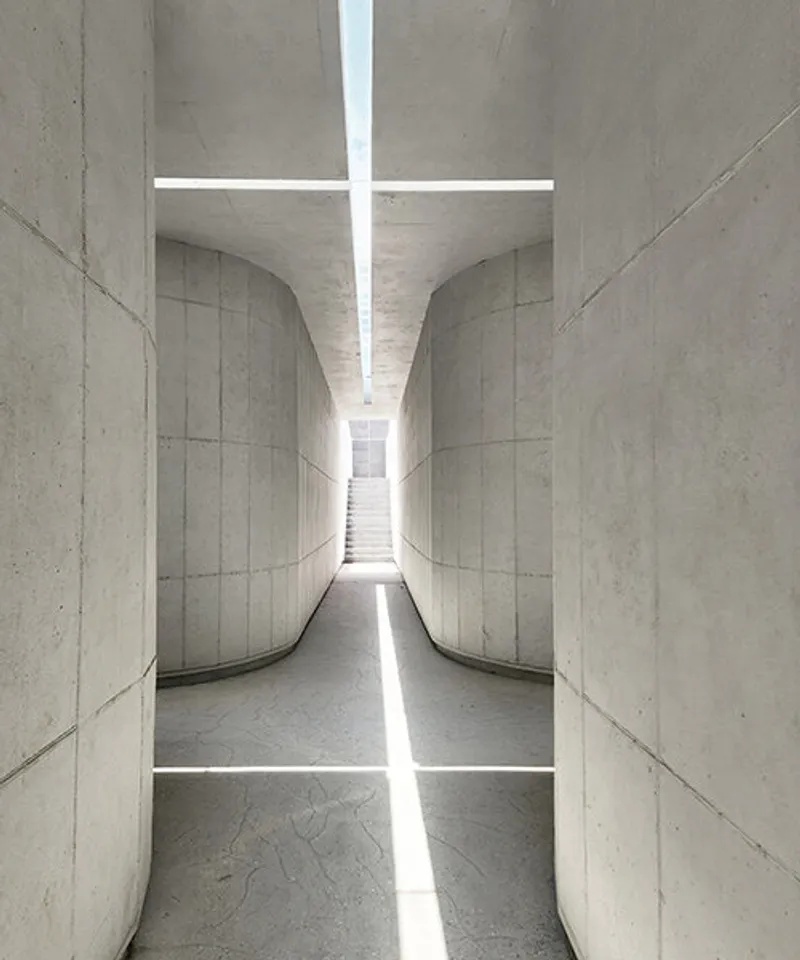
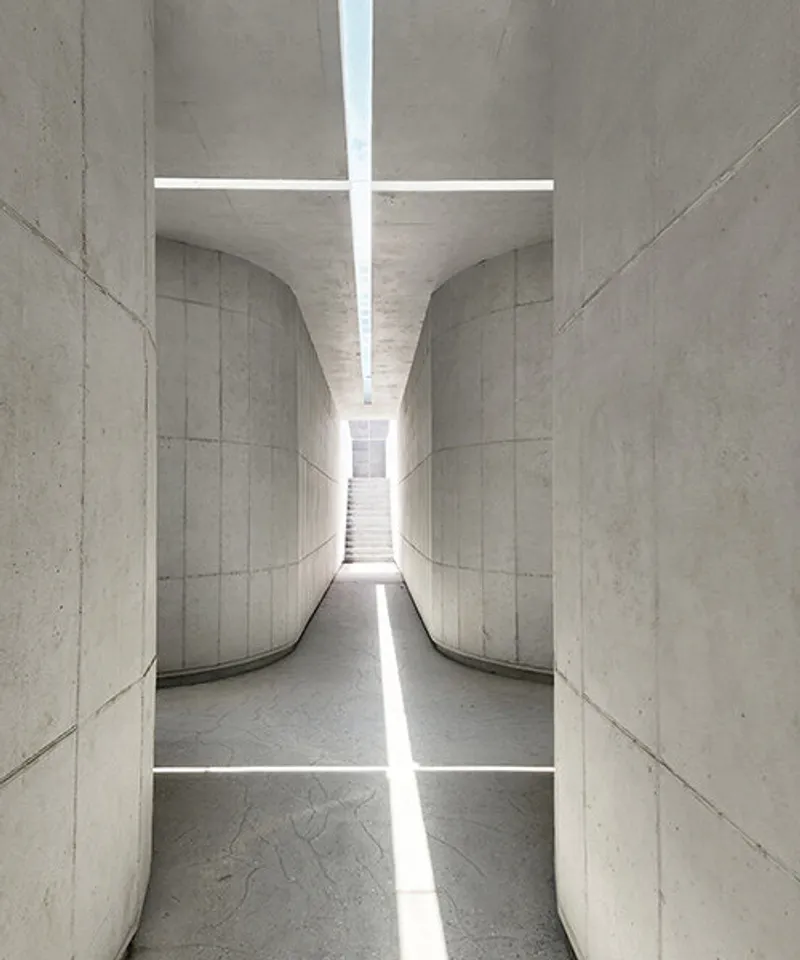
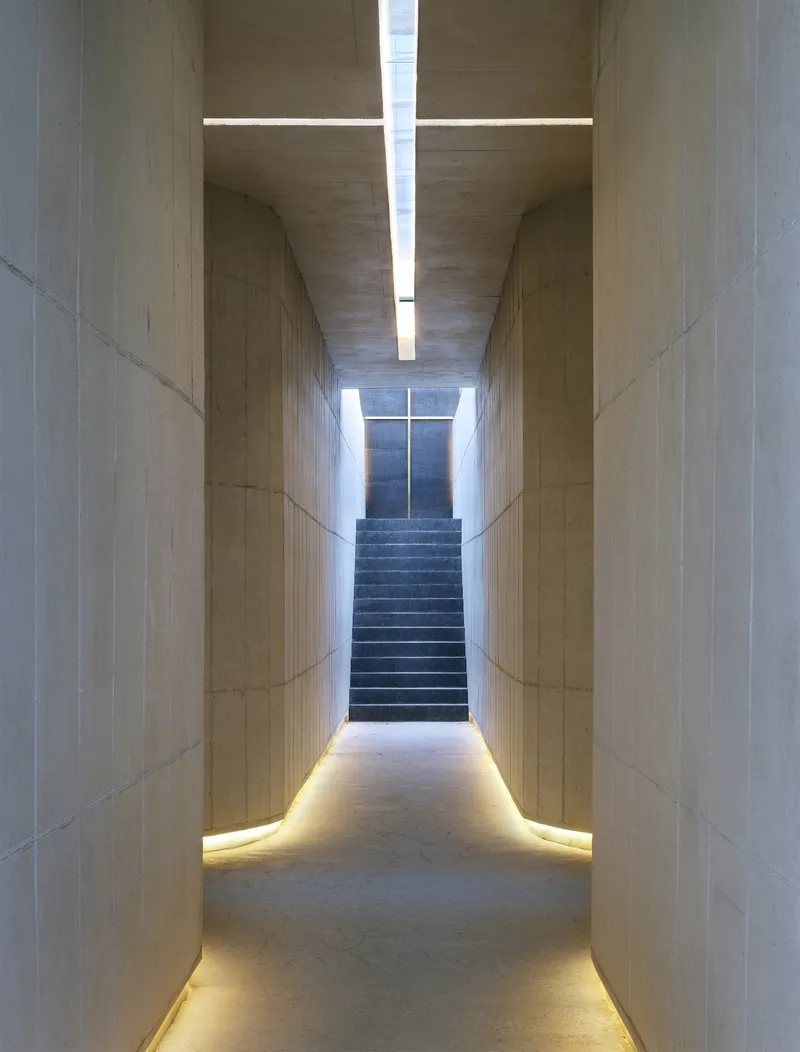
The entrance to Heaven’s Voice is intentionally narrow, comparable to a hallway rather than a conventional chapel entry. This deliberate constriction encourages individuals to enter one by one, preserving the sanctity of the space and fostering personal reflection before communal prayer.
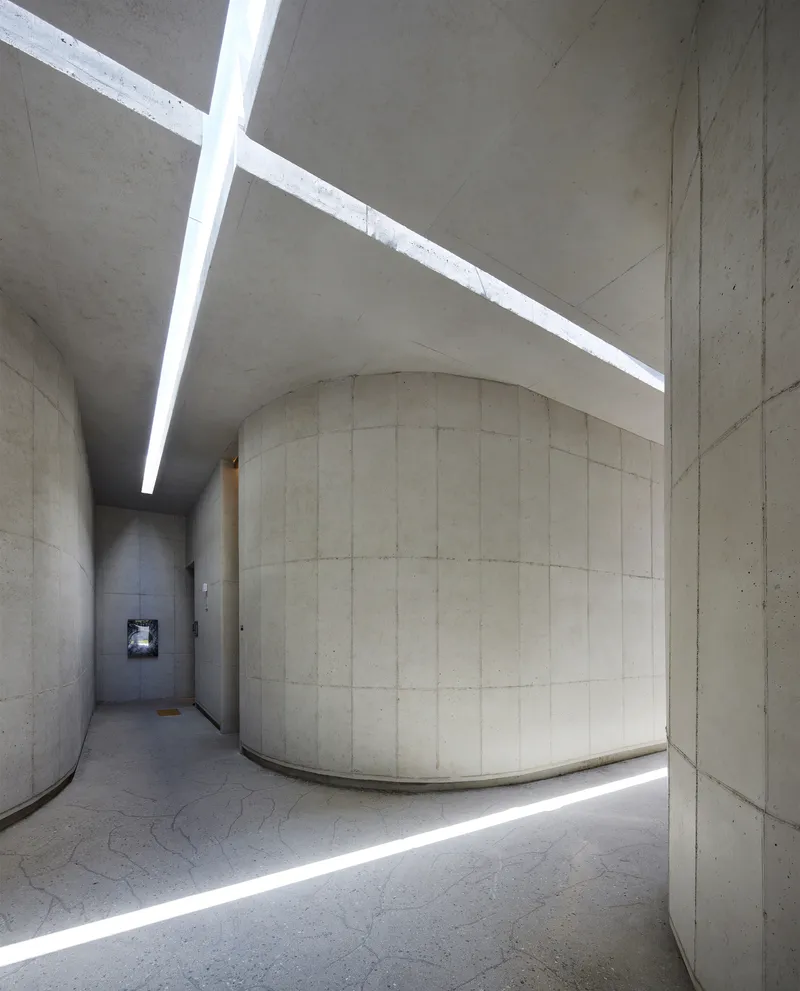
Inside the chapel, columns are completely omitted. A cantilevered structure supports the space, symbolizing the weight and sacrifice of the cross in Christianity. When seated, worshippers experience a horizontal connection with the surrounding landscape, grounding prayer in the natural world. Simultaneously, a skylight positioned above the cross establishes a powerful vertical connection, allowing natural light to descend from above as a metaphor for divine presence.
Light as Theology and Time
Natural light is the primary architectural material of Heaven’s Voice. From the moment one enters, light streaming through the skylight reveals the cross and animates the interior. As the day progresses, shifting light captures the passage of time, turning the chapel into a living expression of prayer, patience, and reflection.
This dialogue of horizontal and vertical light embodies communication between earth and heaven, between human presence and spiritual aspiration. The space is designed to hold the earnest prayers of students who will shape the future, offering a place where vision, restoration, and faith can quietly unfold.
A Sacred Space within an Academic Landscape
“Heaven’s Voice” demonstrates how minimal architecture, guided by belief and restraint, can create a profoundly moving spiritual environment. Through careful siting, symbolic form, and the poetic use of light, the prayer room stands as a contemporary chapel that honors faith while remaining deeply connected to nature and campus life.
More than a building, Heaven’s Voice is a spiritual landmark, inviting students and visitors alike to pause, reflect, and listen, both inwardly and heavenward.
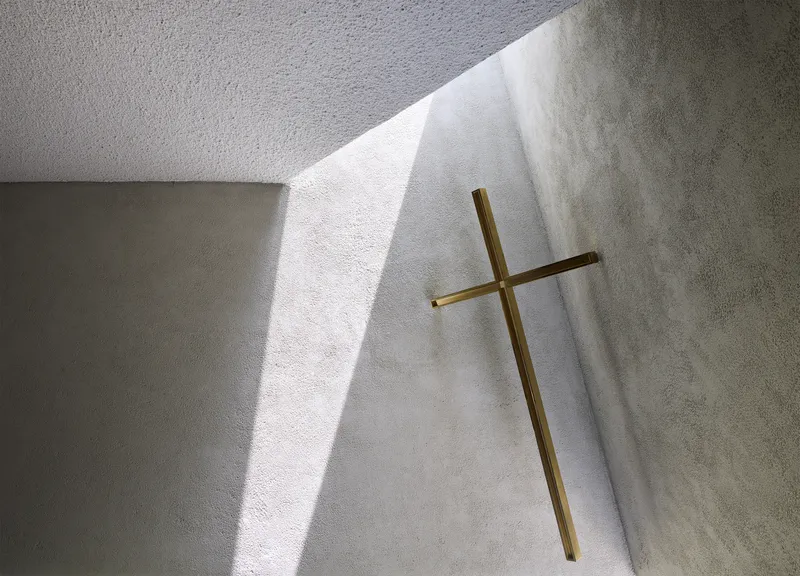
All the photographs are works of Yongkwan Kim


Popular Articles
Popular articles from the community

EW PARK: Sustainable Architecture Reimagines the Future of Urban Parking
EW PARK reimagines city parking as a modular wooden tower combining automation, solar energy, electric mobility, and adaptable urban design.

The Musturak Paradise: Senior Living Architecture for a Connected Future in Temara, Morocco
The Musturak Paradise reimagines senior living architecture in Temara via private homes, social spaces, culture, community, and shared care.

Co-Life: Senior Housing Design That Reconnects Older Adults With the City
Co-Life reimagines senior housing design through healing gardens, shared streets, workshops, and a sustainable community across generations.

Riyadh For All: Intergenerational Urban Design for Active Aging in Rabat
Riyadh For All reimagines urban design in Rabat with intergenerational co-living, adaptive courtyards, and Moroccan cultural exchange today.

Similar Reads
You might also enjoy these articles


Hodi-Mandai Geram
Project Function: Preservation and revitalization of the Intangible heritage and socio-spatial identity of the Hodi by Housing, Cultural Memory Center, Sacred Grove, landscape, local tourism economy


Olio Towers: A Mid-Rise for Performers That Fuses Housing, Rehearsal, and Stage
Located blocks from Houston's Theater District, this modular tower stacks living units around a central performance atrium.

Oasis: Modular Green Housing Carved into Dhaka's Urban Fabric
A shortlisted Plugin Housing entry reclaims unauthorized settlements in Dhaka with stepped concrete volumes, green roofs, and ventilation-driven design.

Black Hole: A Floating Megastructure for the Post-Physical Era
Emiliano Mazzarotto envisions a spherical, self-scaling arena where e-sports, digital hotels, and holographic stadiums replace traditional public space.

Explore Cultural Architecture Competitions
Discover active competitions in this discipline



Challenge to reimagine the Iron Throne


Photograph architecture without architects


Illustrate the lost glory of Angkor Wat - Render Challenge


Bring back Drive In's
Comments (0)
Please login or sign up to add comments
No comments yet. Be the first to comment!