

Hangzhou International Innovation Institute by HENN – A Landmark of Aeronautical Education, Architecture, and Sustainable Innovation
A serene modern home blending granite, wood, gardens, and ponds, creating peaceful indoor–outdoor living with natural light, privacy, and timeless design.


The Hangzhou International Innovation Institute, designed by the renowned architectural firm HENN, stands as a groundbreaking educational and research campus in Hangzhou, China. Completed in 2023, this 670,000 m² development redefines the future of aeronautical research, innovative learning environments, and sustainable campus planning. Located in the dynamic Yangtze River Delta, the institute brings together Beihang University’s international programs, advanced laboratories, collaborative workspaces, and a thriving science and technology park.


A Visionary Campus for Global Research and Innovation
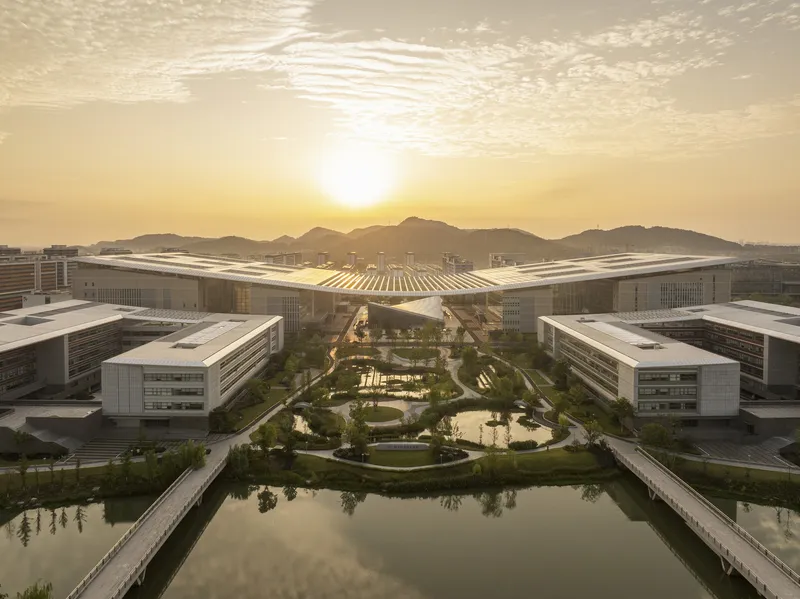
The master plan was developed as a hybrid of an academic institution and a technology research hub, designed to foster collaboration between students, educators, researchers, and commercial partners. Its planning revolves around two powerful design axes:
1. The North–South Academic Axis
This primary axis organizes all key learning and social spaces beneath the iconic Flying Roof, creating a unified academic core. It includes:
- research laboratories
- flexible classrooms
- administrative offices
- public amenities
- a world-class library
- cultural and social spaces
2. The East–West Landscape Axis
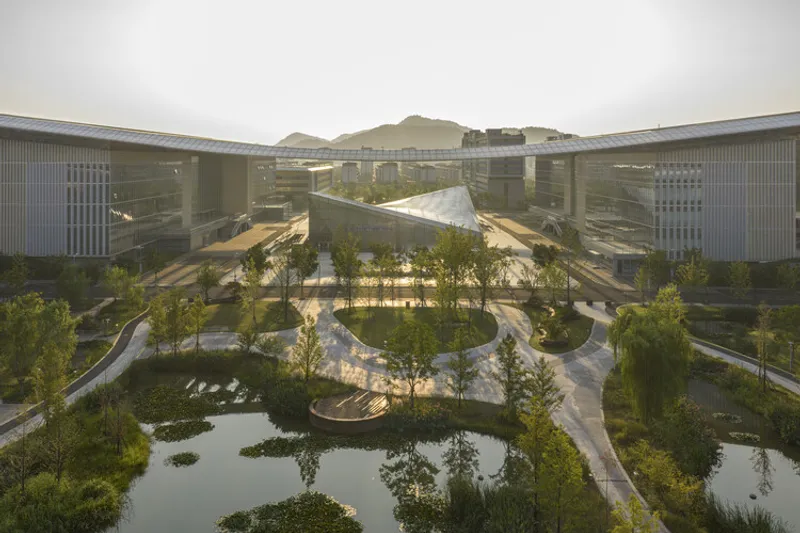
A sweeping green corridor connects the campus gardens, pathways, and open courtyards. This axis blends the institute with the surrounding landscape, creating a tranquil, walkable, and car-free environment.
Surrounding the main cluster are faculty residences, student housing, and sports facilities, forming a complete and self-sustaining educational ecosystem.
Design Inspired by Heritage and High-Tech Aeronautics
HENN’s design merges the historic cultural identity of Liangzhu, a UNESCO World Heritage site, with the architectural language of cutting-edge aviation engineering.
Materials and Influences
- Steel, concrete, glass, and mineral surfaces reflect modern industrial precision.
- Curved roof silhouettes and courtyard clusters reference traditional Chinese building culture.
- Water features and landscaped courtyards evoke ancient Hangzhou settlement patterns.
This synthesis results in a campus that feels both futuristic and deeply rooted in regional heritage.


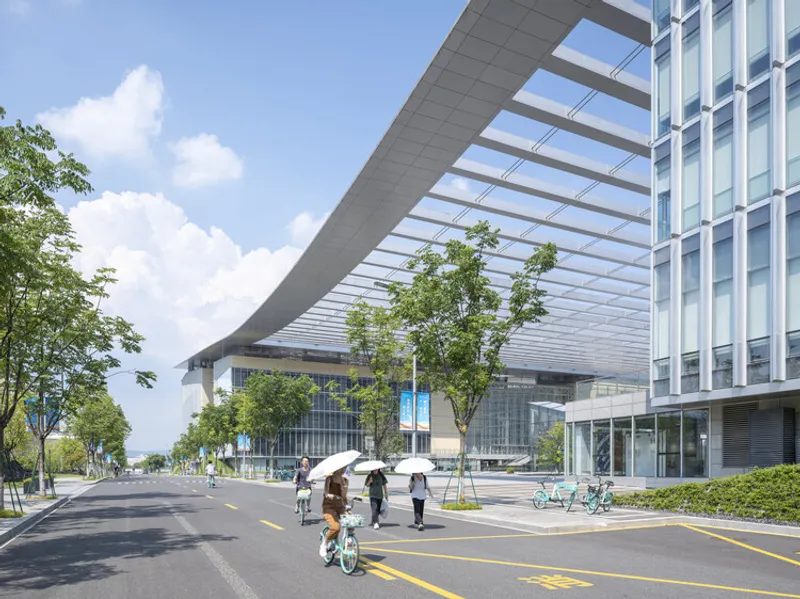
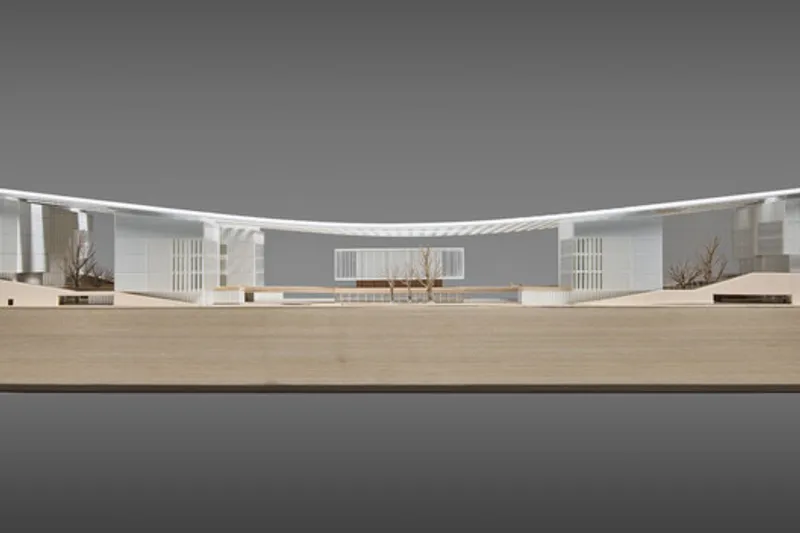
The Flying Roof – One of the World’s Largest Hanging Roof Structures
The centerpiece of the campus is the spectacular Flying Roof, an engineering marvel measuring:
- 395 meters long
- 168 meters wide
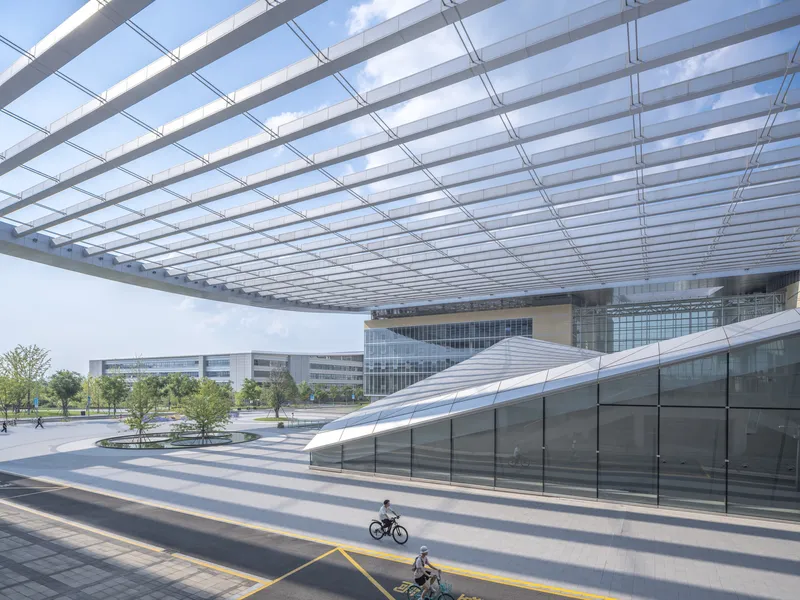
Its sweeping concave silhouette resembles an airplane wing or a bird in flight. This roof:
- unifies multiple buildings into one cohesive complex
- shades the central plaza and public spaces
- uses minimal materials through tensile engineering principles
- symbolizes the institute’s commitment to innovation
Below the Flying Roof lies the campus’s vibrant social heart—a plaza where academic and research communities converge.

Flexible Learning Spaces and Future-Ready Architecture
The academic buildings are designed with maximum adaptability. Classrooms and workspaces can transform into laboratories, offices, or collaborative environments, ensuring long-term functionality and sustainability. The integration of natural light, open courtyards, and interlinked garden paths promotes productivity, wellness, and community engagement.
A Landscape Designed as a Living, Breathing Ecosystem
The site is divided into three horizontal layers:
- Natural terrain and waterways
- Low, flowing building volumes
- A floating grid roof structure
The landscape acts as an extension of the learning environment:
- islands, canals, and gardens form microclimates
- courtyards provide shaded outdoor study areas
- gentle transitions between indoor and outdoor spaces reflect the subtropical climate
The result is a campus that feels like a contemporary garden city, inviting movement, reflection, and discovery.

A Campus Rooted in History, Designed for the Future
The Hangzhou International Innovation Institute stands as a visionary landmark that bridges 5,000 years of regional history with the ambitions of modern aeronautical research and global innovation. By integrating cultural heritage, advanced engineering, and sustainable design, HENN has created a campus that not only serves today’s academic community but also inspires future generations of innovators and thinkers.


All the photographs are works of Fangfang Tian, STUDIO FANG


Popular Articles
Popular articles from the community


Tsunami Convergenics: Turning Catastrophic Ocean Forces into Underwater Housing Infrastructure
A speculative underwater settlement off the coast of Onagawa, Japan, treats tsunamis and typhoons as energy sources rather than threats.

Opera by the Sea Estonia: Three Shells Dissolving Architecture into Tallinn's Coastline
A winning opera house proposal replaces monumental form with interconnected shells that blur the boundary between building, park and Baltic Sea.

Manzana Morphosis: Stretching Barcelona's Grid into a Living Landscape for 2050
A radical reworking of the Eixample manzana turns density into a tool for generous public space, vertical ecology, and environmental performance.

Cloaked Colonization: A Mobile Underwater Habitat That Moves Like a Fish
Micah Abaya's shortlisted EHC Pacific entry reimagines ocean settlement as a dispersed network of self-sustaining architectural organisms.

Similar Reads
You might also enjoy these articles


Hodi-Mandai Geram
Project Function: Preservation and revitalization of the Intangible heritage and socio-spatial identity of the Hodi by Housing, Cultural Memory Center, Sacred Grove, landscape, local tourism economy


Olio Towers: A Mid-Rise for Performers That Fuses Housing, Rehearsal, and Stage
Located blocks from Houston's Theater District, this modular tower stacks living units around a central performance atrium.

Oasis: Modular Green Housing Carved into Dhaka's Urban Fabric
A shortlisted Plugin Housing entry reclaims unauthorized settlements in Dhaka with stepped concrete volumes, green roofs, and ventilation-driven design.

Black Hole: A Floating Megastructure for the Post-Physical Era
Emiliano Mazzarotto envisions a spherical, self-scaling arena where e-sports, digital hotels, and holographic stadiums replace traditional public space.

Explore Zhejiang University Of Tech Competitions
Discover active competitions in this discipline

Challenge to design public laboratory

Challenge to reimagine the Iron Throne

Photograph architecture without architects

Illustrate the lost glory of Angkor Wat - Render Challenge
Comments (0)
Please login or sign up to add comments
No comments yet. Be the first to comment!