

HasleTre Office by Oslotre Architects: A Benchmark for Sustainable Mass Timber Commercial Architecture in Oslo
HasleTre Office is a sustainable, mass timber building in Oslo emphasizing flexibility, reuse, low carbon design, and healthy interiors.


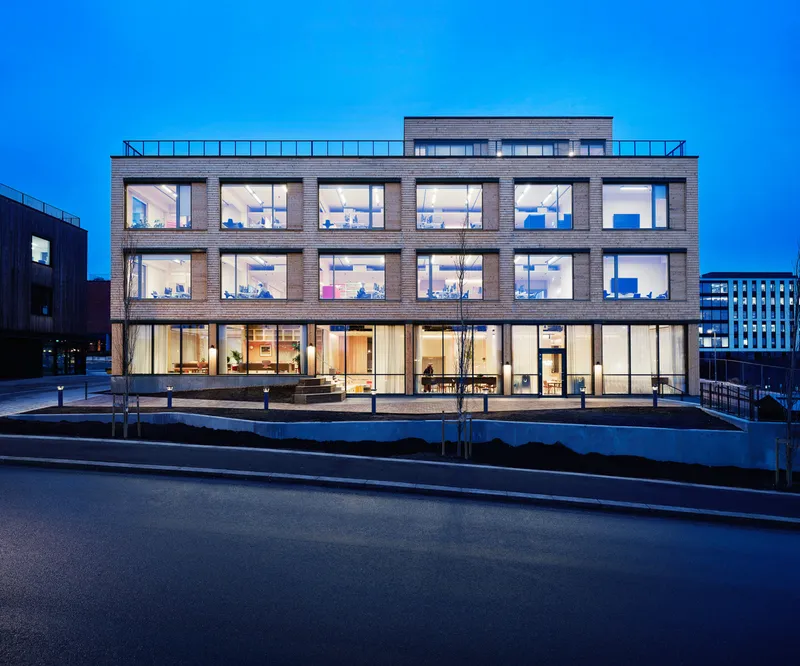
Located on the periphery of Oslo’s central city, the HasleTre Office by Oslotre Architects exemplifies a future-forward model for sustainable commercial architecture in Norway. Completed in 2022, the 3,000-square-meter office building spans five levels—basement to rooftop terraces—and sets a new standard for circular design, environmental responsibility, and workplace well-being.
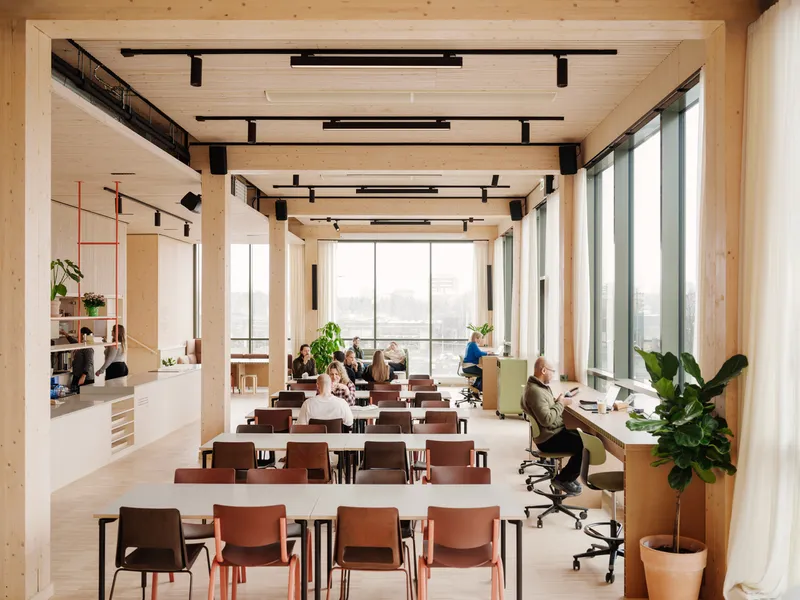
A Vision Rooted in Circularity and Carbon Reduction
The project began with a clear mission: to create a flexible, low-carbon commercial building using disassemblable, reusable elements. Certified to BREEAM-NOR Excellent, HasleTre achieves a 59% reduction in greenhouse gas emissions compared to traditional buildings. Its holistic sustainability approach is not limited to energy performance; it extends to structural systems, material life cycles, and even furniture sourcing.
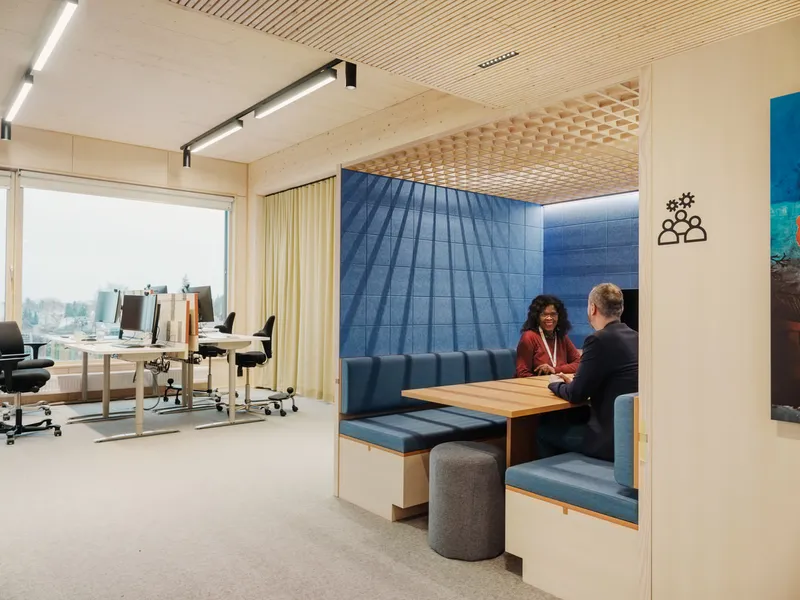
Engineered in Timber: Structural and Environmental Innovation
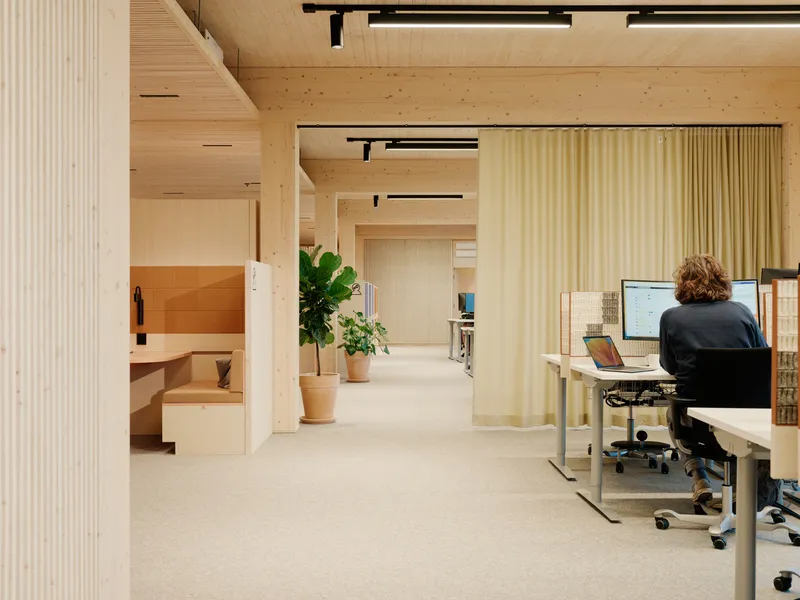
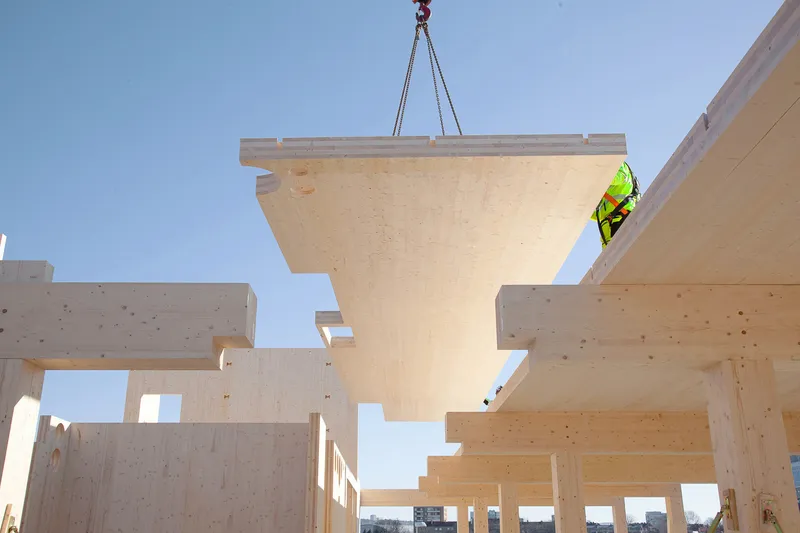
HasleTre employs a full mass timber structural system, organized around a 5x5 meter grid that allows for versatile internal configurations—including private offices, collaborative zones, and meeting rooms. The load-bearing structure is crafted from glulam beams and columns joined by beech dowels, and CLT (cross-laminated timber) walls and slabs fixed with X-fix connectors. This system eliminates the need for conventional steel or aluminum joints, resulting in a 70% reduction in steel usage throughout the building.
The use of standardized timber components with minimal perforation minimizes material waste during fabrication, optimizes transport efficiency, and enables swift on-site assembly. This streamlined approach helped complete construction in just nine months, culminating in the move-in of Save the Children Norway, the current tenant.
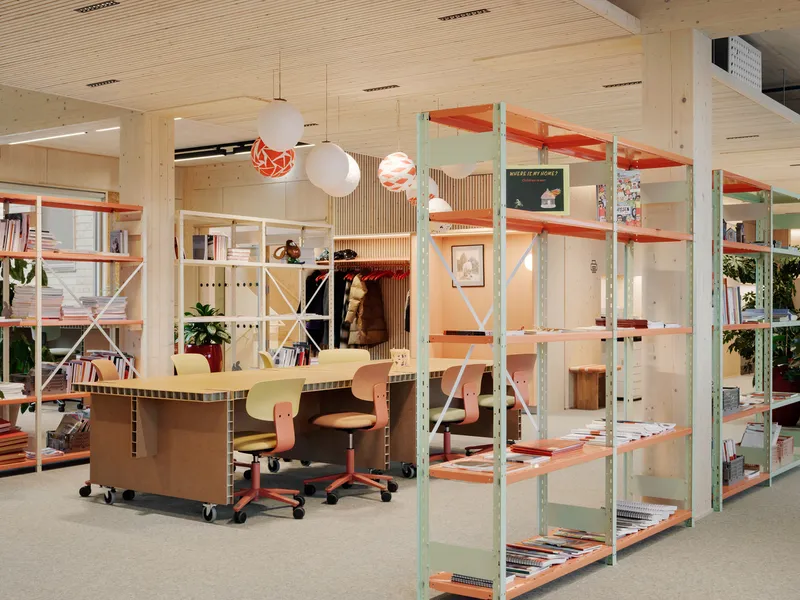
Designing for Disassembly, Reuse, and Second-Life Value
Oslotre's approach goes beyond structure. Every design choice supports future adaptability, simple disassembly, and material reuse. Much of the building incorporates recycled and upcycled materials:
- Ventilation systems and acoustic ceiling tiles were salvaged and reused
- Sanitary equipment and floor finishes in secondary rooms come from existing sources
- 60% of furniture is upcycled, while the remaining 40% is crafted from biodegradable or post-industrial materials, including plastic waste from oceans
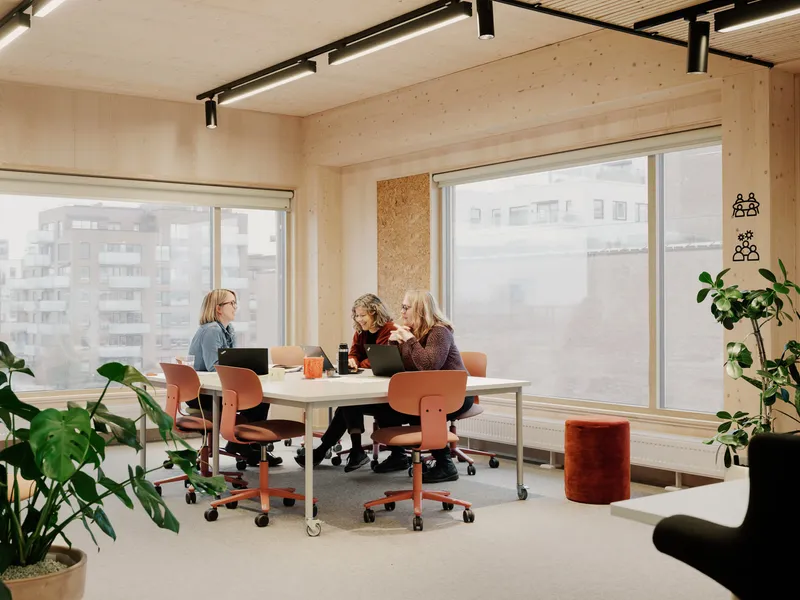
Natural Materials for Healthier Interiors
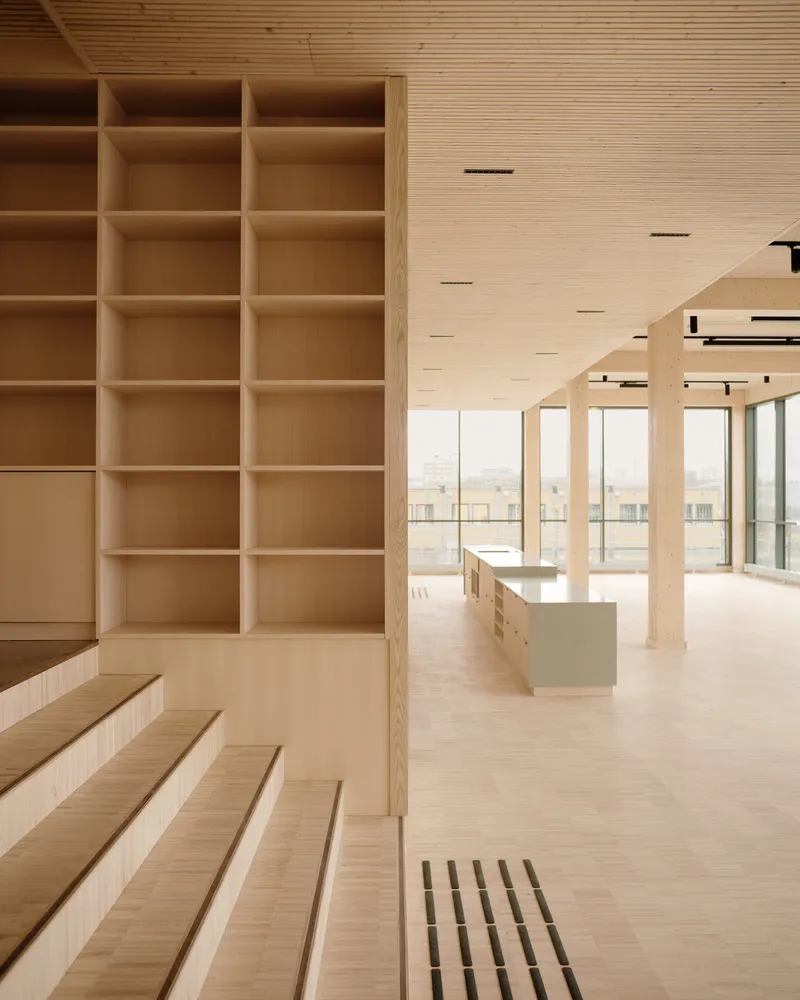
HasleTre’s interiors celebrate exposed wood, cork, and wool, secured without screws, favoring wooden nails for a low-impact, breathable interior. These biological materials contribute not just to aesthetic warmth but also to energy efficiency and occupant health. The building’s hydrothermal mass properties stabilize indoor climate, reducing the need for mechanical heating and cooling while enhancing occupant comfort, focus, and wellbeing.
Built to Last, Built to Adapt
By emphasizing simplicity and durability, HasleTre is crafted to accommodate evolving spatial and technical needs. Its modular structure and high-quality detailing ensure longevity, while its sustainable philosophy demonstrates how commercial architecture can reduce waste and foster circular economies without compromising aesthetics or functionality.
A Collaborative Effort and Industry Inspiration
From planning authorities to contractors and designers, the project showcases the power of cross-disciplinary collaboration. HasleTre has already earned recognition, winning the 2023 Norwegian Building Industry’s Timber Building of the Year. More importantly, it serves as a model for regenerative design, urging architects and developers alike to reimagine the future of workspaces through the lens of sustainability.
All photographs are works of
Dmitry Tkachenko, Einar Aslaksen


Popular Articles
Popular articles from the community


Cube Design Draws an Ecological Corridor Between Two Shenzhen Hills with the Nankai Building
Beside Shenzhen's container docks, the Nankai Building pairs stacked balconies with a climbing green screen to connect two hillsides across its height.

David Macias Steps a Doorless Stone and Plaster House Down a Tropical Colombian Hillside
In the humid hills of Colombia, Threshold House replaces the front door with an open void and terraces its 850 m² down the slope instead of fighting it.

Architekt Andreas Gruber Scatters 23 Dark Timber Chalets Across a South Tyrolean Forest Edge
In Molini di Tures, Amonti Chalets breaks a resort into a hamlet of gabled timber houses, with parking, storage and services pushed into the slope.

Jaramillo Van Sluys Arquitectura and Urbanismo Turn a Demolished Registry Lot in Quito into an Orchard Plaza
In Quito's Centro Histórico, a 2,800 m² plaza exposes the San Agustín convent wall and redraws its lost Augustinian orchard in volcanic stone.

Similar Reads
You might also enjoy these articles


Hodi-Mandai Geram
Project Function: Preservation and revitalization of the Intangible heritage and socio-spatial identity of the Hodi by Housing, Cultural Memory Center, Sacred Grove, landscape, local tourism economy


Olio Towers: A Mid-Rise for Performers That Fuses Housing, Rehearsal, and Stage
Located blocks from Houston's Theater District, this modular tower stacks living units around a central performance atrium.

Oasis: Modular Green Housing Carved into Dhaka's Urban Fabric
A shortlisted Plugin Housing entry reclaims unauthorized settlements in Dhaka with stepped concrete volumes, green roofs, and ventilation-driven design.

Black Hole: A Floating Megastructure for the Post-Physical Era
Emiliano Mazzarotto envisions a spherical, self-scaling arena where e-sports, digital hotels, and holographic stadiums replace traditional public space.

Explore Office Building Competitions
Discover active competitions in this discipline

Challenge to reimagine the Iron Throne

Photograph architecture without architects

Illustrate the lost glory of Angkor Wat - Render Challenge

Design challenge to reuse E-waste
Comments (0)
Please login or sign up to add comments
No comments yet. Be the first to comment!