
Heart of the Ocean: A Radical Vision for Sustainable Ocean Architecture
A visionary sustainable ocean architecture project transforming an oil rig into a kinetic museum powered by tides, water, and human experience.


In an era defined by environmental urgency and adaptive reuse, Heart of the Ocean emerges as a compelling exploration of sustainable ocean architecture. Designed by Krzysztof Galant, this shortlisted entry from Proximity Island 2019 reimagines the obsolete oil rig not as an industrial relic, but as a living, breathing cultural and ecological system embedded within the sea.
The project proposes a bold transformation. Instead of dismantling offshore infrastructure, it integrates it into a new architectural language, where water, energy, and human interaction converge into a kinetic spatial experience.
Reframing the Oil Rig: From Extraction to Experience
At its conceptual core lies a simple yet powerful provocation: what if the ocean reclaimed the oil rig, not as destruction, but as integration?
This shift reframes the oil rig from a symbol of extraction into a symbol of coexistence. The architecture becomes a hybrid entity, merging rigid structural logic with fluid environmental forces. The result is a building that is not static, but dynamic, constantly shaped by water, energy, and movement.
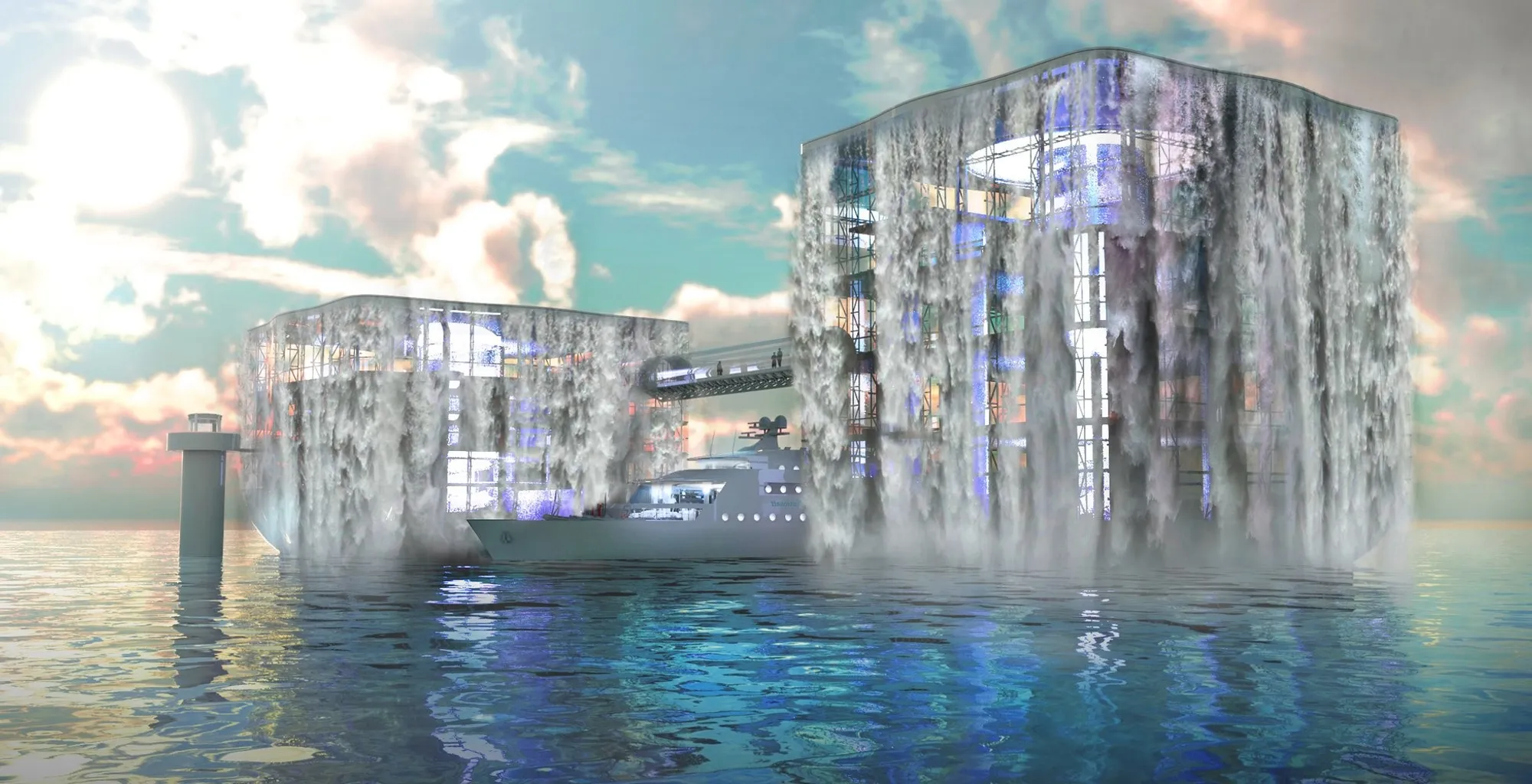
The defining gesture is the creation of two monumental oceanic waterfalls cascading over the structure. These are not merely aesthetic features but performative systems, turning the building into a kinetic interface between human occupation and ocean power.
Kinetic Hybrid Systems and Ocean Energy Integration
The project operates through a sophisticated environmental system embedded beneath the water surface. Turbines and pumps harness ocean currents, converting tidal energy into electricity that powers the entire facility.
Water is circulated vertically through the structure, flowing across interior and exterior surfaces. This continuous movement creates varied atmospheric conditions across different spaces, transforming each level into a unique sensory environment.
This system performs multiple functions simultaneously:
- Energy generation through tidal turbines
- Water circulation creating immersive spatial effects
- Oxygenation of ocean water to reduce ecological dead zones
- Climatic regulation within the building envelope
The architecture therefore operates as both infrastructure and environment, blurring the boundary between building and ecosystem.
Spatial Organization: A Journey Through Water and Meaning
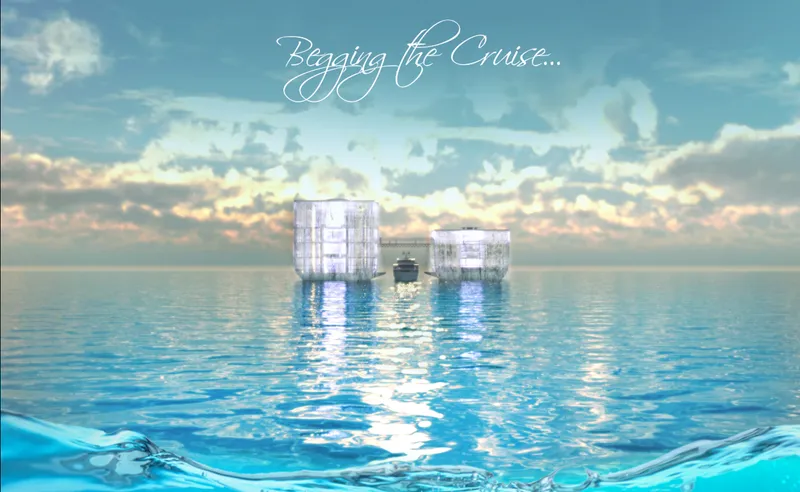
The project is organized into two primary volumes connected by a bridge, each accommodating distinct programs while maintaining a unified experiential narrative.
Arrival and Threshold
The journey begins with a ceremonial mooring ritual. Visitors arrive by boat, physically crossing the boundary between land and sea. This transition is intentionally choreographed, reinforcing the conceptual shift from human territory to oceanic domain.
Building A: Public Interface and Cultural Core
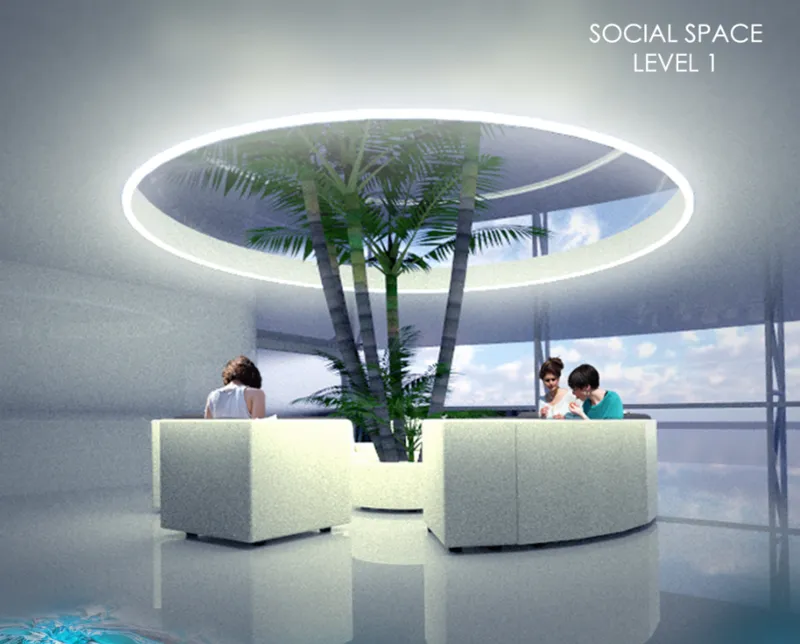
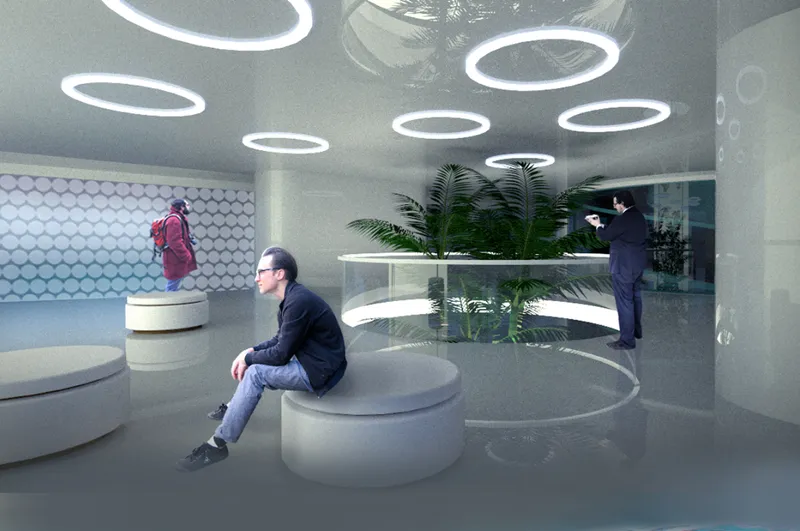
The first structure functions as the main public hub, housing reception areas, ticketing, offices, and social spaces. Circulation is organized around a central vertical core, where a spiral platform and elevator system move visitors through the building.
A repurposed drilling pipe is transformed into a diving lift, reinforcing the narrative of adaptive reuse while enabling vertical movement through water.
Building B: Research, Living, and Production
The second structure integrates laboratories, engine rooms, and accommodation units. It also includes shared facilities such as restaurants, lounges, and artist workspaces.
This hybridization of living, working, and research spaces creates a self-sustaining micro-environment, extending the building’s function beyond a museum into a platform for ongoing exploration.
Thematic Exhibition Spaces: Intimacy, Proximity, Distance
The museum experience unfolds across three major exhibition halls, each exploring a different relationship between humans and the ocean.
Hall of Intimacy
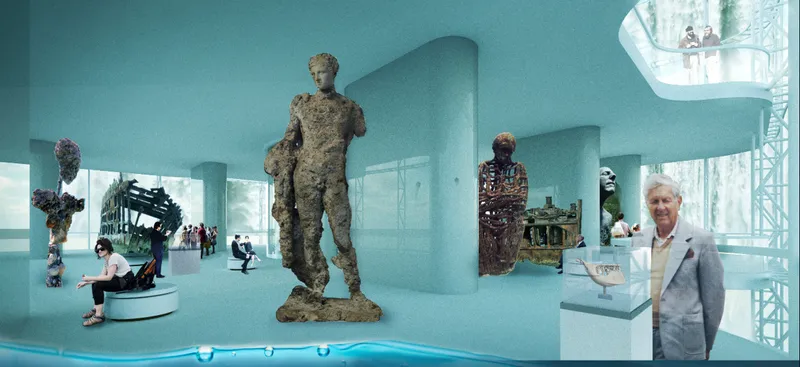
This space introduces visitors to ecological and historical narratives. Exhibitions focus on human impact on marine environments, encouraging reflection and awareness. The design fosters closeness, both physically and emotionally, between viewer and subject.
Hall of Proximity
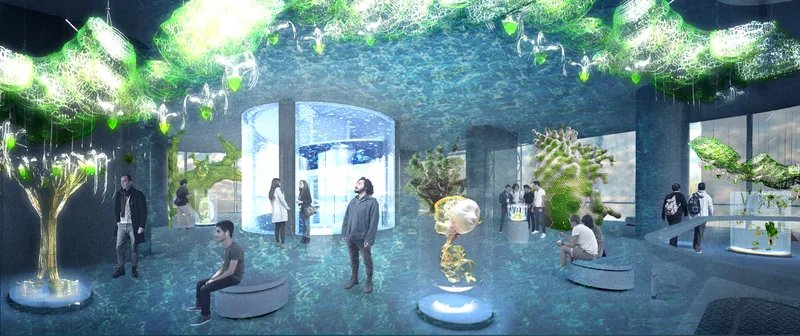
Here, the experience becomes immersive and scientific. Aquariums, bio-art installations, and flowing water systems create a direct sensory connection to oceanic life. Visitors do not simply observe the ocean; they feel embedded within it.
Hall of Distance
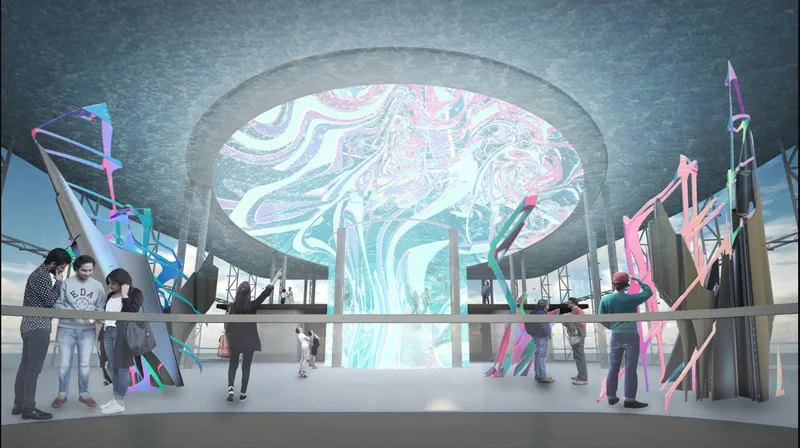
The final hall expands perception toward the infinite. Large-scale digital installations and VR environments explore the vastness of the ocean and its unknown territories. The elevated terrace reinforces this experience, offering uninterrupted views of horizon and sky.
Structural Strategy and Adaptive Reuse
A key dimension of the project lies in its construction logic. Rather than discarding the existing oil rig, the design reuses its structural components.
Steel elements are repurposed to form new façade systems, while concrete remnants are adapted into breakwaters and support structures. This approach minimizes material waste while reinforcing the narrative of transformation.
The modular system allows flexibility in construction and expansion. Each unit can be fabricated, transported, and assembled offshore, aligning with contemporary prefabrication strategies in marine architecture.
Environmental Performance and Ocean Regeneration
Beyond energy production, the project actively contributes to ocean health. The integration of oxygen-generating turbines addresses the issue of underwater dead zones, improving marine biodiversity.
Water circulation systems also enhance thermal performance, reducing reliance on artificial cooling. The building effectively becomes a mediator of environmental processes rather than a passive consumer of resources.
This positions Heart of the Ocean not just as sustainable architecture, but as regenerative infrastructure.
Rethinking the Future of Offshore Architecture
As global awareness of ecological issues intensifies, projects like this signal a shift in how we approach offshore structures. Decommissioned oil rigs, often seen as liabilities, can become opportunities for cultural, environmental, and technological innovation.
Heart of the Ocean demonstrates how sustainable ocean architecture can redefine these typologies. It proposes a future where architecture does not resist natural forces but collaborates with them, creating spaces that are both experiential and ecological.
In this vision, the ocean is no longer a backdrop. It becomes the primary driver of design, performance, and meaning.
Krzysztof Galant’s Heart of the Ocean stands as a powerful exploration of transformation. It challenges conventional boundaries between architecture, infrastructure, and environment, proposing a new paradigm rooted in synergy rather than extraction.
By merging kinetic systems, adaptive reuse, and immersive spatial design, the project sets a precedent for the future of marine architecture. It is not just a museum in the ocean. It is architecture that thinks, moves, and breathes with it.



Popular Articles
Popular articles from the community


Conexión: Biophilic Design Reimagines High-Rise Living in Hong Kong
Conexión reimagines high-rise living in Hong Kong through biophilic design, green facades, shared spaces, daylight, water and nature within.

The Musturak Paradise: Senior Living Architecture for a Connected Future in Temara, Morocco
The Musturak Paradise reimagines senior living architecture in Temara via private homes, social spaces, culture, community, and shared care.

Co-life: Sustainable Architecture for Age-Friendly Community Living
Co-life reimagines sustainable architecture for seniors through courtyards, rammed earth, shared gardens, and spaces designed for belonging.

The Ocean Hive: Sustainable Architecture for a Self-Sufficient Civilization at Sea
The Ocean Hive imagines sustainable architecture at sea, where modular habitats, algae, wave power and ocean waste sustain a growing colony.


Similar Reads
You might also enjoy these articles

Eco Chapel: A Green Architecture Pavilion Designed in Symbiosis with the Forest
Eco Chapel uses green architecture to weave prayer, learning and reuse into a forest pavilion shaped by modular hexagonal canopies for life.
Kaffeebühnen: Coffee Shop Architecture Designed as a Civic Stage Between Vienna’s City and Park
Kaffeebühnen turns coffee shop architecture into a civic stage, linking Vienna’s park edge, urban life, warm timber yards, and coffee craft.
Healing Façade: Sustainable Architecture for Reforestation, Community, and Sacred Ecology in Ethiopia
Healing Façade reimagines sustainable architecture as a living wall that restores soil, catches water and renews Ethiopia's forest churches.


Urban Forest: A Vertical Ecosystem for 5,000 Workers in Singapore's Changi Business Park
Radially stacked pods and layered green decks turn a 7-acre plot into 47 acres of ecological workspace projected for 2040.

Explore Ocean Architecture Competitions
Discover active competitions in this discipline



Challenge to reimagine the Iron Throne


Photograph architecture without architects


Illustrate the lost glory of Angkor Wat - Render Challenge


Design challenge to reuse E-waste
Comments (0)
Please login or sign up to add comments
No comments yet. Be the first to comment!