

Hilltop House by Office Archipel: A Contemporary Community Center Rooted in Taiwan’s Rural Landscape
A hilltop community center in rural Taiwan blending sloped roofs, natural light, and warm materials to create a humble yet monumental gathering space.


A New Community Landmark in Rural Kaohsiung
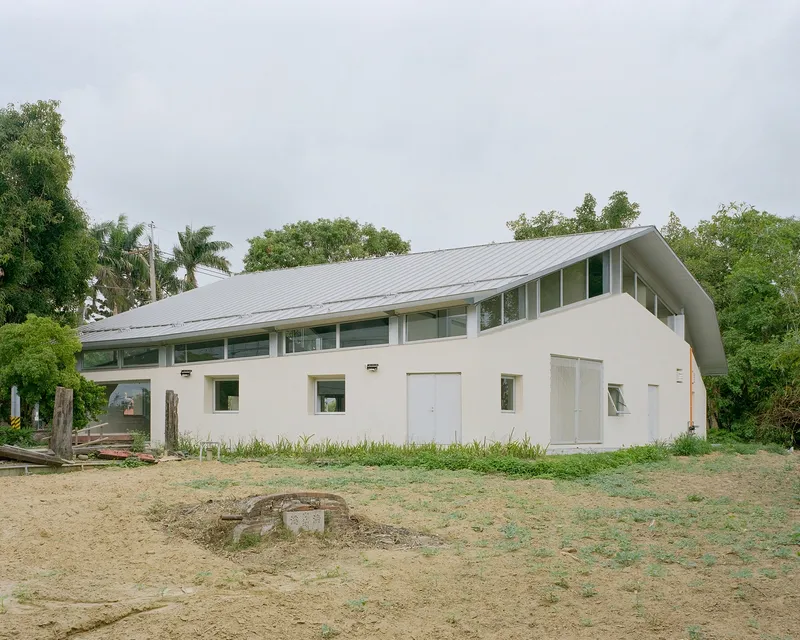
Hilltop House by Office Archipel is a 335 m² community center in Kaohsiung City, Taiwan, designed by lead architects Joel Chen and Mei Luo. Positioned atop a gentle hill, the project embraces the surrounding rural scenery—aged mango trees lining the road in front and a dense bamboo grove rising behind the site. The architecture responds directly to these natural elements, creating a community building that is both contextual and contemporary, familiar yet quietly monumental.


A Building Shaped by Constraints and Landscape
Approaching the site along an uphill country road, visitors first encounter the rhythmic line of mature mango trees before the building slowly reveals itself. Due to the site’s tight and irregular boundaries—common in rural Taiwanese villages—the building adopts a polygonal footprint. Slightly shifting eave heights and a sloped roof soften its massing and help it nestle into the natural backdrop.
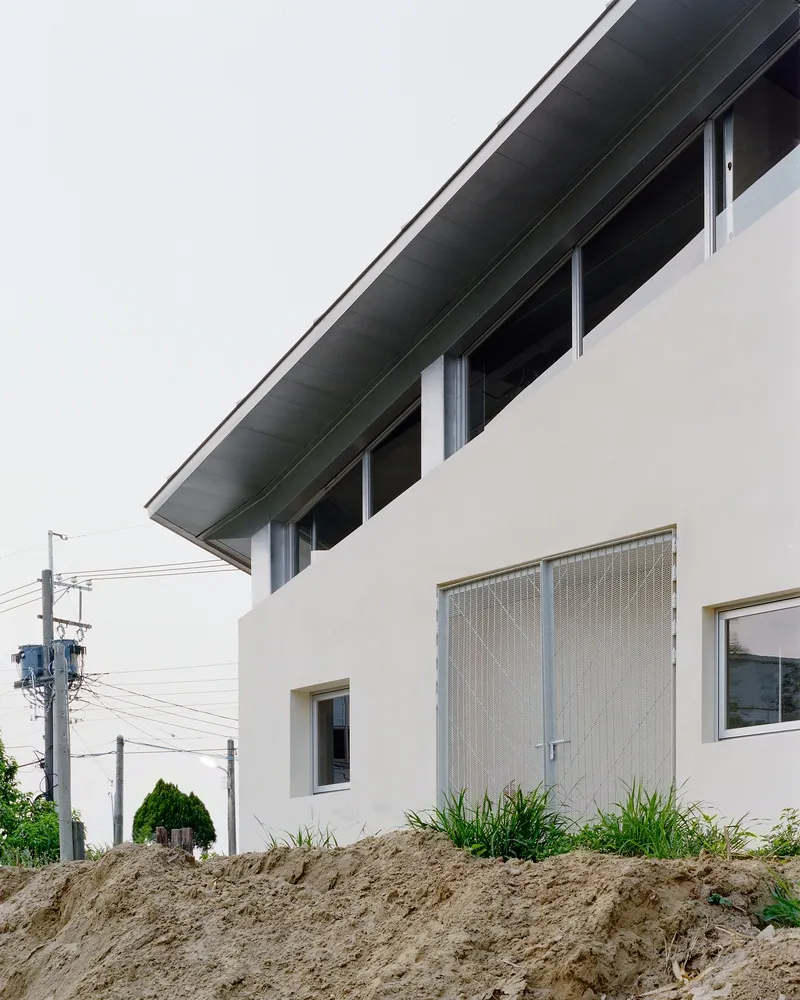
The sloped roof plays a crucial role in the design strategy. It allows the structure to visually merge with the tree canopy while creating a human-centered scale that reflects local building traditions. The architecture consciously embraces the constraints of the small, irregular plot, transforming them into a dynamic formal expression that feels authentic to its rural context.

A Processional Entry and Expansive Interior Volume
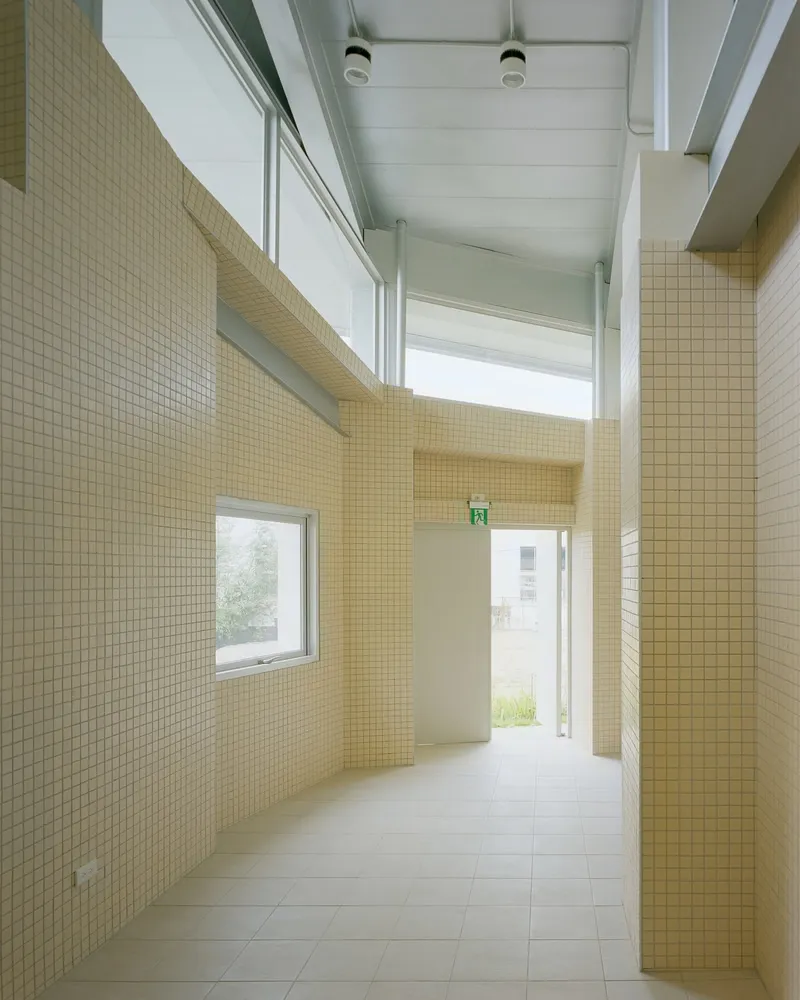
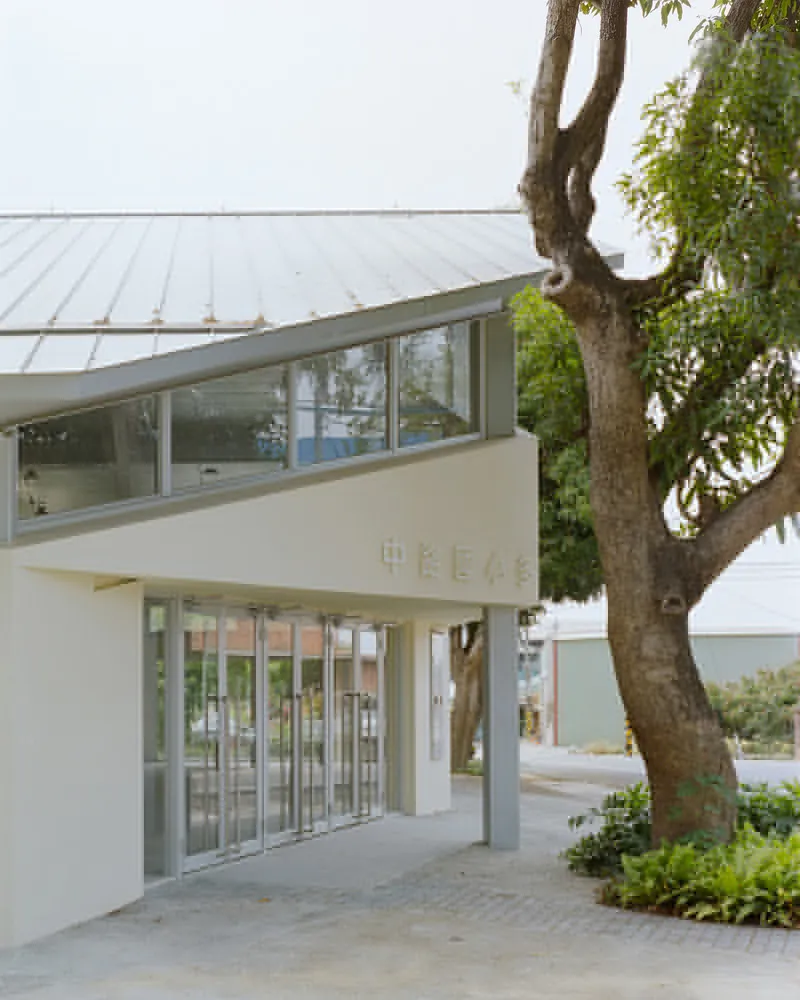
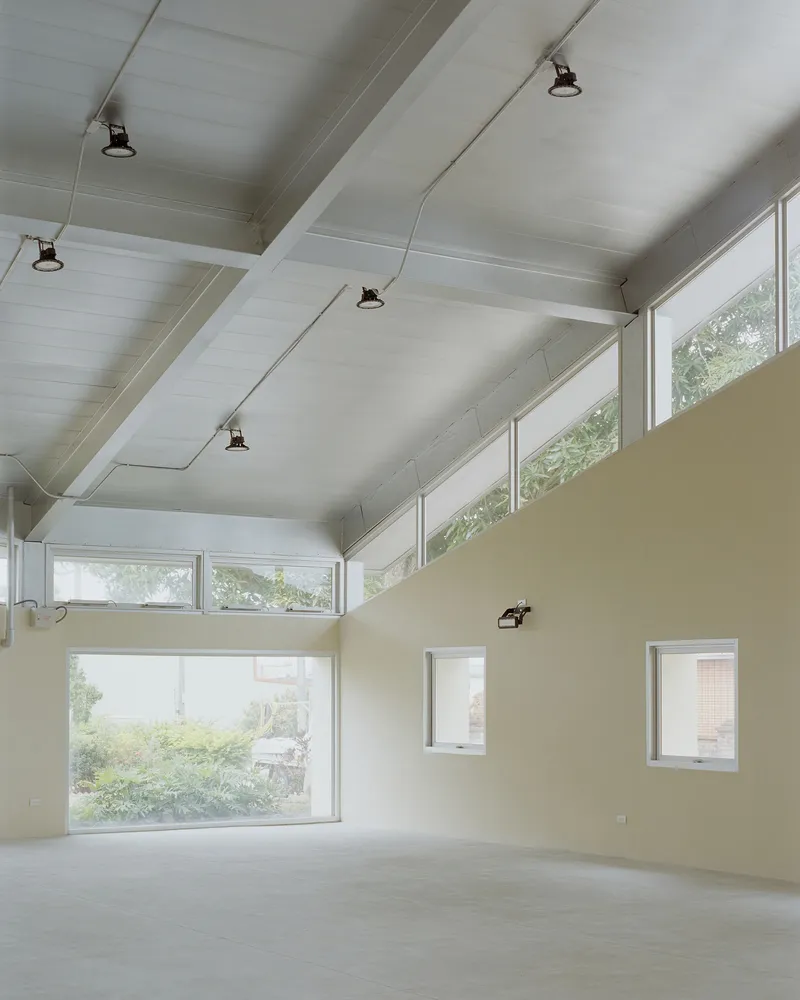
Because of spatial limitations, the main entrance is slightly off-center, aligning instead with the gate of the nearby school—a gesture that symbolically welcomes students and community members. Visitors pass under a modest 2.5-meter-high porch, which acts as an intimate threshold before the interior dramatically expands into a 7.5-meter-high gathering hall.
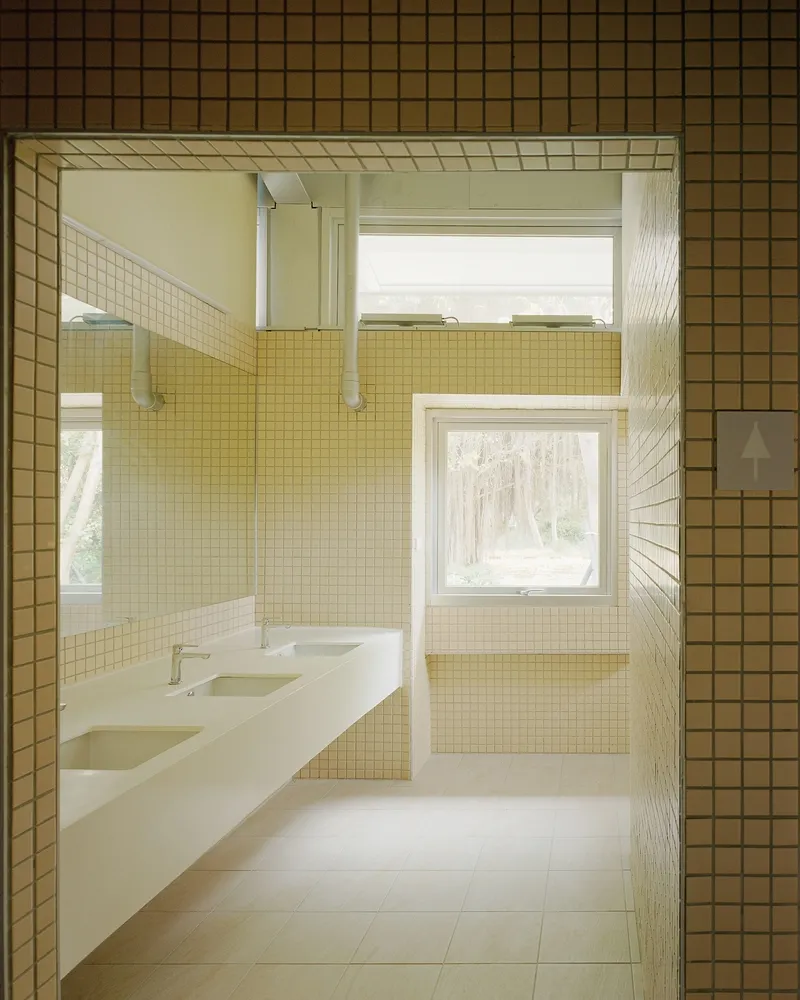
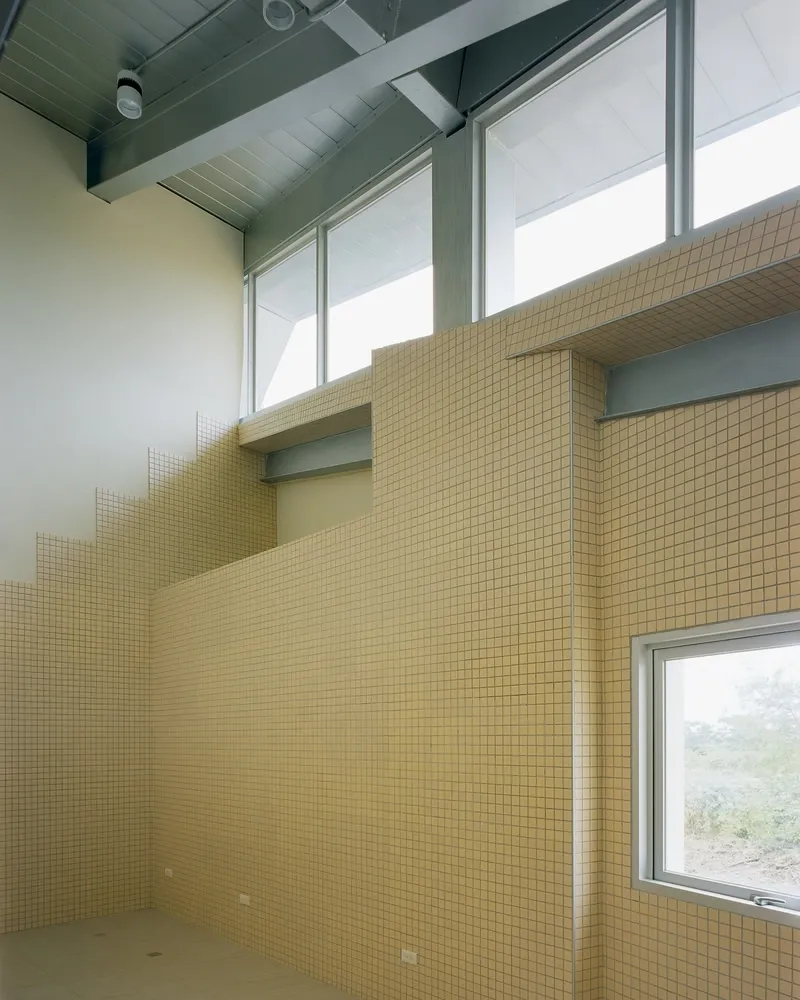
Natural light plays an essential role in shaping the experience of the interior. Skylights cast diffused light onto a reflective silver metal ceiling, while two large picture windows frame serene views of gardens and trees on opposite sides. Even the service areas at the back are illuminated by clerestory openings, maintaining a sense of openness and clarity throughout the plan.
Material Warmth and Quiet Monumentality
Office Archipel intentionally uses a restrained palette to ground the building in its rural environment. Muted exterior tones and deeply recessed windows minimize visual noise, giving the structure a calm, almost contemplative presence. Inside, exposed wood beams and natural materials reinforce a warm, tactile atmosphere reminiscent of traditional Taiwanese structures.
Clerestory windows placed beneath the roofline wash the walls with soft light, cultivating a tranquil, spiritual ambiance. Though modest in scale, the building possesses a subtle monumentality—a clear presence in the streetscape that contrasts with its gentle material expression.
A Community Memory for Future Generations
Hilltop House is designed to evolve with the community. Its abstracted form, simple silhouette, and grounded material palette give it the timeless quality of a rural landmark. Even as future urban development transforms the surrounding landscape, this small community center aims to remain a recognizable symbol of place and memory—a structure rooted in people’s daily rhythms and collective identity.


All photographs are works of Studio Millspace


Popular Articles
Popular articles from the community


U.GA Architects Wraps an Oval Rooftop Pool in Curved Board-Formed Concrete on Busan's Jeollidan-gil
In Busan's Jeonpo-dong, a 454 m² mixed-use block stacks a neighborhood facility, guest rooms and an oval rooftop pool inside spiraling concrete walls.

longwave studio Reorganizes a 112 m² Tainan Apartment Around the Daily Routines of a Family and Two Cats
In Tainan, Taiwan, birch plywood, rust-red furniture and a freestanding plaster wall link arrival, storage, work and family life in one apartment.

GROUP A Strips a 1969 Rotterdam Harbor Headquarters to Its Frame and Wraps It in Timber Louvers
In Rotterdam's M4H harbor district, Ferro Offices reuses a 1969 frame, adds one timber storey and reaches BREEAM-NL Outstanding.

David Macias Steps a Doorless Stone and Plaster House Down a Tropical Colombian Hillside
In the humid hills of Colombia, Threshold House replaces the front door with an open void and terraces its 850 m² down the slope instead of fighting it.

Similar Reads
You might also enjoy these articles


Hodi-Mandai Geram
Project Function: Preservation and revitalization of the Intangible heritage and socio-spatial identity of the Hodi by Housing, Cultural Memory Center, Sacred Grove, landscape, local tourism economy


Olio Towers: A Mid-Rise for Performers That Fuses Housing, Rehearsal, and Stage
Located blocks from Houston's Theater District, this modular tower stacks living units around a central performance atrium.

Oasis: Modular Green Housing Carved into Dhaka's Urban Fabric
A shortlisted Plugin Housing entry reclaims unauthorized settlements in Dhaka with stepped concrete volumes, green roofs, and ventilation-driven design.

Black Hole: A Floating Megastructure for the Post-Physical Era
Emiliano Mazzarotto envisions a spherical, self-scaling arena where e-sports, digital hotels, and holographic stadiums replace traditional public space.

Explore Aotu Architecture Office Competitions
Discover active competitions in this discipline

Challenge to reimagine the Iron Throne

Photograph architecture without architects

Illustrate the lost glory of Angkor Wat - Render Challenge

Design challenge to reuse E-waste
Comments (0)
Please login or sign up to add comments
No comments yet. Be the first to comment!