

Historical Remembrance Community in the Ruins: A Memorial Built on Gathering and Dispersal
A shortlisted Memory entry threads a south-to-north path through arched ruins, letting visitors scatter and regroup around fragments of a wounded past.


Most memorials ask visitors to stand still and look at one thing. This project asks them to keep moving: to arrive from any direction, drift apart among broken walls, and find one another again further along the path. Titled Historical Remembrance Community in the Ruins: Wreckage, it treats remembrance as a rhythm of aggregation and dispersion, holding the pain of a damaged country alongside the hope of its rebirth.
Designed by 陈 霄, the scheme was shortlisted in the Memory competition on uni.xyz. The designer sets out to blend fragments of memory with the physical remnants of a nation. The organising move is simple: a road running from south to north that is open on every side and gives free access to people of all backgrounds. Around that spine, the project gathers spaces for healing, cultural reflection and collective memory.
A Hall of Stone Seats Facing an Empty Arch
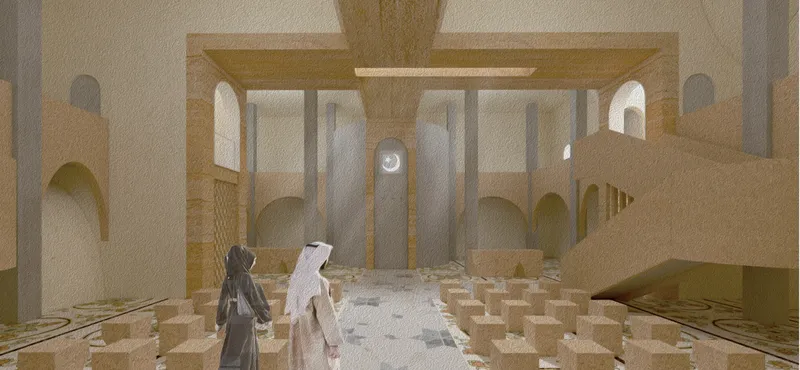
The collage opens with the project's most ceremonial room. Blocks of sandstone serve as seating, arranged so the eye travels down a central aisle to an arched niche, while an angled stair cuts across the composition. Two figures walking the aisle give the hall its scale, and also its mood: this is a place for slow arrival rather than spectacle.
What makes the space persuasive is its restraint. The niche holds no monument, so the arch itself becomes the object of attention, a framed absence that suits a memorial about loss. The rough stone blocks read as salvaged fragments, which ties the furniture directly to the project's theme of wreckage reassembled into something usable.
Curved Walls That Scatter and Regather the Crowd

Outside, curved white walls pierced by arched openings wrap around open lawns. Figures move along a paved path beneath an overcast sky while a flock of birds lifts overhead. Here the idea of divergence and convergence becomes legible on the ground: the walls split the landscape into separate courts, yet the openings keep each one visible from the next, so people who part ways never fully lose sight of one another.
This is the south-to-north road at work. Because it can be entered freely from all sides, the route behaves less like a processional axis and more like a common ground. The curved geometry softens the sense of ruin, and the arches recur from the interior, giving the whole complex a consistent language without forcing a single route through it.
Thresholds of Cord, Water and Perforated Screen
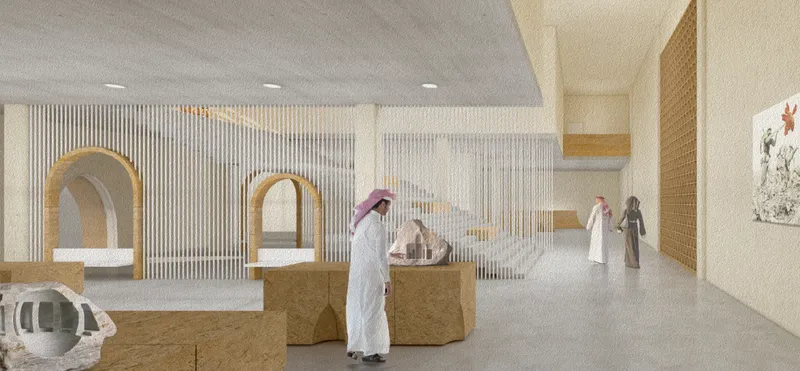
The gallery interior continues the arched openings, then introduces a lighter element: a hanging vertical cord screen that filters the view without blocking it. Stone plinths carry the displays, and visitors in white robes move between them. The cord screen is the most delicate gesture in the scheme, a threshold that can be passed through and that turns separation into something soft and permeable.
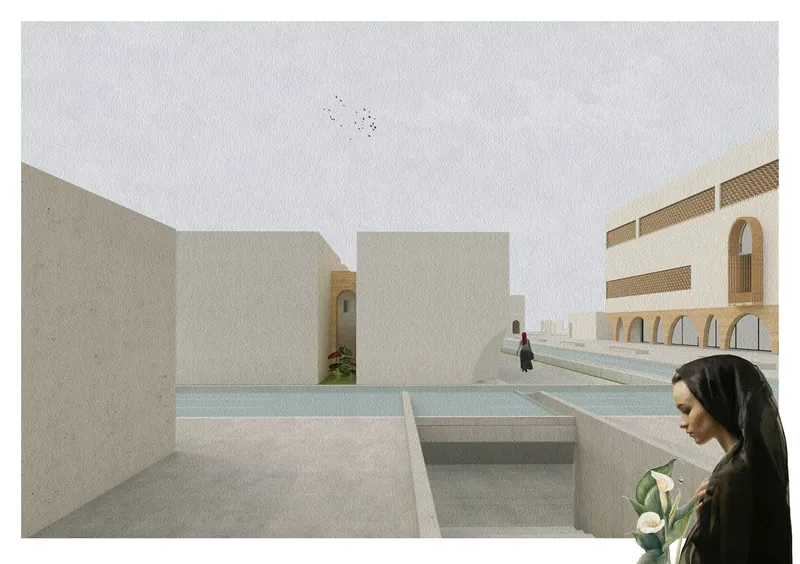
The final rendering shifts to water. A shallow channel runs between plain concrete walls toward an arcade building wrapped in a perforated screen, while a veiled figure holds calla lilies in the foreground. The plain walls and still water slow the pace, and the perforated facade echoes the cord screen inside, letting light and views leak through. The designer frames the project around environmentally friendly materials and techniques intended for longevity and low impact; these images suggest that ambition through a palette of stone, concrete and water, though the entry stops short of specifying how each choice performs.
Why This Project Matters
The strongest idea here is that a memorial can be a community before it is a monument. By opening the site on every side and letting the south-to-north road both divide and reunite its visitors, 陈 霄 gives collective memory a spatial form: people arrive separately, grieve in their own courts, and converge in shared rooms. The repeated arch, the salvaged-looking stone and the permeable screens keep that idea coherent across scales.
The proposal would gain from more precision about its site and its sustainable strategy, which currently remain broad statements. Still, as a shortlisted entry in Memory, it shows a clear instinct for atmosphere and threshold. It treats ruins as a framework for gathering rather than an object to preserve behind glass, and that is a useful position for anyone designing places of remembrance.
View the Full Project
About the Designers
Designer: 陈 霄
Enter a Design Competition on uni.xyz
uni.xyz runs architecture and design competitions year-round that reward proposals with spatial conviction and real site intelligence.
Project credits: Historical remembrance community in the ruins - wreckage by 陈 霄 Memory (uni.xyz).


Popular Articles
Popular articles from the community


Singing Woman: An Opera House That Performs Before the Curtain Rises
Ovidiu Cristian Pavel's conceptual opera house translates Estonia's choral identity into a sculpted waterfront landmark facing the Baltic Sea.

The Amber Palace Opera: A Geological Fiction Surfaces on Tallinn's Baltic Waterfront
Pierre Brillard reimagines a Baltic legend as a public landscape, opera house, and waterfront promenade rooted in Tallinn's coastal identity.

Opera by the Sea Estonia: Three Shells Dissolving Architecture into Tallinn's Coastline
A winning opera house proposal replaces monumental form with interconnected shells that blur the boundary between building, park and Baltic Sea.
Extended Shell: Retrofitting Kolkata's Balconies as Living Urban Thresholds
A modular retrofit system recovers the social and environmental intelligence of Kolkata's historic verandas for contemporary Park Street residents.

Similar Reads
You might also enjoy these articles

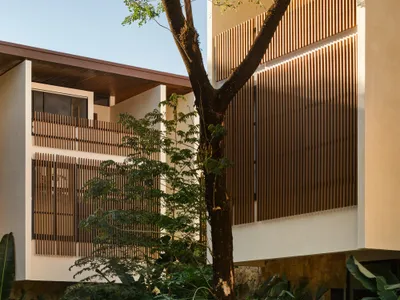
FAMM Arquitectura Organizes Ten Villas Around Courtyards and Jungle in Nosara, Costa Rica
El Molino pairs two elongated volumes with deep overhangs and timber louvers to build a compact coastal community five minutes from the beach.
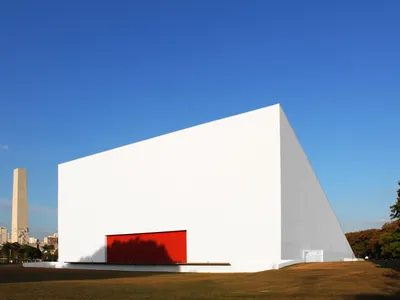
Oscar Niemeyer's Ibirapuera Park Pavilions Define São Paulo's Cultural Identity in Concrete and Curve
A constellation of modernist volumes set within São Paulo's most important urban park, conceived for the city's 400th anniversary in 1954.
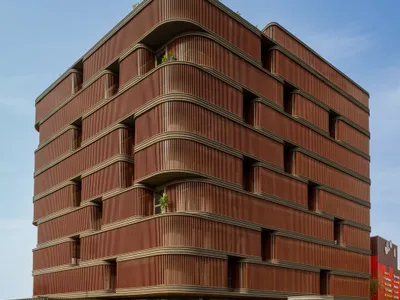
Sanjay Puri Architects Wraps a Jaipur Office Tower in Capsule-Shaped Green Buffers
A nine-level climate-responsive workplace near Jaipur Airport uses stacked planter terraces and aluminium screens to fight 40°C heat.
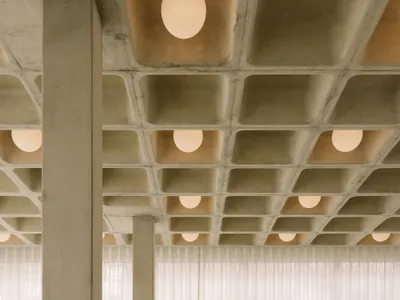
RHO Converts a Berlin Spree-Side Industrial Courtyard into Enkime's 1,000 m² Agency Headquarters
A social media agency's new home in Charlottenburg trades glossy branding for concrete waffle ceilings, glazed tile, and sheer curtains.

Explore Architectural Heritage Competitions
Discover active competitions in this discipline

Challenge to reimagine the Iron Throne

Photograph architecture without architects

Illustrate the lost glory of Angkor Wat - Render Challenge

Bring back Drive In's
Comments (0)
Please login or sign up to add comments
No comments yet. Be the first to comment!