
Højvangen Church: A Contemporary Sanctuary Redefining Denmark’s Spiritual Architecture
A light-filled contemporary church blending tradition and modernity, offering flexible communal spaces, warm materials, and a landscape-integrated design for spiritual and everyday gatherings.


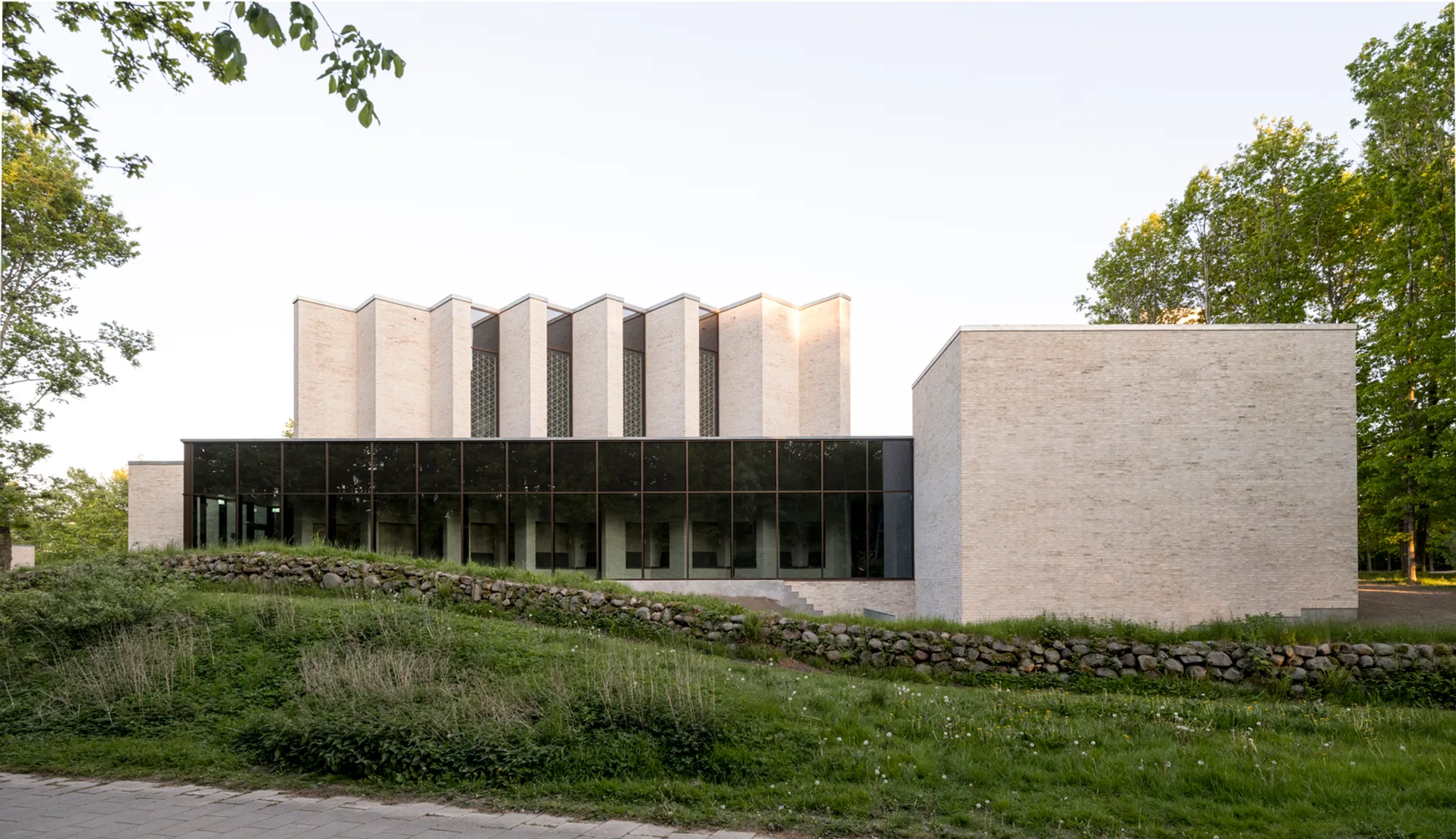
Højvangen Church stands as a rare cultural milestone—the first new church in Skanderborg Parish in more than 500 years. Designed by Henning Larsen in collaboration with Espen Surnevik, the 1,500 m² project reimagines the role of worship spaces for a modern, increasingly secular society. At a time when many churches across Denmark face closure, this new landmark introduces a renewed architectural language that blends tradition, community, and contemporary spiritual expression.

A New Vision for the Danish Church
Henning Larsen has long led the evolution of modern ecclesiastical design in Denmark, from Enghøj Church in Randers to the soon-to-open Ørestad Church in Copenhagen. With Højvangen Church, the design team reframes the ecclesiastical typology, creating a place that embraces both religious ceremonies and everyday community life.
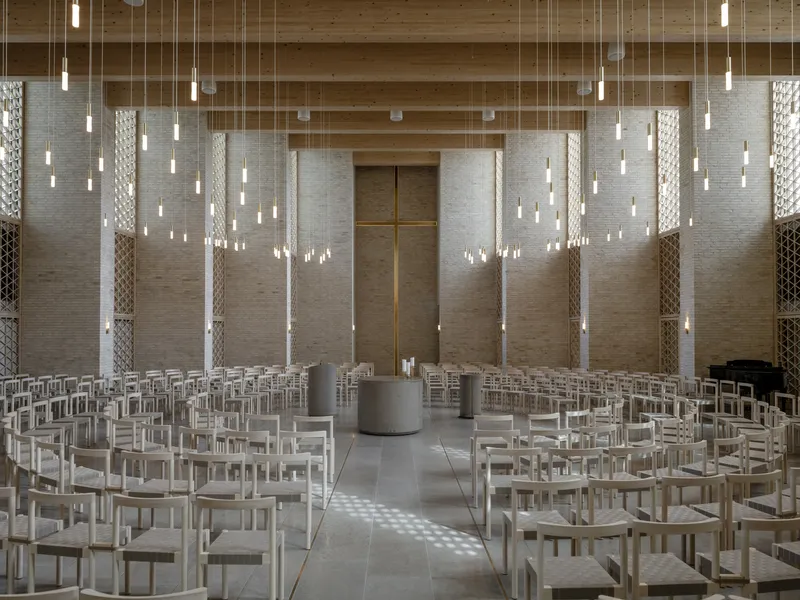
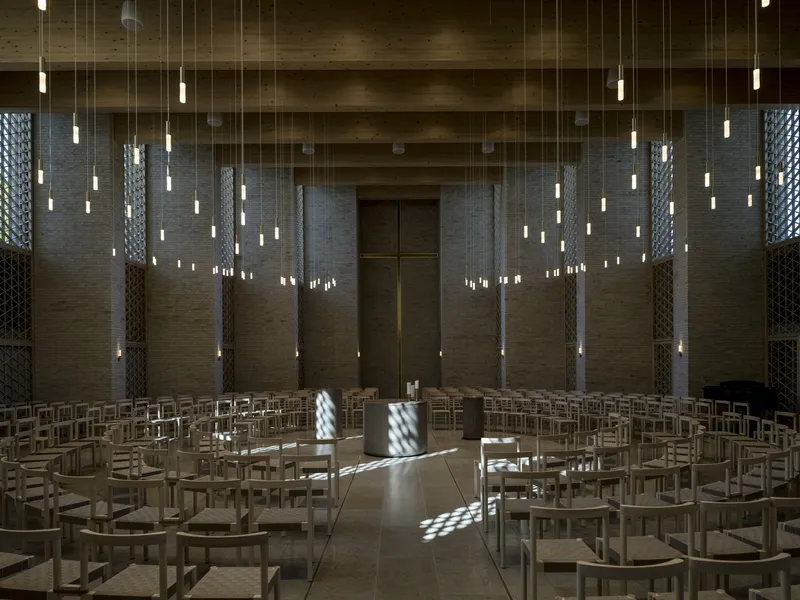
Eva Ravnborg, Director at Henning Larsen, explains that light was the core conceptual driver. More than a functional element, natural light becomes a spiritual medium, shaping a serene and contemplative atmosphere. The result is a church environment that uplifts the human experience, offering tranquility while accommodating diverse forms of gathering, mourning, celebration, and reflection across generations.

Architecture Rooted in Heritage and Community
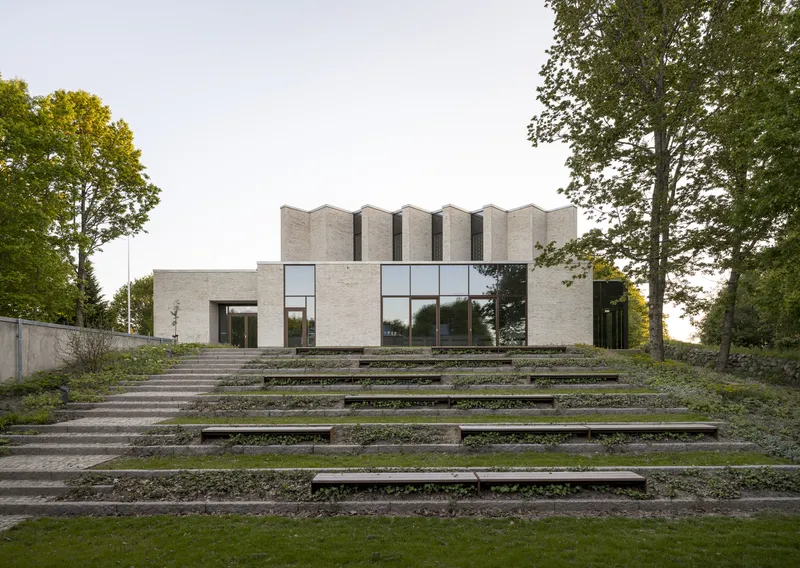
Located on the outskirts of Skanderborg, the church draws inspiration from Danish architectural traditions while embracing contemporary forms. The building reads as a sculpted pavilion integrated seamlessly into the landscape. Its material palette—brick, oak, and brass—evokes warmth, honesty, and timeless craftsmanship.
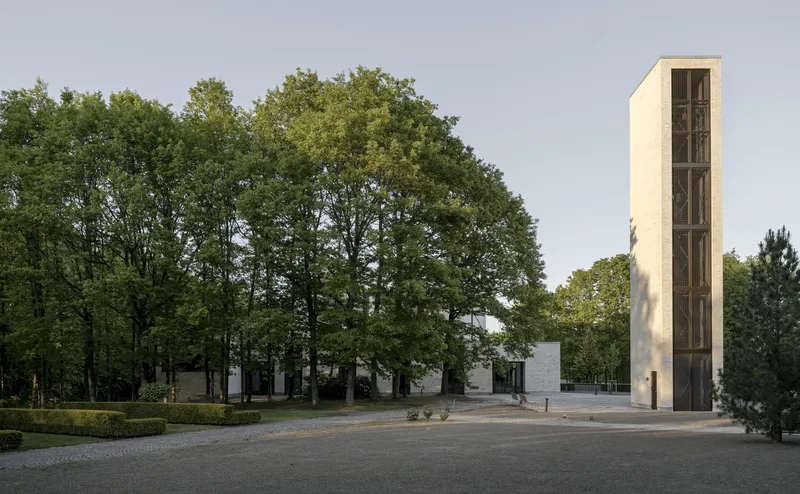
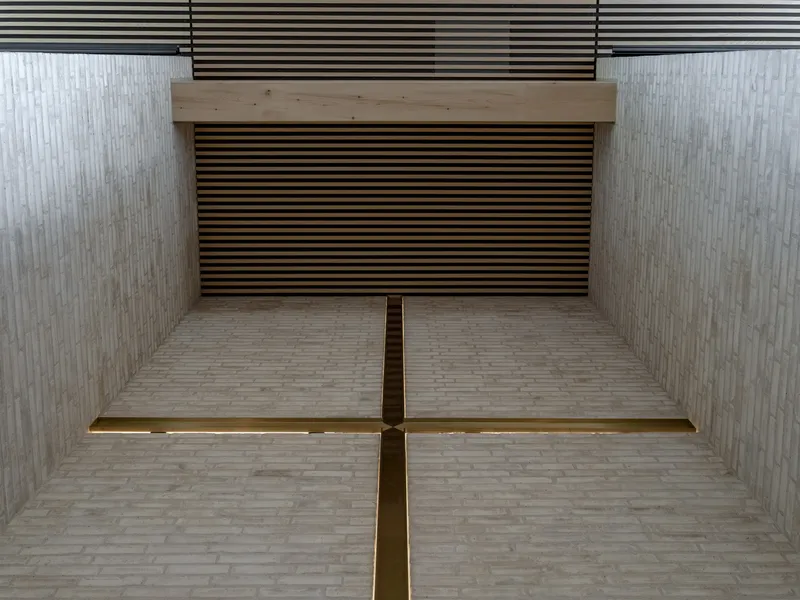
A subtle yet defining gesture is the church’s lack of a formal front or back. Instead, its layout centers around a single fixed element: the baptismal font, placed at the exact heart of the building. From this symbolic anchor, views open outward in all directions—to the forest, the cemetery, and the historic church tower—positioning the building as a communal “clearing” rather than a linear or directional space.
The new church connects to the existing church center through a partially underground corridor, creating cohesion between the old and new without disrupting the landscape.

Flexible Interiors for Spiritual and Civic Life
Inside, the design challenges traditional church organization. Rather than a conventional nave and hierarchy of spaces, the interior unfolds as an adaptable gathering room shaped by shifting walls, transparent sections, and pockets of privacy. This approach supports a wide spectrum of activities—from worship and concerts to community events and contemplative retreats.
Greta Tiedje, Global Design Director at Henning Larsen, emphasizes that the ambition was to create a church that “opens in every direction,” offering an intimate yet inclusive spatial experience. This flexibility reflects the evolving nature of contemporary spirituality and civic life, inviting visitors of all beliefs to share meaningful experiences under one roof.


Engaging Light, Landscape, and Atmosphere
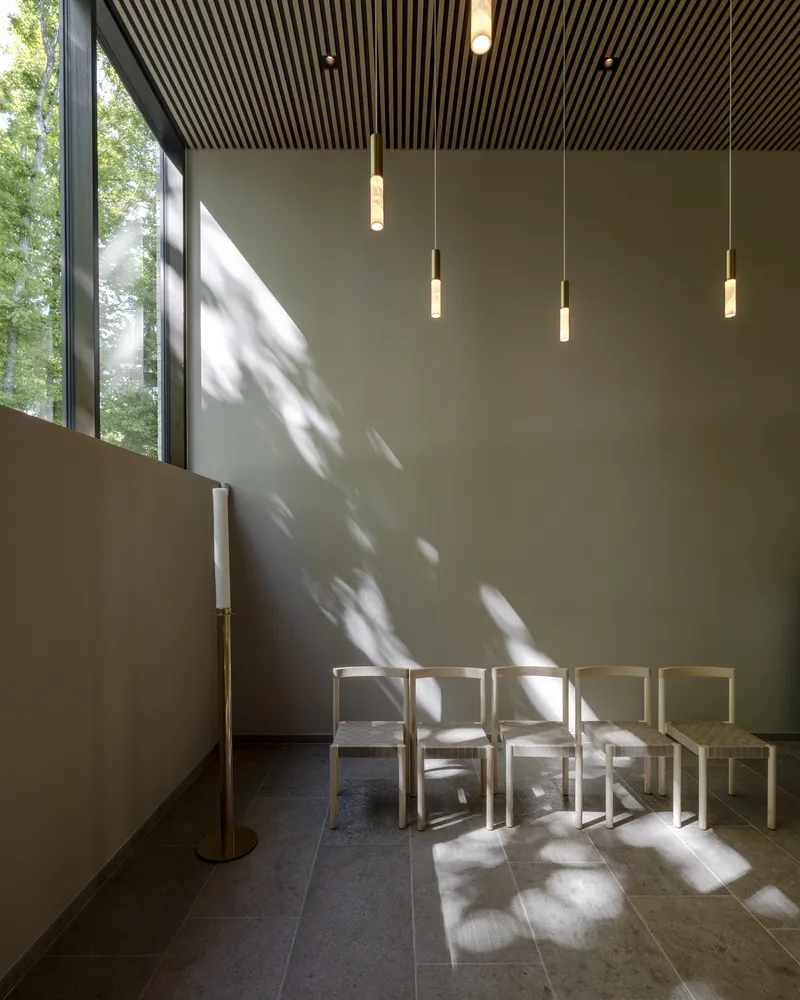
The gently undulating façade plays with natural light throughout the day. Permeable walls filter sunlight into soft, shifting patterns, making illumination a central part of the architectural narrative. These changing atmospheres enrich the spiritual dimension of the church, allowing light to guide emotion and spatial perception.
Outdoors, the church is equally inviting. A colonnaded rear façade incorporates carved niches—quiet spaces designed for rest, conversation, or moments of solitude. The landscaped courtyard and surrounding parklands extend the church’s function into the open air, supporting gatherings, reflection, and community engagement.

Furniture as Craft and Continuity
As part of the project, Henning Larsen collaborated with renowned Danish furniture maker Brdr. Krüger to develop Ekko, a new stackable church chair. Elegant and durable, the chair is certified to the EU’s highest standard for intensive use (L2). Ekko marks the firm’s return to furniture design after six decades, reinforcing the church’s vision of blending tradition, design excellence, and everyday practicality.

All photographs are works of Rasmus Hjortshøj




Popular Articles
Popular articles from the community


Hill & Cross Opera: Sculptural Opera House Architecture Shaped by Tallinn’s Landscape and Identity
Hill & Cross Opera reimagines opera house architecture in Tallinn through its sculptural hill, civic plaza, glass wave and a luminous cross.

Co-Life: Senior Housing Design That Reconnects Older Adults With the City
Co-Life reimagines senior housing design through healing gardens, shared streets, workshops, and a sustainable community across generations.

Conexión: Biophilic Design Reimagines High-Rise Living in Hong Kong
Conexión reimagines high-rise living in Hong Kong through biophilic design, green facades, shared spaces, daylight, water and nature within.

The Musturak Paradise: Senior Living Architecture for a Connected Future in Temara, Morocco
The Musturak Paradise reimagines senior living architecture in Temara via private homes, social spaces, culture, community, and shared care.

Similar Reads
You might also enjoy these articles


Hodi-Mandai Geram
Project Function: Preservation and revitalization of the Intangible heritage and socio-spatial identity of the Hodi by Housing, Cultural Memory Center, Sacred Grove, landscape, local tourism economy


Olio Towers: A Mid-Rise for Performers That Fuses Housing, Rehearsal, and Stage
Located blocks from Houston's Theater District, this modular tower stacks living units around a central performance atrium.

Oasis: Modular Green Housing Carved into Dhaka's Urban Fabric
A shortlisted Plugin Housing entry reclaims unauthorized settlements in Dhaka with stepped concrete volumes, green roofs, and ventilation-driven design.

Black Hole: A Floating Megastructure for the Post-Physical Era
Emiliano Mazzarotto envisions a spherical, self-scaling arena where e-sports, digital hotels, and holographic stadiums replace traditional public space.
Explore Congregational Space Competitions
Discover active competitions in this discipline



Challenge to reimagine the Iron Throne


Photograph architecture without architects


Illustrate the lost glory of Angkor Wat - Render Challenge


Bring back Drive In's
Comments (0)
Please login or sign up to add comments
No comments yet. Be the first to comment!