

Honcourt School by f+f architectes: A Sustainable Educational Landmark in the Vosges Region
A sustainable PASSIVHAUS school blending wood, concrete, and natural light, integrating classrooms and community spaces within Alsace’s scenic landscape.


The Honcourt School in Maisonsgoutte, France, designed by f+f architectes, stands as a contemporary model of sustainable educational architecture. Completed in 2024 after five years of development, the project brings together a primary school and an afterschool center within a unified architectural vision that promotes energy efficiency, environmental integration, and flexible learning environments. Nestled in the scenic Vosges mountains of Alsace, the building establishes a strong dialogue with its natural surroundings while contributing to the village’s evolving urban identity.
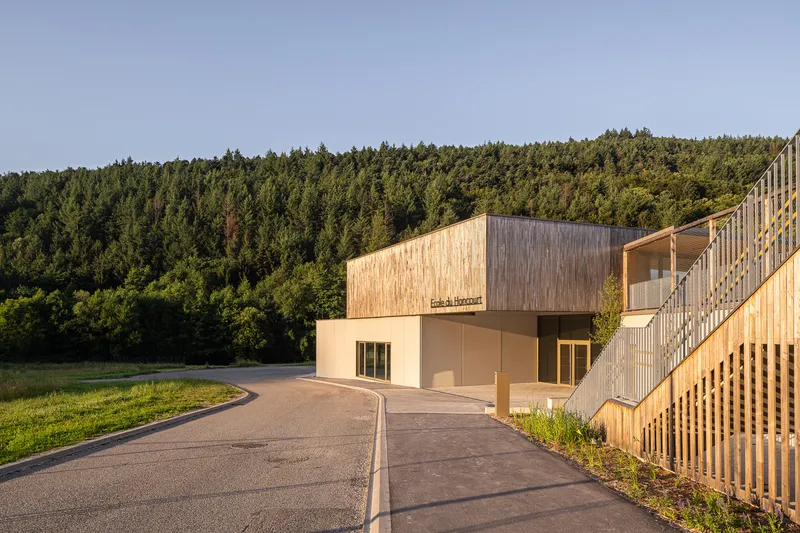
The design process began in 2019 and unfolded through a collaborative planning phase that spanned over a year. Construction started in 2021 amid numerous challenges, including pandemic-related delays, material shortages, and climate constraints. Despite these obstacles, the project was delivered on schedule in early 2024, maintaining the integrity of the architects’ initial vision. The site’s winter landscape, covered in snow during the first site visit, played a defining role in shaping the project’s orientation, spatial relationships, and environmental strategy.
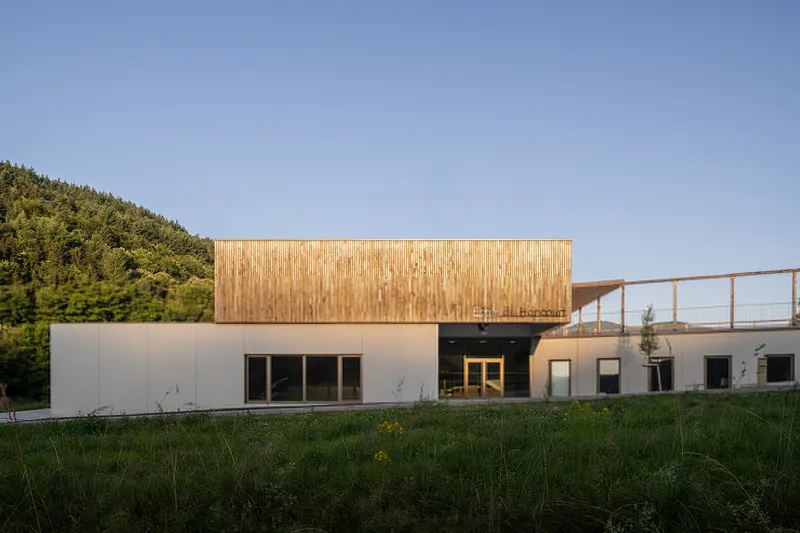
At the urban scale, the project addresses the complexities of its location at the entrance of the village. The north façade faces the D424 roadway, the south opens onto preserved natural land designated under the “Green and Blue Framework,” the west connects to the village's arrival point, and the east overlooks an open field. These conditions called for a careful balance between visibility, environmental sensitivity, and seamless integration within the municipality’s long-term development plan. The result is a building that serves as a civic anchor without overpowering its delicate landscape context.

Spatially, the architecture accommodates two distinct yet interdependent programs: the school and the afterschool center. Each function has its own identity and dedicated spaces, supported by shared resources that enhance efficiency and community use. Circulation routes for pedestrians, cyclists, and vehicles are clearly defined to ensure safety and fluidity. The design aligns with contemporary educational needs, embracing flexibility, accessibility, and environmental responsibility as core principles.
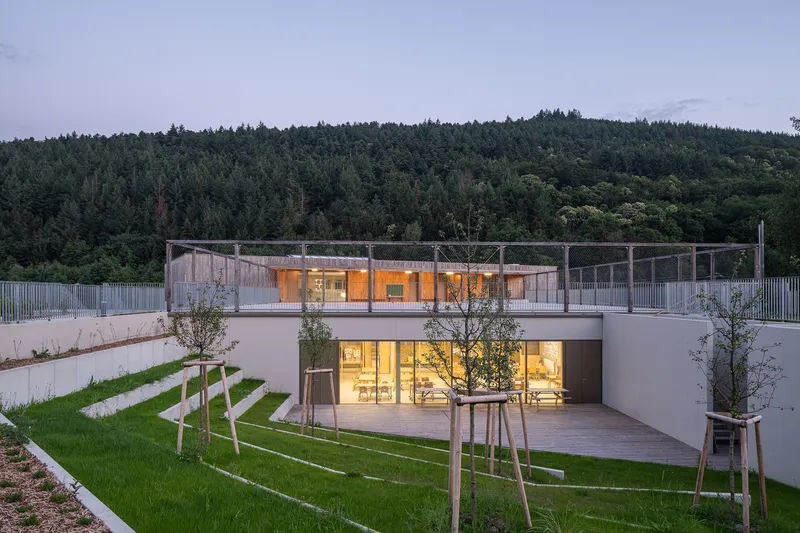
Sustainability plays a central role in the project’s conception. The building is designed according to the PASSIVHAUS standard, an advanced German energy-efficiency certification that dramatically reduces heating demands, up to ten times lower than traditional buildings. This performance is achieved through a compact massing strategy, airtight construction, optimized insulation, and strategic placement within the natural topography. The lower ground level houses the kindergarten and communal areas, while the upper ground floor contains the elementary classrooms, enabling each age group to enjoy direct access to outdoor play spaces.
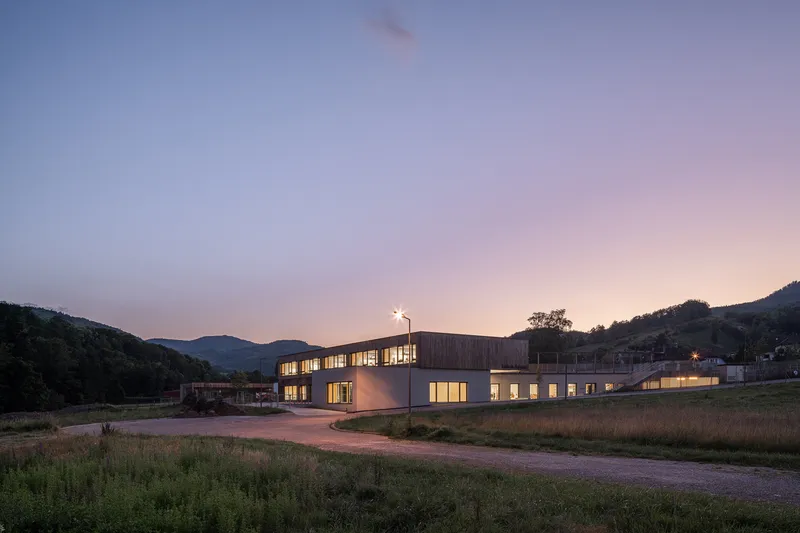
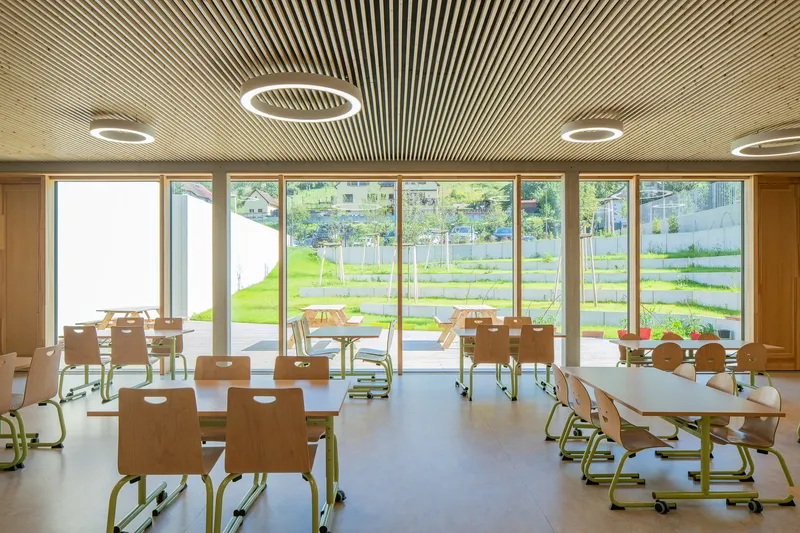
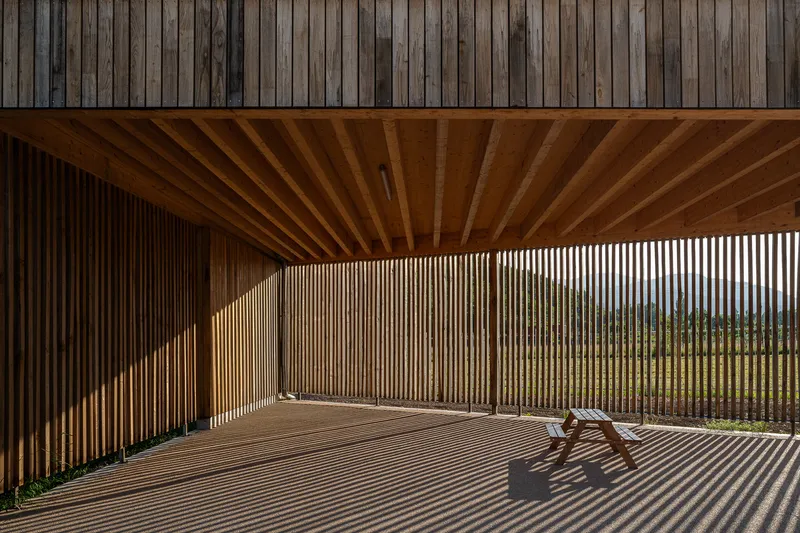
The architectural expression is characterized by simplicity, material honesty, and durability. A robust concrete base supports a warm wooden façade crafted from locally sourced chestnut, reinforcing the project’s commitment to regional materials and ecological responsibility. Natural light shapes the atmosphere throughout the building, entering through skylights and expansive windows that frame views of the surrounding mountains. The interior palette remains intentionally minimal, creating a canvas for children’s creativity while maintaining a calm and inviting ambiance.
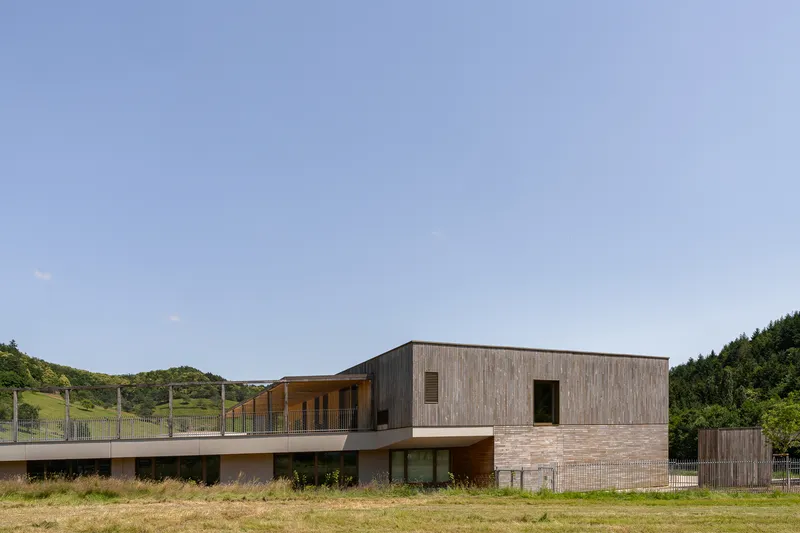
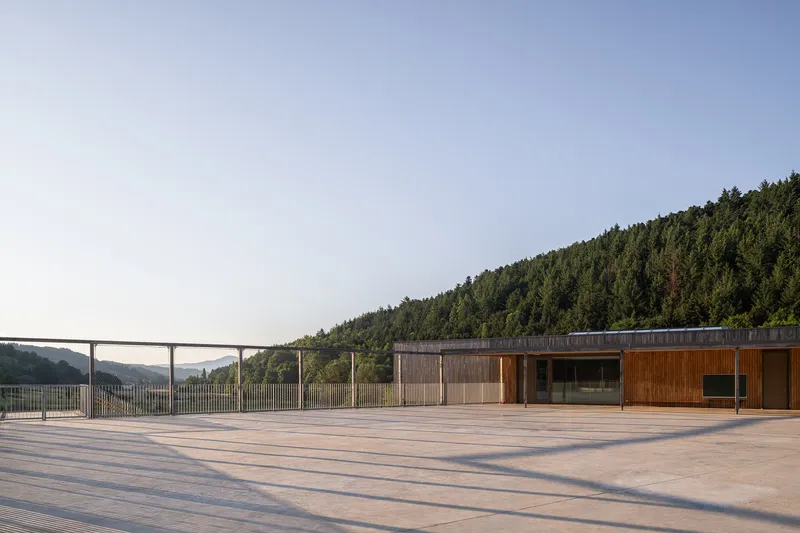
Acoustic comfort and indoor air quality are enhanced through thoughtful material selection, including wooden floors in classrooms and environmentally conscious finishes. These elements contribute to a nurturing, child-centered learning environment that emphasizes well-being and sensory comfort. The building’s understated yet expressive architecture reflects the values of contemporary education: openness, sustainability, community engagement, and respect for the landscape.
All photographs are works of Stephane Aboudaram | WE ARE CONTENTS


Popular Articles
Popular articles from the community

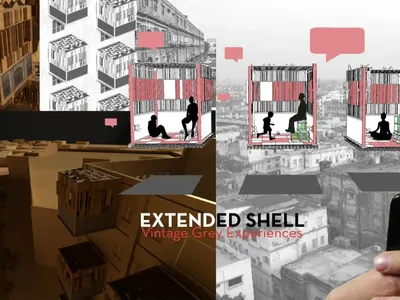
Extended Shell: Retrofitting Kolkata's Balconies as Living Urban Thresholds
A modular retrofit system recovers the social and environmental intelligence of Kolkata's historic verandas for contemporary Park Street residents.

Manzana Morphosis: Stretching Barcelona's Grid into a Living Landscape for 2050
A radical reworking of the Eixample manzana turns density into a tool for generous public space, vertical ecology, and environmental performance.
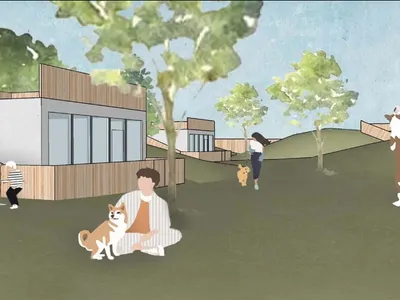
Temporary Home for Dogs: A Reversed Zoo Rethinks Animal Shelter Architecture
In Bucharest, a sinuous corridor and freed landscape flip the logic of containment, designing a shelter that works to make itself unnecessary.
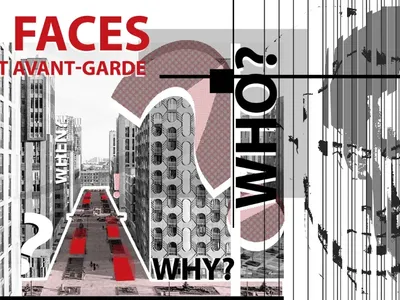
Faces of the Soviet Avant-Garde: Turning Moscow's Street Names into an Open-Air Museum
A network of sculptural installations across a Moscow residential district transforms forgotten architect names into spatial encounters with cultural memor

Similar Reads
You might also enjoy these articles


Hodi-Mandai Geram
Project Function: Preservation and revitalization of the Intangible heritage and socio-spatial identity of the Hodi by Housing, Cultural Memory Center, Sacred Grove, landscape, local tourism economy


Olio Towers: A Mid-Rise for Performers That Fuses Housing, Rehearsal, and Stage
Located blocks from Houston's Theater District, this modular tower stacks living units around a central performance atrium.

Oasis: Modular Green Housing Carved into Dhaka's Urban Fabric
A shortlisted Plugin Housing entry reclaims unauthorized settlements in Dhaka with stepped concrete volumes, green roofs, and ventilation-driven design.

Black Hole: A Floating Megastructure for the Post-Physical Era
Emiliano Mazzarotto envisions a spherical, self-scaling arena where e-sports, digital hotels, and holographic stadiums replace traditional public space.

Explore Pont-Aven School Competitions
Discover active competitions in this discipline

Challenge to design public laboratory

Challenge to reimagine the Iron Throne

Photograph architecture without architects

Illustrate the lost glory of Angkor Wat - Render Challenge
Comments (0)
Please login or sign up to add comments
No comments yet. Be the first to comment!