

Hop Park: Transforming Urban Spaces with Green Pop-Ups in Bangkok
Hop Park is a mobile, low-maintenance green pop-up in Bangkok, offering diverse zones for wellness, biodiversity, urban farming, and air purification.


In the heart of bustling Bangkok, Hop Park, Green Pop-up “Hop into the Greeniverse” emerges as a revolutionary approach to urban greenery. Designed by Shma Company Limited in collaboration with Garnier and the Bangkok Metropolitan Administration, this innovative project transforms underutilized urban spaces into vibrant, low-maintenance green oases that benefit both people and the environment.
A Mobile Green Solution for Urban Life
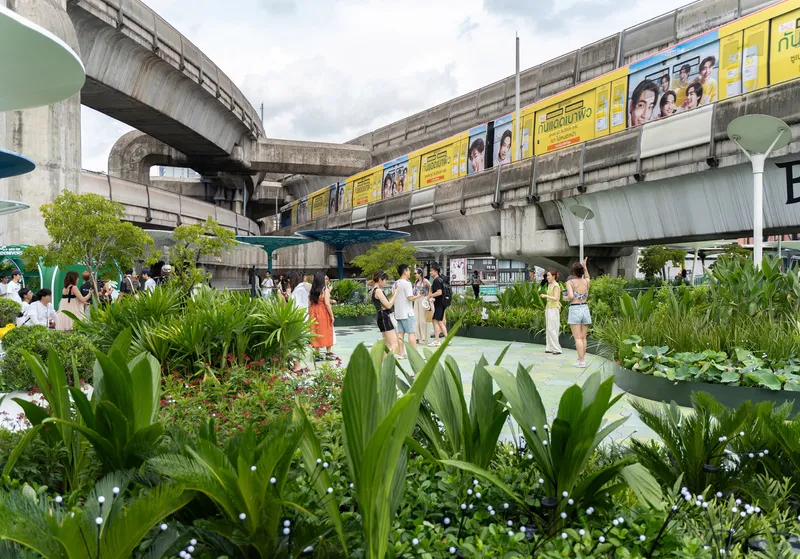
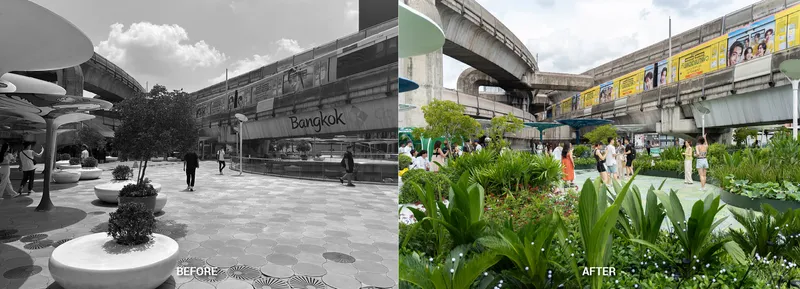
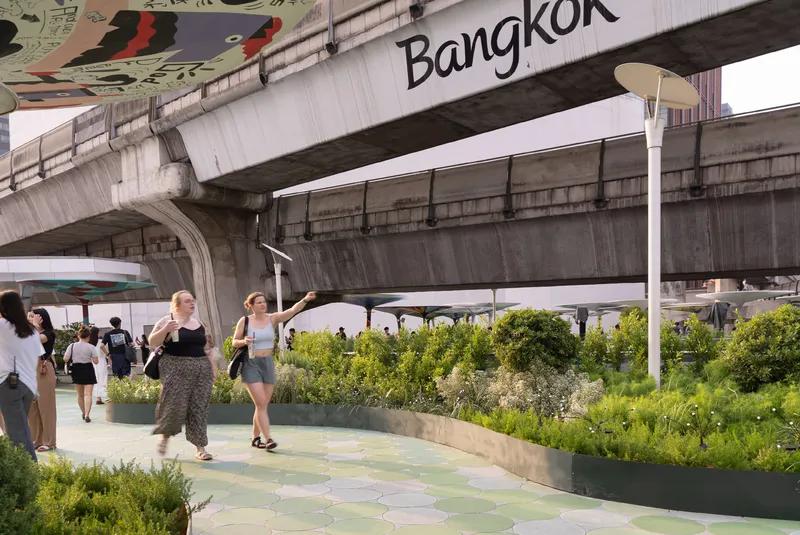
Hop Park reimagines public spaces with a concept that is adaptable, sustainable, and immediately impactful. Situated on the busy Patumwan Skywalk, this 550-square-meter green pop-up park slows the fast pace of city life, creating spaces for social interaction, leisure, and relaxation. By requiring minimal structural changes, Hop Park demonstrates that greenery can be seamlessly integrated into high-density urban areas without heavy construction.
“The vision behind Hop Park is to create green spaces that can ‘hop’ to different locations, instantly revitalizing the cityscape while improving environmental quality,” explains Shma Company Limited. This pilot project serves as a blueprint for future green pop-ups across Bangkok and potentially other urban centers worldwide.
Five Zones of Urban Sustainability
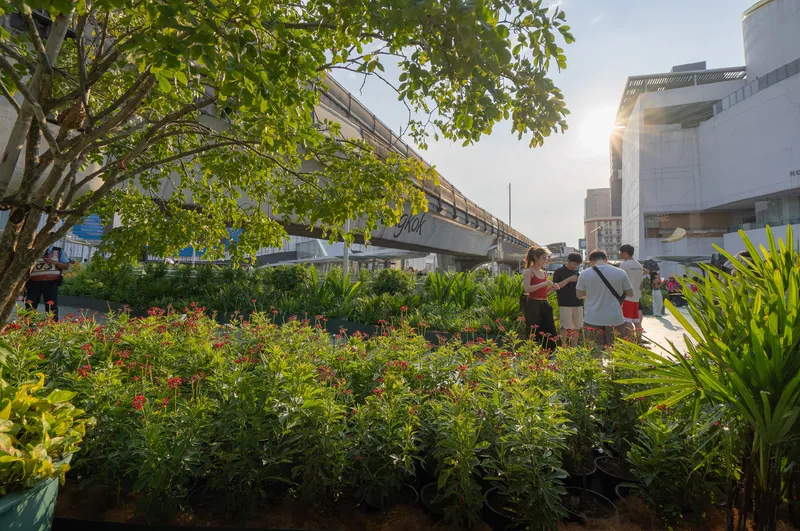
Hop Park’s design is meticulously divided into five experiential zones, each serving a unique environmental and social function. With over 20,000 trees and diverse plant species, the park enhances biodiversity while providing an immersive urban nature experience for visitors.
1. Green Air Zone
Air pollution is a pressing challenge in Bangkok. The Green Air Zone uses strategically planted trees to filter dust and smoke while producing oxygen. Research shows that one tree can generate enough oxygen for two people, absorb 9 to 15 kg of carbon dioxide, and capture 1.4 kg of airborne pollutants annually. This zone not only improves air quality but also provides a refreshing, shaded environment for city dwellers.
2. Blue-Green Oasis Zone
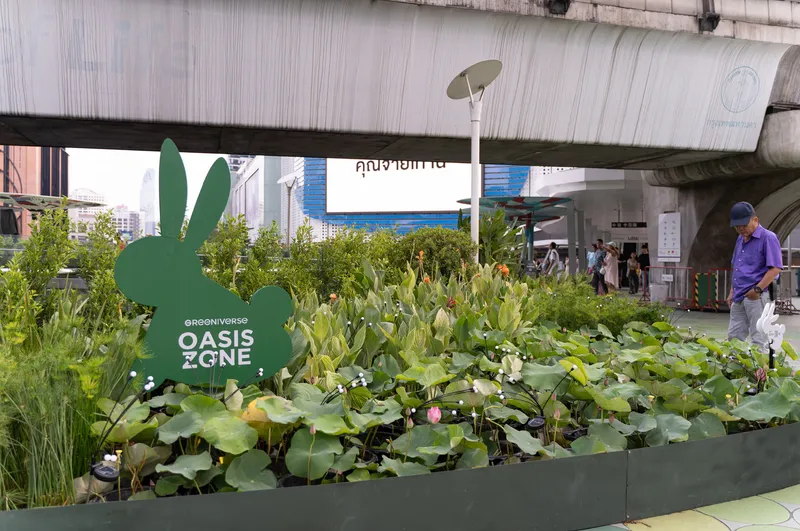
Green spaces are not limited to land alone. The Blue-Green Oasis integrates water plants and aquatic ecosystems, which help purify water, reduce bacterial contamination, and support biodiversity. By combining land and water-based greenery, Hop Park showcases the holistic potential of urban nature design.
3. Edible Haven Zone
Food security is a growing concern in global cities. The Edible Haven Zone encourages urban agriculture, allowing visitors to grow fruits, vegetables, and herbs in a communal environment. This approach promotes healthy eating, local food production, and awareness about sustainability within densely populated areas.
4. Ecological Diversity Zone
Hop Park recognizes the importance of all living creatures in urban ecosystems. The Ecological Diversity Zone creates habitats for birds, insects, and small wildlife, supporting pollination and ecological balance. Native flowering plants provide nectar, food, and shelter, fostering a thriving miniature ecosystem within the city.
5. Wellness Retreat Zone
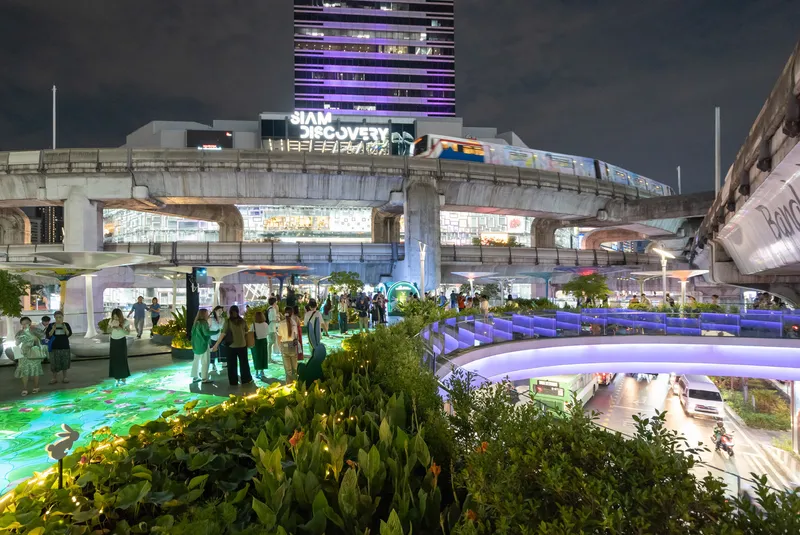
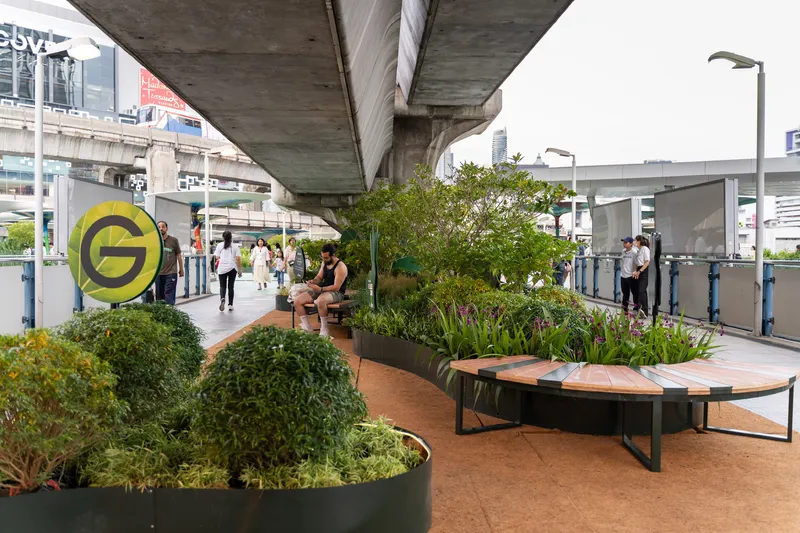
Modern city life often prioritizes speed over serenity. The Wellness Retreat Zone offers a tranquil escape where visitors can sit among fragrant plants, enjoy calm lighting, and even experience projection mapping installations after dark. This zone emphasizes mental wellbeing, relaxation, and leisurely social interaction in the midst of Bangkok’s urban hustle.
Instant Green Spaces with Lasting Impact
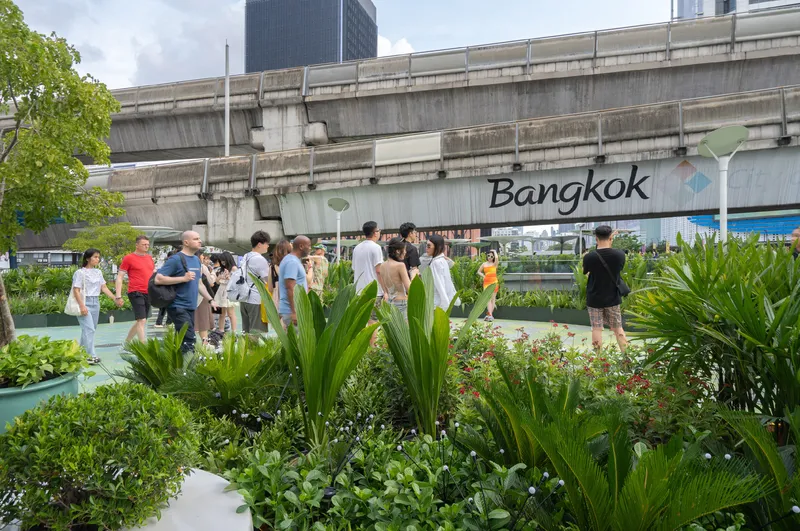
Hop Park is more than a temporary park, it’s a prototype for adaptable urban greenery. Its modular and mobile design allows it to “hop” to other gray, underutilized spaces across the city, turning concrete-heavy areas into lush, environmentally beneficial landscapes. By promoting sustainability, urban biodiversity, and public wellbeing, Hop Park exemplifies how innovative landscape architecture can transform urban life.
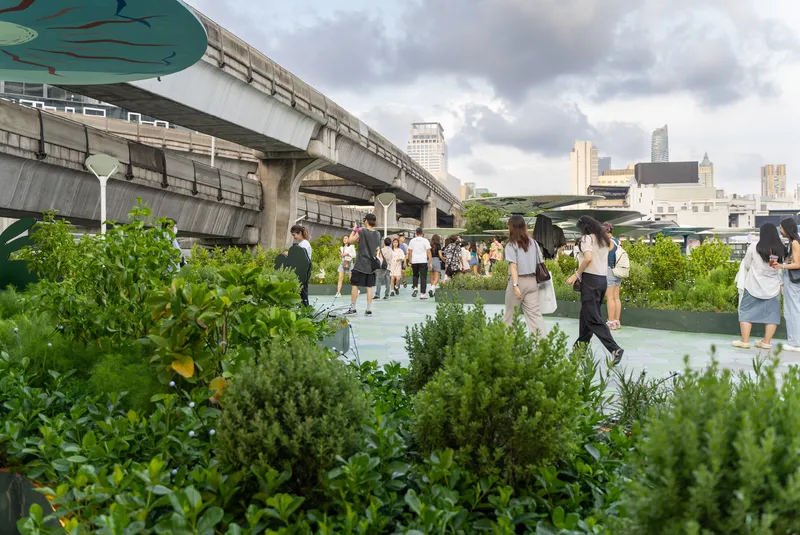
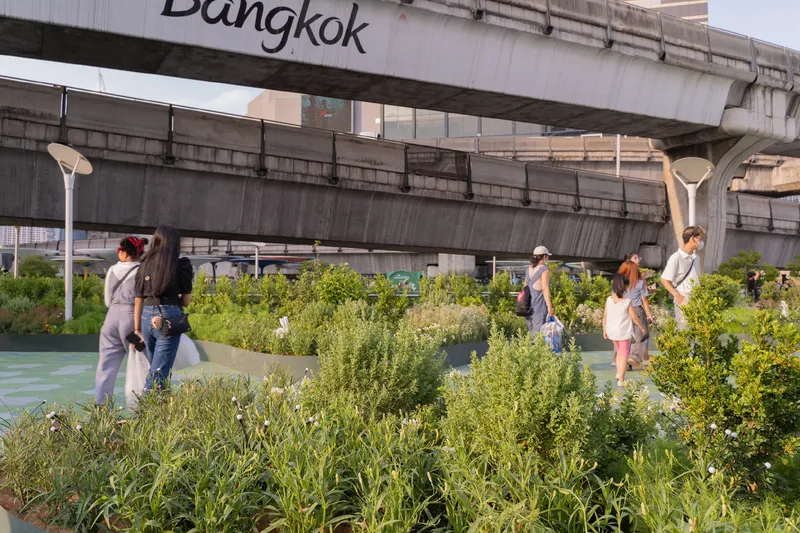
All photographs are works of Nawin Deangnul


Popular Articles
Popular articles from the community

Faces of the Soviet Avant-Garde: Turning Moscow's Street Names into an Open-Air Museum
A network of sculptural installations across a Moscow residential district transforms forgotten architect names into spatial encounters with cultural memor
Tsunami Convergenics: Turning Catastrophic Ocean Forces into Underwater Housing Infrastructure
A speculative underwater settlement off the coast of Onagawa, Japan, treats tsunamis and typhoons as energy sources rather than threats.
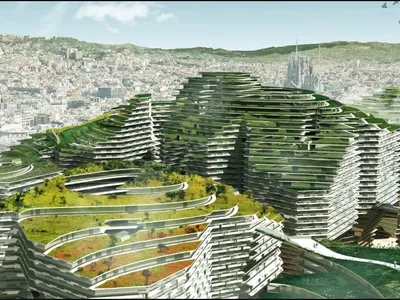
Manzana Morphosis: Stretching Barcelona's Grid into a Living Landscape for 2050
A radical reworking of the Eixample manzana turns density into a tool for generous public space, vertical ecology, and environmental performance.

Singing Woman: An Opera House That Performs Before the Curtain Rises
Ovidiu Cristian Pavel's conceptual opera house translates Estonia's choral identity into a sculpted waterfront landmark facing the Baltic Sea.

Similar Reads
You might also enjoy these articles


Hodi-Mandai Geram
Project Function: Preservation and revitalization of the Intangible heritage and socio-spatial identity of the Hodi by Housing, Cultural Memory Center, Sacred Grove, landscape, local tourism economy


Olio Towers: A Mid-Rise for Performers That Fuses Housing, Rehearsal, and Stage
Located blocks from Houston's Theater District, this modular tower stacks living units around a central performance atrium.

Oasis: Modular Green Housing Carved into Dhaka's Urban Fabric
A shortlisted Plugin Housing entry reclaims unauthorized settlements in Dhaka with stepped concrete volumes, green roofs, and ventilation-driven design.

Black Hole: A Floating Megastructure for the Post-Physical Era
Emiliano Mazzarotto envisions a spherical, self-scaling arena where e-sports, digital hotels, and holographic stadiums replace traditional public space.

Explore Urban Park Competitions
Discover active competitions in this discipline

Challenge to design locus for the upliftment of human rights

Challenge to reimagine the Iron Throne

Photograph architecture without architects

Illustrate the lost glory of Angkor Wat - Render Challenge
Comments (0)
Please login or sign up to add comments
No comments yet. Be the first to comment!