

House 2/3 by Momento: A Nature-Integrated Home in San Nicolás, Argentina
House 2/3 by Momento blends contemporary architecture with nature, creating a compact, sustainable home integrated into San Nicolás' landscape.


House 2/3, designed by the architecture studio Momento, is the second of a trilogy of houses thoughtfully positioned on the same block in Villa San Nicolás, a peaceful municipality just outside Córdoba, Argentina. Completed in 2020, this 82 m² residence masterfully blends architecture and landscape, creating a harmonious living experience.
Captured beautifully through the lens of Gonzalo Viramonte, House 2/3 stands as a testament to context-driven design and sustainable integration with its environment.

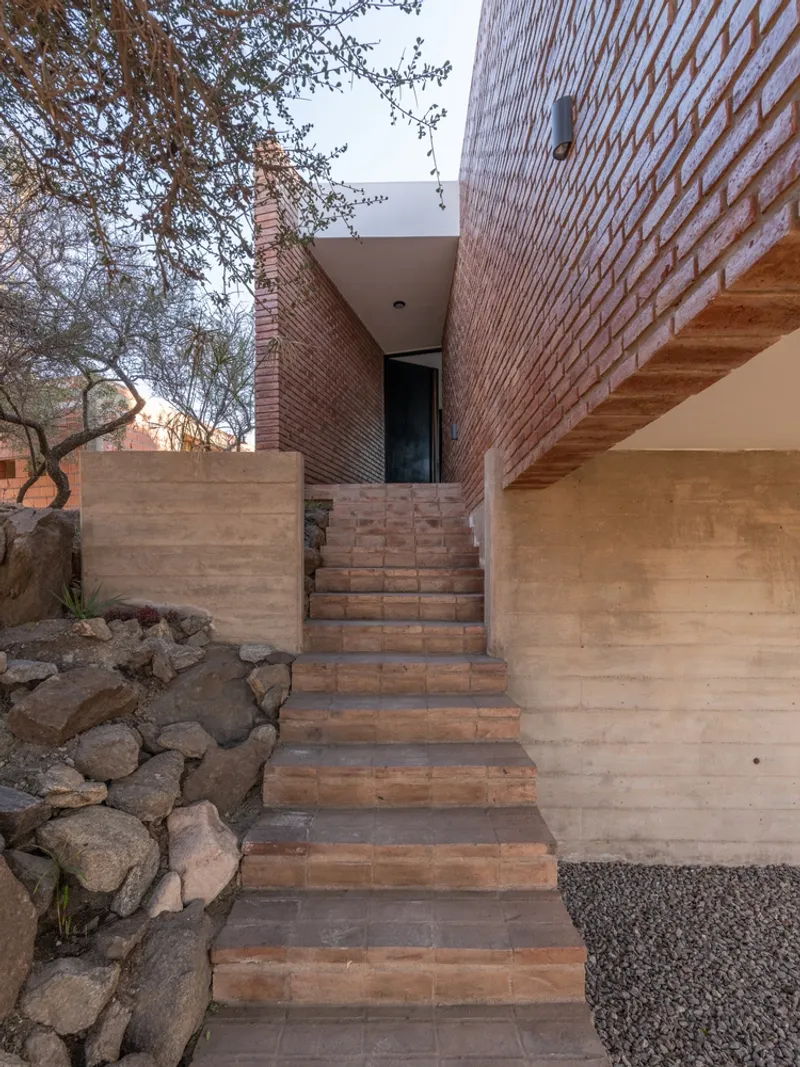
Site and Context: Working with Nature
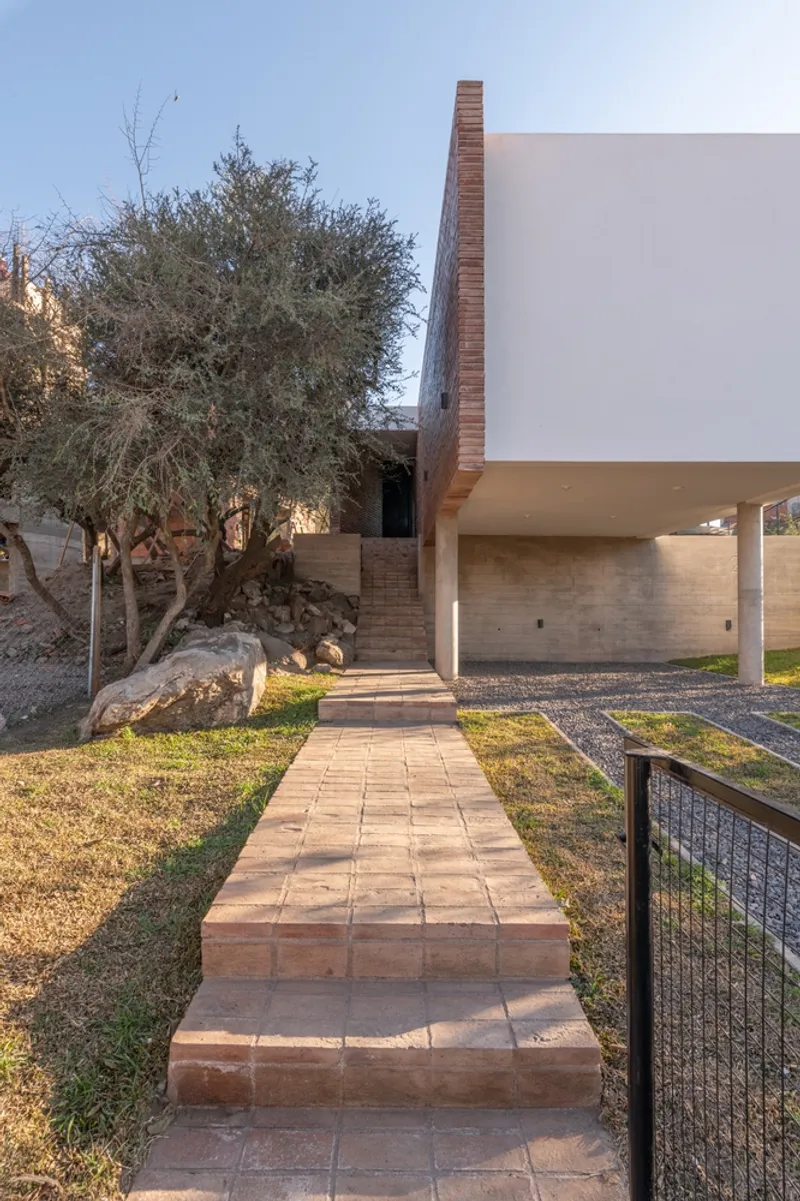
Set on a rectangular plot measuring 10 meters wide and 30 meters deep, the project’s unique natural and topographic conditions became the primary inspiration for its design. The terrain is dramatically divided into two zones: a lower area near the street and a higher elevated section at the rear, with a steep 5-meter slope between them.
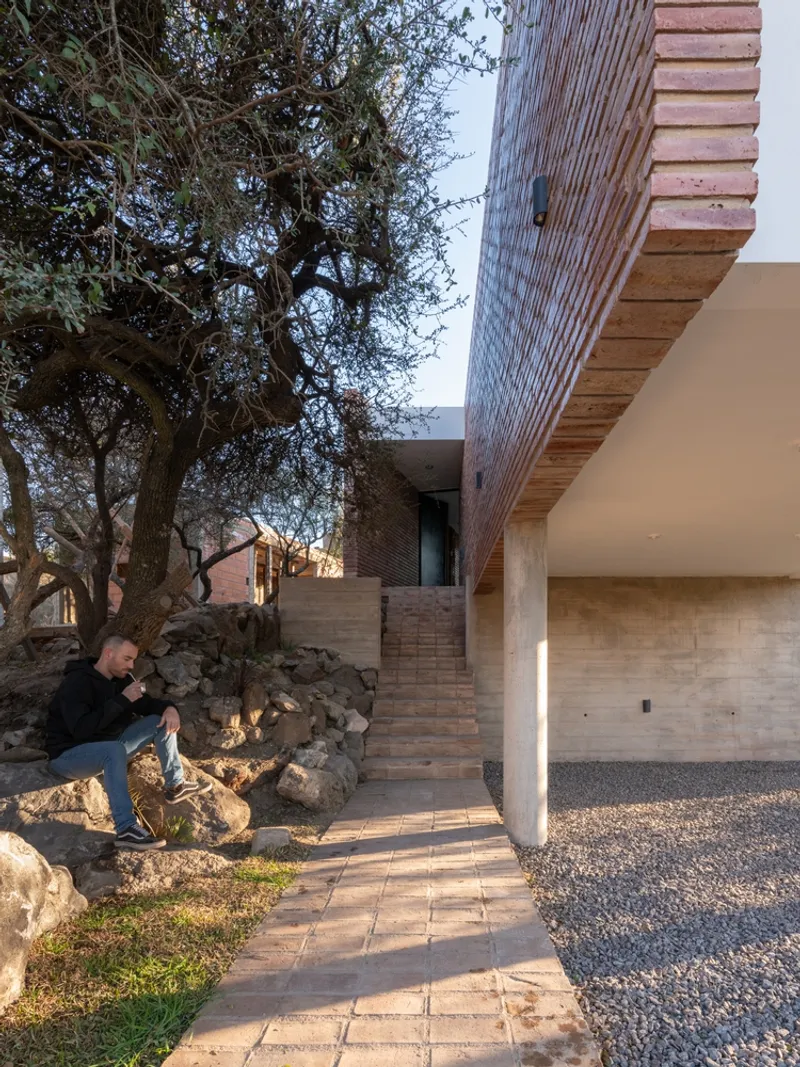
Scattered across the lot are several medium-sized trees with lush canopies, including one remarkable tree growing directly from a large rock at the rear of the site. These natural elements were seen not as obstacles but as integral components of the design. Rather than removing them, the architects prioritized preservation, weaving the trees into the architectural narrative and enhancing the house's relationship with its environment.
Architectural Strategy: Adaptation and Efficiency
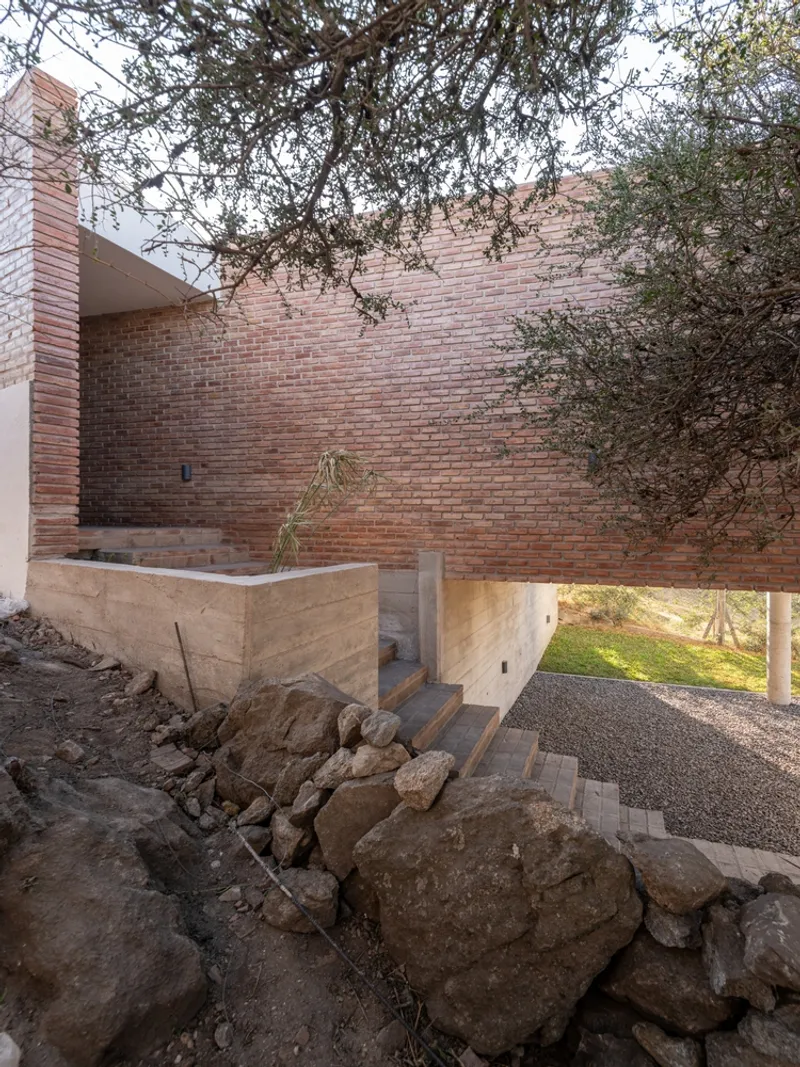
House 2/3 is conceived as a single rectangular volume that carefully breaks and shifts to adapt to the existing natural features. This approach allows the building to fit into the open spaces between tree canopies, respecting the original landscape while providing privacy and shade.
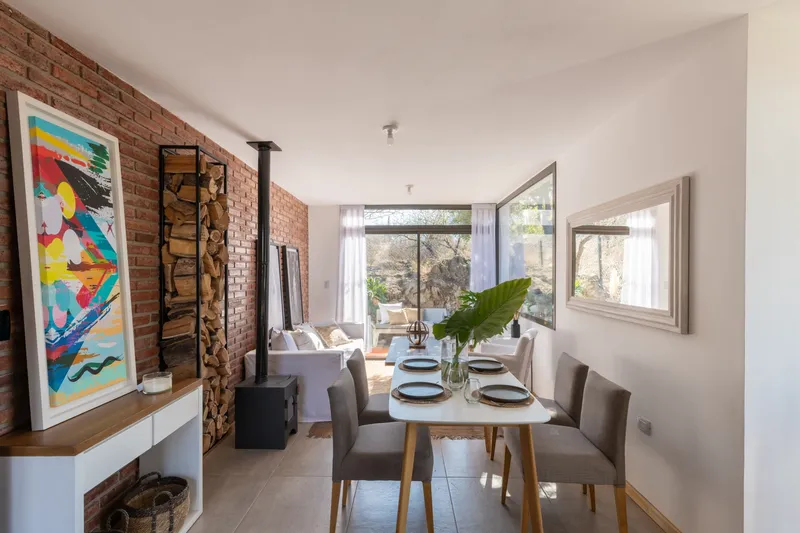
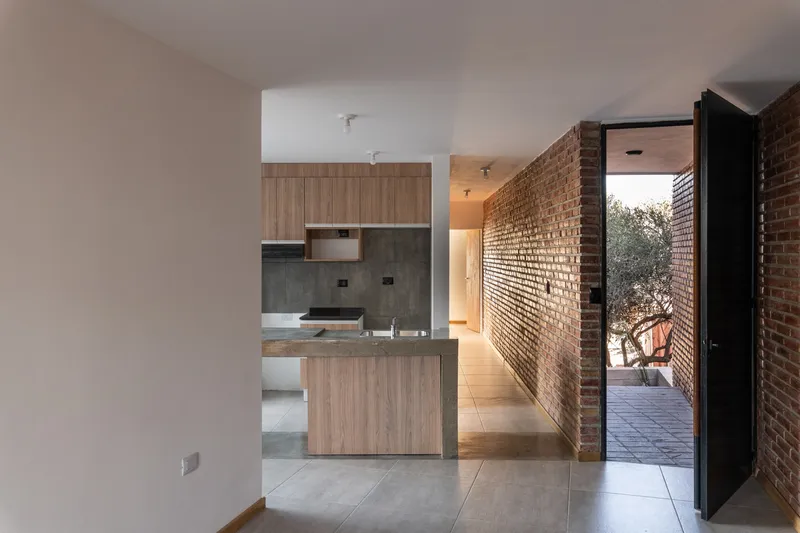
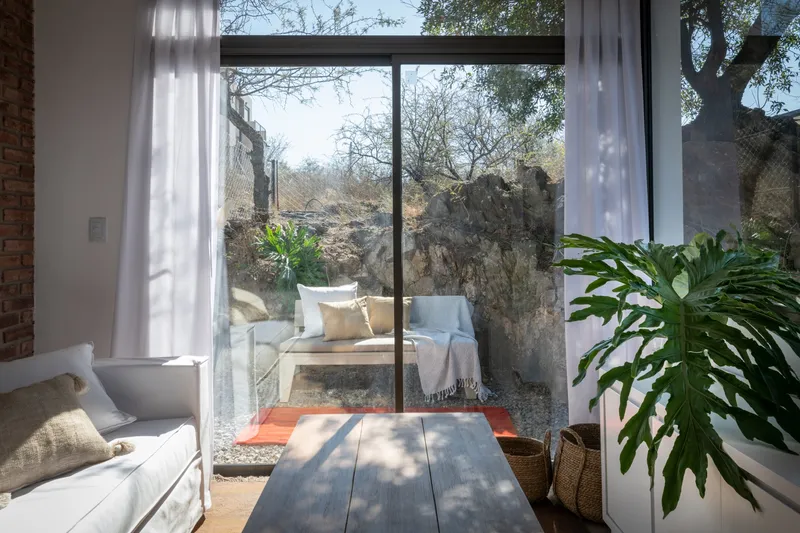
Strategically anchored on the higher portion of the site, the house creates a sheltered space beneath it, forming a garage on the lower level. Meanwhile, the social areas—the kitchen and living room—are situated at the rear, seamlessly connecting to the natural surroundings. Both spaces open to private patios that extend the living areas outward, offering natural expansions filled with light, greenery, and the textures of the landscape.
Design Focus: Quality of Life within a Compact Footprint
Given the nature of the real estate development, the project faced strict limitations on buildable square meters. The architects’ challenge was to maximize the quality of life within a compact footprint. Their solution was to embrace the existing vegetation, transforming the surrounding trees and natural features into an extension of the living environment.
By doing so, they not only maintained a low environmental impact but also created an architecture where space, light, and nature work together to enrich the everyday experiences of the residents. Every decision—from volume positioning to material choice—was aimed at enhancing comfort, functionality, and emotional connection with the place.

Materiality and Atmosphere
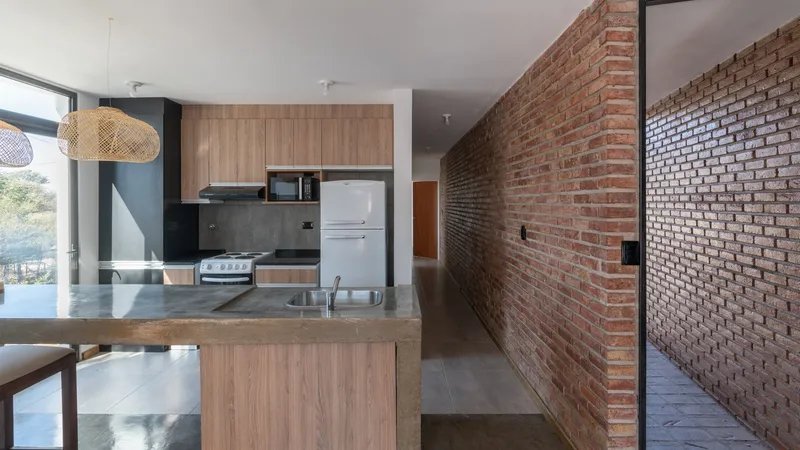
The house's material palette complements its natural setting, featuring brick, wood, and textured surfaces that blur the boundaries between built and organic. Interior spaces are warm and inviting, grounded by a simple, clean design ethos that lets the surrounding landscape take center stage.

All Photographs are works of Gonzalo Viramonte



Popular Articles
Popular articles from the community


The Musturak Paradise: Senior Living Architecture for a Connected Future in Temara, Morocco
The Musturak Paradise reimagines senior living architecture in Temara via private homes, social spaces, culture, community, and shared care.

The Earth Pod: 3D Printed Homes for Resilient Refugee Communities
The Earth Pod reimagines refugee housing through 3D printed homes made from clay, combining resilience, self-sufficiency, and rapid shelter.

EW PARK: Sustainable Architecture Reimagines the Future of Urban Parking
EW PARK reimagines city parking as a modular wooden tower combining automation, solar energy, electric mobility, and adaptable urban design.

The Ocean Hive: Sustainable Architecture for a Self-Sufficient Civilization at Sea
The Ocean Hive imagines sustainable architecture at sea, where modular habitats, algae, wave power and ocean waste sustain a growing colony.


Similar Reads
You might also enjoy these articles


Hodi-Mandai Geram
Project Function: Preservation and revitalization of the Intangible heritage and socio-spatial identity of the Hodi by Housing, Cultural Memory Center, Sacred Grove, landscape, local tourism economy


Olio Towers: A Mid-Rise for Performers That Fuses Housing, Rehearsal, and Stage
Located blocks from Houston's Theater District, this modular tower stacks living units around a central performance atrium.

Oasis: Modular Green Housing Carved into Dhaka's Urban Fabric
A shortlisted Plugin Housing entry reclaims unauthorized settlements in Dhaka with stepped concrete volumes, green roofs, and ventilation-driven design.

Black Hole: A Floating Megastructure for the Post-Physical Era
Emiliano Mazzarotto envisions a spherical, self-scaling arena where e-sports, digital hotels, and holographic stadiums replace traditional public space.

Explore Latin American Houses Competitions
Discover active competitions in this discipline



Challenge to reimagine the Iron Throne


Photograph architecture without architects


Illustrate the lost glory of Angkor Wat - Render Challenge


Design challenge to reuse E-waste
Comments (0)
Please login or sign up to add comments
No comments yet. Be the first to comment!