

Marcos Bertoldi Steps a Concrete House Down a Curitiba Hillside Around a Central Courtyard
House 8 in southern Brazil organizes raw concrete volumes and brick plinths around an open-air core that ties every level to the landscape.


A house on a sloping site can either fight the terrain or negotiate with it. Marcos Bertoldi Arquitetos chose negotiation with House 8, a residence in Curitiba that steps its concrete volumes down a hillside in a way that gives every principal room direct contact with the ground plane, a courtyard, or a terrace. The result is a house that reads as a single monolithic gesture from the street but unfolds into a far more open, fragmented composition once you move around it.
What makes this project worth studying is the interplay between two material identities: the grey brick plinth that anchors the house to the street, and the board-formed concrete slabs and walls that cantilever overhead, creating deep overhangs and covered outdoor rooms. Neither material dominates. Instead they share structural duty and expressive weight, which keeps the house from tipping into the kind of concrete brutalism that turns suburban neighbors against you.
Street Presence and the Brick Plinth
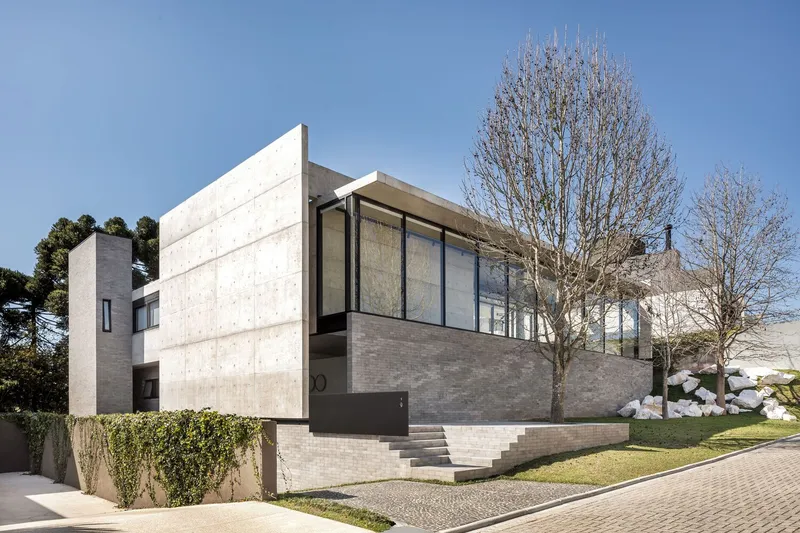
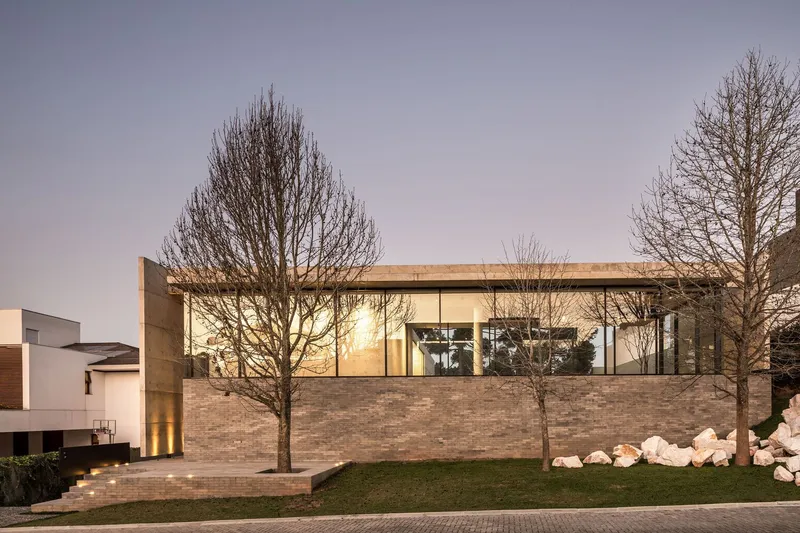
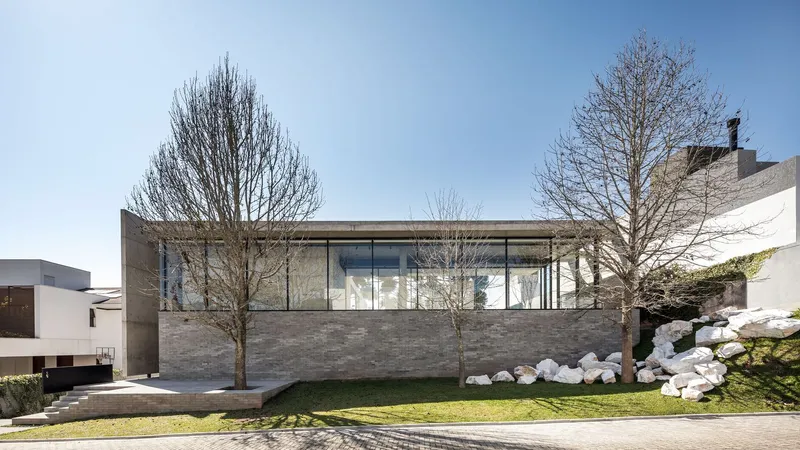
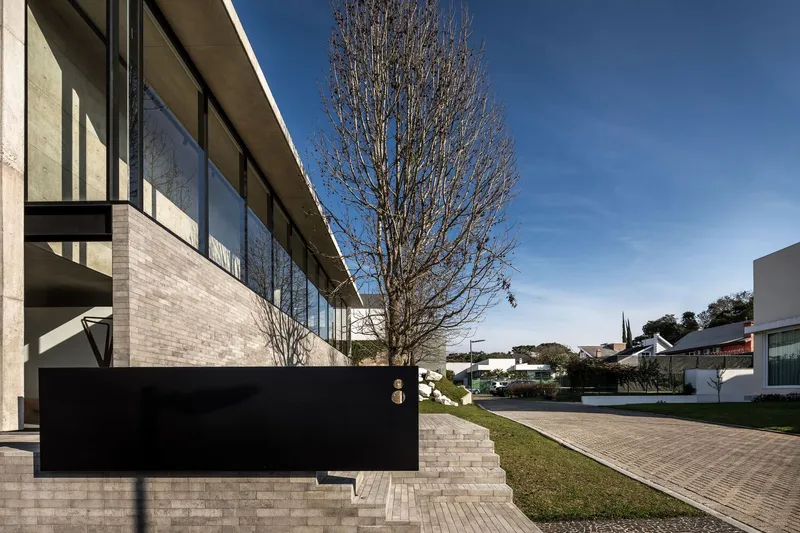
From the street, House 8 presents a horizontal bar of grey brick topped by a continuous band of glass under a flat concrete roof. Two bare deciduous trees frame the composition in winter, softening an elevation that might otherwise feel too fortified. The brick is not decorative; it forms the structural base, a plinth that absorbs the grade change and gives the house its datum line.
At dusk, the strategy becomes clear. The glazed upper floor glows, turning the brick plinth into a dark pedestal for a lantern. The proportions are carefully managed: the solid base is just tall enough to provide privacy, while the glass band above is just transparent enough to signal domestic life without overexposing it.
Cantilevers and Material Tectonics
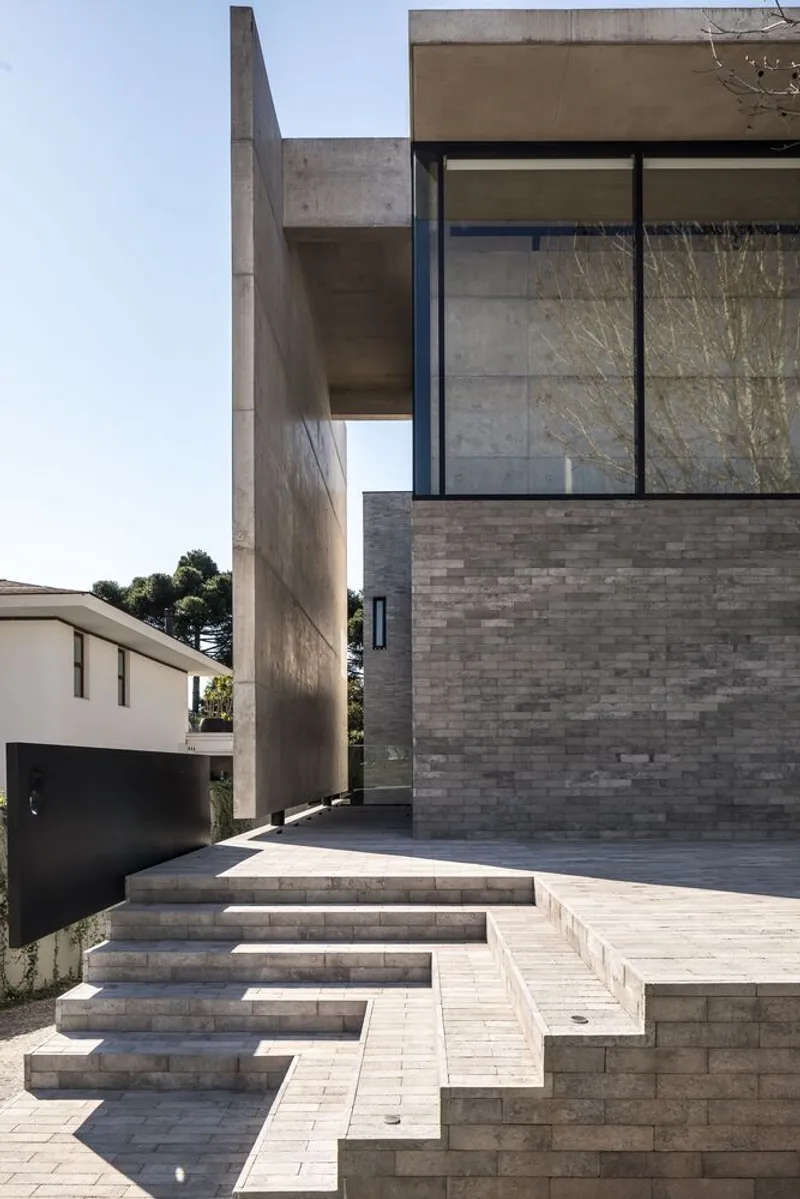
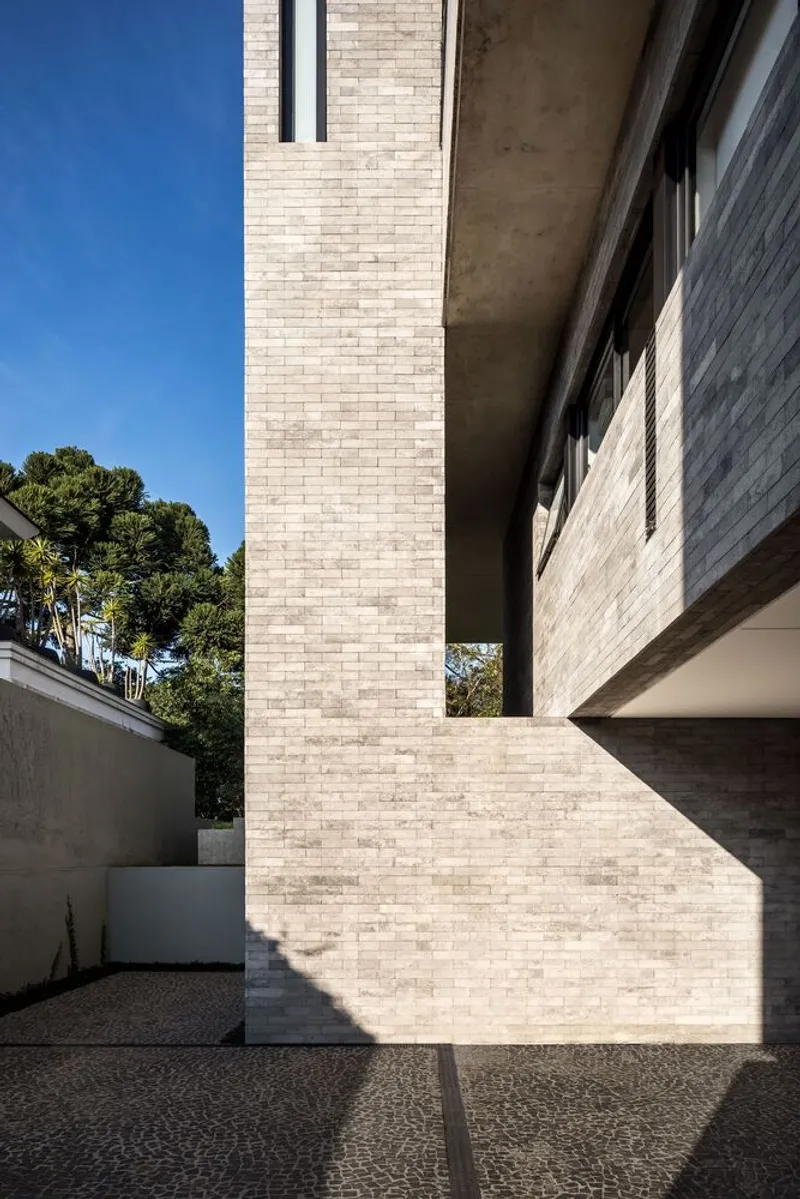
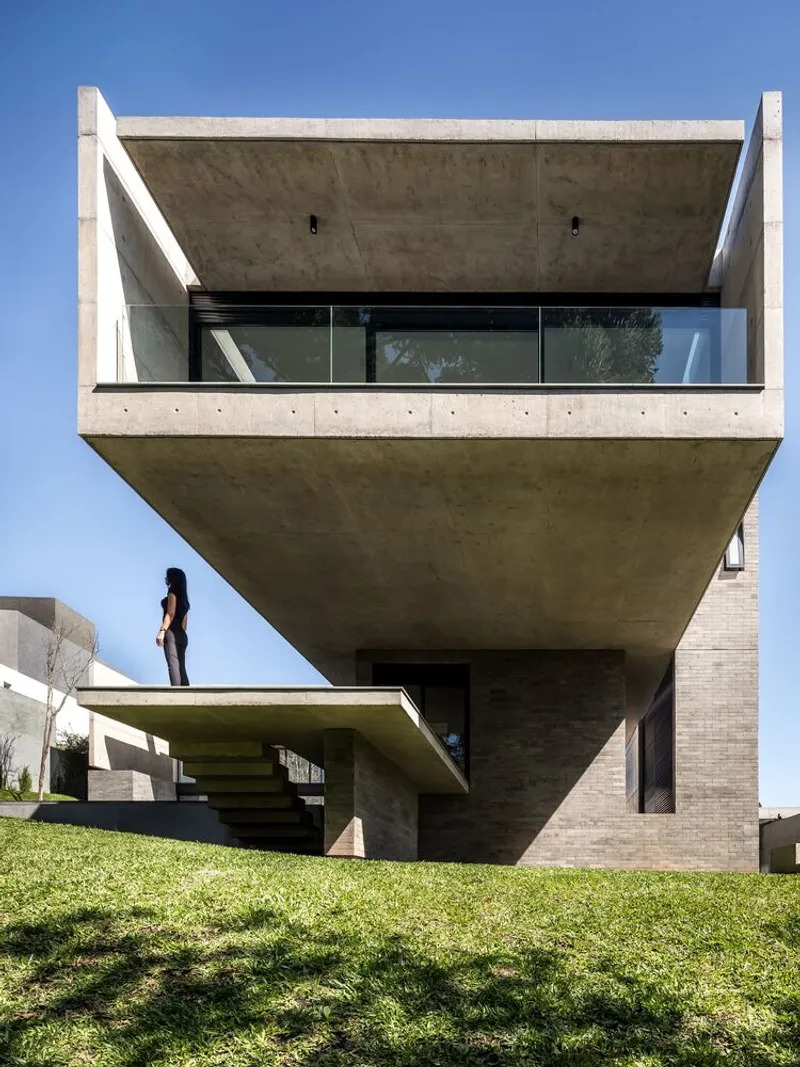
The cantilever is the project's signature structural move. A concrete slab extends well beyond the brick columns below, producing a deep soffit that shades the entry terrace and shelters the stepped paver approach. A detail shot of a single brick column meeting the concrete overhang tells you everything about the tectonic logic: compression in the brick, tension in the concrete, daylight in the gap between.
Seen from the lower terrace, the cantilever reads as a thick horizontal plane floating above a glazed balcony. The effect is both protective and dramatic. You are always either under it or looking up at it, and that constant awareness of the slab overhead gives the outdoor spaces a cave-like sense of shelter without enclosure.
The Courtyard as Organizational Core
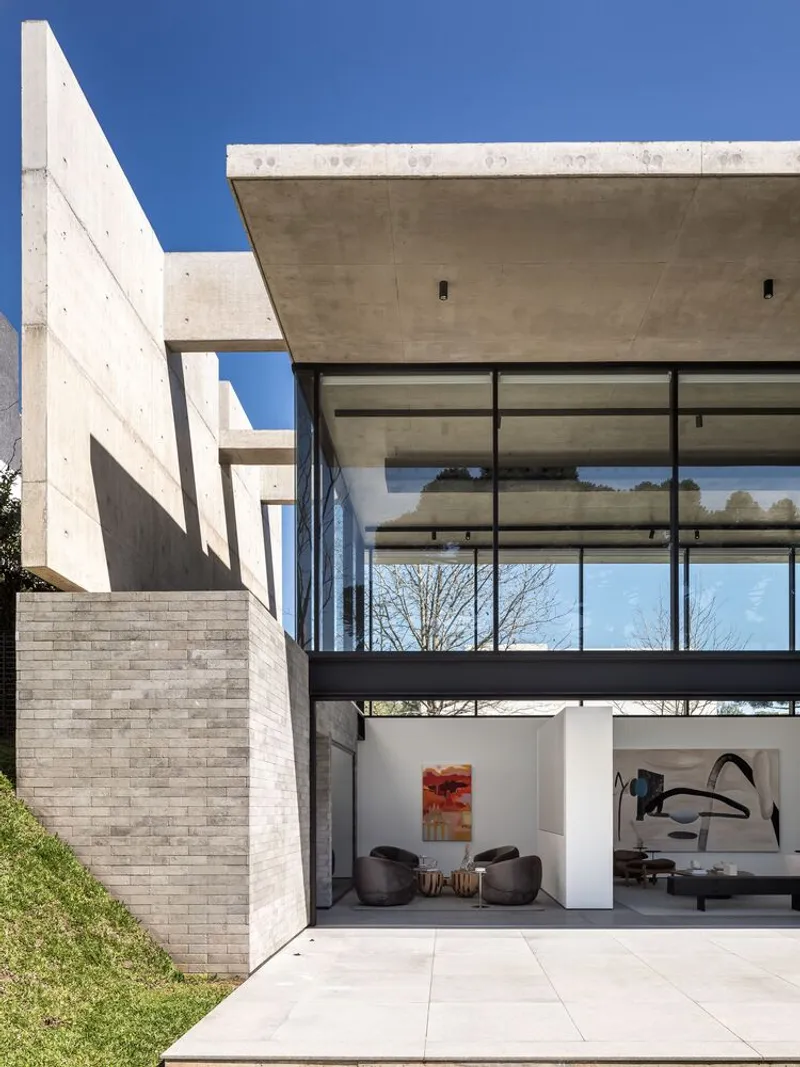
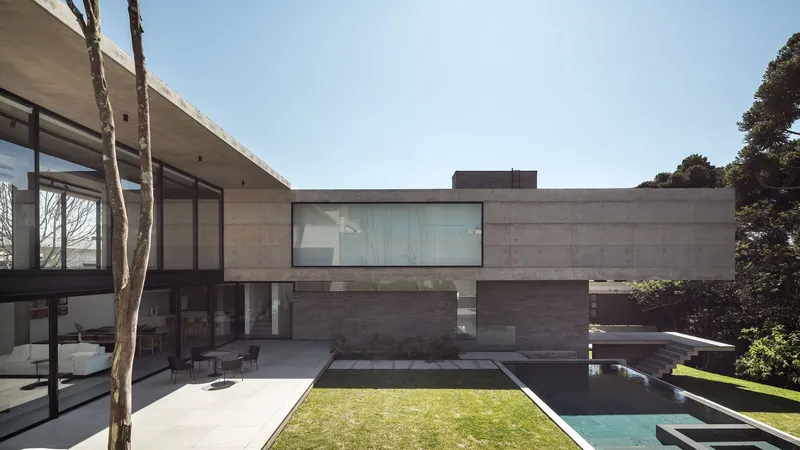
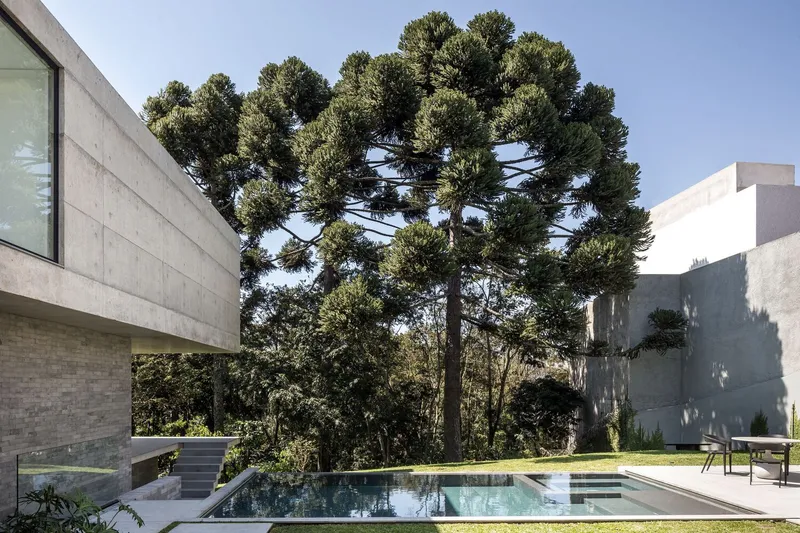
The courtyard is the hinge around which the entire plan rotates. Concrete walls and slabs frame a double-height void that draws light down into the living level while the lawn terrace and pool edge sit just beyond. A mature conifer anchors the rear courtyard, its dark canopy a counterpoint to the pale concrete and the bare deciduous trees elsewhere on the site.
This is not a decorative patio. The courtyard mediates between the more public pool terrace and the private interior rooms, functioning as both light well and circulation spine. Standing in it, you can see up to the bridge connecting the bedroom wing above, out to the garden, and back toward the entry, which makes it a spatial orientation device as much as an outdoor room.
Living Spaces That Erase the Threshold
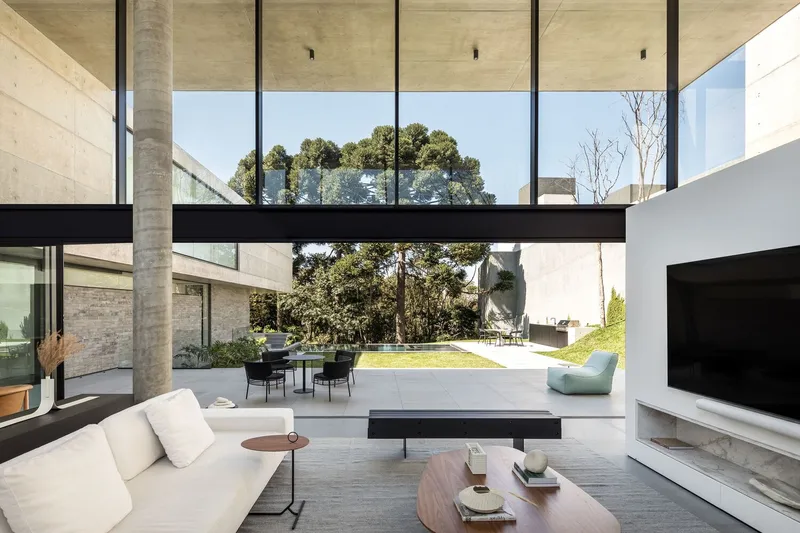
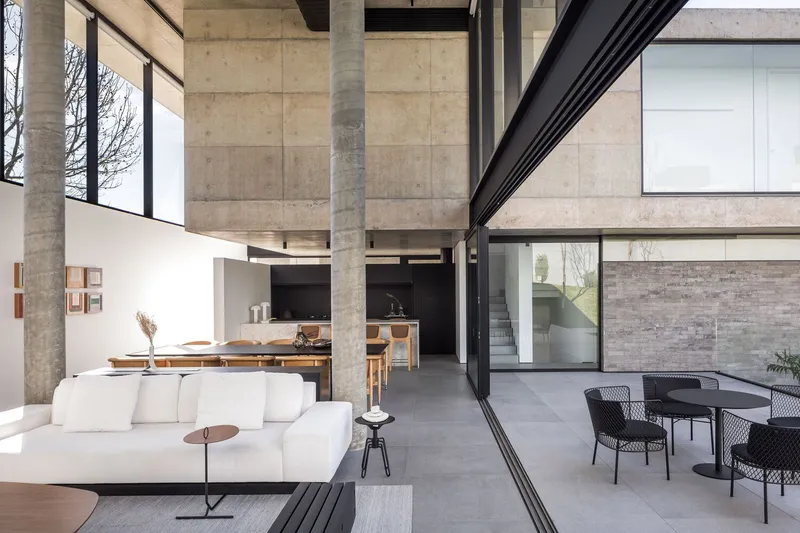
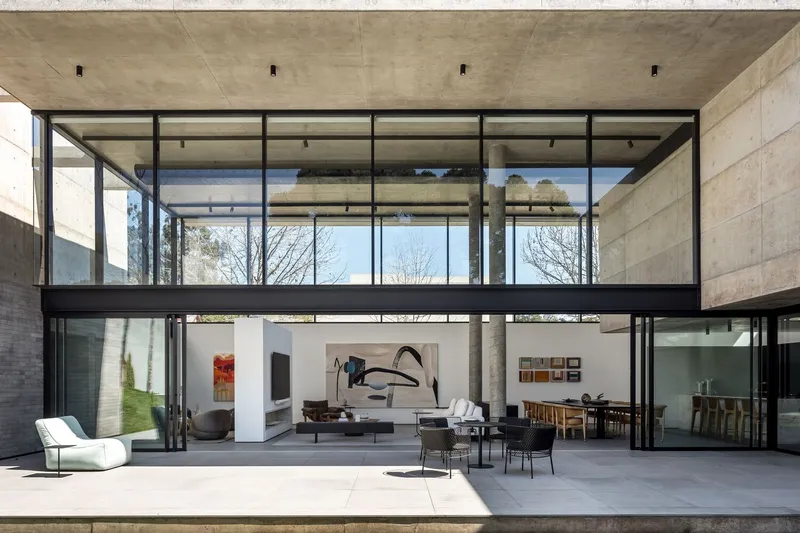
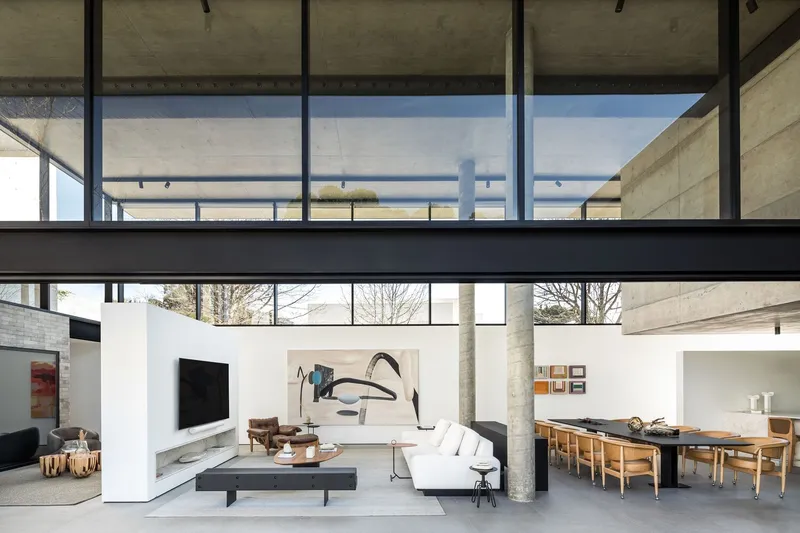
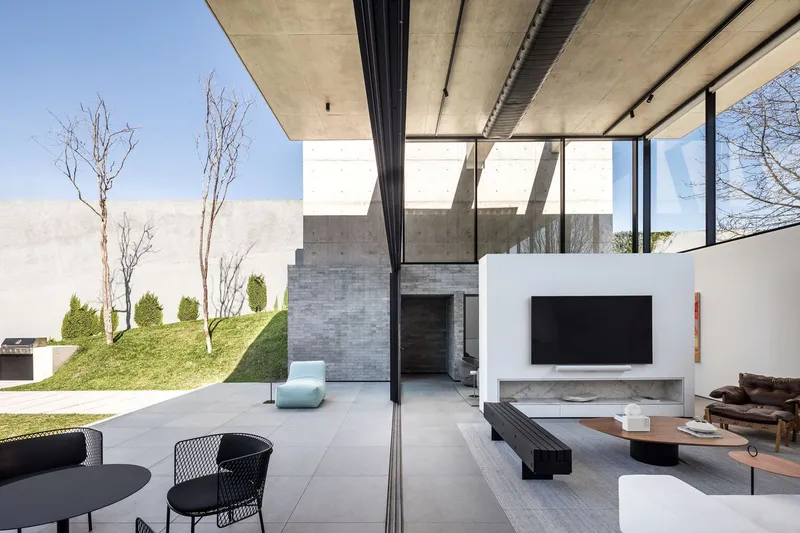
Inside, the principal living spaces operate as a continuous zone that opens on at least two sides to the outdoors. Full-height steel-framed glazing slides away to merge the living room with the lawn, and the exposed concrete soffit runs unbroken from inside to out, eliminating any visual distinction between covered interior and covered terrace.
The open-air living room beneath the cantilevered upper floor is the best version of this idea. Glazed on three sides, it feels like sitting in the garden with a roof over your head. The columns are slender enough to disappear in your peripheral vision, and the furniture floats on a stone floor that reads as continuous with the terrace beyond. Curitiba's subtropical climate makes this viable year-round, and Bertoldi has leaned into that advantage fully.
Light, Corridors, and the Bridge
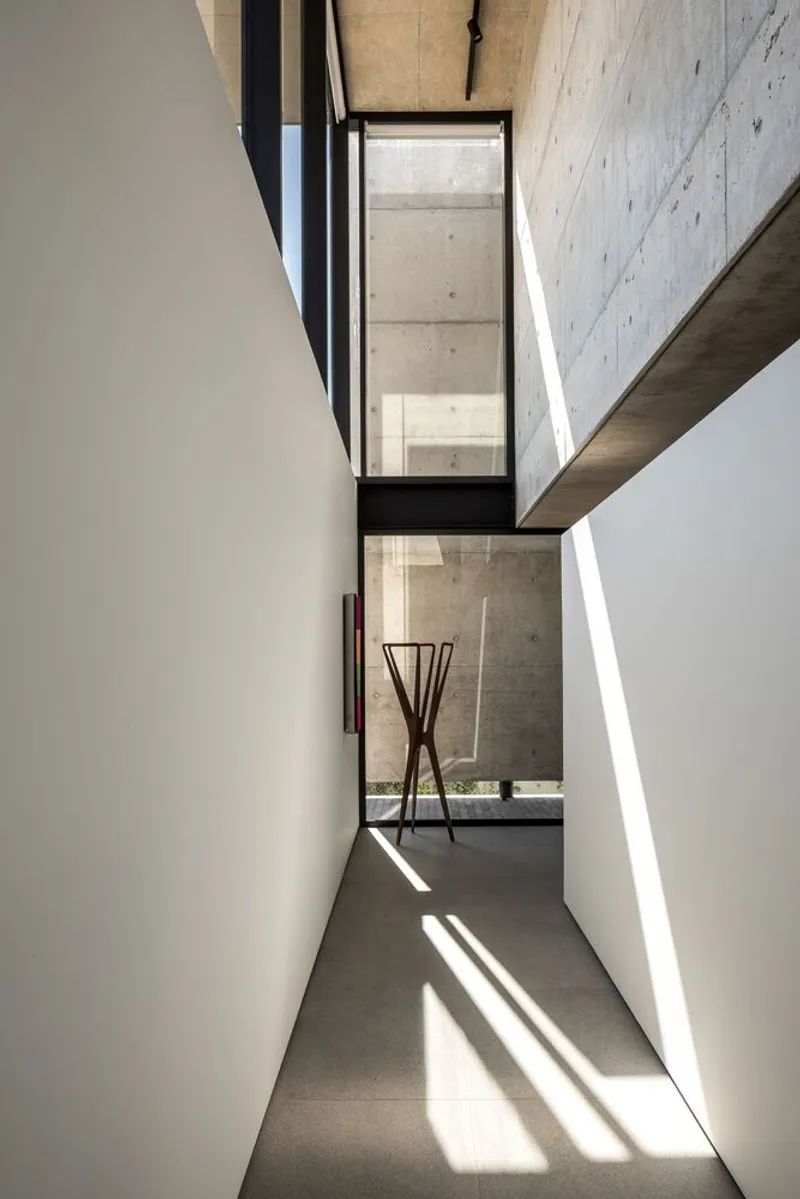
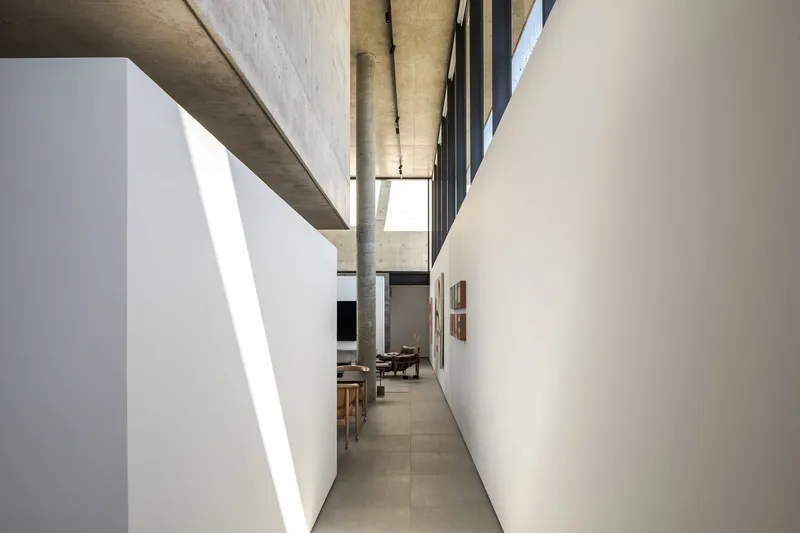
A black-framed glazed bridge crosses the double-height void, casting angular shadows on the concrete floor below. It is the most photogenic moment in the house, and it earns its drama by doing real work: it connects the two wings of the upper floor across the courtyard void, turning what could have been a dead-end corridor into a circulation loop.
Elsewhere, corridors are treated as light channels. White walls and exposed concrete ceilings funnel daylight from clerestory windows toward the deeper plan, and the double-height living space captures the silhouettes of bare trees outside its upper glazing, projecting a constantly changing pattern onto the concrete columns within. These are not accidental effects. The window placement is precise, and the restraint in material palette ensures nothing competes with the play of shadow.
Garden, Pool, and the Sloping Site
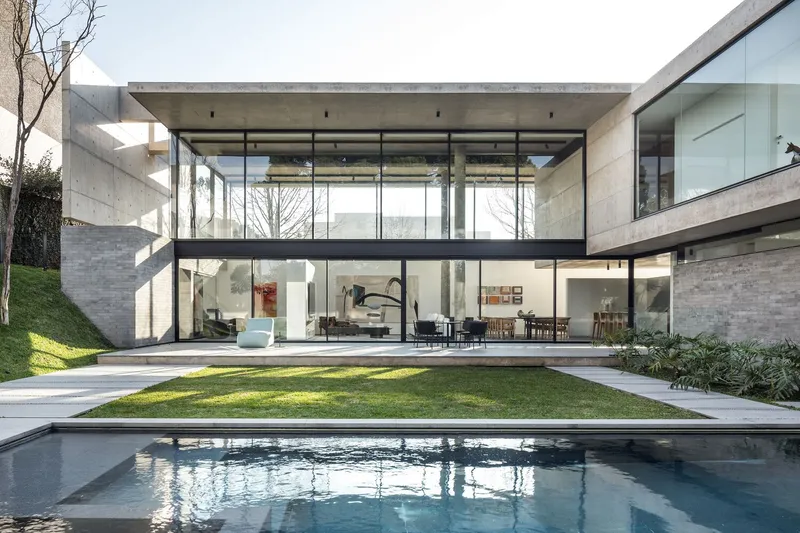
The garden view reveals the full extent of the hillside strategy. The pool sits at a mid-level terrace, flanked by concrete volumes on two sides, and a sloped lawn descends beyond the living area toward the lower grade. The house reads as a series of stacked trays, each one shifted slightly in plan to capture a different orientation and a different relationship to the garden.
The brick base visible from the street transforms, at the rear, into a rendered surface that reflects afternoon light onto the pool. The material transition is managed without a seam, which speaks to the level of detailing throughout. Even the landscape design is restrained: a single species of lawn grass, a few specimen trees, and stone pavers that match the interior flooring.
Bathrooms as Material Studies
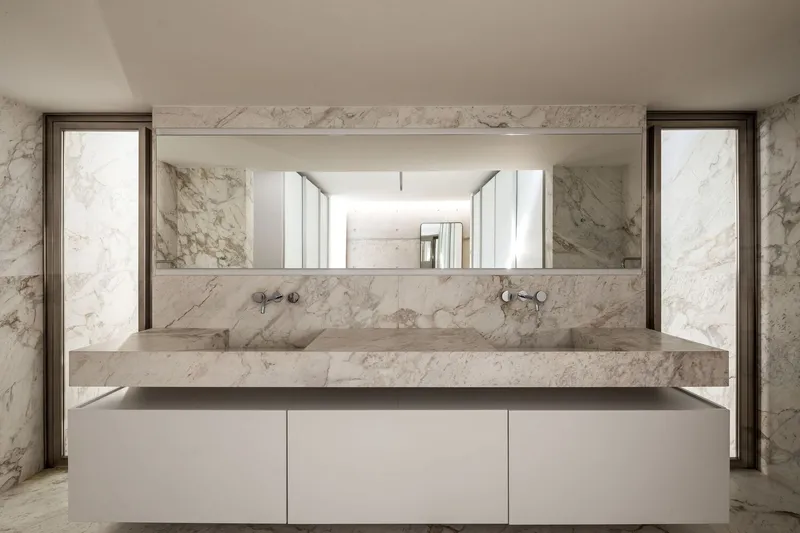
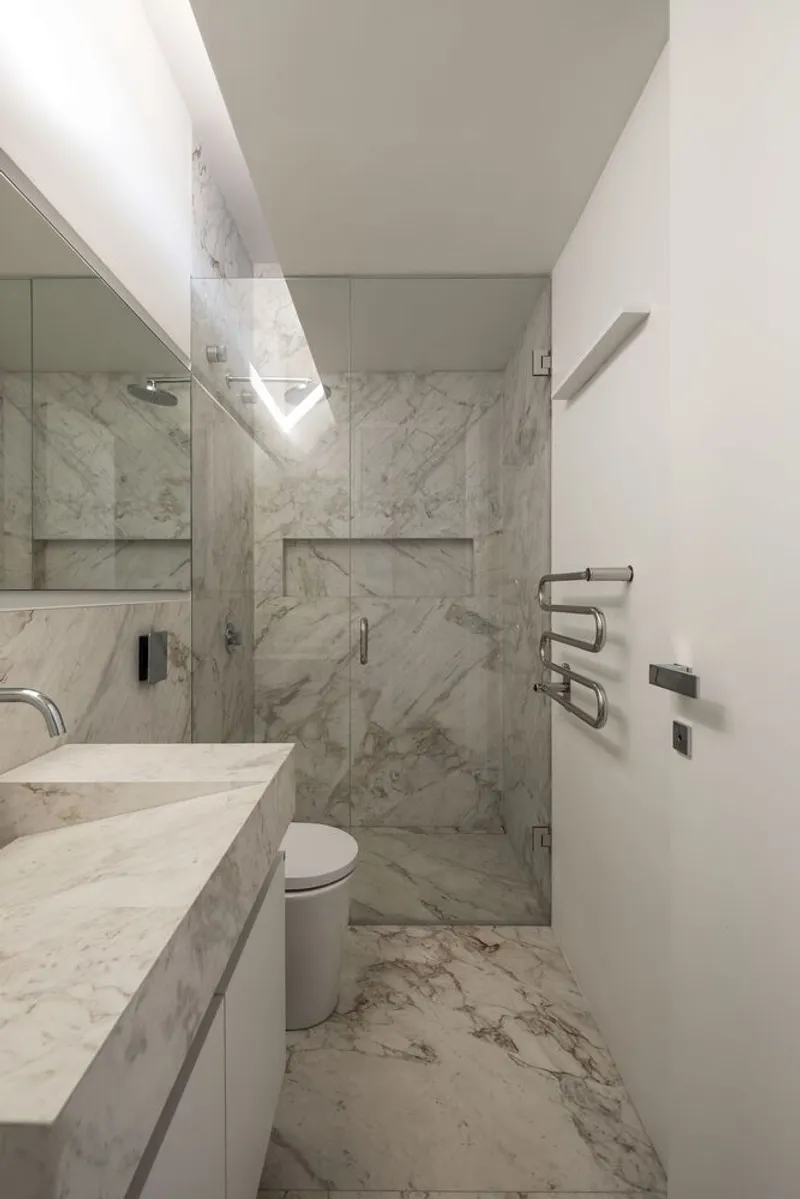
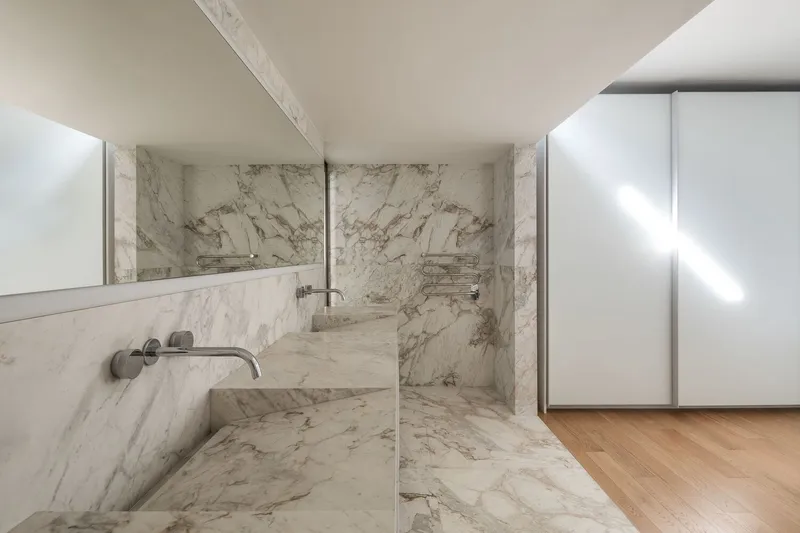
The bathrooms are the only rooms where the concrete recedes entirely. Here, veined white marble takes over walls, countertops, and even the bathtub surround. Bronze-framed mirrors, glass shower enclosures, and linear ceiling lights give these spaces a hotel-suite precision that contrasts sharply with the rawness elsewhere in the house.
It is a deliberate shift in register. The marble bath with a wall-mounted faucet and a glass partition opening onto a timber-floored bedroom beyond makes the private quarters feel like a reward for navigating the heavy concrete volumes of the public areas. The palette change is not subtle, and it does not need to be.
Dusk and the Glass Lantern
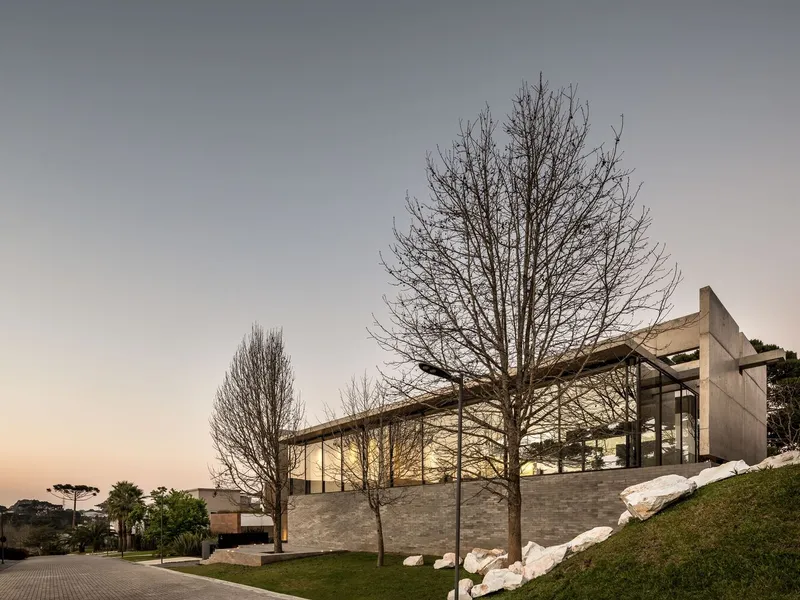
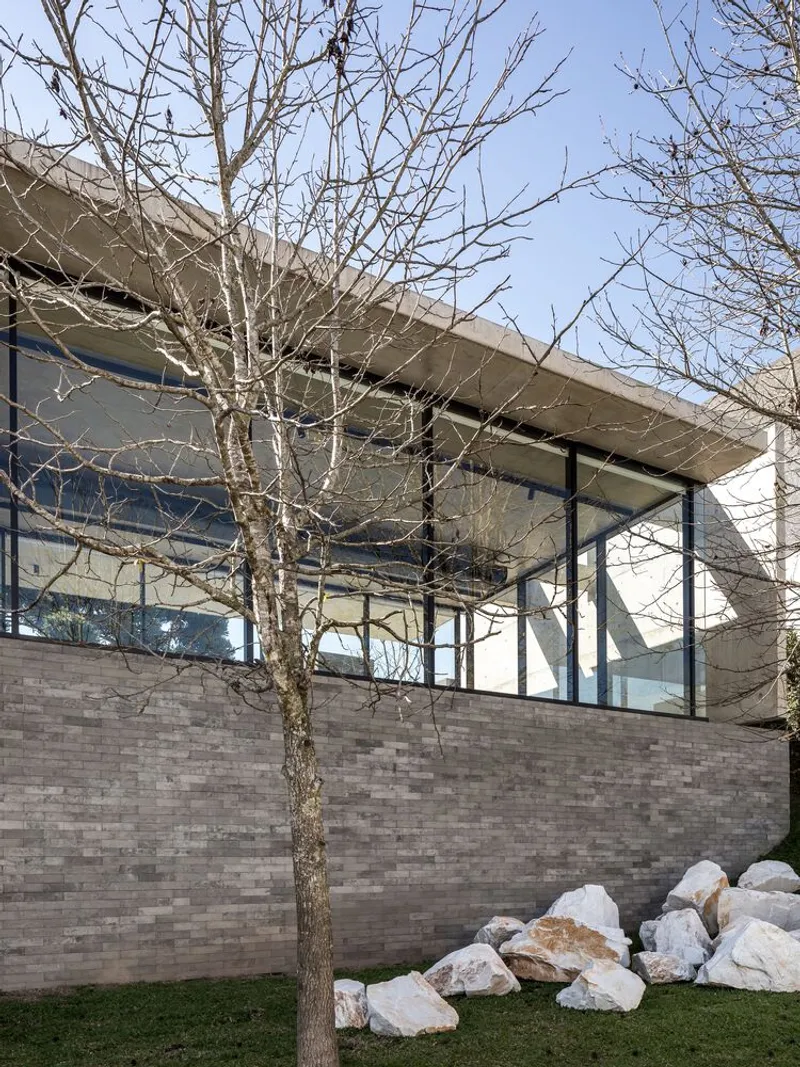
At dusk, the house reveals its layered composition most clearly. The brick walls absorb the fading light while the glazed upper floor emits a warm glow through the bare winter branches. A corner detail catches a textured brick wall meeting a white stone outcrop and a tree trunk, a collision of natural and built textures that summarizes the project's material ethos in a single frame.
Plans and Drawings
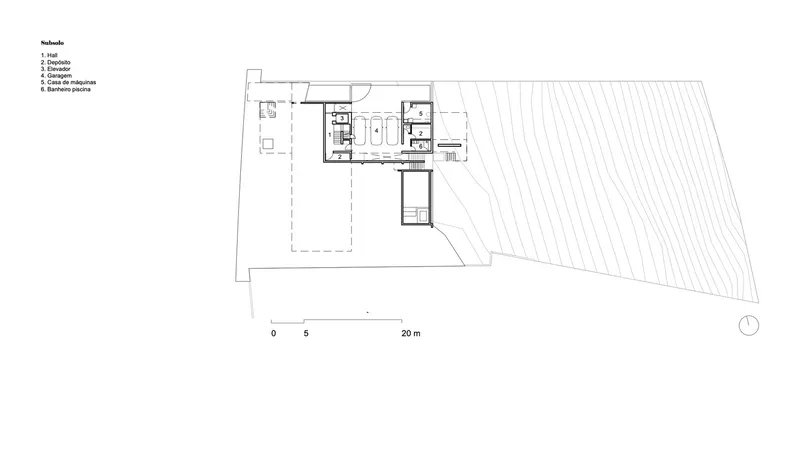
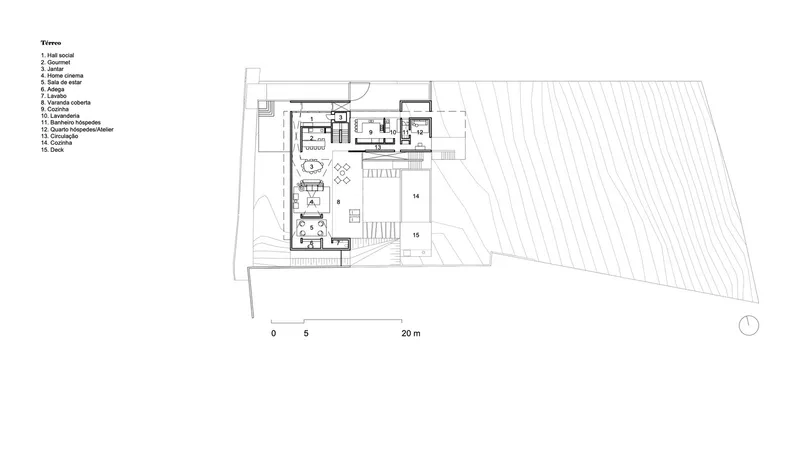
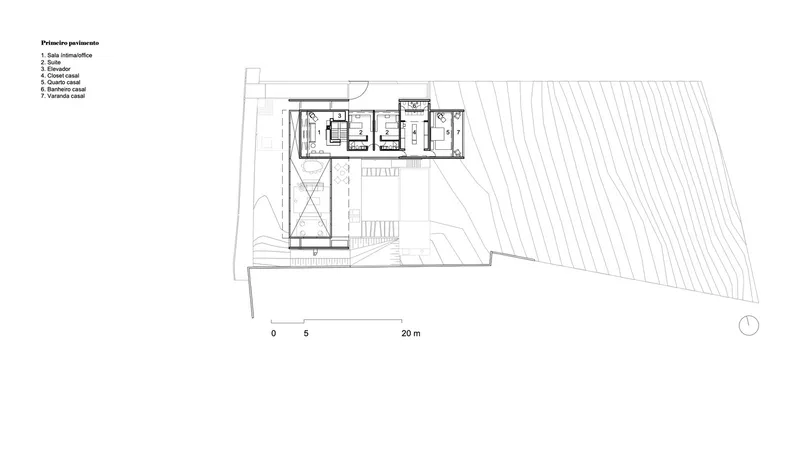
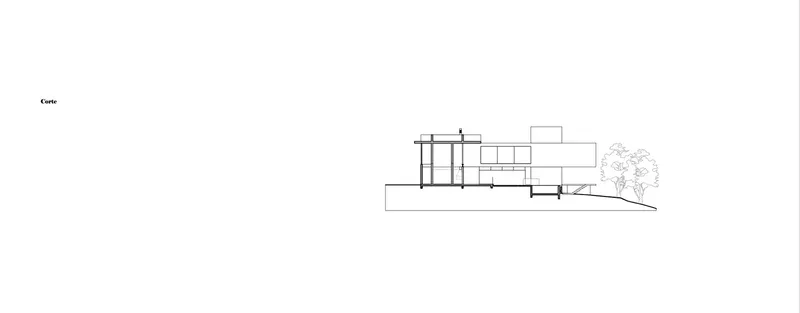
The ground floor plan confirms the courtyard as the organizational pivot: living, dining, and kitchen spaces wrap around it on three sides, with the pool terrace anchoring the fourth. Upstairs, bedroom suites are arranged around the central staircase and the double-height void, and the section drawing reveals the full topographic strategy, with the house stepping down the hillside in at least three distinct levels. The linear layout of the upper sleeping quarters and rooftop terrace adds a final horizontal datum that ties the whole composition together from the street.
Why This Project Matters
House 8 demonstrates that the exposed concrete residential idiom, now thoroughly globalized, still has room for site-specific invention. The hillside section, the courtyard void, and the brick plinth are all responses to this particular plot in Curitiba, not transferable gestures imported from a mood board. Marcos Bertoldi has built a house that could not exist on a flat site, and that specificity is the source of its strength.
More broadly, the project is a lesson in managing material contrast without collision. Concrete, brick, marble, steel, and glass each occupy clearly defined zones, and the transitions between them are handled with enough care that no junction feels arbitrary. In a market where concrete houses too often default to monolithic severity, House 8 finds a genuinely livable middle ground between raw structure and domestic warmth.
House 8 by Marcos Bertoldi Arquitetos, located in Curitiba, Brazil. Photography by Eduardo Macarios.
About the Studio
Share Your Own Work on uni.xyz
If projects like this are the kind of work you want to make, uni.xyz is a place to publish your own, find collaborators, and enter design competitions.



Popular Articles
Popular articles from the community


The Ocean Hive: Sustainable Architecture for a Self-Sufficient Civilization at Sea
The Ocean Hive imagines sustainable architecture at sea, where modular habitats, algae, wave power and ocean waste sustain a growing colony.

Co-Life: Senior Housing Design That Reconnects Older Adults With the City
Co-Life reimagines senior housing design through healing gardens, shared streets, workshops, and a sustainable community across generations.

The Earth Pod: 3D Printed Homes for Resilient Refugee Communities
The Earth Pod reimagines refugee housing through 3D printed homes made from clay, combining resilience, self-sufficiency, and rapid shelter.

The Musturak Paradise: Senior Living Architecture for a Connected Future in Temara, Morocco
The Musturak Paradise reimagines senior living architecture in Temara via private homes, social spaces, culture, community, and shared care.


Similar Reads
You might also enjoy these articles


Hodi-Mandai Geram
Project Function: Preservation and revitalization of the Intangible heritage and socio-spatial identity of the Hodi by Housing, Cultural Memory Center, Sacred Grove, landscape, local tourism economy


Olio Towers: A Mid-Rise for Performers That Fuses Housing, Rehearsal, and Stage
Located blocks from Houston's Theater District, this modular tower stacks living units around a central performance atrium.

Oasis: Modular Green Housing Carved into Dhaka's Urban Fabric
A shortlisted Plugin Housing entry reclaims unauthorized settlements in Dhaka with stepped concrete volumes, green roofs, and ventilation-driven design.

Black Hole: A Floating Megastructure for the Post-Physical Era
Emiliano Mazzarotto envisions a spherical, self-scaling arena where e-sports, digital hotels, and holographic stadiums replace traditional public space.

Explore Architecture Competitions
Discover active competitions in this discipline



Challenge to reimagine the Iron Throne


Photograph architecture without architects


Illustrate the lost glory of Angkor Wat - Render Challenge


Design challenge to reuse E-waste
Comments (0)
Please login or sign up to add comments
No comments yet. Be the first to comment!