
House and Atelier Among the Foothills of Buda by GUBAHÁMORI: Harmonious Residential Design in Remeteszőlős, Hungary
Private courtyard house in Buda Hills, Hungary, blending modern design with nature, intimacy, and sustainable, restrained architecture by GUBAHÁMORI.


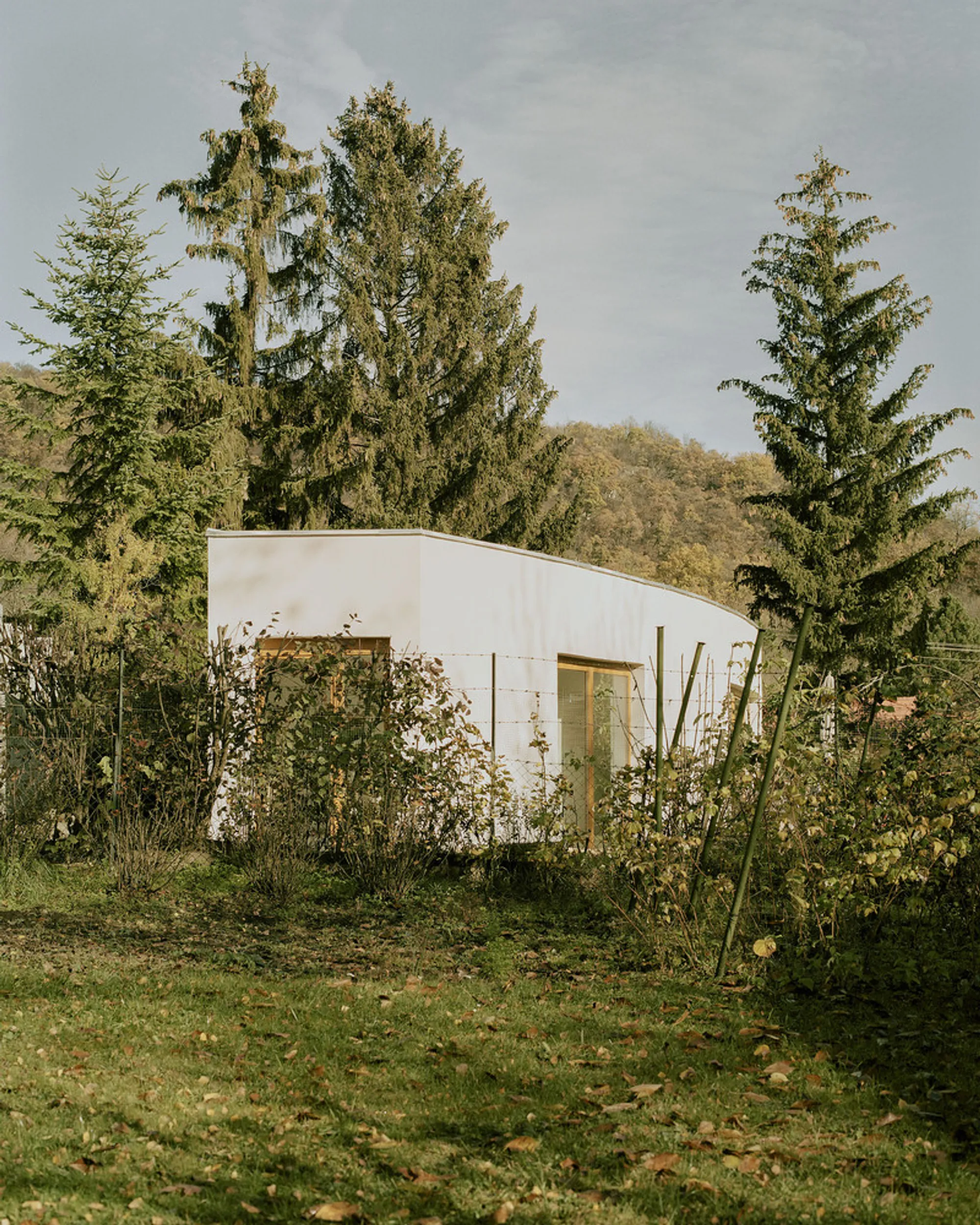
Nestled at the foot of the Buda Hills in Remeteszőlős, Hungary, the House and Atelier by GUBAHÁMORI exemplifies thoughtful architecture that balances modern living with the natural landscape. Designed by lead architects Sándor Guba and Péter Hámori, the 100 m² residence, completed in 2022, responds to the area’s rich green environment while subtly countering the rapid suburbanization of Budapest’s outskirts.
Context and Site
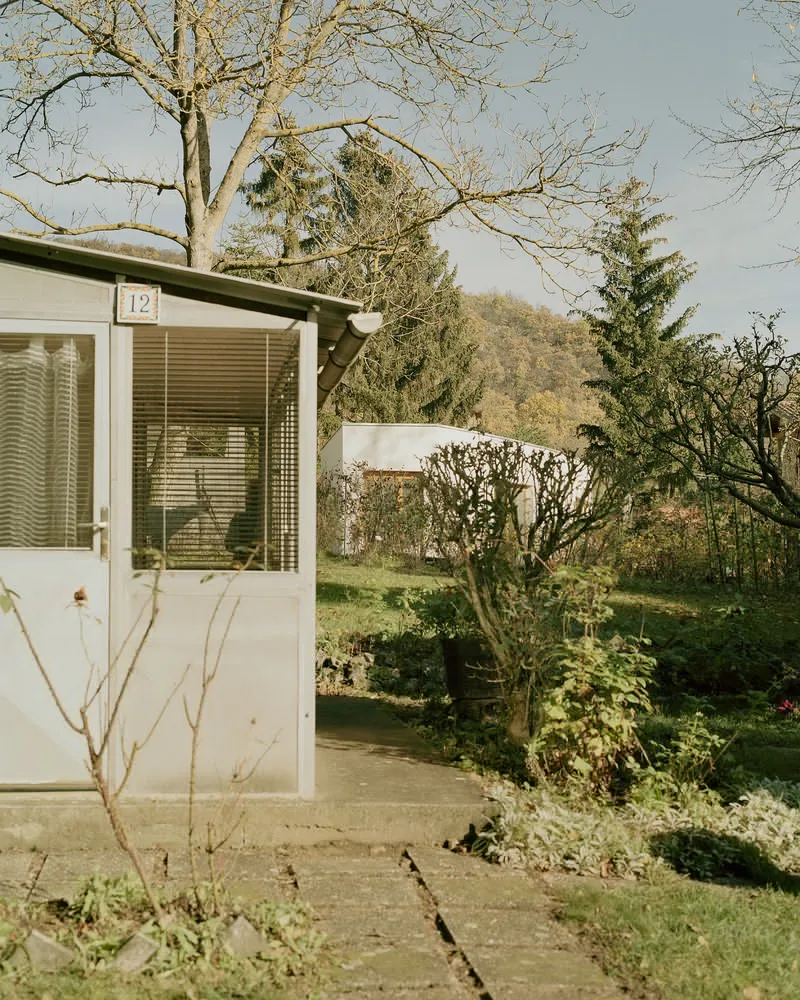
Remeteszőlős is known for its protected forests, designated since 1983, and its lush multi-level greenery around the village center. Historically an agricultural site until the early 1970s, the area was transformed into a recreational neighborhood, originally dotted with small holiday cottages and light brick constructions. Over the last two decades, the settlement has seen the rise of larger, more complex detached houses, gradually altering the original verdant character of the village.
In response to these changes, GUBAHÁMORI designed the house with a restrained scale, modest materials, and a careful approach to massing, ensuring a sensitive relationship between the building and its green surroundings. The design prioritizes intimacy with nature over the typical suburban sprawl, preserving the tranquility of the site.
Architectural Concept
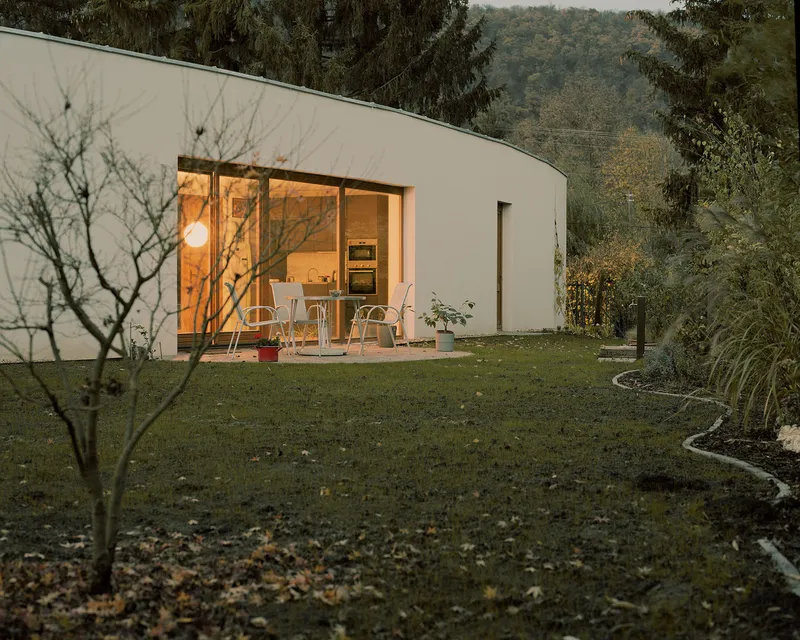
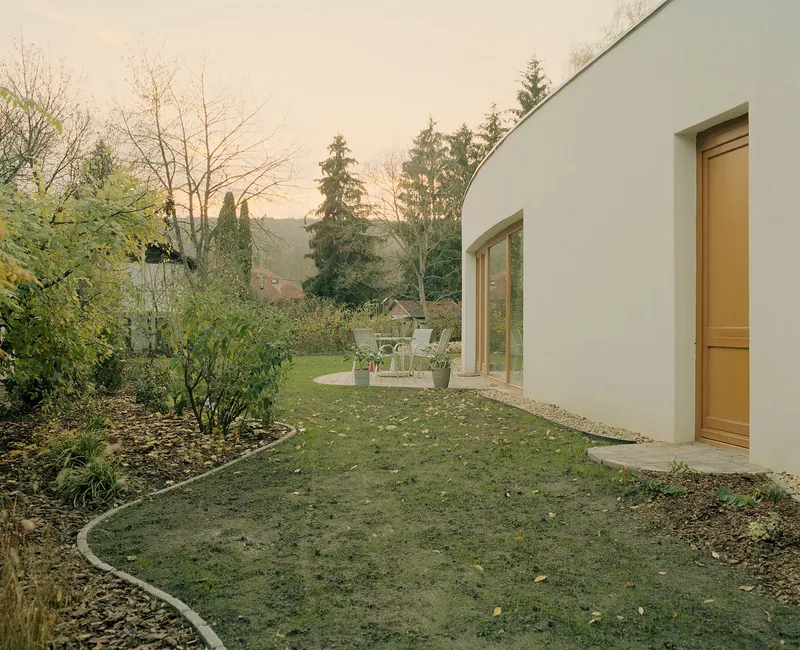
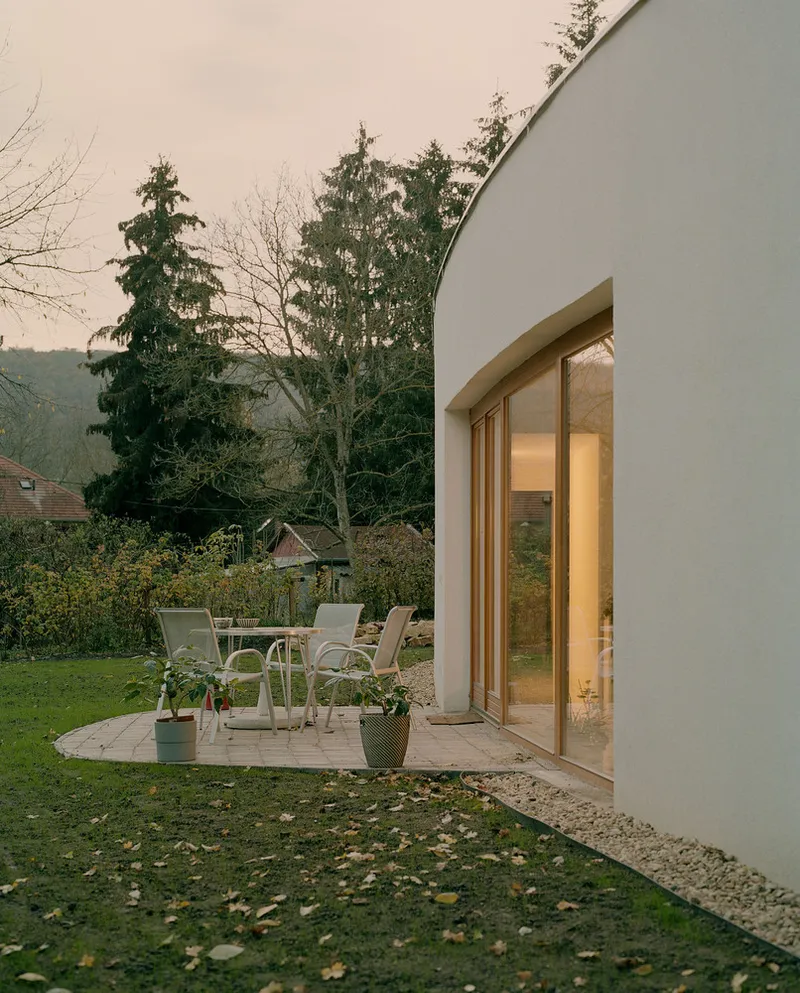
The house’s massing creates a dual-courtyard system: a smaller, enclosed courtyard at the entrance offers privacy and transition from the street, while a larger rear courtyard opens to the living spaces, hidden from public view. The curved, minimalist form enhances this division and promotes harmony between interior spaces and exterior greenery.
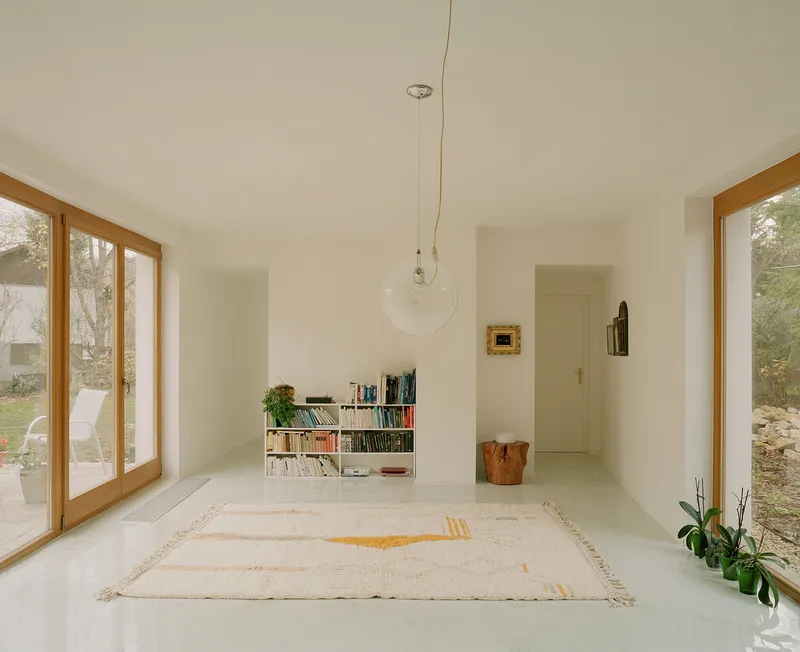
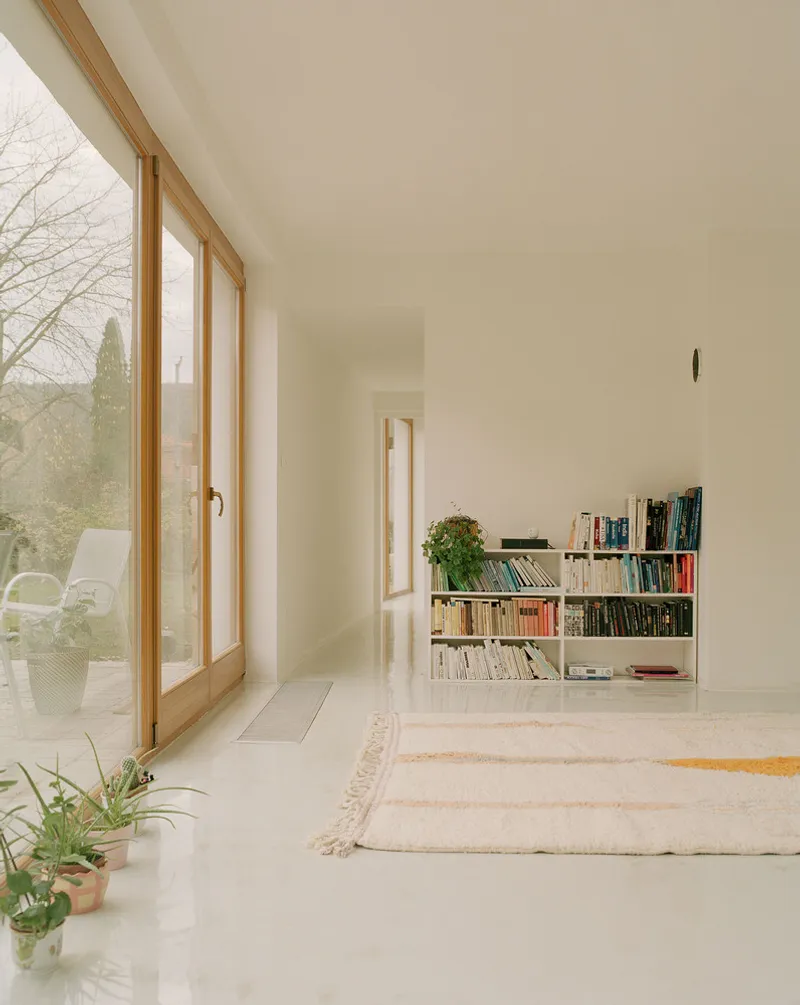
The floor plan is simple yet thoughtful. Positioned centrally, the entrance leads to the kitchen and living area, reflecting a modern interpretation of the traditional three-partition Hungarian home layout. Service spaces like the garage, storage, and mechanical areas face the street, while more private areas: the living room, bedroom, and studio/guest room, are oriented toward the rear, maximizing garden views and natural light.
Integration with Landscape
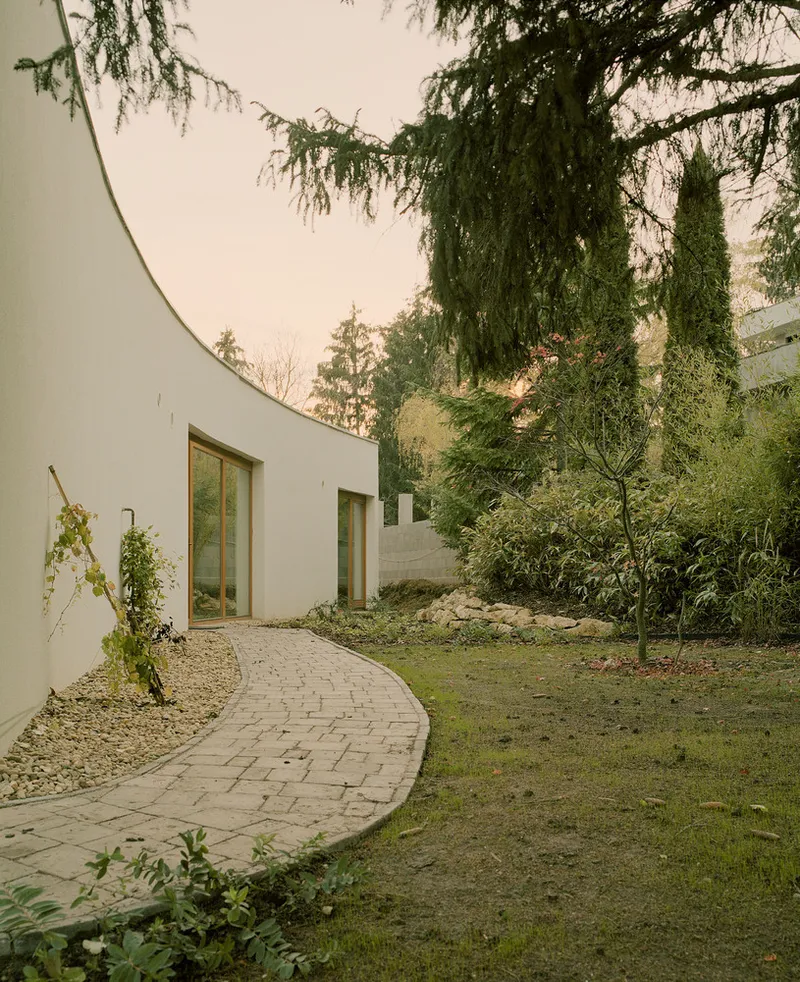
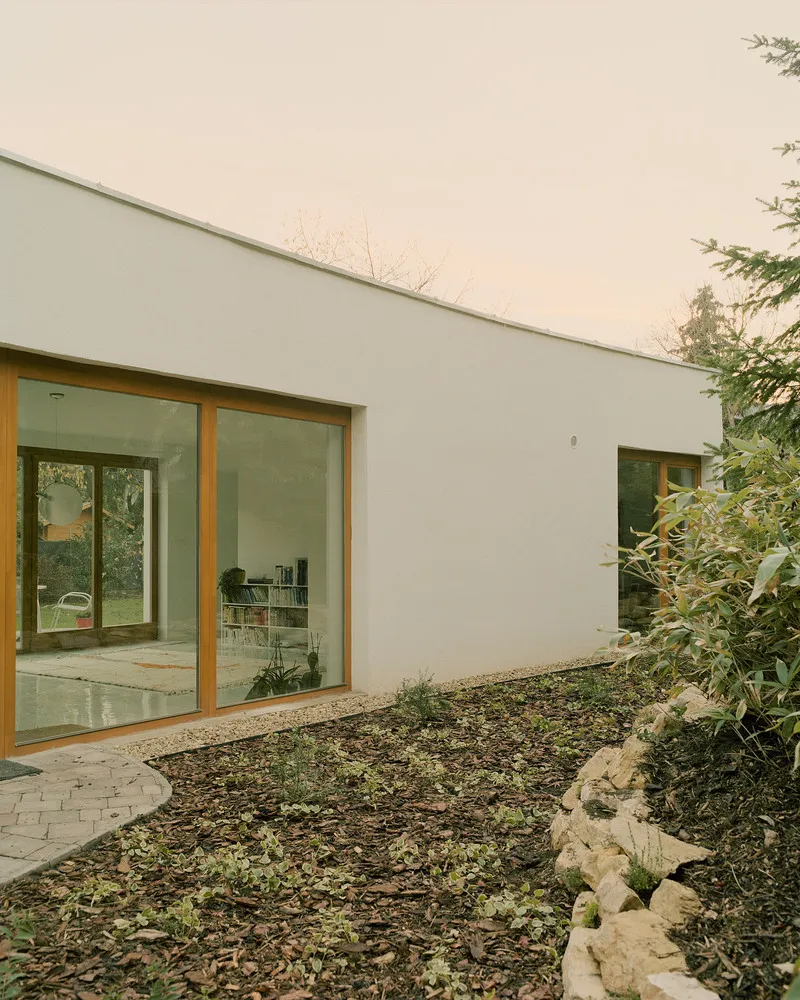
The existing garden, meticulously maintained by the owner before construction, became a central feature in the design. Wide windows and the slender building mass visually connect interior spaces with the two courtyards, creating the sensation of sitting within the garden itself. This approach reinforces the project’s core principle: architecture that respects and enhances its natural surroundings.
Materials and Sustainability
GUBAHÁMORI’s design uses restrained materials that blend with the natural environment, emphasizing sustainability and visual continuity. The subtle palette and carefully considered scale allow the house to coexist with the site, rather than dominate it, promoting an understated, environmentally conscious lifestyle.
This project exemplifies contemporary residential design that embraces privacy, nature, and functional elegance. By thoughtfully integrating building form, interior layout, and landscape, the House and Atelier Among the Foothills of Buda demonstrates how architecture can harmonize with its context while providing modern comfort.
All photographs are works of
Balázs Danyi




Popular Articles
Popular articles from the community


Riyadh For All: Intergenerational Urban Design for Active Aging in Rabat
Riyadh For All reimagines urban design in Rabat with intergenerational co-living, adaptive courtyards, and Moroccan cultural exchange today.

Co-Life: Senior Housing Design That Reconnects Older Adults With the City
Co-Life reimagines senior housing design through healing gardens, shared streets, workshops, and a sustainable community across generations.

Play: Fragments of Their World
Familiar architecture becomes modular playground design, creating safe spaces where displaced children can learn, connect, imagine and play.

The Earth Pod: 3D Printed Homes for Resilient Refugee Communities
The Earth Pod reimagines refugee housing through 3D printed homes made from clay, combining resilience, self-sufficiency, and rapid shelter.


Similar Reads
You might also enjoy these articles

Bamboo Housing Challenge 2026: Design Affordable, Sustainable Homes Using Bamboo
An international design competition by Bamboo U and IBUKU inviting architects and designers to reimagine affordable housing using bamboo — with the winning design built full-scale in Bali.

Computational Design & Education: Beegraphy Design Awards Introduces 7th Category (Featuring Jiyun's Innovative Approach)
Dive into Beegraphy’s 7th Design Awards category, where computational design meets education to create immersive, interactive learning tools, inspired by Jiyun’s work.
From Parametric Lighting to Urban Furniture: Join the 2nd Workshop in Beegraphy’s Computational Design Series
Dive into Cutting-Edge Design Techniques and Practical Applications with Industry Experts

Last Call: Unleash Your Architectural Genius in SHAK's Kindergarten Design Competition
Urgent call for architects to join SHAK's kindergarten design competition before the looming deadline

Explore Architecture Competitions
Discover active competitions in this discipline



Challenge to reimagine the Iron Throne


Photograph architecture without architects


Illustrate the lost glory of Angkor Wat - Render Challenge


Design challenge to reuse E-waste
Comments (0)
Please login or sign up to add comments
No comments yet. Be the first to comment!