

House CM: Redefining Tradition Through Contemporary Architecture
House CM reinterprets traditional suburban architecture through three elevated brick volumes, creating fluid spaces that connect interior living with surrounding forest landscape.


Transforming Constraints into Architectural Innovation
In the quiet landscape of Escobar, a gated community on the outskirts of Buenos Aires, Argentina, House CM emerges as a remarkable example of how architectural constraints can become catalysts for innovation. Designed by AtelierM in collaboration with Nicolas Krause and completed in 2022, this 315-square-meter residence demonstrates that tradition and contemporaneity need not exist in opposition—rather, they can engage in a productive dialogue that enriches both.

The project occupies one of the final available lots within a neighborhood governed by strict and deeply conservative building regulations. These codes, typical of many established residential communities, were designed to maintain visual continuity and preserve a particular aesthetic character. Among the most rigid requirements was the mandate that all roofs must be sloped—a specification that, on its surface, seemed to prescribe a conventional, even predictable architectural solution.

From Limitation to Opportunity
Where others might have viewed these regulations as restrictive obstacles, AtelierM and Nicolas Krause recognized an intriguing design challenge. The question became not how to circumvent the rules, but rather how to work within them while simultaneously pushing their boundaries. This approach reflects a mature understanding of architectural practice: that creativity often flourishes most vigorously when operating within defined constraints.
The sloped roof requirement initially evoked images of traditional suburban homes—familiar, comfortable, but architecturally unremarkable. However, the design team saw potential to reinterpret this conventional typology, to take its fundamental elements and reconfigure them into something that honored tradition while speaking unmistakably to contemporary sensibilities. The result would be architecture that residents and neighbors could recognize and relate to, yet which introduced a subtle but significant shift in how residential space could be conceived and experienced.
House CM: Redefining Tradition Through Contemporary Architecture
Transforming Constraints into Architectural Innovation
In the quiet landscape of Escobar, a gated community on the outskirts of Buenos Aires, Argentina, House CM emerges as a remarkable example of how architectural constraints can become catalysts for innovation. Designed by AtelierM in collaboration with Nicolas Krause and completed in 2022, this 315-square-meter residence demonstrates that tradition and contemporaneity need not exist in opposition—rather, they can engage in a productive dialogue that enriches both.
The project occupies one of the final available lots within a neighborhood governed by strict and deeply conservative building regulations. These codes, typical of many established residential communities, were designed to maintain visual continuity and preserve a particular aesthetic character. Among the most rigid requirements was the mandate that all roofs must be sloped—a specification that, on its surface, seemed to prescribe a conventional, even predictable architectural solution.
From Limitation to Opportunity
Where others might have viewed these regulations as restrictive obstacles, AtelierM and Nicolas Krause recognized an intriguing design challenge. The question became not how to circumvent the rules, but rather how to work within them while simultaneously pushing their boundaries. This approach reflects a mature understanding of architectural practice: that creativity often flourishes most vigorously when operating within defined constraints.
The sloped roof requirement initially evoked images of traditional suburban homes—familiar, comfortable, but architecturally unremarkable. However, the design team saw potential to reinterpret this conventional typology, to take its fundamental elements and reconfigure them into something that honored tradition while speaking unmistakably to contemporary sensibilities. The result would be architecture that residents and neighbors could recognize and relate to, yet which introduced a subtle but significant shift in how residential space could be conceived and experienced.
Three Volumes, One Unified Vision
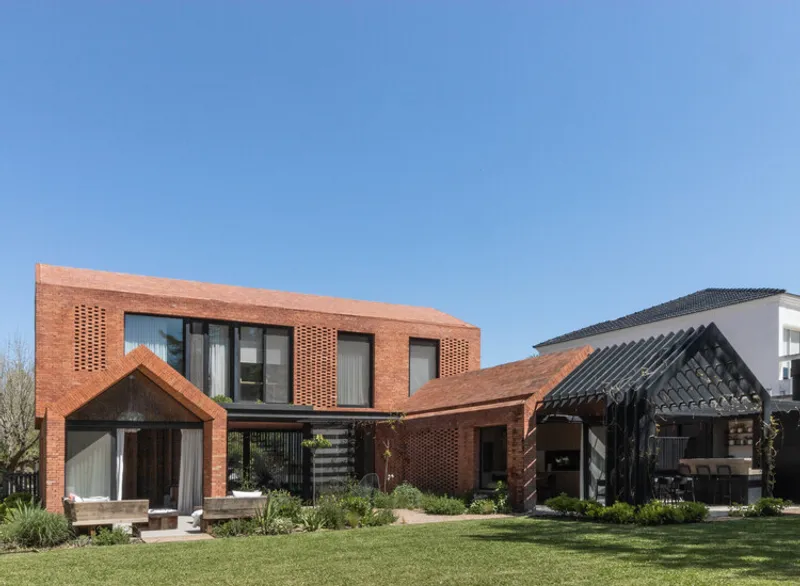
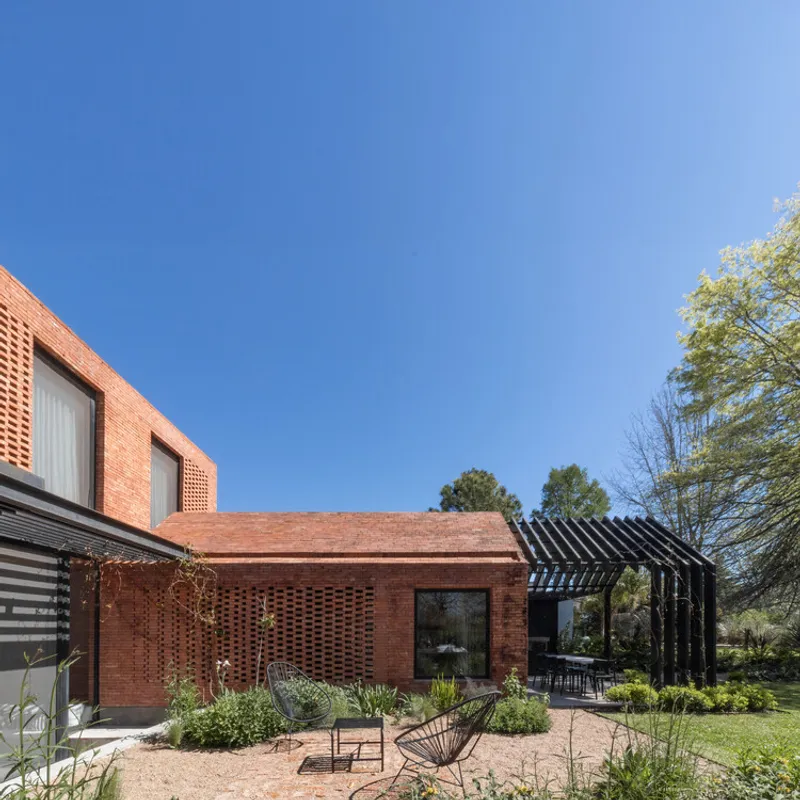
The architectural concept materializes as three distinct brick volumes, each designed as a monomaterial block where envelope, roof, and walls merge into a single, coherent logic. This approach—treating each volume as a unified sculptural element rather than as separate components assembled together—creates remarkable visual clarity and material honesty.
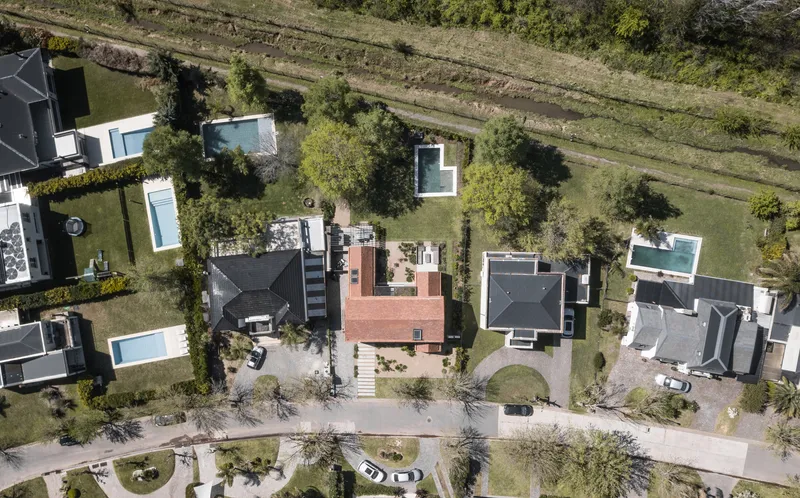
These three bodies are not arbitrarily placed. Instead, they are strategically positioned on the site to organize the domestic program while simultaneously constructing specific relationships with the landscape and neighboring properties. Each volume houses particular functions, grouping spaces according to their use patterns, privacy requirements, and connections to outdoor areas.
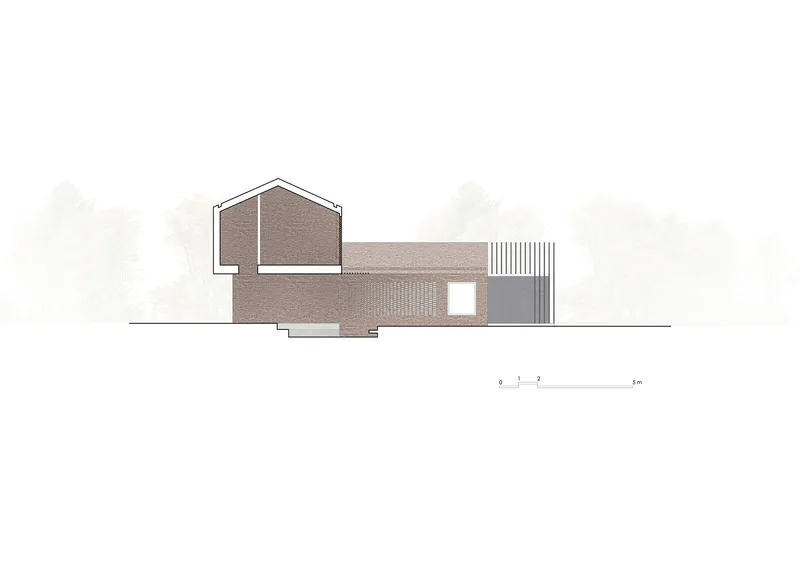
The initial visual impression is almost archetypical: three simple houses with sloped roofs, rendered in fundamental geometric forms. There is something childlike about this image, reminiscent of a young person's first drawing of a house—a peaked roof, four walls, essential and unadorned. This deliberate simplicity constitutes a manifesto of clarity and synthesis, stripping away unnecessary ornamentation to reveal architecture's most fundamental elements.
Yet this apparent simplicity conceals sophisticated spatial thinking. The design embraces essentialism not through lack of imagination but through disciplined focus on what truly matters: spatial quality, material integrity, and the relationship between interior and exterior environments.
The Contemporary Gesture
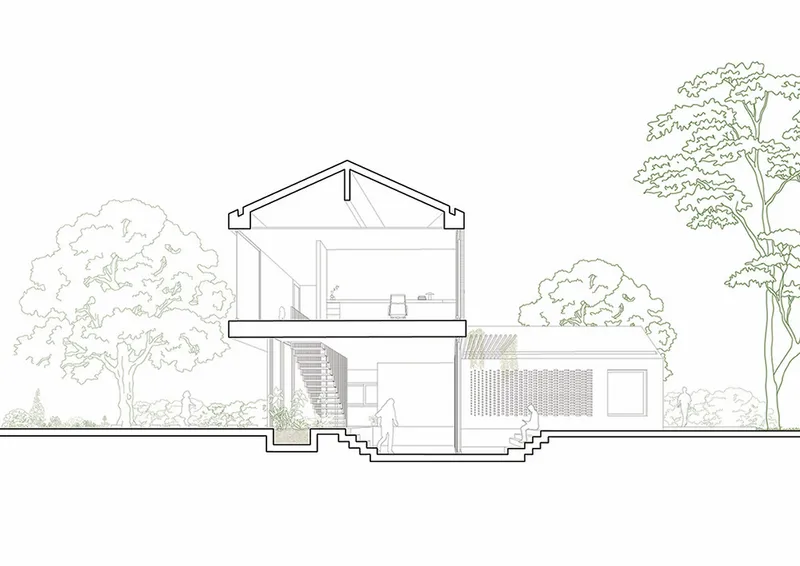
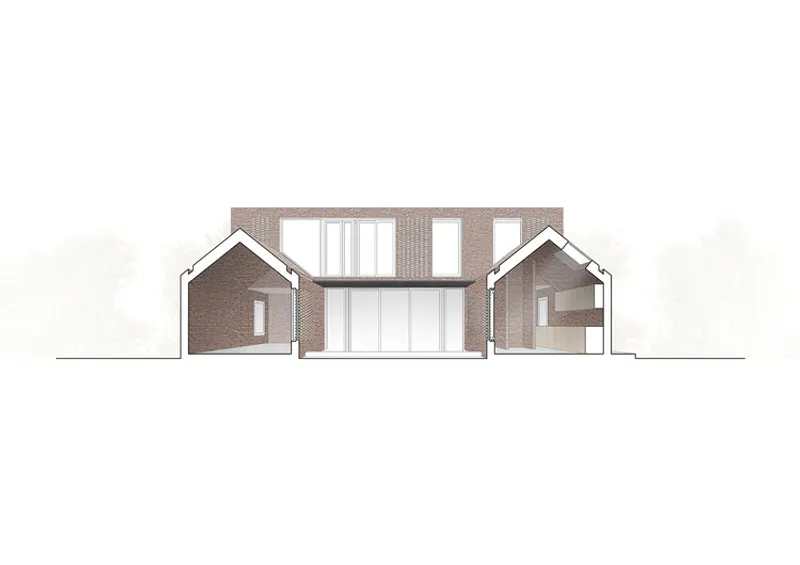
Where House CM transcends conventional tradition lies in how these three volumes interconnect. To disrupt the inertia of established patterns, one of the blocks pivots into a transverse position, elevating above and resting upon the other two. This gesture, far from being arbitrary or merely sculptural, serves specific functional and experiential purposes.
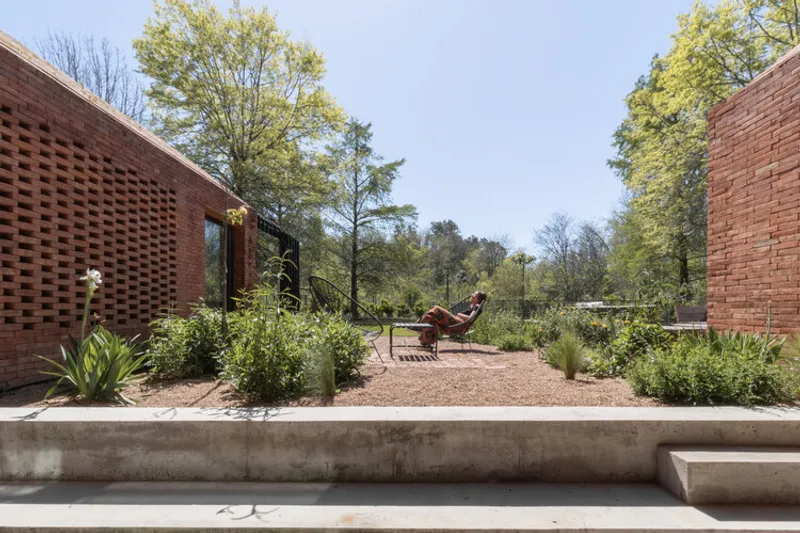
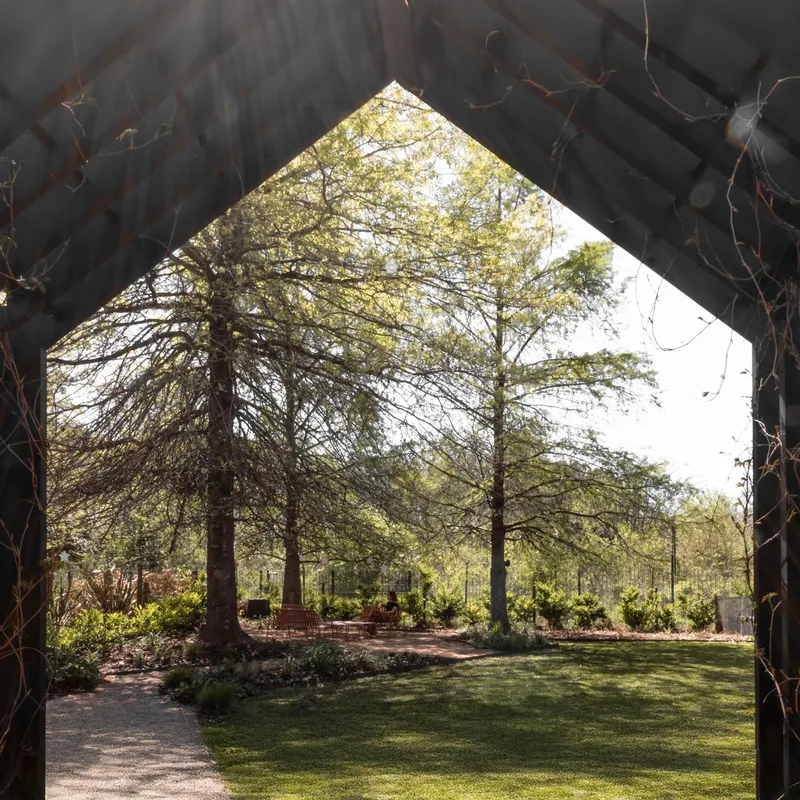
By lifting one volume off the ground, the design liberates public space on the ground floor. This elevated configuration creates a covered outdoor area that feels simultaneously protected and open, sheltered yet connected to the surrounding landscape. The forest behind the property, which might otherwise have remained merely backdrop, becomes the true protagonist of the domestic experience.
The architecture frames these natural views with deliberate precision, creating carefully composed vistas that transform everyday activities—dining, relaxing, gathering—into moments of connection with the natural world. Simultaneously, this configuration provides visual privacy from neighboring properties, a critical consideration in the dense social environment of a gated community.
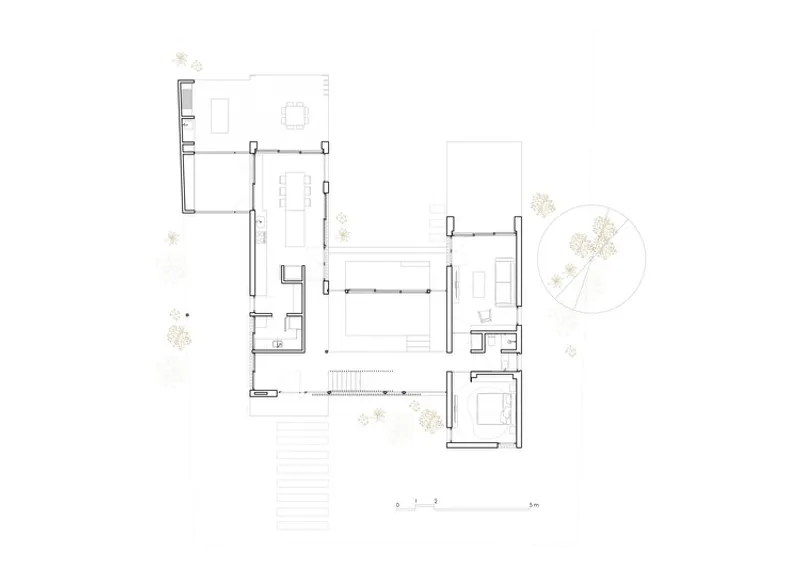
The result is an environment that seems to defy gravity. The substantial mass of brick—a material typically associated with weight, permanence, and earthbound solidity—transforms into something light and permeable. The elevated volume floats above the ground plane, its heaviness seemingly suspended, creating spatial experiences that feel both grounded and ethereal.
Two Scales of Simplicity
House CM operates coherently across multiple scales of perception. At the macro scale, the composition reads as three pure volumes that clearly comply with neighborhood regulations while engaging respectfully with traditional residential typologies. From the street or from neighboring properties, the house presents itself as part of the community fabric, neither aggressively different nor boringly identical to its context.
Yet this compliance with convention masks the project's more radical aspects. The unconventional arrangement of volumes, the elevated configuration, and the generous spatial relationships between interior and exterior all represent significant departures from typical suburban residential design. This duality—simultaneously fitting in and standing out—reflects sophisticated urban thinking about how individual buildings relate to their communities.
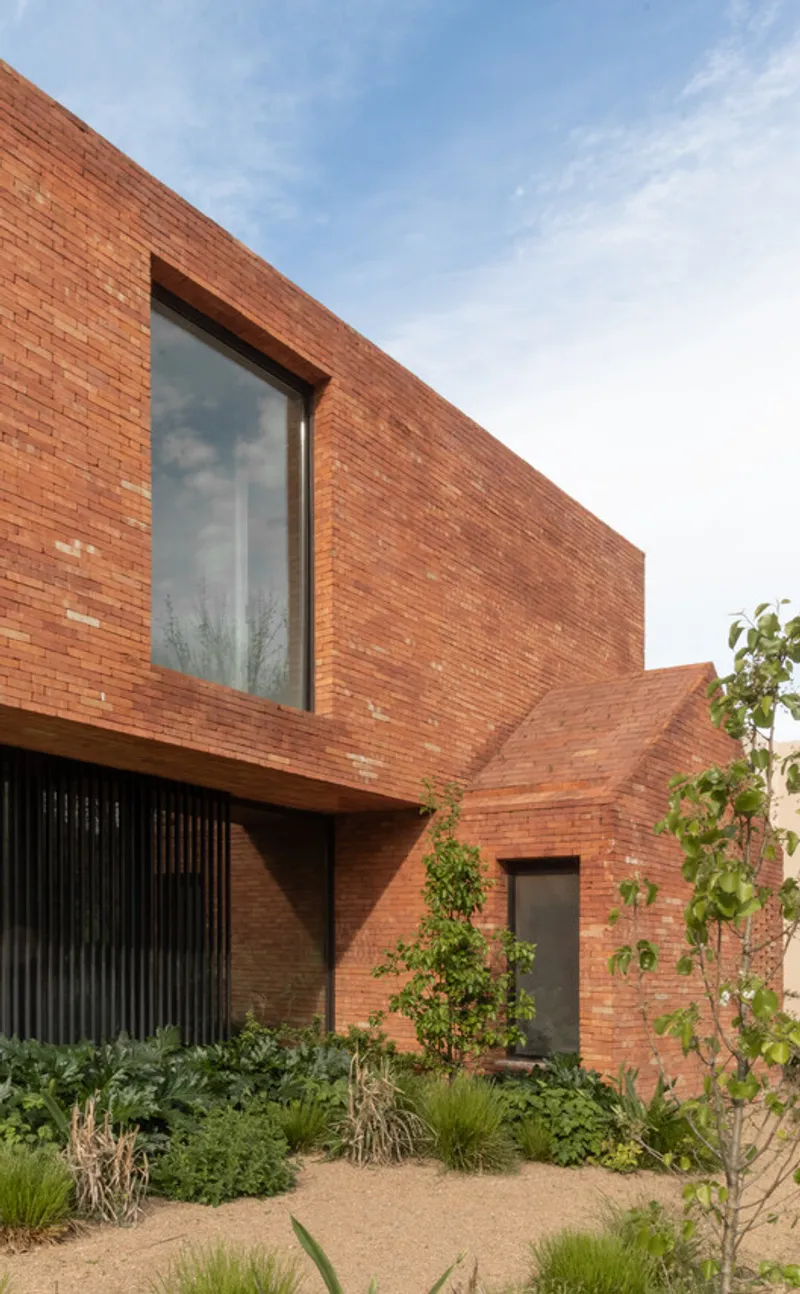
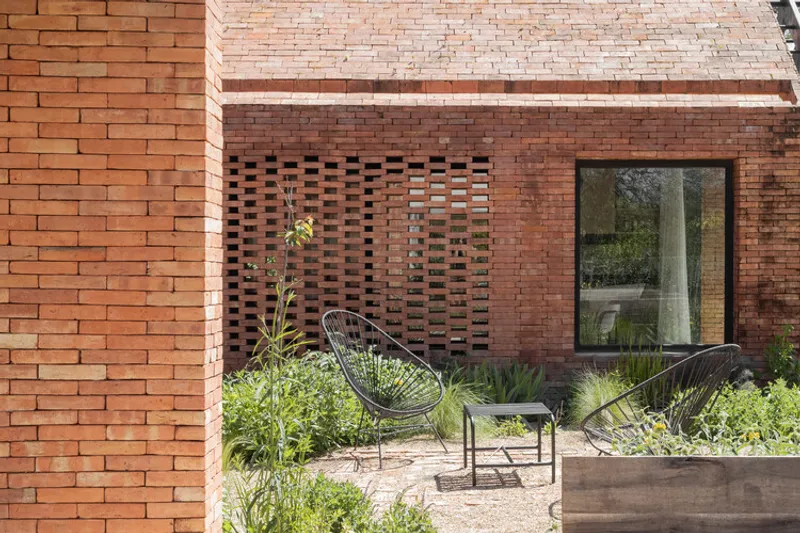
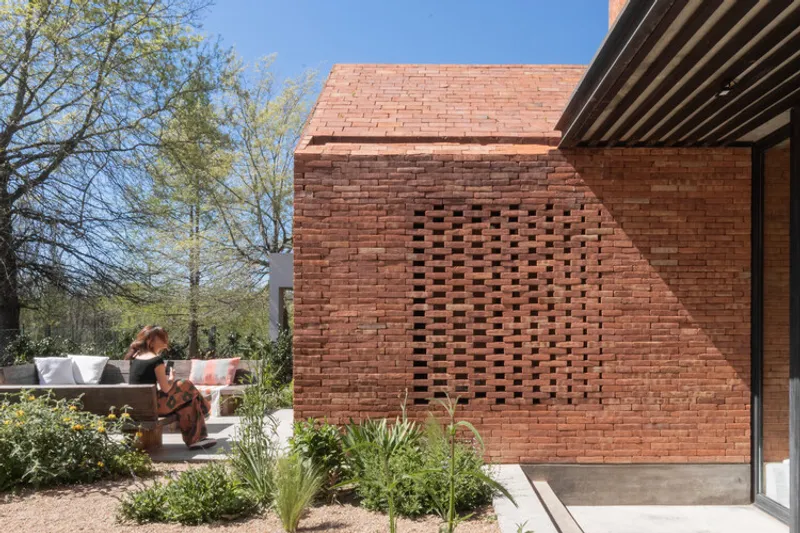
At the micro scale, the decision to resolve the entire envelope with a single material enhances coherence and reinforces ideas of timelessness and integrity. Brick covers walls, roofs, and transitional surfaces, creating visual continuity that unifies the three volumes despite their different orientations and relationships to the ground. This monomaterial approach avoids the visual fragmentation that often results from combining multiple cladding systems, trim details, and color transitions.

The Timeless Appeal of Brick
The choice of brick as the singular material deserves particular attention. This ancient building material, used for millennia across countless cultures and climates, brings specific qualities that align perfectly with the project's conceptual ambitions.
Brick's texture provides visual richness without requiring applied decoration. Its color—warm, earthy, subtly varied—connects the architecture to natural landscapes while avoiding the stark whiteness that can make contemporary buildings feel antiseptic or alien within established neighborhoods. The material's inherent durability means that House CM will age gracefully, developing character over time rather than simply deteriorating.

From a practical standpoint, brick requires minimal maintenance across generations. Unlike painted surfaces that need periodic refreshing, or wood that demands regular treatment, brick simply endures. This longevity inscribes the project within a logic of material sustainability—reducing the resource consumption and waste associated with building maintenance and renovation.
The decision to use brick for roofing surfaces—not merely walls—represents both technical sophistication and aesthetic commitment. Creating weathertight, durable sloped roofs in brick requires careful detailing and expert construction, but the result justifies this effort through visual unity and material honesty. The house reads as carved from brick rather than assembled from disparate components.
Environmental Strategy and Passive Performance
Sustainability in House CM extends beyond material selection to encompass sophisticated environmental strategies that reduce energy consumption while enhancing occupant comfort. The design prioritizes passive systems—those that function without mechanical equipment or energy input—recognizing that the most sustainable energy is that which need never be consumed.
Natural cross-ventilation forms the foundation of the house's passive climate control strategy. By carefully positioning openings and considering prevailing wind patterns, the design enables air to flow through interior spaces, providing cooling and freshness without relying on air conditioning systems. During Buenos Aires's warm seasons, this natural ventilation can maintain comfortable interior conditions while consuming zero energy for cooling.
The configuration of the three volumes contributes to this ventilation strategy. The gaps between volumes and the elevated configuration of one block create opportunities for air movement that would be impossible in a more conventional, compact floor plan. These spatial relationships serve aesthetic and functional purposes simultaneously—a hallmark of integrated design thinking.
Natural lighting receives equally careful attention. While generous windows connect interior spaces to landscape views, the design avoids the common pitfall of excessive glazing that leads to glare and unwanted solar heat gain. Sunshades, filtering elements, and carefully dimensioned eaves regulate solar incidence, allowing daylight to penetrate while blocking direct summer sun during the hottest hours.
These passive climate control strategies work synergistically with brick's thermal mass. The material's density allows it to absorb heat during warm periods and release it slowly, moderating interior temperature fluctuations. In winter, brick warmed by daytime sun continues radiating heat into evening hours. In summer, the same thermal mass helps keep interiors cool by absorbing and delaying heat transmission.
The result is a house that achieves efficient thermal and luminous comfort while substantially reducing energy consumption compared to conventionally designed homes. This passive efficiency doesn't require occupants to sacrifice comfort or make lifestyle compromises—rather, it enhances daily living quality while reducing environmental impact and operating costs.
Reinterpreting the Language of Home
House CM succeeds as an exercise in architectural reinterpretation precisely because it doesn't reject tradition outright. Instead of positioning itself in opposition to conventional residential design, the project engages with familiar typologies while introducing carefully considered shifts toward contemporaneity.
These shifts manifest not merely in appearance but fundamentally in how the house functions and how it shapes daily experience. The spatial relationships differ significantly from those in typical suburban homes. Rather than discrete rooms separated by walls and doors, House CM offers spacious, fluid areas that flow into one another and connect generously with outdoor spaces.
The elevated volume creates covered outdoor areas that expand the house's effective living space. During pleasant weather, these semi-exterior zones function as outdoor rooms, protected from sun and rain but open to breezes and views. This blurring of interior-exterior boundaries reflects contemporary understandings of residential life, where rigid separation between inside and outside feels increasingly arbitrary and limiting.
The relationship with the forest exemplifies this expanded understanding of residential space. Rather than treating the natural landscape as merely scenery visible through windows, the architecture frames and foregrounds it, making nature an active participant in daily life. From multiple vantage points throughout the house, the forest becomes not just something to look at but something to feel present with—its changing light, seasonal transformations, and living vitality integrated into domestic experience.
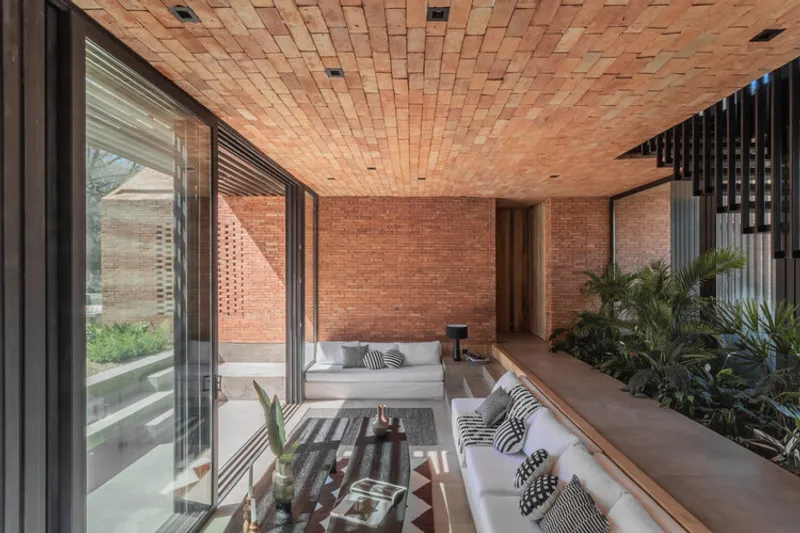
This privileging of connection to landscape represents a shift in values. Where traditional residential design often emphasized privacy achieved through enclosure, House CM pursues a more nuanced approach: selective openness that connects residents to desirable views and natural environments while maintaining privacy from neighboring properties through strategic positioning and careful framing.
Living in Relation to Nature
Ultimately, House CM succeeds because it prioritizes what matters most: creating an environment where residents can live richly in relation to the natural world. The forest isn't decorative backdrop but integral presence, woven into daily routines and seasonal rhythms.
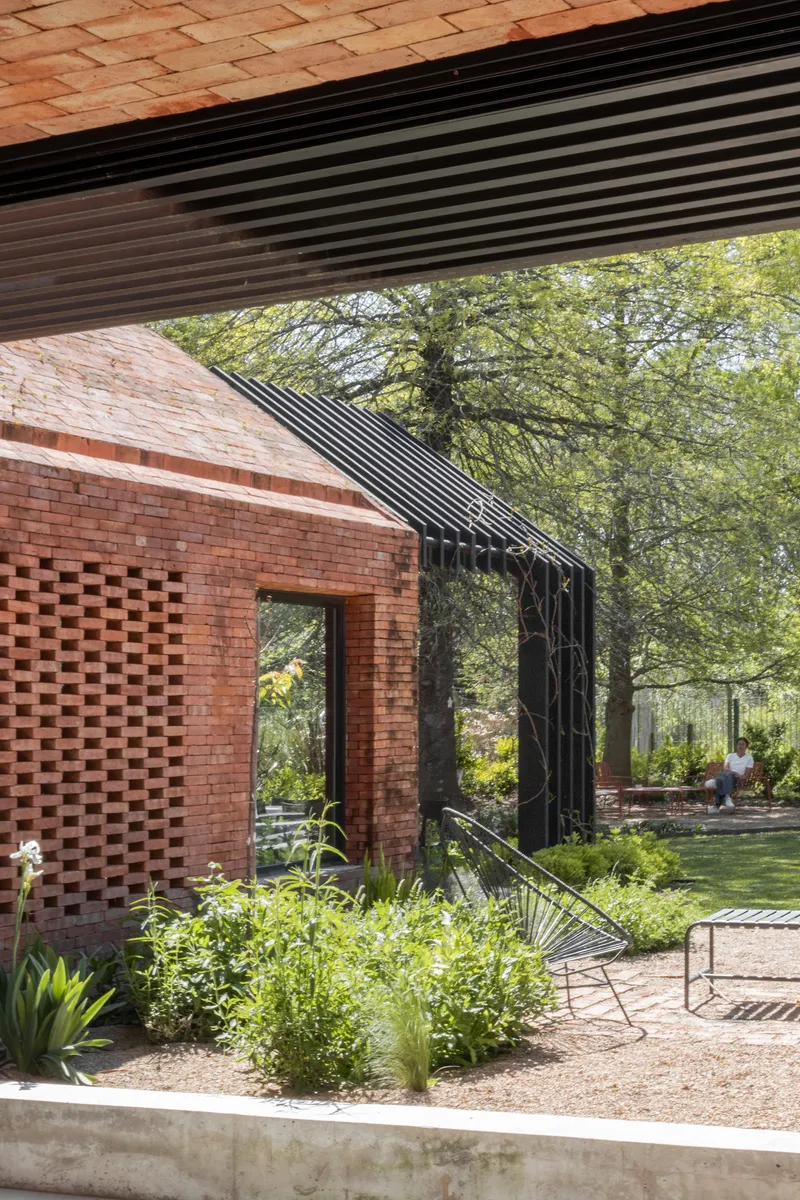
This relationship with nature isn't achieved through technology or elaborate systems but through architectural fundamentals: placement, orientation, framing, and the careful orchestration of solid and void, enclosure and openness. The design creates moments throughout the house where nature feels immediately present—not distantly viewed but intimately experienced.
In an era of increasing urbanization and digital distraction, this grounding in the physical, natural world offers genuine value. House CM provides its residents not just shelter but sanctuary, not merely square meters but meaningful space, not simply views but connection. These qualities, more than any formal innovation, constitute the project's most important achievements.
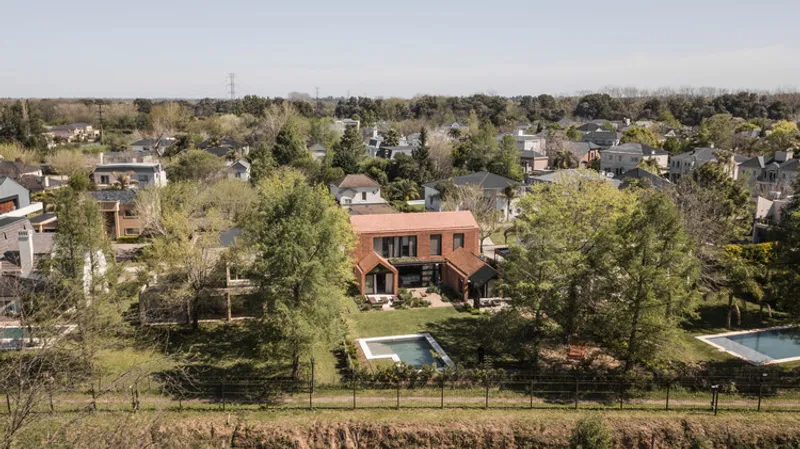
AtelierM and Nicolas Krause have delivered a house that honors tradition while embracing contemporaneity, that complies with regulations while achieving innovation, that pursues simplicity while creating spatial richness. For a residential community in suburban Buenos Aires, they've demonstrated how careful design thinking can transform constraints into opportunities, producing architecture that enriches both individual lives and collective environments.
All the Photographs are works of AtelierM


Popular Articles
Popular articles from the community

Cloaked Colonization: A Mobile Underwater Habitat That Moves Like a Fish
Micah Abaya's shortlisted EHC Pacific entry reimagines ocean settlement as a dispersed network of self-sustaining architectural organisms.

Singing Woman: An Opera House That Performs Before the Curtain Rises
Ovidiu Cristian Pavel's conceptual opera house translates Estonia's choral identity into a sculpted waterfront landmark facing the Baltic Sea.

Manzana Morphosis: Stretching Barcelona's Grid into a Living Landscape for 2050
A radical reworking of the Eixample manzana turns density into a tool for generous public space, vertical ecology, and environmental performance.

Extended Shell: Retrofitting Kolkata's Balconies as Living Urban Thresholds
A modular retrofit system recovers the social and environmental intelligence of Kolkata's historic verandas for contemporary Park Street residents.

Similar Reads
You might also enjoy these articles


Hodi-Mandai Geram
Project Function: Preservation and revitalization of the Intangible heritage and socio-spatial identity of the Hodi by Housing, Cultural Memory Center, Sacred Grove, landscape, local tourism economy


Olio Towers: A Mid-Rise for Performers That Fuses Housing, Rehearsal, and Stage
Located blocks from Houston's Theater District, this modular tower stacks living units around a central performance atrium.

Oasis: Modular Green Housing Carved into Dhaka's Urban Fabric
A shortlisted Plugin Housing entry reclaims unauthorized settlements in Dhaka with stepped concrete volumes, green roofs, and ventilation-driven design.

Black Hole: A Floating Megastructure for the Post-Physical Era
Emiliano Mazzarotto envisions a spherical, self-scaling arena where e-sports, digital hotels, and holographic stadiums replace traditional public space.

Explore Architecture Magazine Competitions
Discover active competitions in this discipline

Challenge to reimagine the Iron Throne

Photograph architecture without architects

Illustrate the lost glory of Angkor Wat - Render Challenge

Design challenge to reuse E-waste
Comments (0)
Please login or sign up to add comments
No comments yet. Be the first to comment!