

House CO Stacks Timber Volumes on Chile's Coast
Estudio Base Arquitectos designs a flexible coastal home in Santo Domingo where stacked timber boxes create layered living between garden courtyards.


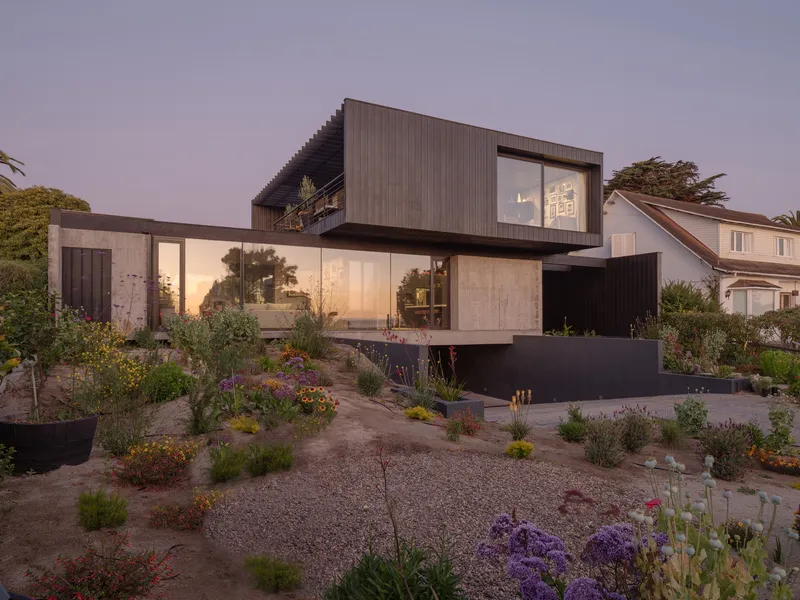
The Chilean coast around Santo Domingo is not the dramatic cliffside landscape that dominates the country's architectural imagination. It is quieter, more suburban, threaded with palms and low-rise clusters that sit comfortably within a sandy, wind-shaped terrain. House CO by Estudio Base Arquitectos takes this modest context and builds something genuinely ambitious within it: a 310-square-meter home composed of stacked and offset timber-clad volumes that hover above planted courtyards, negotiating slope, privacy, and openness with real precision.
What makes this project worth studying is not any single gesture but the way it choreographs the relationship between solid and void across a split-level section. The house reads differently from every angle. From the street, it is a compact layering of timber, concrete, and glass. From within, it dissolves into garden views, cantilevered terraces, and daylit voids that connect upper and lower living spaces. Estudio Base has delivered a house that feels both grounded and weightless, a trick that only works because the structural and material logic is so clearly resolved.
Stacking Strategy
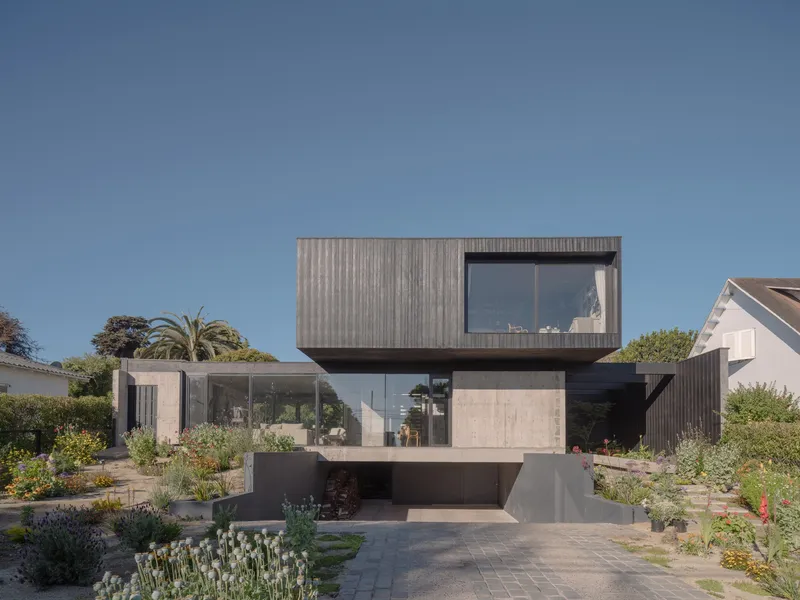
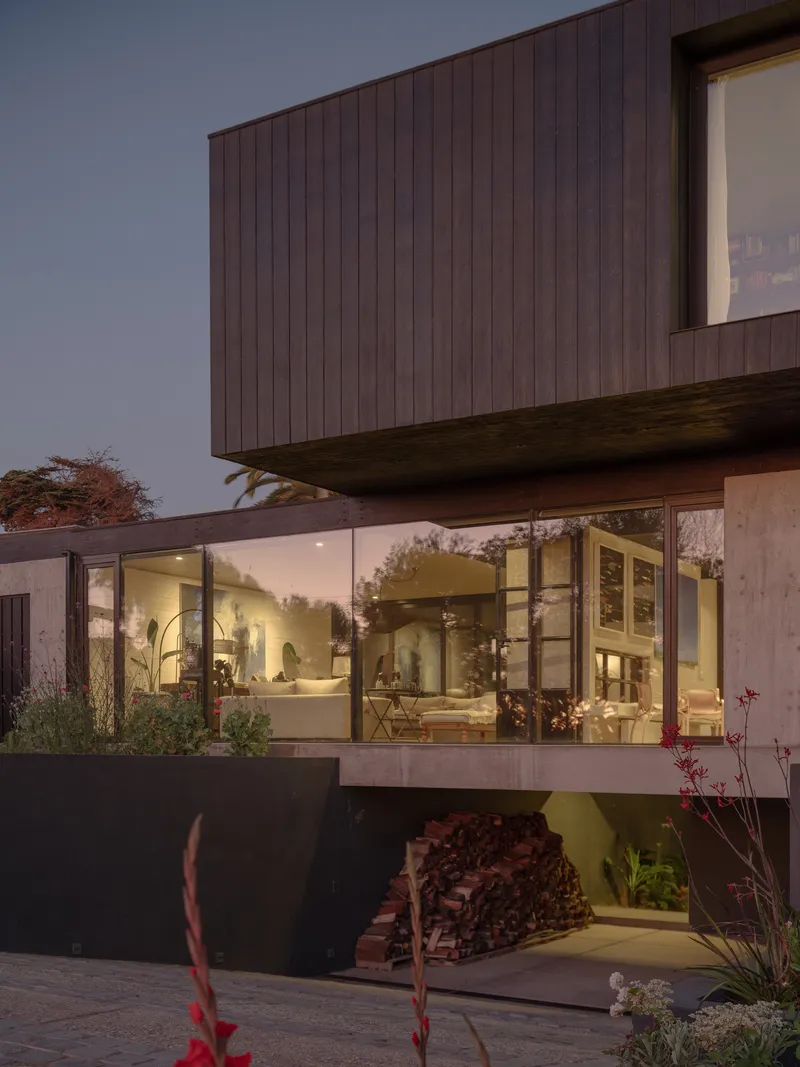
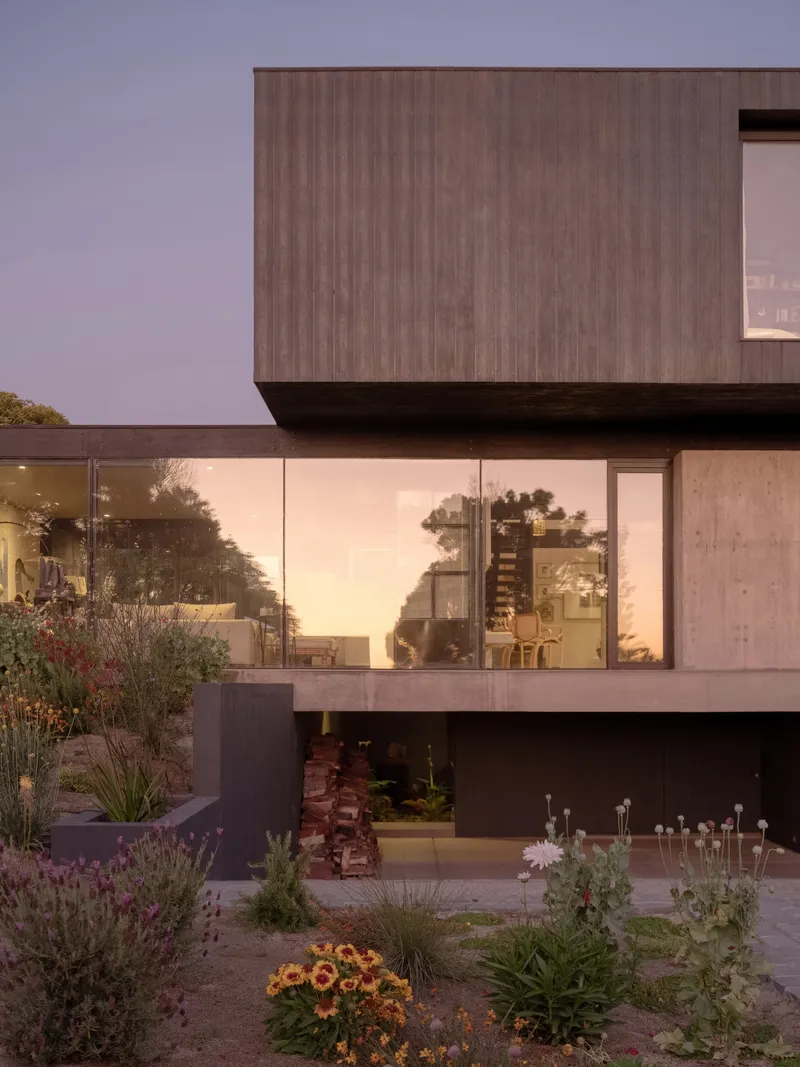
The fundamental move here is vertical stacking on a sloping site. Rather than terracing horizontally or cutting into the grade, the architects pile compact boxes on top of each other, offsetting them to create cantilevers that shelter the ground level. The vertical timber cladding wraps each volume as a continuous skin, giving the composition a material unity that holds together despite the volumetric complexity.
At dusk, the house reveals its layered logic most clearly. Lit interiors glow behind full-height glazing, and you can read the stacking order as a sectional diagram. The upper volumes project outward, shading the glass walls below while framing elevated views toward the ocean and surrounding trees. It is a strategy that extracts maximum spatial variety from what is ultimately a compact footprint.
Ground Level and Approach
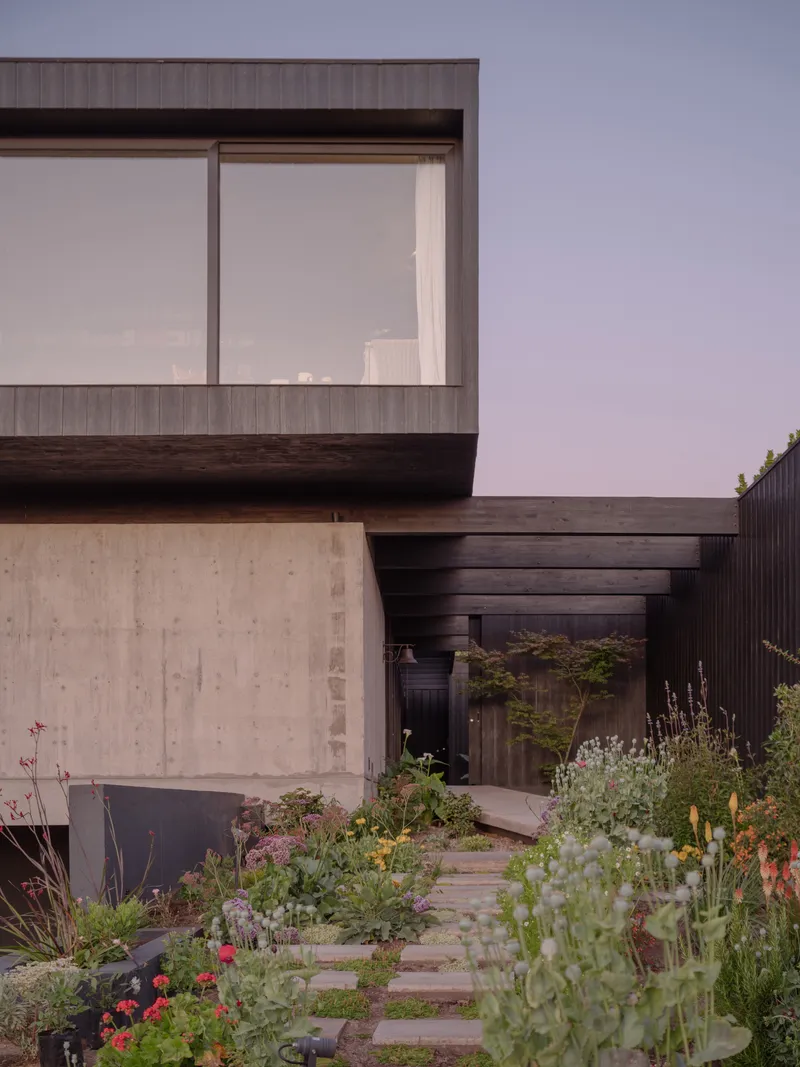
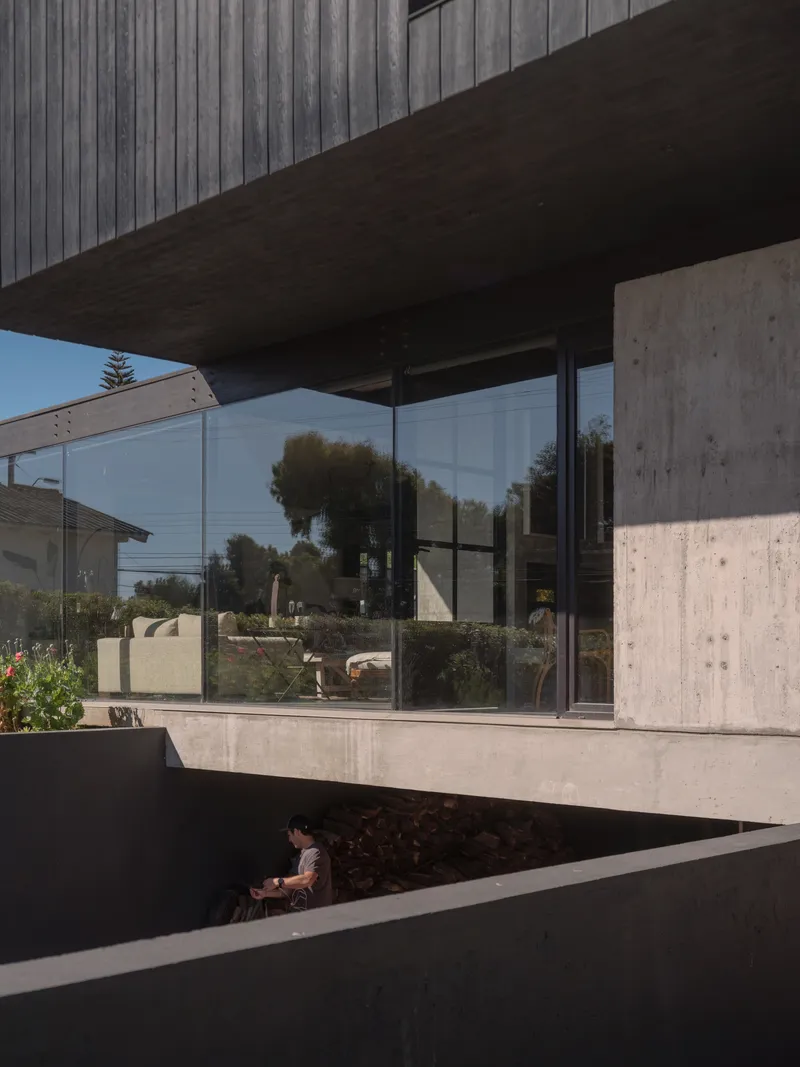
The approach sequence is carefully controlled. A stone-paved path winds through a planted garden of native species and succulents before arriving at a recessed doorway set deep beneath the cantilevered upper volume. The entrance is compressed and sheltered, a deliberate contrast to the open, airy spaces that follow once you cross the threshold.
At the ground plane, the house meets the earth through a concrete plinth that anchors the lighter timber volumes above. The gravel garden with native plantings is not decorative afterthought; it is integral to the building's relationship with the sandy coastal terrain. Steel-framed glazing punches through the concrete base, allowing light into lower-level rooms while maintaining a sense of mass and permanence at the foundation.
Living Spaces and Materiality
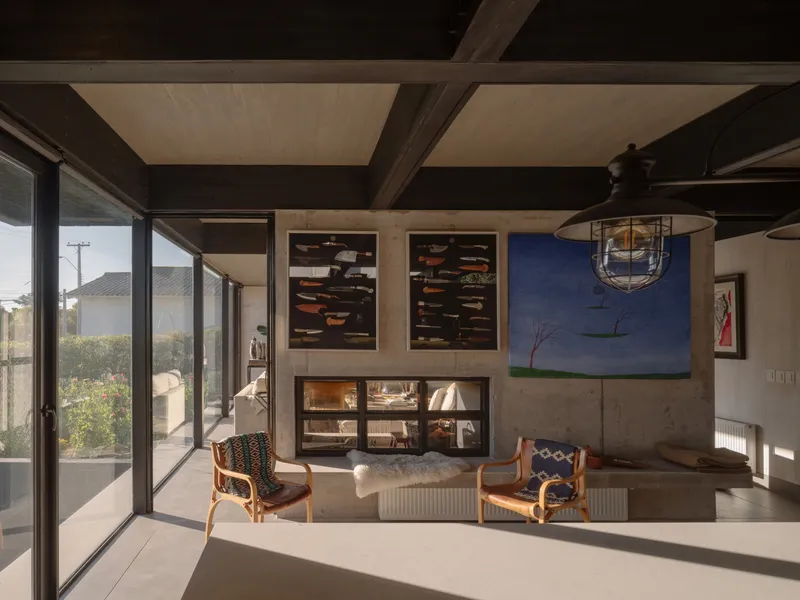
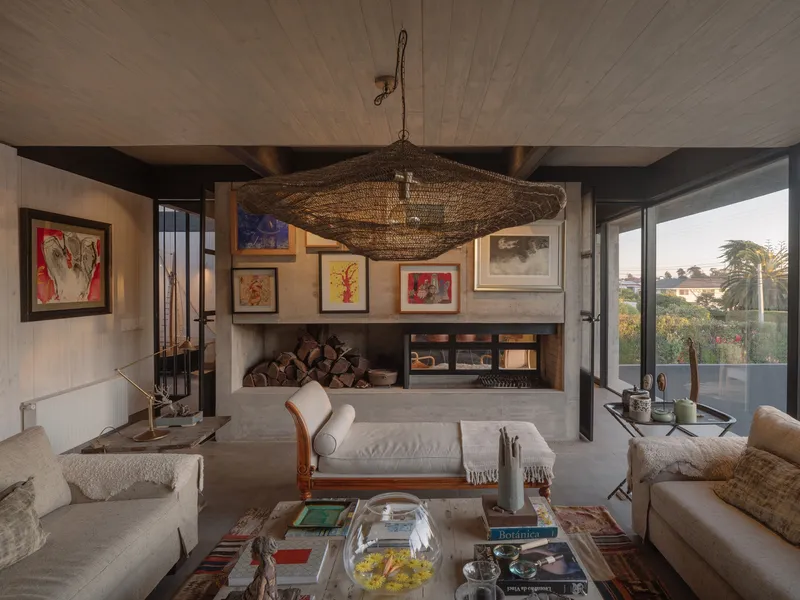
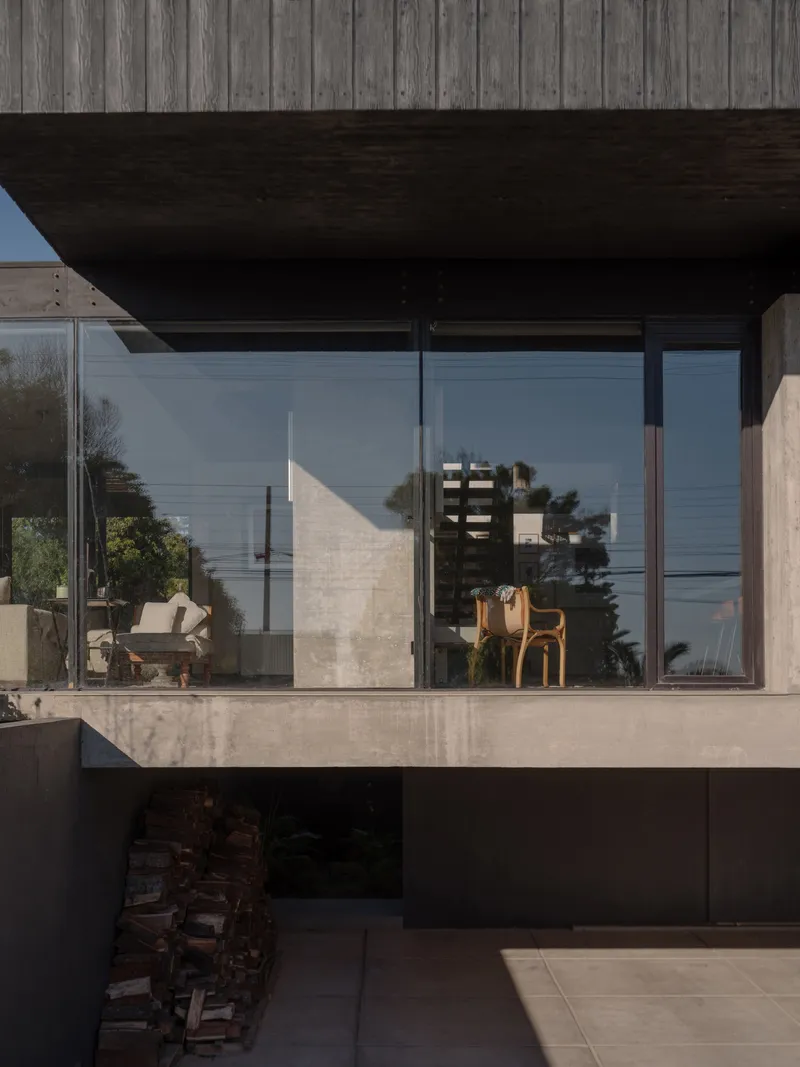
Inside, the material palette stays disciplined: exposed timber beams and plank ceilings overhead, board-formed concrete for the fireplace surround and structural walls, steel for the window frames and stair structure. The large woven pendant light in the living room introduces a softer texture without breaking the tonal consistency. Everything reads as honest and direct, with no applied finishes hiding the construction logic.
The corner glazing in the living room is the standout detail. By dissolving two walls into glass, the room extends visually into the garden on both sides, collapsing the boundary between interior and landscape. Afternoon light bouncing off the concrete walls creates a warm, diffused atmosphere that would be impossible to achieve with a single window orientation.
Courtyards and Outdoor Rooms
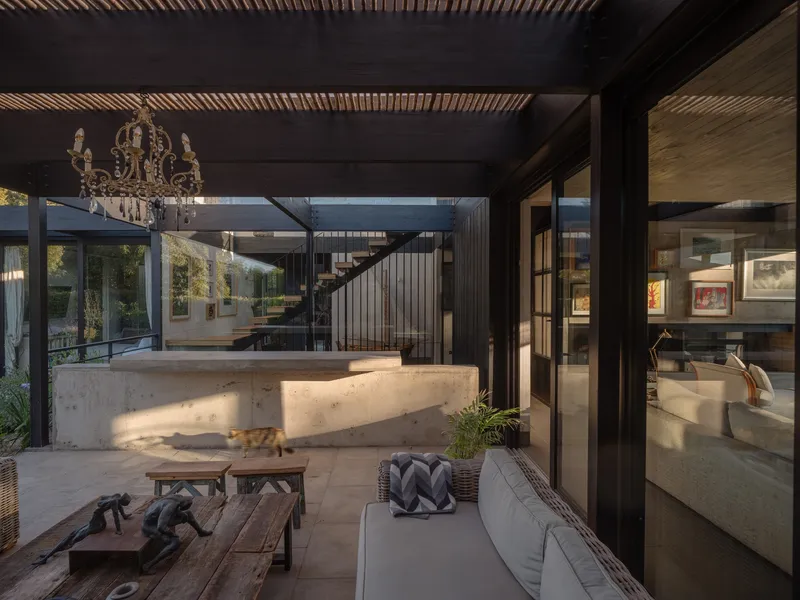
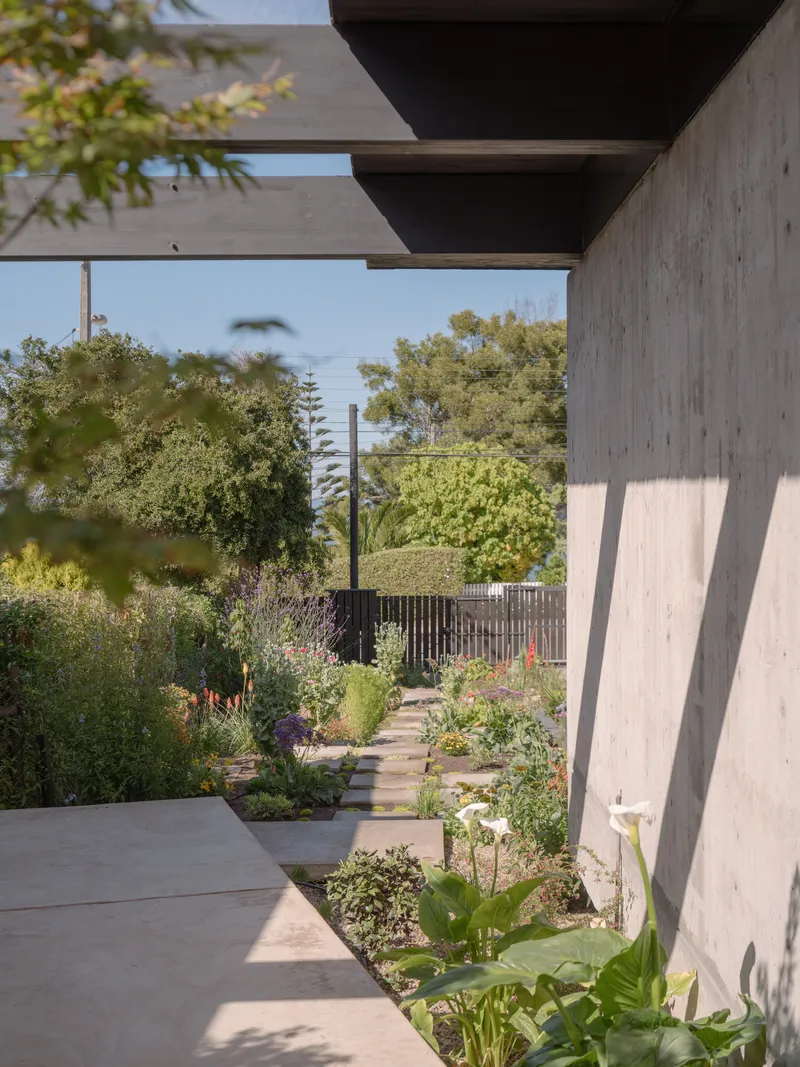
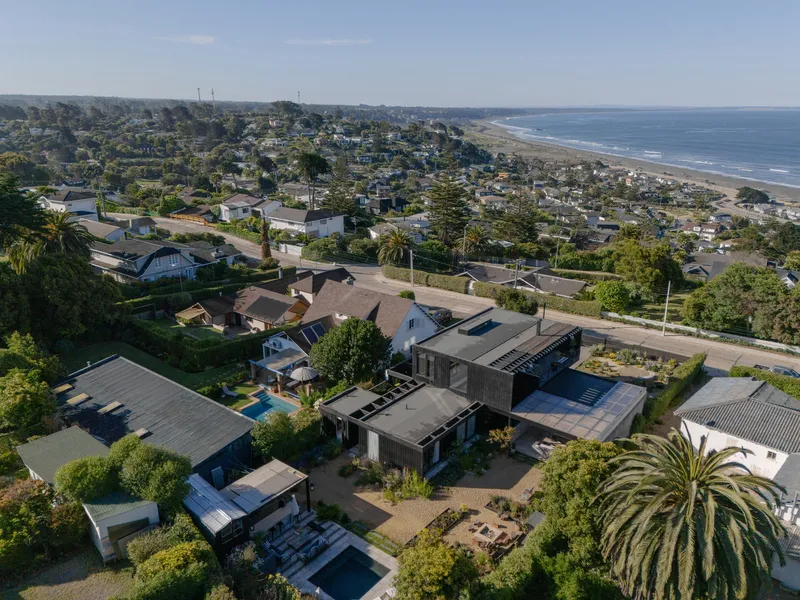
The covered terrace with its curved concrete bar is arguably the social heart of the house. Protected by a timber-slatted ceiling, it functions as an outdoor room that mediates between the interior living spaces and the central courtyard. The curving bar counter is a generous, inviting gesture, one of the few moments where the architecture relaxes its orthogonal discipline.
Board-formed concrete columns and beams define a covered walkway that connects different zones of the house while framing views of planted garden paths. From above, the aerial perspective reveals how the clustered roof forms and courtyards sit within the broader neighborhood fabric. The house does not isolate itself; instead, it creates a series of sheltered outdoor spaces that feel connected to the coastal landscape while maintaining genuine privacy.
Vertical Circulation and Interior Voids
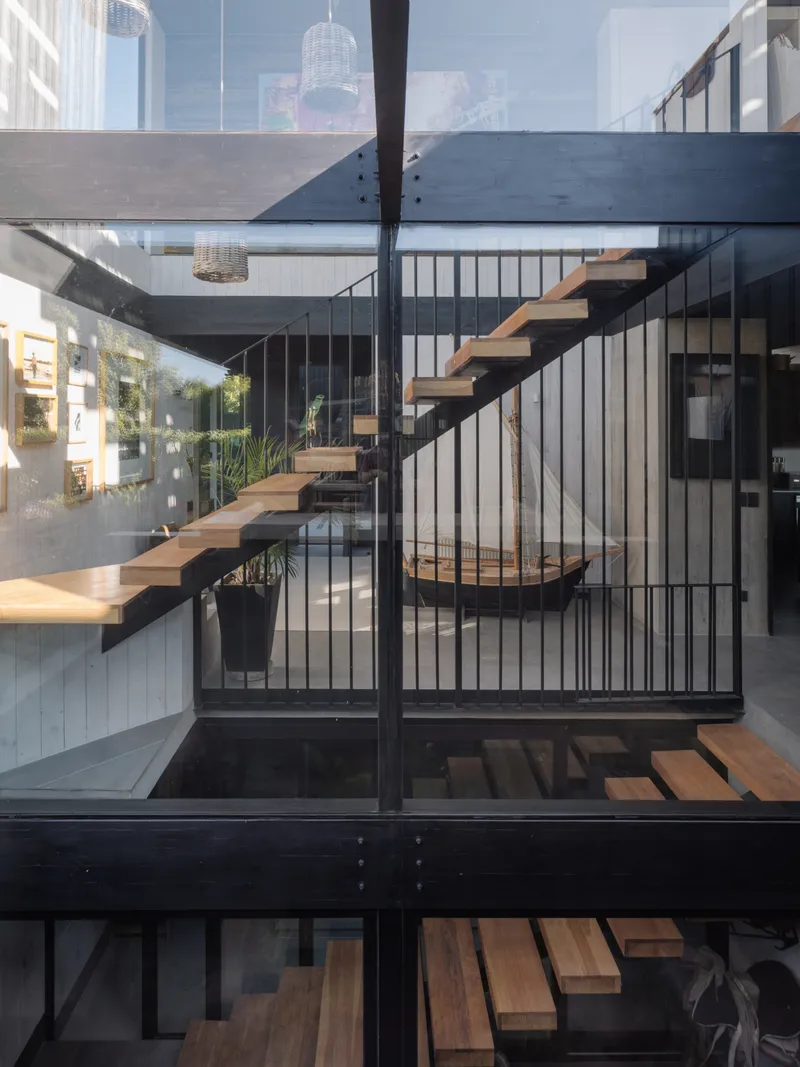
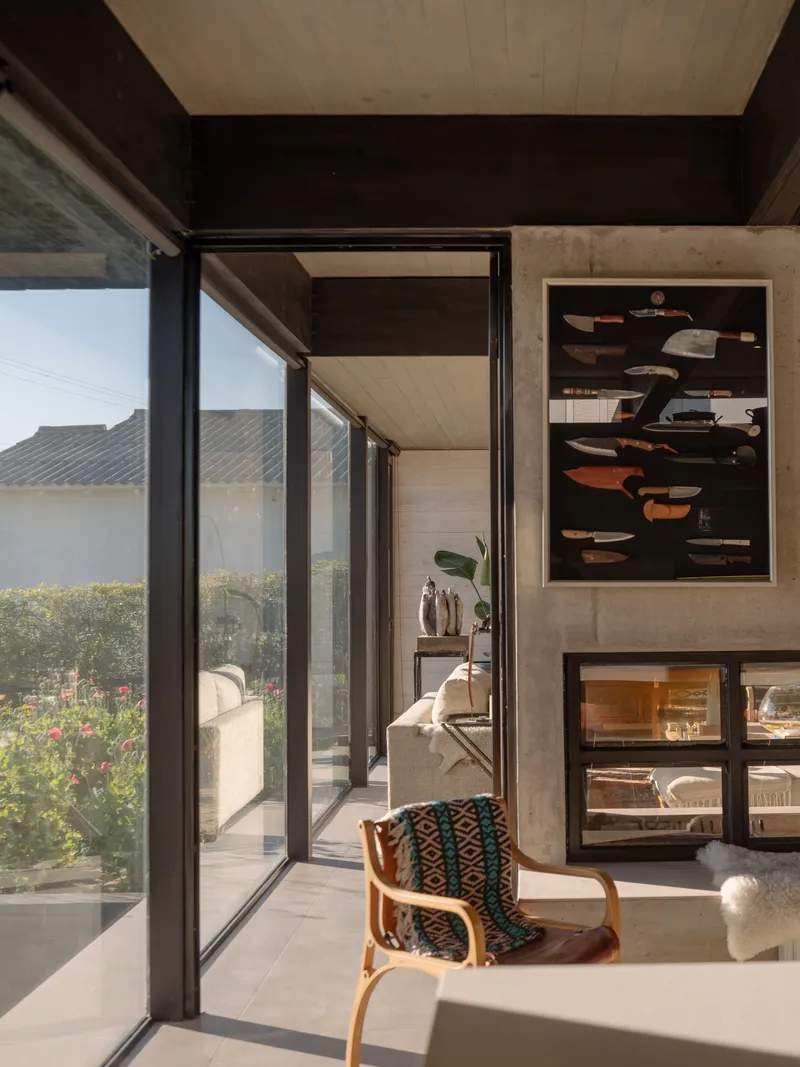

The staircase is a piece of furniture-scale architecture in its own right. Cantilevered timber treads project from a black steel structure, with vertical rod railings allowing light to pass through the void. The stair sits within a daylit interior void that vertically connects the split levels, acting as both circulation and light well.
On the upper level, the glass-walled living spaces open to views of surrounding trees and the ocean beyond. Black steel-framed glazing at the corner opens to a planted terrace, extending the upper rooms into the landscape. The section works hard here: by splitting levels and connecting them through open voids, the architects create spatial richness that a conventional two-story plan simply cannot achieve.
The Pergola and Dusk Light
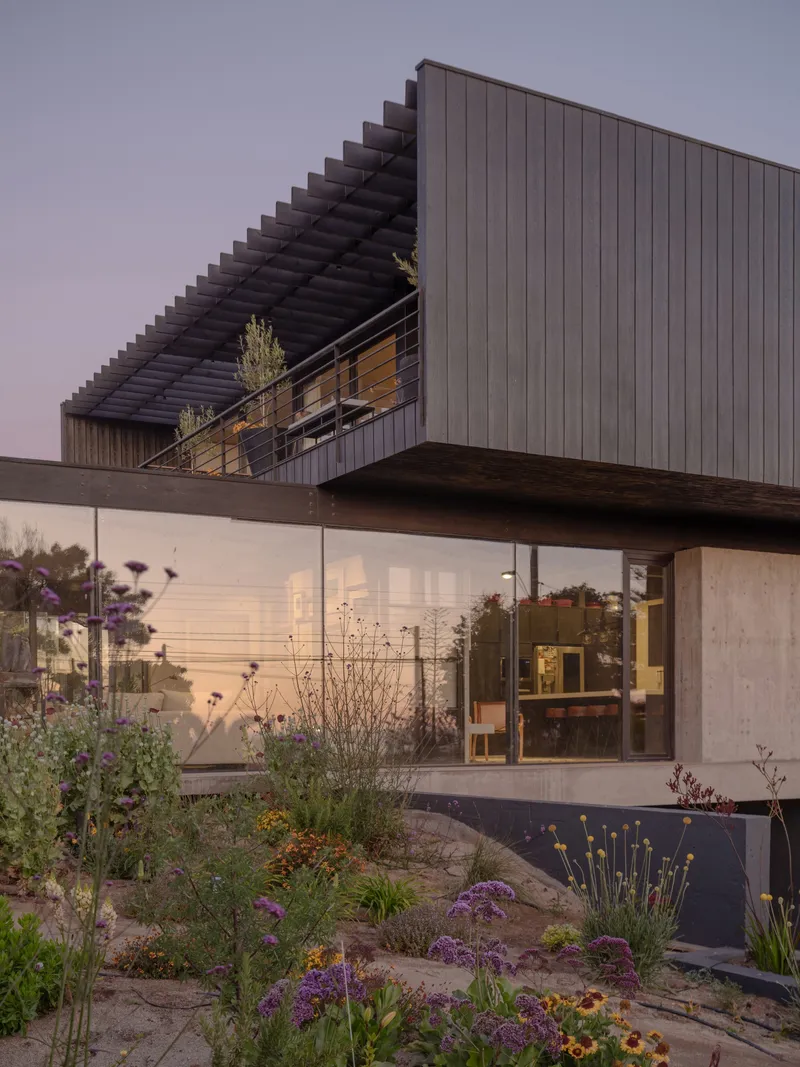
The slatted pergola canopy that extends from the upper volume is one of the defining silhouette elements of the house. At dusk, it filters the last light into horizontal bands while the glass-walled living space below glows from within. The timber slats register as a continuation of the cladding language, translated into a lighter, more permeable register. It is a simple element doing significant atmospheric work.
Plans and Drawings
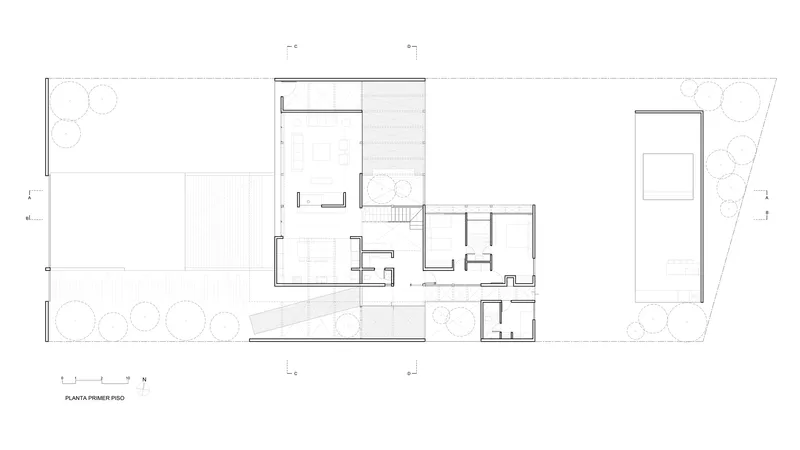
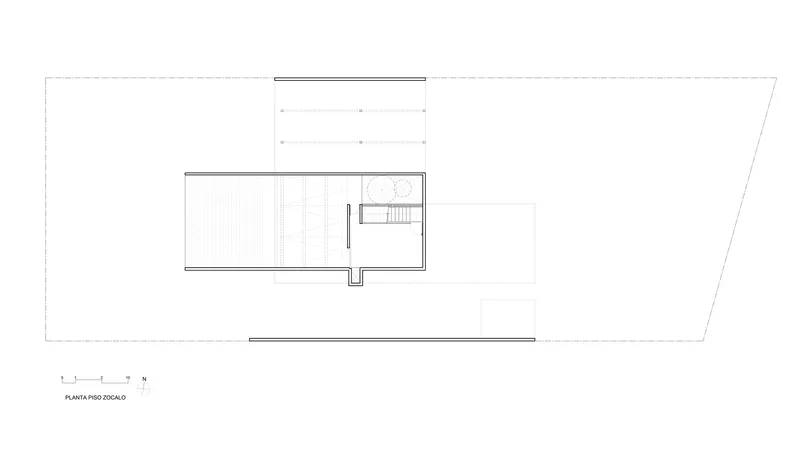

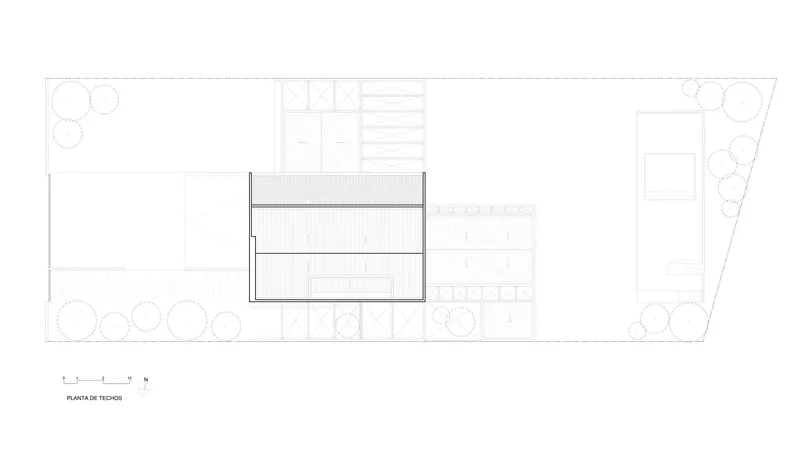
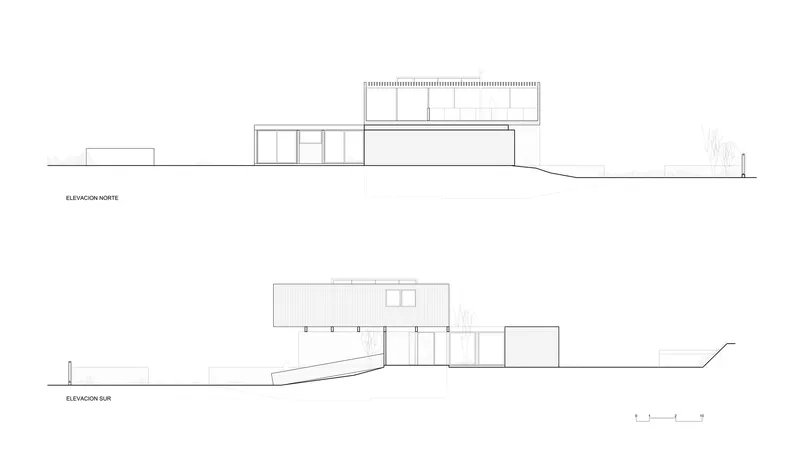
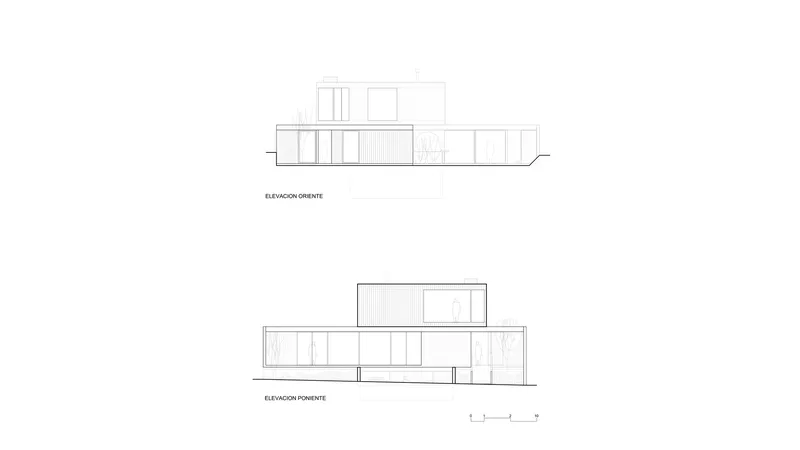
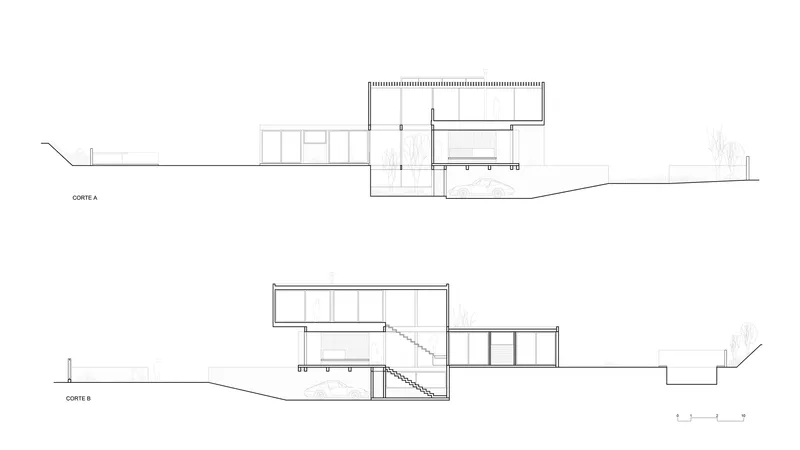
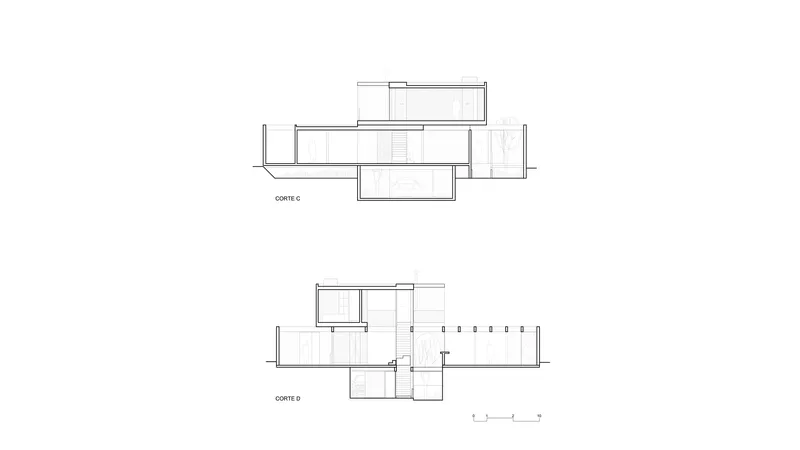
The plan drawings confirm what the photographs suggest: the house is organized around a central circulation core that connects offset volumes at different levels. The ground floor opens generously to flanking courtyards, while the upper floors are compact and introverted, containing private rooms and small terraces. The roof plan reveals the full extent of the slatted canopy and the circular tree plantings that frame the outdoor spaces.
The section drawings are where the project's ambition becomes most legible. Internal staircases thread through split-level volumes on a sloping grade, and the offset relationship between boxes creates the cantilevers visible in the exterior photographs. The north-south and east-west elevations show how the stacked volumes respond to the terrain differently on each side, with varying window openings calibrated to sun exposure and views.
Why This Project Matters
House CO is a reminder that domestic architecture in Chile continues to operate at a very high level of sectional intelligence. Where many coastal houses default to a single panoramic gesture, this project works the section relentlessly, using split levels, voids, cantilevers, and planted courtyards to generate spatial variety within a controlled material vocabulary. The result is a house that feels larger and more diverse than its 310 square meters would suggest.
Estudio Base Arquitectos has produced a home that is specific to its site, disciplined in its means, and generous in its spatial experience. The stacking of timber volumes on a concrete base is not a novel idea, but the execution here, particularly the integration of covered outdoor rooms and the calibration of daylight through voids and cantilevered overhangs, elevates it well beyond formula. For anyone working on sloped coastal sites, this project offers a clear and compelling model.
House CO by Estudio Base Arquitectos, Santo Domingo, Chile. 310 m², completed 2024. Photography by Marcos Zegers.
About the Studio
Share Your Own Work on uni.xyz
If projects like this are the kind of work you want to make, uni.xyz is a place to publish your own, find collaborators, and enter design competitions.


Popular Articles
Popular articles from the community


Jaramillo Van Sluys Arquitectura and Urbanismo Turn a Demolished Registry Lot in Quito into an Orchard Plaza
In Quito's Centro Histórico, a 2,800 m² plaza exposes the San Agustín convent wall and redraws its lost Augustinian orchard in volcanic stone.

Architekt Andreas Gruber Scatters 23 Dark Timber Chalets Across a South Tyrolean Forest Edge
In Molini di Tures, Amonti Chalets breaks a resort into a hamlet of gabled timber houses, with parking, storage and services pushed into the slope.

David Ortega Stacks a Two-Story Mexico City Penthouse Around a Steel Stair and a Pergola-Shaded Roof Terrace
In Colonia Roma, a 300 m² penthouse uses oak joinery, a planted steel stair and a slatted roof pergola to make a new-build apartment feel like a house.

longwave studio Reorganizes a 112 m² Tainan Apartment Around the Daily Routines of a Family and Two Cats
In Tainan, Taiwan, birch plywood, rust-red furniture and a freestanding plaster wall link arrival, storage, work and family life in one apartment.

Similar Reads
You might also enjoy these articles


LAVA Architecten Gives Vocational Education a Sawtooth-Roofed Face on a Mechelen School Campus
In Mechelen, Belgium, a 2,053 m² STEM school on a 6×6 m grid turns workshops and classrooms into rooms that can be rearranged as teaching changes.

KEMA Studio Turns a Derelict Marvila Attic into a 60 m² Lighthouse Apartment Above Lisbon
In Lisbon's Marvila district, a rebuilt roof, four skylights and two plywood volumes turn an unlivable attic into a bright home facing the Tagus.

Pixel Gardens: One Repeated Module Stacked Into a Terraced Social Housing Tower for Famagusta
Salem Bader's shortlisted housing tower builds a vertical neighbourhood from one repeated module, offsetting units to carve terraces, light and air.

Bao Huynh Watercolor Atelier: A Serene Art Retreat in Hội An
Bao Huynh Watercolor Atelier in Hội An blends multifunctional art spaces, sustainable design, local materials, and family-friendly living in a serene environment.

Explore Residential Building Competitions
Discover active competitions in this discipline

Comments (0)
Please login or sign up to add comments
No comments yet. Be the first to comment!