

House G by Karlen + Clemente: A Courtyard Sanctuary in Río Tercero
House G by Karlen + Clemente blends concrete, wood, and light around a central courtyard, creating serene, sustainable living in Argentina.


A Contemporary Family Home Rooted in Light, Materiality, and Spatial Balance
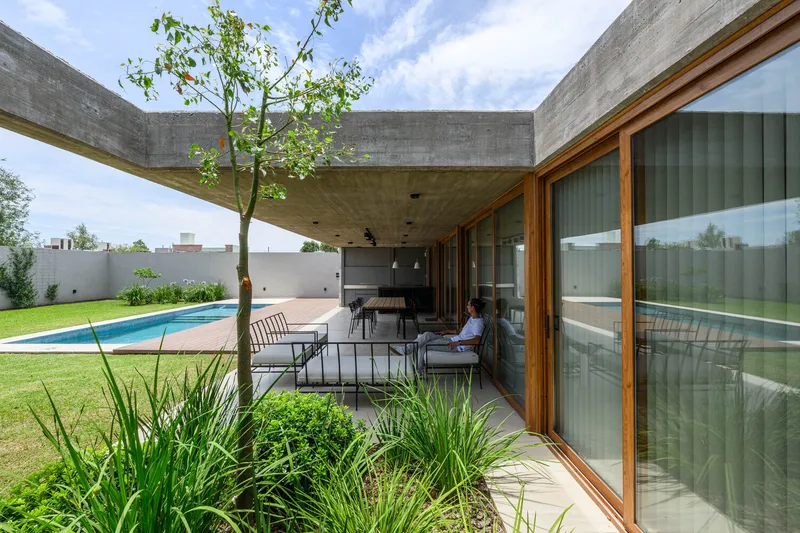
Located in the tranquil residential neighborhood of Río Tercero, Argentina, House G by Karlen + Clemente redefines suburban domestic life through an architecture of measured openness and crafted intimacy. Spanning 400 square meters, the residence is designed around a generous central courtyard, a serene void that structures everyday rhythms and fosters a continuous dialogue between indoor and outdoor living.
Site Strategy: A House That Frames Light and Privacy
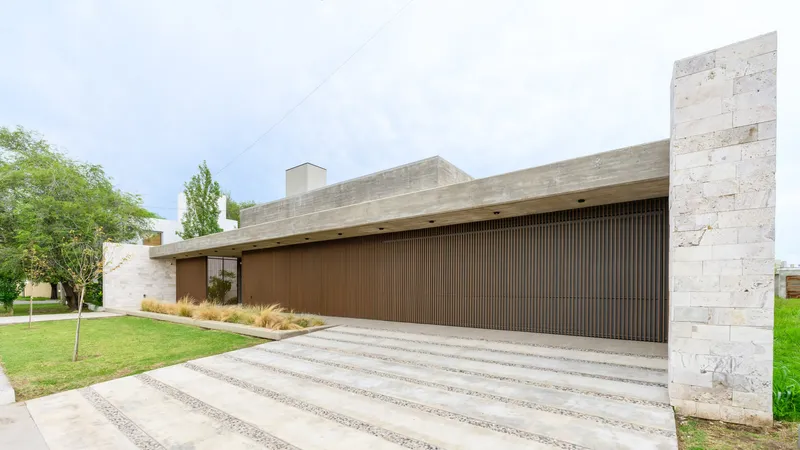
The project is set on a rectangular plot, where the architects implemented a deliberate implantation strategy—extending the built volume across the full width of the lot from east to west. This gesture defines a solid urban frontage while releasing a large central patio as the spatial and social heart of the house.
While the street-facing façade remains controlled and introverted, the rear elevation unfolds generously toward the north-facing garden, optimizing natural light and enhancing passive thermal comfort. This duality establishes a gradual transition between public and private realms, balancing protection and openness in a single architectural gesture.
Spatial Organization: Horizontal Living and Vertical Harmony
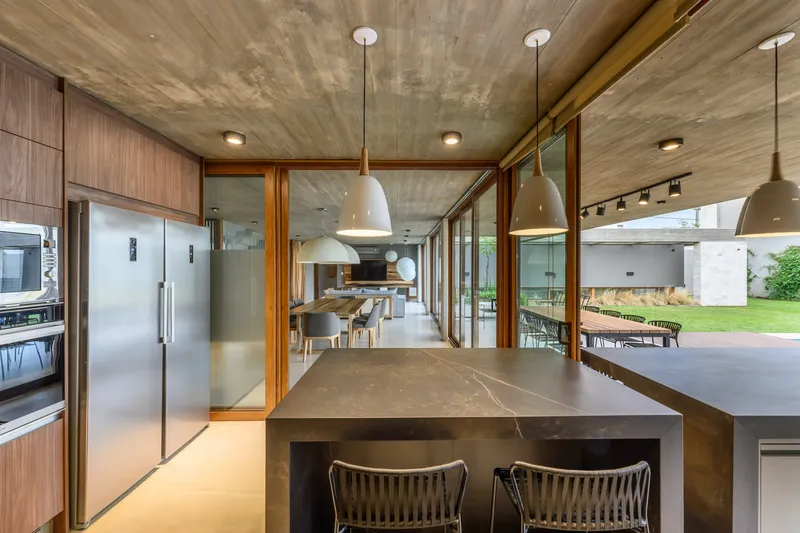
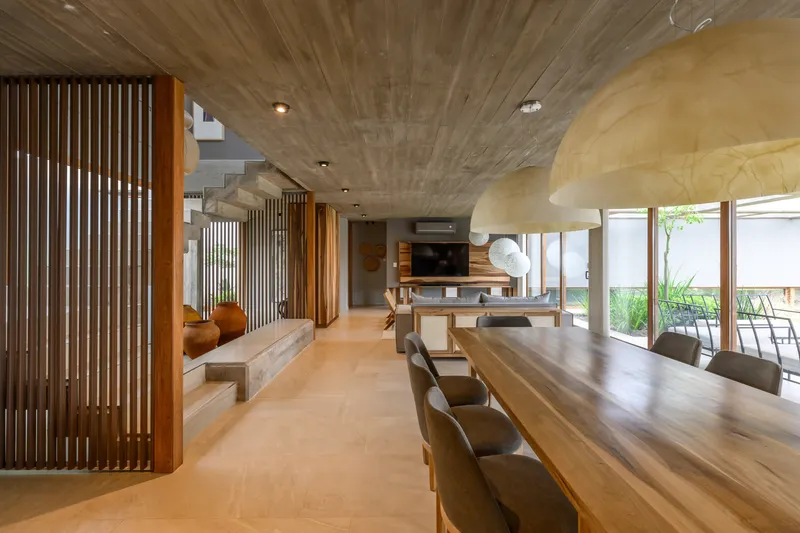
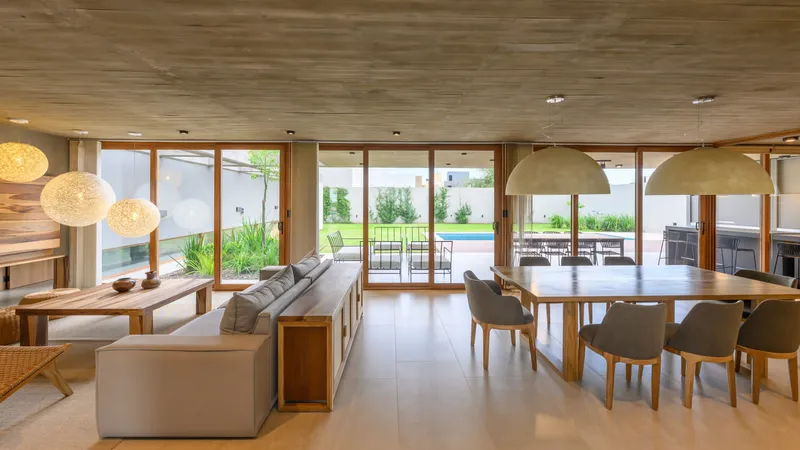
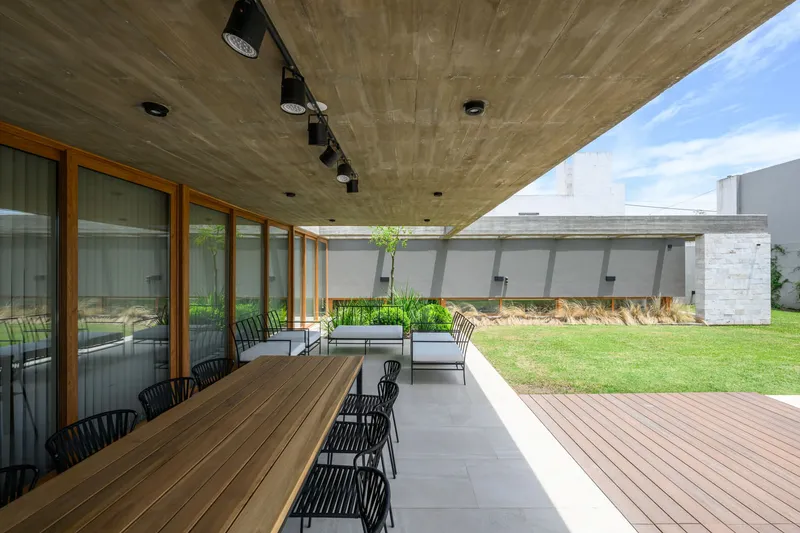
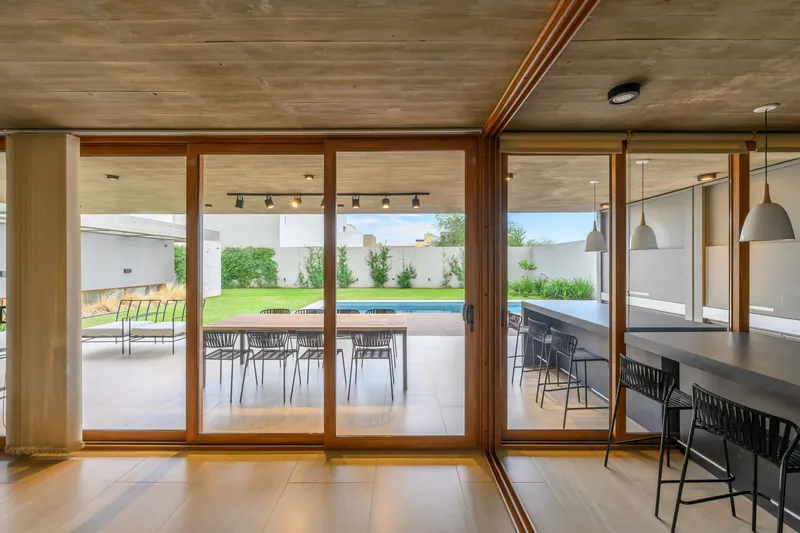
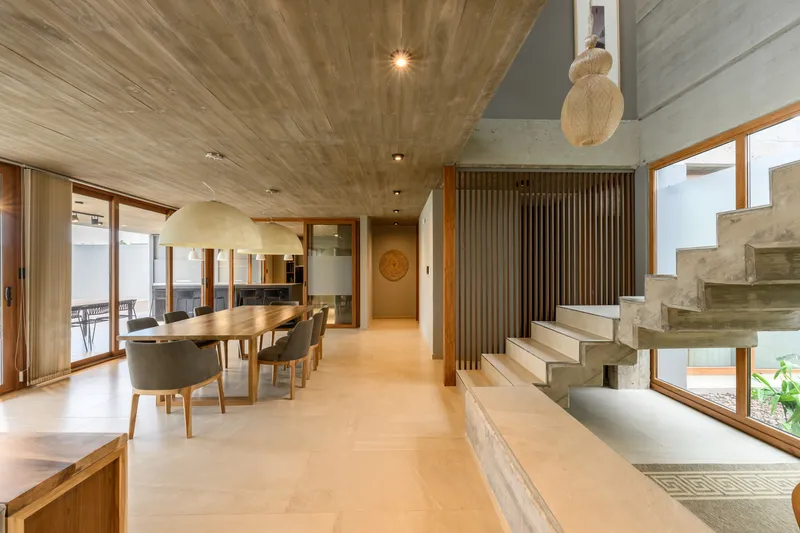
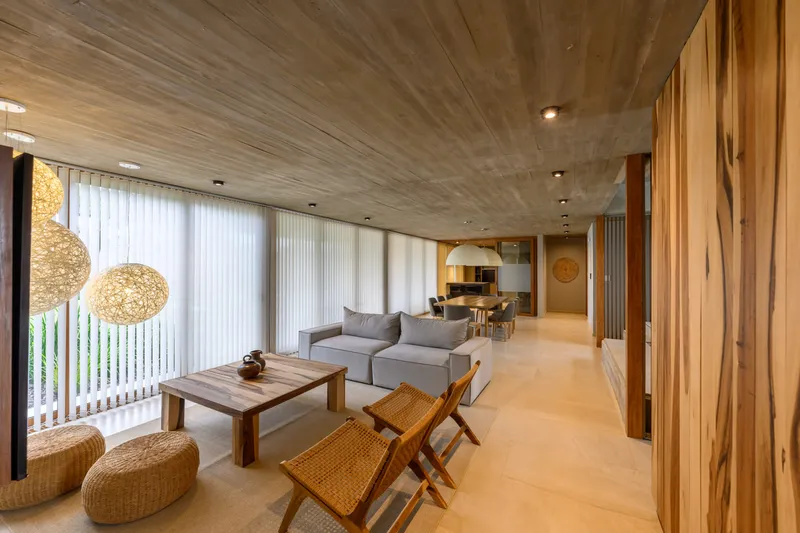
At the ground level, House G unfolds through a longitudinal axis that organizes the home’s primary functions. The living, dining, and kitchen areas flow linearly toward a gallery and pool, forming a continuous sequence that dissolves boundaries between interior and landscape.
The service areas and the master suite occupy the same level, ensuring complete functionality and privacy on the ground floor. This arrangement makes the house fully livable on a single level, adaptable for long-term comfort and accessibility.
The upper floor introduces a more secluded realm—two secondary bedrooms designed as an independent volume that opens to terraces and distant views. Here, the interplay of voids and solids defines a composition where openness to the sky contrasts with the sheltering warmth of the interiors.
Material Expression: Concrete, Wood, and Stone in Dialogue
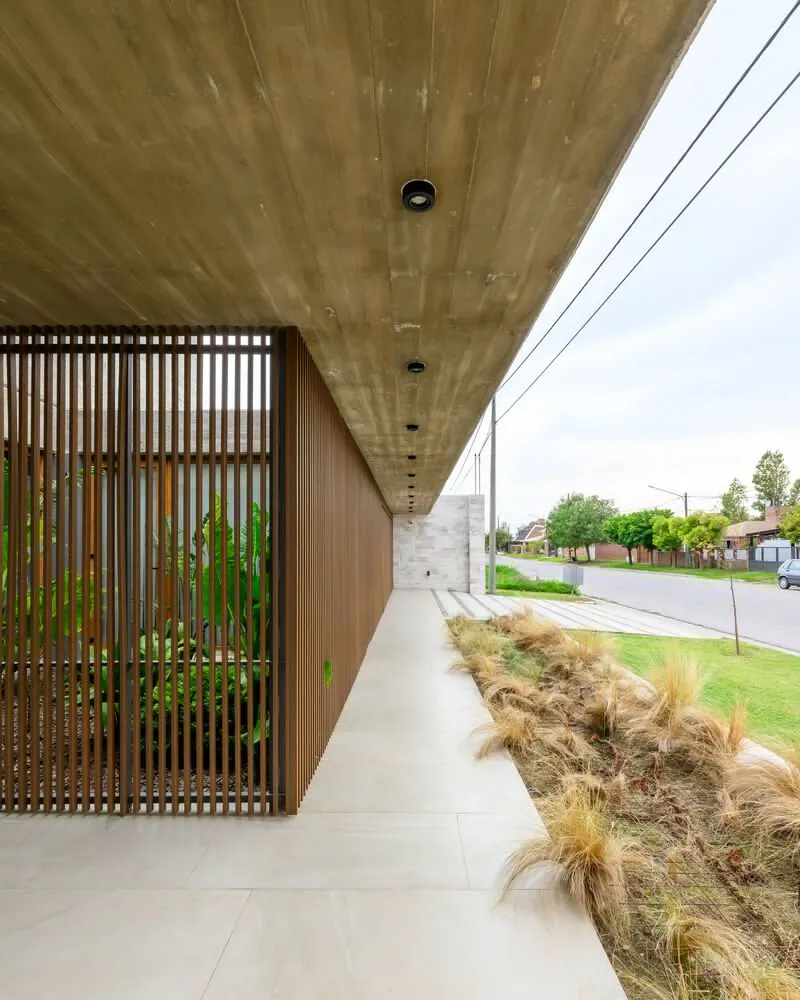
Materiality plays a vital role in shaping the architectural identity of House G. The structure is built from a harmonious combination of exposed concrete, local stone, and natural wood, creating a tactile and timeless palette.
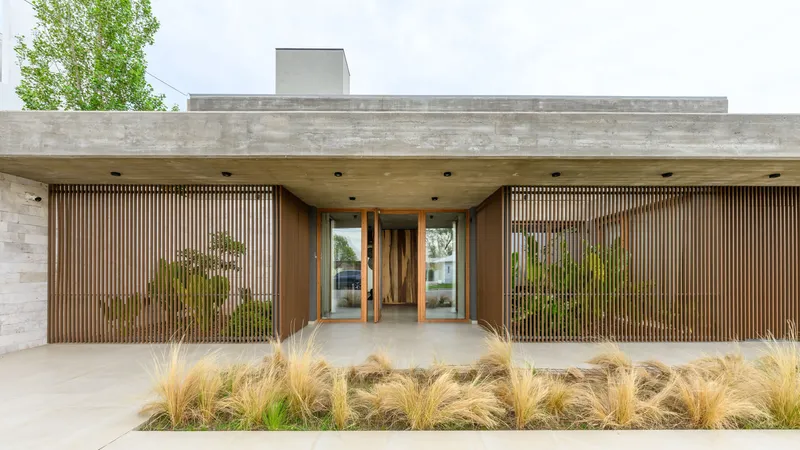
The street façade expresses a sense of solidity and rhythm through vertical wooden slats, which filter light and offer privacy while softening the concrete mass. In contrast, the interior spaces open generously through large glazed panels, shaded by projecting eaves and wooden lattices that mediate sunlight and enhance energy efficiency.
The result is an architecture that ages gracefully, allowing the play of light, shadows, and vegetation to animate the spaces throughout the day. This living architecture embraces time as a design element—one that deepens the connection between structure and nature.
Atmosphere and Experience: Serenity Through Material Honesty
Inside, the design prioritizes spatial continuity and visual calm. The warm textures of wood and the soft reflection of light on concrete create a serene atmosphere where simplicity becomes luxury. Every material reveals its authentic texture, evoking a tactile connection with the natural world.
The furniture and finishes are carefully chosen to complement the architectural language—crafted wooden surfaces, minimalist fixtures, and neutral tones enhance the sense of timelessness. By integrating light, material, and proportion, House G achieves a delicate equilibrium between shelter and openness, intimacy and landscape.
Sustainable Design and Contextual Sensitivity
Beyond aesthetics, House G demonstrates a thoughtful approach to sustainable living. The northern orientation maximizes solar gain during winter while deep overhangs and lattices mitigate heat in summer. The courtyard typology naturally enhances cross ventilation, reducing reliance on mechanical cooling systems.
Local materials such as stone and wood not only root the house in its context but also minimize transportation impact and maintenance over time. The result is a home that reflects environmental responsiveness as much as architectural elegance.
A Living Framework for Everyday Rituals
For Karlen + Clemente, House G represents more than a built structure—it is a framework for family life, evolving with the passage of time. The architecture’s strength lies in its quietness, in how it allows daily routines to unfold naturally within its crafted boundaries.
As sunlight filters through wooden lattices and reflections shimmer across the pool, the house becomes an ever-changing stage of light, warmth, and serenity—an architecture that celebrates both domestic intimacy and the generosity of space.
All photographs are works ofGonzalo Viramonte


Popular Articles
Popular articles from the community


David Macias Steps a Doorless Stone and Plaster House Down a Tropical Colombian Hillside
In the humid hills of Colombia, Threshold House replaces the front door with an open void and terraces its 850 m² down the slope instead of fighting it.

longwave studio Reorganizes a 112 m² Tainan Apartment Around the Daily Routines of a Family and Two Cats
In Tainan, Taiwan, birch plywood, rust-red furniture and a freestanding plaster wall link arrival, storage, work and family life in one apartment.

Cube Design Draws an Ecological Corridor Between Two Shenzhen Hills with the Nankai Building
Beside Shenzhen's container docks, the Nankai Building pairs stacked balconies with a climbing green screen to connect two hillsides across its height.

Architekt Andreas Gruber Scatters 23 Dark Timber Chalets Across a South Tyrolean Forest Edge
In Molini di Tures, Amonti Chalets breaks a resort into a hamlet of gabled timber houses, with parking, storage and services pushed into the slope.

Similar Reads
You might also enjoy these articles


Hodi-Mandai Geram
Project Function: Preservation and revitalization of the Intangible heritage and socio-spatial identity of the Hodi by Housing, Cultural Memory Center, Sacred Grove, landscape, local tourism economy


Olio Towers: A Mid-Rise for Performers That Fuses Housing, Rehearsal, and Stage
Located blocks from Houston's Theater District, this modular tower stacks living units around a central performance atrium.

Oasis: Modular Green Housing Carved into Dhaka's Urban Fabric
A shortlisted Plugin Housing entry reclaims unauthorized settlements in Dhaka with stepped concrete volumes, green roofs, and ventilation-driven design.

Black Hole: A Floating Megastructure for the Post-Physical Era
Emiliano Mazzarotto envisions a spherical, self-scaling arena where e-sports, digital hotels, and holographic stadiums replace traditional public space.

Explore Latin American Houses Competitions
Discover active competitions in this discipline

Challenge to design mud housing for contemporary communities

Challenge to reimagine the Iron Throne

Photograph architecture without architects

Illustrate the lost glory of Angkor Wat - Render Challenge
Comments (0)
Please login or sign up to add comments
No comments yet. Be the first to comment!