
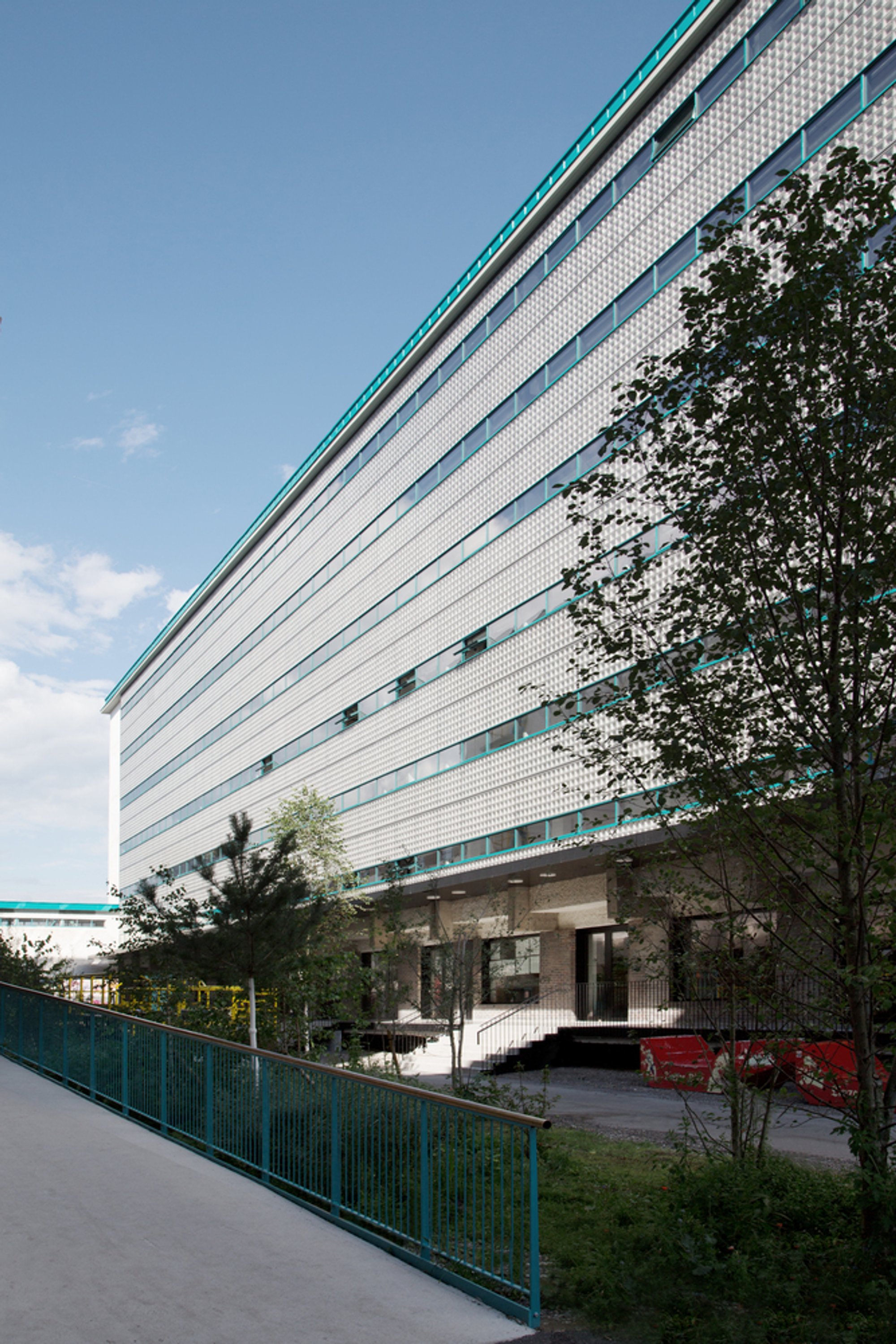
House Havana Tobacco Factory Linz by Kaltenbacher ARCHITEKTUR + STEINBAUER architektur+design
Historic tobacco factory transformed with a luminous glass block façade, preserving industrial heritage while introducing modern office spaces and architectural clarity.

A Monumental Revival of Industrial Heritage through Glass and Light
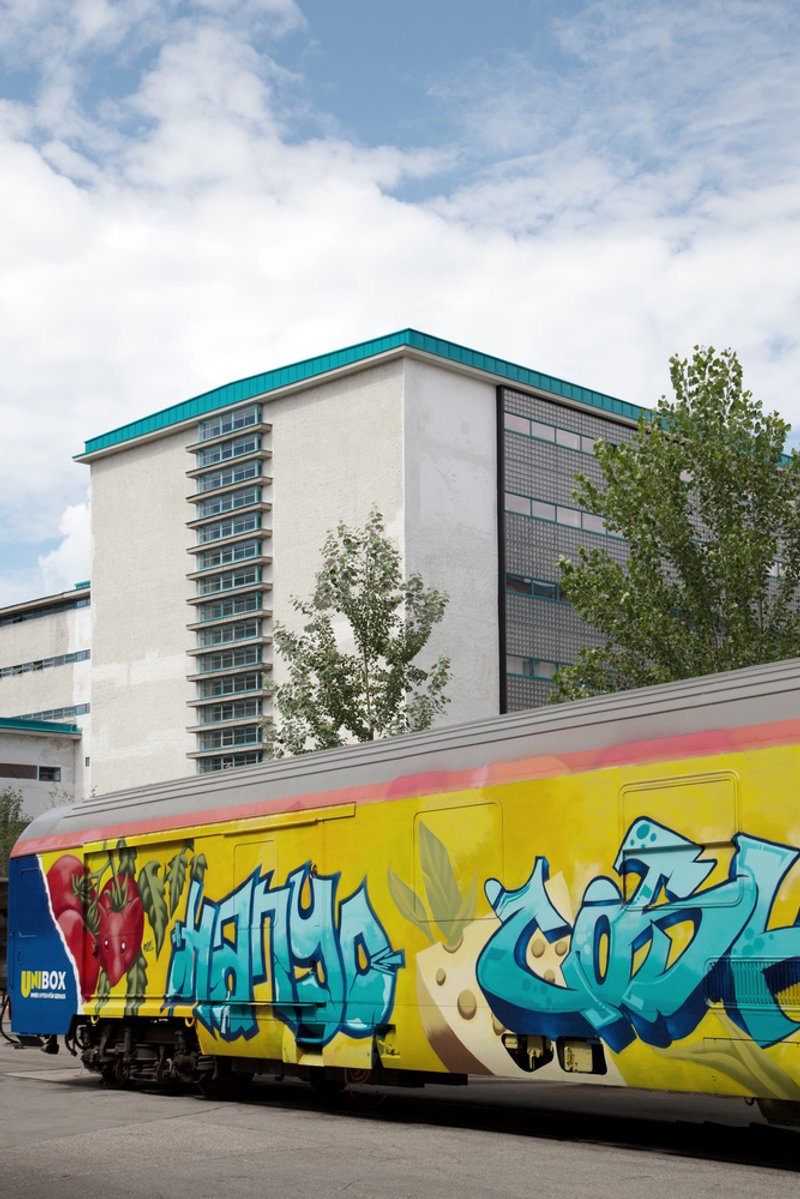
Located near the Danube promenade in Linz, Austria, the House Havana—originally built in the 1930s as a tobacco warehouse—has undergone a remarkable architectural transformation. Once part of a vast industrial complex designed by Peter Behrens and Alexander Popp, this listed monument has been reimagined by Kaltenbacher ARCHITEKTUR and STEINBAUER architektur+design into a luminous, modern office building that celebrates the essence of its industrial past.
Historical Legacy and Modern Intervention
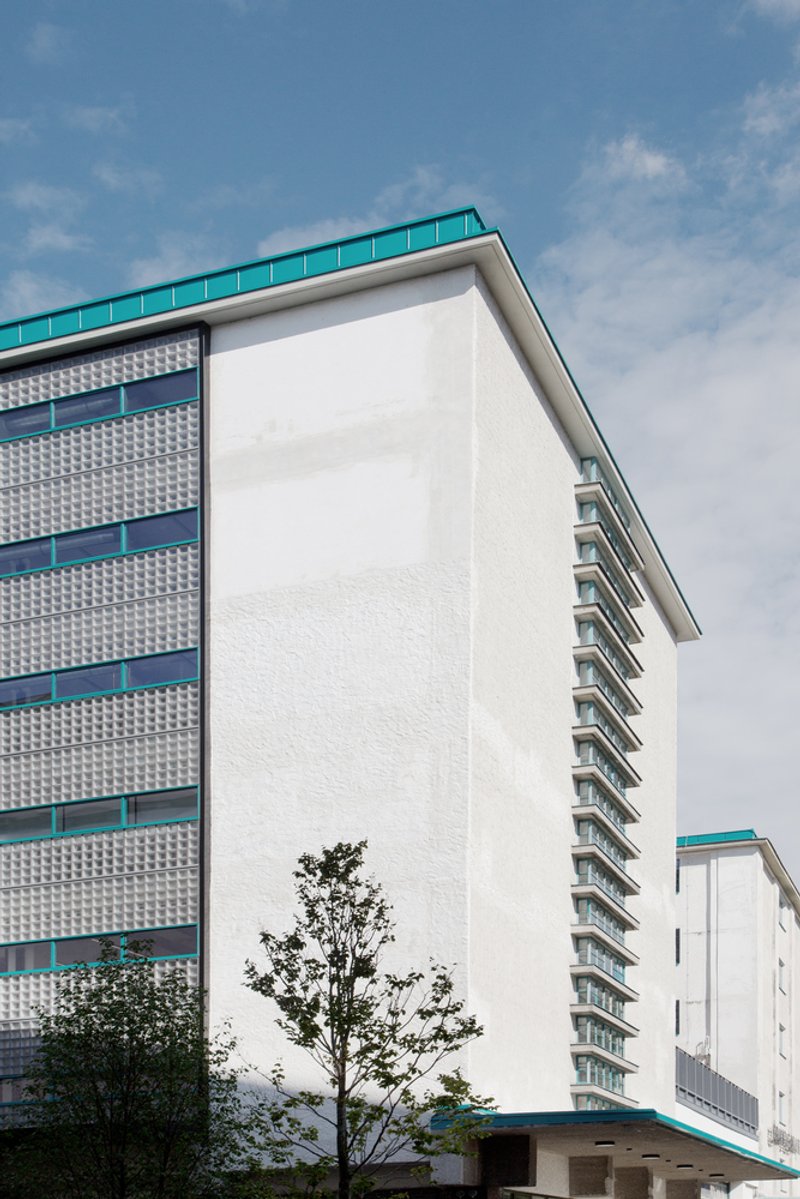
Originally constructed as a tobacco storage facility, the building underwent structural changes in the 1960s, including vertical expansion and southern and northern additions. These later interventions, however, were not protected by heritage status and were subsequently demolished in 2017. An EU-wide architecture competition initiated the search for a visionary yet respectful design approach that would redefine the building’s purpose while preserving its historical integrity.
The architects’ guiding principle was minimal intervention with maximum impact. Rather than compete with the powerful industrial character of the original structure, the design team introduced a contemporary façade system that complements and enhances the historical fabric.
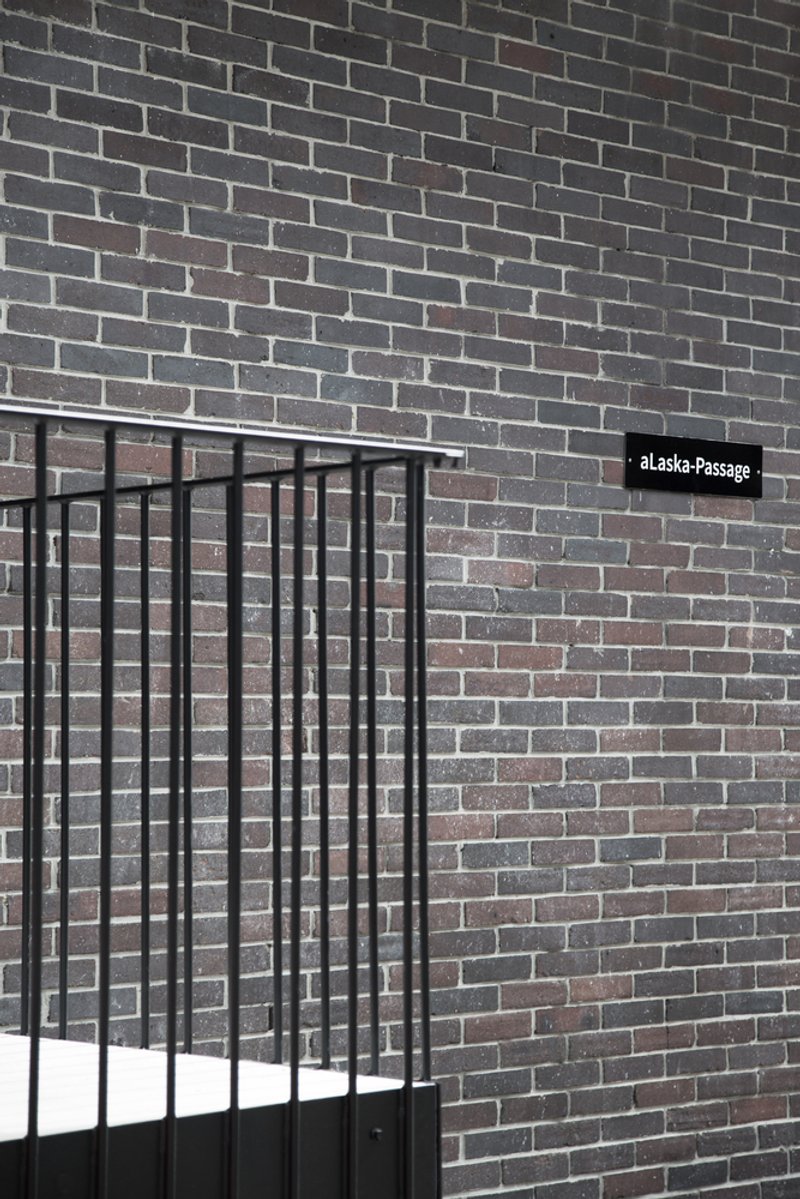
The Glass Block Façade: A Dialogue with the Past
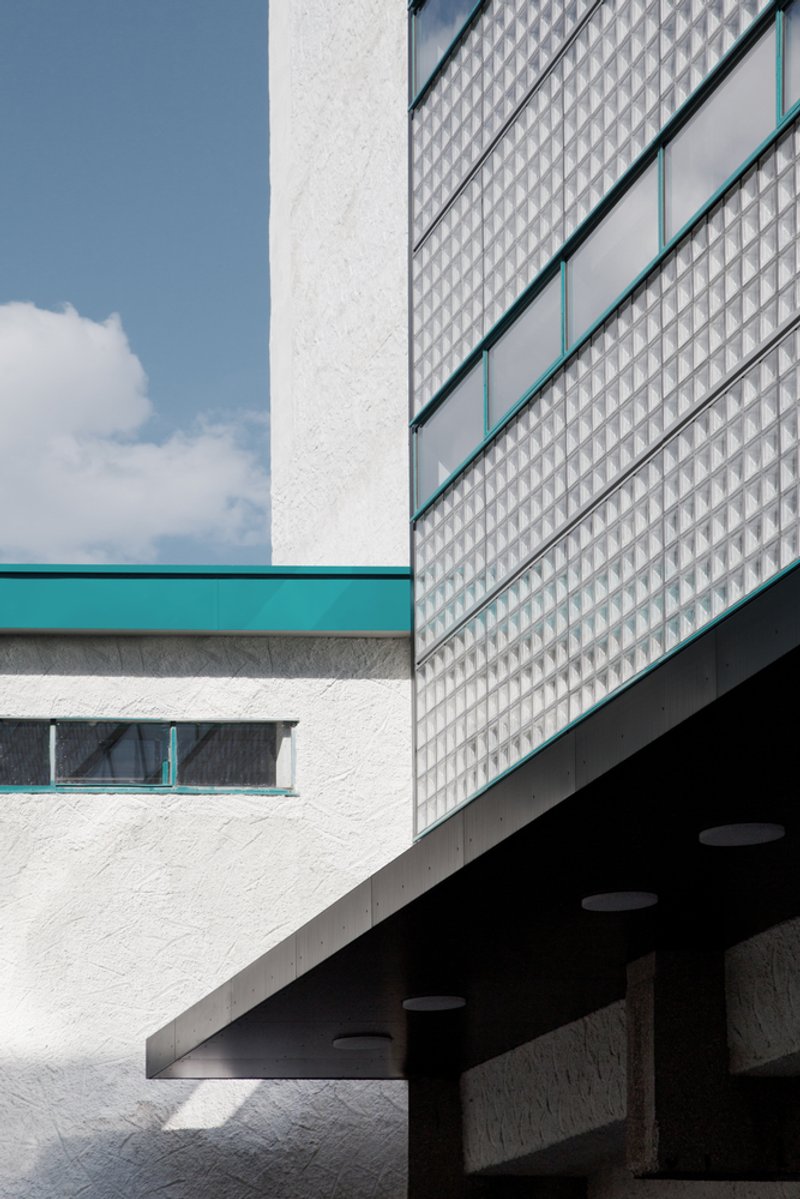
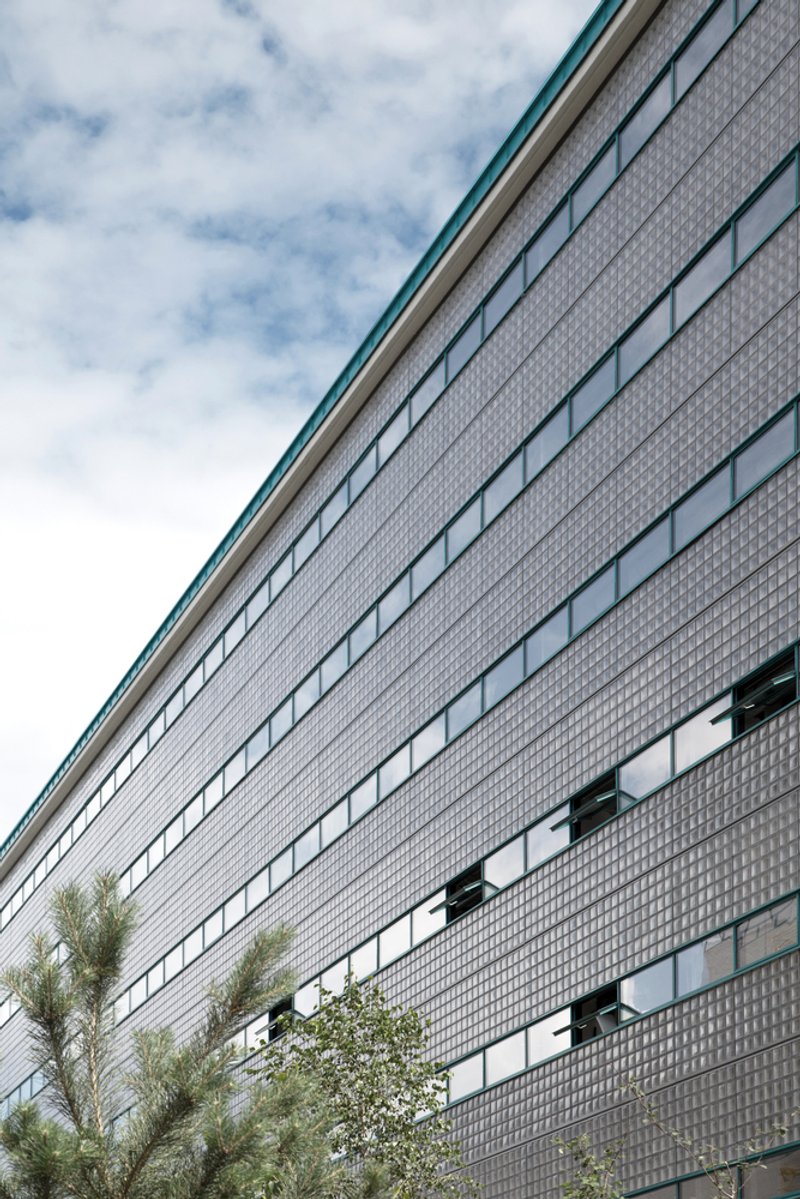
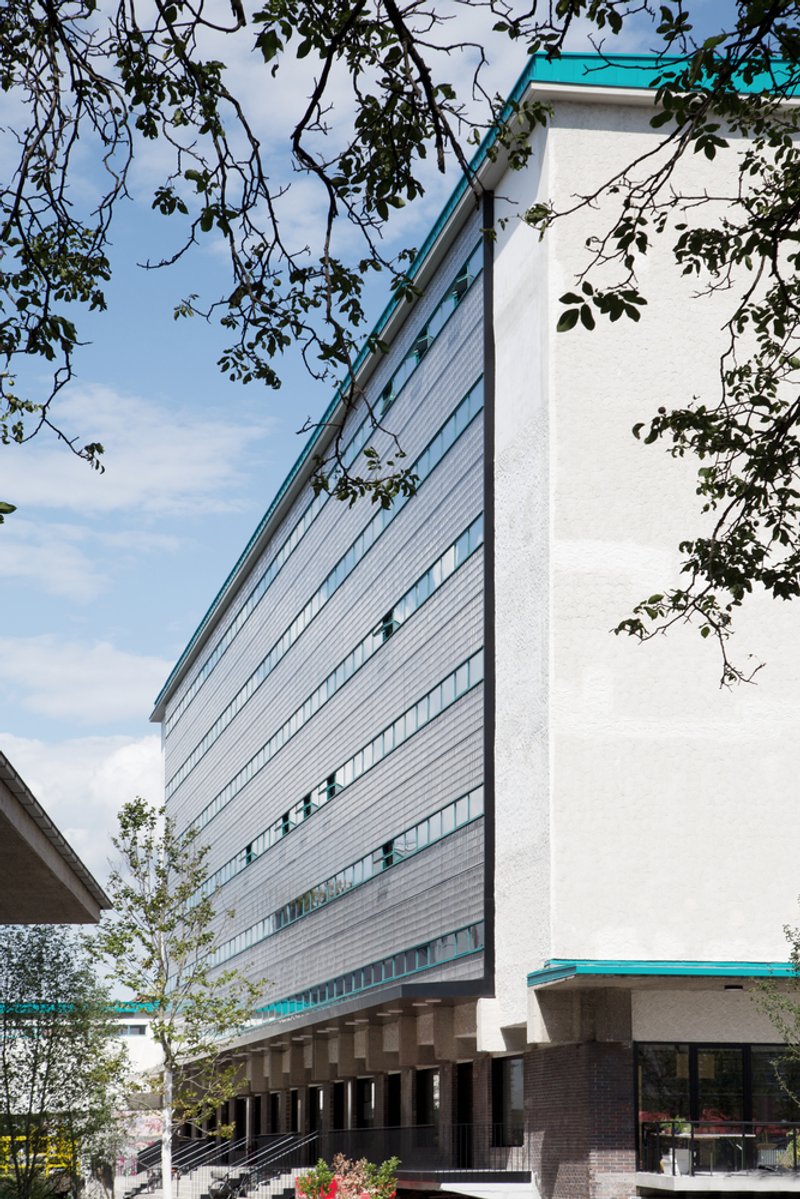
The building’s standout feature is its new glass block façade, covering over 1,800 square meters across six floors. Comprising 70,000 individual glass blocks, this translucent skin redefines the former dark and enclosed tobacco store into a building flooded with natural light. The material choice—an architectural element popular in early 20th-century functionalist buildings—evokes the industrial origins of the site while introducing a distinctly modern vocabulary.
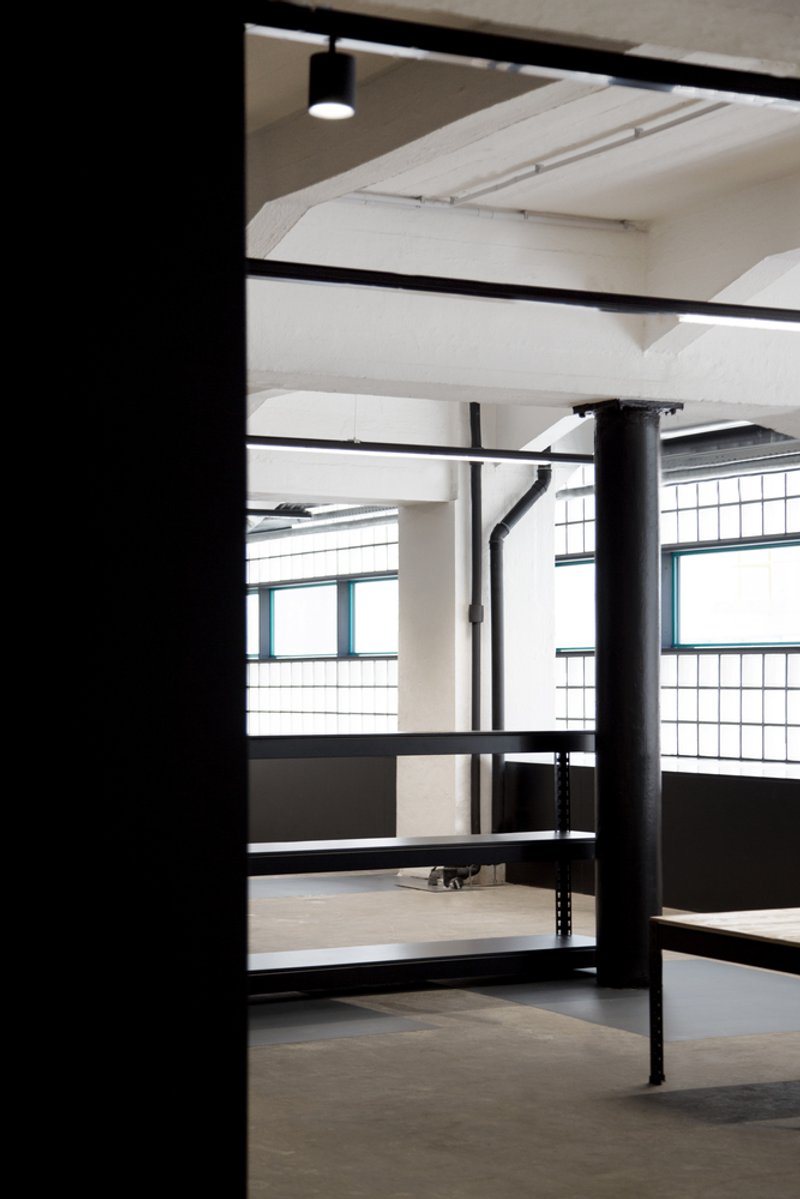
All steel structural supports are embedded invisibly within the joints of the glass blocks, maintaining a clean and uninterrupted exterior. The steel windows are carefully integrated within the preserved concrete skeleton, offering natural ventilation through pivoting sash openings—a subtle nod to the building’s original design.
Details that Define the Design
A black steel band encases the entire glass façade, creating a clear visual boundary between the old and new elements. A newly introduced canopy at the base reinstates the ground-level articulation lost during the 1960s alterations.
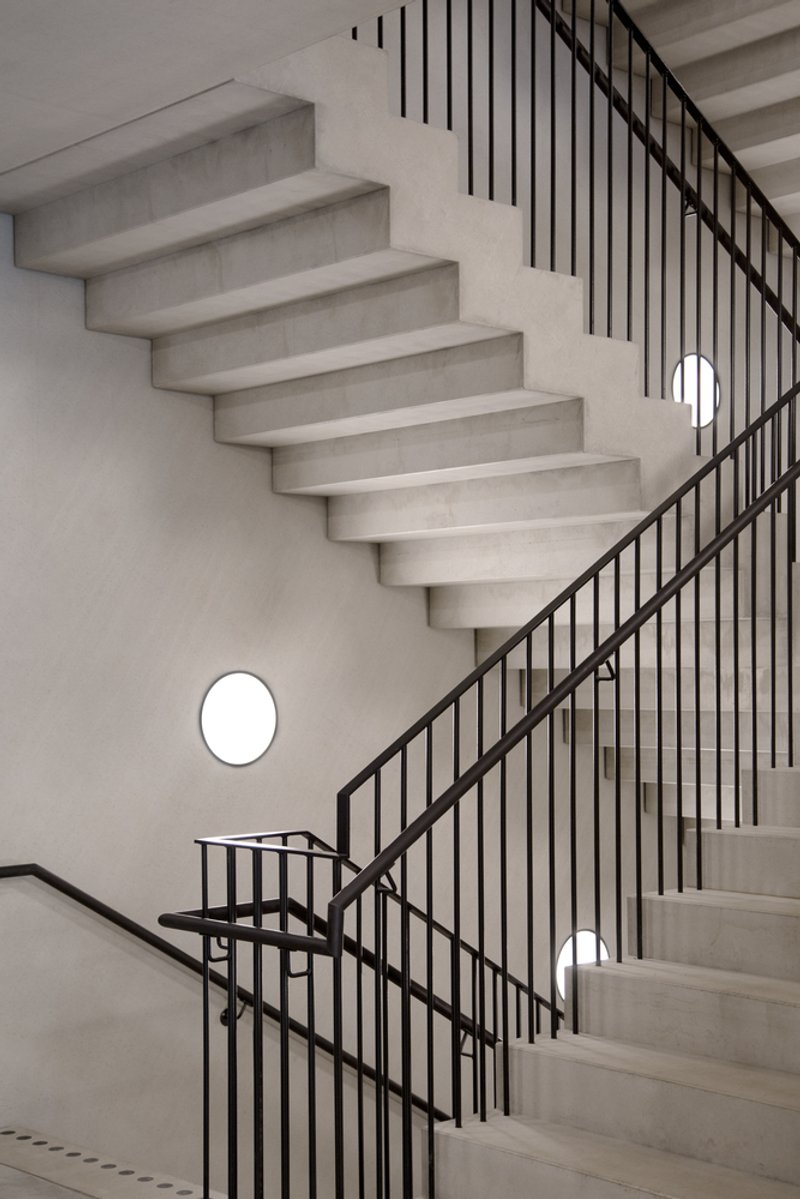
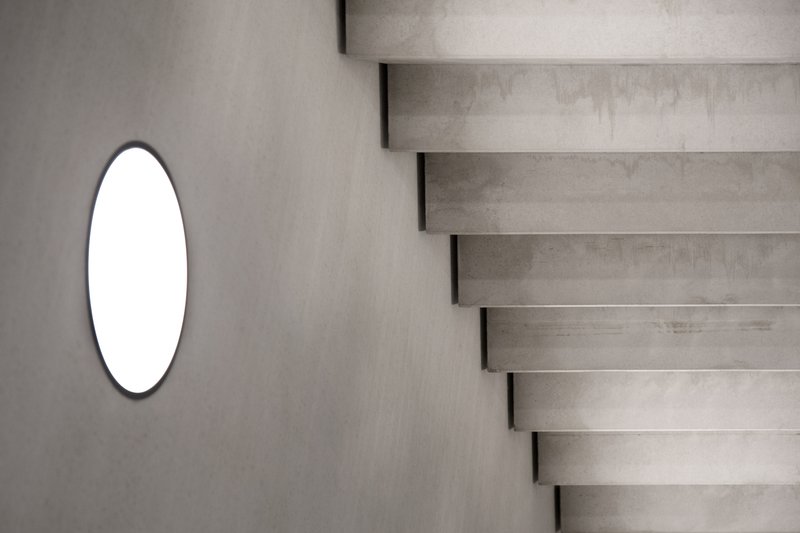
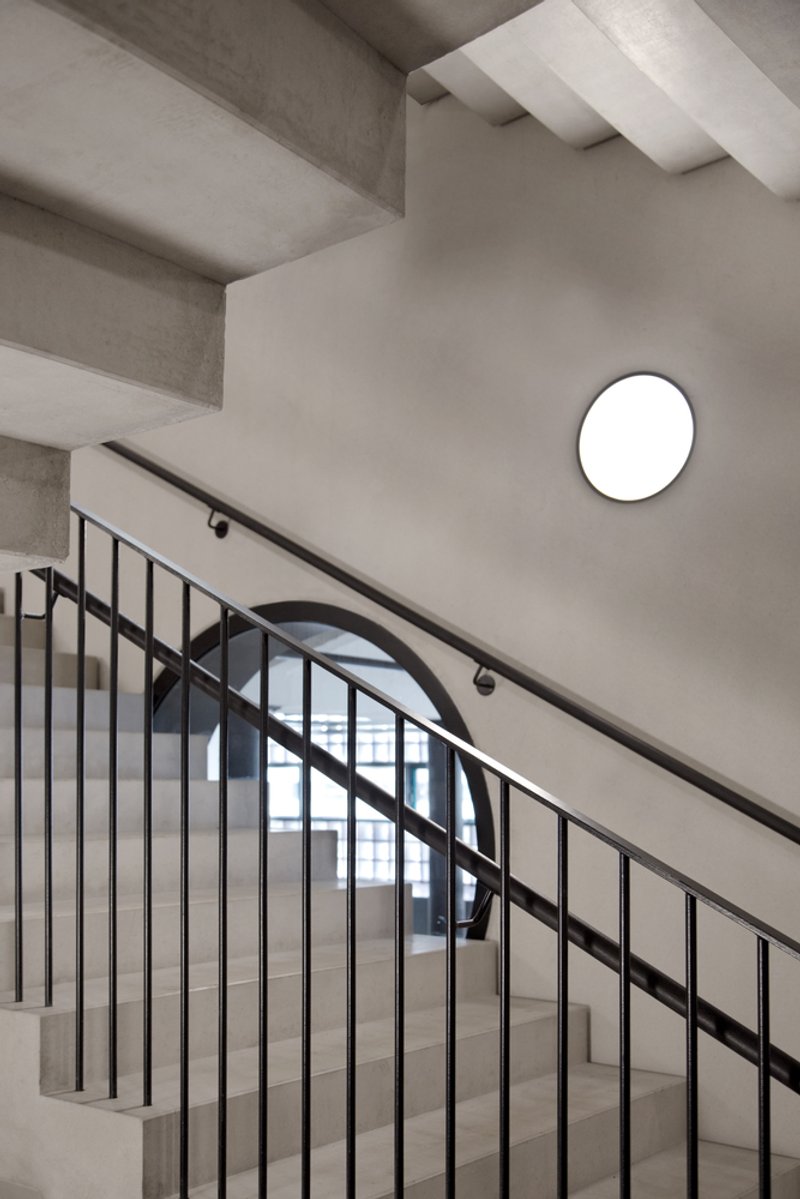
Inside, the architectural narrative continues. A new stair tower introduces a spatial moment of introspection before entering the customized office areas. Composed of two opposing single-flight concrete staircases per floor, the design produces a visual rhythm reminiscent of M.C. Escher’s lithographs. The railings, formed by thick round steel rods, are directly anchored into the stair treads through precise core drilling, showcasing an expressive use of raw materials.
A distinctive round window glazing—inspired by the factory’s porthole-style windows—has been strategically placed at staircase landings. These round apertures frame unexpected views and perspectives within the building, becoming a playful architectural signature that connects movement with memory.
Spatial Flexibility and Adaptive Function
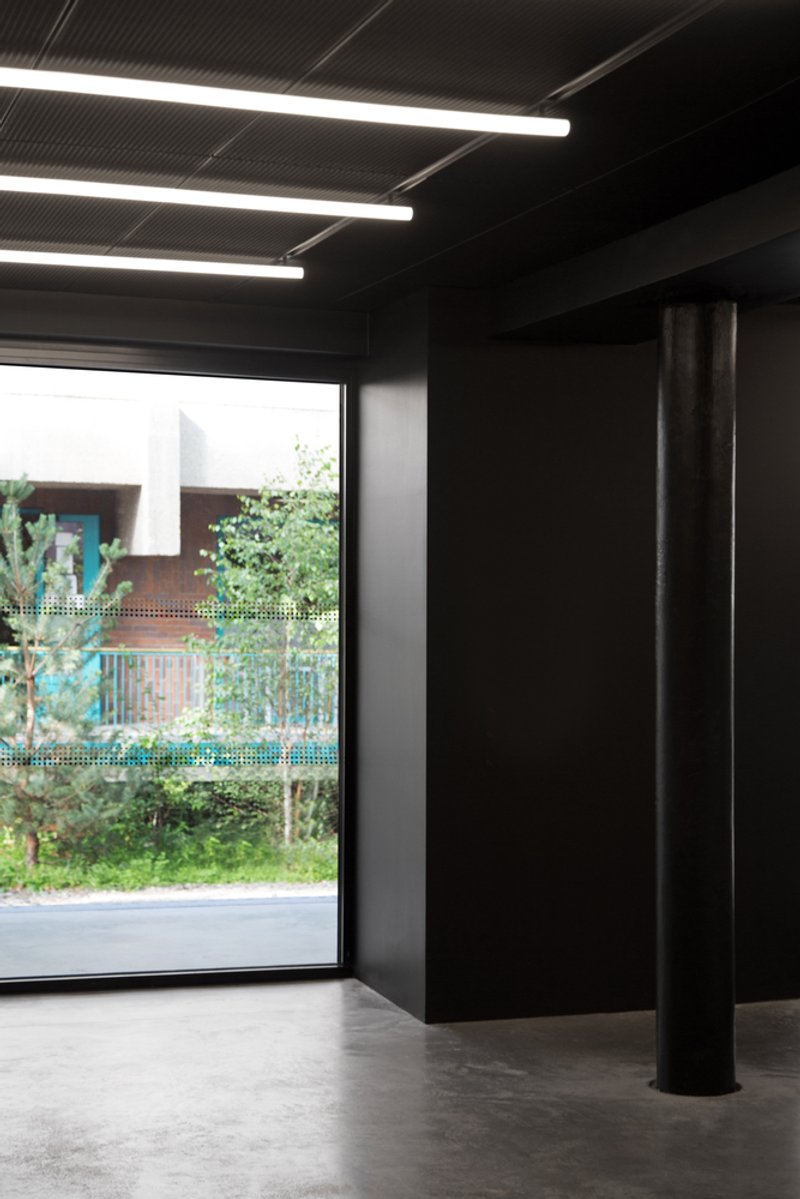
Adhering to the original axis grid of the historical structure, the new standard floor plans are clean and efficient. Infrastructure and circulation cores are centralized, while four new sanitary zones occupy the unexposed corners of the plan. The remaining open spaces are left flexible for tenants to configure based on individual needs, ensuring long-term adaptability and personalization.
The House Havana project stands as a successful example of adaptive reuse and industrial heritage preservation. Through the innovative use of glass blocks, concealed structural systems, and a deep respect for architectural history, the building not only recovers its relevance in the contemporary urban context of Linz but also sets a benchmark for revitalizing industrial landmarks.
Project Details
Location: Linz, Austria Architects: Kaltenbacher ARCHITEKTUR + STEINBAUER architektur+design Area: 8,000 m² Year: 2022 Engineering: ETECH Schmid and Pachler Elektrotechnik Manufacturers: Jansen, Allplan, D-Line, Forster, Fuchs Design, Fural, Herzbach, Proox, Schmitt+Sohn, Silent Gliss, XAL




Popular Articles
Popular articles from the community

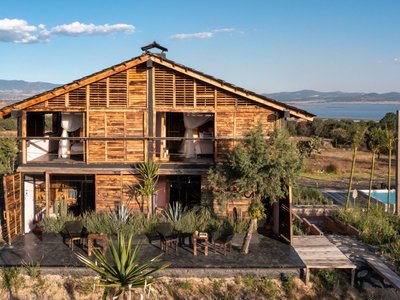
Fausto Terán and Toro Fuse Japanese Craft with Mexican Tradition in a Lakeside Retreat
Nakamura House pairs Shou-Sugi-Ban charred pine with handmade clay tile at the foot of Atlangatepec Lagoon in Mexico.
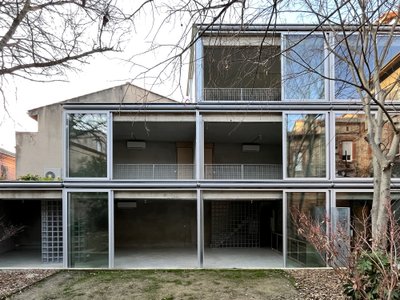
BAST Slots a Four-Story Glass House into a Narrow Gap Between Toulouse Townhouses
In the dense Bonnefoy district, a stepped infill building merges home and office while preserving a majestic hackberry tree.
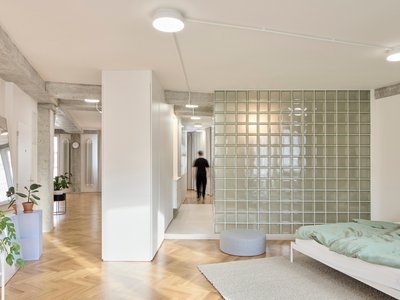
RDTH architekti Rips Out Nearly Every Wall in a Prague Apartment and Replaces Them with Furniture
A 101-square-meter post-war flat in Prague trades rigid partitions for a single rotated furniture block, curtains, and glass concrete.
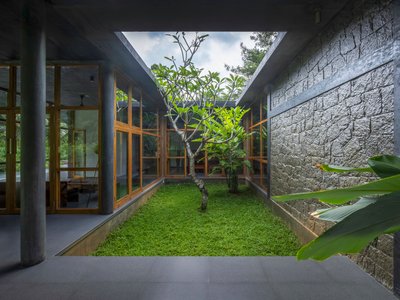
3dor Concepts Wraps a Kerala Home in Mirrored Concrete Arcs Around a Courtyard Tree
In the Western Ghats foothills of Thamarassery, a 270 m² single-story house uses two curved volumes to frame nature as its center.


Similar Reads
You might also enjoy these articles

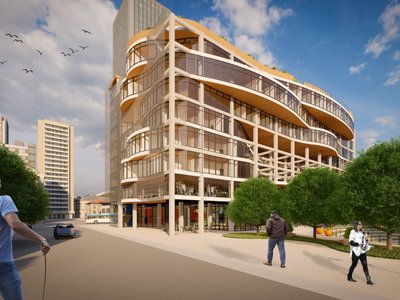
Olio Towers: A Mid-Rise for Performers That Fuses Housing, Rehearsal, and Stage
Located blocks from Houston's Theater District, this modular tower stacks living units around a central performance atrium.

Oasis: Modular Green Housing Carved into Dhaka's Urban Fabric
A shortlisted Plugin Housing entry reclaims unauthorized settlements in Dhaka with stepped concrete volumes, green roofs, and ventilation-driven design.

Black Hole: A Floating Megastructure for the Post-Physical Era
Emiliano Mazzarotto envisions a spherical, self-scaling arena where e-sports, digital hotels, and holographic stadiums replace traditional public space.
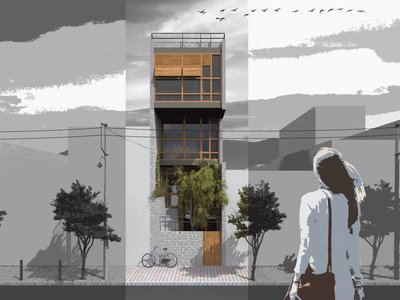
Compact & Sustainable Living in Piraeus: A Four-Level Family Home Built Around Light and Air
A narrow townhouse in one of Greece's densest port cities uses a central atrium and passive strategies to house three generations under one roof.


Explore Architecture Competitions
Discover active competitions in this discipline




The International Standard for Design Portfolios


The Global Benchmark for Architecture Dissertation Awards


The Global Benchmark for Graduation Excellence


Challenge to reimagine the Iron Throne
Comments (0)
Please login or sign up to add comments
No comments yet. Be the first to comment!