
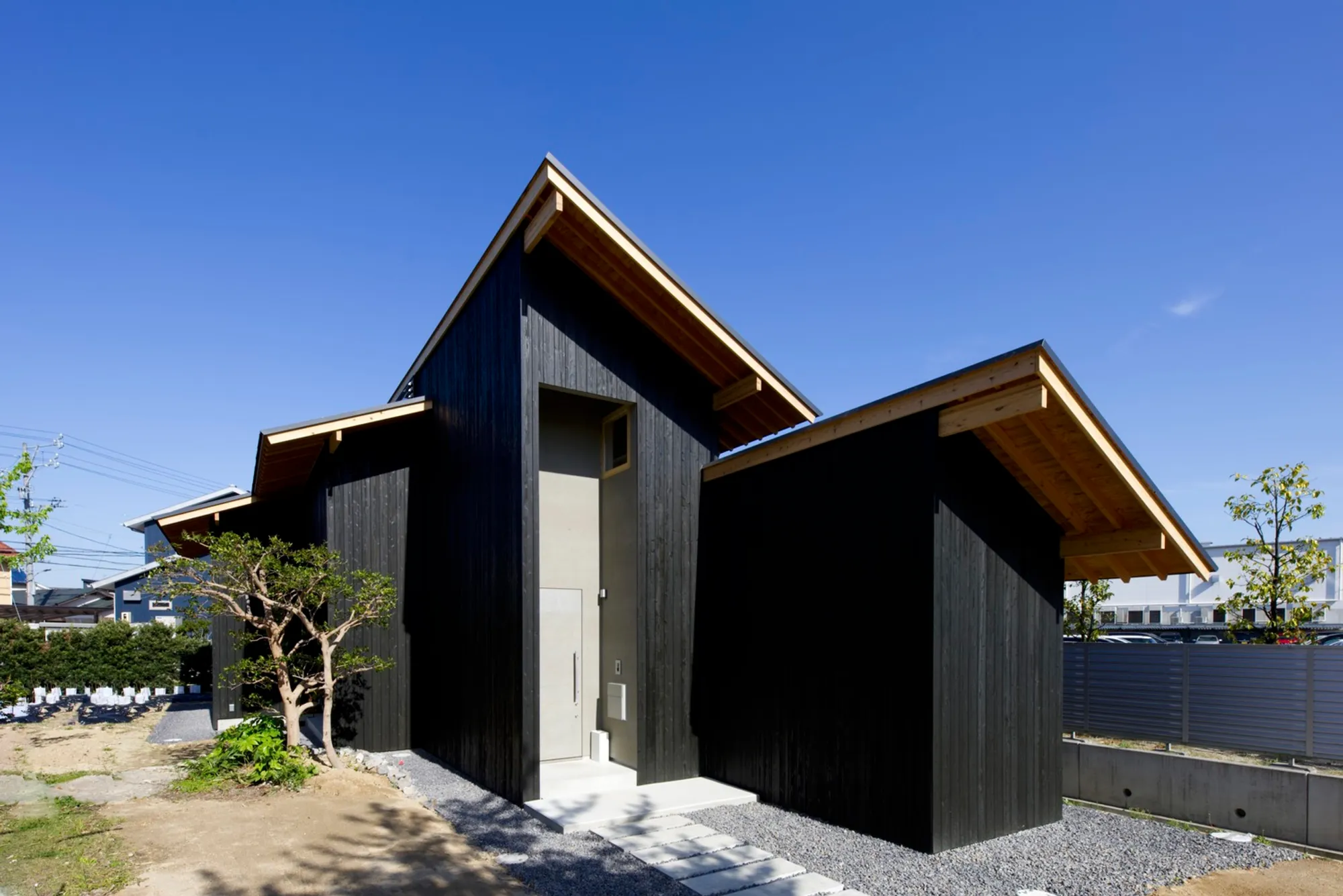
House in Hantsuki by Katsutoshi Sasaki + Associates: A Harmonious Blend of Privacy, Nature, and Light
Minimalist Japanese home blending privacy and nature, featuring sloped roofs, garden integration, and seamless indoor-outdoor living on a compact site.


Located in Obu, Japan, the House in Hantsuki by Katsutoshi Sasaki + Associates is a masterful example of minimalist Japanese architecture that gracefully balances openness with seclusion. Designed in 2023, the 74-square-meter home is nestled within a flagpole-shaped lot—a site configuration that presented both a creative challenge and opportunity.
The surrounding environment—a mix of factories, parking lots, and fields—demanded a design that would preserve privacy while fostering a connection to nature. The result is a spatial composition that is both introspective and outward-looking, offering the residents tranquility amidst a semi-industrial context.
Architectural Layout: A Strip Composition That Connects
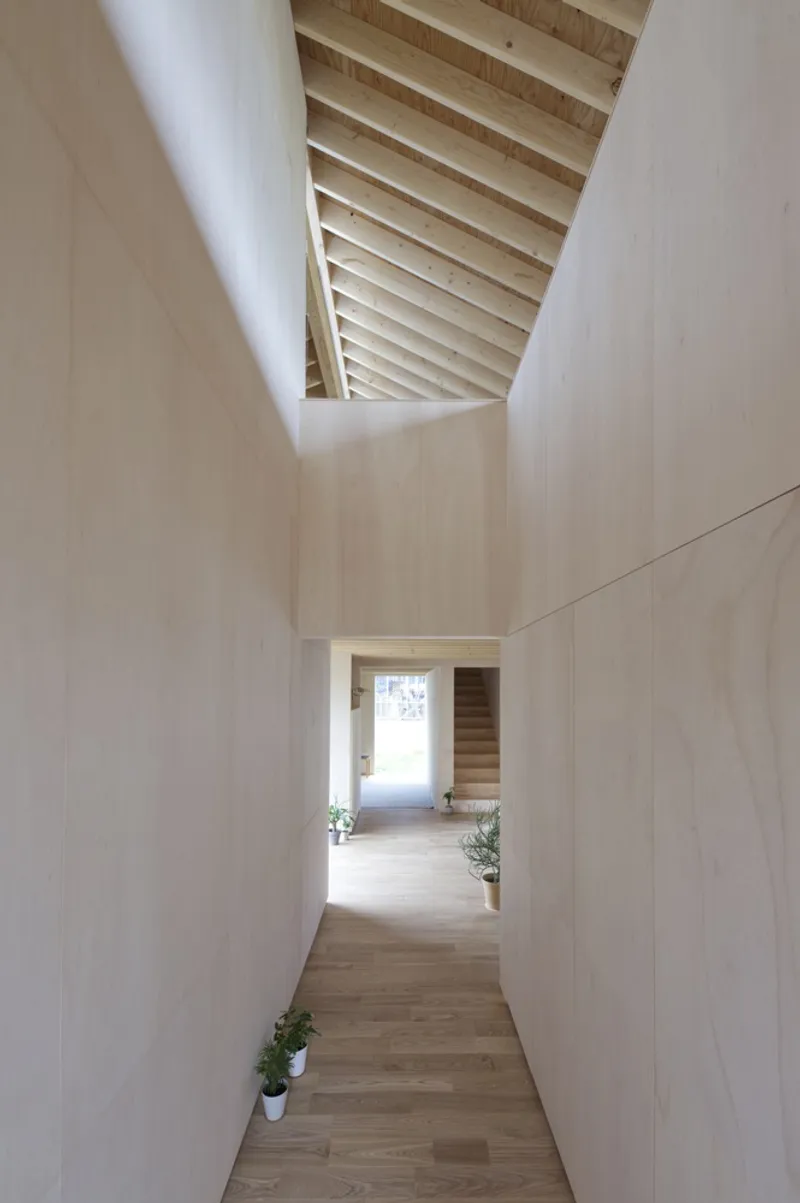
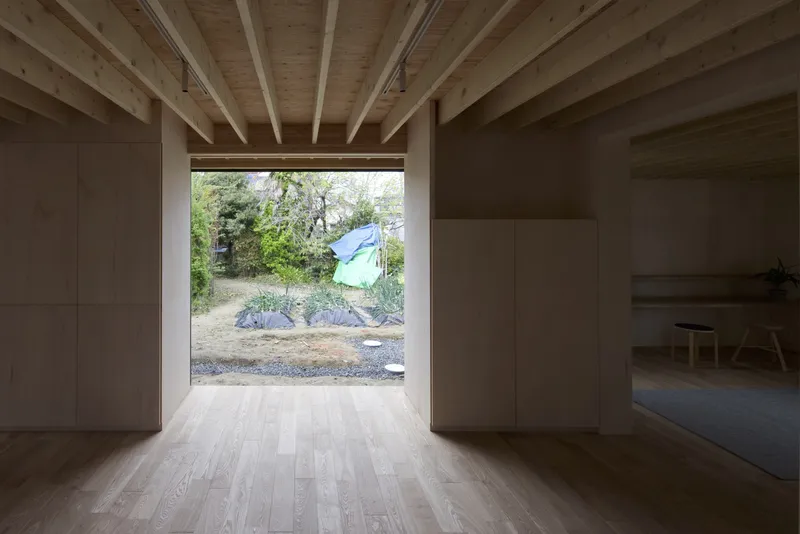
The structure is composed of elongated, narrow volumes—or "strips"—aligned sequentially from the front of the site to the rear. This layout not only maximizes the narrow plot but also enables light to filter through the structure while maintaining visual privacy. The overlapping volumes create multi-functional spaces that can adapt to various daily activities.
The design avoids existing plantings and instead introduces a new garden space at the back, reinforcing the concept of an internal retreat. Public zones such as the living and dining areas occupy the intersecting volumes, offering open, flexible areas for gathering and interaction.
Sloping Roof Design: Light, Air, and Privacy
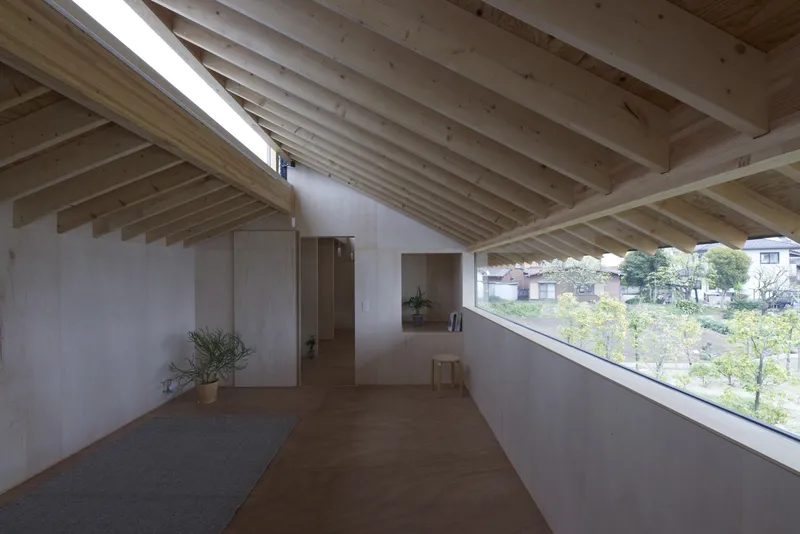
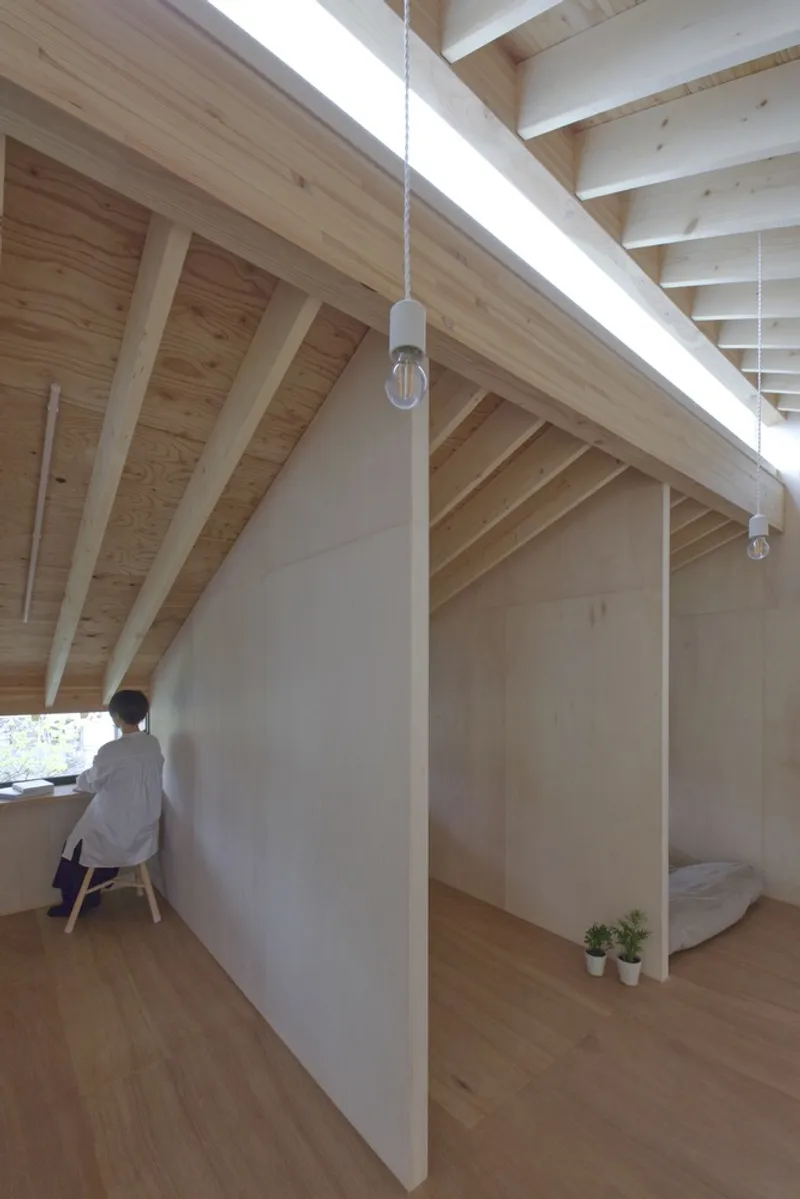
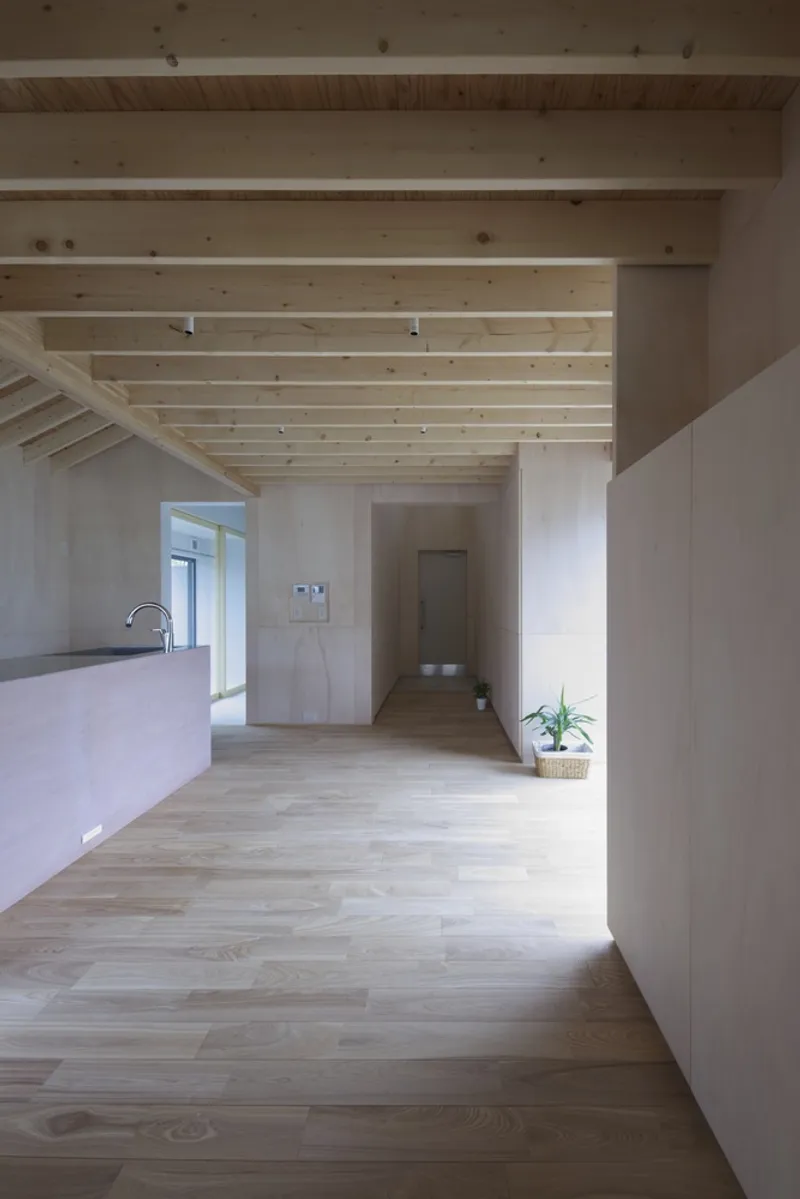
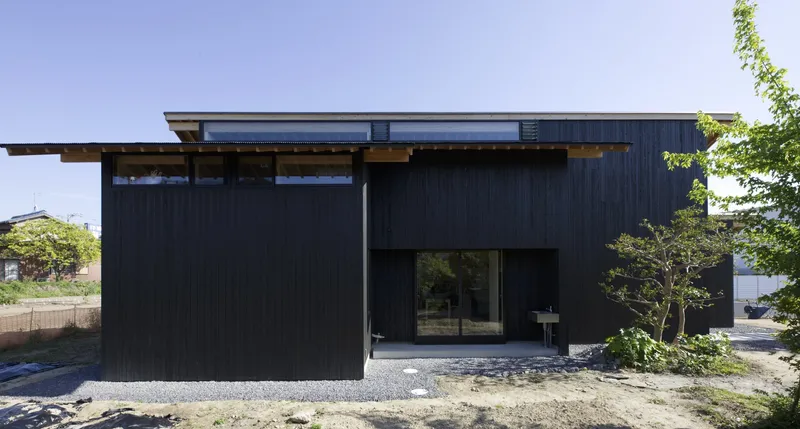
To soften the home’s presence within its neighborhood, a sloping roof design was implemented—set low along the edges to minimize visual impact, ensure privacy, and allow natural light to penetrate deep into the space. The interstitial spaces between the sloped roofs welcome natural ventilation and glimpses of the sky, fostering a continuous dialogue between the indoors and the external environment.
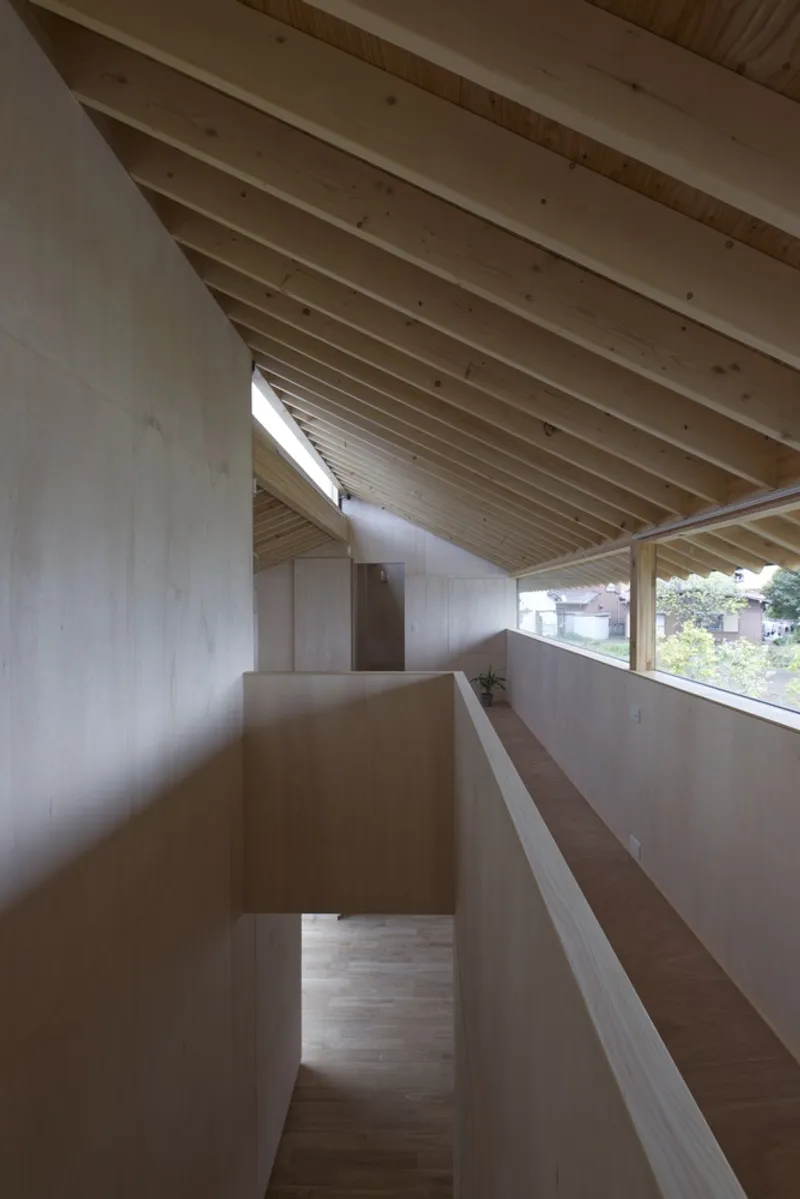
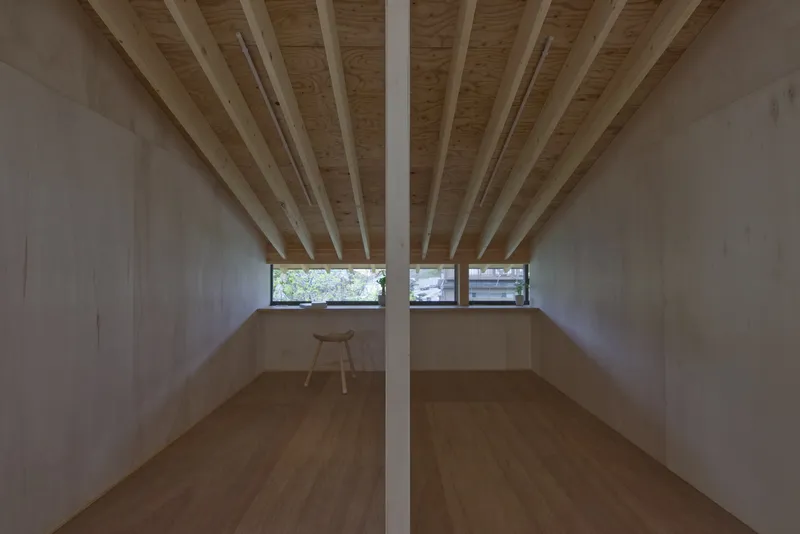
This design choice also creates a layered experience inside the home: the first floor connects to the "ground"—extending the home into the surrounding fields and garden, while the second-floor bedrooms connect to the "sky", blocking neighboring views while offering serene skyward vistas.
Material Simplicity and Structural Clarity
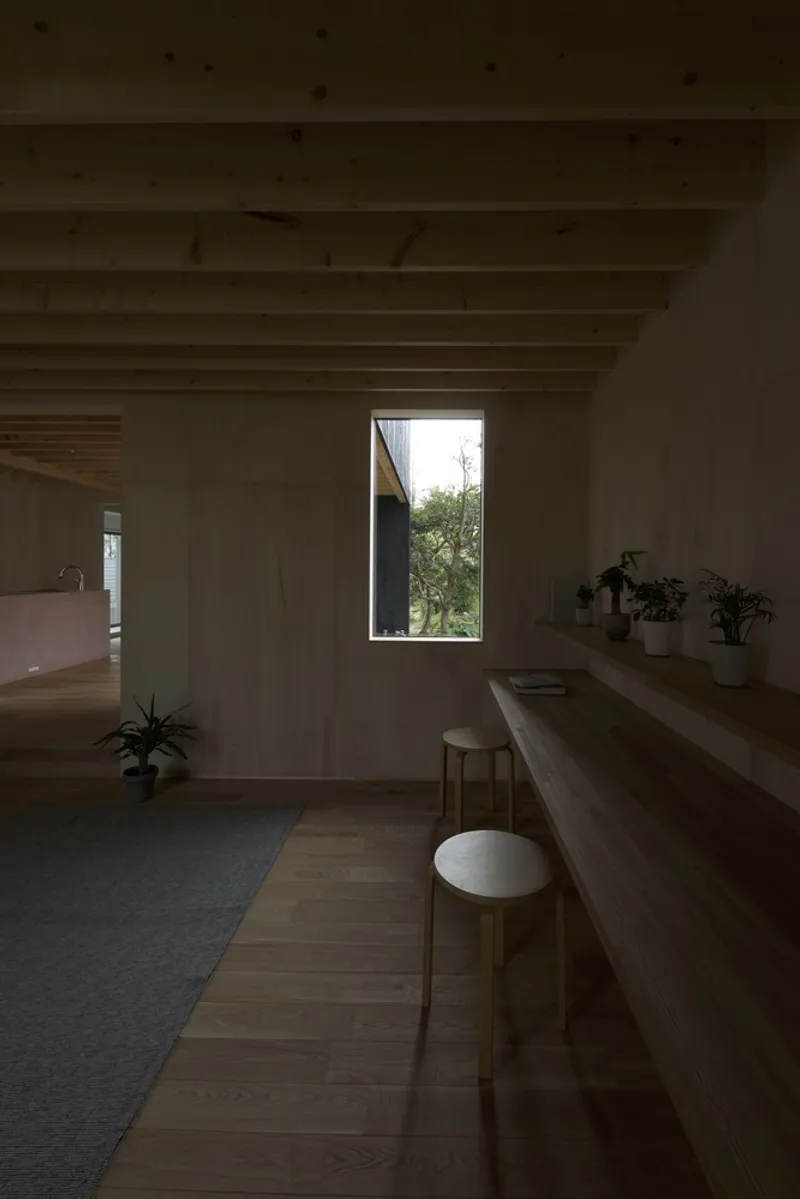
Constructed in collaboration with Tatsumi Terado Structural Studio and Toyonaka Construction Co. Ltd., the project demonstrates careful craftsmanship and structural clarity. Wooden beams, clean lines, and natural textures define the minimalist interior. Large windows and skylights carefully frame views without exposing the occupants to the nearby urban setting.
The garden, designed by moss green ikkei, enhances the sense of stillness and organic integration, offering seasonal variation and a dynamic natural backdrop to daily life.
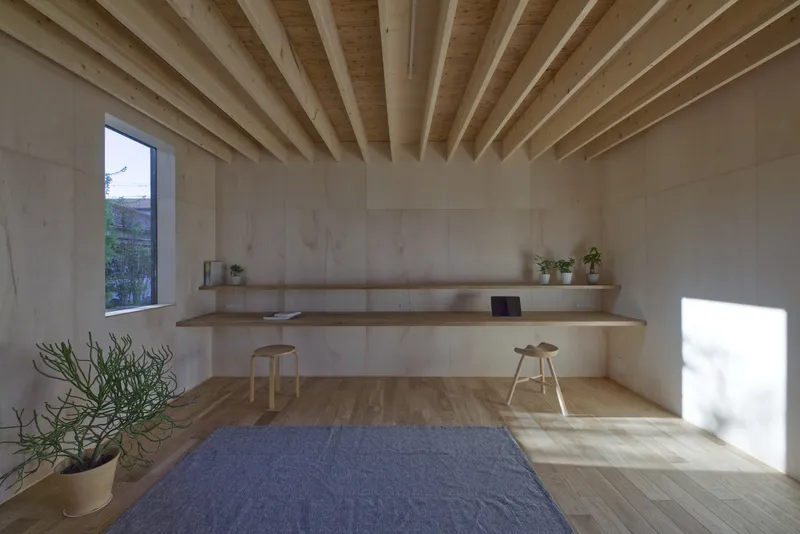
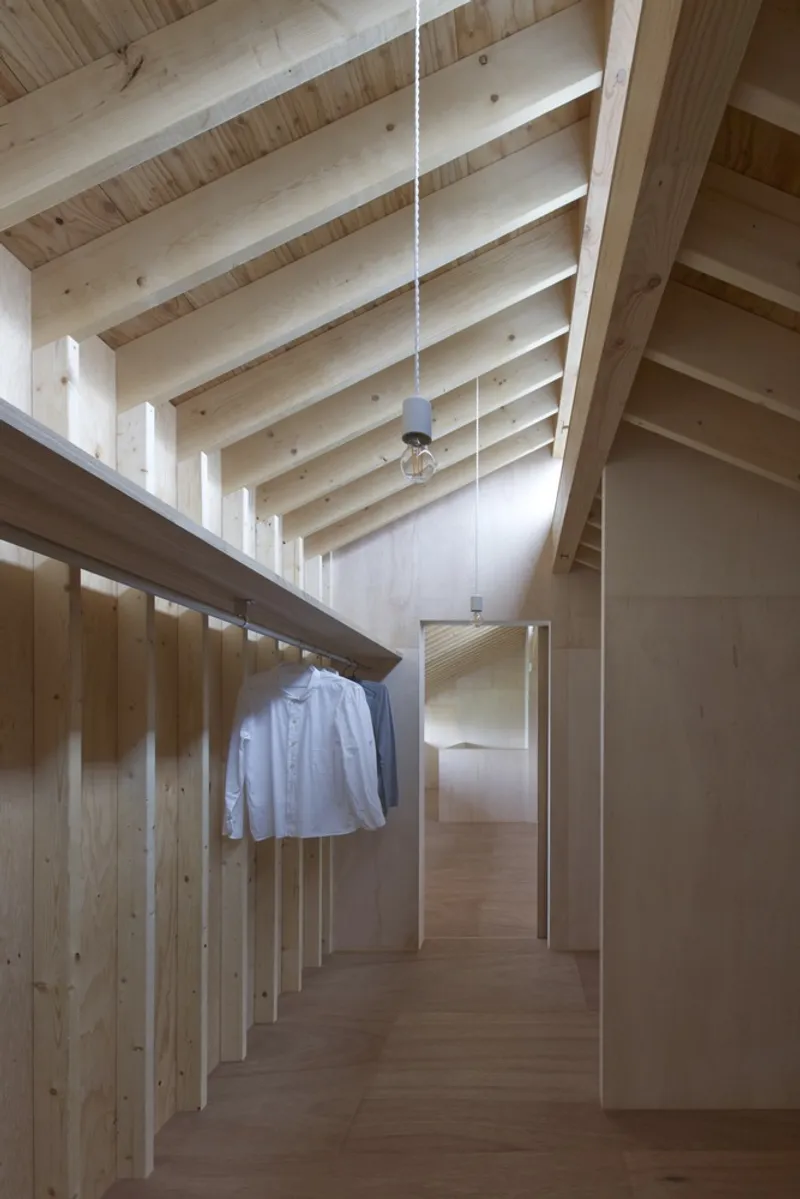
A Philosophy of Coexistence
Ultimately, House in Hantsuki is a reflection of contemporary Japanese residential design—where architecture serves not only function but also emotion and harmony. By intertwining elements of landscape, privacy, and spatial openness, the home becomes a sanctuary that connects residents with both the earth below and the sky above.
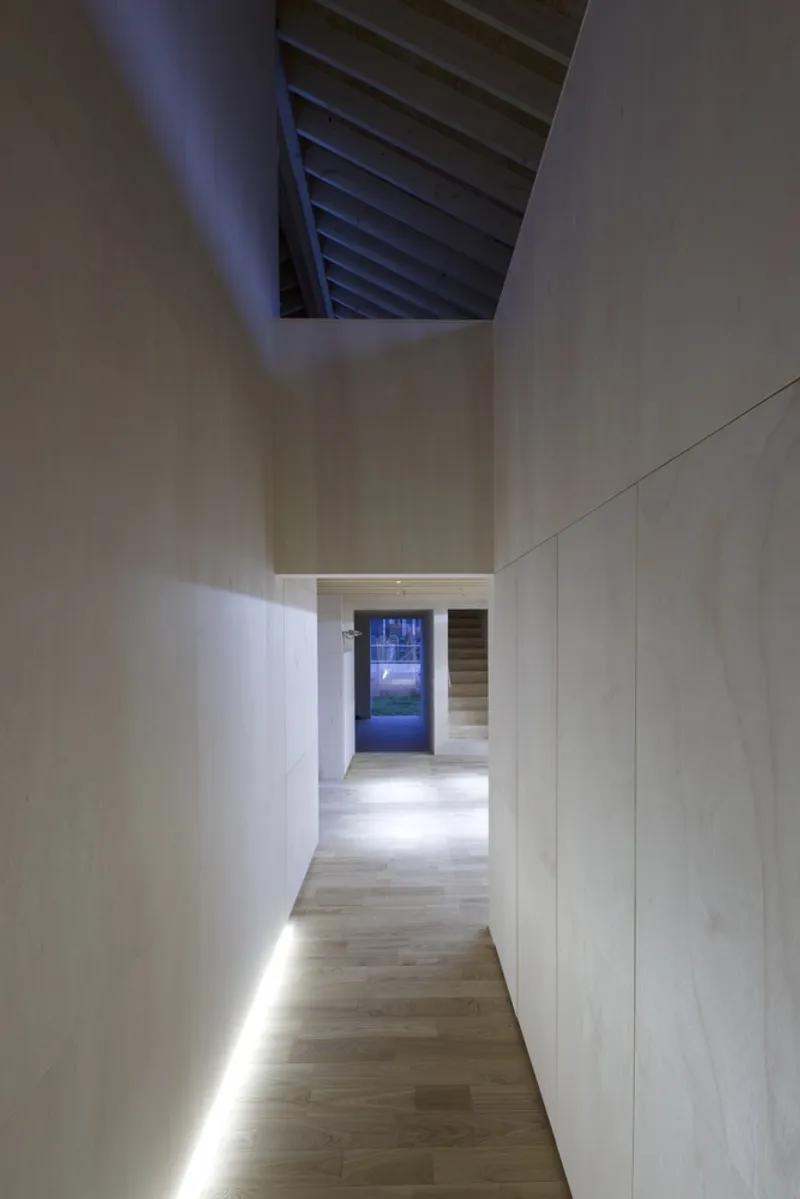
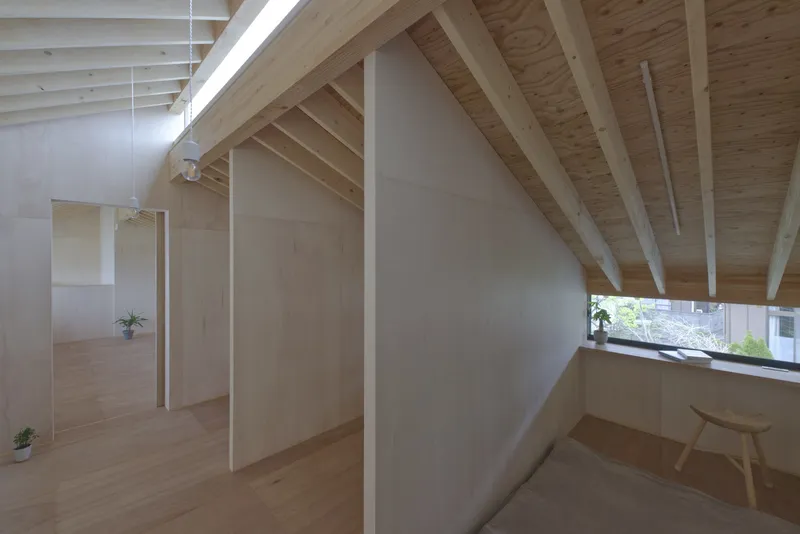



Popular Articles
Popular articles from the community


Conexión: Biophilic Design Reimagines High-Rise Living in Hong Kong
Conexión reimagines high-rise living in Hong Kong through biophilic design, green facades, shared spaces, daylight, water and nature within.

Hill & Cross Opera: Sculptural Opera House Architecture Shaped by Tallinn’s Landscape and Identity
Hill & Cross Opera reimagines opera house architecture in Tallinn through its sculptural hill, civic plaza, glass wave and a luminous cross.

The Ocean Hive: Sustainable Architecture for a Self-Sufficient Civilization at Sea
The Ocean Hive imagines sustainable architecture at sea, where modular habitats, algae, wave power and ocean waste sustain a growing colony.

The Earth Pod: 3D Printed Homes for Resilient Refugee Communities
The Earth Pod reimagines refugee housing through 3D printed homes made from clay, combining resilience, self-sufficiency, and rapid shelter.

Similar Reads
You might also enjoy these articles


Hodi-Mandai Geram
Project Function: Preservation and revitalization of the Intangible heritage and socio-spatial identity of the Hodi by Housing, Cultural Memory Center, Sacred Grove, landscape, local tourism economy


Olio Towers: A Mid-Rise for Performers That Fuses Housing, Rehearsal, and Stage
Located blocks from Houston's Theater District, this modular tower stacks living units around a central performance atrium.

Oasis: Modular Green Housing Carved into Dhaka's Urban Fabric
A shortlisted Plugin Housing entry reclaims unauthorized settlements in Dhaka with stepped concrete volumes, green roofs, and ventilation-driven design.

Black Hole: A Floating Megastructure for the Post-Physical Era
Emiliano Mazzarotto envisions a spherical, self-scaling arena where e-sports, digital hotels, and holographic stadiums replace traditional public space.


Explore Japanese Architecture Competitions
Discover active competitions in this discipline



Challenge to reimagine the Iron Throne


Photograph architecture without architects


Illustrate the lost glory of Angkor Wat - Render Challenge


Design challenge to reuse E-waste
Comments (0)
Please login or sign up to add comments
No comments yet. Be the first to comment!