

House in Okamoto by FujiwaraMuro Architects: Innovative Residential Design on a Narrow Site
The House in Okamoto by FujiwaraMuro Architects transforms a narrow hillside site into an airy, family-friendly home with integrated greenery.


Nestled on a sloping hillside in Kobe, the House in Okamoto by FujiwaraMuro Architects redefines smart residential design on constrained sites. Designed for a family of four, this house transforms a long, narrow, triangular plot into a functional, aesthetically pleasing home that harmonizes with its quiet residential surroundings.
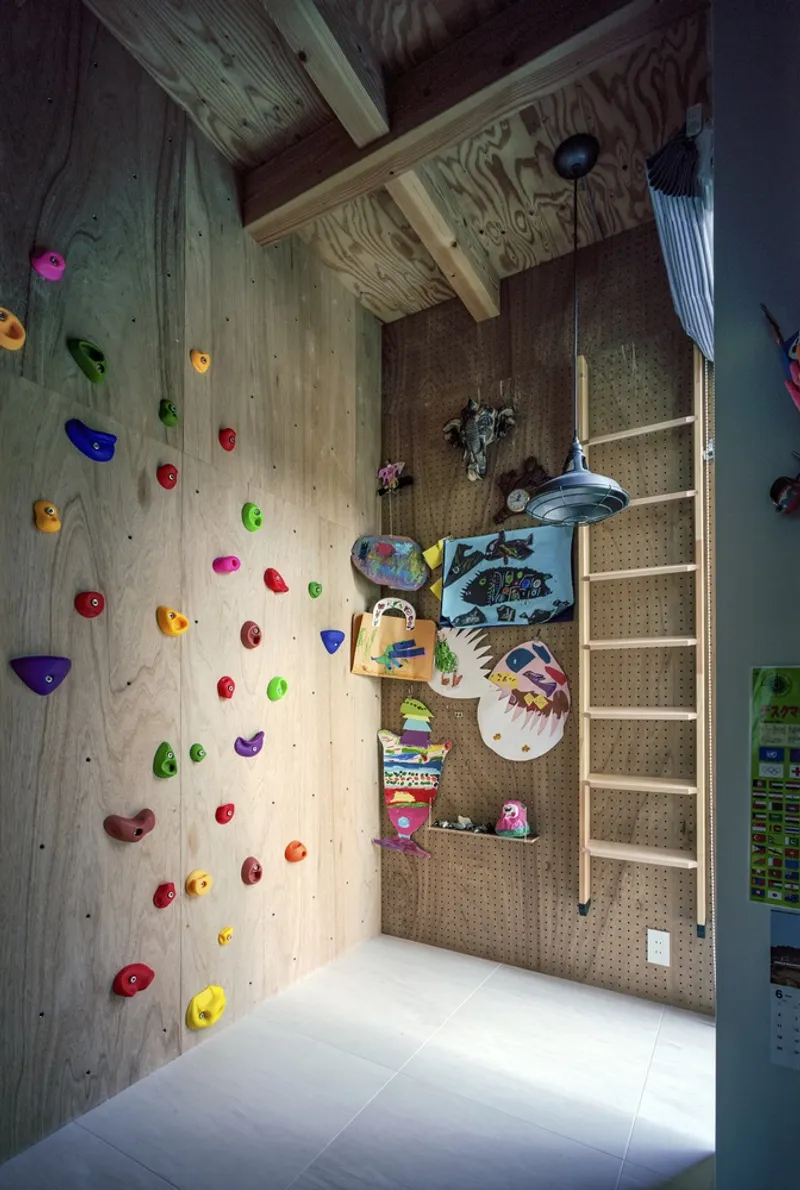
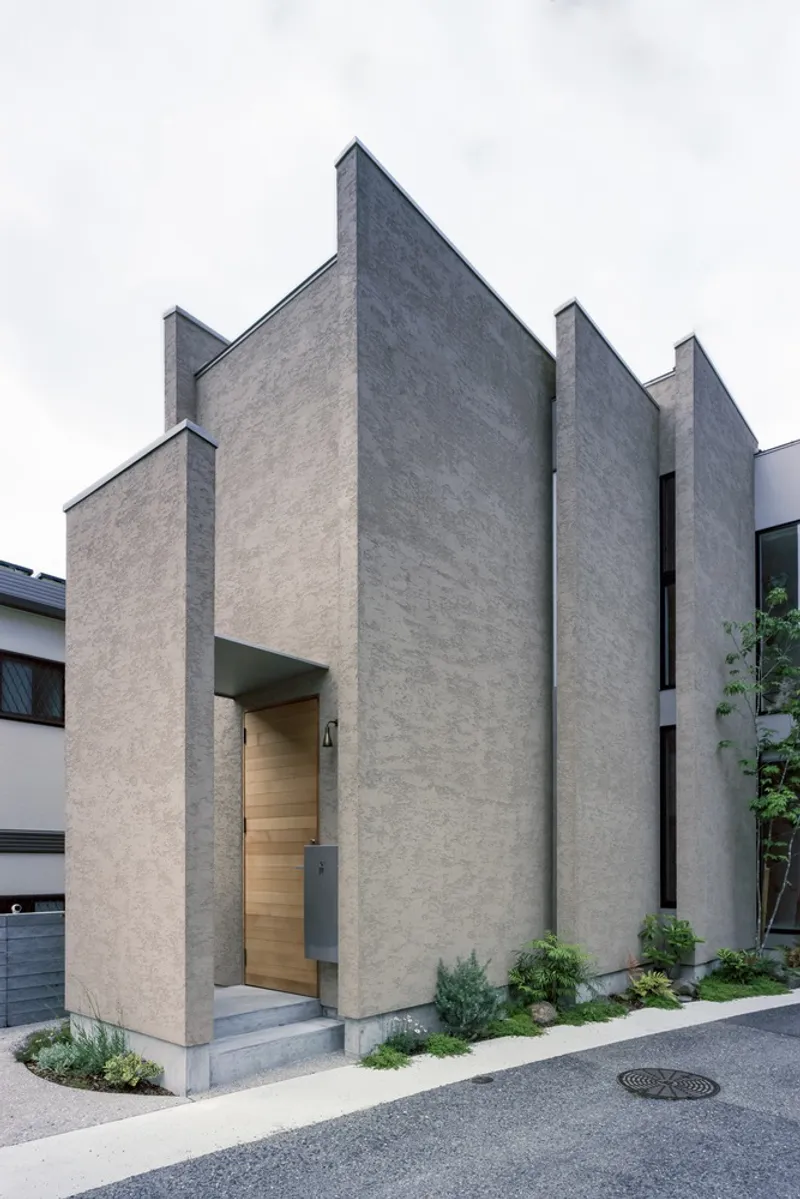
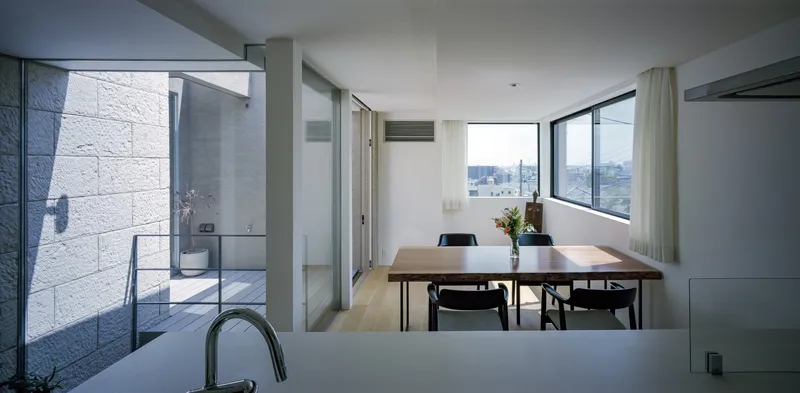
Site-Specific Design Strategy
In urban and suburban Japan, maximizing site usage is a common challenge for architects. For the House in Okamoto, the team prioritized the client’s request for an efficient layout without compromising the building’s relationship with the streetscape. Unlike typical small-lot construction, which can feel imposing when walls occupy the entire allowable footprint, FujiwaraMuro Architects approached the design with sensitivity to both interior spaciousness and external appearance.
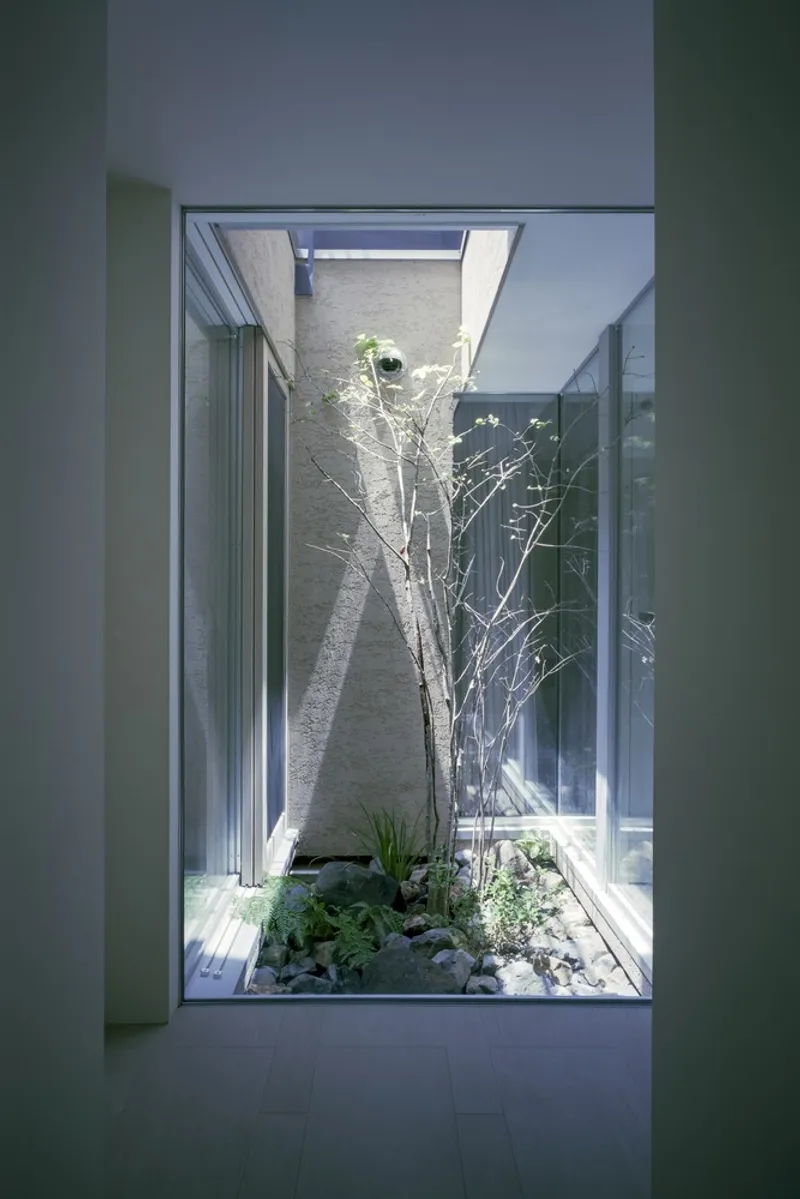
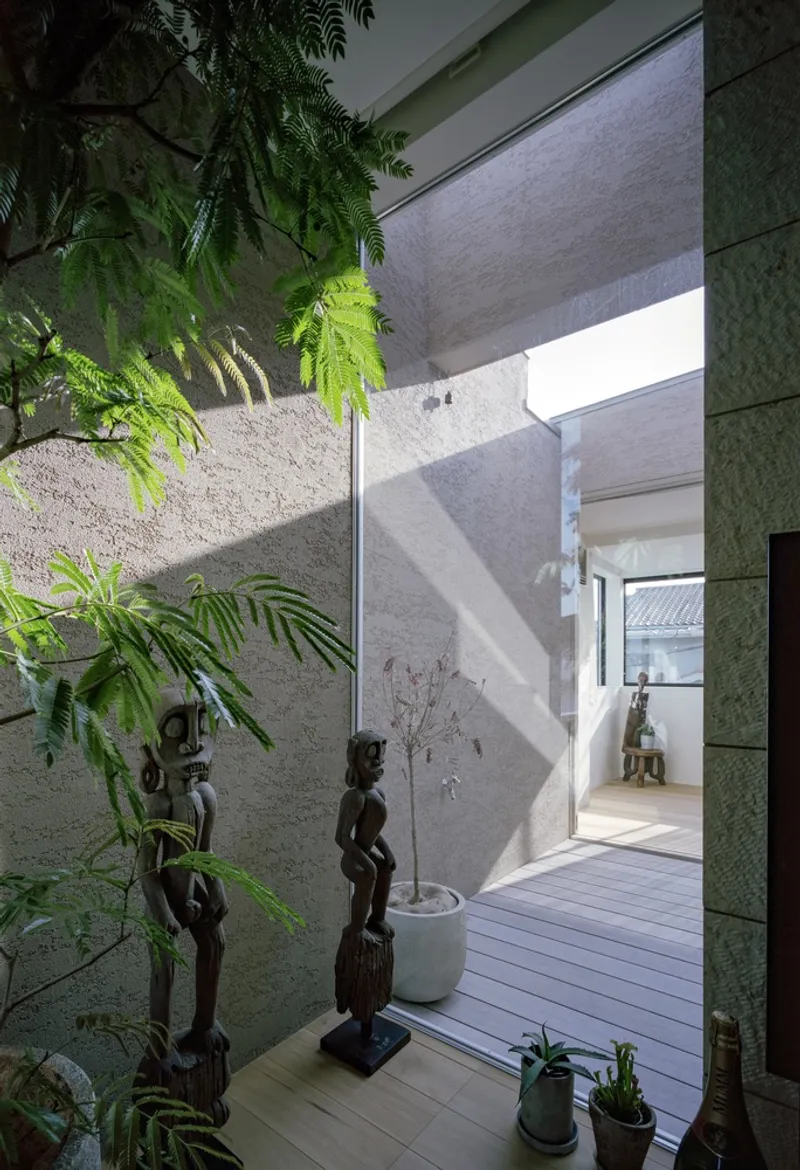
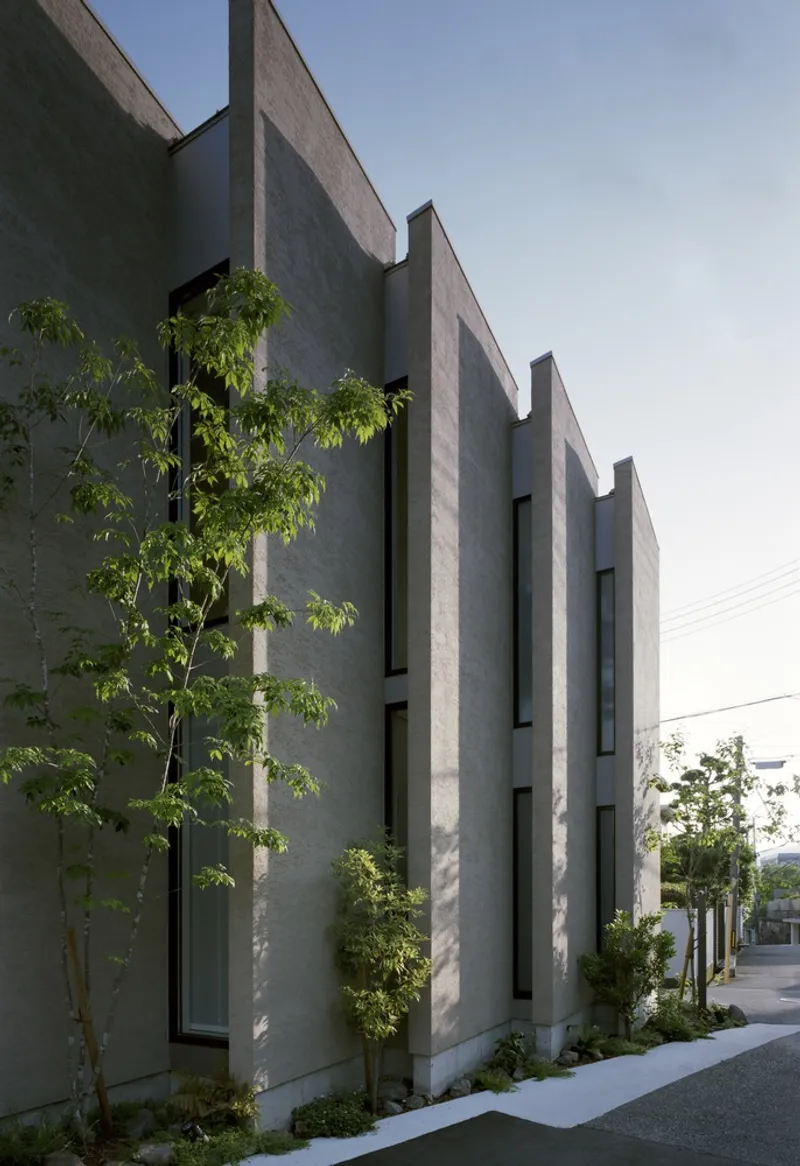
The architects divided the exterior walls into sections, strategically placing openings at the connections to reduce visual heaviness. These openings not only allow natural light and ventilation but also create a two-story volume that feels airy and open. Triangular leftover spaces along the site edges are utilized as planted areas, introducing greenery and softening the architectural form.


Spatial Flow and Interior Connectivity
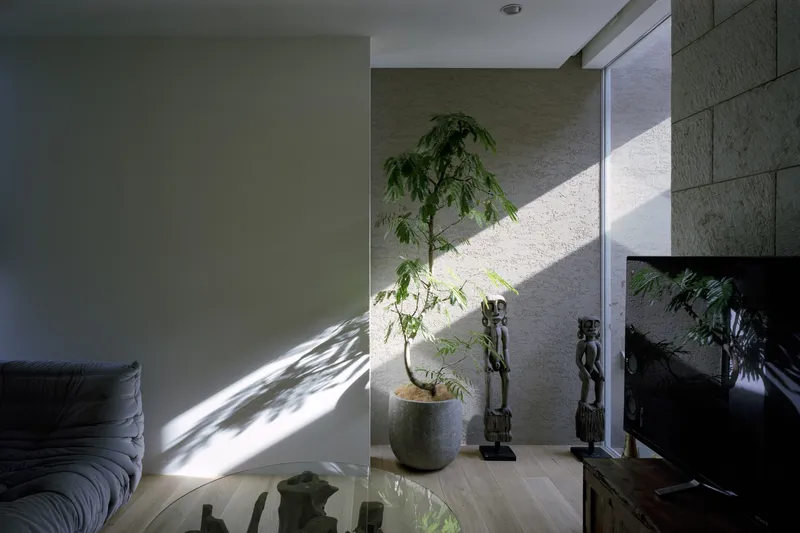
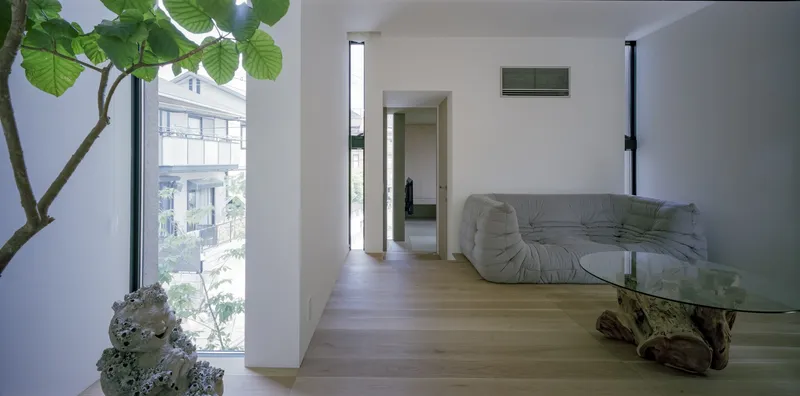
Inside, the house leverages the unique site geometry to create a seamless connection between interior and exterior spaces. Shifting walls define functional zones while maintaining openness, sightlines, and airflow throughout the home. This thoughtful spatial arrangement enhances both comfort and interaction, providing the family with an efficient yet visually expansive living environment.
Natural light floods through carefully positioned windows, highlighting interior details such as minimalist furnishings and wooden finishes. Bedrooms, bathrooms, and living areas benefit from cross-ventilation, ensuring a healthy, breathable environment while maintaining privacy from the surrounding neighborhood.
Harmonizing Architecture and Streetscape
A key aspect of the design philosophy was respecting the surrounding streetscape. The segmented wall design not only reduces the building’s apparent mass but also engages passersby, balancing openness with residential privacy. The planted triangular spaces act as a visual buffer and a welcoming green element, integrating the house seamlessly into its hillside context.
FujiwaraMuro Architects successfully delivered a residence that meets modern family needs, optimizes a challenging site, and contributes positively to the urban fabric of Kobe. The House in Okamoto is a striking example of compact, context-driven residential architecture that demonstrates how thoughtful design can transform limitations into opportunities.
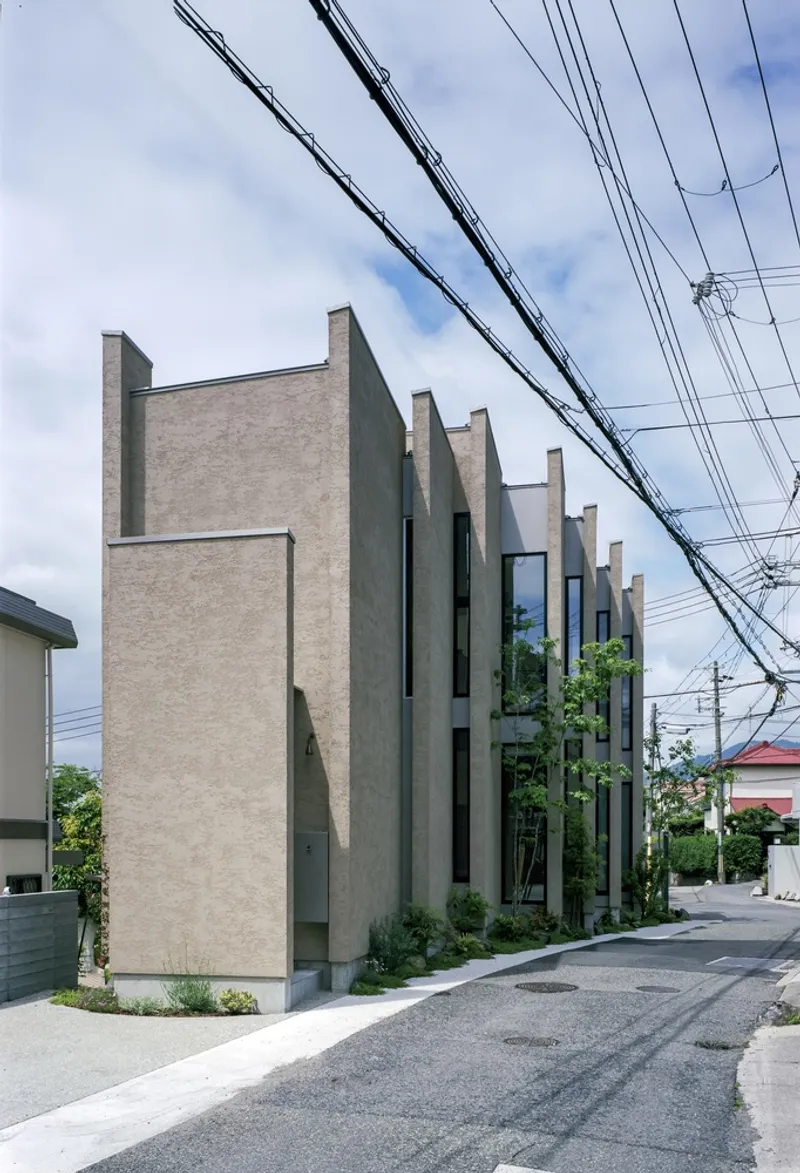
All photographs are works of
studioREM




Popular Articles
Popular articles from the community


The Musturak Paradise: Senior Living Architecture for a Connected Future in Temara, Morocco
The Musturak Paradise reimagines senior living architecture in Temara via private homes, social spaces, culture, community, and shared care.

Hill & Cross Opera: Sculptural Opera House Architecture Shaped by Tallinn’s Landscape and Identity
Hill & Cross Opera reimagines opera house architecture in Tallinn through its sculptural hill, civic plaza, glass wave and a luminous cross.

Conexión: Biophilic Design Reimagines High-Rise Living in Hong Kong
Conexión reimagines high-rise living in Hong Kong through biophilic design, green facades, shared spaces, daylight, water and nature within.

Riyadh For All: Intergenerational Urban Design for Active Aging in Rabat
Riyadh For All reimagines urban design in Rabat with intergenerational co-living, adaptive courtyards, and Moroccan cultural exchange today.


Similar Reads
You might also enjoy these articles

FAMM Arquitectura Organizes Ten Villas Around Courtyards and Jungle in Nosara, Costa Rica
El Molino pairs two elongated volumes with deep overhangs and timber louvers to build a compact coastal community five minutes from the beach.
Oscar Niemeyer's Ibirapuera Park Pavilions Define São Paulo's Cultural Identity in Concrete and Curve
A constellation of modernist volumes set within São Paulo's most important urban park, conceived for the city's 400th anniversary in 1954.
How Henri Picq's 1889 Paris Pavilion Traveled 11,000 Kilometers to Become Santiago's Artequín Museum
A prefabricated iron and glass pavilion built for the Paris Universal Exposition found a second life as a children's art museum in Chile.
Sanjay Puri Architects Wraps a Jaipur Office Tower in Capsule-Shaped Green Buffers
A nine-level climate-responsive workplace near Jaipur Airport uses stacked planter terraces and aluminium screens to fight 40°C heat.


Explore Tetsuo Kobori Architects Competitions
Discover active competitions in this discipline



Challenge to reimagine the Iron Throne


Photograph architecture without architects


Illustrate the lost glory of Angkor Wat - Render Challenge


Design challenge to reuse E-waste
Comments (0)
Please login or sign up to add comments
No comments yet. Be the first to comment!