

House “irfn” in Chuo City: A Compact Steel Residence by Daisuke Yamashita Architects
Compact 35-square-meter steel-framed house in Tokyo featuring split-level spaces, central stairwell, minimal finishes, and adaptable open structural grid.


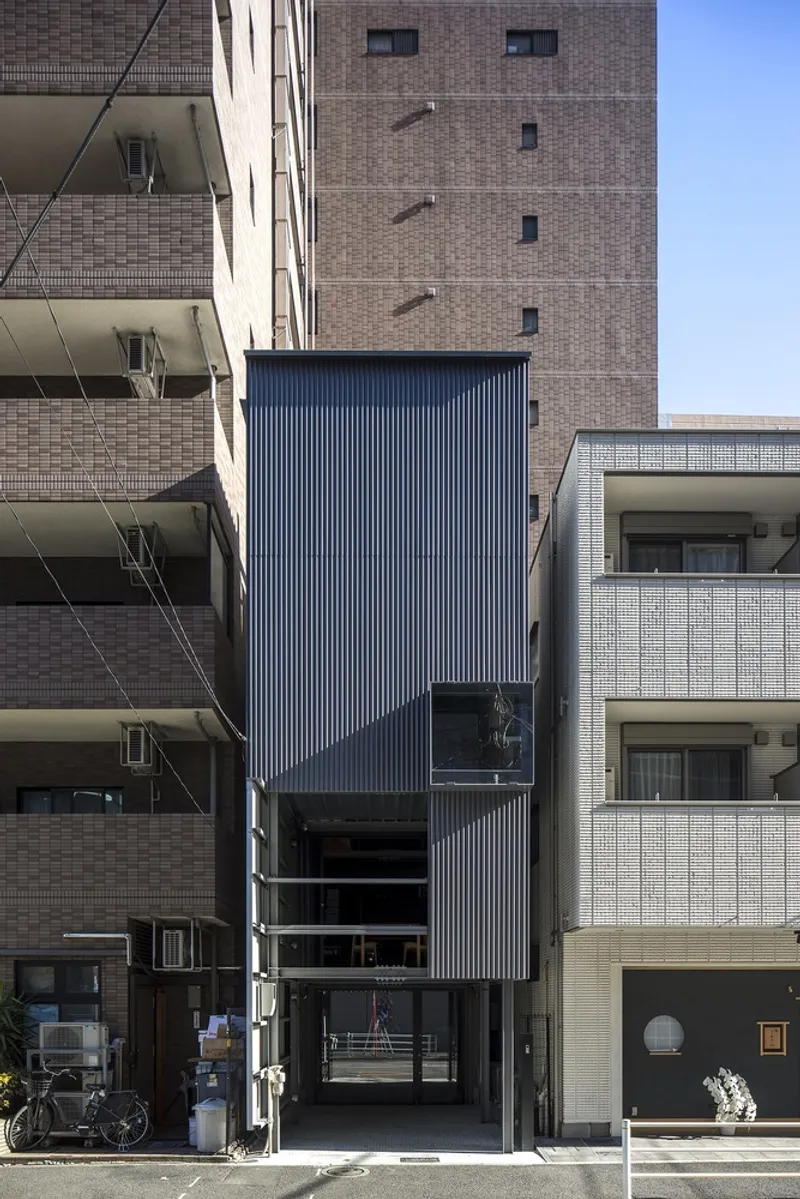
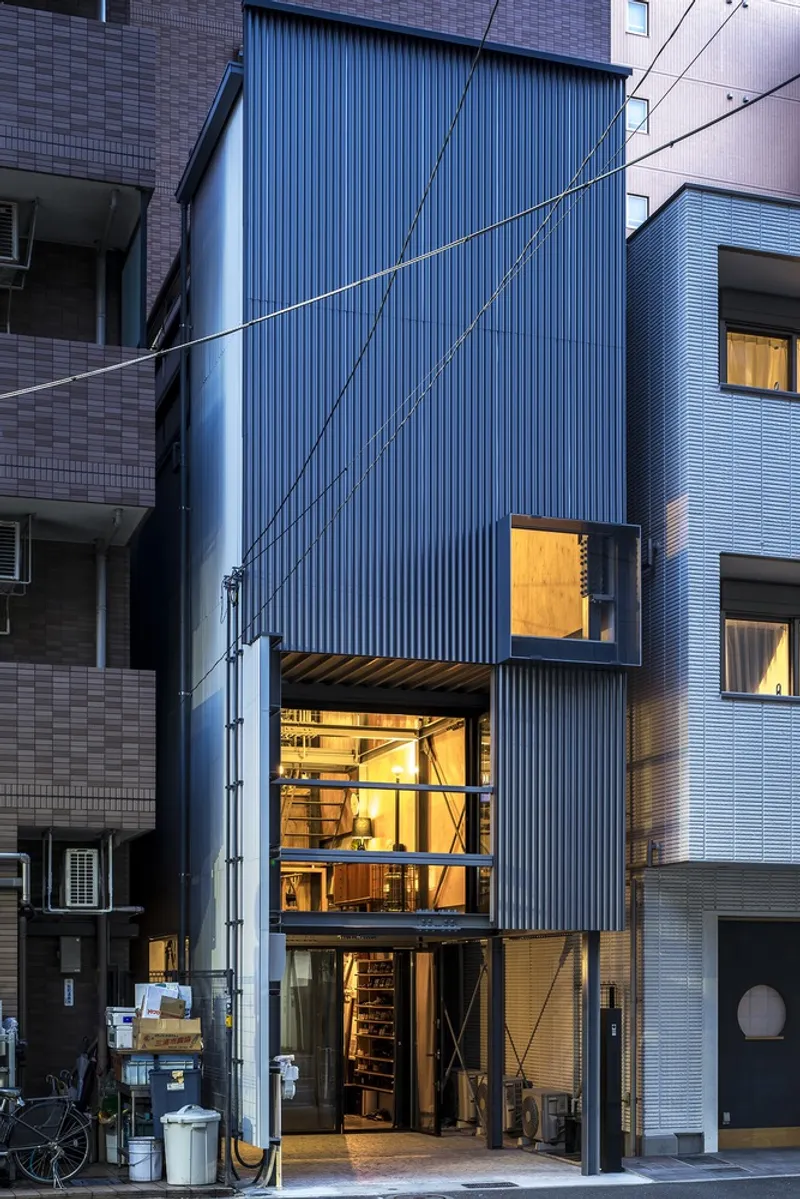
Located in the dense urban fabric of Chuo City, House “irfn” is a 35-square-meter compact residence designed in 2023 for a married couple and their two children. Designed by Daisuke Yamashita Architects, the project reinterprets small-scale urban housing through structural clarity, spatial layering, and long-term adaptability.
Built on a typical narrow plot in a highly congested neighborhood, this contemporary Japanese house explores how minimal architecture can respond intelligently to evolving family structures and changing urban conditions.
Structural Precision: A Steel-Framed Micro-House
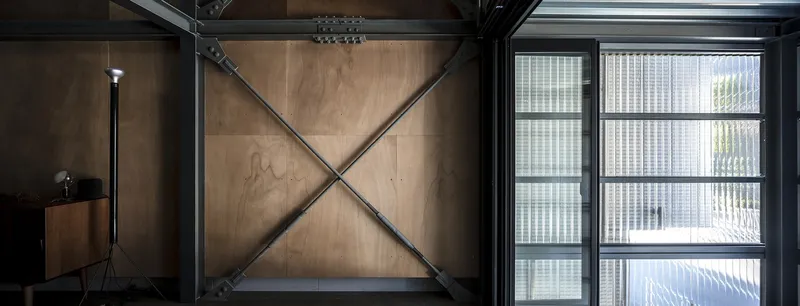
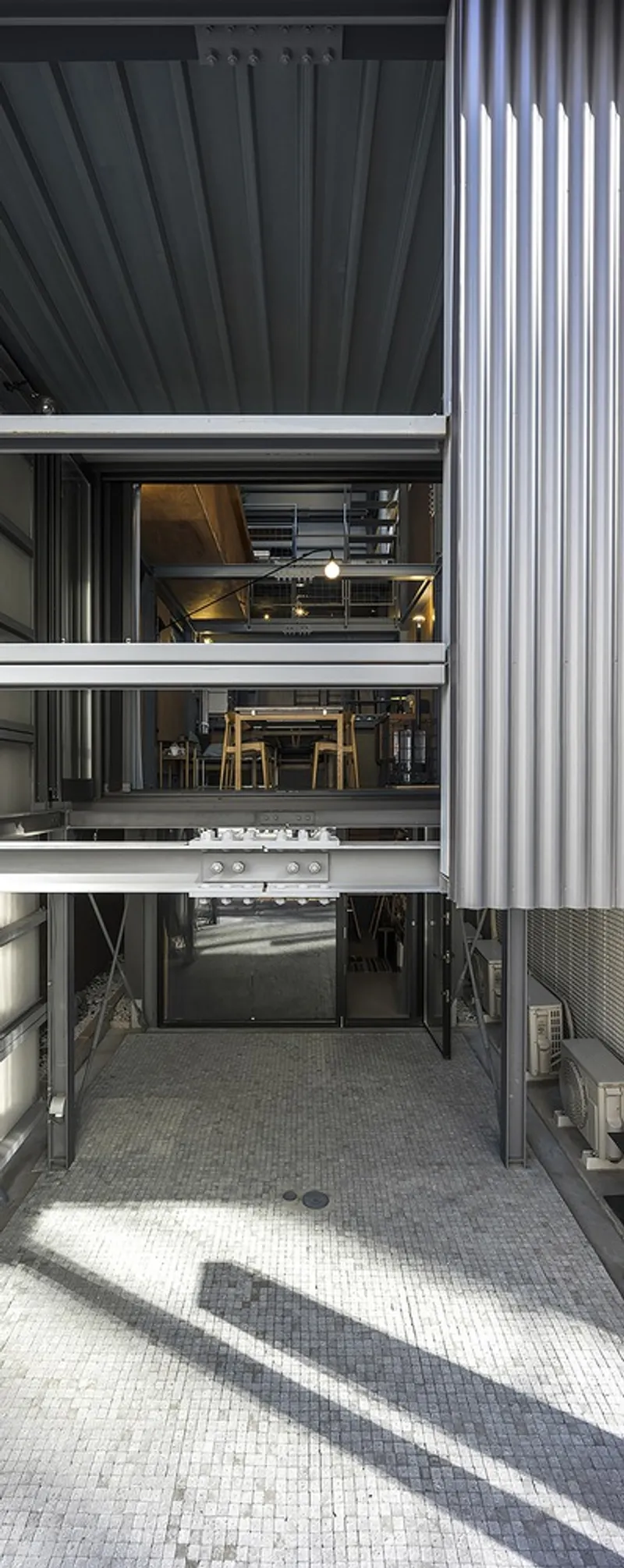
The residence is constructed using a precise steel frame system composed of H-beams measuring 125 x 125 millimeters for both columns and beams. The structural grid defines the spatial logic of the home:
- Five spans arranged in plan: 2.4 x 3 meters (2.4 + 0.6 configuration)
- Four stacked spans in section: 2.4 x 2.4 meters
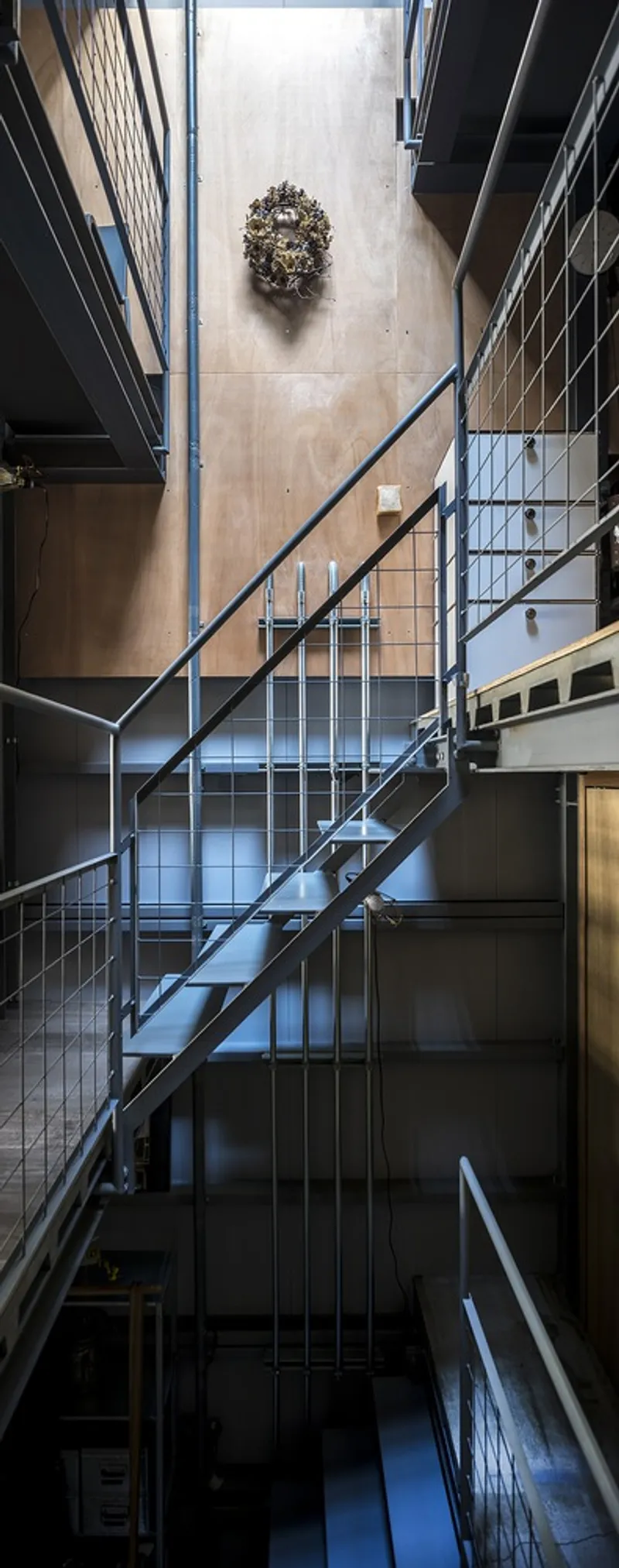
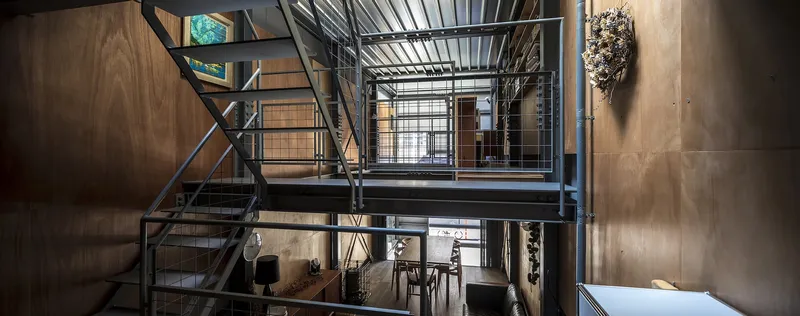
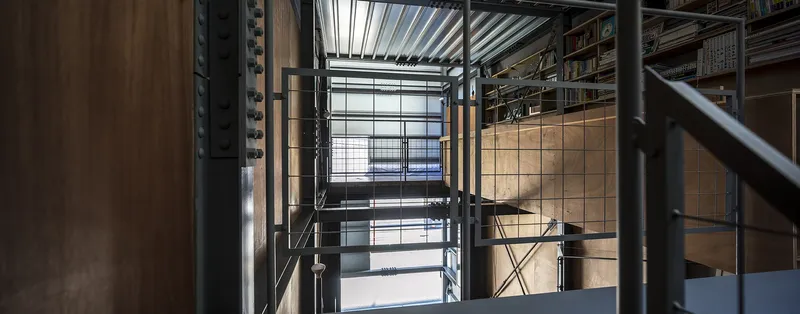
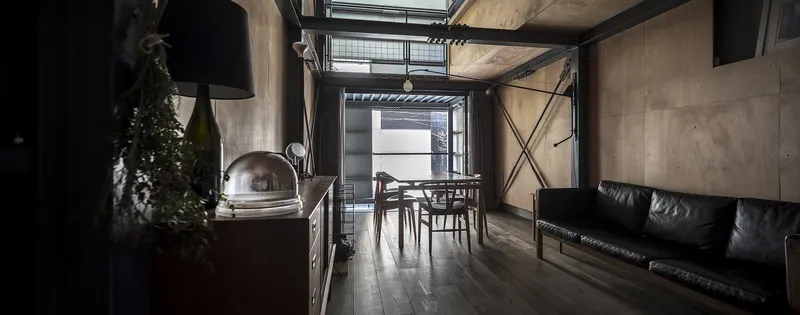
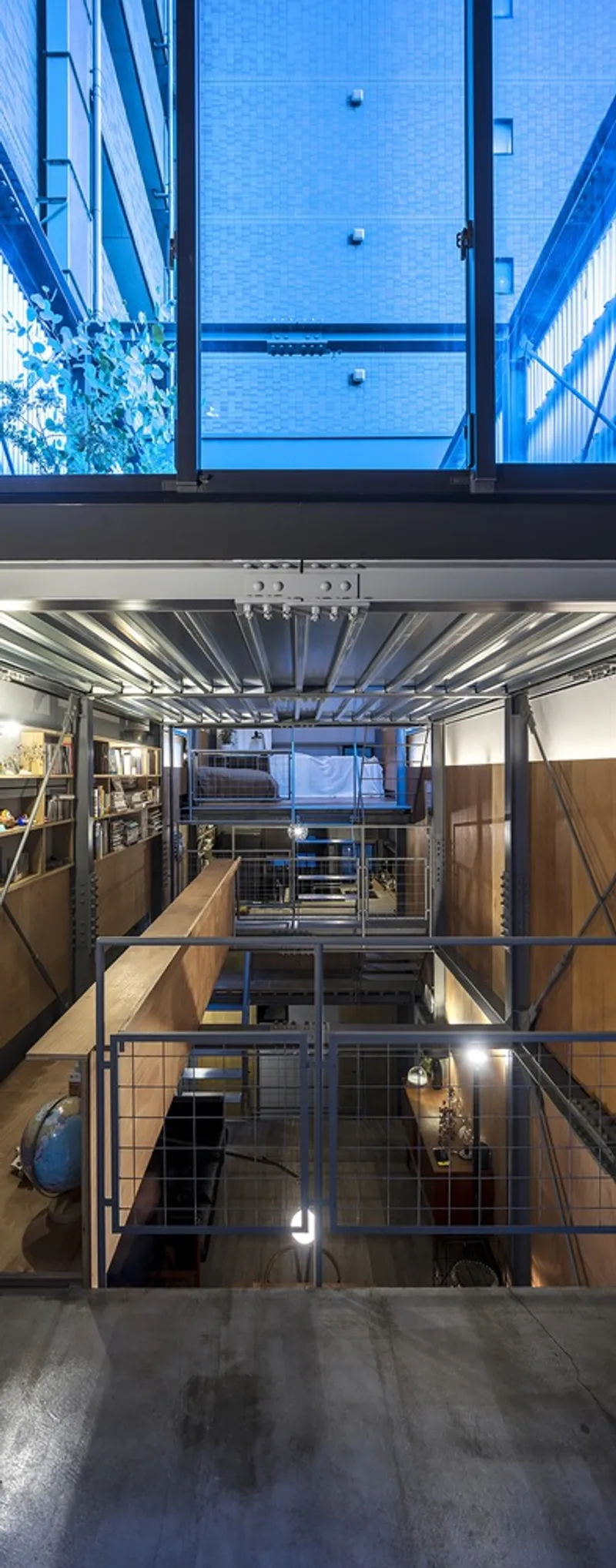
This modular steel grid forms the architectural backbone of the house, creating stacked studio-like levels connected by a full-height central stairwell. Rather than concealing the structure, the design expresses it openly, emphasizing raw material honesty and structural clarity, an approach often seen in experimental Japanese residential architecture.
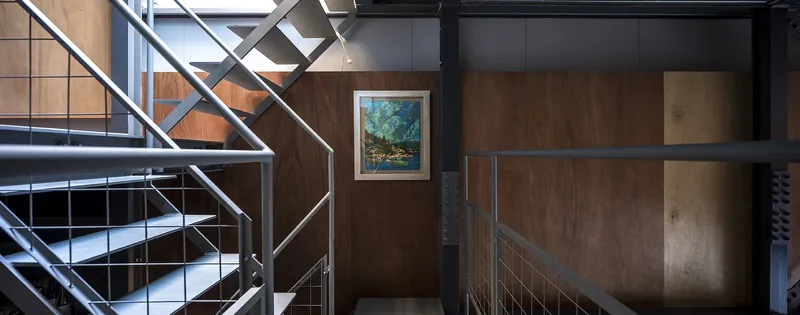
The visible framing, exposed beams, and minimal enclosure give the building an industrial yet intimate character.
Vertical Living: Split Levels and Spatial Depth
Despite its extremely narrow frontage, House “irfn” achieves remarkable spatial complexity. The design introduces multiple oblique axes that interact with the dominant vertical axis of the stairwell. Split-level rooms spiral around the staircase, creating a subtle rotational movement throughout the house.
This layered composition achieves several key spatial effects:
- Visual depth within a tight footprint
- Varied ceiling heights and sightlines
- A dynamic sequence of movement
- Distorted planar perception that avoids monotony
The carefully placed openings regulate light and privacy while reinforcing the sense of depth. Rather than presenting a static arrangement, the house unfolds gradually as one moves upward, transforming vertical circulation into spatial experience.
Minimalism as Strategy: An Intentionally Unfinished House
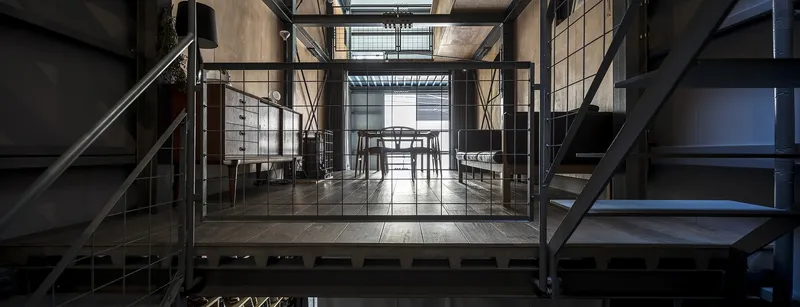
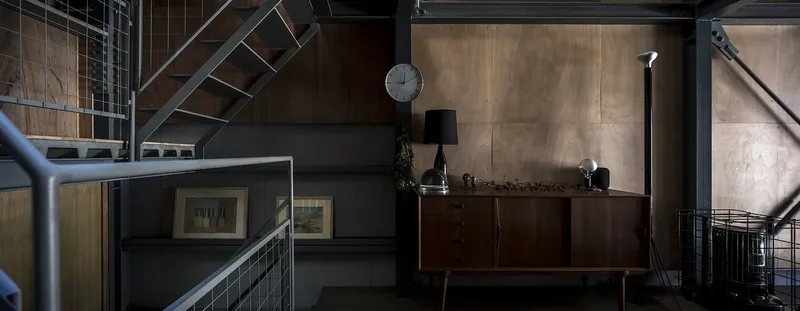
At first glance, the house appears incomplete. Only the essential elements: structural frame, exterior walls, and windows, are fully resolved. Interior finishes, fixtures, and decorative elements are intentionally minimal.
This is not an aesthetic accident but a deliberate architectural stance.
As a low-cost project with limited room for refinement, the design embraces incompleteness as a positive response to the heterogeneous and constantly shifting urban environment of Tokyo. The residence avoids over-designing and instead offers a flexible spatial framework capable of transformation.
In this sense, House “irfn” aligns with contemporary themes in adaptive housing design, incremental architecture, and sustainable urban living.
Adaptability and Future Transformation
4
The open structural grid allows future adjustments:
- Addition or removal of floors
- Reconfiguration of rooms
- Installation of new finishes and equipment
- Potential change in building use
As family needs evolve or urban conditions shift, the house can adapt without structural overhaul. This approach reflects a broader architectural philosophy focused on long-term flexibility and coexistence with the city.
Rather than resisting the surrounding density, the house quietly asserts itself as a small yet resilient shelter, holding its ground while remaining open to transformation.
Coexistence with the Contemporary City
House “irfn” is not a finished object but an evolving architectural framework. It reflects the condition of the modern city: layered, incomplete, and continuously reshaped.
By maintaining structural openness and spatial ambiguity, the house gently embraces its environment. It proposes a way of living that grows alongside the city rather than opposing it, an approach deeply rooted in Japanese compact house design strategies.
In its modest 35 square meters, the project demonstrates how small urban houses can achieve:
- Structural efficiency
- Spatial richness
- Long-term adaptability
- Cost-conscious construction
- Sustainable urban coexistence
All photographs are works of
Takeshi Yamagishi




Popular Articles
Popular articles from the community


Riyadh For All: Intergenerational Urban Design for Active Aging in Rabat
Riyadh For All reimagines urban design in Rabat with intergenerational co-living, adaptive courtyards, and Moroccan cultural exchange today.

Co-Life: Senior Housing Design That Reconnects Older Adults With the City
Co-Life reimagines senior housing design through healing gardens, shared streets, workshops, and a sustainable community across generations.

Conexión: Biophilic Design Reimagines High-Rise Living in Hong Kong
Conexión reimagines high-rise living in Hong Kong through biophilic design, green facades, shared spaces, daylight, water and nature within.

AL-JANNAH: Sustainable Architecture and Permaculture for Afghan Widows
AL-JANNAH uses sustainable architecture and permaculture to create resilient oasis of housing, learning, work and renewal for Afghan widows.


Similar Reads
You might also enjoy these articles

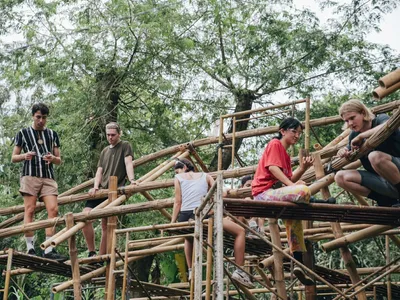
Bamboo Housing Challenge 2026: Design Affordable, Sustainable Homes Using Bamboo
An international design competition by Bamboo U and IBUKU inviting architects and designers to reimagine affordable housing using bamboo — with the winning design built full-scale in Bali.

Computational Design & Education: Beegraphy Design Awards Introduces 7th Category (Featuring Jiyun's Innovative Approach)
Dive into Beegraphy’s 7th Design Awards category, where computational design meets education to create immersive, interactive learning tools, inspired by Jiyun’s work.

From Parametric Lighting to Urban Furniture: Join the 2nd Workshop in Beegraphy’s Computational Design Series
Dive into Cutting-Edge Design Techniques and Practical Applications with Industry Experts

Last Call: Unleash Your Architectural Genius in SHAK's Kindergarten Design Competition
Urgent call for architects to join SHAK's kindergarten design competition before the looming deadline


Explore Architecture Competitions
Discover active competitions in this discipline



Challenge to reimagine the Iron Throne


Photograph architecture without architects


Illustrate the lost glory of Angkor Wat - Render Challenge


Design challenge to reuse E-waste
Comments (0)
Please login or sign up to add comments
No comments yet. Be the first to comment!