
House of Communication by HENN: A Landmark of Office Urbanism in Munich
Innovative office urbanism project in Munich integrating collaborative workspaces, art, flexible interiors, and bold industrial design for modern communication culture.


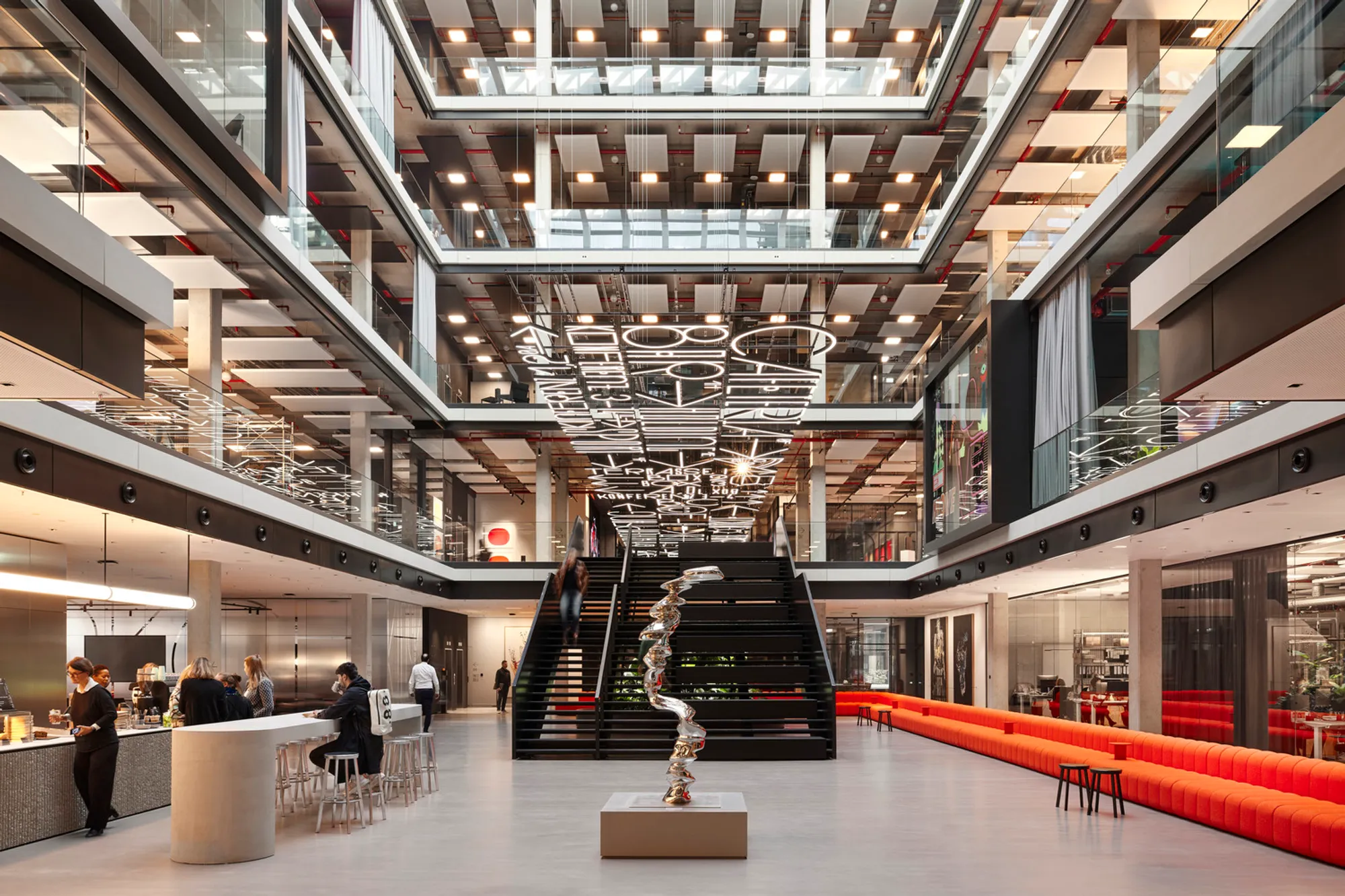
The House of Communication by HENN stands as a pioneering example of contemporary office architecture, redefining how collaborative workplaces function in today’s creative industries. Located in Munich within the innovative iCampus district near Ostbahnhof, this 40,000-square-meter headquarters was completed in 2022 for Serviceplan Group, the world’s largest owner-managed agency group.
Office Urbanism: A City Within a Workplace
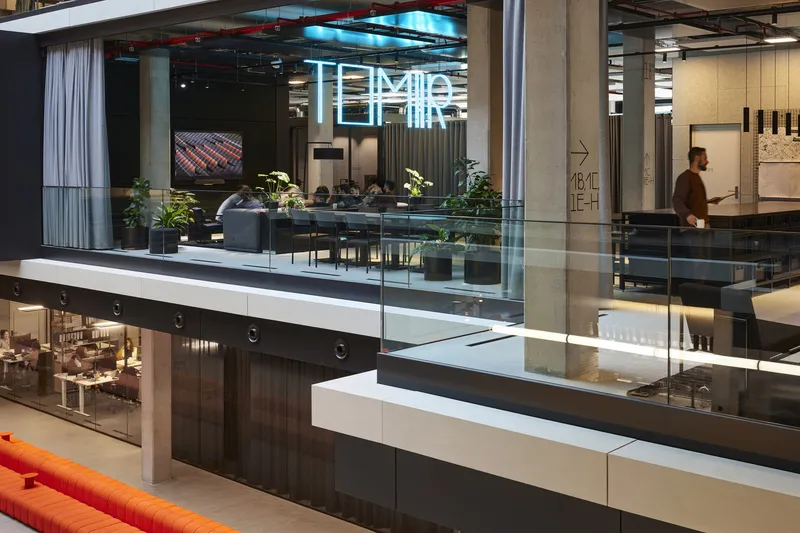
The concept behind the House of Communication revolves around office urbanism, where the workspace is designed as a dynamic micro-city. By physically connecting three separate buildings through elevated bridges, the project unifies 40 agencies and over 1,700 employees into a cohesive ecosystem. This architectural strategy emphasizes connectivity, collaboration, and spatial fluidity, essential for modern communication-driven organizations.
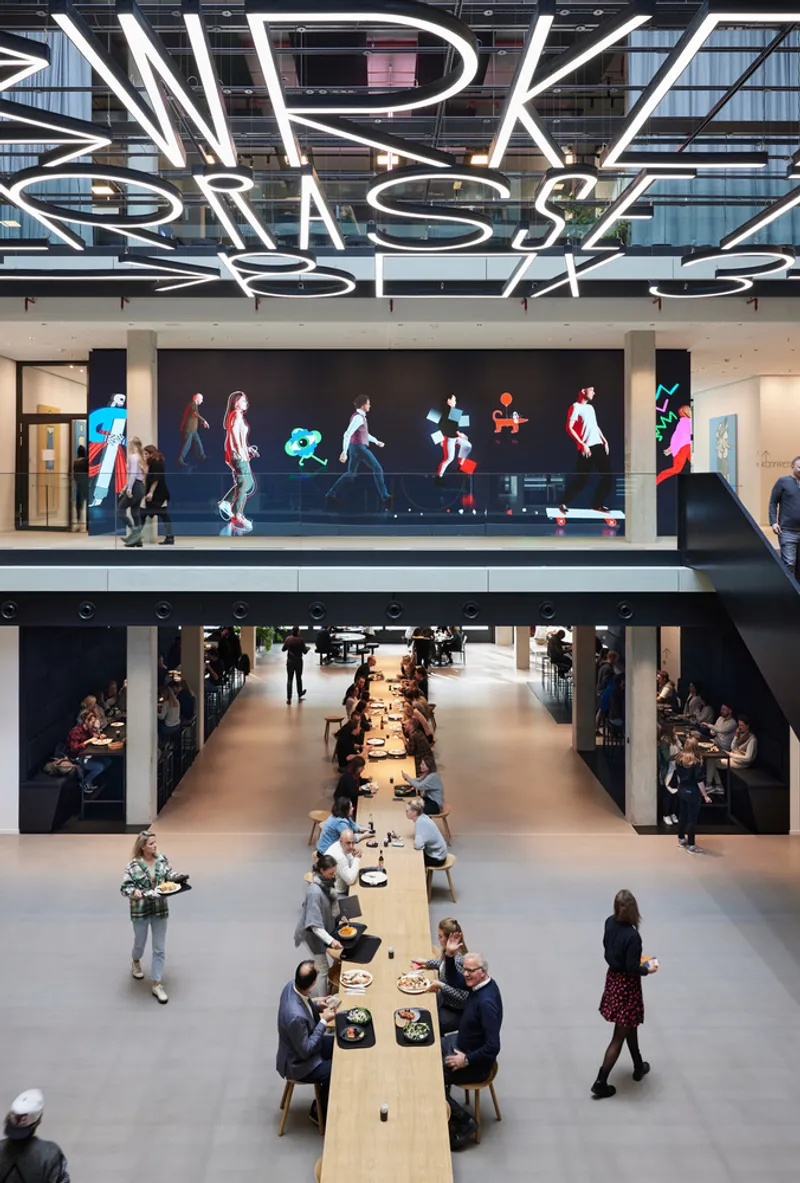
Like an urban environment, the building integrates spaces for working, socializing, dining, and relaxation. This mixed-use approach enhances employee interaction while promoting a healthy work-life balance, key principles in sustainable workplace design.
The Innovation Track: A Spine of Creativity and Interaction
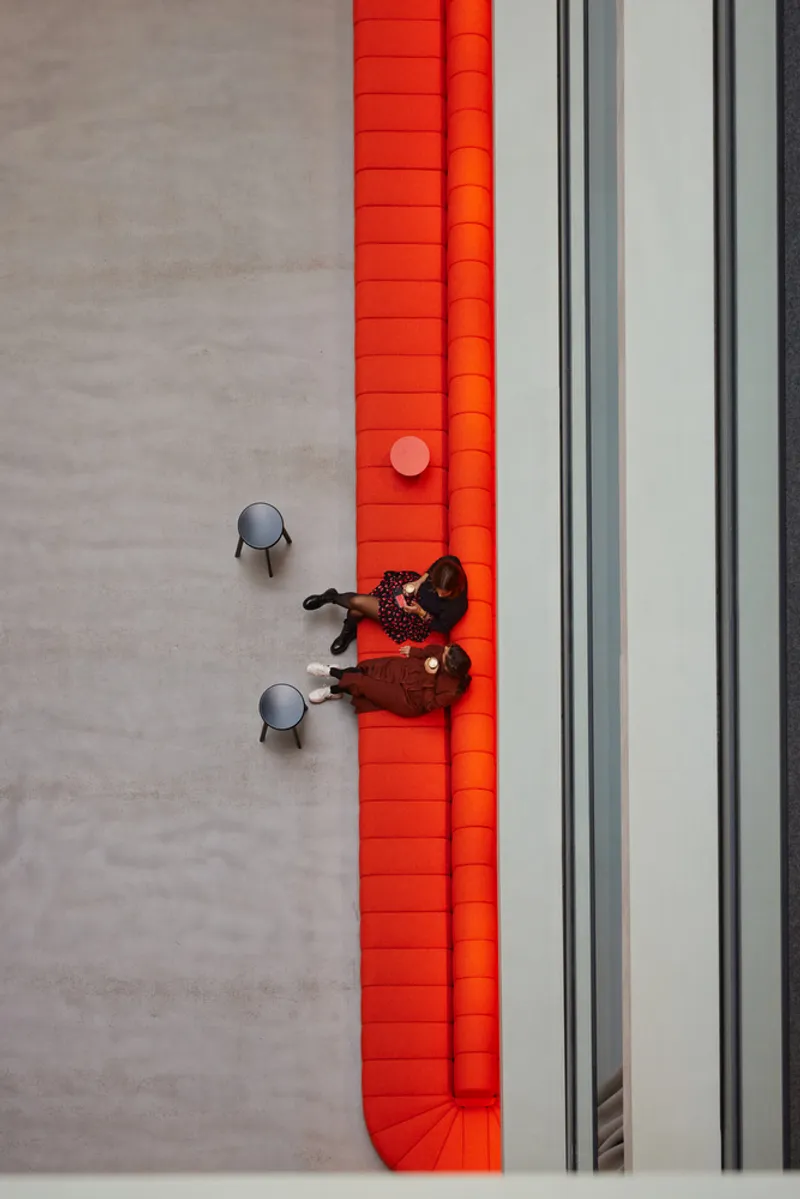
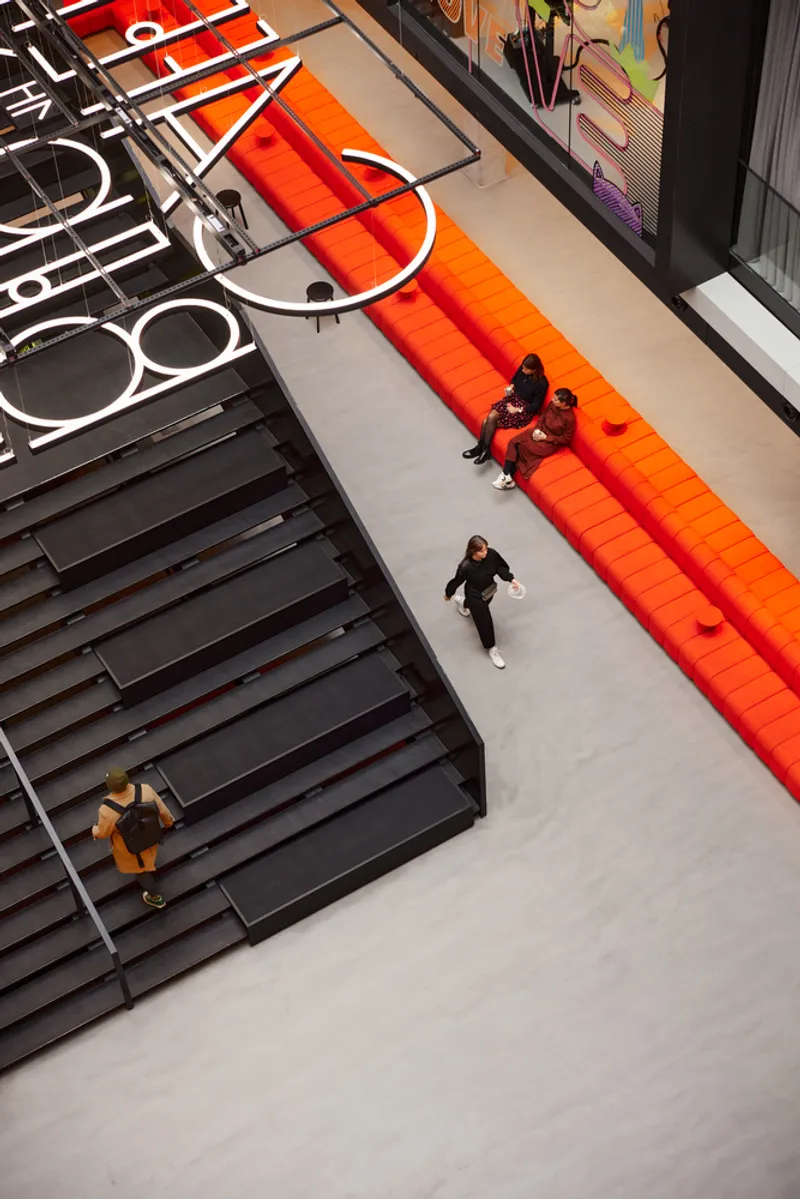
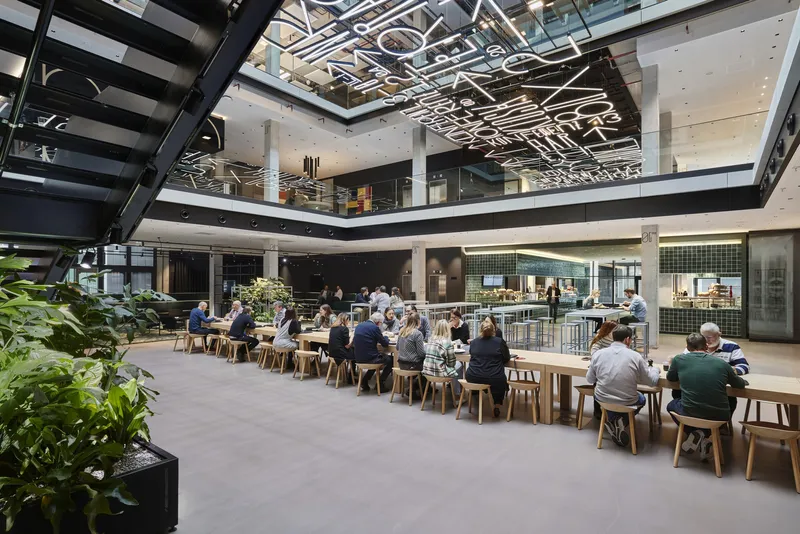
At the heart of the project lies the Innovation Track, a central circulation axis introduced by HENN Interior. Running across the first floor, this spine links all three atrium buildings and acts as a vibrant hub for movement and engagement. Visitors are welcomed by a dramatic six-meter-wide staircase leading into this dynamic corridor.
A 130-meter-long light installation, inspired by neon signage and designed by Büro Uebele, enhances the spatial experience. Beyond circulation, the Innovation Track doubles as an event and exhibition space, showcasing artworks by renowned artists such as Anselm Kiefer, Georg Baselitz, and Tony Cragg. This integration of art and architecture opens the building to the public, fostering cultural engagement.
Flexible Work Environments and Acoustic Innovation
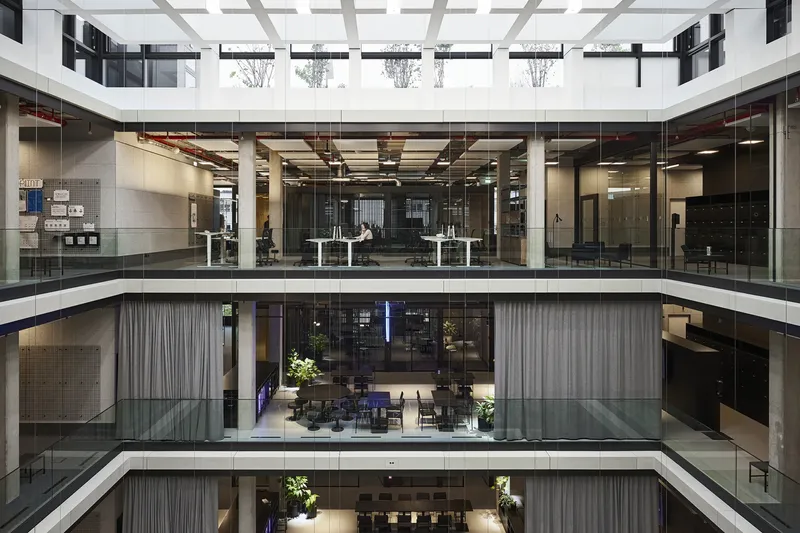
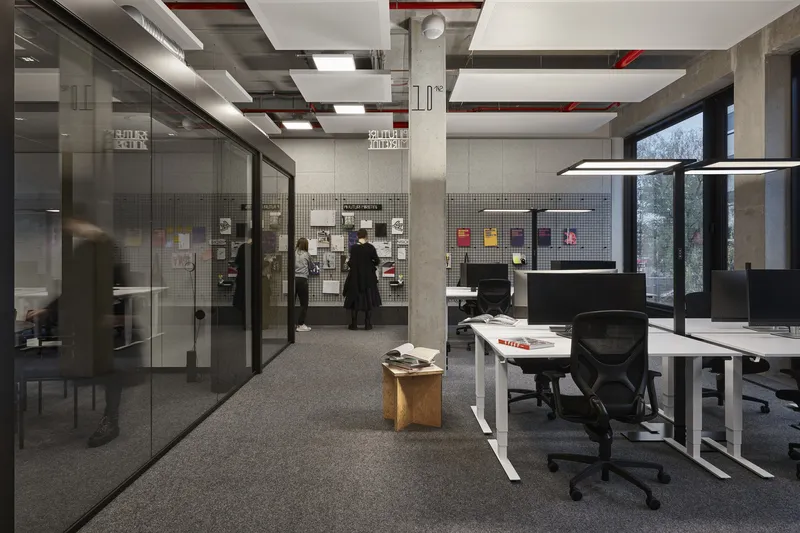
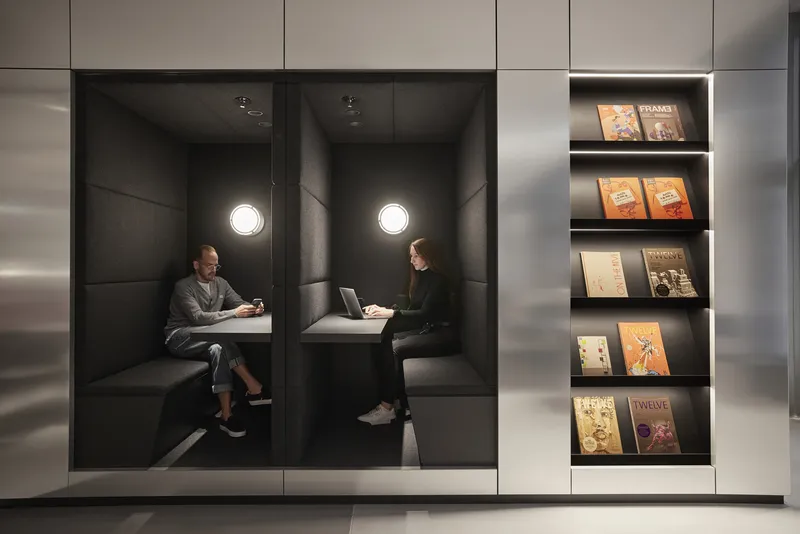
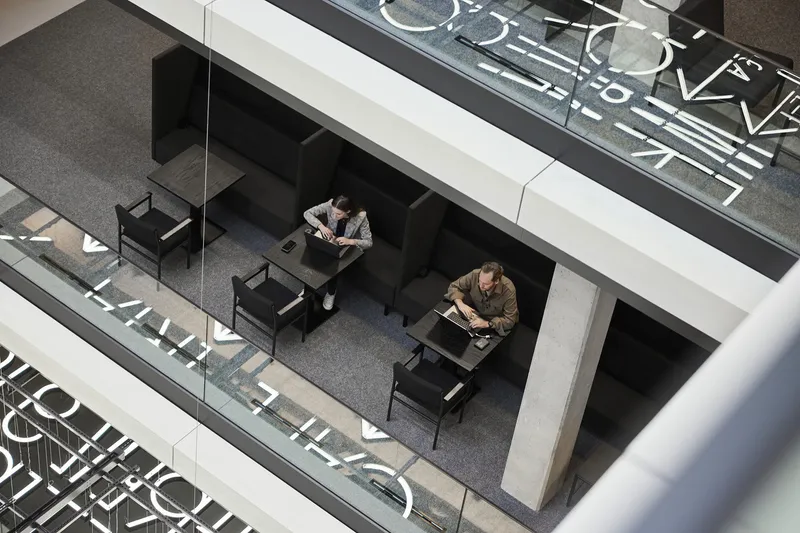
The interior planning addresses diverse working styles by balancing collaborative zones and quiet workspaces. Around the central atriums, lively areas encourage teamwork, featuring open lounges, tea kitchens, and informal meeting zones. In contrast, the building’s perimeter houses quieter spaces such as private offices, meeting rooms, and phone booths for focused tasks.
A sophisticated acoustic strategy ensures that different work modes, whether interactive or concentrated, can coexist seamlessly. Sound-absorbing materials, including acoustic wall panels, ceiling systems, and heavy felt curtains, contribute to a comfortable and productive environment.
A Distinct Visual Identity: The Serviceplan “Uniform”
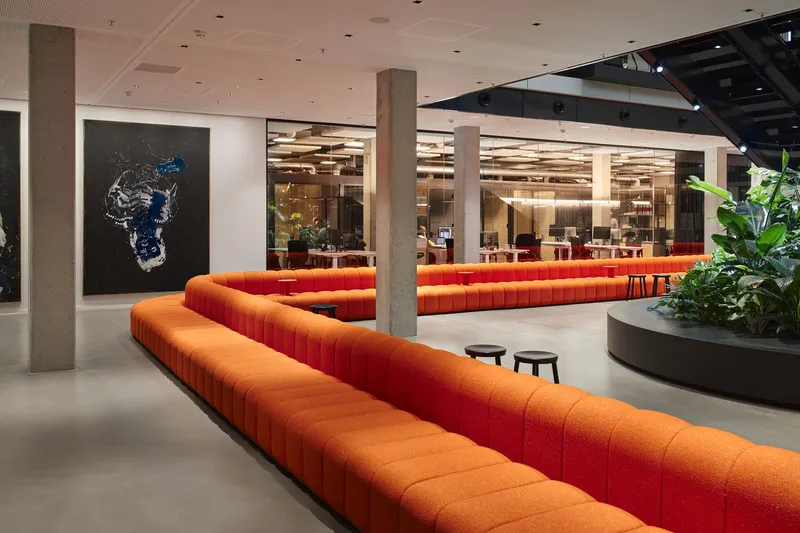
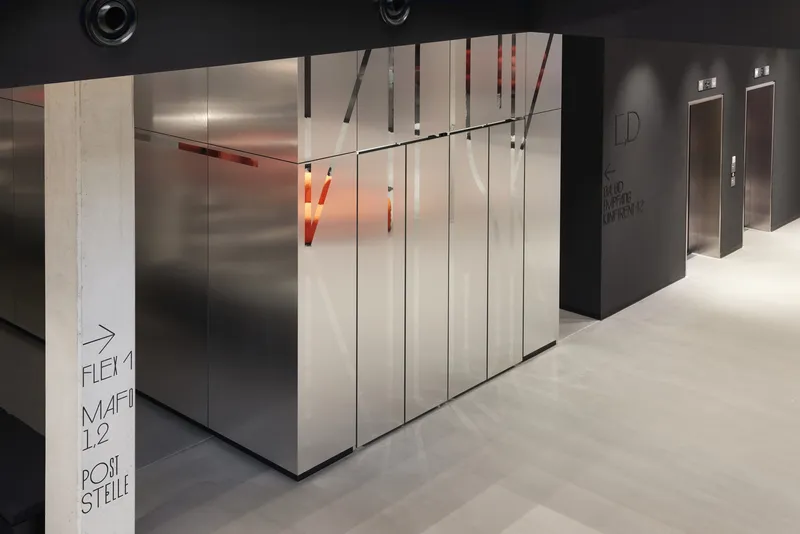
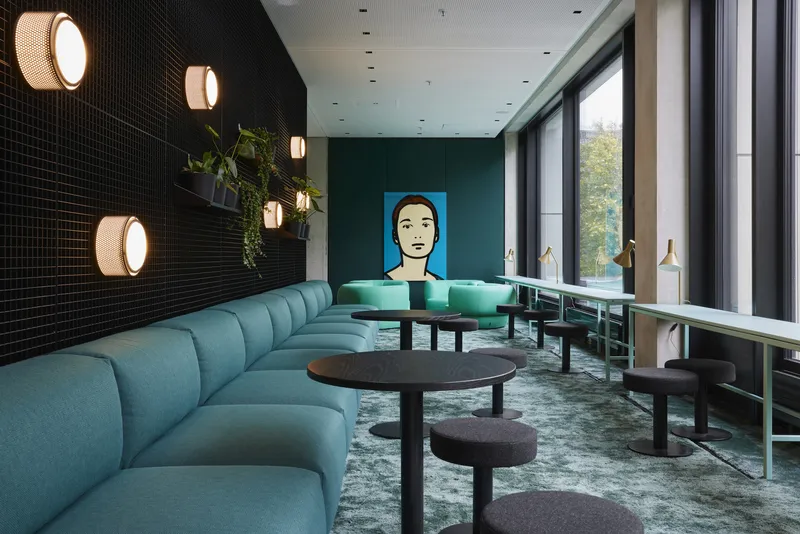
The interior design follows a cohesive visual identity inspired by the idea of a “uniform.” This concept translates into a refined palette of black, white, and gray, creating a minimalist yet powerful backdrop. Industrial materials such as raw steel, steel grating, and black-stained wood reinforce the building’s bold architectural language.
This restrained base allows vibrant statement elements to stand out. Notable features include a 30-meter-long sofa upholstered in coral fabric by Raf Simons, accommodating up to 100 people, and a massive communal table in the canteen seating 80 employees. These oversized elements embody the project’s emphasis on communication, scale, and shared experiences.
Custom Design and Craftsmanship
HENN Interiors collaborated with local manufacturers to develop bespoke elements, including custom textiles, lighting, and furniture systems. A reissued mid-century chair, originally used by German police in the 1950s, was transformed into a complete furniture collection, blending historical references with modern functionality.
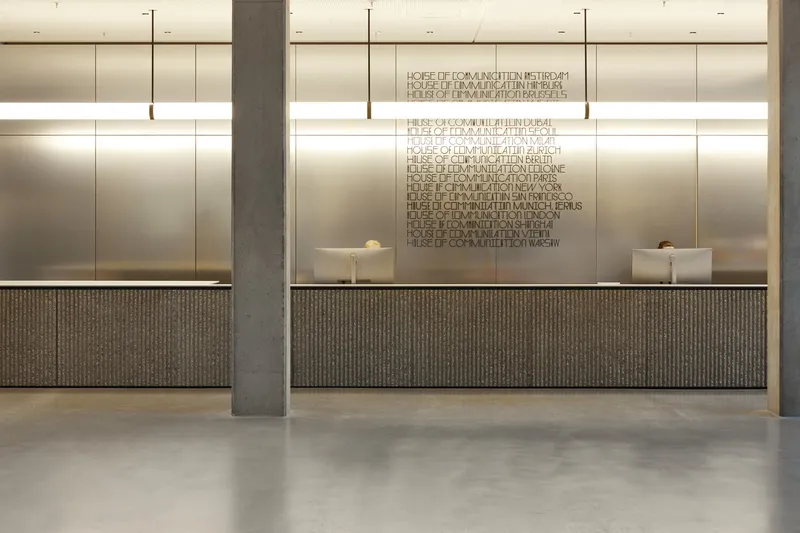
Additional design features include modular shelving systems that act as flexible partitions and textile wall coverings with geometric grid patterns, echoing the building’s façade. A custom typeface, also developed by Büro Uebele, enhances wayfinding while contributing to the building’s unique graphic identity.
A Future-Oriented Workplace
The House of Communication exemplifies the future of innovative office design, where architecture supports creativity, collaboration, and cultural exchange. By merging urban principles with workplace functionality, HENN has created a landmark that not only serves as a corporate headquarters but also as a vibrant social and cultural hub.
All photographs are works of
Mark Seelen



Popular Articles
Popular articles from the community


Co-life: Sustainable Architecture for Age-Friendly Community Living
Co-life reimagines sustainable architecture for seniors through courtyards, rammed earth, shared gardens, and spaces designed for belonging.

Riyadh For All: Intergenerational Urban Design for Active Aging in Rabat
Riyadh For All reimagines urban design in Rabat with intergenerational co-living, adaptive courtyards, and Moroccan cultural exchange today.
AL-JANNAH: Sustainable Architecture and Permaculture for Afghan Widows
AL-JANNAH uses sustainable architecture and permaculture to create resilient oasis of housing, learning, work and renewal for Afghan widows.
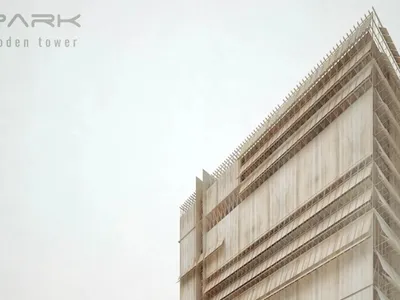
EW PARK: Sustainable Architecture Reimagines the Future of Urban Parking
EW PARK reimagines city parking as a modular wooden tower combining automation, solar energy, electric mobility, and adaptable urban design.


Similar Reads
You might also enjoy these articles

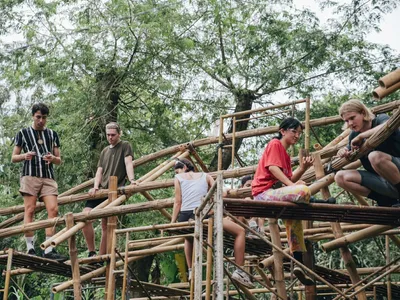
Bamboo Housing Challenge 2026: Design Affordable, Sustainable Homes Using Bamboo
An international design competition by Bamboo U and IBUKU inviting architects and designers to reimagine affordable housing using bamboo — with the winning design built full-scale in Bali.
Computational Design & Education: Beegraphy Design Awards Introduces 7th Category (Featuring Jiyun's Innovative Approach)
Dive into Beegraphy’s 7th Design Awards category, where computational design meets education to create immersive, interactive learning tools, inspired by Jiyun’s work.
From Parametric Lighting to Urban Furniture: Join the 2nd Workshop in Beegraphy’s Computational Design Series
Dive into Cutting-Edge Design Techniques and Practical Applications with Industry Experts

Last Call: Unleash Your Architectural Genius in SHAK's Kindergarten Design Competition
Urgent call for architects to join SHAK's kindergarten design competition before the looming deadline

Explore Blocs Competitions
Discover active competitions in this discipline



Challenge to reimagine the Iron Throne


Photograph architecture without architects


Illustrate the lost glory of Angkor Wat - Render Challenge


Design challenge to reuse E-waste
Comments (0)
Please login or sign up to add comments
No comments yet. Be the first to comment!