
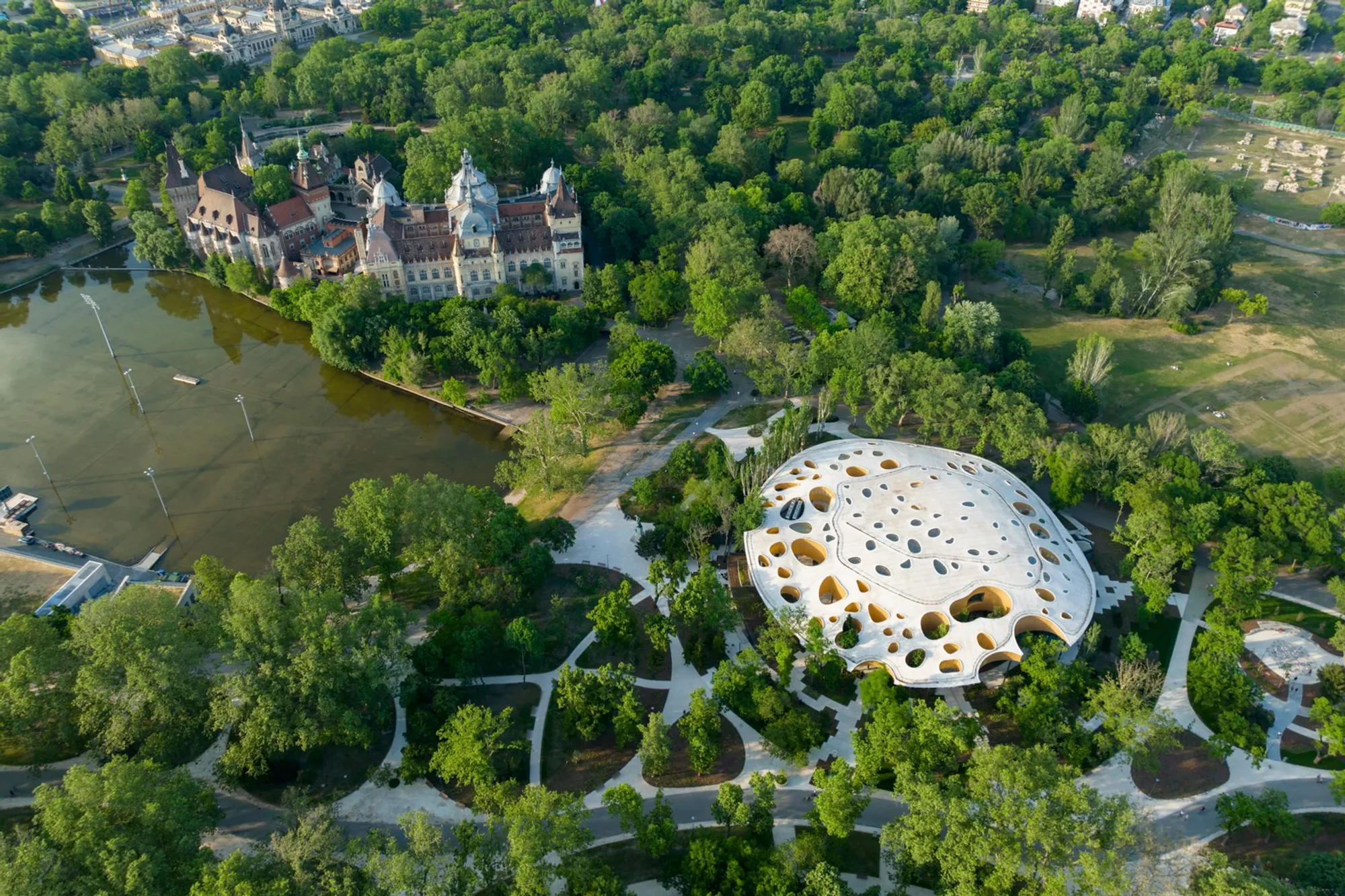
House of Music, Budapest – Sou Fujimoto Architects
The House of Music Budapest by Sou Fujimoto Architects blends nature, music, and architecture, creating immersive, interactive, and sustainable cultural experiences.


A 21st-Century Musical Experience
The House of Music Budapest, designed by Sou Fujimoto Architects, is a pioneering cultural landmark that celebrates sound, music, and human interaction. Situated in the heart of Budapest’s City Park, the museum transcends traditional exhibition spaces to create an immersive, participatory experience. Visitors are encouraged to explore freely, moving through spaces like the gentle flow of sound, discovering unexpected encounters that enrich their journey.
Unlike conventional museums, the architecture itself becomes a medium of engagement. Circular volumes appear to levitate above the ground, allowing the landscape and visitors to interact seamlessly beneath. Natural light filters through perforated surfaces, mimicking sunlight streaming through tree canopies, while interior and exterior spaces blend harmoniously to dissolve boundaries.
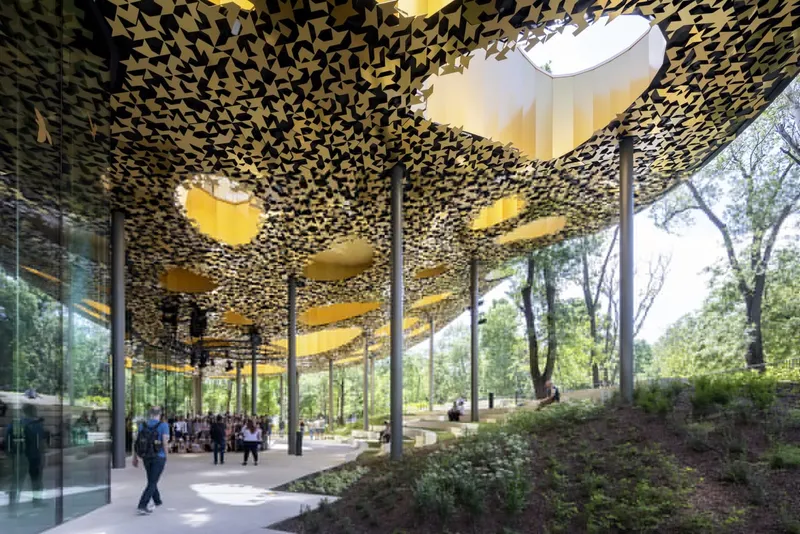
Architecture Inspired by Nature
The abundant trees of City Park shaped the museum’s design. Dense, historical foliage inspired organic forms and fluid spatial arrangements, creating a building that respects and integrates with its natural surroundings. The architecture cradles visitors like the forest itself, with sunlit areas, shaded retreats, and gentle curves that encourage exploration.
The floating volumes above the ground floor provide open, communal areas for concerts, performances, and cultural gatherings, emphasizing the museum’s mission of shared experiences. This design fosters a sense of freedom and connection, allowing music to travel effortlessly through space while inviting people from all backgrounds to participate.
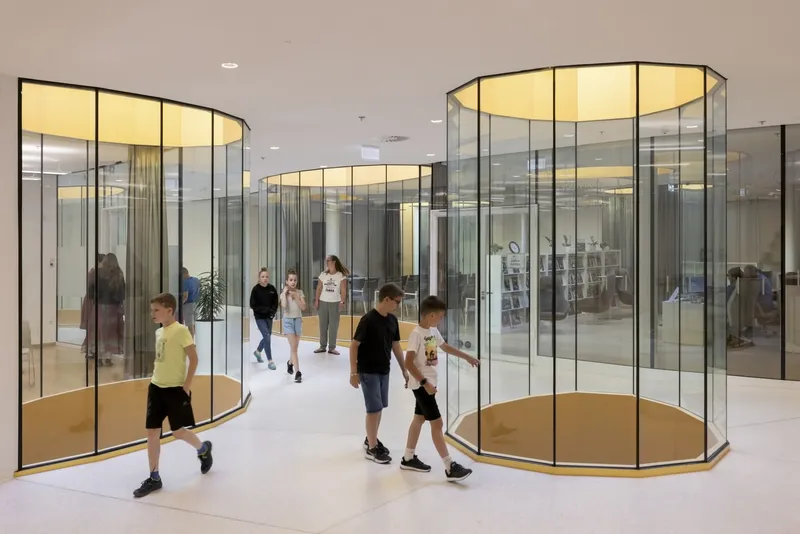
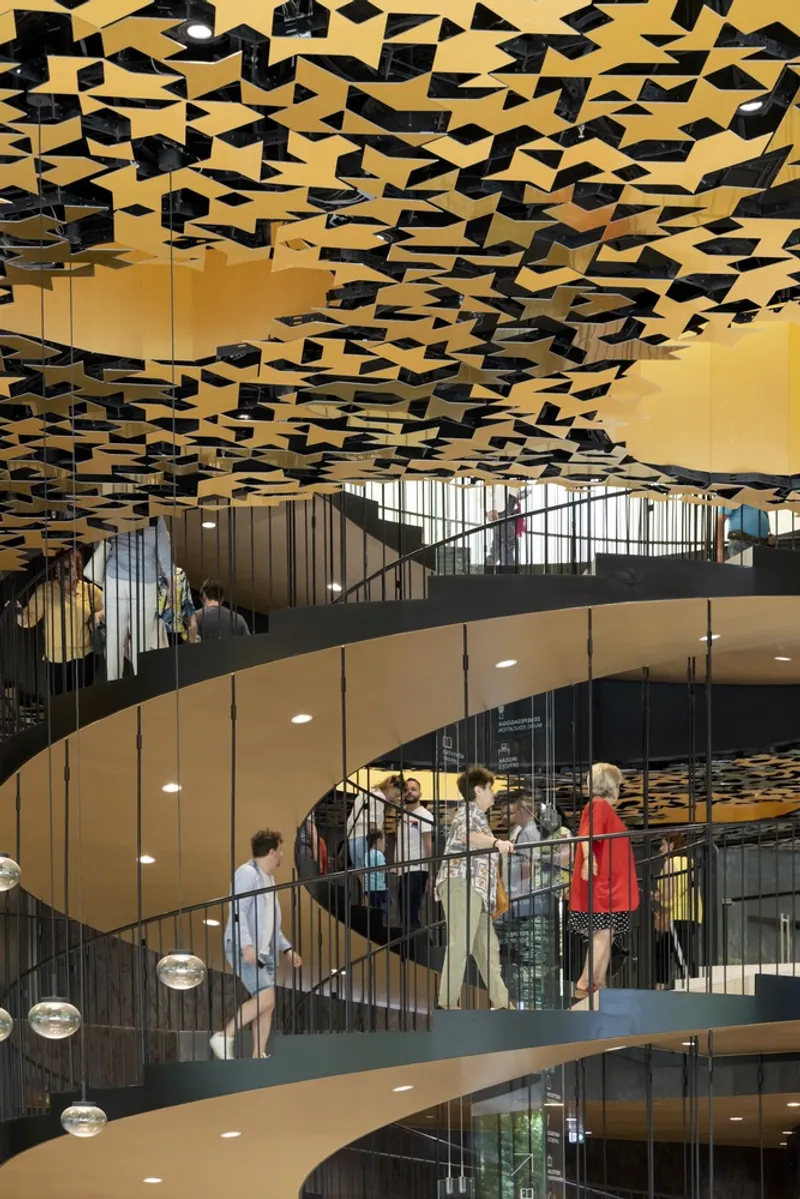
Integration of Sound, Space, and Culture
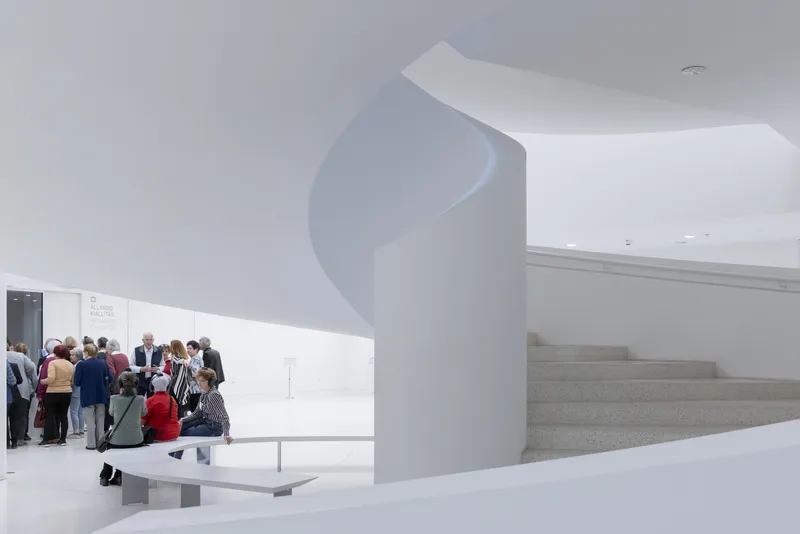
The House of Music is not only a museum but a symbol of open cultural exchange. Its layout encourages interaction, movement, and spontaneity, echoing the essence of sound itself. Visitors wander freely along spiral staircases, through gardens, and among interior volumes, experiencing the building as a dynamic instrument that resonates with its natural and social context.
By merging sustainable design, landscape integration, and innovative architecture, the project embodies a 21st-century vision of culture and music—where architecture, nature, and people coexist in harmony.




Popular Articles
Popular articles from the community


Hill & Cross Opera: Sculptural Opera House Architecture Shaped by Tallinn’s Landscape and Identity
Hill & Cross Opera reimagines opera house architecture in Tallinn through its sculptural hill, civic plaza, glass wave and a luminous cross.

Conexión: Biophilic Design Reimagines High-Rise Living in Hong Kong
Conexión reimagines high-rise living in Hong Kong through biophilic design, green facades, shared spaces, daylight, water and nature within.

Co-Life: Senior Housing Design That Reconnects Older Adults With the City
Co-Life reimagines senior housing design through healing gardens, shared streets, workshops, and a sustainable community across generations.

The Ocean Hive: Sustainable Architecture for a Self-Sufficient Civilization at Sea
The Ocean Hive imagines sustainable architecture at sea, where modular habitats, algae, wave power and ocean waste sustain a growing colony.


Similar Reads
You might also enjoy these articles


Hodi-Mandai Geram
Project Function: Preservation and revitalization of the Intangible heritage and socio-spatial identity of the Hodi by Housing, Cultural Memory Center, Sacred Grove, landscape, local tourism economy


Olio Towers: A Mid-Rise for Performers That Fuses Housing, Rehearsal, and Stage
Located blocks from Houston's Theater District, this modular tower stacks living units around a central performance atrium.

Oasis: Modular Green Housing Carved into Dhaka's Urban Fabric
A shortlisted Plugin Housing entry reclaims unauthorized settlements in Dhaka with stepped concrete volumes, green roofs, and ventilation-driven design.

Black Hole: A Floating Megastructure for the Post-Physical Era
Emiliano Mazzarotto envisions a spherical, self-scaling arena where e-sports, digital hotels, and holographic stadiums replace traditional public space.


Explore Architecture Competitions
Discover active competitions in this discipline



Challenge to reimagine the Iron Throne


Photograph architecture without architects


Illustrate the lost glory of Angkor Wat - Render Challenge


Design challenge to reuse E-waste
Comments (0)
Please login or sign up to add comments
No comments yet. Be the first to comment!