

House of Reclaimed Gold: A Testament to Eco-Sensitive Architecture
The House of Reclaimed Gold in Vikramgadh, India, combines eco-sensitive design, reclaimed materials, and traditional craftsmanship in a sustainable family residence.


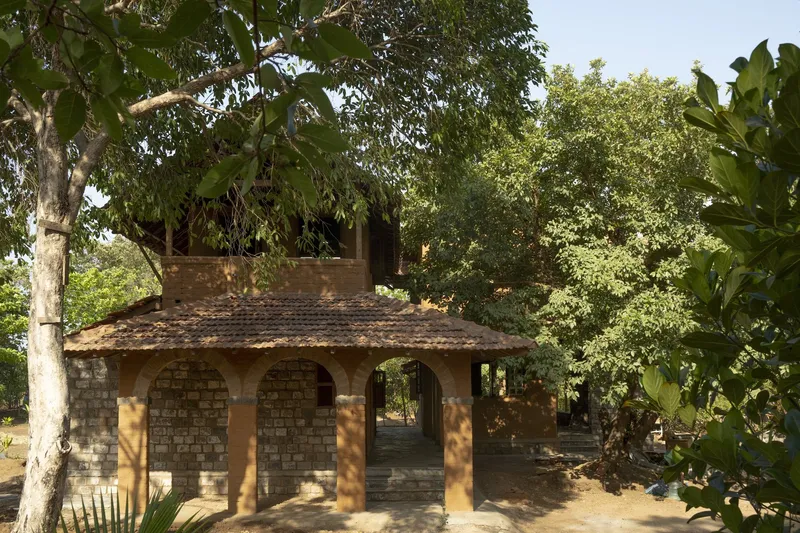
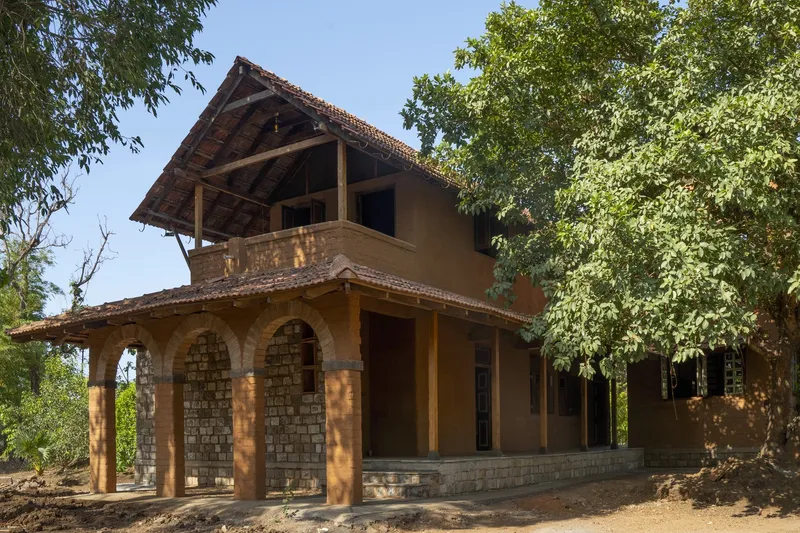
Nestled in the lush landscapes of Vikramgadh, Palghar, Maharashtra, the House of Reclaimed Gold emerges as a beacon of sustainable living and architectural brilliance. Designed by OutOfTheBox I Eco-Architects, this 2900 ft² family residence exemplifies how eco-sensitive design, community participation, and the utilization of reclaimed materials can harmonize to create a space that is both environmentally responsible and deeply connected to its roots.

Embracing Traditional Skills with Modern Design
The genesis of the project was the client's desire to construct a family abode on ancestral farmland, amidst a paddy plantation and fruit-bearing trees. Observing the shift towards high-maintenance contemporary structures in the area, the client wished for a return to traditional homes, suitable for the local tropical climate. The architects saw this as an opportunity to minimize environmental disruption while fostering community engagement by reintroducing local craftsmen to indigenous building materials and methods.
The Philosophy Behind the Design
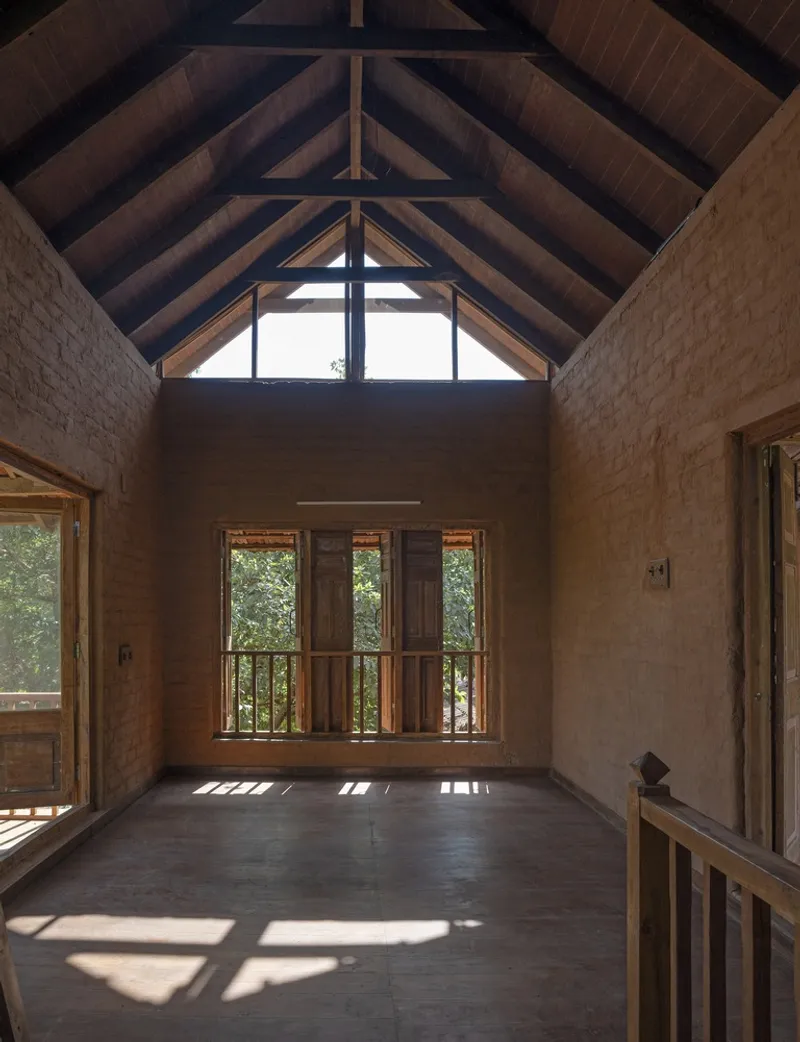
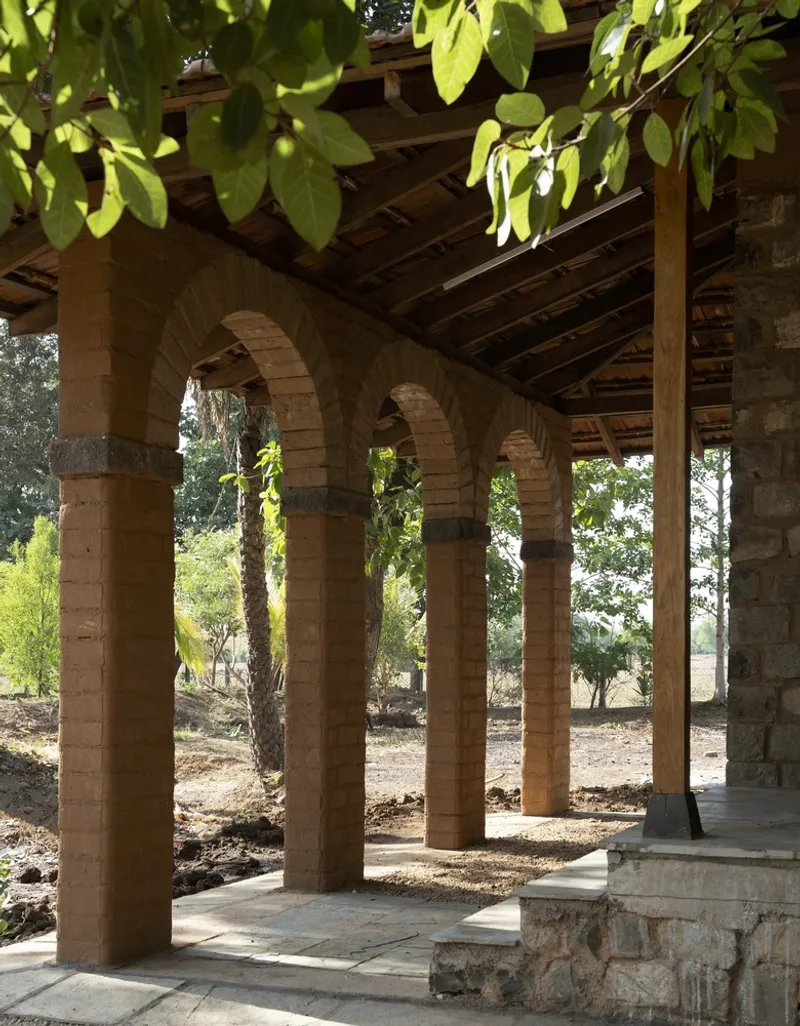
The house's construction centered around handmade adobe blocks, using earth sourced directly from the site, making it the primary load-bearing element. This method not only equipped local craftsmen for future sustainable projects but also encouraged the community's embrace of natural building techniques.

The Name: A Legacy of Sustainability
"The House of Reclaimed Gold" draws its name from the architects' commitment to repurposing materials from demolition waste. This practice resonates with the Indian tradition of passing down heirlooms, reflecting a deep respect for environmental stewardship and resource conservation.

A Foundation Built on Reclaimed Materials
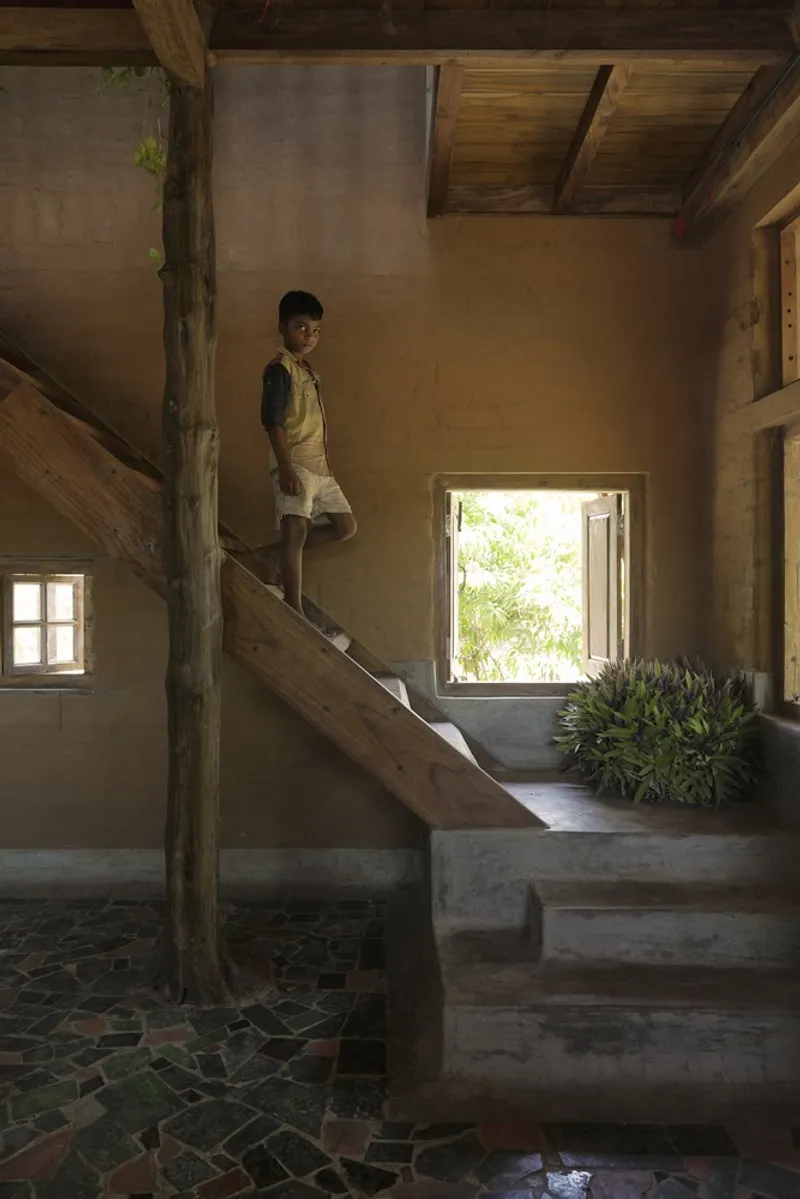
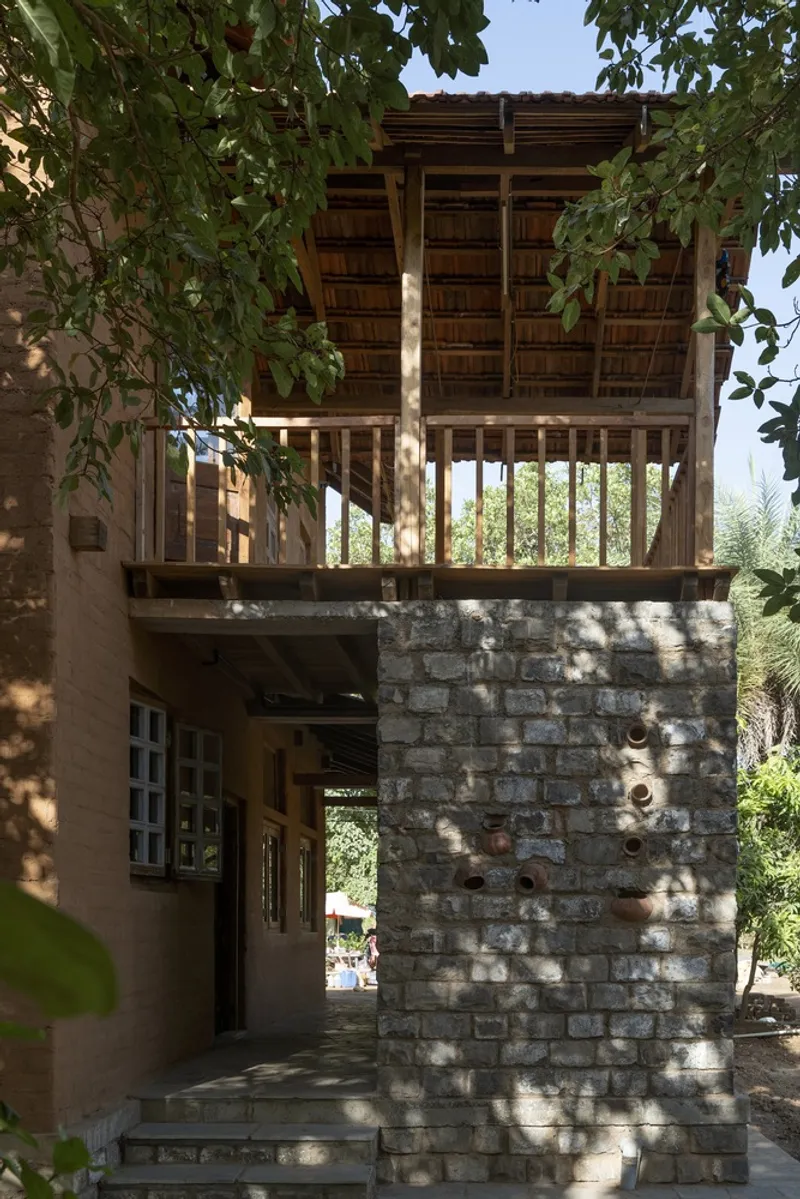
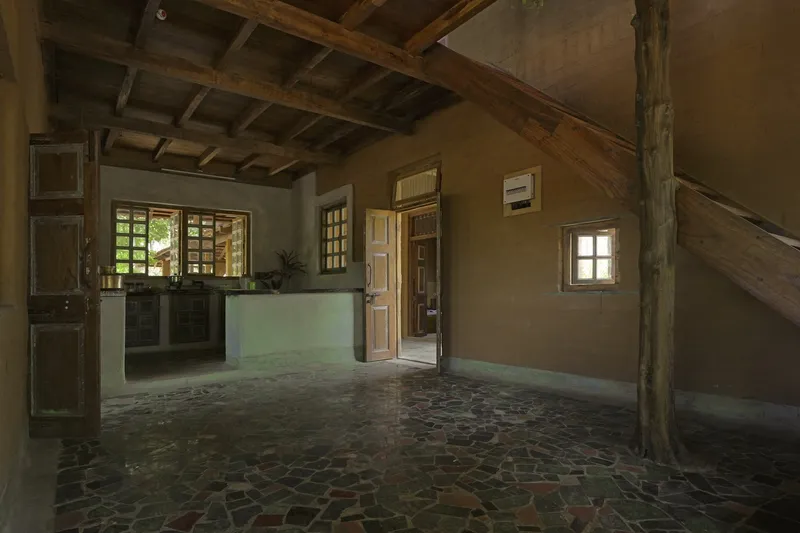
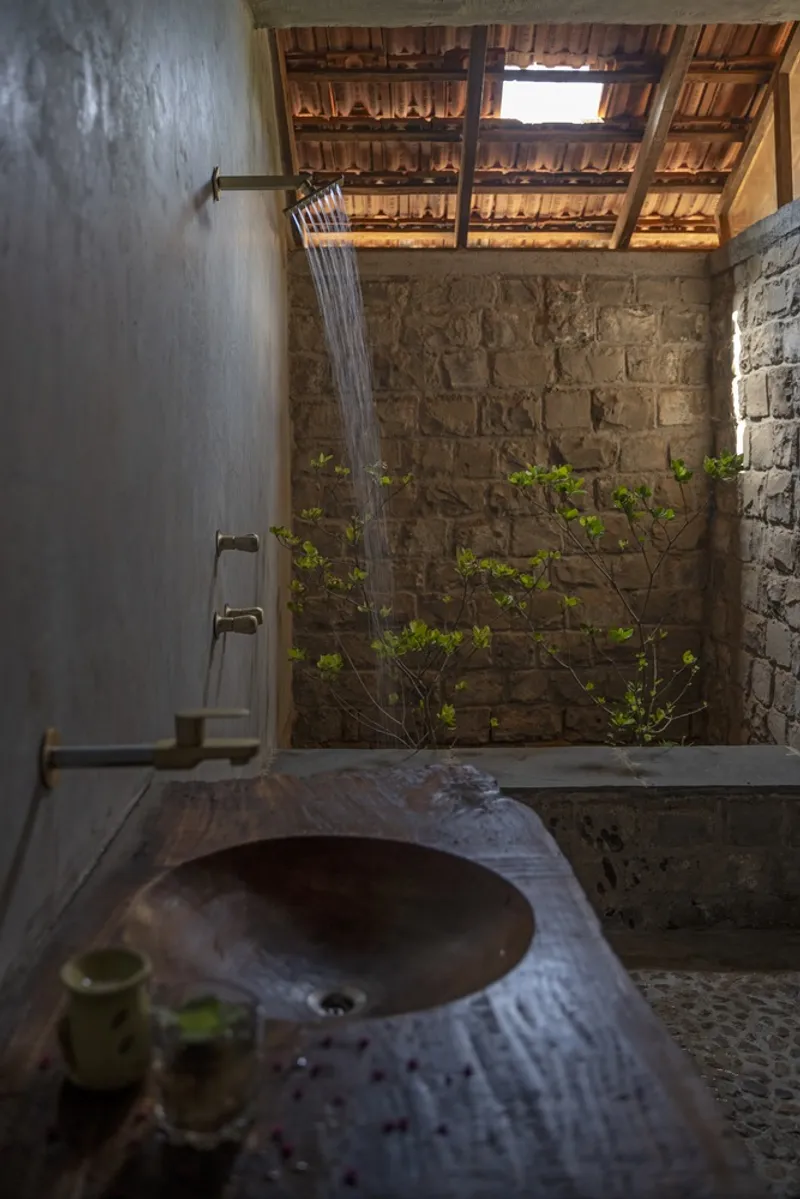
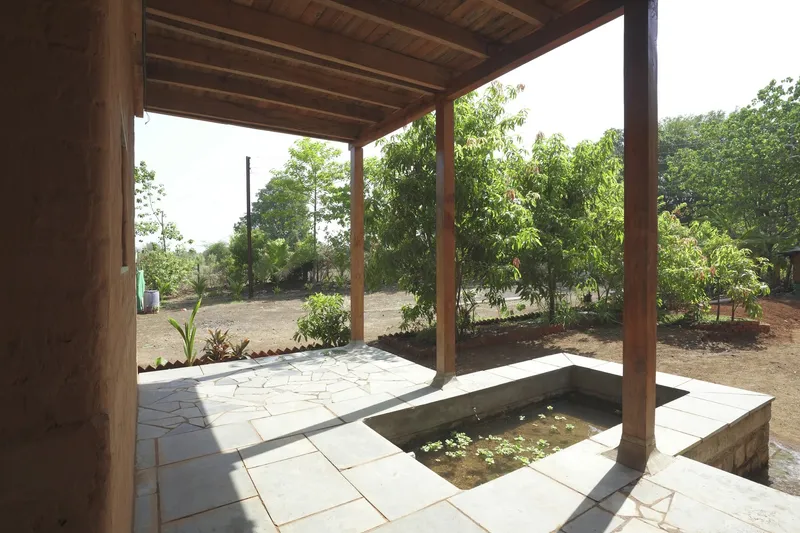
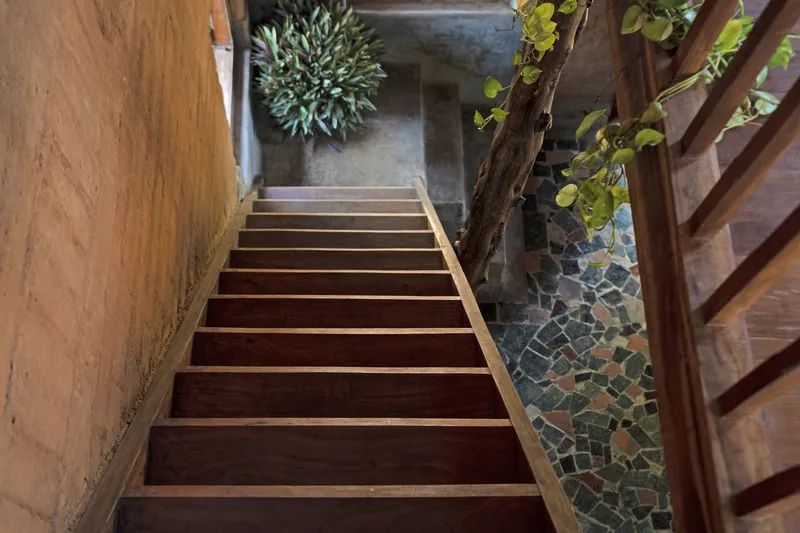
As old wada-style properties in Mumbai faced demolition, the architects salvaged chiseled basalt rock for the foundation and seasoned wood for decking and roofing. Broken granite waste was repurposed for mosaic flooring, and pebbles from construction sites were utilized in bathroom areas, showcasing the project's sustainable ethos.
Innovations and Handcrafted Elements
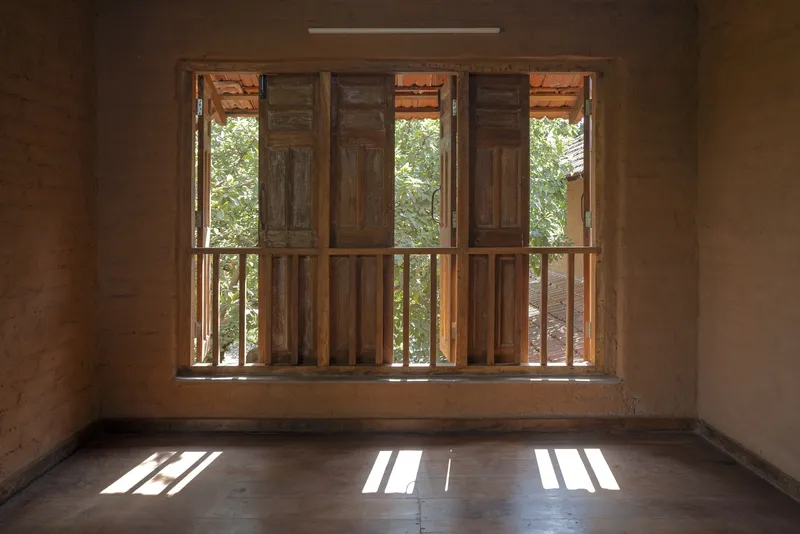
Innovative design solutions, such as adobe molds for concealing electrical conduits, highlight the project's blend of tradition and modernity. Reclaimed teak wood was used for switch boxes, and aged wooden logs found on the farmland were transformed into live-edge features, enhancing the house's connection to its natural surroundings.
Designed for the Climate
Acknowledging the local climate of intense summers and heavy monsoons, the house features elongated wings for minimal sun exposure and maximum ventilation. The adobe walls' thermal mass insulates the interiors, while expansive roof overhangs and verandahs protect the structure from weathering, ensuring the building's longevity.


A Space That Blurs the Indoor-Outdoor Divide
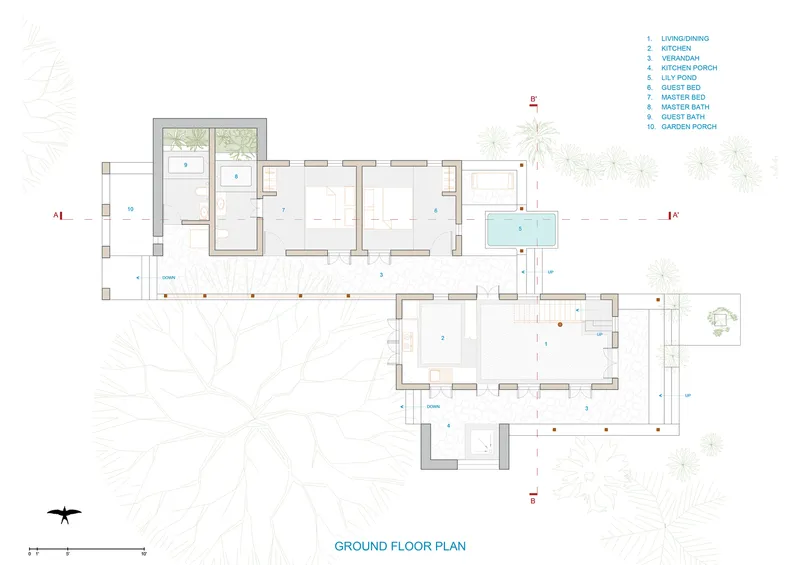
The residence divides into public and private wings, planned around a fruiting fig tree and connected by a central verandah. Open-plan living areas, skylit bathrooms, and interconnected verandahs on the first floor offer a seamless integration with the outdoors, allowing inhabitants to fully immerse themselves in farm life.
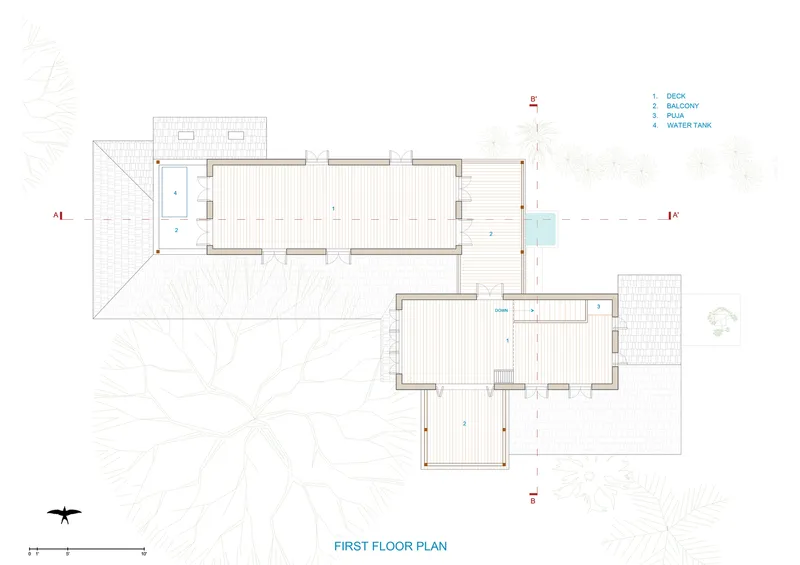
The House of Reclaimed Gold stands as a testament to the possibilities of eco-sensitive architecture. By marrying traditional skills with innovative design, utilizing reclaimed materials, and designing with the climate in mind, OutOfTheBox I Eco-Architects have crafted a home that not only respects the environment but also enriches the community and fosters a profound connection to the land.
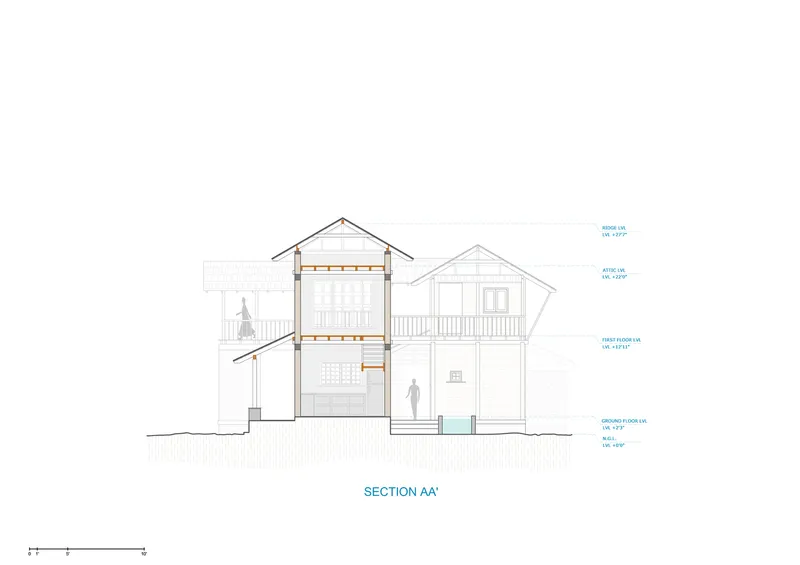
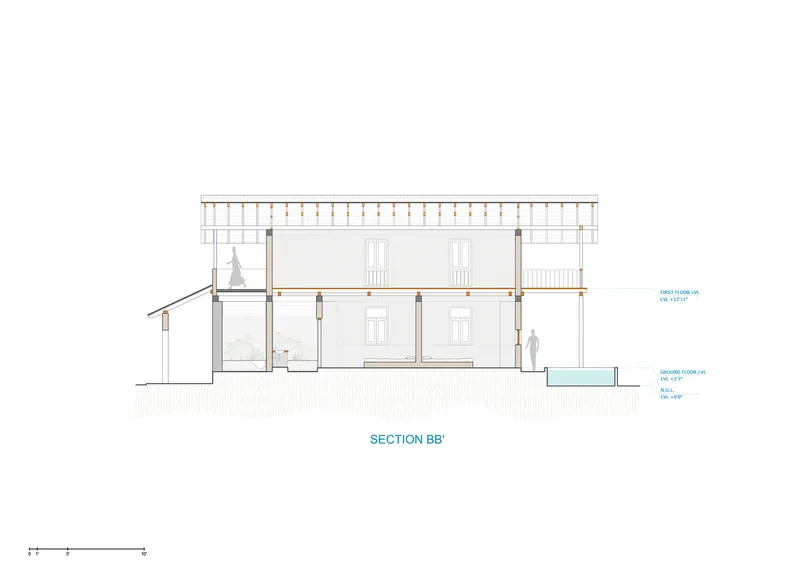
All the photographs are work of Omkar Kotwal



Popular Articles
Popular articles from the community


Co-Life: Senior Housing Design That Reconnects Older Adults With the City
Co-Life reimagines senior housing design through healing gardens, shared streets, workshops, and a sustainable community across generations.

Lunar Spiral: Space Architecture Shaped by the Mathematics of the Universe
Lunar Spiral reimagines space architecture through Fibonacci geometry, lunar regolith, levitating habitats, and self-sustaining Moon living.

Co-life: Sustainable Architecture for Age-Friendly Community Living
Co-life reimagines sustainable architecture for seniors through courtyards, rammed earth, shared gardens, and spaces designed for belonging.

Hill & Cross Opera: Sculptural Opera House Architecture Shaped by Tallinn’s Landscape and Identity
Hill & Cross Opera reimagines opera house architecture in Tallinn through its sculptural hill, civic plaza, glass wave and a luminous cross.

Similar Reads
You might also enjoy these articles


Hodi-Mandai Geram
Project Function: Preservation and revitalization of the Intangible heritage and socio-spatial identity of the Hodi by Housing, Cultural Memory Center, Sacred Grove, landscape, local tourism economy


Olio Towers: A Mid-Rise for Performers That Fuses Housing, Rehearsal, and Stage
Located blocks from Houston's Theater District, this modular tower stacks living units around a central performance atrium.

Oasis: Modular Green Housing Carved into Dhaka's Urban Fabric
A shortlisted Plugin Housing entry reclaims unauthorized settlements in Dhaka with stepped concrete volumes, green roofs, and ventilation-driven design.

Black Hole: A Floating Megastructure for the Post-Physical Era
Emiliano Mazzarotto envisions a spherical, self-scaling arena where e-sports, digital hotels, and holographic stadiums replace traditional public space.

Explore Eco Building Competitions
Discover active competitions in this discipline



Challenge to reimagine the Iron Throne


Photograph architecture without architects


Illustrate the lost glory of Angkor Wat - Render Challenge


Design challenge to reuse E-waste
Comments (0)
Please login or sign up to add comments
No comments yet. Be the first to comment!