
House of the Circular Terraces by Denis Joelsons: A Harmonious Integration with the Atlantic Forest Landscape
House of the Circular Terraces by Denis Joelsons blends prefabricated wood with terraced design, harmonizing modern living and nature.


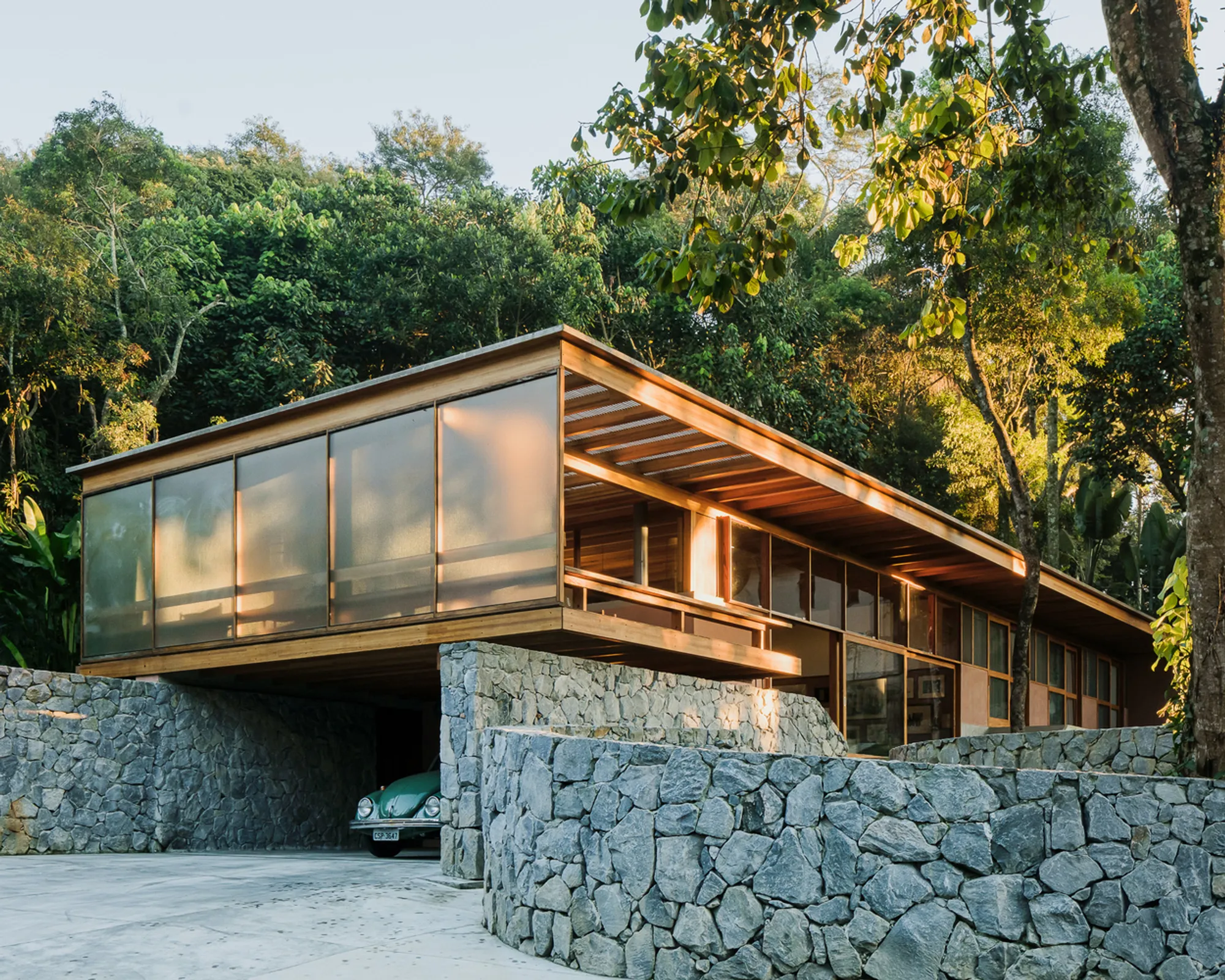
Located in the serene valley of Cotia, Brazil, the House of the Circular Terraces is an exemplary architectural project by Denis Joelsons that beautifully embraces the natural terrain and lush surroundings of the Atlantic Forest. Spanning an area of 253 square meters, this 2022 residence seamlessly merges modern prefabricated wooden construction with organic landscape design, creating a unique home that prioritizes both nature and functional living.
Site and Landscape Integration
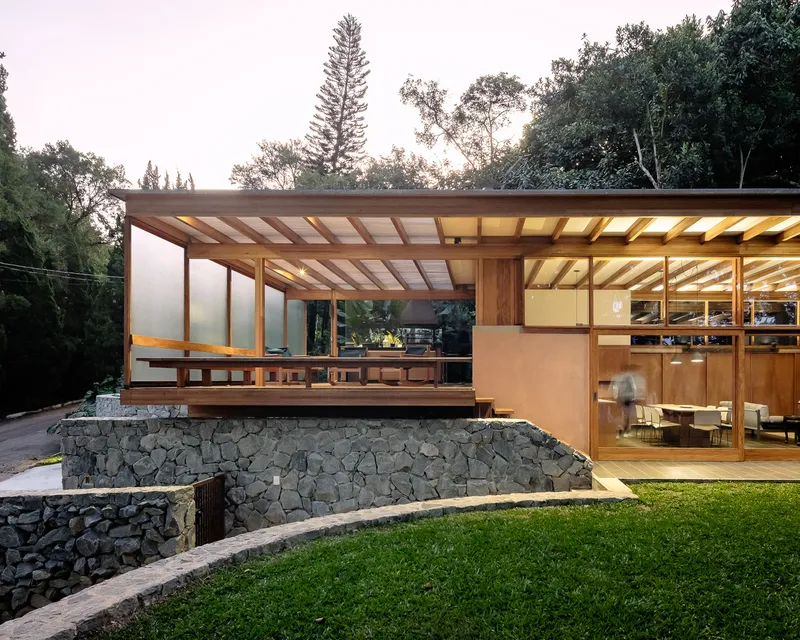
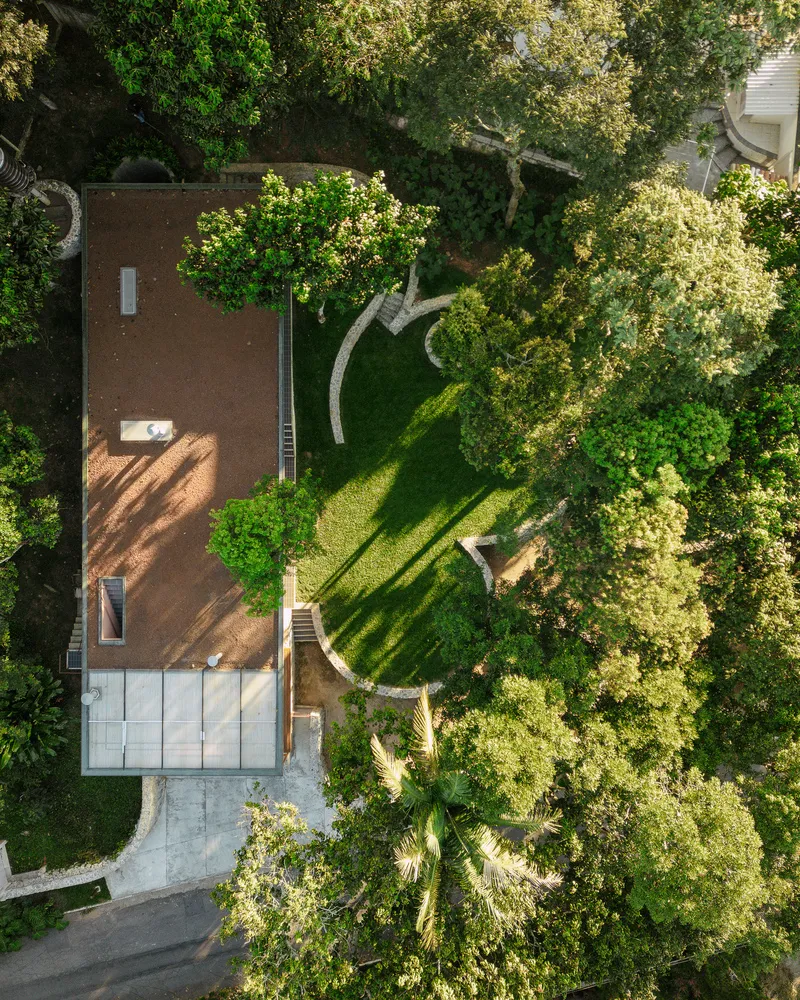
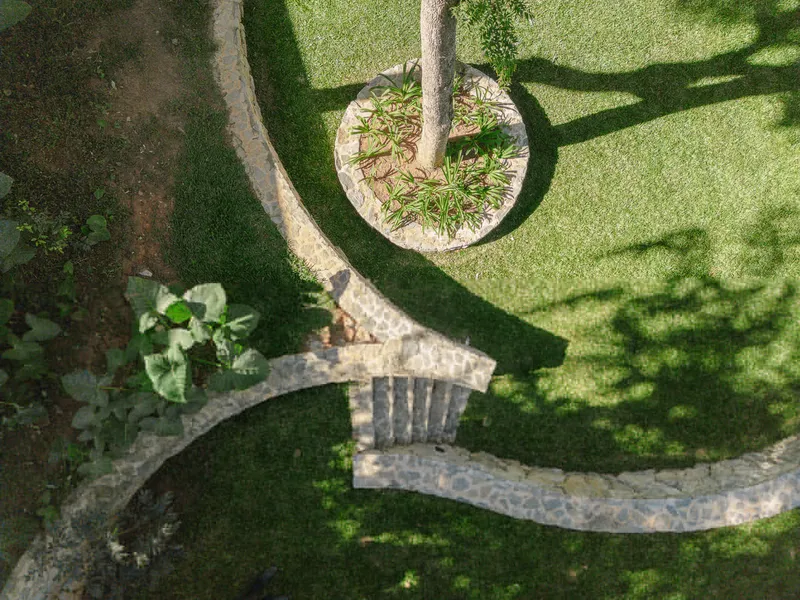
Situated in a valley with modest horizon views, the key visual focus of the site is the majestic tree canopies of the Atlantic Forest. Rather than commanding distant vistas, the design celebrates the immediate natural environment. To harmonize with the site’s existing topography, the architects introduced a series of intermediate-level circular terraces carved into the natural slope of the terrain. These terraces serve as the foundational layers upon which the house is strategically organized, making the building an extension of the land rather than an imposition.
Architectural Layout and Spatial Organization
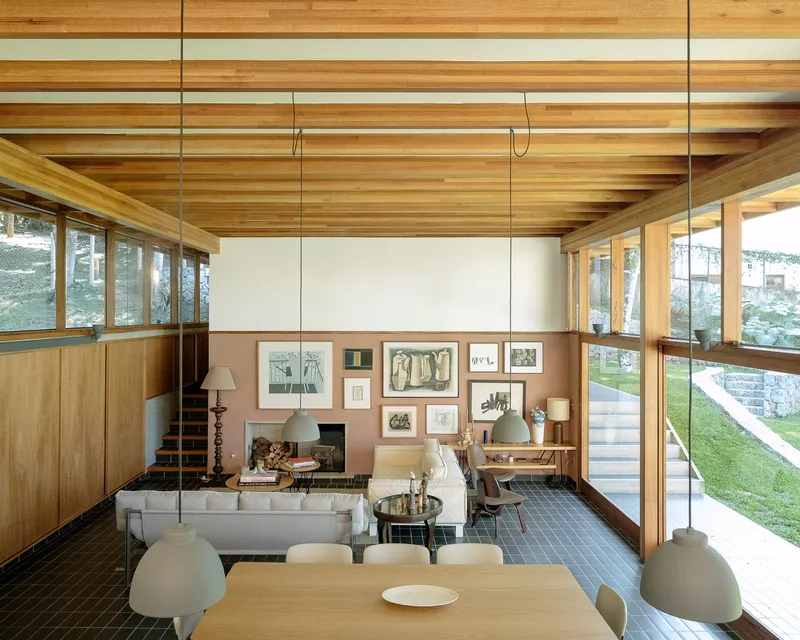
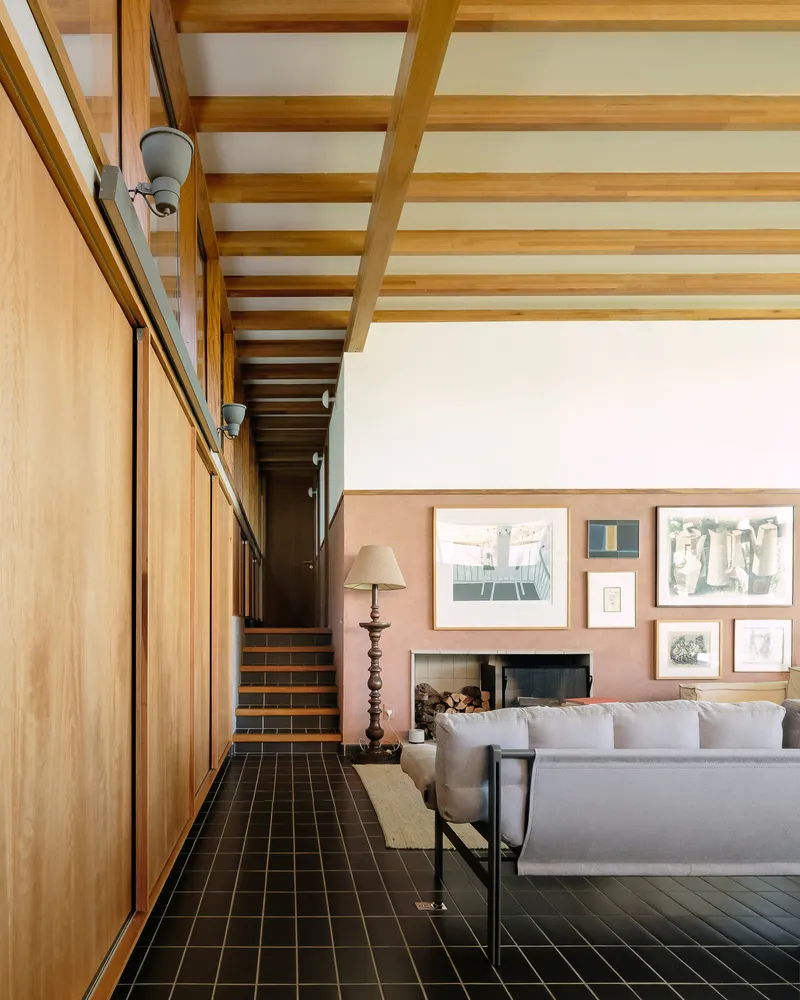
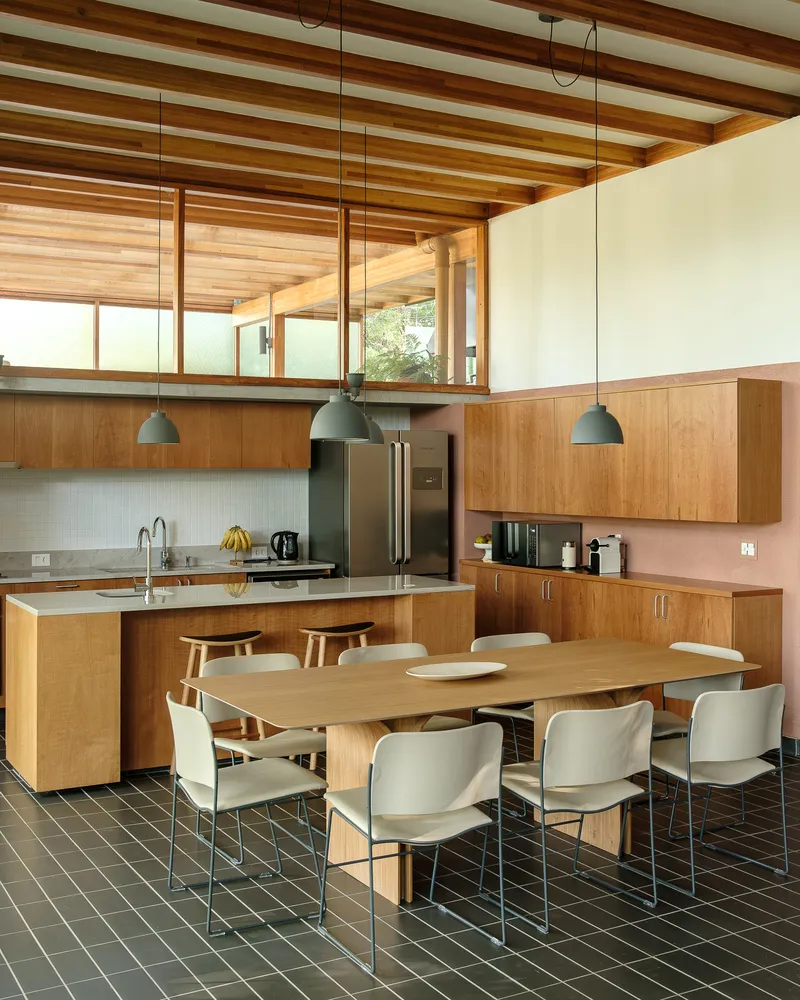
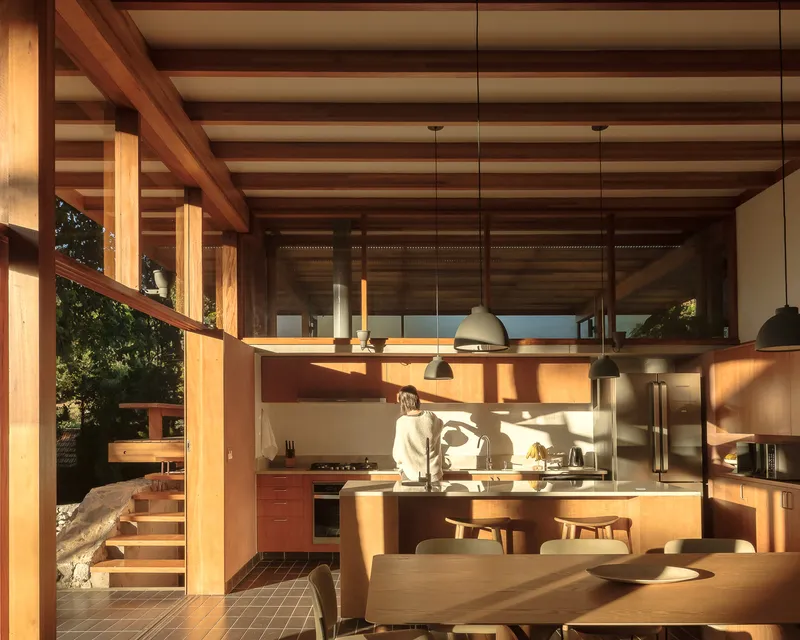
The House of the Circular Terraces follows a thoughtful spatial arrangement that reflects its terrain-inspired concept. Communal and social spaces—such as the living room, dining area, and kitchen—are positioned near the entrance adjacent to the street, facilitating welcoming and accessible interaction zones. Meanwhile, private quarters are carefully placed farther along the property boundary, ensuring privacy and quietude amidst the natural landscape.
The architectural composition features an orthogonal geometry that aligns with its prefabricated wooden structure. This system not only offers structural efficiency but also allows the house to respond organically to the curvilinear form of the garden terraces. Retaining walls are thoughtfully built to accommodate the circular garden’s shape, integrating mature trees into the design and preserving the forest’s ecology.
Dynamic Interior and Exterior Interplay
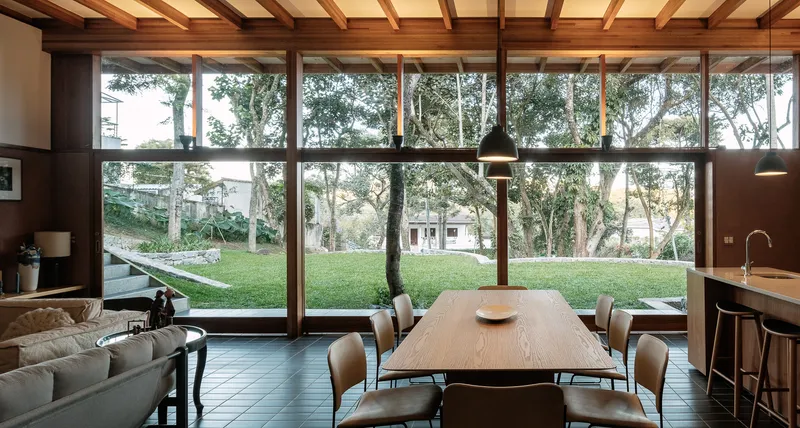
One of the defining features of the house is the dynamic interplay between roof, floor, and open spaces. While the roof maintains a consistent, leveled silhouette on the horizon, the floors undulate across various terraces, creating a variety of ceiling heights and spatial experiences inside. A suspended balcony covers the garage area, while an analogous architectural gesture at the opposite end mirrors this volume in the bedroom zone. This spatial dialogue reflects the valley’s geography, enhancing the home’s connection to its natural setting.
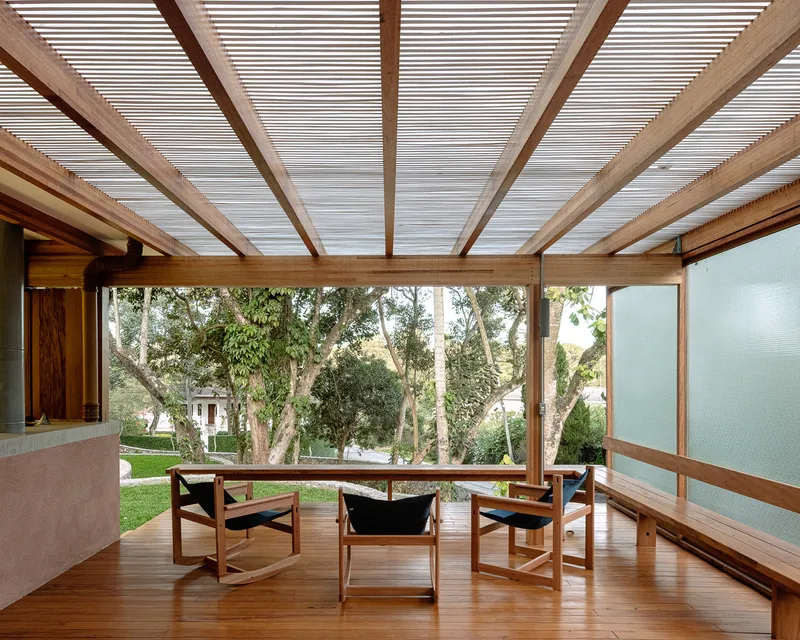
Natural light floods the interiors through large windows and multiple entrances, with every room designed to have at least two access points. This circulation reinforces the concept of a circular path, inviting fluid movement throughout the home and blurring boundaries between indoor and outdoor spaces.
Materials and Sustainability
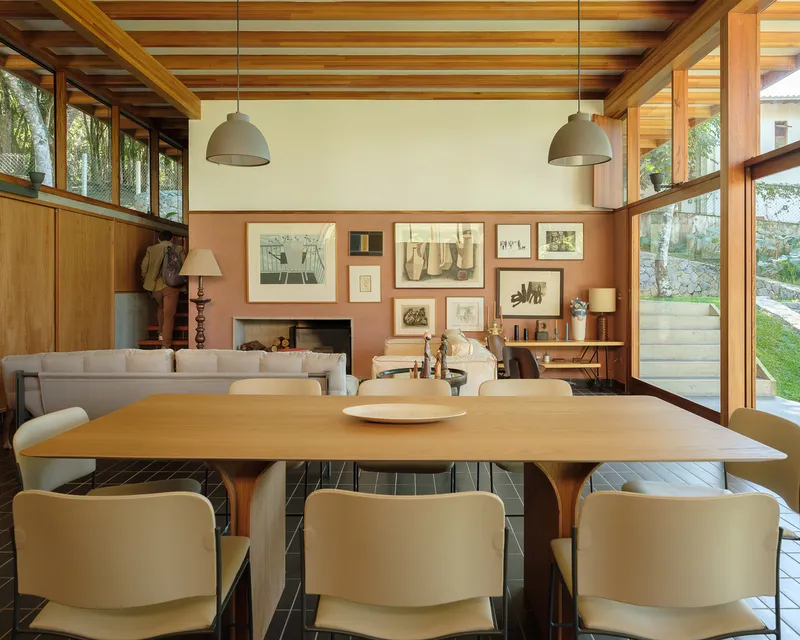
Constructed with prefabricated wood by manufacturers such as Gail, Persolly, and REKA, the house exemplifies sustainable building principles by minimizing environmental impact and emphasizing material efficiency. The wood’s natural textures complement the lush green garden, creating a warm and inviting ambiance inside while promoting eco-conscious living.
Denis Joelsons’ House of the Circular Terraces is a masterclass in architectural sensitivity, where thoughtful design responds to nature’s forms rather than reshaping them. It stands as a contemporary retreat in Cotia, Brazil, that balances modern living with ecological respect, making it a landmark project in sustainable residential architecture.
All Photographs are works of Pedro Kok, Rodrigo Fonseca



Popular Articles
Popular articles from the community


Conexión: Biophilic Design Reimagines High-Rise Living in Hong Kong
Conexión reimagines high-rise living in Hong Kong through biophilic design, green facades, shared spaces, daylight, water and nature within.

The Ocean Hive: Sustainable Architecture for a Self-Sufficient Civilization at Sea
The Ocean Hive imagines sustainable architecture at sea, where modular habitats, algae, wave power and ocean waste sustain a growing colony.

Co-life: Sustainable Architecture for Age-Friendly Community Living
Co-life reimagines sustainable architecture for seniors through courtyards, rammed earth, shared gardens, and spaces designed for belonging.

Lunar Spiral: Space Architecture Shaped by the Mathematics of the Universe
Lunar Spiral reimagines space architecture through Fibonacci geometry, lunar regolith, levitating habitats, and self-sustaining Moon living.

Similar Reads
You might also enjoy these articles


Hodi-Mandai Geram
Project Function: Preservation and revitalization of the Intangible heritage and socio-spatial identity of the Hodi by Housing, Cultural Memory Center, Sacred Grove, landscape, local tourism economy


Olio Towers: A Mid-Rise for Performers That Fuses Housing, Rehearsal, and Stage
Located blocks from Houston's Theater District, this modular tower stacks living units around a central performance atrium.

Oasis: Modular Green Housing Carved into Dhaka's Urban Fabric
A shortlisted Plugin Housing entry reclaims unauthorized settlements in Dhaka with stepped concrete volumes, green roofs, and ventilation-driven design.

Black Hole: A Floating Megastructure for the Post-Physical Era
Emiliano Mazzarotto envisions a spherical, self-scaling arena where e-sports, digital hotels, and holographic stadiums replace traditional public space.


Explore Architecture Competitions
Discover active competitions in this discipline



Challenge to reimagine the Iron Throne


Photograph architecture without architects


Illustrate the lost glory of Angkor Wat - Render Challenge


Design challenge to reuse E-waste
Comments (0)
Please login or sign up to add comments
No comments yet. Be the first to comment!