
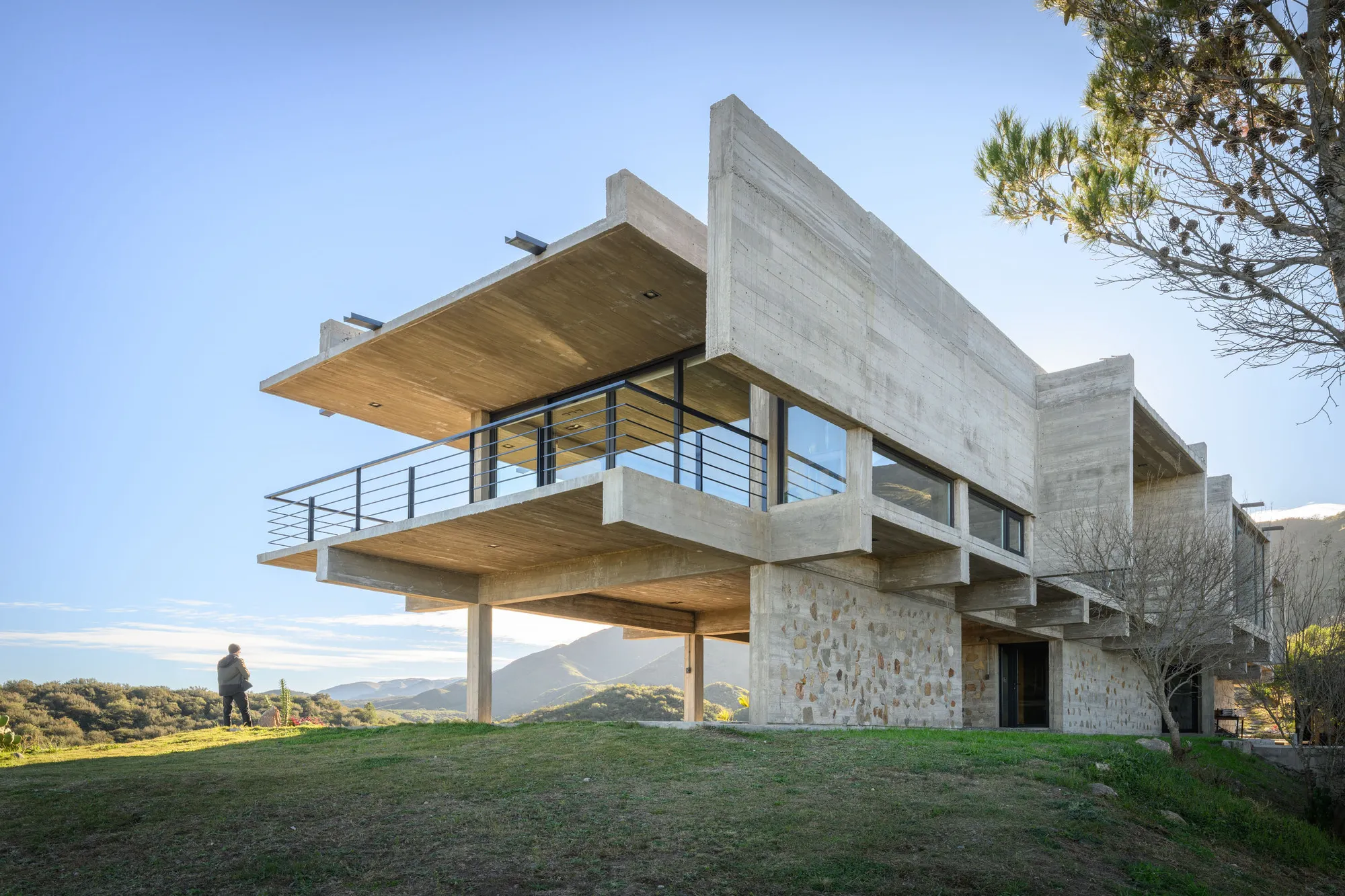
House on El Dragón By Cristian Nanzer
A sculptural concrete and stone house embedded in Córdoba’s hills, merging structure, light, and landscape into a powerful architectural statement.


Nestled within the dramatic landscape of the Punilla Valley in Córdoba, Argentina, House on El Dragón by architect Cristian Nanzer is a powerful architectural response to steep topography, expansive mountain views, and the raw character of its semi-arid context. Located near Cerro El Dragón, between La Falda and Huerta Grande, the residence occupies an elevated plateau at the highest point of the site, asserting a strong presence while maintaining a deep dialogue with the surrounding landscape.
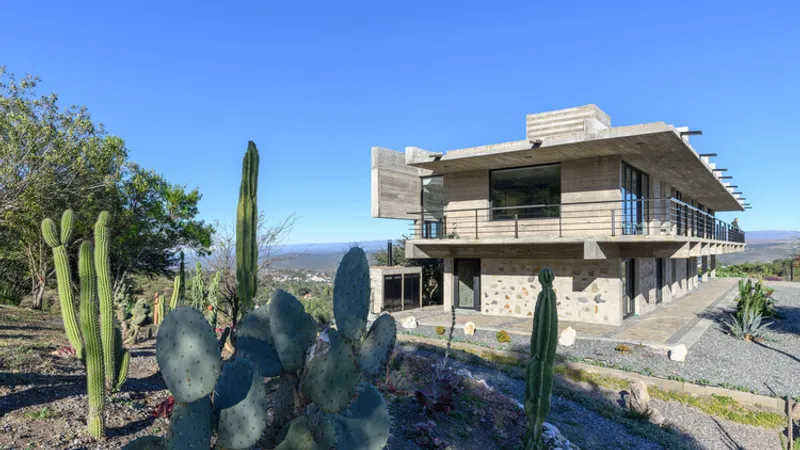
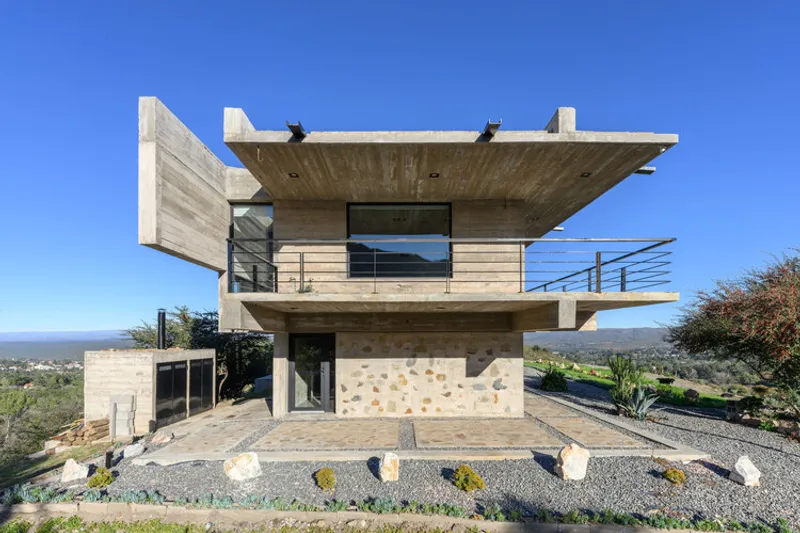
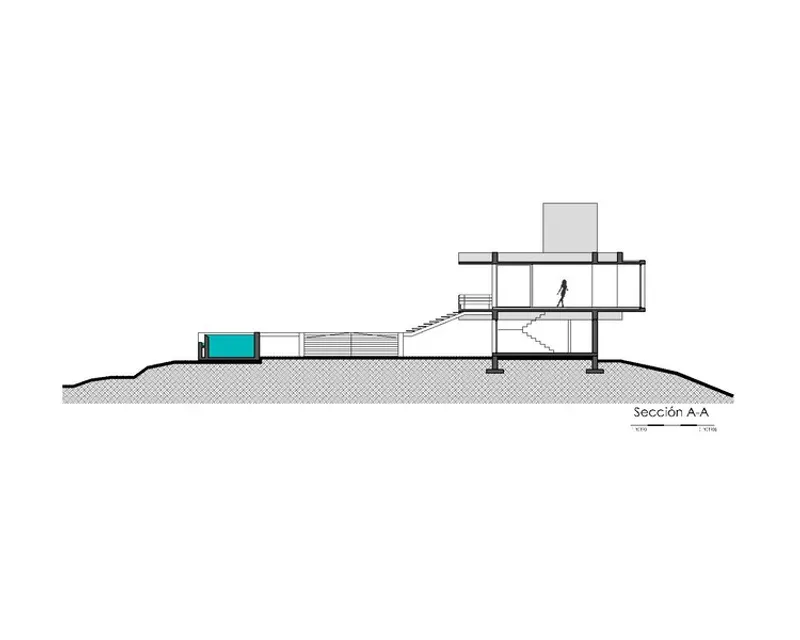
The project is organized across two linear levels, carefully oriented toward the northwest to maximize views of the valley and capture optimal daylight. The terrain’s steep slope becomes a design generator rather than a constraint, allowing the house to anchor itself firmly into the land while projecting outward toward the horizon.
The ground floor is conceived as a solid, weighty base built from cyclopean concrete walls, an expressive construction technique that integrates large stones within poured concrete. This base accommodates guest bedrooms, service areas, a craft workshop, and garage access, as well as an exterior terrace that extends daily life outward. The materiality reinforces a sense of gravity and permanence, rooting the building into the hillside.
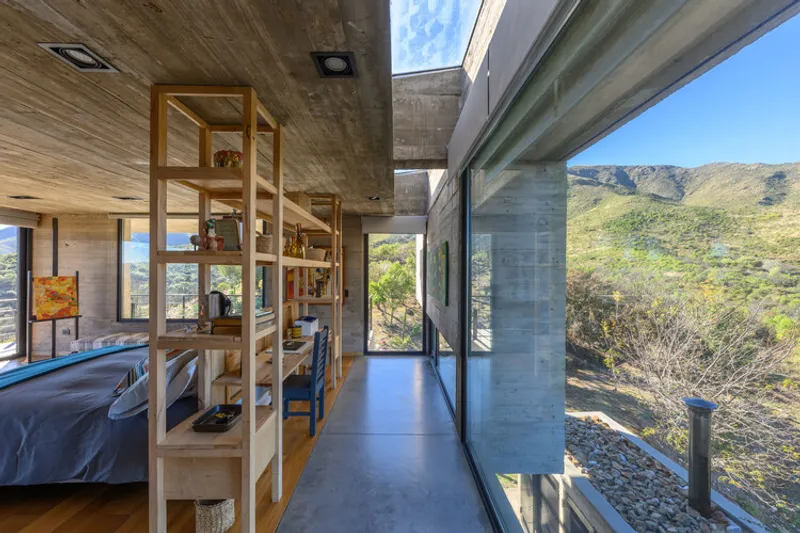
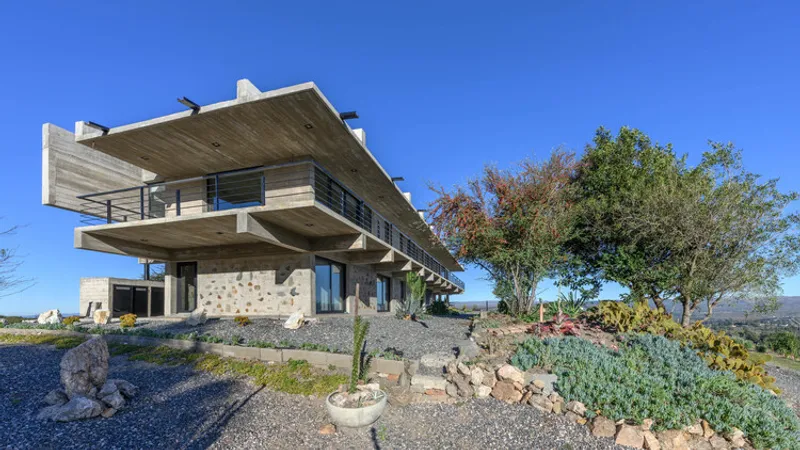
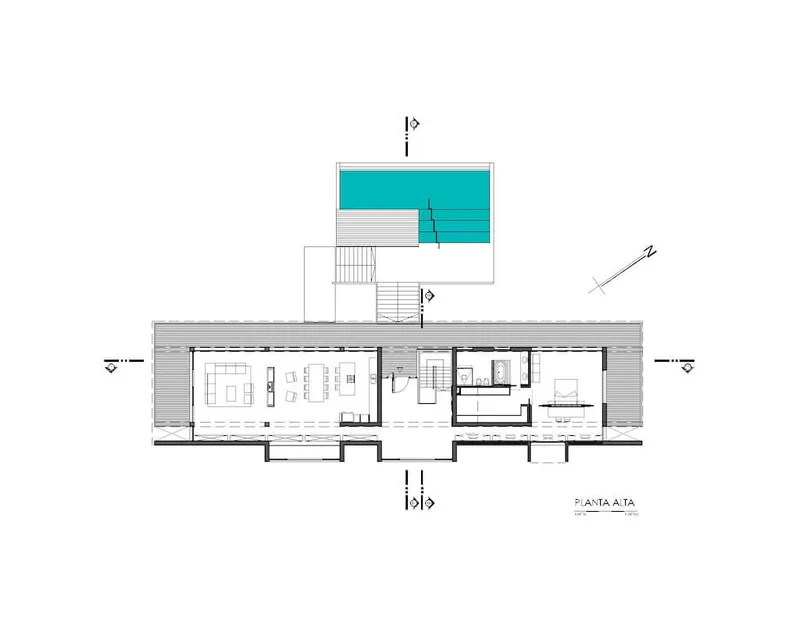
Above this stone foundation rises an exposed concrete structure that defines the upper level. Organized on a modular grid with 6-meter spans and perimeter cantilevers, the structure varies in scale according to function. Social spaces unfold within broader 6-meter modules, while more intimate private areas compress into 3-meter spans. These distinct zones are clearly articulated yet fluidly connected through a generous entrance hall that opens panoramic views toward the southern landscape.
In House on El Dragón, structure and architecture are inseparable. The cyclopean base supports an upper volume that extends outward to create shaded galleries along nearly all façades. On the southern side, a cantilevered internal circulation corridor runs longitudinally, protected by a suspended partition that filters light and frames selected views. This passage is punctuated by three large concrete volumes that act as visual anchors, choreographing movement while allowing overhead daylight to penetrate deep into the interior.
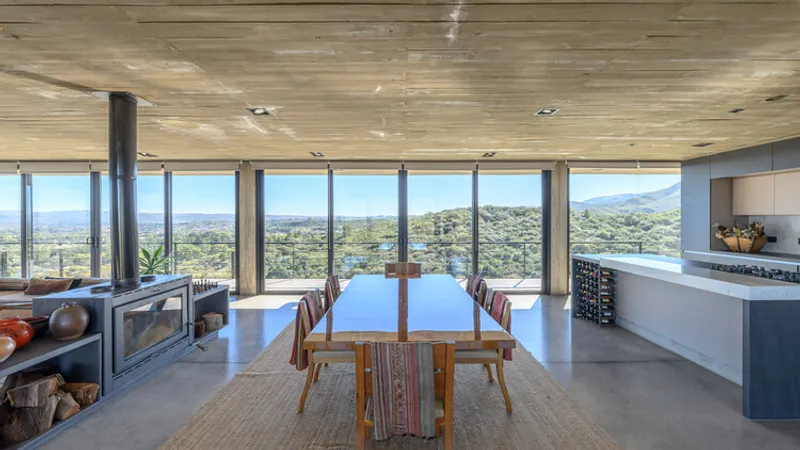
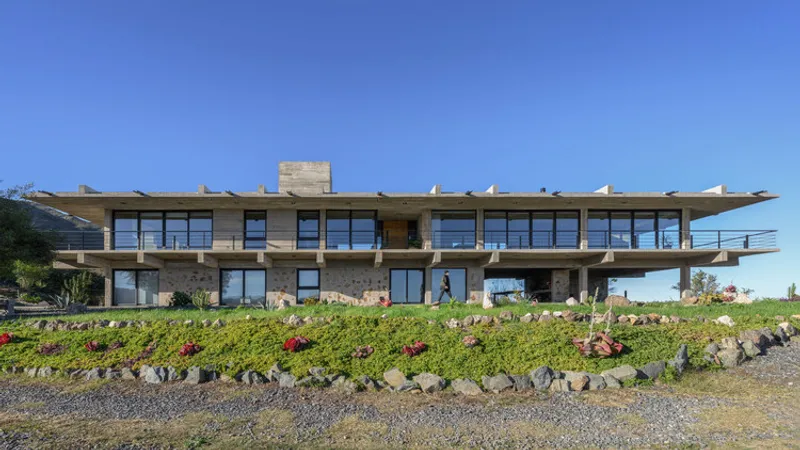
The project’s material palette is intentionally restrained, limited to natural stone and concrete, described by the architect as “artificial stone.” This reduction intensifies the relationship between mass, light, and landscape. Sunlight becomes an architectural material itself, animating surfaces and reinforcing the tension between heaviness and levitation. The atmosphere echoes the geology and luminosity of the Córdoba region, grounding the home in its place.
Conceived as an open and evolving work, the house resists notions of completion. Instead, it embraces flexibility and appropriation, allowing inhabitants to shape and reinterpret the spaces over time. This unfinished quality is not a lack, but a generative condition, one that transforms the residence into an intimate extension of its environment and a living framework for daily life.
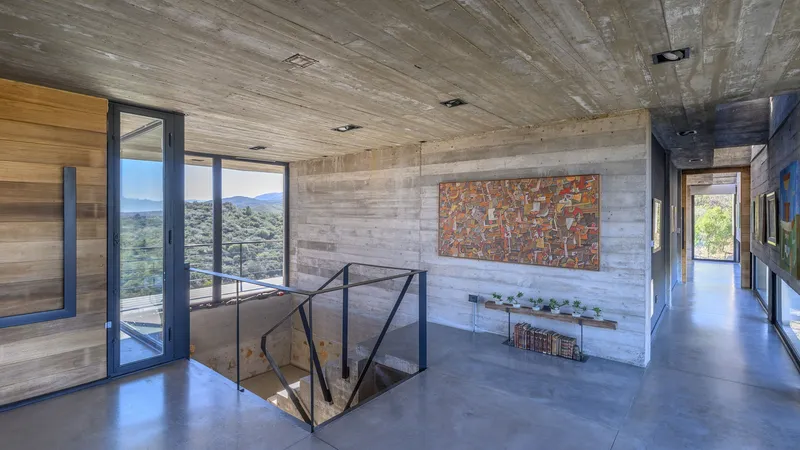
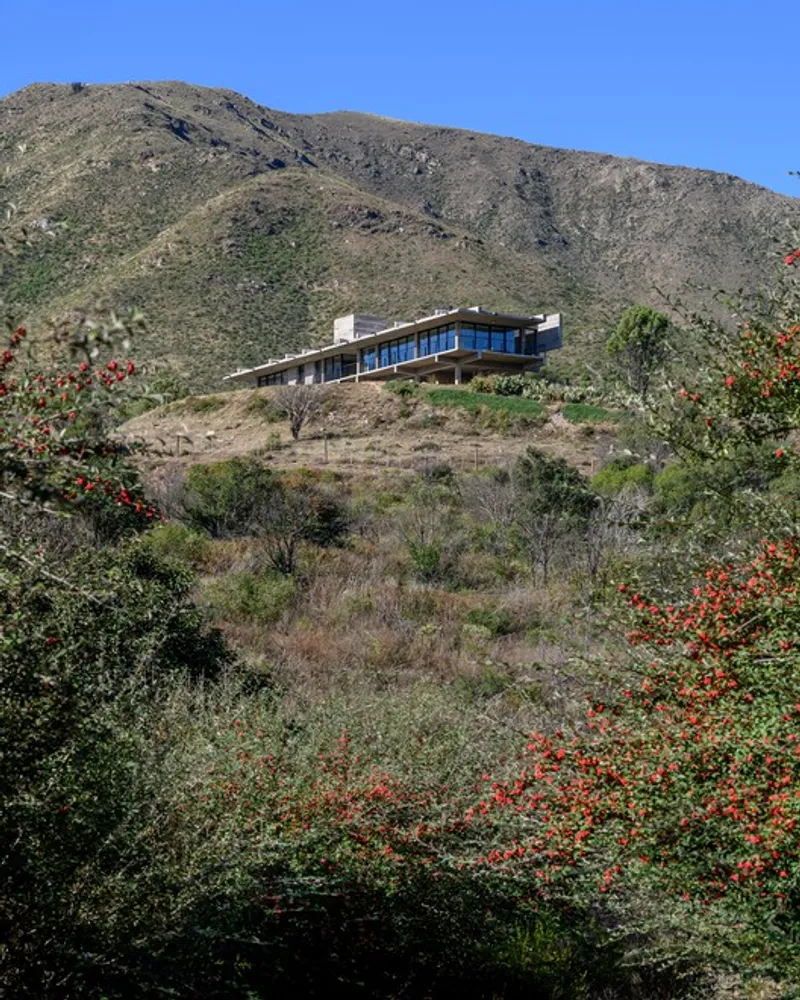
House on El Dragón stands as a clear expression of contemporary Argentine architecture: rigorous, landscape-driven, and materially honest, where structure becomes language and the site itself defines the architectural narrative.
All the photographs are works of Gonzalo Viramonte



Popular Articles
Popular articles from the community

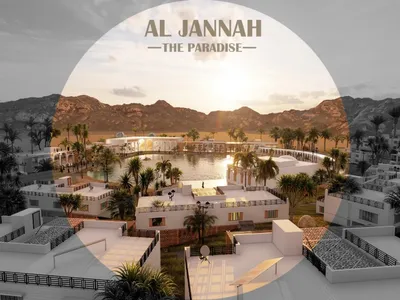
AL-JANNAH: Sustainable Architecture and Permaculture for Afghan Widows
AL-JANNAH uses sustainable architecture and permaculture to create resilient oasis of housing, learning, work and renewal for Afghan widows.

The Musturak Paradise: Senior Living Architecture for a Connected Future in Temara, Morocco
The Musturak Paradise reimagines senior living architecture in Temara via private homes, social spaces, culture, community, and shared care.

EW PARK: Sustainable Architecture Reimagines the Future of Urban Parking
EW PARK reimagines city parking as a modular wooden tower combining automation, solar energy, electric mobility, and adaptable urban design.

Co-life: Sustainable Architecture for Age-Friendly Community Living
Co-life reimagines sustainable architecture for seniors through courtyards, rammed earth, shared gardens, and spaces designed for belonging.


Similar Reads
You might also enjoy these articles


Hodi-Mandai Geram
Project Function: Preservation and revitalization of the Intangible heritage and socio-spatial identity of the Hodi by Housing, Cultural Memory Center, Sacred Grove, landscape, local tourism economy


Olio Towers: A Mid-Rise for Performers That Fuses Housing, Rehearsal, and Stage
Located blocks from Houston's Theater District, this modular tower stacks living units around a central performance atrium.

Oasis: Modular Green Housing Carved into Dhaka's Urban Fabric
A shortlisted Plugin Housing entry reclaims unauthorized settlements in Dhaka with stepped concrete volumes, green roofs, and ventilation-driven design.

Black Hole: A Floating Megastructure for the Post-Physical Era
Emiliano Mazzarotto envisions a spherical, self-scaling arena where e-sports, digital hotels, and holographic stadiums replace traditional public space.


Explore Housing Competitions
Discover active competitions in this discipline



Challenge to reimagine the Iron Throne


Photograph architecture without architects


Illustrate the lost glory of Angkor Wat - Render Challenge


Design challenge to reuse E-waste
Comments (0)
Please login or sign up to add comments
No comments yet. Be the first to comment!