
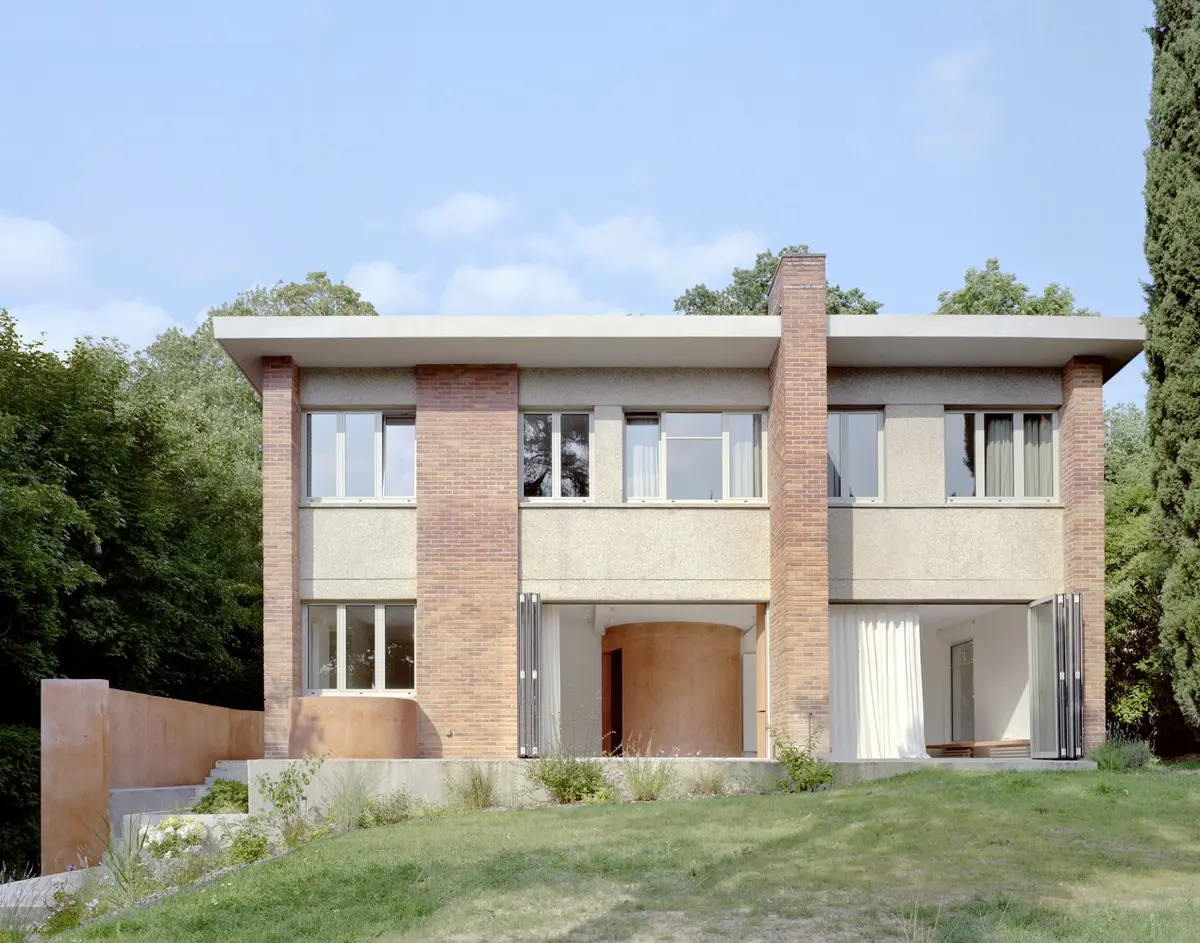
House Rehabilitation with Brick Shards – A Sustainable Transformation by Atelier Delalande Tabourin
Sustainable house rehabilitation using recycled brick shards, enhancing natural light, spatial flow, and material reuse while preserving architectural heritage.


Revitalizing Architecture with Recycled Materials
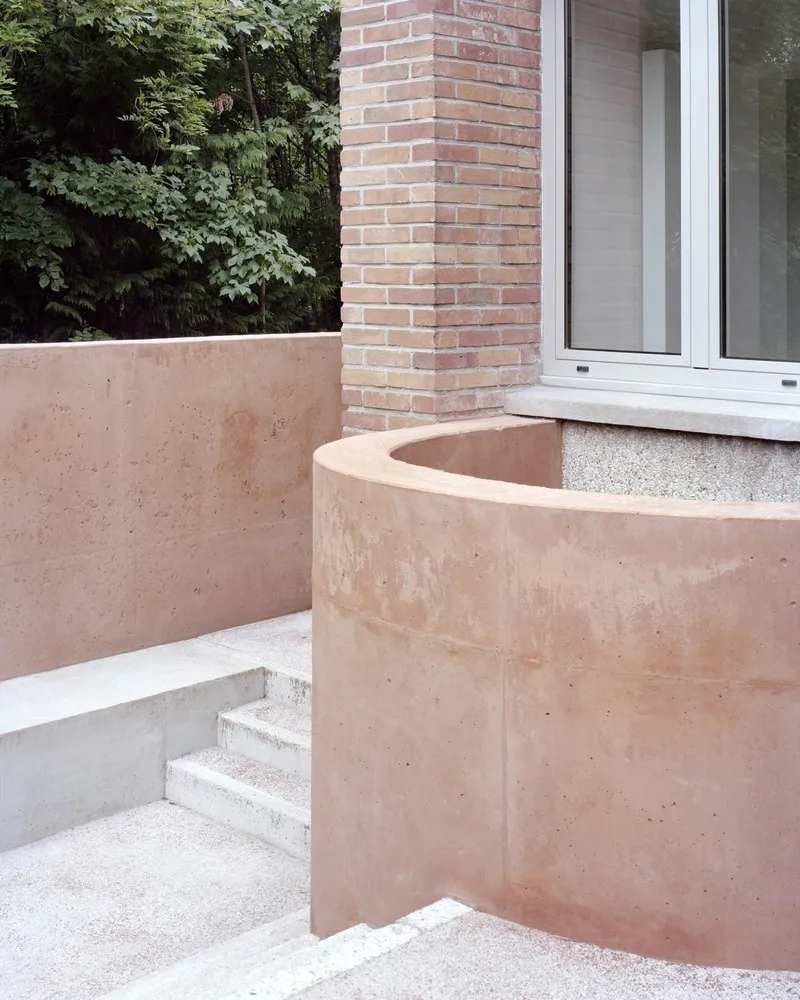
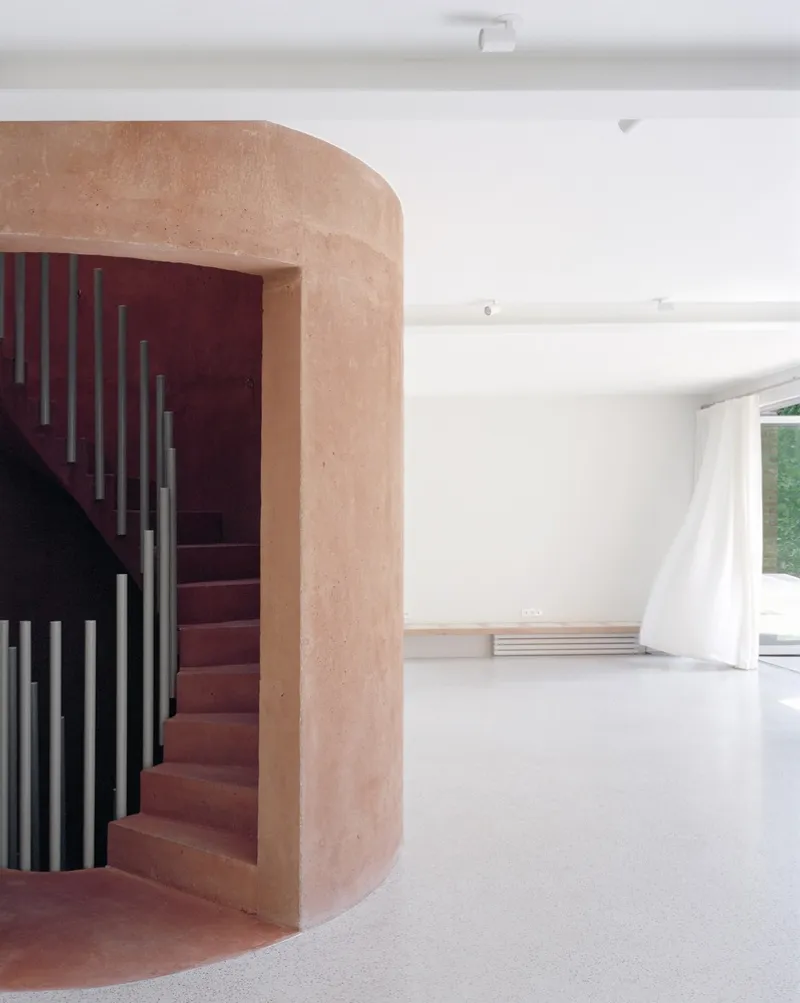
Atelier Delalande Tabourin (ADT) has completed an innovative house rehabilitation project in Versailles, France, utilizing brick shards—a sustainable material born from extensive research on repurposing locally sourced construction waste. The project redefines the spatial organization of a 1950s residential building, merging historic preservation with contemporary sustainability.
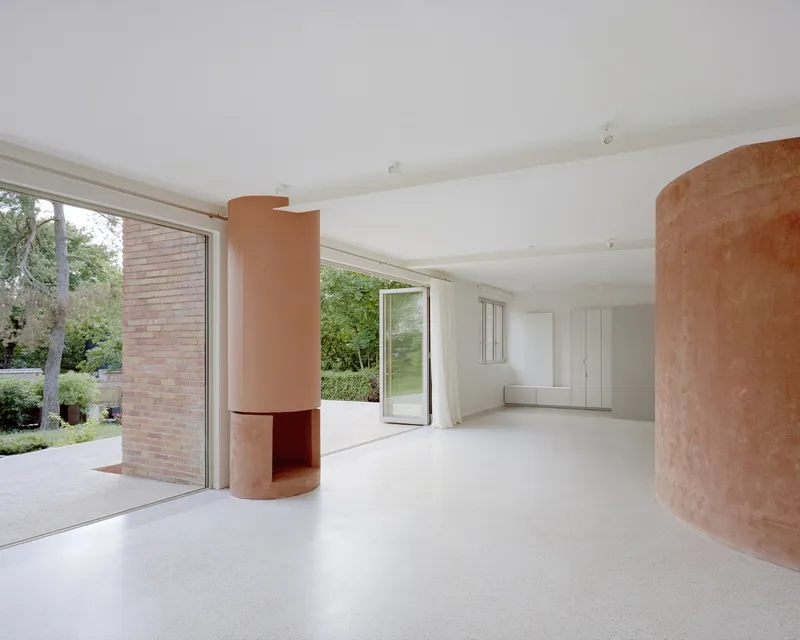
By introducing grogged concrete, a material derived from crushed defective bricks, the architects crafted new light wells, vertical brick steles, and improved circulation pathways, offering a fresh architectural narrative that balances functionality, material innovation, and environmental responsibility.
Transforming Space with Architectural Interventions
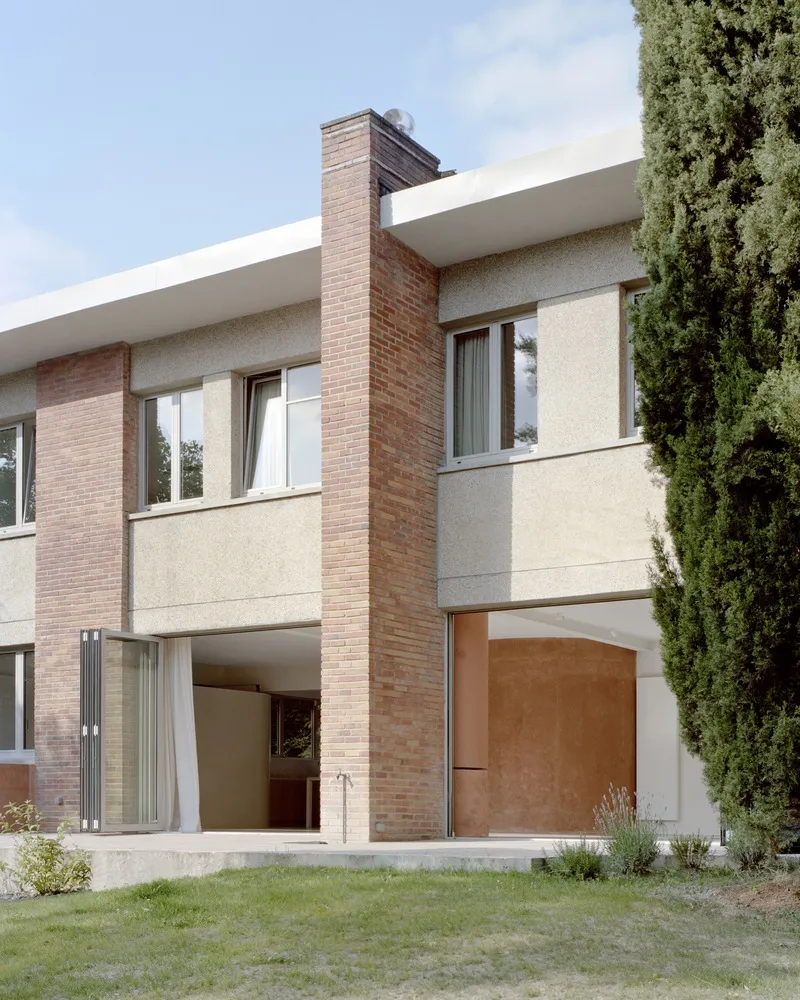
The existing house, originally dark and disconnected from its surrounding garden, underwent four major architectural modifications:
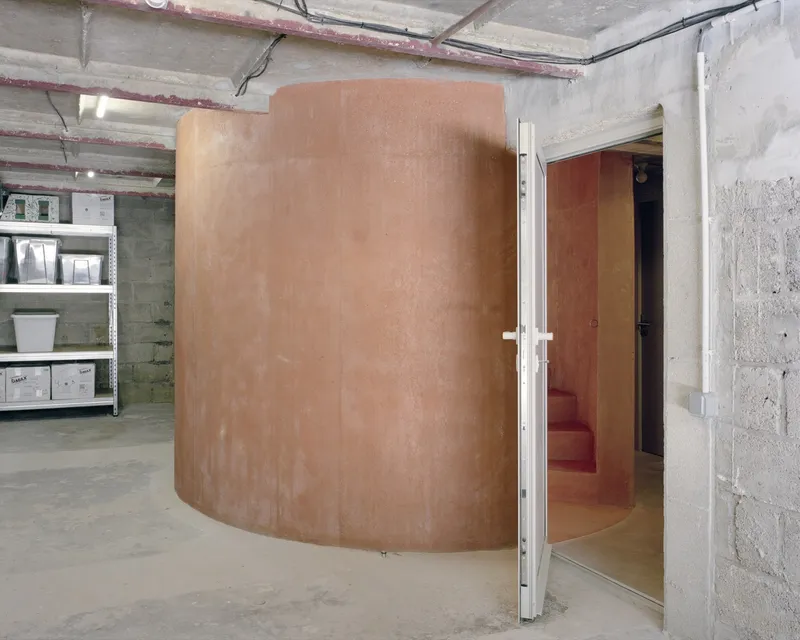
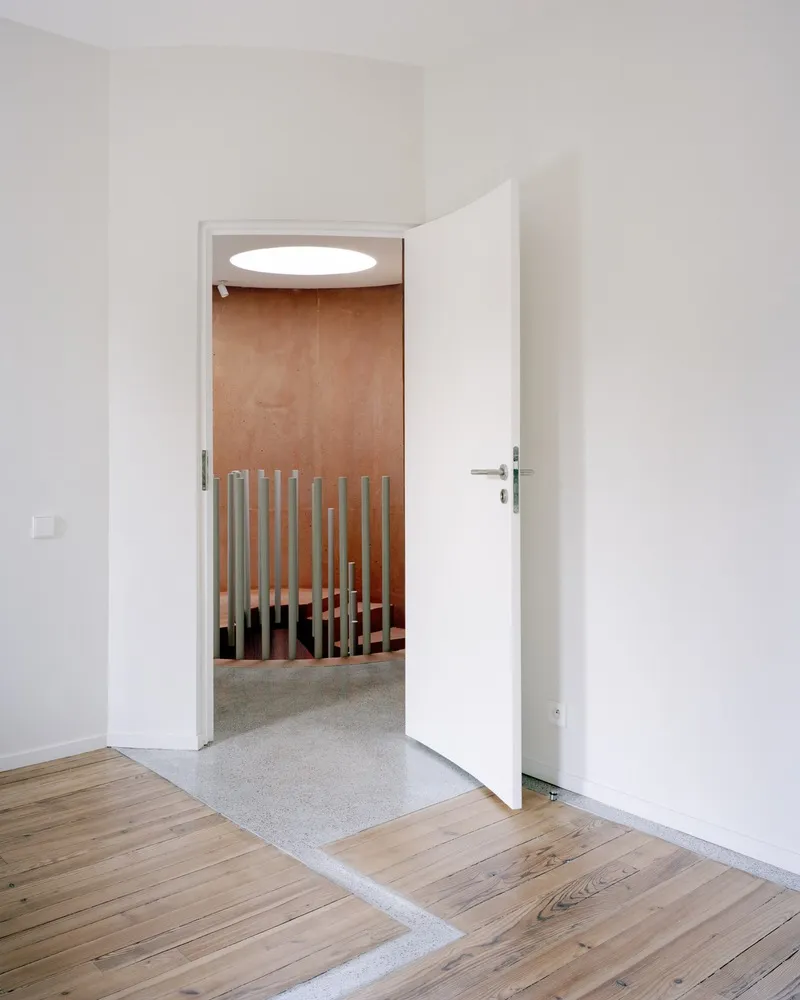
- Perforated Floorboards & Skylights – Large circular openings were created to introduce natural light and improve spatial connectivity.
- Vertical Brick Steles – Six prominent brick pillars were integrated into the façade to enhance structural lightness while maintaining the original cubic form.
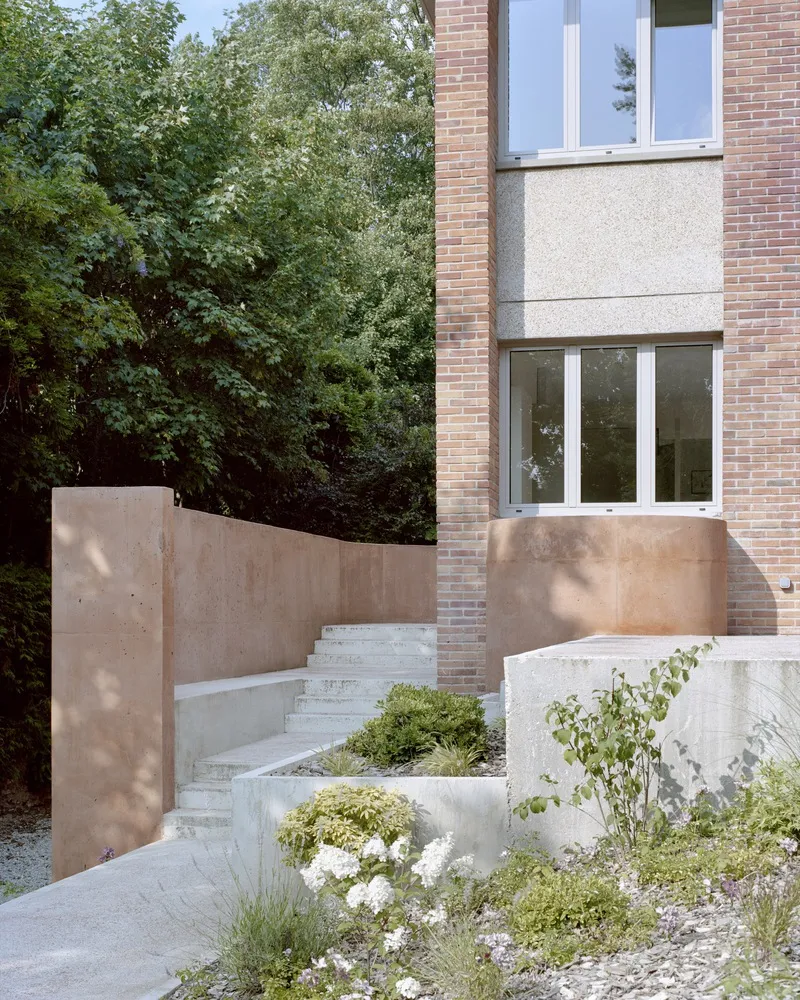
- Material Reuse Strategy – The use of recycled brick grog for flooring, walls, and structural elements contributes to a circular construction model.
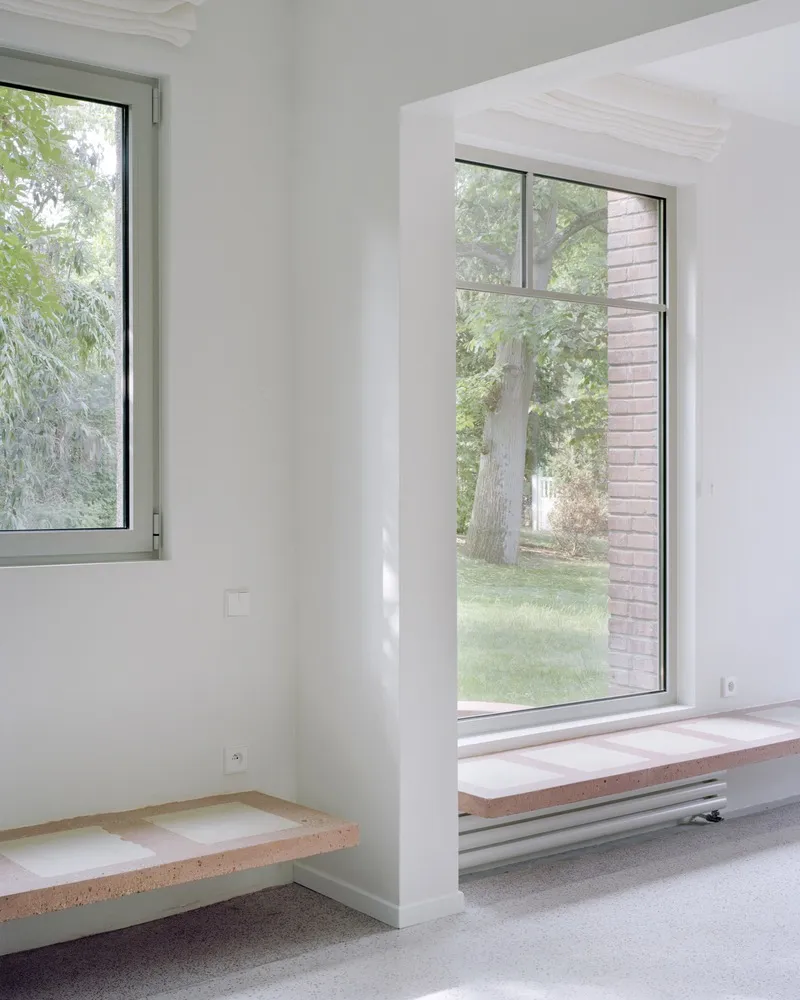
- Seamless Indoor-Outdoor Flow – Spatial reorganization connected previously isolated areas, harmonizing the interior with the surrounding landscape.
These interventions redefine movement within the house, turning previously neglected spaces into dynamic living areas while maintaining a sense of historical continuity.
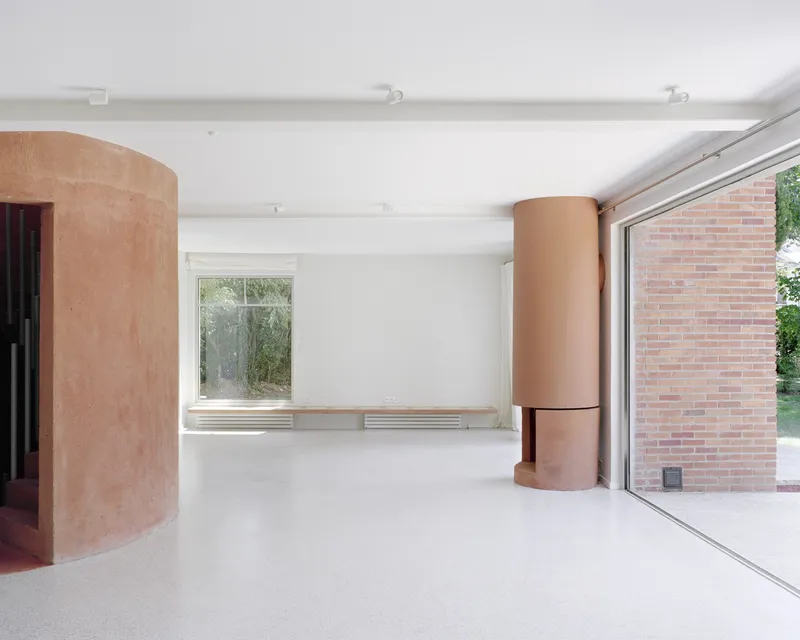
Sustainable Material Innovation: Grogged Concrete
In collaboration with Anna Saint-Pierre, a designer specializing in material reuse, ADT sourced defective bricks from DeWulf brickworks in Île-de-France. These discarded, overfired, and misshapen bricks—referred to as "grogs"—were crushed and repurposed into a textured concrete material.
Preserving Architectural Heritage with a Contemporary Vision
ADT sought to retain the essence of the original structure by revealing traces of past architectural elements:
- Former partition lines were exposed within rooms, preserving the house’s history.
- Existing travertine flooring was repurposed as a decorative masonry bench.
- Handcrafted elements highlight local craftsmanship while promoting sustainable construction practices.
This rehabilitation project stands as a testament to adaptive reuse, proving that historic buildings can evolve sustainably without erasing their past.
A Model for Circular Architecture
The House Rehabilitation with Brick Shards serves as an exemplary model for sustainable architecture, demonstrating how reuse-driven design strategies can lead to both aesthetic and environmental advancements. Through its commitment to material innovation, light optimization, and seamless circulation, Atelier Delalande Tabourin delivers a contemporary yet timeless living space that respects both architectural heritage and ecological responsibility.
All Photographs are works of Maxime Delvaux


Popular Articles
Popular articles from the community


Temporary Home for Dogs: A Reversed Zoo Rethinks Animal Shelter Architecture
In Bucharest, a sinuous corridor and freed landscape flip the logic of containment, designing a shelter that works to make itself unnecessary.

Tsunami Convergenics: Turning Catastrophic Ocean Forces into Underwater Housing Infrastructure
A speculative underwater settlement off the coast of Onagawa, Japan, treats tsunamis and typhoons as energy sources rather than threats.

The Amber Palace Opera: A Geological Fiction Surfaces on Tallinn's Baltic Waterfront
Pierre Brillard reimagines a Baltic legend as a public landscape, opera house, and waterfront promenade rooted in Tallinn's coastal identity.

Faces of the Soviet Avant-Garde: Turning Moscow's Street Names into an Open-Air Museum
A network of sculptural installations across a Moscow residential district transforms forgotten architect names into spatial encounters with cultural memor

Similar Reads
You might also enjoy these articles


Hodi-Mandai Geram
Project Function: Preservation and revitalization of the Intangible heritage and socio-spatial identity of the Hodi by Housing, Cultural Memory Center, Sacred Grove, landscape, local tourism economy


Olio Towers: A Mid-Rise for Performers That Fuses Housing, Rehearsal, and Stage
Located blocks from Houston's Theater District, this modular tower stacks living units around a central performance atrium.

Oasis: Modular Green Housing Carved into Dhaka's Urban Fabric
A shortlisted Plugin Housing entry reclaims unauthorized settlements in Dhaka with stepped concrete volumes, green roofs, and ventilation-driven design.

Black Hole: A Floating Megastructure for the Post-Physical Era
Emiliano Mazzarotto envisions a spherical, self-scaling arena where e-sports, digital hotels, and holographic stadiums replace traditional public space.

Explore Recycled Brick Competitions
Discover active competitions in this discipline

Challenge to reimagine the Iron Throne

Photograph architecture without architects

Illustrate the lost glory of Angkor Wat - Render Challenge

Design challenge to reuse E-waste
Comments (0)
Please login or sign up to add comments
No comments yet. Be the first to comment!