

Idilana Artisan Workshop by Semper Vera: A Community-Centered Architecture in Madagascar
Community-focused artisan workshop in Madagascar using local materials, passive cooling, and flexible spaces to support craftsmanship, education, and village gatherings.


The Idilana Artisan Workshop, designed by Semper Vera, stands as an inspiring example of community-centered architecture in Madagascar. Completed in 2022, this modest yet impactful 150 m² community building was conceived as a multifunctional space that supports local development, craftsmanship, and social gathering.
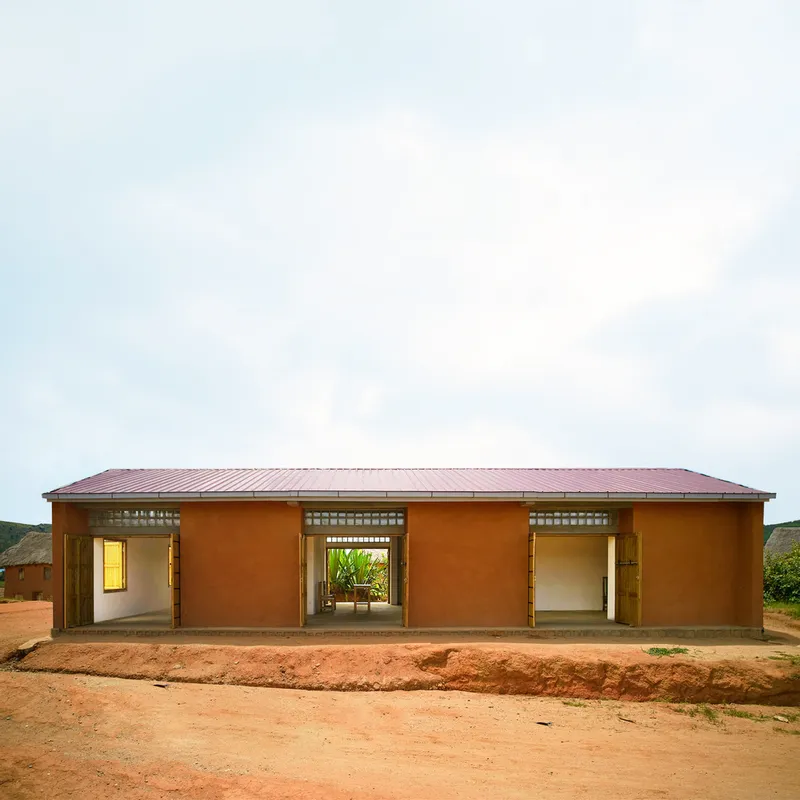
Located in a rural village, the project was initiated through a Franco-Malgasy association aiming to create opportunities for local communities by encouraging artisan work, sewing workshops, and community collaboration. The building acts as a village hub, combining workshop spaces, social gathering areas, and educational facilities under a single roof.
Through its thoughtful design, Idilana Artisan Workshop demonstrates how architecture, local materials, and participatory design strategies can strengthen community identity and create sustainable rural infrastructure.
Architectural Vision: A Multipurpose Village Hub
At the core of the project lies the idea of creating a central place for the village of Idilana: a space that encourages collaboration, learning, and collective activities. The building accommodates artisan production spaces, sewing workshops, and community gatherings, allowing villagers to develop local crafts and skills while strengthening social bonds.
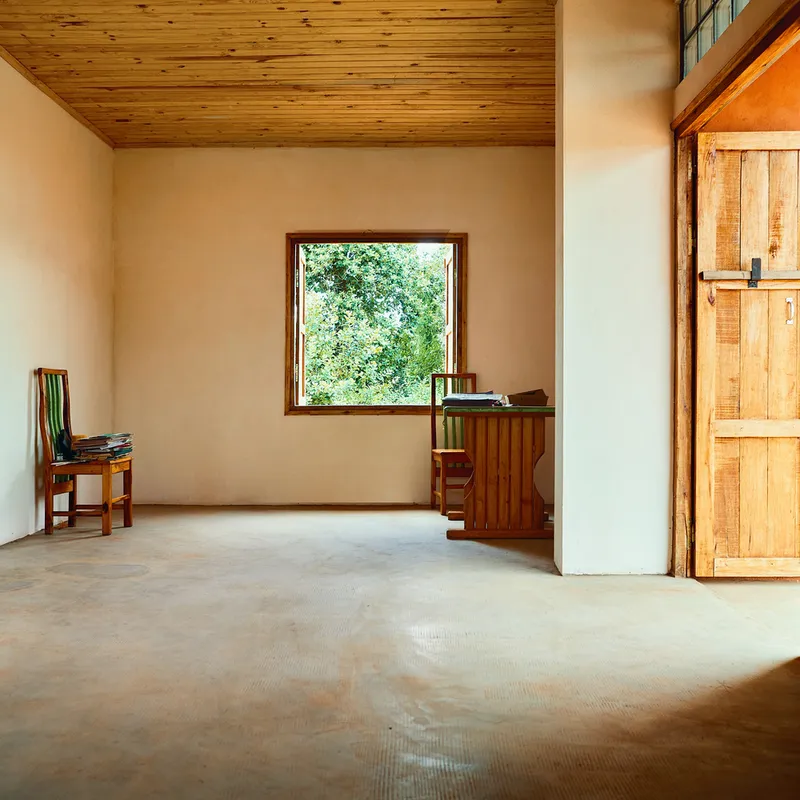
Architects Duc Truong and Elias Vogel led the project with a vision that prioritizes flexibility and adaptability. The interior layout allows the building to transform according to different needs, whether hosting workshops, training sessions, celebrations, or communal meetings.
This multifunctional design approach ensures the building remains relevant as the community evolves, making it a long-term catalyst for local economic and social development.
Integrating Local Identity Through Materials
A defining characteristic of the project is its strong connection to the surrounding architectural landscape. The architects carefully selected materials and construction methods that reflect the vernacular architecture of Madagascar.
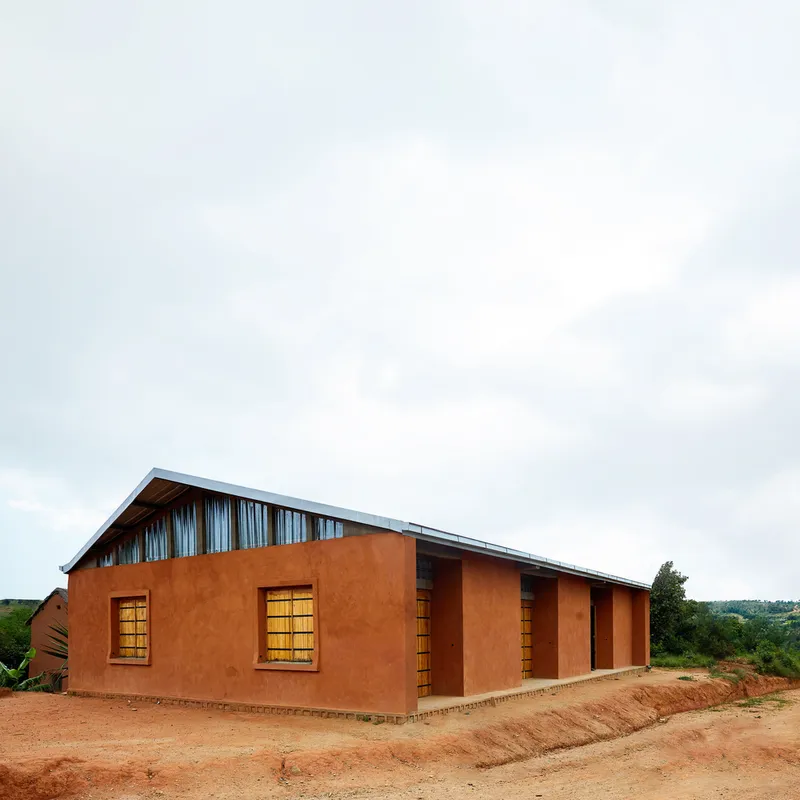
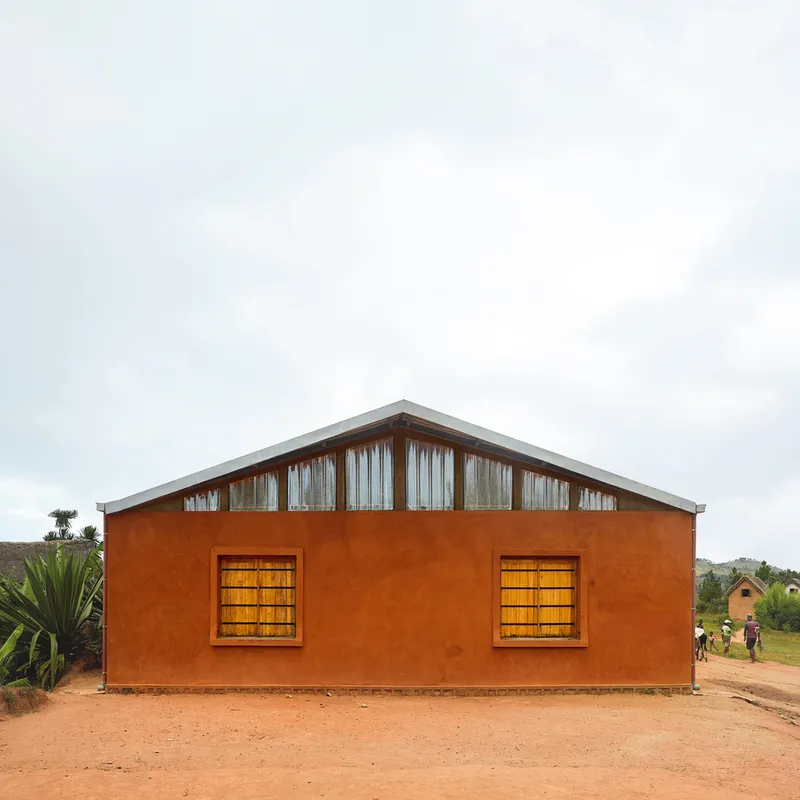
The building’s facade is coated using traditional techniques, combining locally sourced red earth with cement. This mixture creates a distinctive red tone that closely resembles the color of nearby homes, allowing the structure to blend naturally into the village fabric.
By using locally available materials, the design minimizes transportation costs while supporting traditional craftsmanship. This approach not only enhances sustainability but also reinforces a sense of cultural continuity and regional identity.
Climate-Responsive Architecture for Tropical Conditions
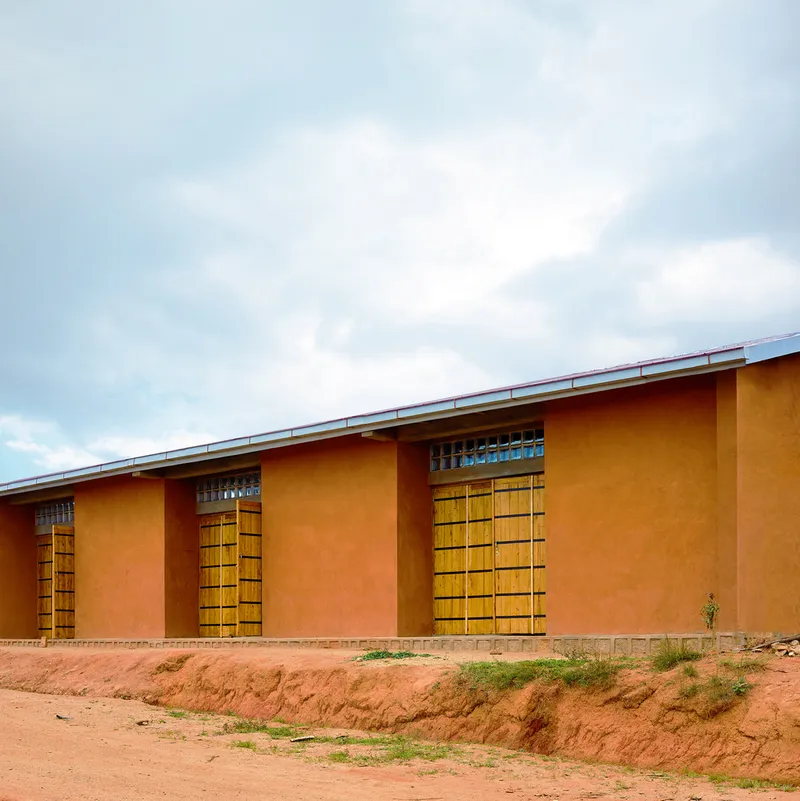
The architectural rhythm of the building plays a critical role in achieving thermal comfort and natural ventilation, which are essential in Madagascar’s warm climate.
The facade alternates between:
- Large wooden doors, which can be fully opened to connect interior and exterior spaces
- Massive earth blocks, which provide thermal mass and shading
This configuration allows cool air to circulate naturally through the building, reducing the need for mechanical cooling while maintaining comfortable indoor temperatures during the hot season.
The design also promotes passive climate control, a key strategy in sustainable architecture, ensuring that the building performs efficiently within its environmental context.
Interior Design: Light, Contrast, and Simplicity
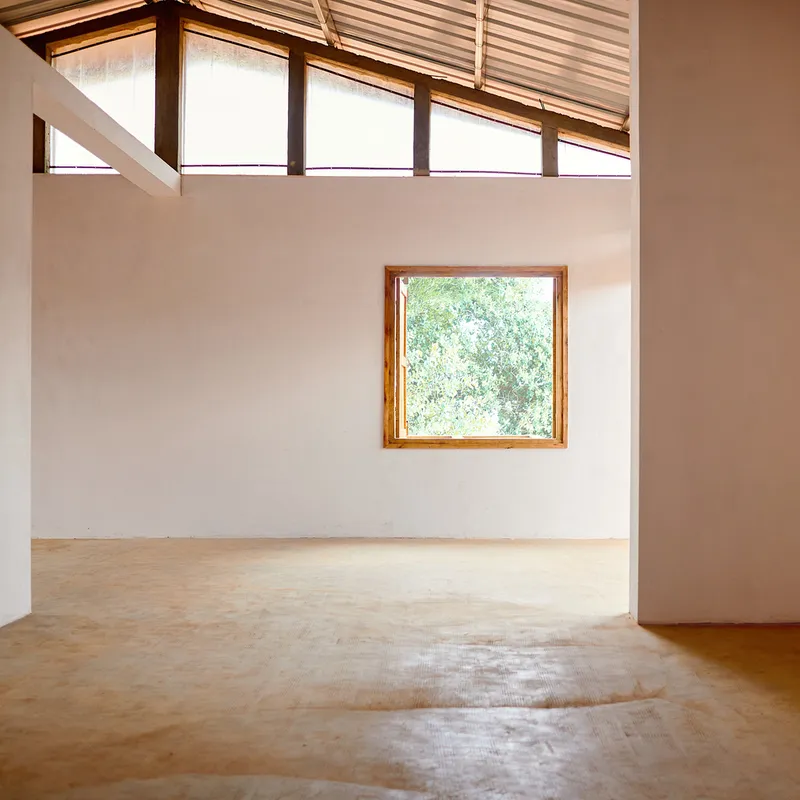
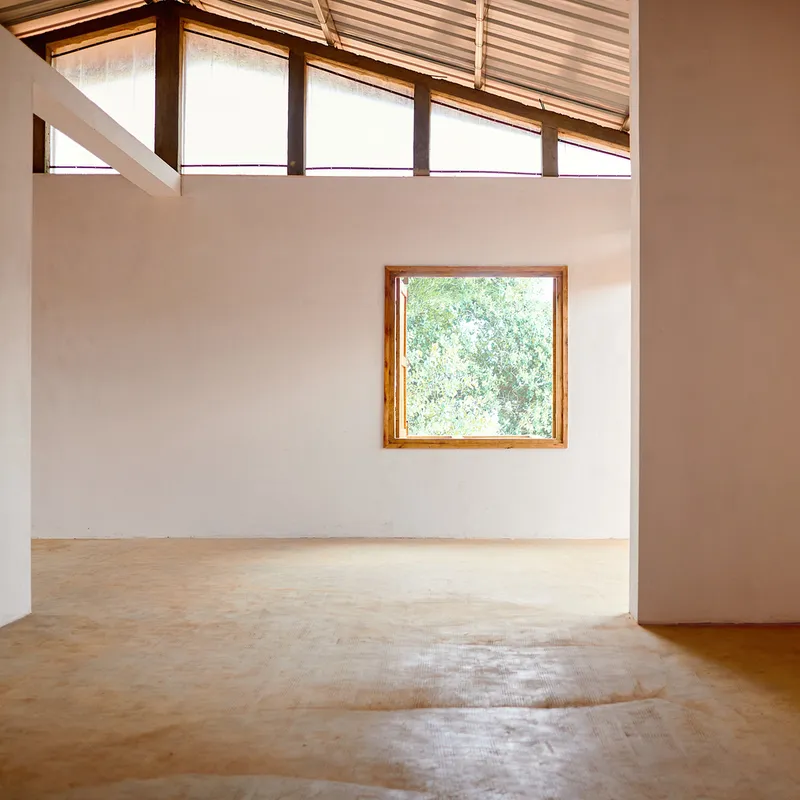
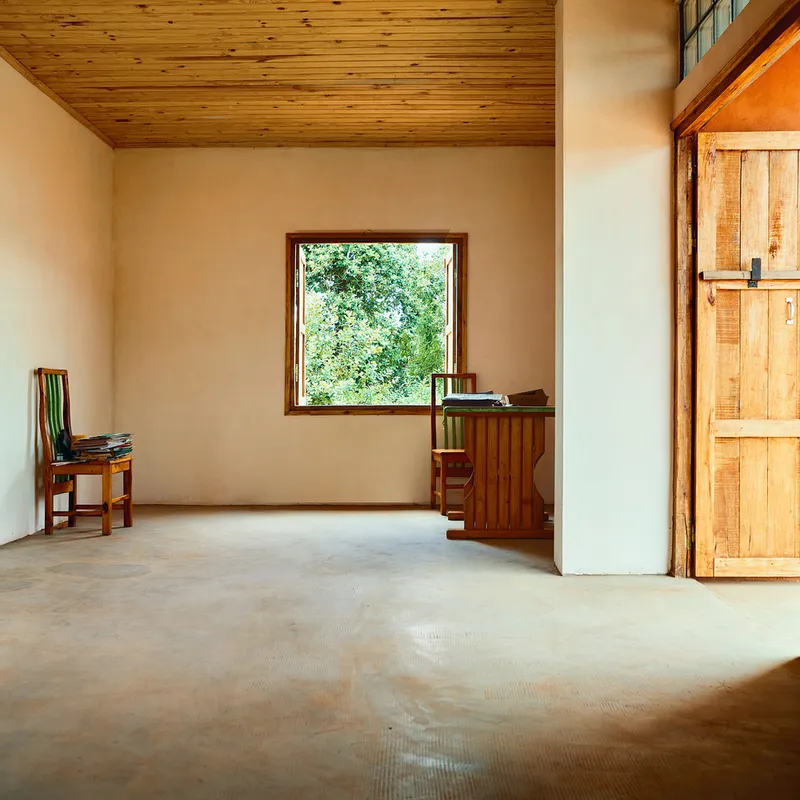
Inside the building, the design contrasts the warm exterior with a clean and luminous interior environment. The walls are painted bright white, amplifying natural light and visually expanding the interior space.
Another striking feature is the exposed metallic roof structure, intentionally left visible rather than concealed. This decision creates a dynamic interior atmosphere, as sunlight enters through openings and reflects off the metal surfaces, producing subtle patterns of light and shadow throughout the day.
The result is an interior that feels simple yet expressive, balancing practicality with spatial character.
Flexible Spatial Design for Community Life
The layout of the Idilana Artisan Workshop follows a repetitive modular plan, allowing the building to accommodate a wide variety of uses.
This flexibility transforms the structure into a social and economic platform for the village, where residents can:
- Gather for community meetings
- Participate in craft and sewing workshops
- Celebrate festivals and communal meals
- Develop small-scale artisan production
Such adaptability ensures the building remains responsive to community needs, strengthening its role as a shared cultural and social space.
A Model for Sustainable Rural Architecture
The Idilana Artisan Workshop demonstrates how small-scale architecture projects can generate meaningful social impact. Through the use of local materials, passive climate strategies, and adaptable spaces, the building supports both environmental sustainability and community empowerment.
Rather than imposing a foreign architectural language, the project respects the local context, traditions, and construction techniques, creating a building that truly belongs to its environment.
This approach highlights the potential of architecture as a tool for social change, particularly in rural communities where thoughtfully designed infrastructure can support education, craftsmanship, and economic development.
The Idilana Artisan Workshop by Semper Vera stands as a compelling example of community-driven architecture in Madagascar. Its integration of traditional materials, climate-responsive design, and flexible spaces transforms a simple building into a vibrant center for creativity and collaboration.
By prioritizing local identity, sustainability, and social engagement, the project illustrates how architecture can empower communities while preserving cultural heritage.
All photographs are works of
Ymagoo project


Popular Articles
Popular articles from the community


Architekt Andreas Gruber Scatters 23 Dark Timber Chalets Across a South Tyrolean Forest Edge
In Molini di Tures, Amonti Chalets breaks a resort into a hamlet of gabled timber houses, with parking, storage and services pushed into the slope.

GROUP A Strips a 1969 Rotterdam Harbor Headquarters to Its Frame and Wraps It in Timber Louvers
In Rotterdam's M4H harbor district, Ferro Offices reuses a 1969 frame, adds one timber storey and reaches BREEAM-NL Outstanding.

Juan García Correa, John González and Claudia Rueda Sink a Circular Amphitheater into a Manizales Engineering Building
On the La Nubia campus in Manizales, Colombia, the S1 Building folds labs and offices into a hillside of ramped lawns that double as a campus route.

longwave studio Reorganizes a 112 m² Tainan Apartment Around the Daily Routines of a Family and Two Cats
In Tainan, Taiwan, birch plywood, rust-red furniture and a freestanding plaster wall link arrival, storage, work and family life in one apartment.

Similar Reads
You might also enjoy these articles

Gil Mello Arquitetura Tilts a Single Roof Toward the Waterfalls on a Plateau Above Aiuruoca, Brazil
In Aiuruoca, Minas Gerais, a 200 m² house of local labor and reclaimed poles pairs a low valley veranda with a tall mountain one.

U.GA Architects Wraps an Oval Rooftop Pool in Curved Board-Formed Concrete on Busan's Jeollidan-gil
In Busan's Jeonpo-dong, a 454 m² mixed-use block stacks a neighborhood facility, guest rooms and an oval rooftop pool inside spiraling concrete walls.

Felipe Hess Arquitetos Turns a Blind Stone Wall to the Street and Opens a Brazilian House onto a Courtyard and Canal
A canal-front house in Brazil hides behind painted stone and planting, then opens to an olive-tree courtyard, a reed-ceilinged porch and a curving pool.

David Macias Steps a Doorless Stone and Plaster House Down a Tropical Colombian Hillside
In the humid hills of Colombia, Threshold House replaces the front door with an open void and terraces its 850 m² down the slope instead of fighting it.

Explore Architecture Competitions
Discover active competitions in this discipline

Challenge to reimagine the Iron Throne

Photograph architecture without architects

Illustrate the lost glory of Angkor Wat - Render Challenge

Design challenge to reuse E-waste
Comments (0)
Please login or sign up to add comments
No comments yet. Be the first to comment!