

If cities like Jackson want to emerge from their current crises, they need to start shunning tribalism and embracing community.
By coming together as a community, we can help Jackson rebound from the challenges it has faced in recent years.
The water infrastructure crisis in Jackson, Mississippi has received a lot of national attention recently. However, the problems the city faces are not new or unique to the South. This is not a story of municipal mismanagement. This is a story of long-term disinvestment and neglect of a place and its people. This is a chapter in a national story of misguided individualism, suburban capitalism that has gone wrong, and the loss of a sense of community.
Jackson, Mississippi is an important indicator of more than just neglected infrastructure. It's true that we have a failing water system, and like many other cities, we're facing the consequences of ageing infrastructure. However, it's not just our physical infrastructure that's failing - our social infrastructure is also in need of repair. A dwindling tax base has led to inadequate city resources for fire, police, and other essential services, including education. Since 1980, the city has lost more than 45,000 residents and many businesses to surrounding communities. This mass exodus has put a strain on the remaining residents, who have to bear the brunt of the city's decline.
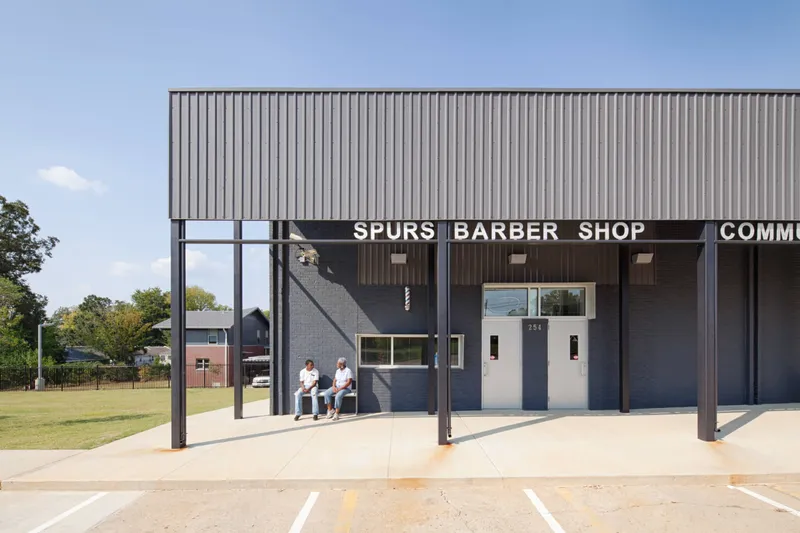 A community barber shop was completed during the third phase of Duvall Decker’s Midtown Master Plan project. (Mark Howell)
Jackson is a city with a lot to offer. Yes, it has its challenges, but the people of Jackson are a diverse and cooperative group. The city is home to amazing music, arts, and literature. It has museums, churches, neighbourhoods, nonprofit groups, great chefs and restaurants, universities, and state-of-the-art hospitals. Authors like Eudora Welty, Richard Wright, and Alice Walker once called Jackson home, and Mississippi blues musicians like B.B. King, Robert Johnson, and Muddy Waters performed here and changed all music that followed. Heroes of the Civil Rights Movement have worked tirelessly for hope and human dignity in this place. There's always room for improvement, and the city of Jackson is no exception. The heroes of the Civil Rights Movement have fought and continue to fight for a better future - a future with hope and human dignity for everyone in this world.
There's always room for improvement, and that's especially true in a city like Jackson. We're constantly working to do more with less, and we're seeing some great results. The city administration is becoming more efficient, and the school district is making some great strides in terms of educational opportunities. We're also seeing a rise in the school district's educational achievements. From our position on the political margin, Jackson is thriving thanks to our creative culture - which rivals any other place in America.
 A young Jackson resident sits outside a community health center created as part of the Midtown Master Plan in Jackson. (Mark Howell)
The failed water system in Jackson is a symptom of decades of emphasis on capitalistic individuality. Some say that the idea of “community” has been compromised because people have started to align themselves with tribes that are based on appearances, identities, and loyalties instead of actual communities. There's been a recent shift in focus from rational discussion to tribal alignments which has only served to make political conversations more divisive. This rhetoric does nothing but uphold the power of those in the centre while preventing any sort of critical or productive dialogue about the complex issues that make up our diverse culture.
Jackson is a "blue" city in a "red" state, which means that the majority of its residents are democratic. The city is made up of 82.47% black people, 16.19% white people, and 1.34% other people. Jackson is a poor city; 24.46% of its residents live below the poverty line. This is an indicator of a lack of investment and economic development in the city, which has left its residents without opportunities for social and economic mobility. Jackson is an inner city that is lacking in resources, with a diverse population that does not look like those who are in power. When you compare the suburbs around Jackson to the city itself, it's easy to see how the former has thrived while the latter has suffered. In America, cities like Jackson are all too often left to fend for themselves while the people who live in them continue to decline. The philosophical and policy changes in the 1980s led to reduced federal support for infrastructure and social services, leaving many cities searching for resources. The 1987 Clean Water Act revisions left Jackson with federal regulations to follow but without resources to meet the standards. The government intended the gap to be paid by states and local municipalities through increased water bills, but Jackson’s declining tax revenue and population led to inadequate funds for improvements or maintenance. The city has made some progress in repairing and updating its infrastructure, but there is still a long way to go. According to the master plan, there are over 100 miles of corroded cast iron piping that need to be upgraded, among other critical repairs. Unfortunately, most requests for state funding have not been very successful.
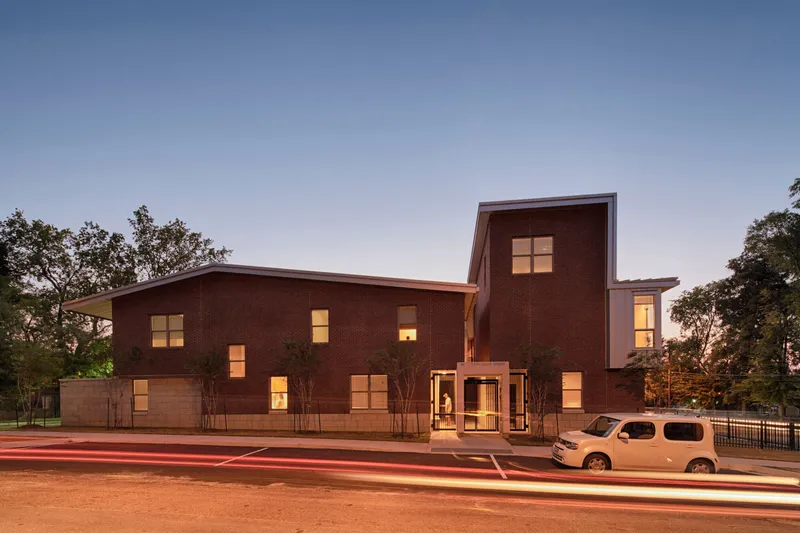 Social courtyard-anchored affordable housing was created as part of the Midtown Master Plan. (Mark Howell)
It's been a few years now since the governor and other state officials began either dismissing infrastructural needs as commonplace statewide or blaming them on city administration negligence. Both narratives have served as a means of redirecting funding to other communities within the state at the expense of those who need it most. State allocations for infrastructure improvements have neglected the areas where the need is greatest, preferring instead to funnel money into suburban and politically aligned communities. But finally, people are beginning to question this practice of neglecting inner cities in favour of other areas. It's time for those in power to start listening to the people and allocating resources where they're needed most. The EPA is currently investigating whether Mississippi is in violation of civil rights laws regarding federal infrastructure spending. This is in response to a recent complaint filed which alleges that the state has been discriminating against Jackson's majority Black population.
Our recent water crisis was a trying time for our whole community. We had to go without running water for more than 48 days, which meant flushing toilets with buckets and only being able to drink and brush our teeth with boiled or bottled water. This was especially hard on businesses like restaurants and hotels that had to bear the added expense of staying open, as well as our school children who had to go back to remote learning after finally returning to in-person learning (post-Covid). We're all hoping that this won't happen again any time soon. Over the years, we've become all too familiar with the water shortages that happen all too often. So, we always make sure to have a few toilet flushing buckets and a large water pump on standby, just in case.
The latest water crisis is different because it captured national attention and while the situation is inexcusable, it may result in some much-needed funding and federal, state, and city collaboration. We're encouraged that Jackson may become a trailblazer for other cities facing similar issues and start a conversation about how to rebuild our inner cities, open the centre, and empower those in the margin. We need to find a balance between individualism and community responsibility. We need to think differently about the very nature and future of our environment and society. How can we achieve individual success while also elevating the living opportunities and health of others? Can we undermine and interrogate the divisions and tribalism promoted in national news and social media, and return the productive civic debate to the actual issues and problems in our neglected cities? As architects, we have the ability to facilitate conversations that can lead to more just, equitable, and healthy communities. We can also help create communities that are more diverse and inclusive. By working together, we can make a difference in the world.
Architecture is public work - and that means more than just providing a service. Architects are trained to be servant leaders, which for us has come to mean teachers. A teacher reveals the public good when others cannot see it. A teacher explains the value of durability when the prevailing interest is in superficiality. Architecture projects are local, have a site, and are in a specific place and community. As architects, we sometimes don’t realize the public consequences that every building or landscape carries. But it’s important to remember that our work affects more than just the people who use our buildings or landscapes - it affects the whole community. With each new building that's erected or an old one that's renovated, each new site that's developed, and every park, street, school, library, home, and business that's changed - a community is also altered. These changes bring forth consequences that are experienced by those who encounter them on a daily basis, from homeowners to citizens utilizing public spaces. It's important to consider the public value of each intervention before taking any action because buildings can be seen as teachers. They express the values of a community, what they believe in, and even present their hopes for the future.
Design leaders are the people who guide the team through a design conversation that results in a functional, aesthetic, or economic solution. They can also help shape a more mature conversation about our social and environmental community health.
As an architect, I can't single-handedly fix the water infrastructure in Jackson, but I can help to facilitate a more productive conversation about what our community needs in order to be its best. Through my work, I can search for ways to benefit the public good, and help bring people together to achieve it.
Roy Decker, FAIA, is a co-founder of Duvall Decker Architects in Jackson, Mississippi. As an architect, Roy is always searching for ways to expand the role and impact of his profession for the public good. Committed to design excellence, education and skilful craftsmanship, Roy's work is imbued with great meaning. He is a respected design and critical thought leader in many arenas - from participating in neighbourhood meetings in inner cities, to serving on student reviews across the country, sharing his perspective in lectures and publications, or inspiring individuals in conversation.
References
2) FAIA

Popular Articles
Popular articles from the community


The Amber Palace Opera: A Geological Fiction Surfaces on Tallinn's Baltic Waterfront
Pierre Brillard reimagines a Baltic legend as a public landscape, opera house, and waterfront promenade rooted in Tallinn's coastal identity.

Opera on the Sea: Driftwood Logic Shapes a Timber Opera House on Estonia's Coast
Trevor Orgill's opera house translates the entangled drift of floating timber into a civic building where wood, water, and music converge.
Opera by the Sea Estonia: Three Shells Dissolving Architecture into Tallinn's Coastline
A winning opera house proposal replaces monumental form with interconnected shells that blur the boundary between building, park and Baltic Sea.

Singing Woman: Contemporary Architecture Inspired by Estonia’s Voice and the Sea
Singing Woman turns Estonia’s song culture into flowing opera house architecture, blending public life, landscape, sea, and national memory.

Similar Reads
You might also enjoy these articles

Bao Huynh Watercolor Atelier: A Serene Art Retreat in Hội An
Bao Huynh Watercolor Atelier in Hội An blends multifunctional art spaces, sustainable design, local materials, and family-friendly living in a serene environment.

Atelier Macri Concept Store Interior Design by CASE-REAL
Atelier Macri store features a "ko" counter, walnut wood details, cork displays, blending retail, gallery, and seamless customer experiences.

Manuel Vargas Izquierdo Stadium and High-Performance Sports Center: Architectural Excellence in Jalpa de Méndez
The Manuel Vargas Izquierdo Stadium blends sustainable design, inclusive sports facilities, and cultural-inspired architecture, revitalizing Jalpa de Méndez’s public spaces.
KAKR Buluh Awar Hall: Revitalizing Community and Ecology Through Bamboo Architecture
Community built bamboo hall revitalizes Buluh Awar village, empowering youth, restoring ecology, celebrating vernacular craftsmanship through sustainable architecture and culture.

Explore Community Reconstruction Competitions
Discover active competitions in this discipline


Challenge to reimagine the Iron Throne

Photograph architecture without architects

Illustrate the lost glory of Angkor Wat - Render Challenge

Design challenge to reuse E-waste
Comments (0)
Please login or sign up to add comments
No comments yet. Be the first to comment!