
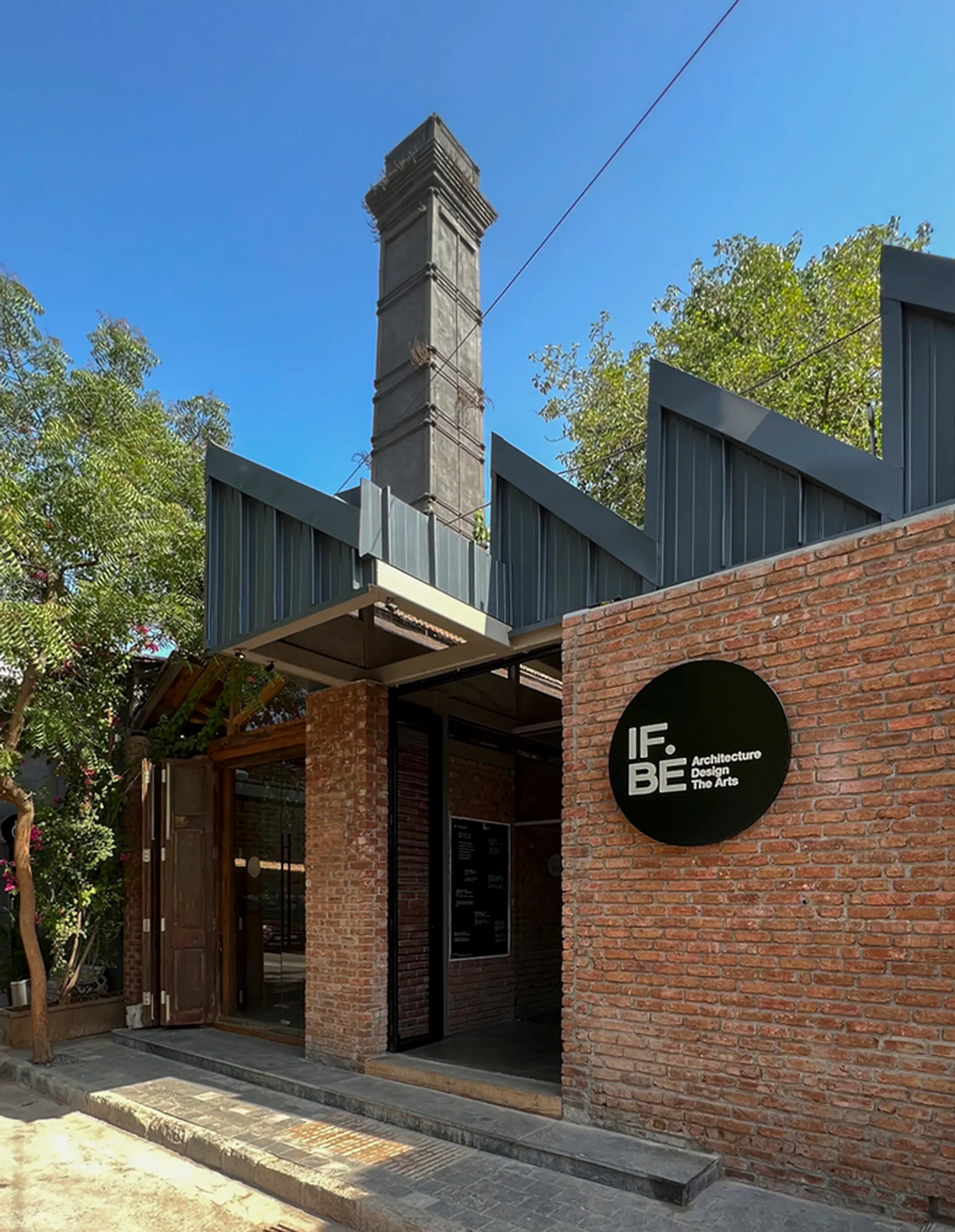
IF.BE Ice Factory Ballard Estate: A Landmark in Adaptive Reuse and Cultural Revitalization by Malik Architecture
IF.BE transforms a decaying ice factory into a vibrant cultural hub, merging heritage, art, nature, and adaptive reuse.


Located in the heart of Mumbai’s historic Ballard Estate, the transformation of the 140-year-old Ambico Ice Factory into IF.BE (Ice Factory Ballard Estate) by Malik Architecture stands as a pioneering project in adaptive reuse, cultural restoration, and sustainable urban regeneration. Encompassing 10,870 square feet, this mixed-use space reimagines the old industrial site as a dynamic cultural node—blending art, design, performance, exhibitions, food, and public gatherings under one unified architectural narrative.
From Industrial Ruin to Cultural Oasis
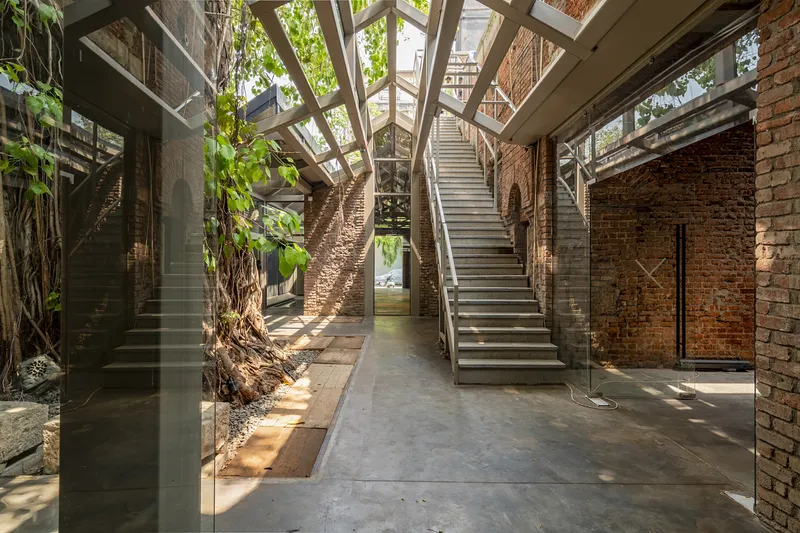
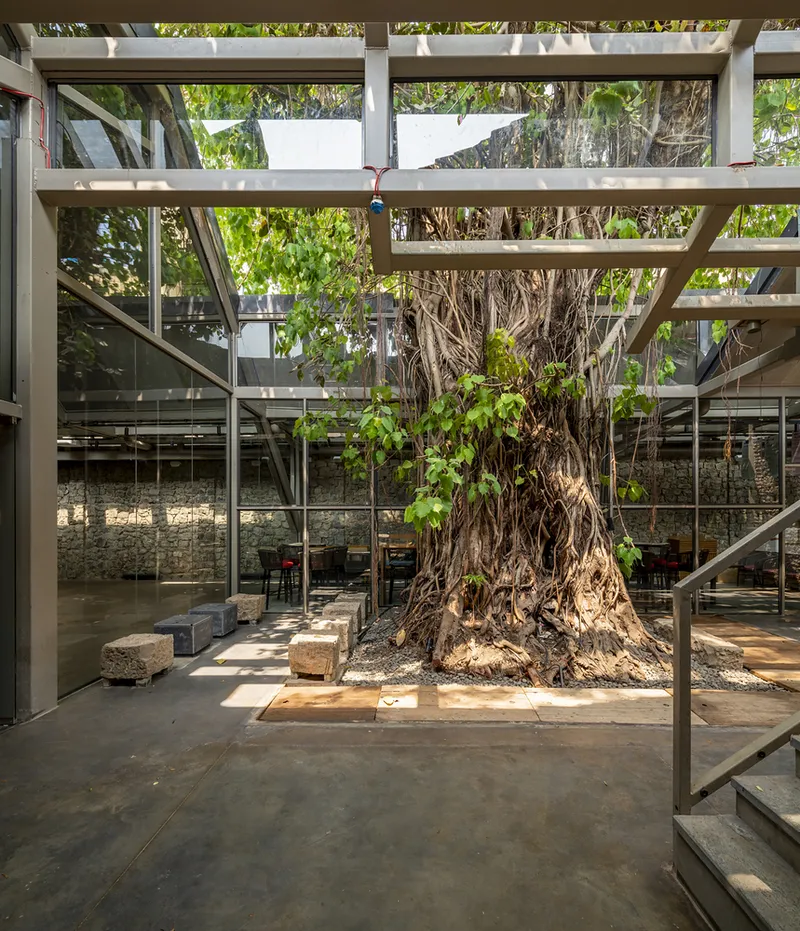
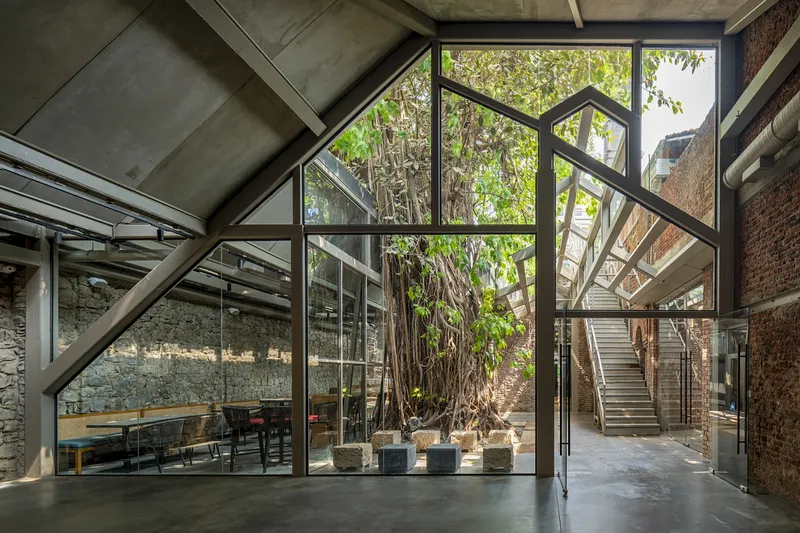
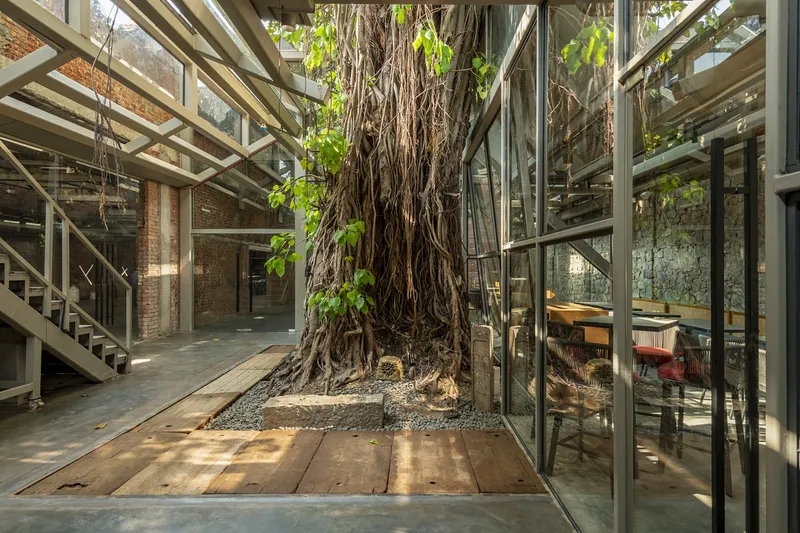
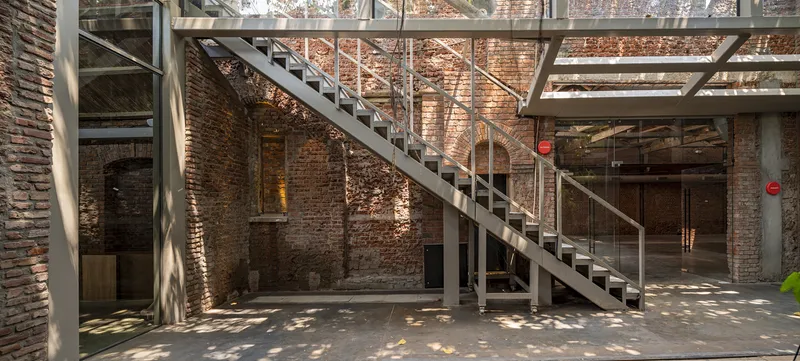
The original structure—long subjected to decay, structural compromise, and insensitive alterations—was carefully examined and surgically restored. The site analysis revealed a once-continuous courtyard linking Calicut and Cochin Streets, now congested by ad-hoc construction. At the center stood a century-old Banyan tree, buried under rubble but destined to become the soul of the new design. This tree became the project's conceptual genesis—a metaphor for breathing new life into heritage architecture.
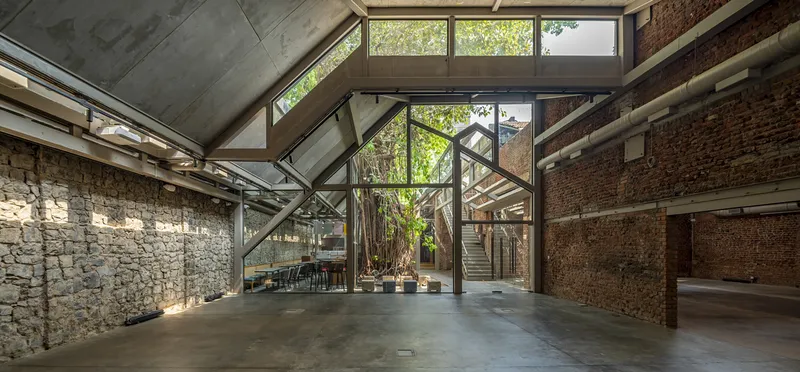
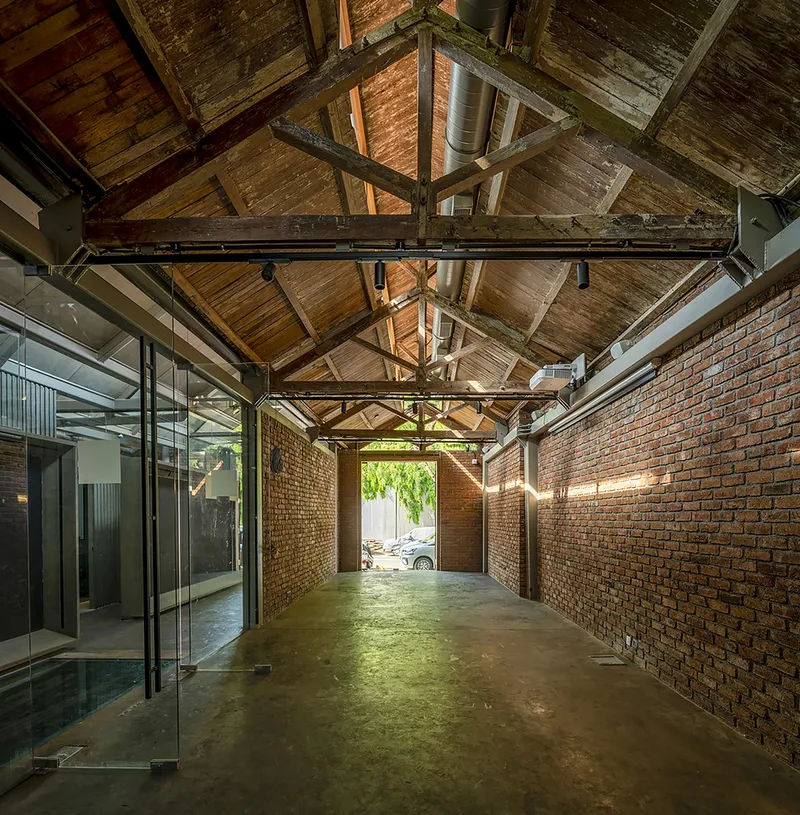
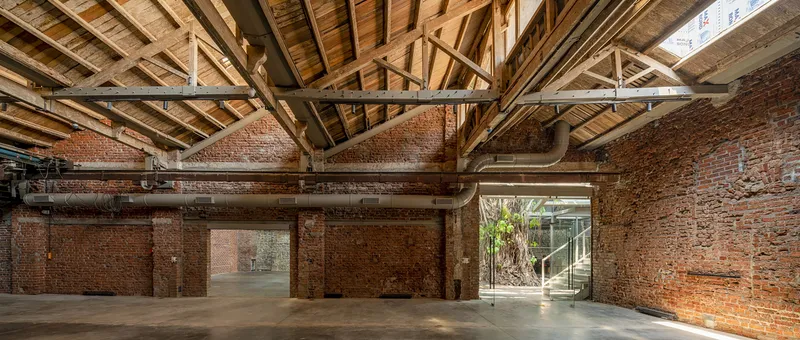
The project’s architectural language emerges not from invention but introspection. Rather than imposing a new form, Malik Architecture excavated the past—literally and figuratively. Plaster was gently scraped off decades-old walls to reveal original brickwork and vintage Burma teak structures. The design philosophy emphasizes a dialogue between the found and the made, seamlessly integrating restored elements with new architectural interventions.
Design Interventions and Structural Innovation
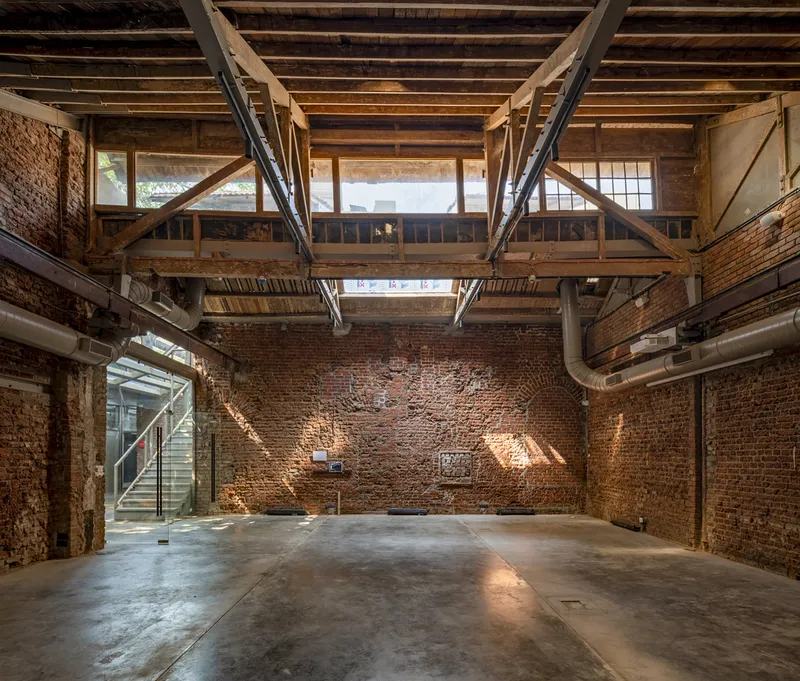
The restoration effort focused on structural integrity and spatial clarity. Retrofitting was employed to stabilize crumbling foundations, sagging trusses, and warped walls in the main ice factory, sub-station, cold storage, and ice-cubing units. The existing north-light truss roofs were extended and reoriented, while maintaining ventilation and daylight access for neighboring buildings.
A dramatic feature is the transformation of the sub-station into a “Cathedral” space—a large, light-filled room defined by its lantern roof and framed views of the courtyard and Banyan tree. Here, industrial elements take on new lives: original gantries are reused as movable art partitions, while old cooling coils are embedded in a glass floor, creating a museum-like spatial experience.
Sustainability Through Preservation
In an era where heritage is often sacrificed for commercial gain, IF.BE offers a counter-narrative. It challenges the ongoing erasure of industrial architecture in Mumbai's historic precincts, advocating instead for micro-urbanism, adaptive reuse, and sustainable development. The project is not just a building—it’s a living platform for democratic discourse, community engagement, and cultural experimentation.
Spaces of varying scale, light, and materiality encourage curators, artists, and visitors to explore IF.BE not as a static venue but as an ever-evolving organism. It defies the sterile typologies of "white cube" galleries or black-box theaters, inviting instead participatory and immersive use.
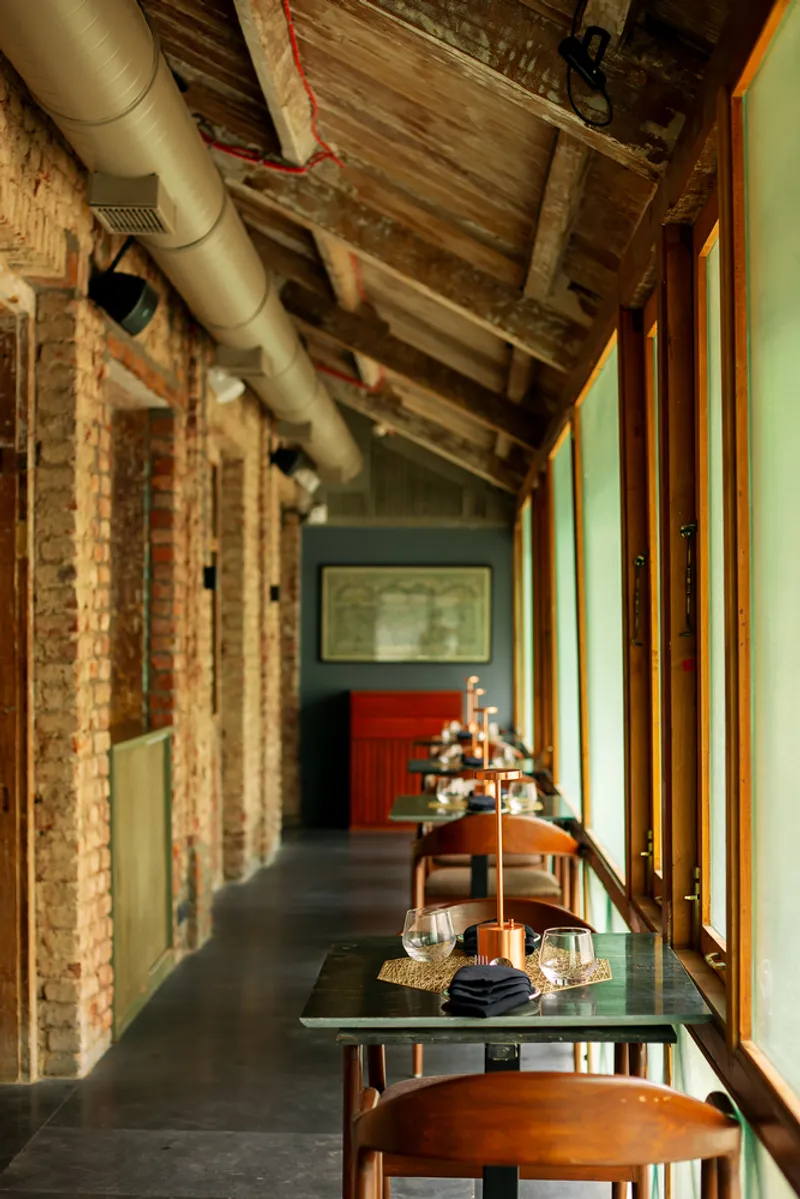
A Model for Urban Cultural Infrastructure
Beyond its architectural achievement, IF.BE is a self-funded initiative by Malik Architecture, in collaboration with two equal partners. It represents a bold act of civic engagement and resistance against the decline of public cultural spaces in Indian cities. The project involved over three years of continuous on-site exploration, treating the building as an archaeological site where fragments—physical, historical, and emotional—were unearthed and stitched together to form a cohesive spatial narrative.
Malik Architecture’s approach sets a benchmark for how heritage restoration can be performed with sensitivity, sustainability, and visionary purpose. As a seed for future urban interventions, IF.BE aspires to inspire architects, developers, and public bodies to preserve the past while designing for the future.
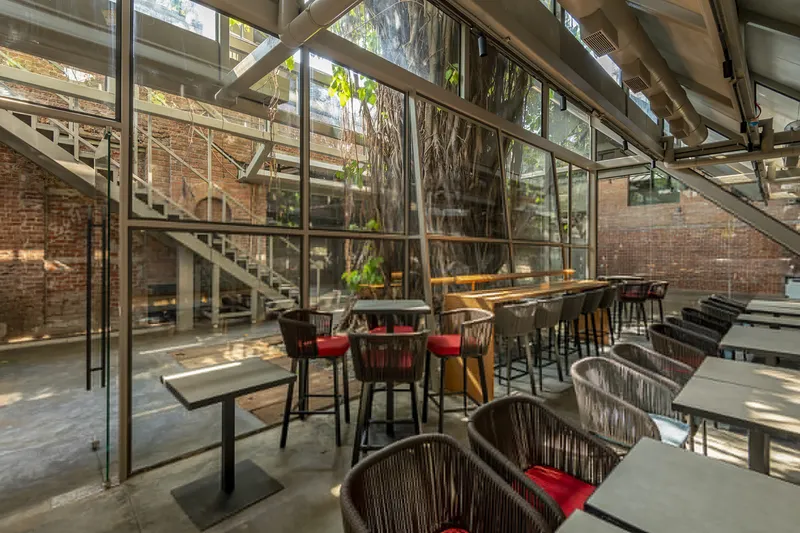
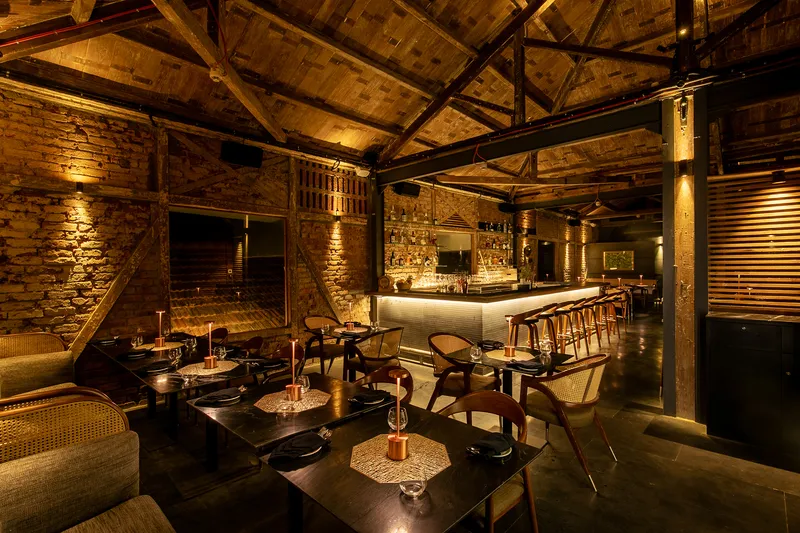
All Photographs are works of Bharath Ramamrutham




Popular Articles
Popular articles from the community


The Musturak Paradise: Senior Living Architecture for a Connected Future in Temara, Morocco
The Musturak Paradise reimagines senior living architecture in Temara via private homes, social spaces, culture, community, and shared care.

Riyadh For All: Intergenerational Urban Design for Active Aging in Rabat
Riyadh For All reimagines urban design in Rabat with intergenerational co-living, adaptive courtyards, and Moroccan cultural exchange today.

Hill & Cross Opera: Sculptural Opera House Architecture Shaped by Tallinn’s Landscape and Identity
Hill & Cross Opera reimagines opera house architecture in Tallinn through its sculptural hill, civic plaza, glass wave and a luminous cross.

The Ocean Hive: Sustainable Architecture for a Self-Sufficient Civilization at Sea
The Ocean Hive imagines sustainable architecture at sea, where modular habitats, algae, wave power and ocean waste sustain a growing colony.


Similar Reads
You might also enjoy these articles


Hodi-Mandai Geram
Project Function: Preservation and revitalization of the Intangible heritage and socio-spatial identity of the Hodi by Housing, Cultural Memory Center, Sacred Grove, landscape, local tourism economy


Olio Towers: A Mid-Rise for Performers That Fuses Housing, Rehearsal, and Stage
Located blocks from Houston's Theater District, this modular tower stacks living units around a central performance atrium.

Oasis: Modular Green Housing Carved into Dhaka's Urban Fabric
A shortlisted Plugin Housing entry reclaims unauthorized settlements in Dhaka with stepped concrete volumes, green roofs, and ventilation-driven design.

Black Hole: A Floating Megastructure for the Post-Physical Era
Emiliano Mazzarotto envisions a spherical, self-scaling arena where e-sports, digital hotels, and holographic stadiums replace traditional public space.

Explore Cultural Architecture Competitions
Discover active competitions in this discipline



Challenge to reimagine the Iron Throne


Photograph architecture without architects


Illustrate the lost glory of Angkor Wat - Render Challenge


Bring back Drive In's
Comments (0)
Please login or sign up to add comments
No comments yet. Be the first to comment!