

Impluvium by Choza: A Vision of Sustainable Greenhouse Architecture in Argentina
Impluvium by Choza redefines sustainable greenhouse architecture in Argentina, blending adaptive reuse, passive design, and contemplative agricultural spaces.


The Impluvium by Choza. Espacio de Arquitectura in Calamuchita, Córdoba, Argentina, redefines the boundaries of sustainable greenhouse architecture. Designed in 2023, this project transforms a disused water tank into a multifunctional greenhouse that embodies the principles of recycling, sustainability, and contemplative living.

From Past to Present: Reusing Historical Infrastructure
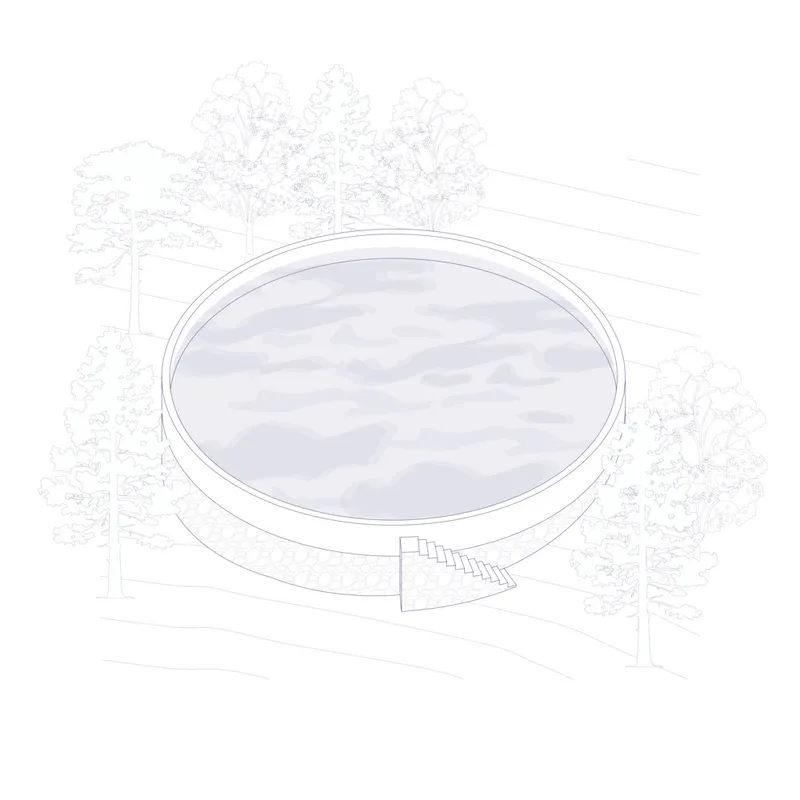
The Impluvium greenhouse sits on the remains of a productive property from the 1930s, where a water tank once supplied irrigation to the valley. Nearly 90 years later, the tank’s circular base and rocky foundation were repurposed into an architectural platform, proving that infrastructures with physical and cultural value can be reimagined. This adaptive reuse highlights the project’s commitment to a sustainable architectural approach, linking past agricultural heritage with present-day ecological needs.

Conceptual Foundations: Produce, Experiment, Contemplate
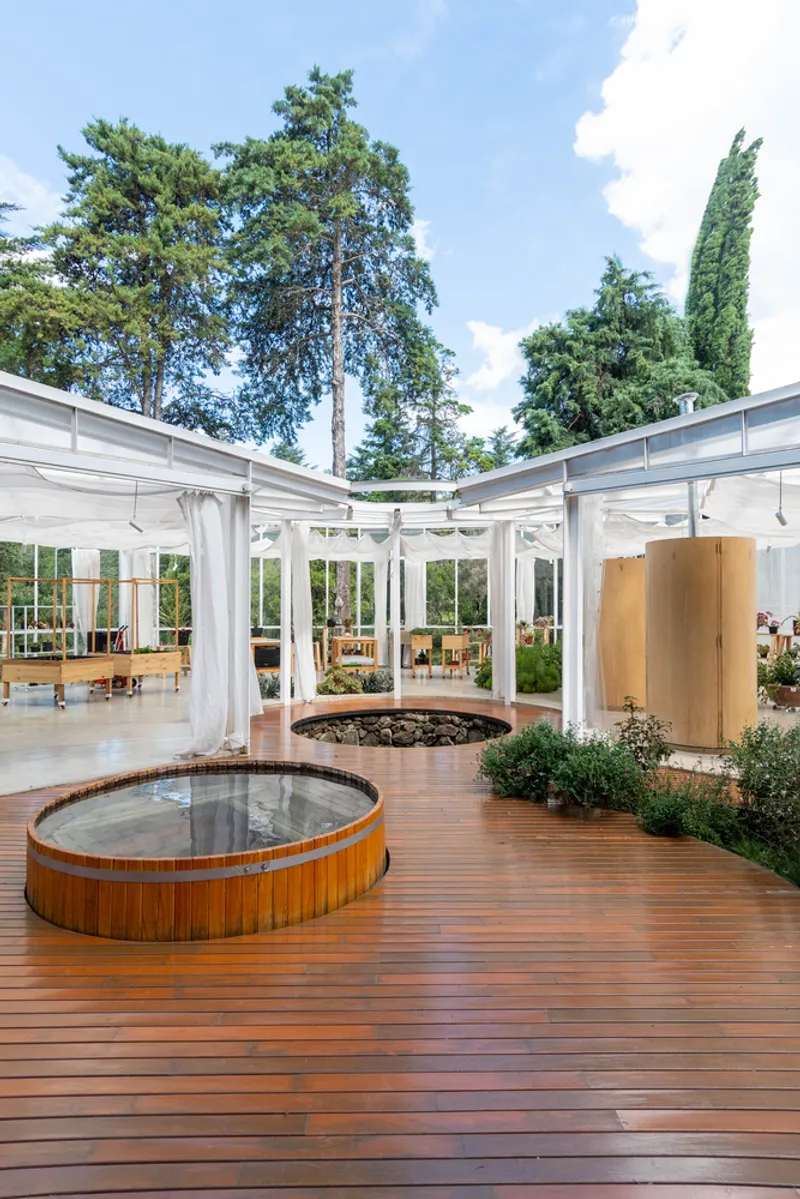
The project responds to three essential desires: reproducing plant life, experimenting with cultivation under controlled climates, and creating a space for contemplation. The Impluvium greenhouse balances practical agricultural functions with leisure and reflection, integrating cultivation spaces with areas for rest, observation, and enjoyment.


Architectural Design: The Inverted Tent
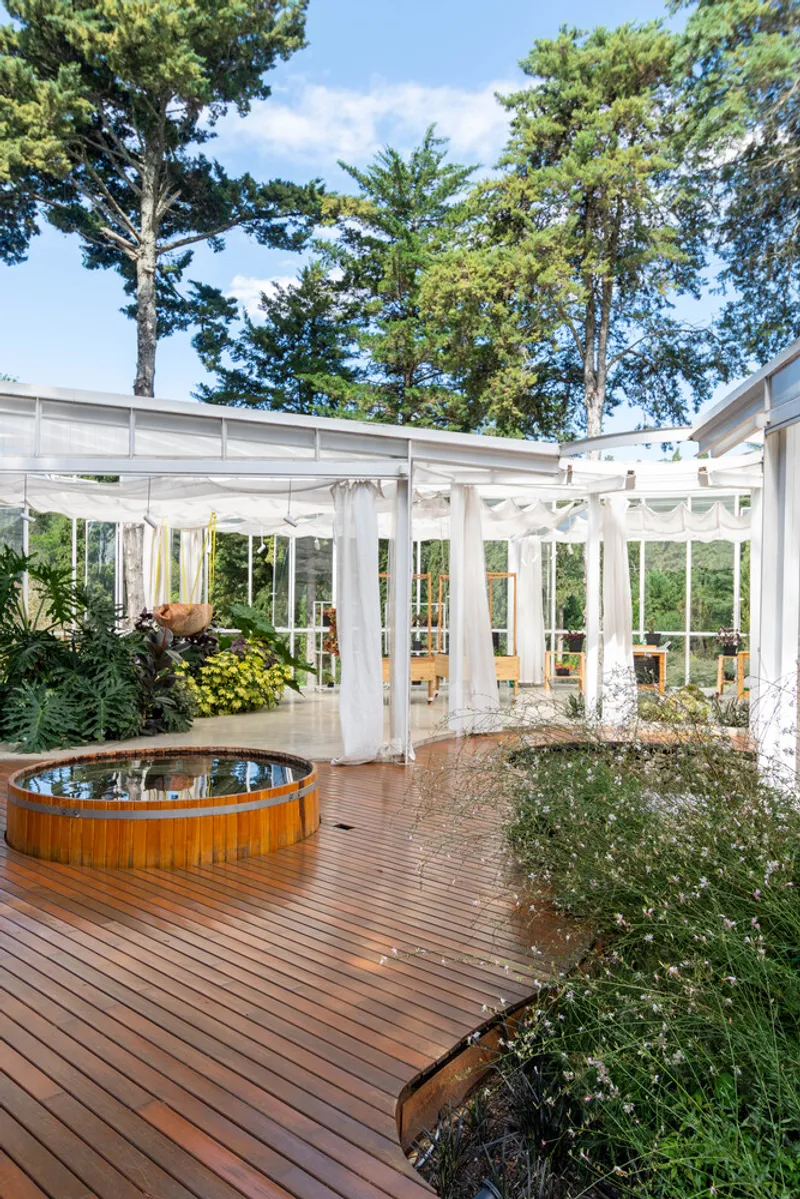
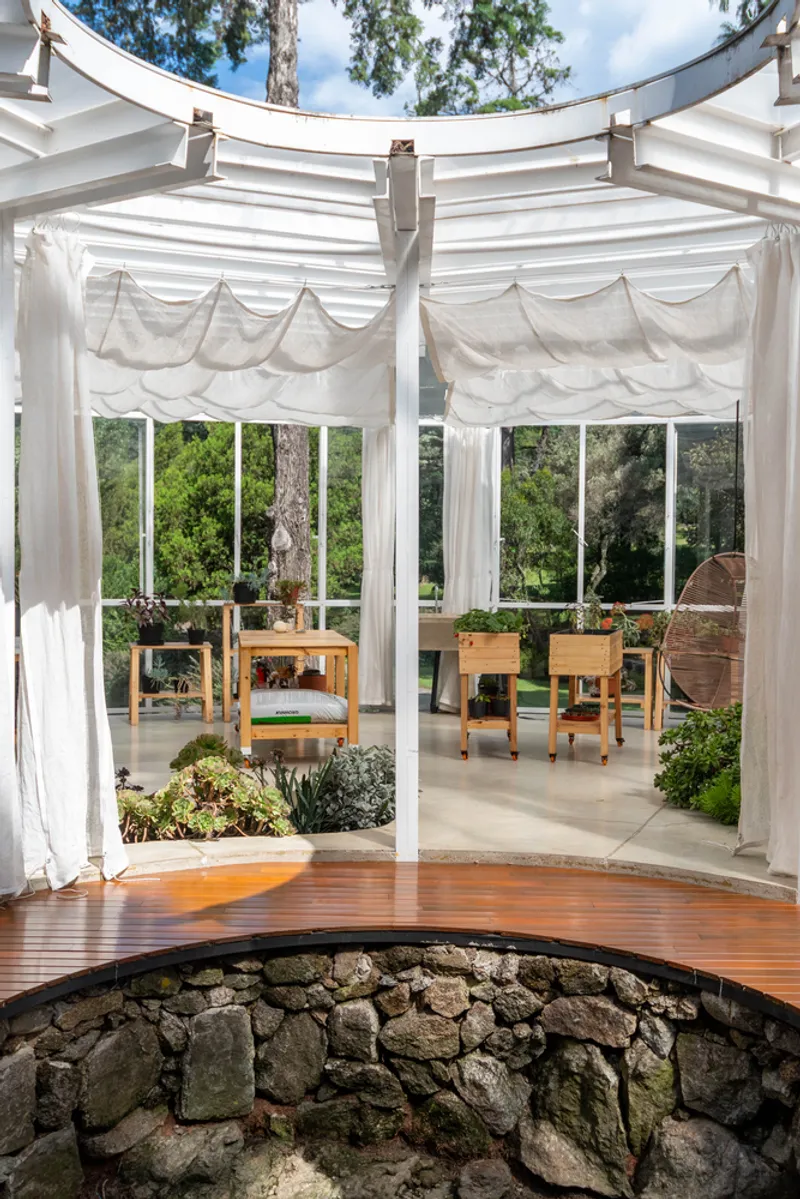
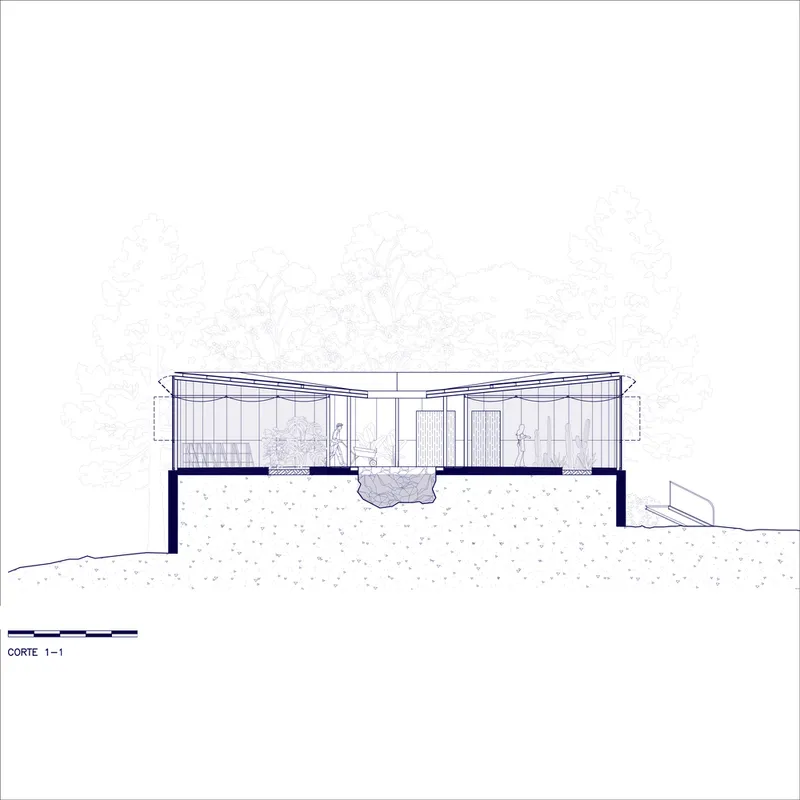
Inspired by the Roman impluvium, the greenhouse features an inverted circular tent form, structured in steel and enclosed with translucent polycarbonate. At the center, the roof opens to collect rainwater, channeling it into a natural pool formed by the rocky terrain. This design not only sustains cultivation but also creates a poetic relationship between water, architecture, and landscape.
Functional Organization: Eight Modular Sectors
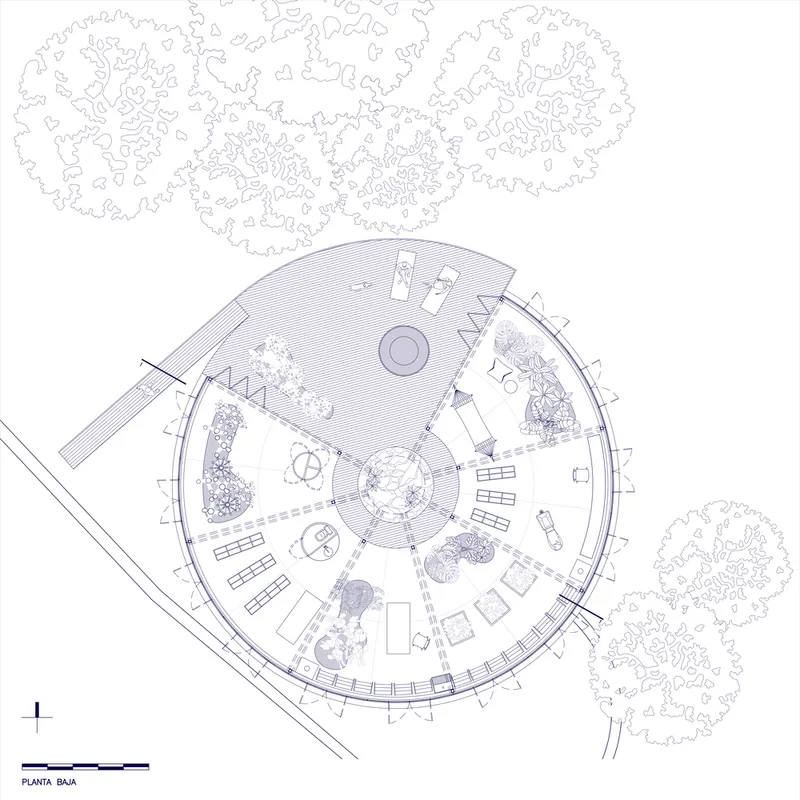
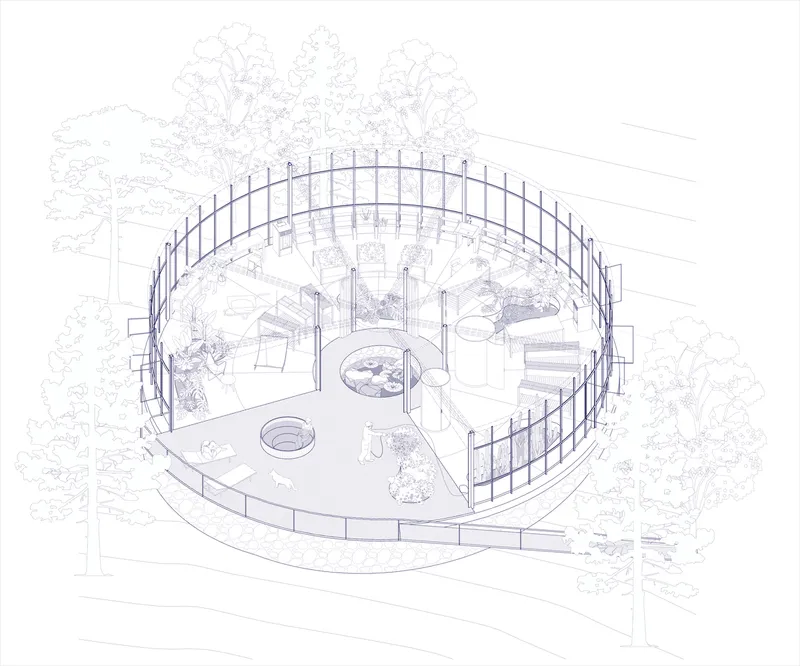
The 16-meter diameter circular surface is divided into eight structural and spatial modules. Six are dedicated to interior cultivation and experimentation, while two are exterior extensions. Each module operates independently, with controlled systems for temperature, humidity, ventilation, and lighting. The greenhouse accommodates diverse crops—from vegetables and hydroponics to cacti, orchids, and tropical plants—while also offering storage and germination workspaces.
Climate Responsiveness and Energy Efficiency
In Córdoba’s challenging climate of seasonal extremes, the Impluvium greenhouse applies passive architectural strategies. During winter, the design maximizes solar radiation capture, storing heat to maintain interior warmth. In summer, natural ventilation and a double-envelope system prevent overheating.
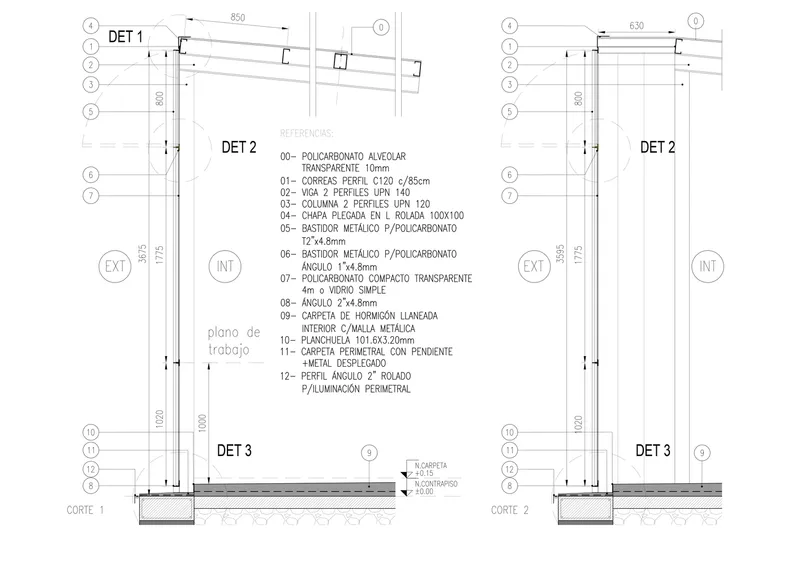

The outer polycarbonate shell enhances light capture while providing ventilation through operable perimeter openings. Inside, a white micro-perforated textile membrane filters sunlight, retains heat in winter, and creates a thermal buffer in summer. This layered system regulates temperatures efficiently while maintaining natural light for photosynthesis.

A Slow and Handcrafted Architecture
The greenhouse embodies the idea of “slow architecture,” where care, maintenance, and observation are integral to design. By drawing inspiration from Lacaton & Vassal’s integration of industrial typologies with domestic life, Choza demonstrates how greenhouses can be both productive infrastructures and spaces of human experience.


A Model for Sustainable Greenhouse Architecture
The Impluvium by Choza exemplifies how architecture can merge sustainability, adaptive reuse, and cultural reflection. Through its circular geometry, climatic intelligence, and poetic water collection system, the project sets a benchmark for sustainable greenhouse architecture. It demonstrates that ecological design is not only about efficiency but also about rethinking the relationship between humans, environment, and time.
All Photographs are works of Juan Cruz Paredes




Popular Articles
Popular articles from the community


The Musturak Paradise: Senior Living Architecture for a Connected Future in Temara, Morocco
The Musturak Paradise reimagines senior living architecture in Temara via private homes, social spaces, culture, community, and shared care.

Co-life: Sustainable Architecture for Age-Friendly Community Living
Co-life reimagines sustainable architecture for seniors through courtyards, rammed earth, shared gardens, and spaces designed for belonging.

AL-JANNAH: Sustainable Architecture and Permaculture for Afghan Widows
AL-JANNAH uses sustainable architecture and permaculture to create resilient oasis of housing, learning, work and renewal for Afghan widows.

Conexión: Biophilic Design Reimagines High-Rise Living in Hong Kong
Conexión reimagines high-rise living in Hong Kong through biophilic design, green facades, shared spaces, daylight, water and nature within.


Similar Reads
You might also enjoy these articles

Bamboo Housing Challenge 2026: Design Affordable, Sustainable Homes Using Bamboo
An international design competition by Bamboo U and IBUKU inviting architects and designers to reimagine affordable housing using bamboo — with the winning design built full-scale in Bali.

Computational Design & Education: Beegraphy Design Awards Introduces 7th Category (Featuring Jiyun's Innovative Approach)
Dive into Beegraphy’s 7th Design Awards category, where computational design meets education to create immersive, interactive learning tools, inspired by Jiyun’s work.

From Parametric Lighting to Urban Furniture: Join the 2nd Workshop in Beegraphy’s Computational Design Series
Dive into Cutting-Edge Design Techniques and Practical Applications with Industry Experts

Last Call: Unleash Your Architectural Genius in SHAK's Kindergarten Design Competition
Urgent call for architects to join SHAK's kindergarten design competition before the looming deadline


Explore Architecture Competitions
Discover active competitions in this discipline



Challenge to reimagine the Iron Throne


Photograph architecture without architects


Illustrate the lost glory of Angkor Wat - Render Challenge


Design challenge to reuse E-waste
Comments (0)
Please login or sign up to add comments
No comments yet. Be the first to comment!