

Imun Neighborhood Facility Architecture: Triplet Code Urban Stack by L'EAU design
Layered community hub in Imun, South Korea, where L'EAU design stacks diverse neighborhood programs as an evolving architectural code prototype.


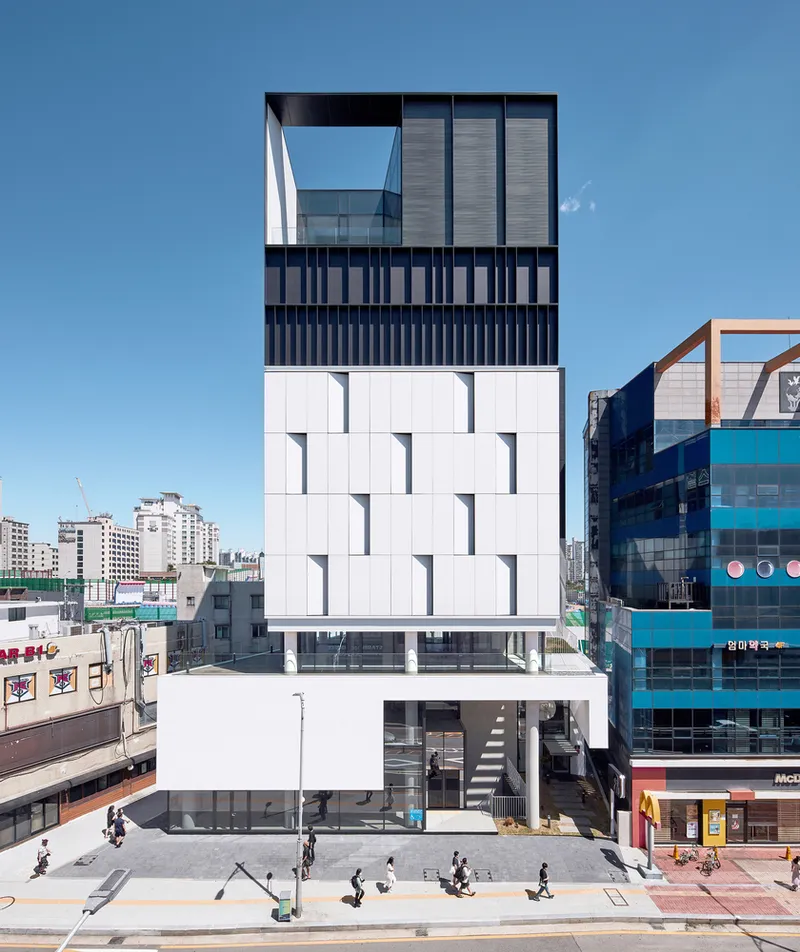
Triplet Code Imun Neighborhood Facility by L'EAU design explores how a modestly scaled, vertically organized community and commercial complex can absorb and express the layered social DNA of its urban surroundings. Completed in 2021 in South Korea, the 2,987 square meter project operates as a stacked urban code: three interrelated programmatic strata that respond to neighborhood life, local culture, and shifting patterns of coexistence. Rather than treating mixed use as a simple aggregation of unrelated tenants, the project treats information drawn from its context as genetic material capable of recombining over time.
Urban Context And Programmatic DNA
Neighborhood living facilities in dense Korean urban areas often arise from multiple small-scale needs—local commerce, community services, social gathering, and flexible rental space. These uses change frequently as demographics shift and micro-economies evolve. The Imun site demanded an architecture able to register these variations without losing identity. L'EAU design drew inspiration from genetic coding, proposing that just as three nucleotide bases combine to form a codon, three architectural bands could encode distinct yet interdependent neighborhood traits. Each layer receives, stores, and expresses local information gathered from everyday use, gradually building an urban genotype specific to Imun.
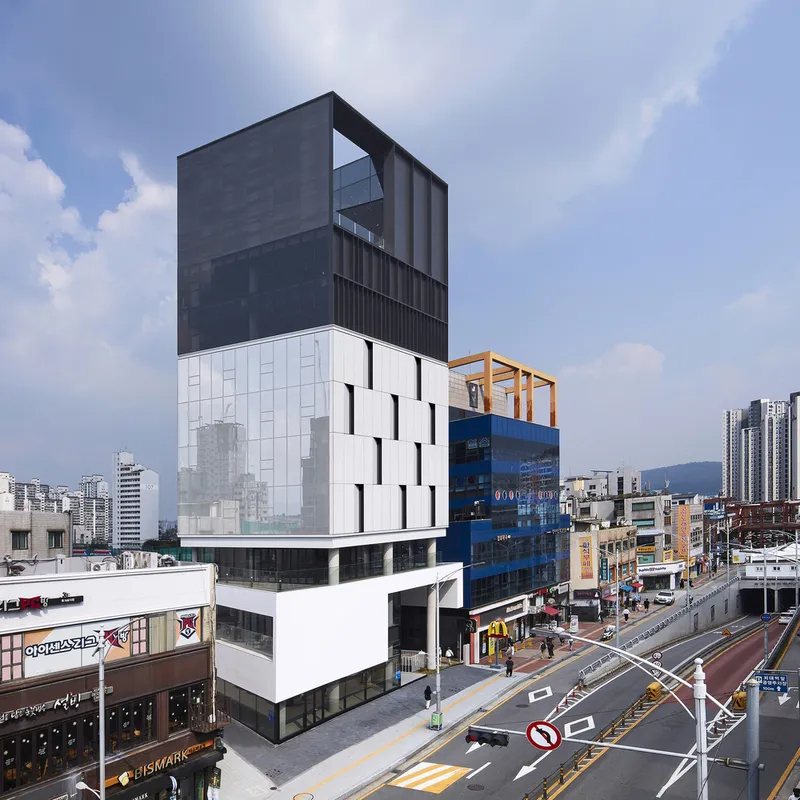
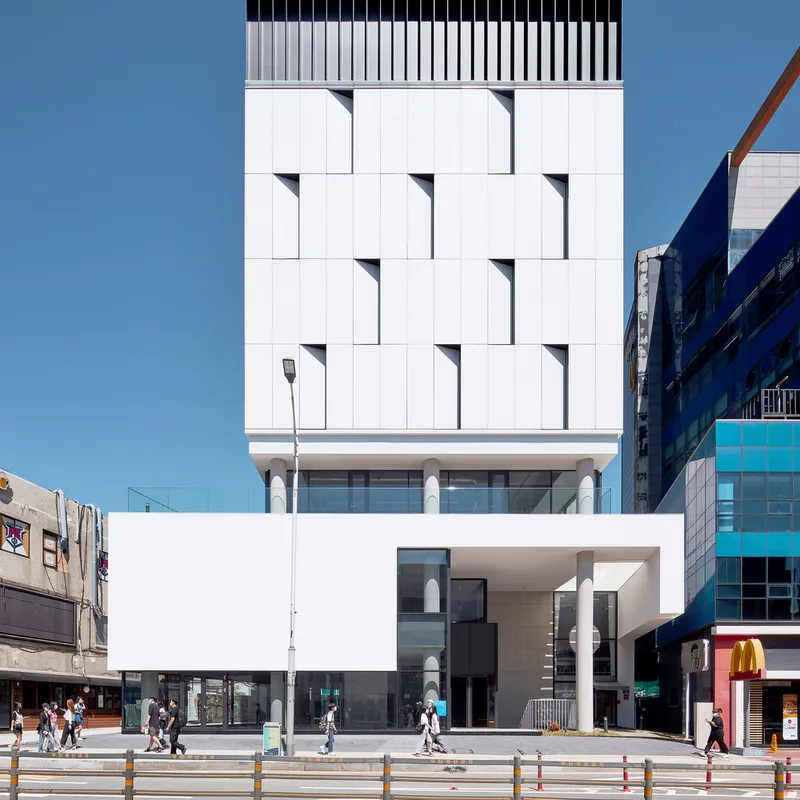
Concept Of The Triplet Code
The design narrative likens programmatic integration to the way biological codes translate stored information into living expression. Here, architectural volumes, transparencies, and materials act as carriers for social data—retail rhythms, community habits, circulation flows, seasonal events. When combined in triplet formation, these programmatic genes do more than coexist; they hybridize. Over time, the building can mutate through interior reconfiguration, signage overlays, or façade adjustments, allowing future uses to be read against the original code without erasing it. The result is a living architectural syntax that anticipates change.
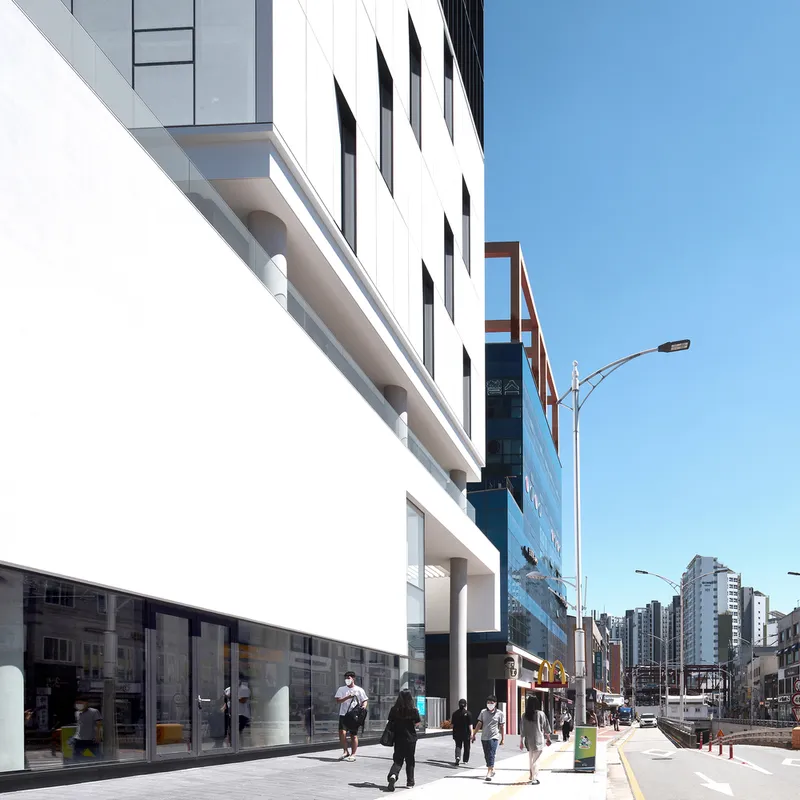
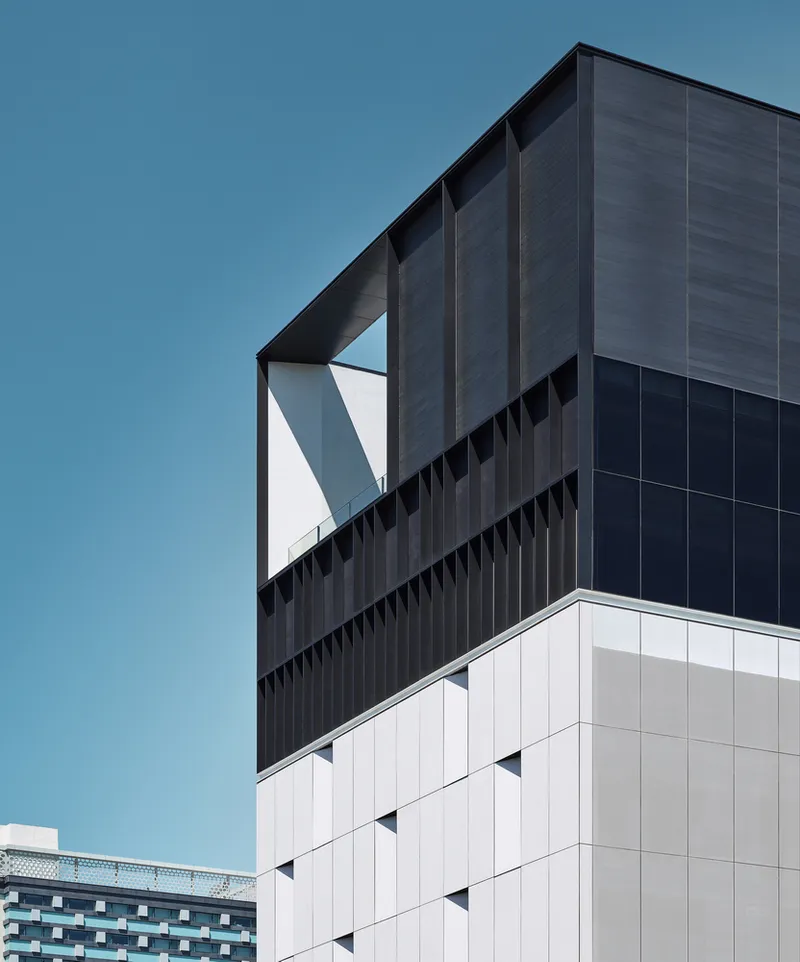
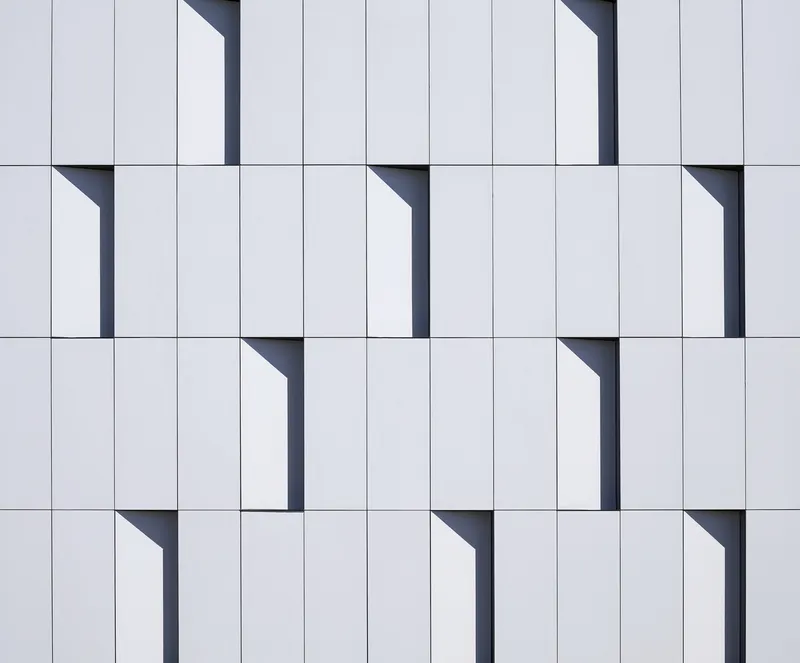
Stacked Neighborhood Living Typology
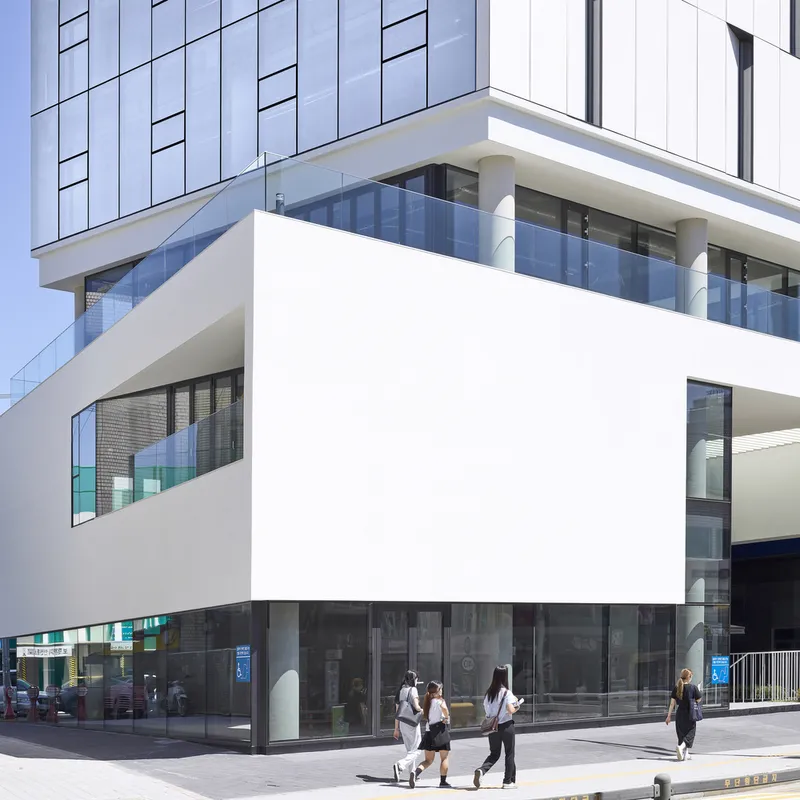
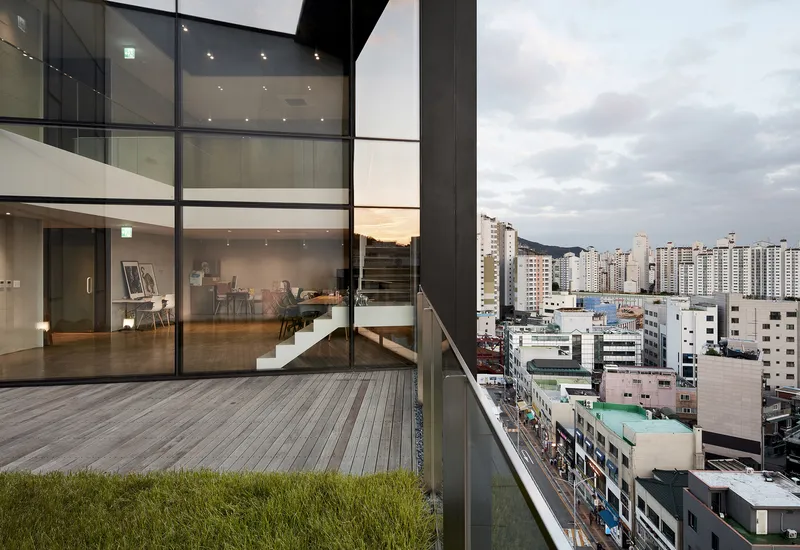
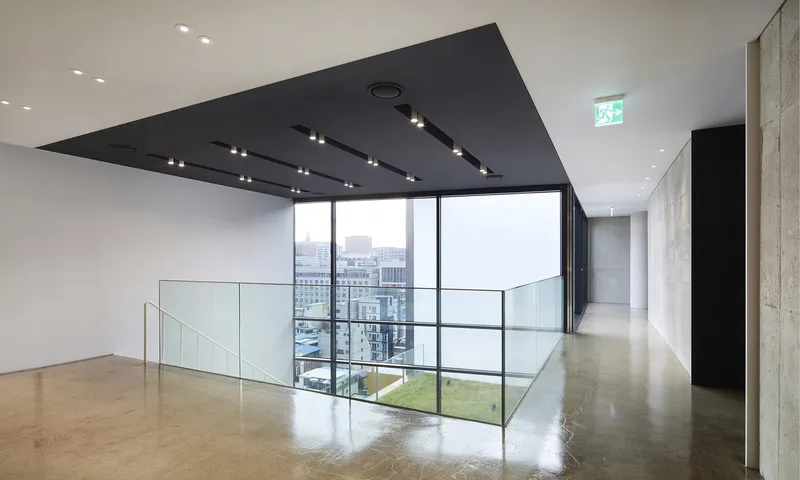
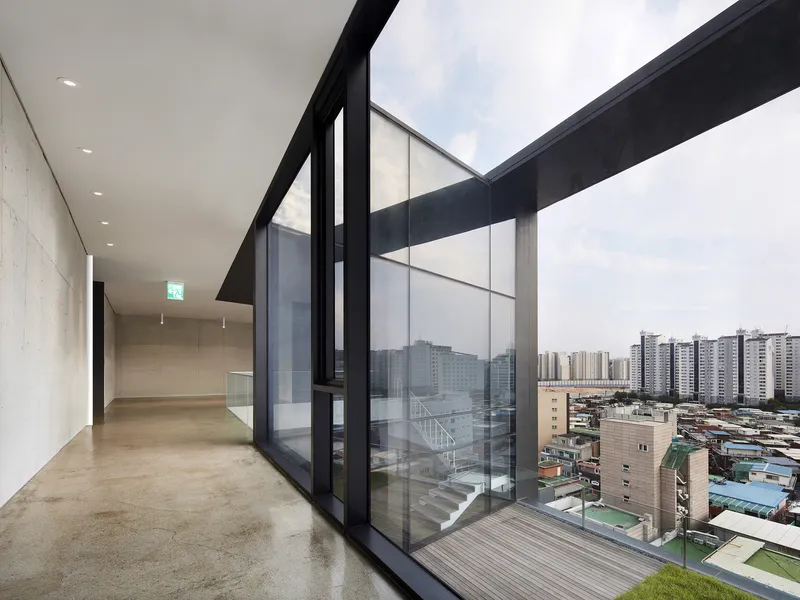
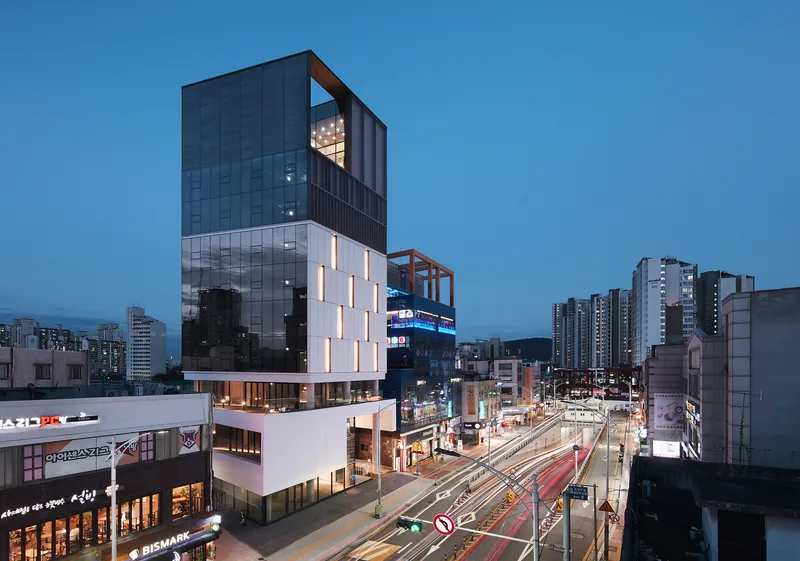
Although not a high-rise, the building leverages vertical stacking to concentrate activity on a constrained footprint. The lower levels engage the street, drawing pedestrian energy inward and establishing the first layer of the triplet code as immediate neighborhood interface. Mid-levels host functions that mix semi-public and commercial activity, creating overlap zones where users who arrive for one purpose encounter others. Upper levels, while still accessible, support uses that benefit from distance—gathering rooms, flexible studios, or small-scale cultural programs. This calibrated stacking makes vertical movement legible and socially porous.
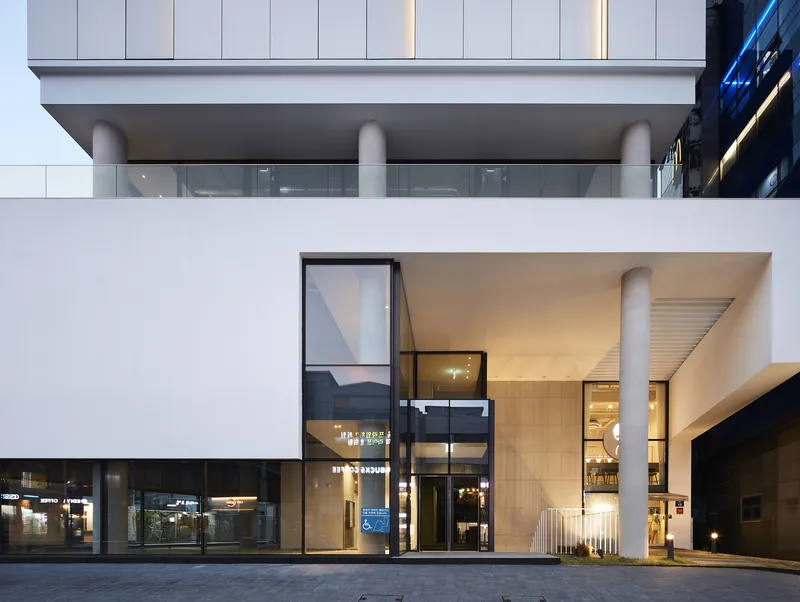
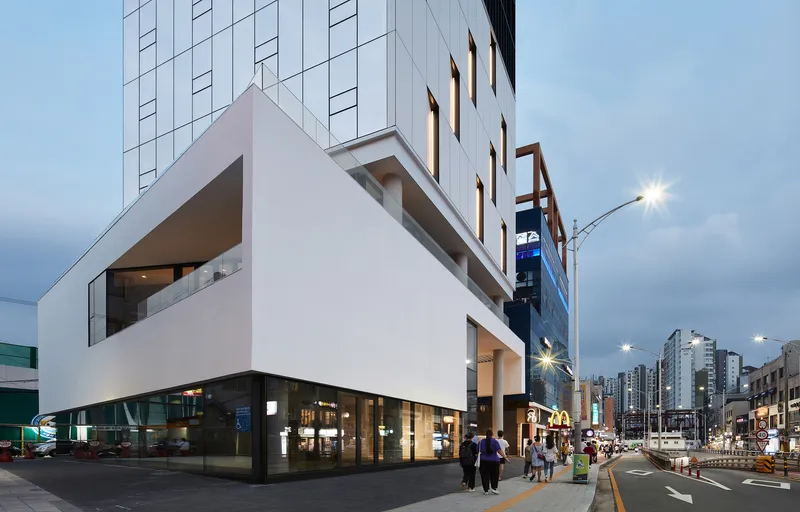
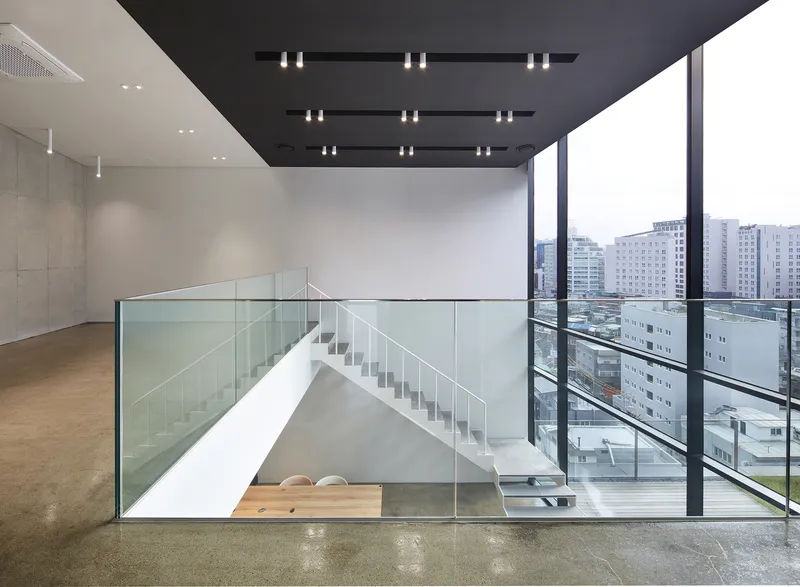
Material Expression And Façade Strategy
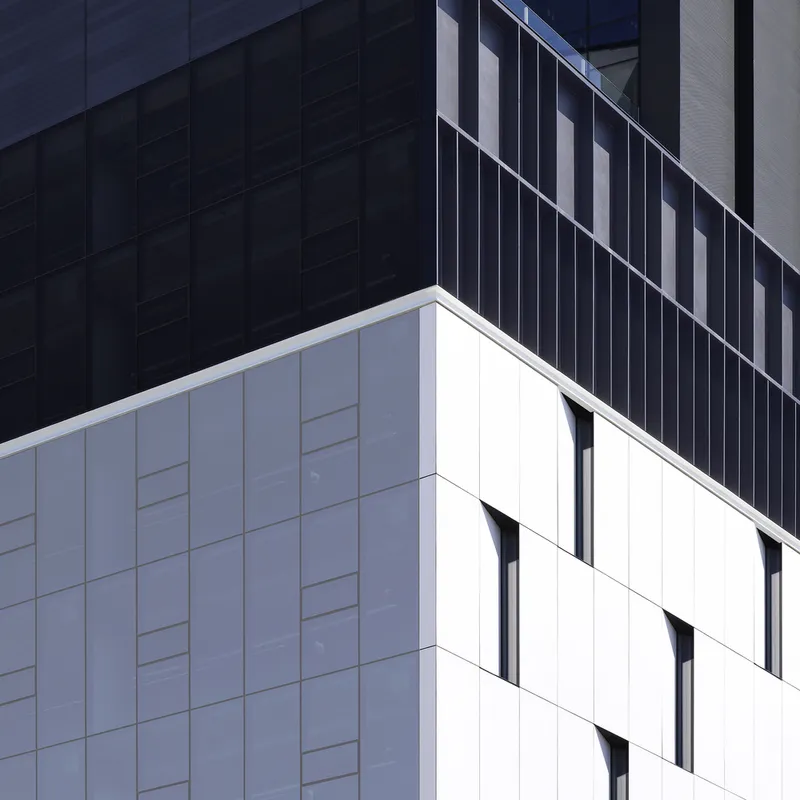
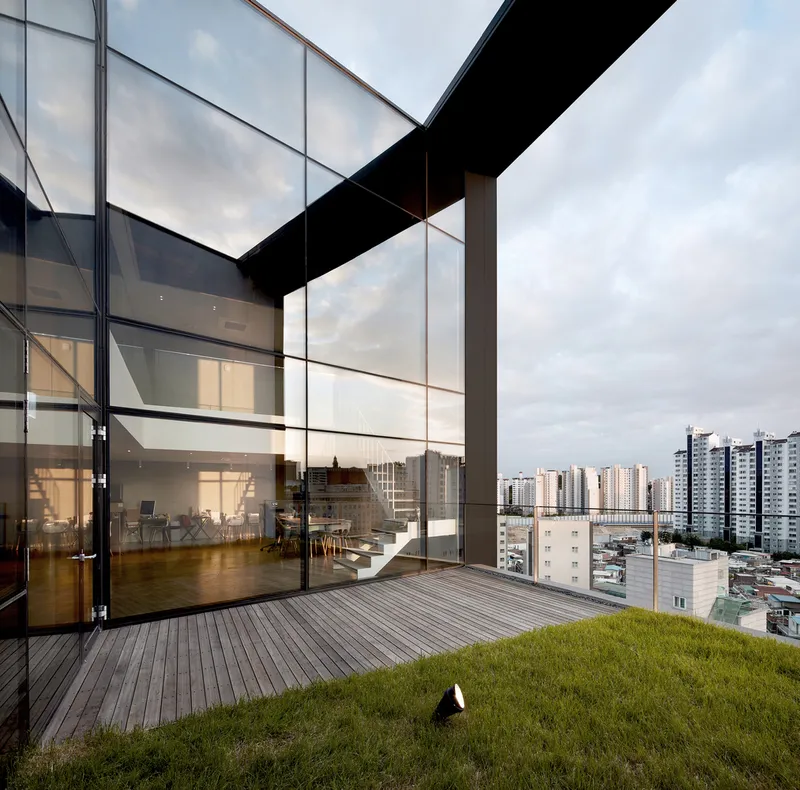
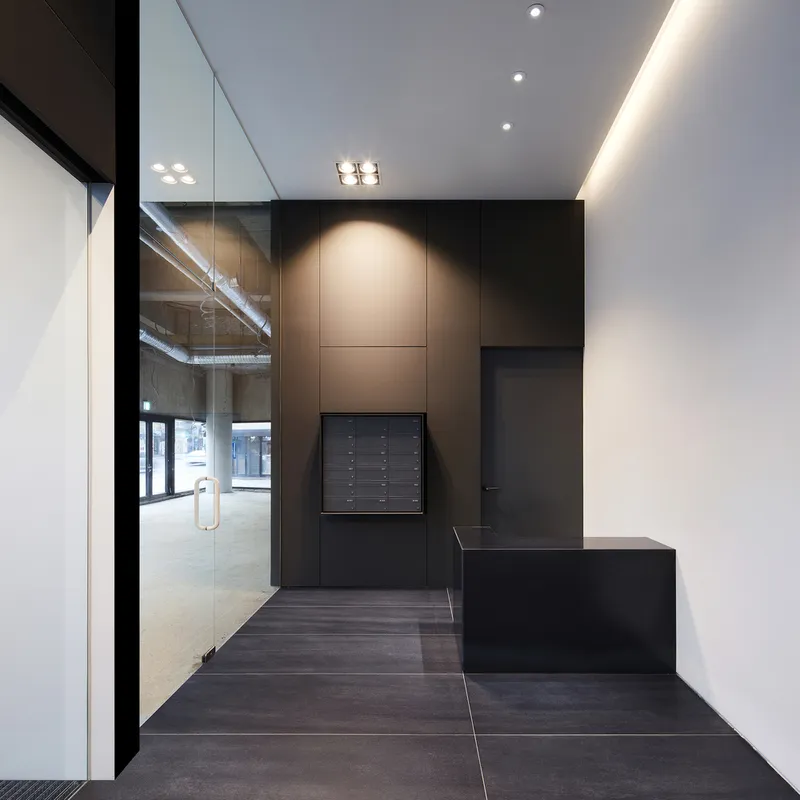
Variation in materials across the stacked volumes reinforces the triplet concept. Changes in opacity, glazing scale, and surface treatment differentiate programmatic zones without severing the whole. Glazed portions reveal activity, signaling openness and exchange, while more solid planes temper light, frame views, and provide surfaces for future adaptation. The façade reads like a sectional barcode of neighborhood life: each band distinct, yet clearly part of a single coded system.
Programmatic Layers And Community Interface
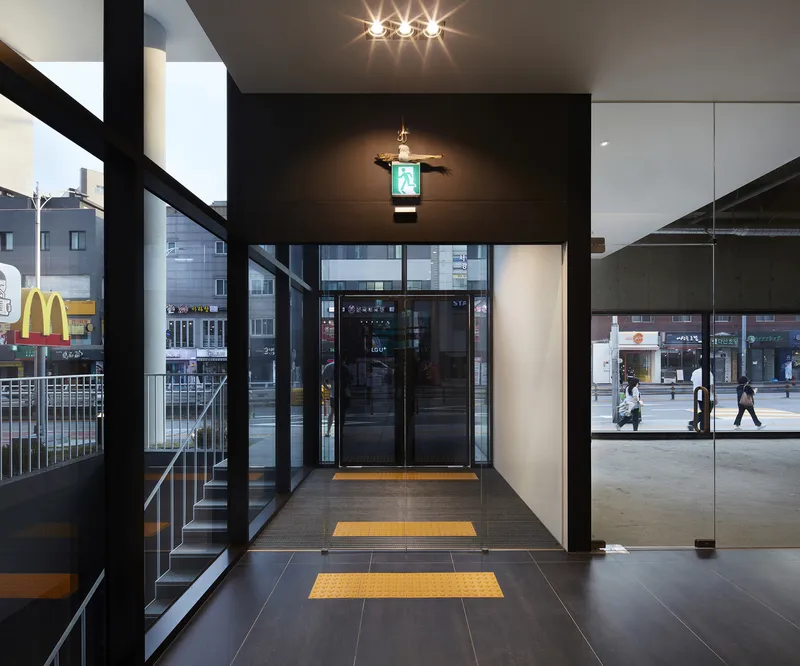
Neighborhood facilities must adapt to distinct daily cycles—morning services, afternoon commerce, evening learning or social events. The Triplet Code organizes circulation to let programs overlap without conflict. Street-level entries remain highly permeable, encouraging spontaneous use. Intermediate connectors allow vertical redistribution so that a space originally conceived for retail can pivot toward education, health, or community workshops. Shared thresholds between layers cultivate unplanned encounters, strengthening social networks that extend beyond any one tenant.
Genetic Accumulation And Evolution
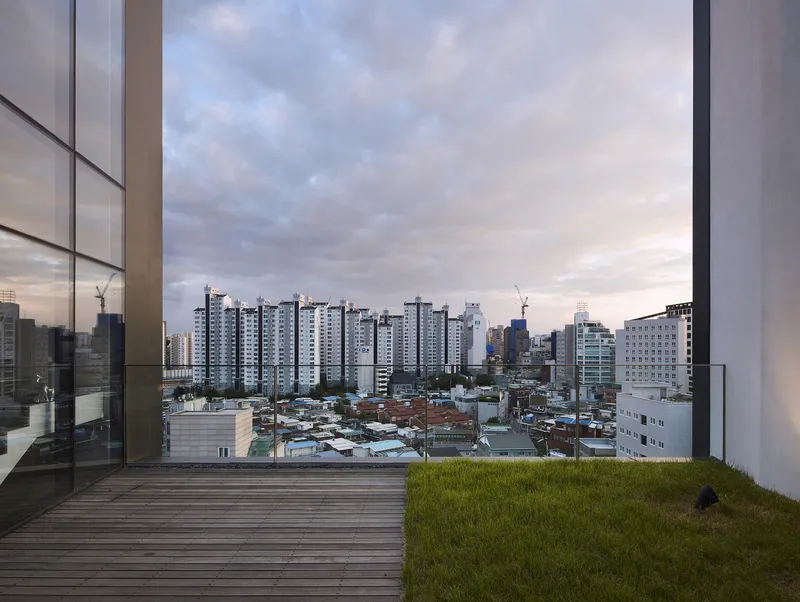
As the building is occupied, localized information accumulates: signage, furniture improvisations, user flows, micro-landscapes, and seasonal decorations. These additions form the incremental mutations that evolve the architectural genome. L'EAU design’s strategy acknowledges that long-term urban relevance depends less on fixed form than on an architecture willing to absorb, translate, and re-express the life around it. The Triplet Code thus becomes an open sequencing platform for ongoing hybridization between programs.
Cultural Coexistence And Regional Identity
Neighborhood living facilities across South Korea often appear in divergent materials and ad hoc configurations, yet they share a common civic ambition: to change their surroundings for cultural coexistence. Triplet Code Imun participates in this broader urban phenomenon by providing structure without rigidity. It invites local operators, residents, and visitors to leave traces, gradually composing a spatial record of the community’s evolving identity. In doing so, the project elevates an everyday building type into a cultural instrument.
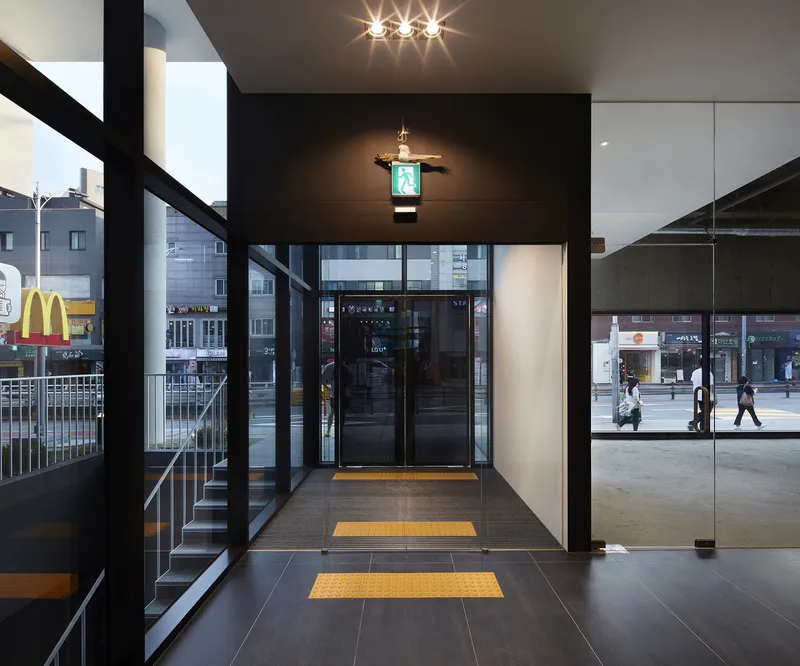
Imun Neighborhood Facility Architecture by L'EAU design demonstrates how a mid-scale, vertically layered building can function as an adaptive code for urban life. By translating contextual data into three interdependent programmatic strata, the Triplet Code model shows a path beyond static mixed use toward architecture that learns, mutates, and sustains cultural exchange over time.
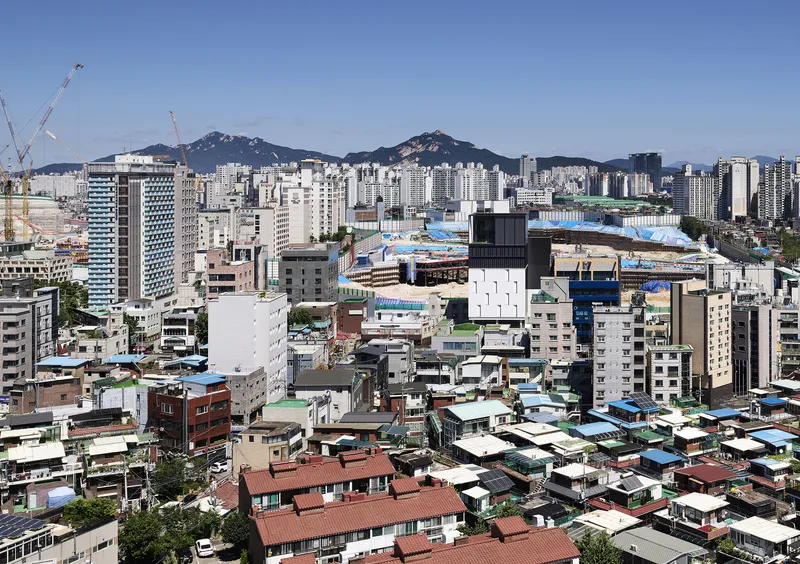
All the photographs are works of Yongkwan Kim


Popular Articles
Popular articles from the community


longwave studio Reorganizes a 112 m² Tainan Apartment Around the Daily Routines of a Family and Two Cats
In Tainan, Taiwan, birch plywood, rust-red furniture and a freestanding plaster wall link arrival, storage, work and family life in one apartment.

Architekt Andreas Gruber Scatters 23 Dark Timber Chalets Across a South Tyrolean Forest Edge
In Molini di Tures, Amonti Chalets breaks a resort into a hamlet of gabled timber houses, with parking, storage and services pushed into the slope.

U.GA Architects Wraps an Oval Rooftop Pool in Curved Board-Formed Concrete on Busan's Jeollidan-gil
In Busan's Jeonpo-dong, a 454 m² mixed-use block stacks a neighborhood facility, guest rooms and an oval rooftop pool inside spiraling concrete walls.

LT2A and OPEN Architectes Thread a Brick and Glass High School Through a Wooded Belgian Campus
In Braine-l'Alleud, a 3,000 m² wing for Collège Cardinal Mercier pairs pale brick with a glazed colonnade, deferring to a small chapel and a dense wood.

Similar Reads
You might also enjoy these articles

Bamboo Housing Challenge 2026: Design Affordable, Sustainable Homes Using Bamboo
An international design competition by Bamboo U and IBUKU inviting architects and designers to reimagine affordable housing using bamboo — with the winning design built full-scale in Bali.
Computational Design & Education: Beegraphy Design Awards Introduces 7th Category (Featuring Jiyun's Innovative Approach)
Dive into Beegraphy’s 7th Design Awards category, where computational design meets education to create immersive, interactive learning tools, inspired by Jiyun’s work.
From Parametric Lighting to Urban Furniture: Join the 2nd Workshop in Beegraphy’s Computational Design Series
Dive into Cutting-Edge Design Techniques and Practical Applications with Industry Experts

Last Call: Unleash Your Architectural Genius in SHAK's Kindergarten Design Competition
Urgent call for architects to join SHAK's kindergarten design competition before the looming deadline

Explore Architecture Competitions
Discover active competitions in this discipline

Challenge to reimagine the Iron Throne

Photograph architecture without architects

Illustrate the lost glory of Angkor Wat - Render Challenge

Design challenge to reuse E-waste
Comments (0)
Please login or sign up to add comments
No comments yet. Be the first to comment!