
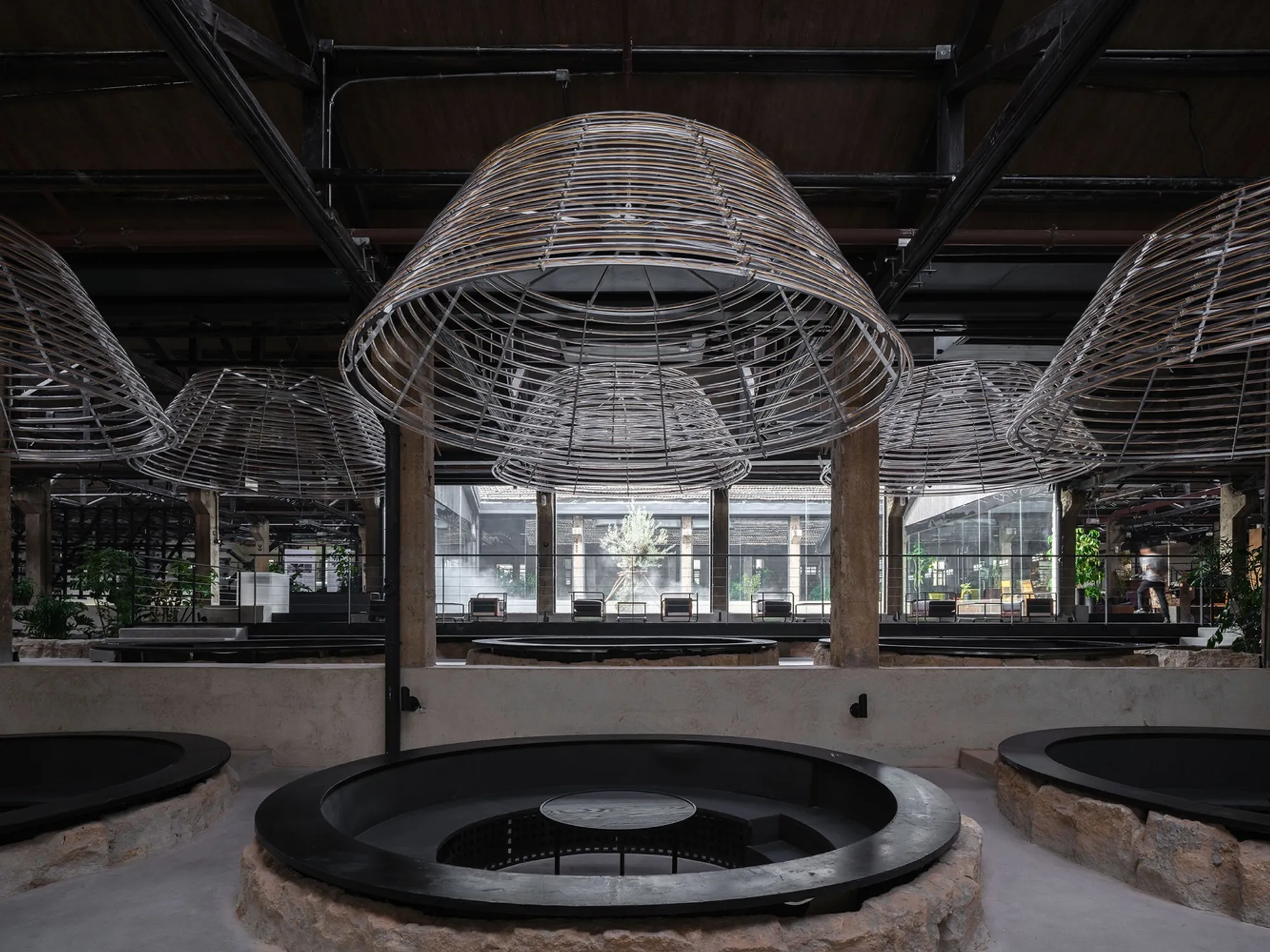
Interior Design of Fanshan Alunite Crystallization Ponds by FLIP Studio
Fanshan Alunite Crystallization Ponds by FLIP Studio transforms industrial heritage into a vibrant cultural, ecological, and immersive interior experience.


Revitalizing Industrial Heritage Through Interior Design
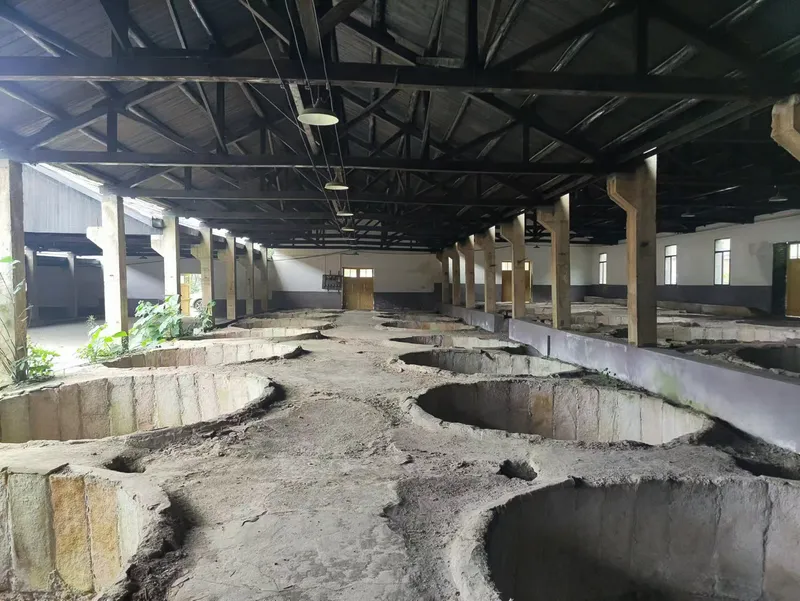
The Fanshan Alunite Crystallization Ponds in Lujiang, Hefei, represent a profound industrial heritage site. Once a thriving alunite mining hub, the site faced decline in the 1990s, ceasing operations in 2001. Decades of abandonment left behind deteriorated factories, crystallization ponds, and a damaged ecological environment. This industrial relic, rich in historical and cultural value, risked fading into obscurity.
The FLIP Studio interior design project adopted a transformative approach: Conservation-Activation-Insertion-Regeneration. Through this strategy, the Fanshan site is no longer merely an industrial relic but a dynamic cultural and ecological landmark.
Conservation: Preserving Industrial Memory
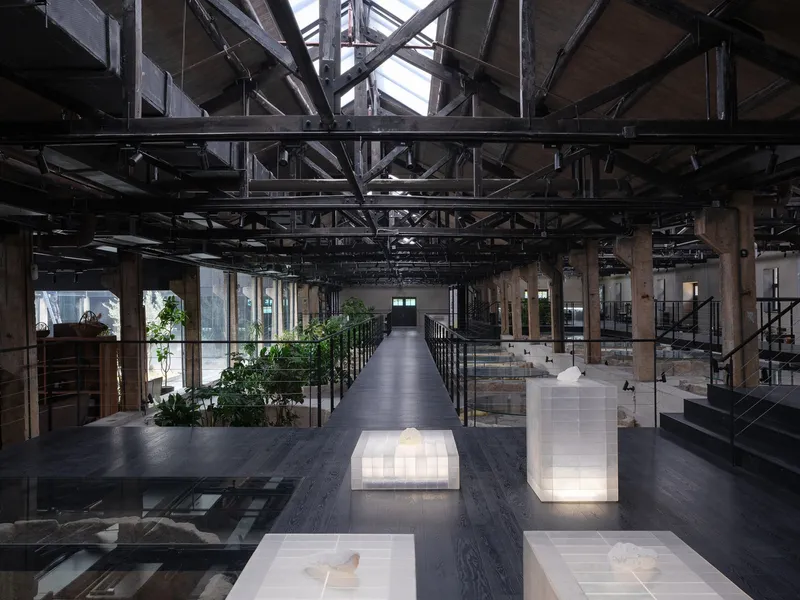
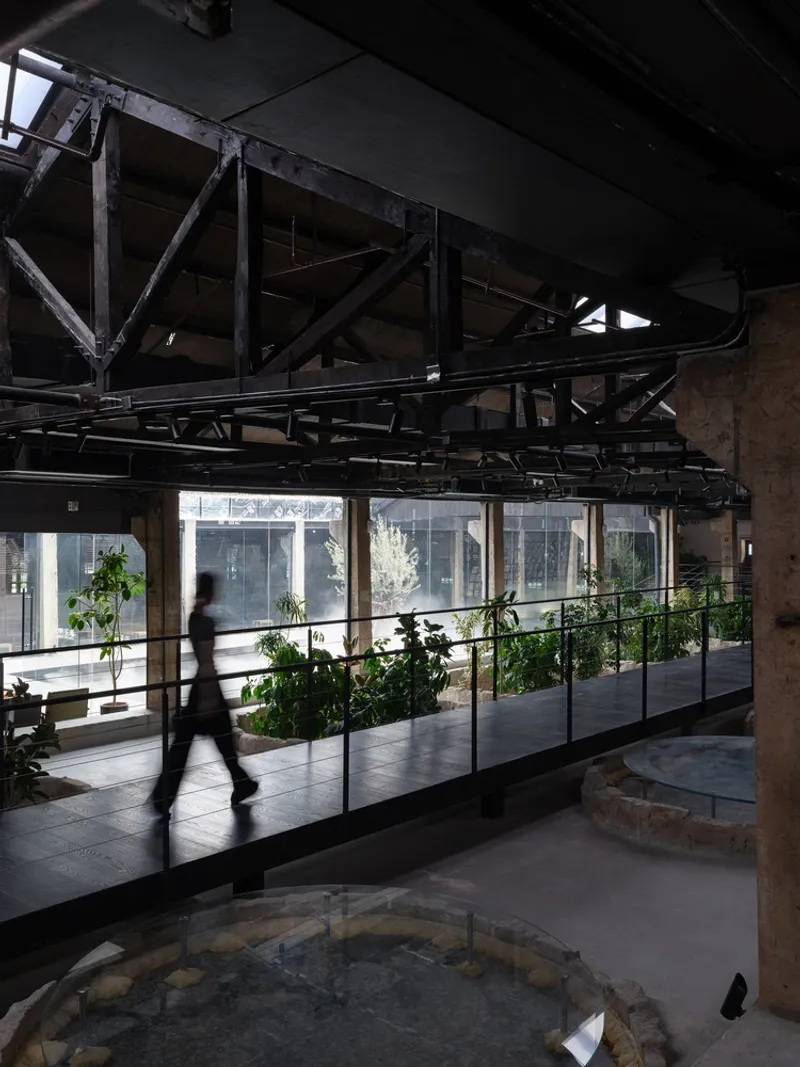
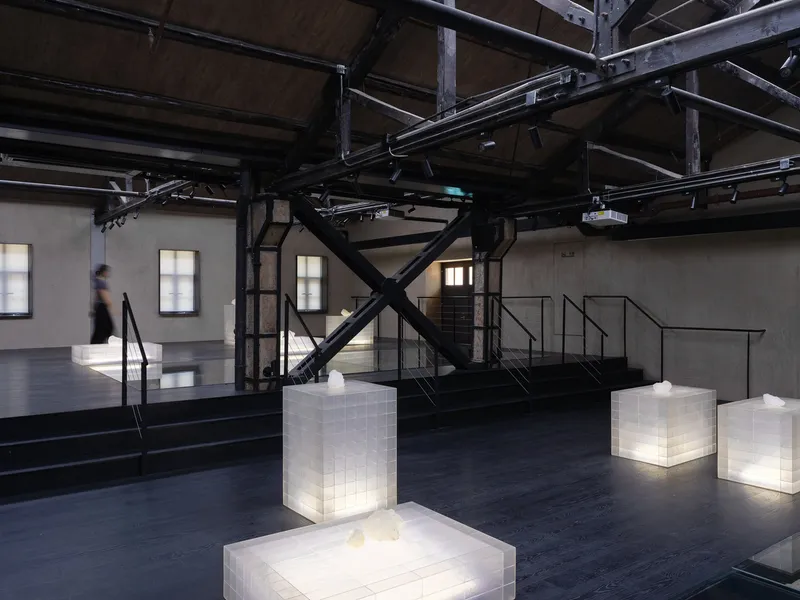
The renovation began with archaeological precision, retaining terraced landforms, circular pit structures, original timber trusses, and industrial traces. These preserved elements provide a three-dimensional base for design interventions, maintaining the site’s authentic industrial narrative while laying the foundation for modern use.
Activation: Immersive Spatial Experiences
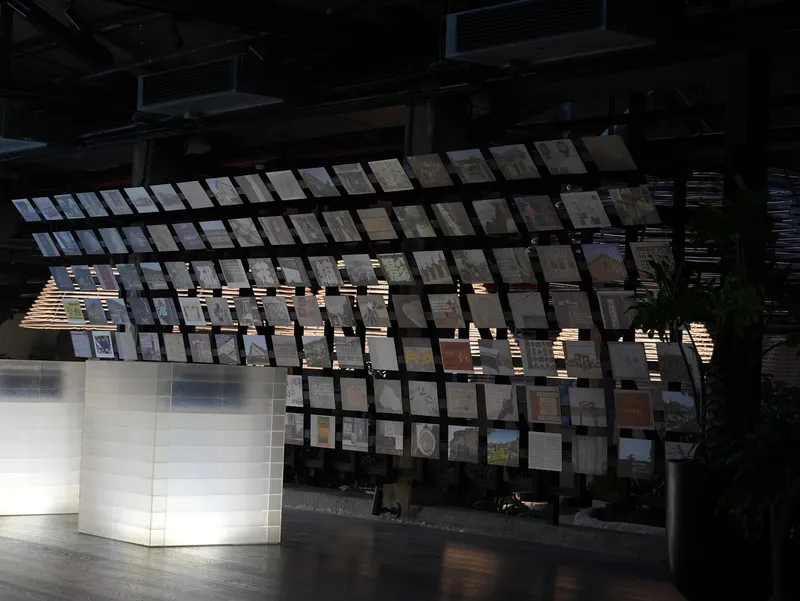
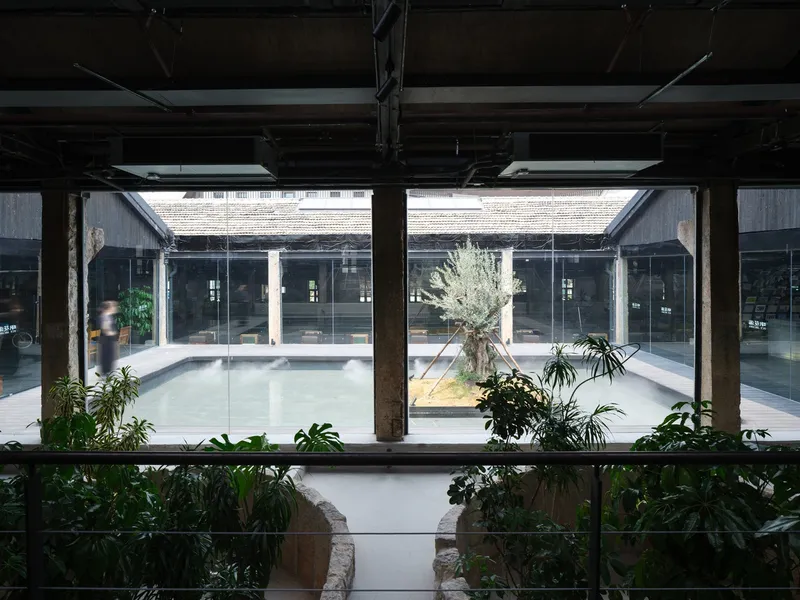
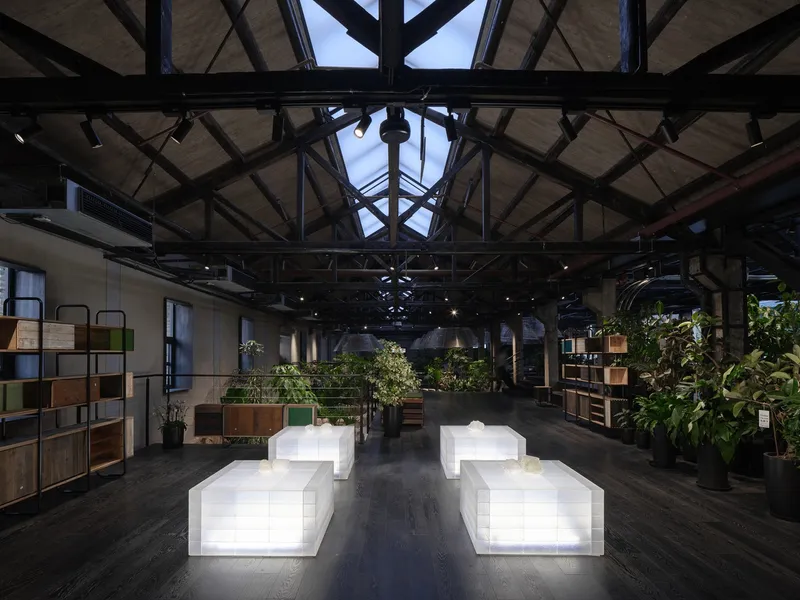
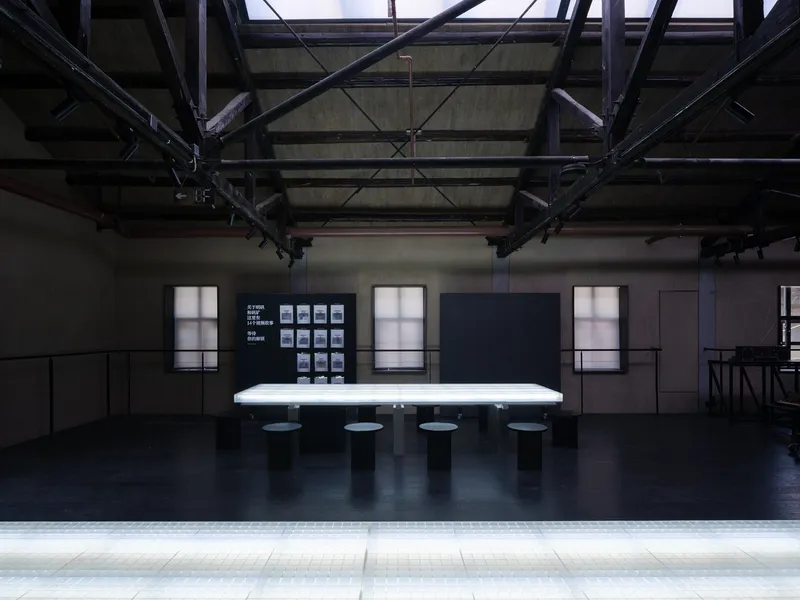
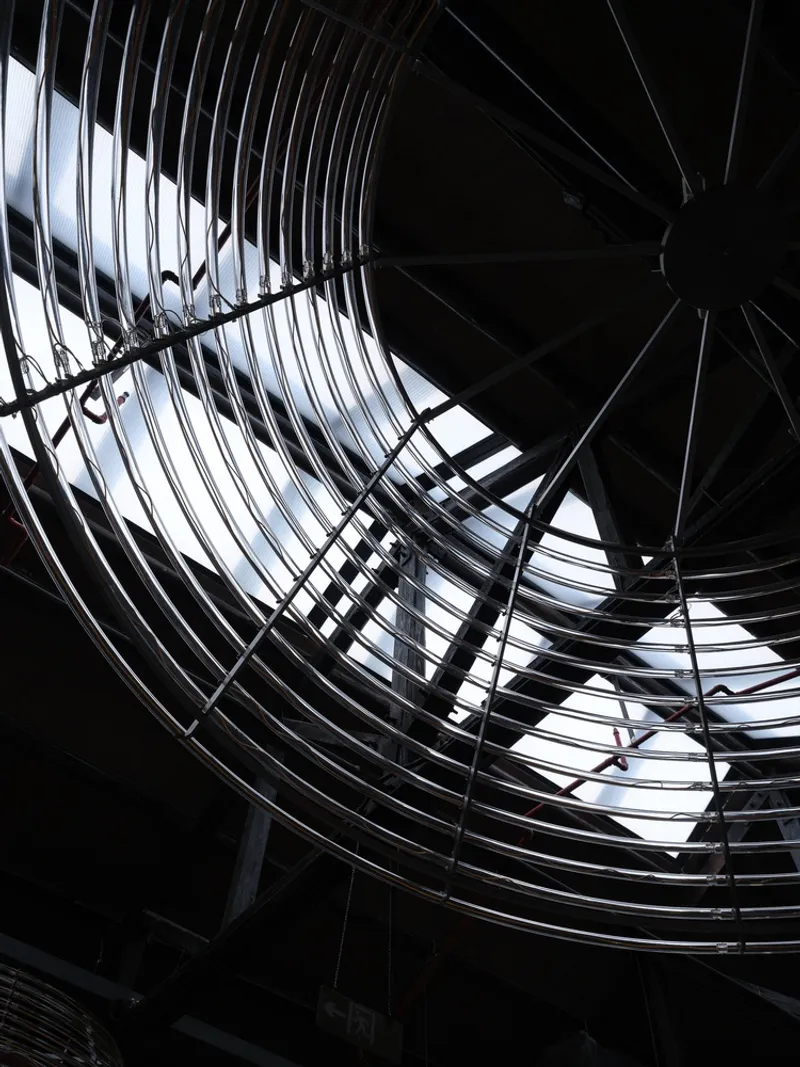
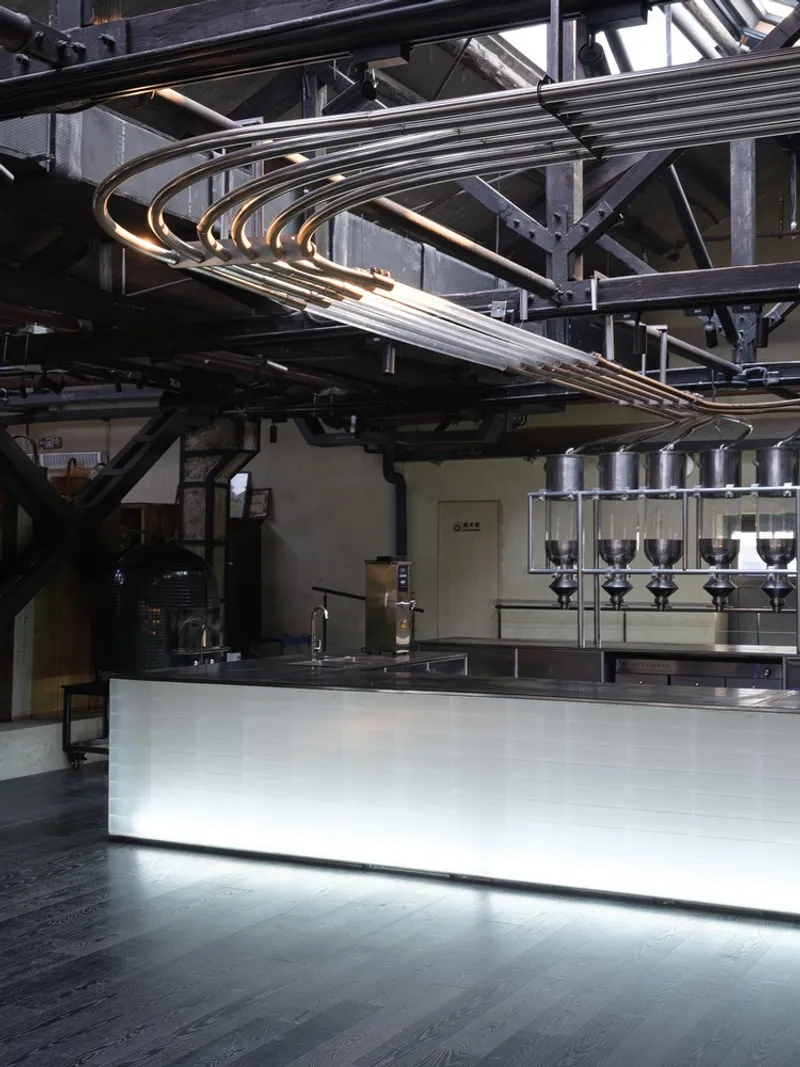
To transform the industrial space, FLIP Studio reimagined spatial experiences using “crystals” as a unifying motif. The design features an elevated black boardwalk system that links the site while respecting original landforms. Throughout the space, exhibition displays, custom furniture, and lighting installations crafted from translucent materials—including frosted glass, acrylic tubes, and fiberglass—immerse visitors in a poetic journey of light, minerals, and time.
Insertion: Introducing Contemporary Functions
The project integrates new programs that bring contemporary vitality to the historical site:
- Reception areas and visitor centers
- Alunite-themed exhibitions
- Guided pit relic tours
- Outdoor theater and event spaces
- Historical artifacts displays from the 1950s
- Pit Café and retail spaces
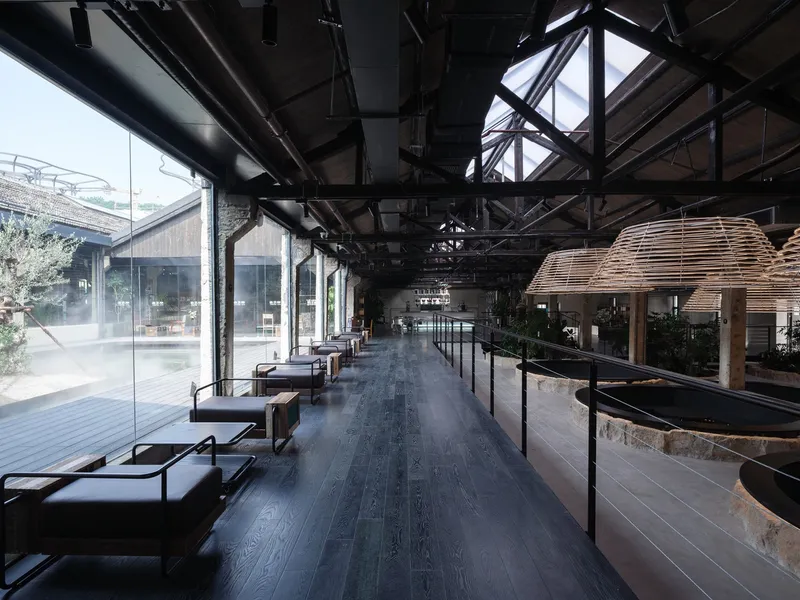
The Pit Café, a circular pit converted into a cozy café, serves as a signature intervention. Visitors descend via the boardwalk into the pit, surrounded by weathered industrial walls, and experience a seamless blend of history and modern life under circular translucent lighting installations.
Regeneration: Cultural and Ecological Revival
FLIP Studio’s interventions go beyond cultural preservation to achieve ecological restoration. Some pits recreate the alunite crystallization process, while others host café seating or indoor planters, fostering micro-ecosystems. Through these strategies, the industrial site evolves into an ecologically resilient and culturally rich environment, balancing heritage, leisure, education, and contemporary use.
A Model of Sustainable Industrial Transformation
Through conservation, activation, and insertion, the Fanshan Alunite Crystallization Ponds project demonstrates how industrial heritage can be reimagined for the 21st century. Today, the site thrives as a cultural landmark, seamlessly integrating restored ecology with modern tourism and leisure, and offering visitors an immersive experience of industrial history, design innovation, and environmental stewardship.
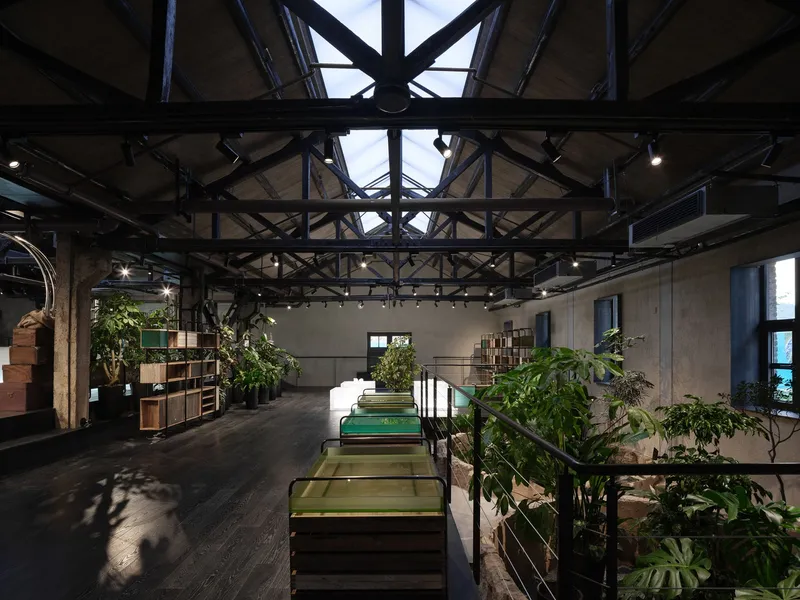
All Photographs are works of Runzi Zhu



Popular Articles
Popular articles from the community


Co-Life: Senior Housing Design That Reconnects Older Adults With the City
Co-Life reimagines senior housing design through healing gardens, shared streets, workshops, and a sustainable community across generations.

Conexión: Biophilic Design Reimagines High-Rise Living in Hong Kong
Conexión reimagines high-rise living in Hong Kong through biophilic design, green facades, shared spaces, daylight, water and nature within.

The Earth Pod: 3D Printed Homes for Resilient Refugee Communities
The Earth Pod reimagines refugee housing through 3D printed homes made from clay, combining resilience, self-sufficiency, and rapid shelter.

Co-life: Sustainable Architecture for Age-Friendly Community Living
Co-life reimagines sustainable architecture for seniors through courtyards, rammed earth, shared gardens, and spaces designed for belonging.
Similar Reads
You might also enjoy these articles


Hodi-Mandai Geram
Project Function: Preservation and revitalization of the Intangible heritage and socio-spatial identity of the Hodi by Housing, Cultural Memory Center, Sacred Grove, landscape, local tourism economy


Olio Towers: A Mid-Rise for Performers That Fuses Housing, Rehearsal, and Stage
Located blocks from Houston's Theater District, this modular tower stacks living units around a central performance atrium.

Oasis: Modular Green Housing Carved into Dhaka's Urban Fabric
A shortlisted Plugin Housing entry reclaims unauthorized settlements in Dhaka with stepped concrete volumes, green roofs, and ventilation-driven design.

Black Hole: A Floating Megastructure for the Post-Physical Era
Emiliano Mazzarotto envisions a spherical, self-scaling arena where e-sports, digital hotels, and holographic stadiums replace traditional public space.

Explore Interior Design Competitions
Discover active competitions in this discipline


Challenge to design luxury tourism on rails


Challenge to reimagine the Iron Throne


Photograph architecture without architects


VR headsets Storefront design competition
Comments (0)
Please login or sign up to add comments
No comments yet. Be the first to comment!