

Introduction to Sustainable Architecture Design at Media Library Ris Orangis
The Media Library Ris Orangis project transforms a historical hall into a sustainable media library focusing on eco-friendly design principles.


The Media Library Ris Orangis, redesigned by DE-SO architects, exemplifies cutting-edge sustainable architecture design. Located in Ris Orangis, France, this project transforms a historical industrial hall into a modern media library, prioritizing environmental consciousness and community engagement.


Historical Context and Modern Reclamation
The original structure, a former Freyssinet hall notable for its spacious interior and abundant natural light, is situated in the Zac des DOCKS area of Ris Orangis. This rehabilitation project respects the hall's architectural integrity while infusing it with modern sustainability practices.

Sustainable Materials and Techniques
Reuse of Existing Materials
Critical to the project’s sustainability goals is the reuse of bricks. The process involved the selective removal, cleaning, and reinstallation of bricks, which not only preserved the historical essence of the building but also significantly reduced the construction waste typically associated with renovations.

Organic and Low-Impact Insulation
The insulation choices further reflect the building's green credentials. Materials such as hemp wool, linen, and cotton were selected for their low environmental impact and organic origins, contributing to the building's overall energy efficiency and comfort.

Raw Earth Partitions
Emphasizing natural materials, raw earth partitions with an earth coating were used throughout the interior. This choice supports thermal regulation and adds unique aesthetic value while minimizing the building’s carbon footprint.


Architectural Design and User Experience
The design of the Media Library Ris Orangis is a thoughtful blend of functionality and aesthetic appeal. The large, open spaces illuminated by skylights create an inviting atmosphere that encourages community interaction and engagement with the media resources.

Conclusion: A Model for Future Projects
The Media Library Ris Orangis stands as a testament to the possibilities of sustainable architecture design in modern urban landscapes. It serves as a model for future projects aiming to blend historical preservation with environmental responsibility.


All photographs are work of Hervé Abbadie


Popular Articles
Popular articles from the community


Fiechter Salzmann Extends Werner Künzi's Listed Mösli School in Ostermundigen with Concrete, Spruce and Red Steel
In Ostermundigen near Bern, a kindergarten and day school wing lengthens a heritage-listed complex using precast concrete, regional spruce and red steel.

Studio Andre Lenza Shrinks a Family Home into a Single-Storey Goiânia House Behind Timber Screens
A couple's move to a smaller home in eastern Goiânia becomes a single-storey concrete house wrapped in timber screens, around a plunge pool and garden.


Ayodele: Earth-Built Housing That Pushes Back Against Accra's Concrete and Asphalt
A modular earth-built housing block for central Accra stacks family units around shared courtyards, craft studios and planted roofs.

REAL Architects and Challenge Design Plant a Timber Gridshell Seed at the Heart of Shanghai's West Bund
On Shanghai's Xuhui Waterfront, a 230 m² glazed timber lattice dome anchors a terraced garden and lets its structure do all the talking.

Similar Reads
You might also enjoy these articles

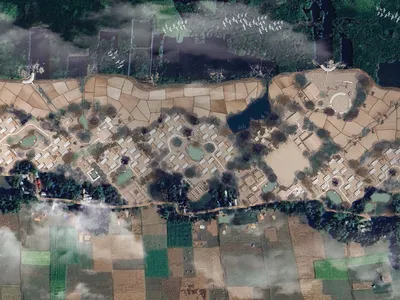
Hodi-Mandai Geram
Project Function: Preservation and revitalization of the Intangible heritage and socio-spatial identity of the Hodi by Housing, Cultural Memory Center, Sacred Grove, landscape, local tourism economy

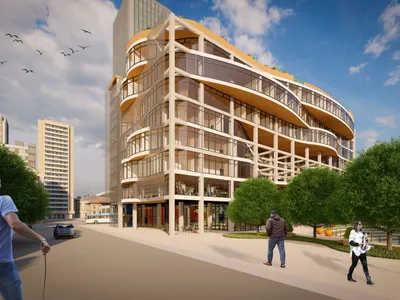
Olio Towers: A Mid-Rise for Performers That Fuses Housing, Rehearsal, and Stage
Located blocks from Houston's Theater District, this modular tower stacks living units around a central performance atrium.
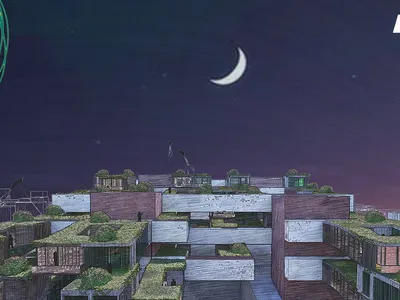
Oasis: Modular Green Housing Carved into Dhaka's Urban Fabric
A shortlisted Plugin Housing entry reclaims unauthorized settlements in Dhaka with stepped concrete volumes, green roofs, and ventilation-driven design.

Black Hole: A Floating Megastructure for the Post-Physical Era
Emiliano Mazzarotto envisions a spherical, self-scaling arena where e-sports, digital hotels, and holographic stadiums replace traditional public space.

Explore Architecture Competitions
Discover active competitions in this discipline

The International Standard for Design Portfolios

The Global Benchmark for Architecture Dissertation Awards

The Global Benchmark for Graduation Excellence

Challenge to reimagine the Iron Throne
Comments (0)
Please login or sign up to add comments
No comments yet. Be the first to comment!