
Inversive Enclosure Installation: Reflective Geometry Meets Spatial Experience at Harvard Yard
Reflective installation in Harvard Yard exploring inverse geometry, spatial perception, and interaction through mirrored mylar strips. A contemplative architectural experience.


Project Overview
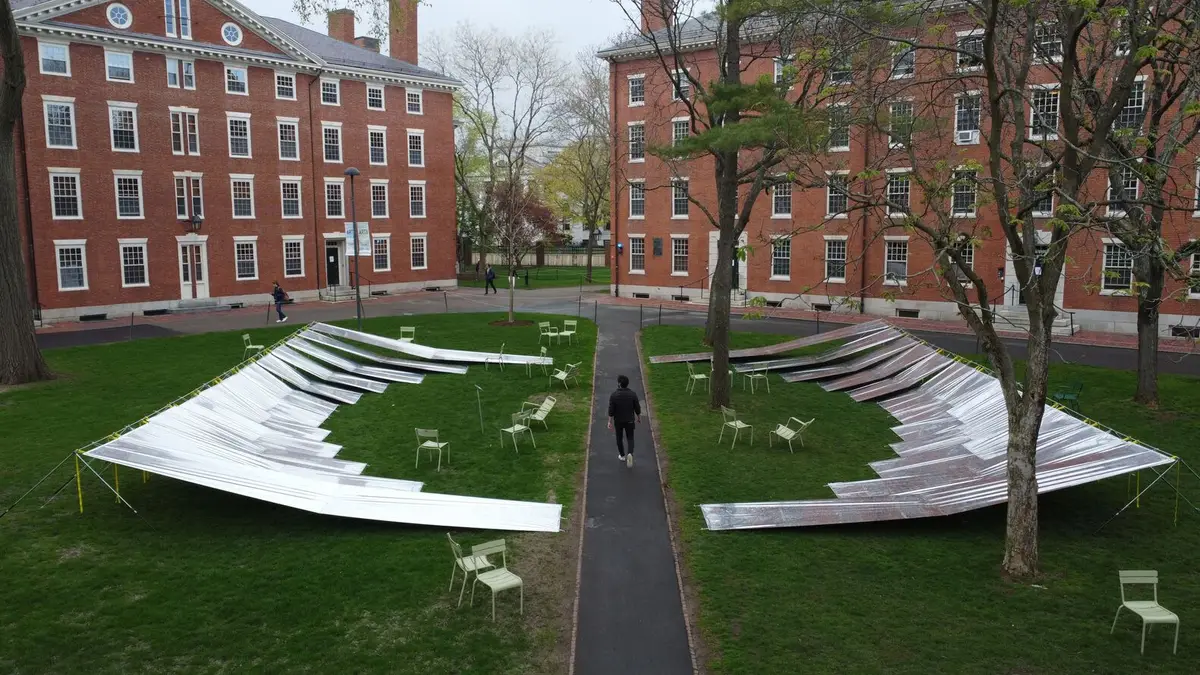
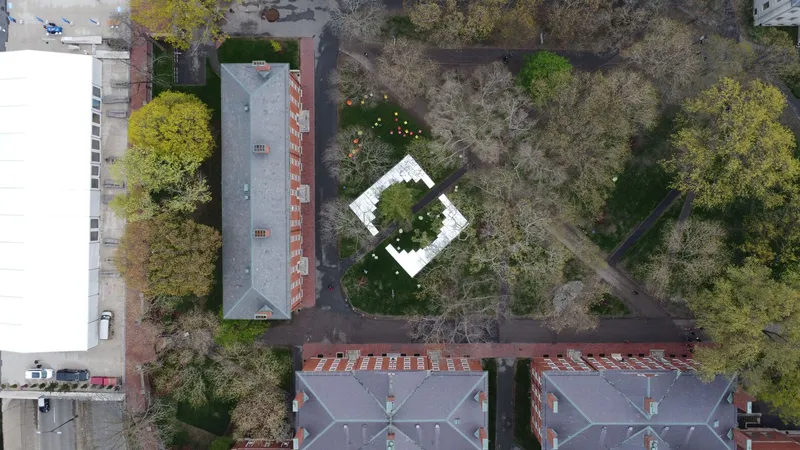
Inversive Enclosure, a collaborative architectural installation, was designed for the inaugural 2023 Harvard Arts Festival. Conceived by Alsar Atelier, Oscar Zamora, Karim Saleh Studio (KSS), and Pietro Mendonça, the installation reinterprets the landscape of Harvard Yard—a historic and symbolic space—through a geometrically inspired, reflective environment.
Drawing from the mathematical principles of three-dimensional inverse geometry, the design invites participants to reflect—literally and metaphorically—on their spatial experience within the campus's storied grounds. This dynamic, temporary structure simultaneously blends with and distorts its context, reshaping the way we see and move through Harvard Yard.
Design and Concept
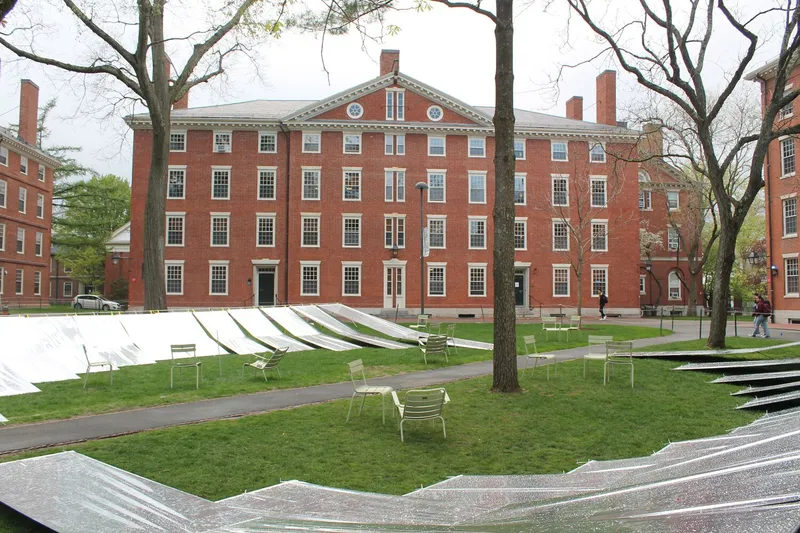
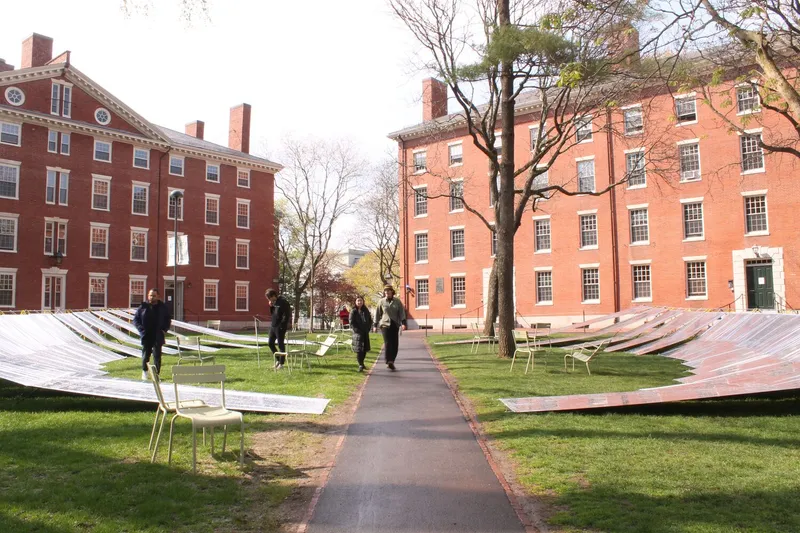
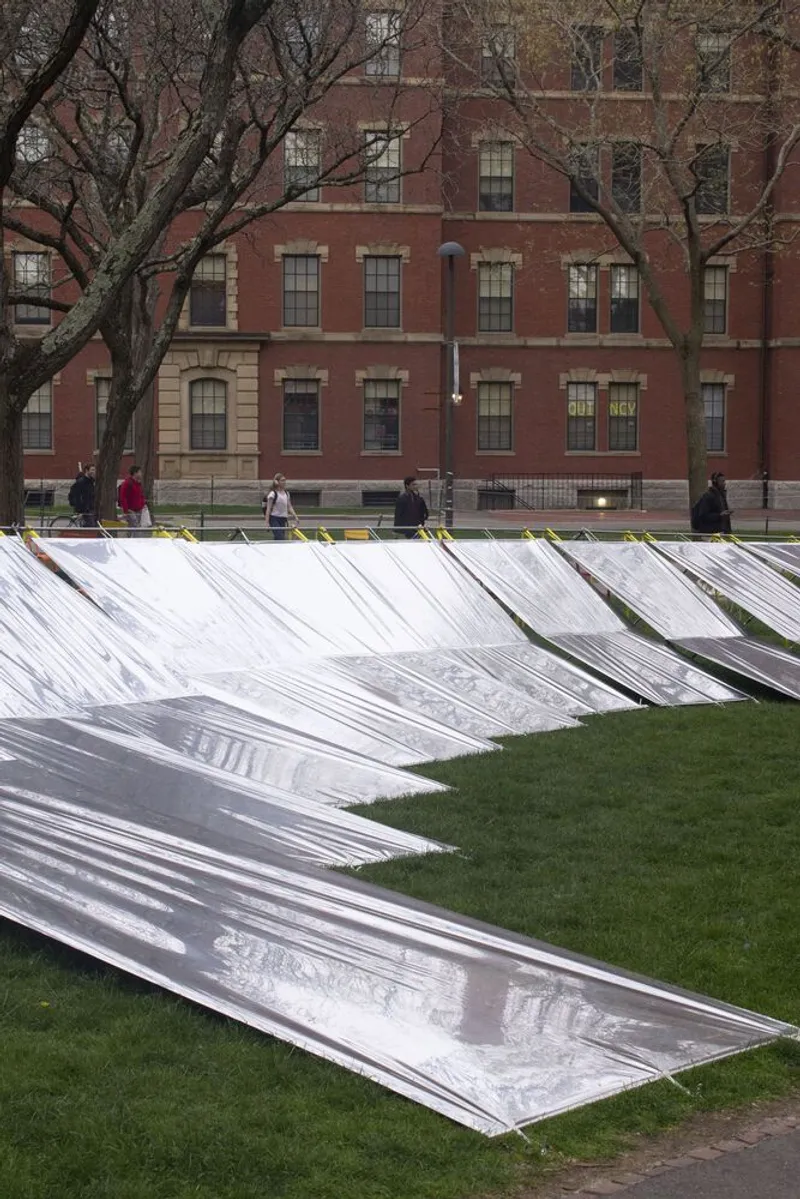
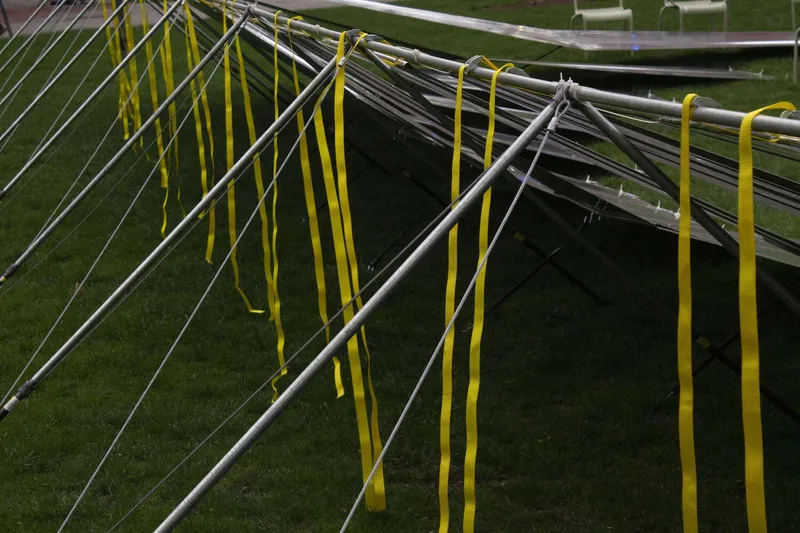
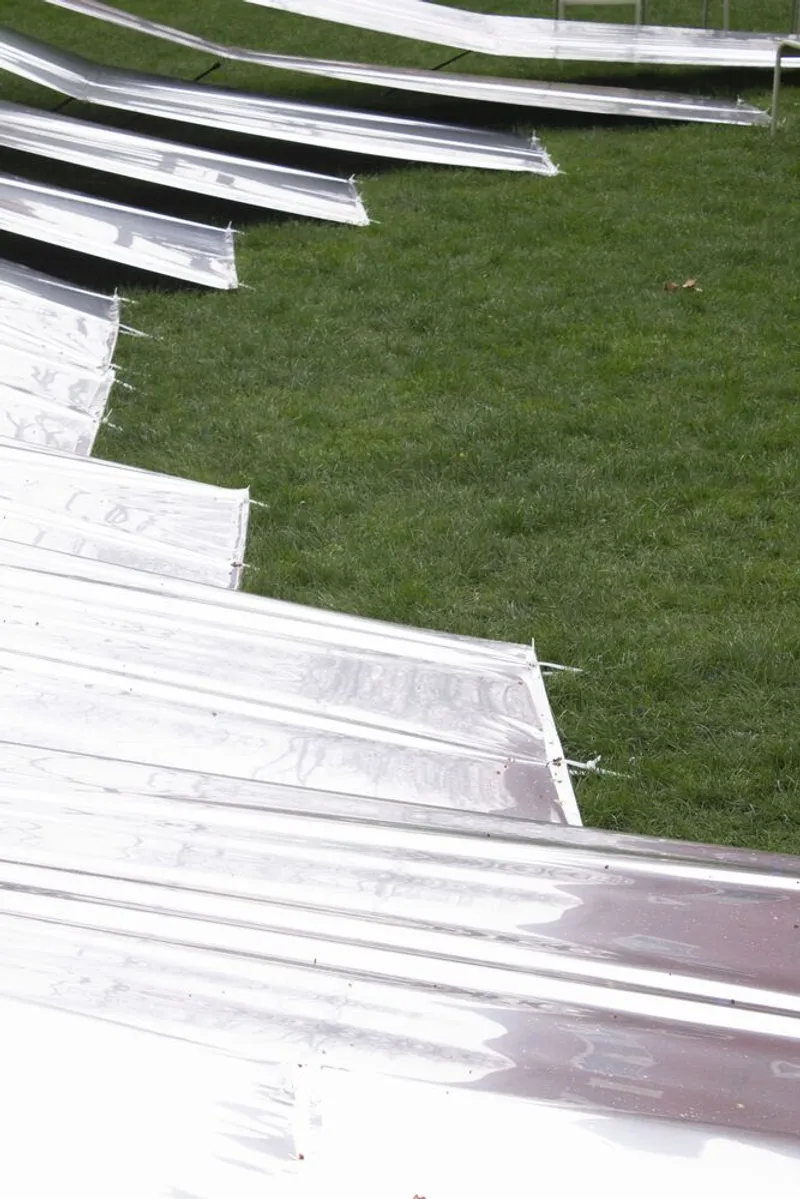
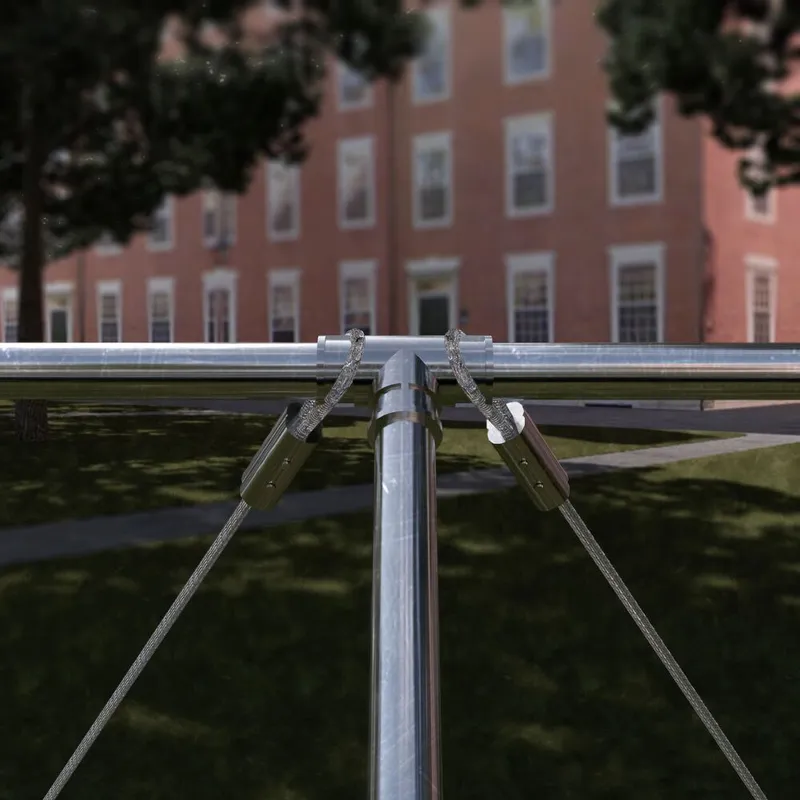
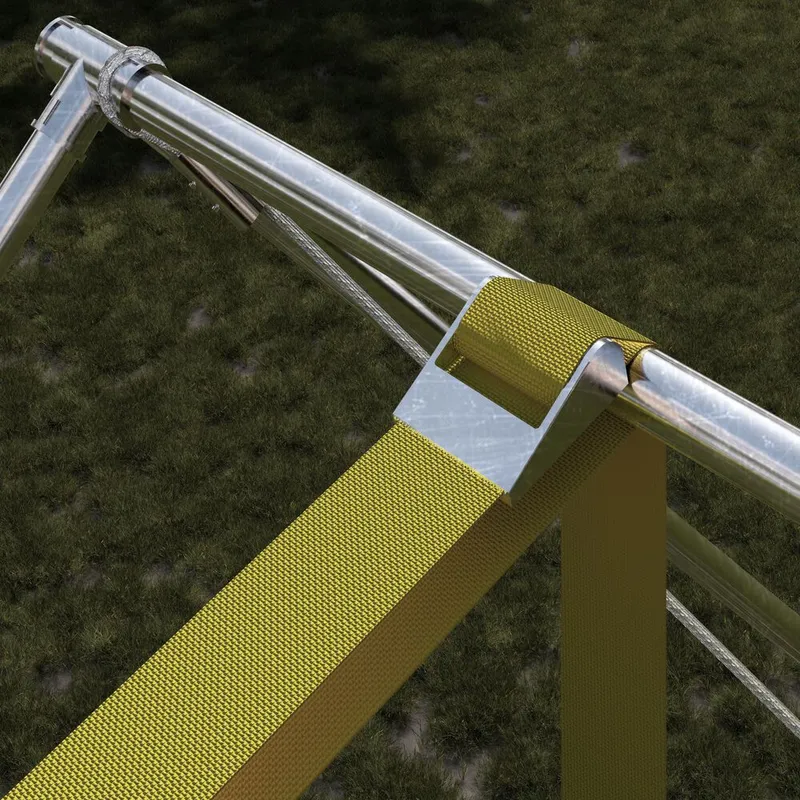
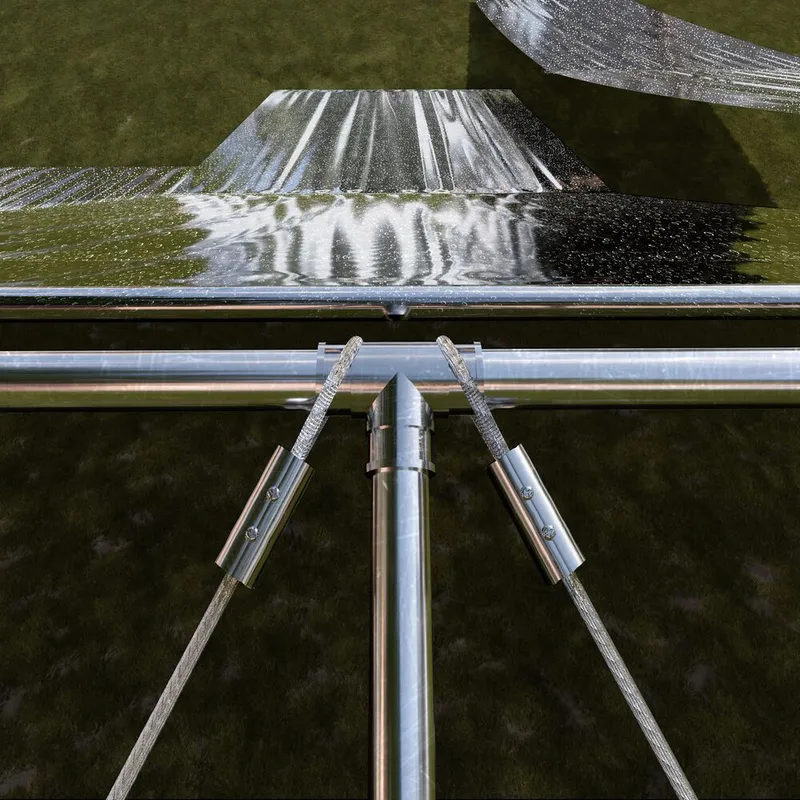
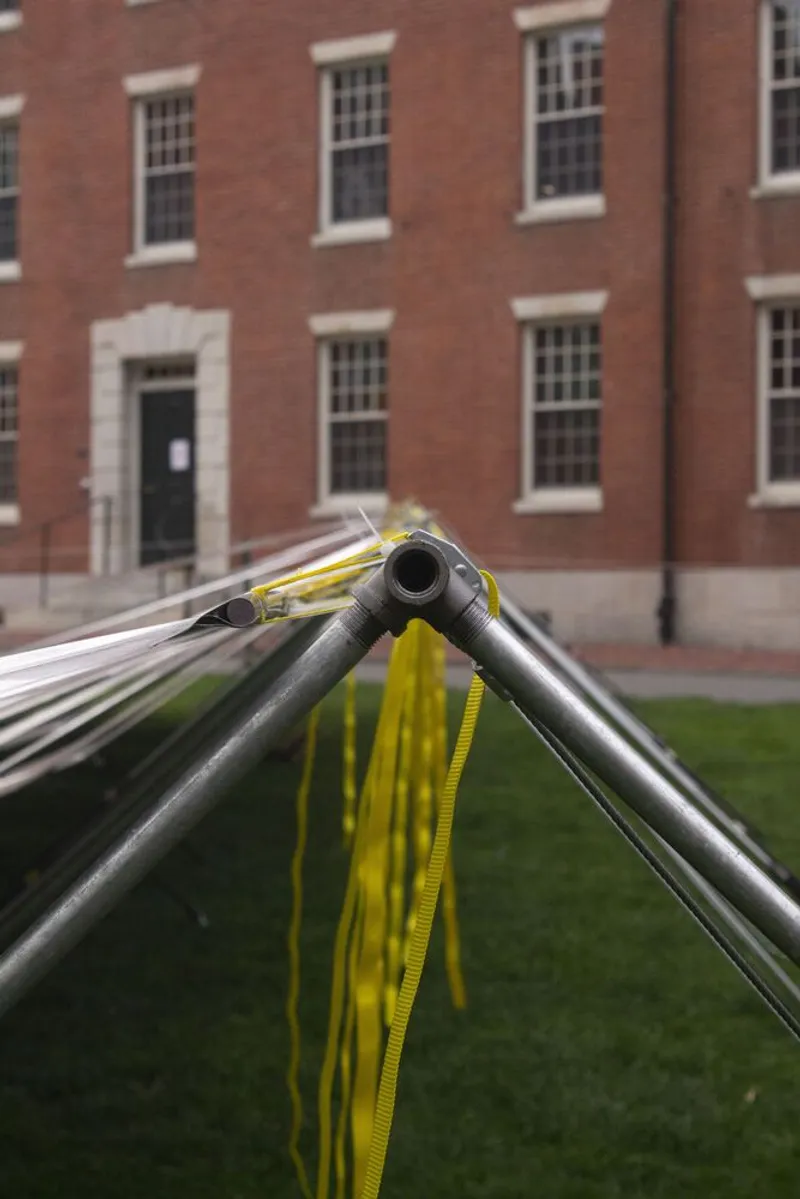
The installation is arranged as a rectangular plan housing a pixelated circular void at its center. Mylar strips, mounted vertically between floor and ceiling structures, form a semi-transparent curtain that defines the enclosure. These mirrored strips rise gradually to eye-level, creating a convex effect that alters the viewer’s orientation while allowing partial visibility in and out.
This approach blurs the line between enclosure and openness. Visitors experience a sudden spatial disconnection from the familiar surroundings while still being subtly aware of them. Entrances on opposing sides maintain circulation while emphasizing a contrast between exterior and interior realms.
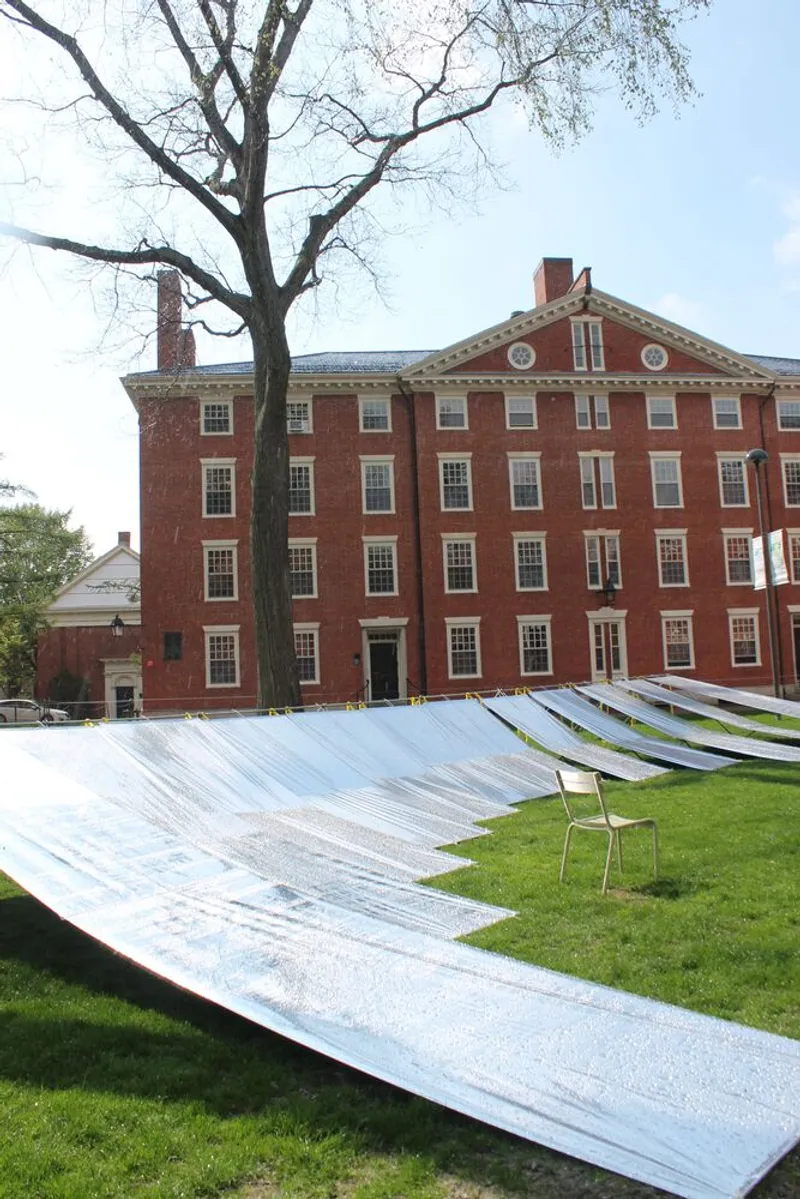
Interaction with Harvard Yard
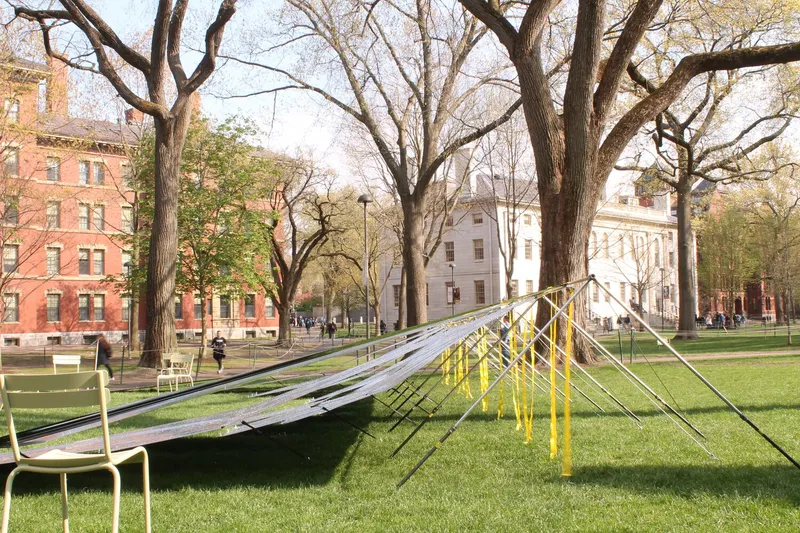
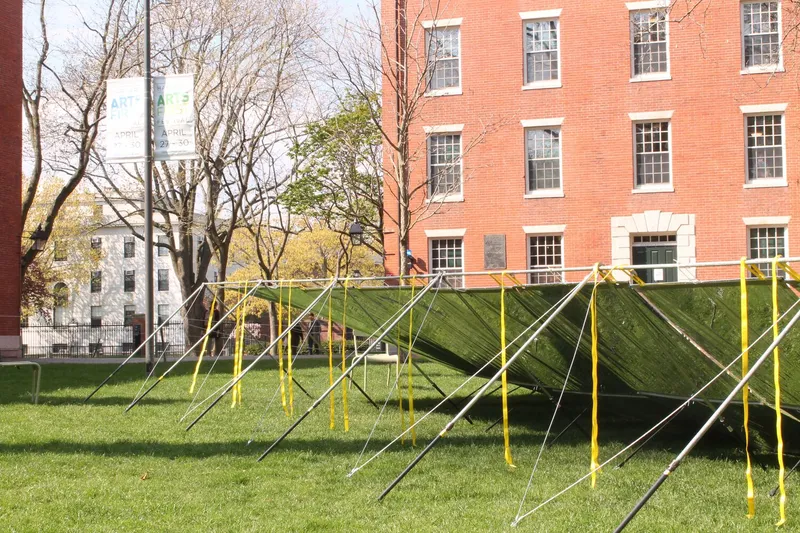
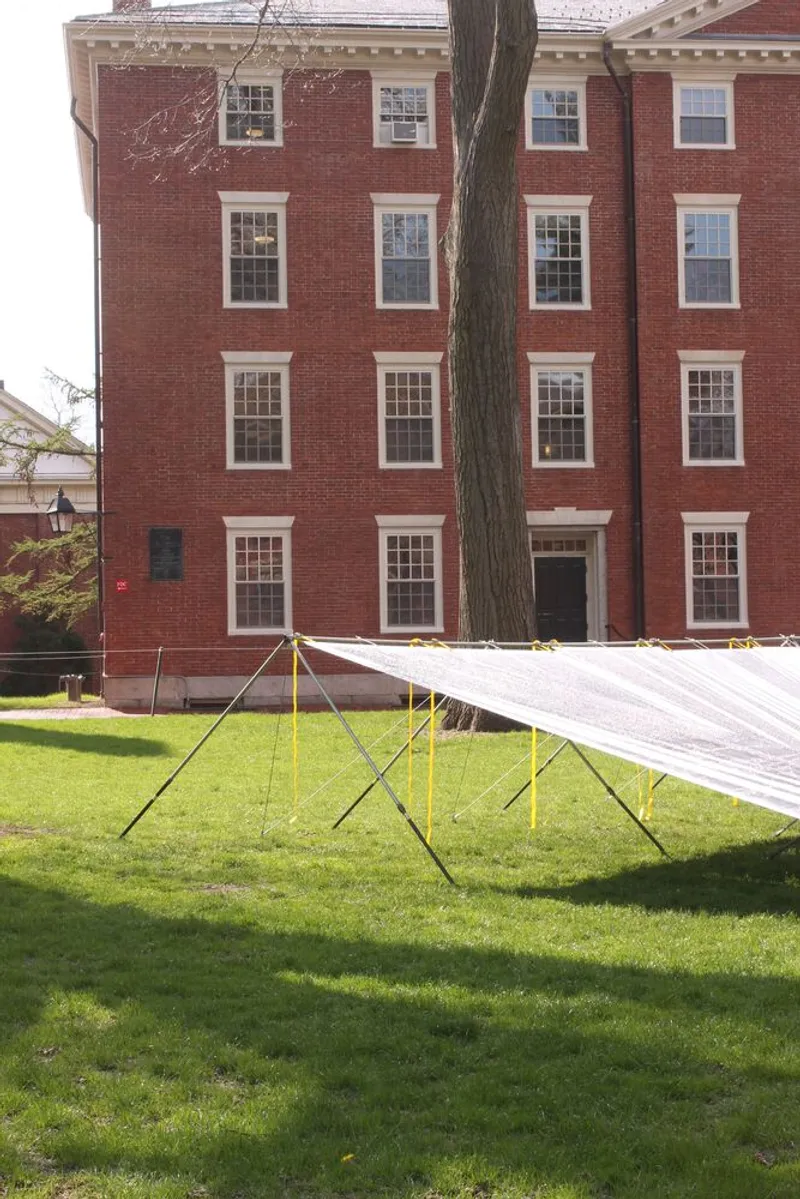
Harvard Yard is characterized by its historic red-brick buildings, mature trees, and open green spaces. Inversive Enclosure responds to these elements by inserting a sculptural yet introspective space within the Yard’s traditional setting. It becomes an “enclosure within an enclosure”—a place of both spatial contrast and continuity.
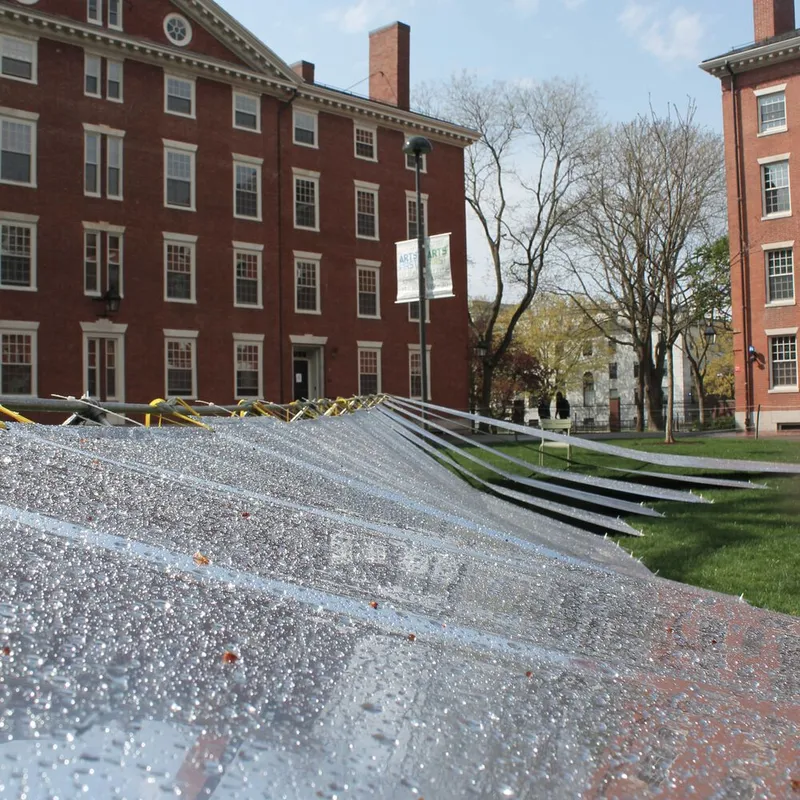
Rather than compete with the Yard’s built identity, the installation mirrors and reframes it. It disrupts conventional paths, interrupts sightlines, and transforms how users engage with the space. Visitors are encouraged to pause, observe, and question their place within a constantly shifting visual and spatial context.

Material and Environmental Response
The primary material—reflective mylar—serves both structural and conceptual purposes. Its shiny, malleable surface reflects the surrounding trees, sky, and architecture, creating kaleidoscopic distortions that challenge perception. Environmental elements—light, shadow, movement—are continuously refracted and fragmented across the surfaces, intensifying the immersive effect.
Despite its modest 53 m² footprint, the installation harnesses its materials and form to provoke deep contemplation. It calls attention to elements that often go unnoticed in daily routines and engages visitors in a dialogue between the physical space and their internal reflection.
Inversive Enclosure is not just an artistic structure—it is a spatial experience that transforms a familiar landscape into a meditative zone. Its blend of geometry, materiality, and interactivity embodies the essence of site-specific, temporary architecture. The project captures the dualities of openness and closure, transparency and reflection, motion and stillness—prompting users to engage with the built environment in new and meaningful ways.
All the photographs are works of Rolando Girodengo, Dhruv Mehta, Alejandro Saldarriaga


Popular Articles
Popular articles from the community


Play: Fragments of Their World
Familiar architecture becomes modular playground design, creating safe spaces where displaced children can learn, connect, imagine and play.

Little Red Riding Hood: Architectural Design as a Journey Through Fear, Light, and Storytelling
Little Red Riding Hood reimagines the fairy tale through architectural design shaped by fear, light, scale, memory, uncertainty, and choice.

Lunar Spiral: Space Architecture Shaped by the Mathematics of the Universe
Lunar Spiral reimagines space architecture through Fibonacci geometry, lunar regolith, levitating habitats, and self-sustaining Moon living.

Hill & Cross Opera: Sculptural Opera House Architecture Shaped by Tallinn’s Landscape and Identity
Hill & Cross Opera reimagines opera house architecture in Tallinn through its sculptural hill, civic plaza, glass wave and a luminous cross.

Similar Reads
You might also enjoy these articles


Hodi-Mandai Geram
Project Function: Preservation and revitalization of the Intangible heritage and socio-spatial identity of the Hodi by Housing, Cultural Memory Center, Sacred Grove, landscape, local tourism economy


Olio Towers: A Mid-Rise for Performers That Fuses Housing, Rehearsal, and Stage
Located blocks from Houston's Theater District, this modular tower stacks living units around a central performance atrium.

Oasis: Modular Green Housing Carved into Dhaka's Urban Fabric
A shortlisted Plugin Housing entry reclaims unauthorized settlements in Dhaka with stepped concrete volumes, green roofs, and ventilation-driven design.

Black Hole: A Floating Megastructure for the Post-Physical Era
Emiliano Mazzarotto envisions a spherical, self-scaling arena where e-sports, digital hotels, and holographic stadiums replace traditional public space.

Explore Art Installation Competitions
Discover active competitions in this discipline

Challenge to design a portable theatre

Challenge to design a portable music platform

Challenge to design an open learning module for the elderly

Challenge to reimagine the Iron Throne
Comments (0)
Please login or sign up to add comments
No comments yet. Be the first to comment!