
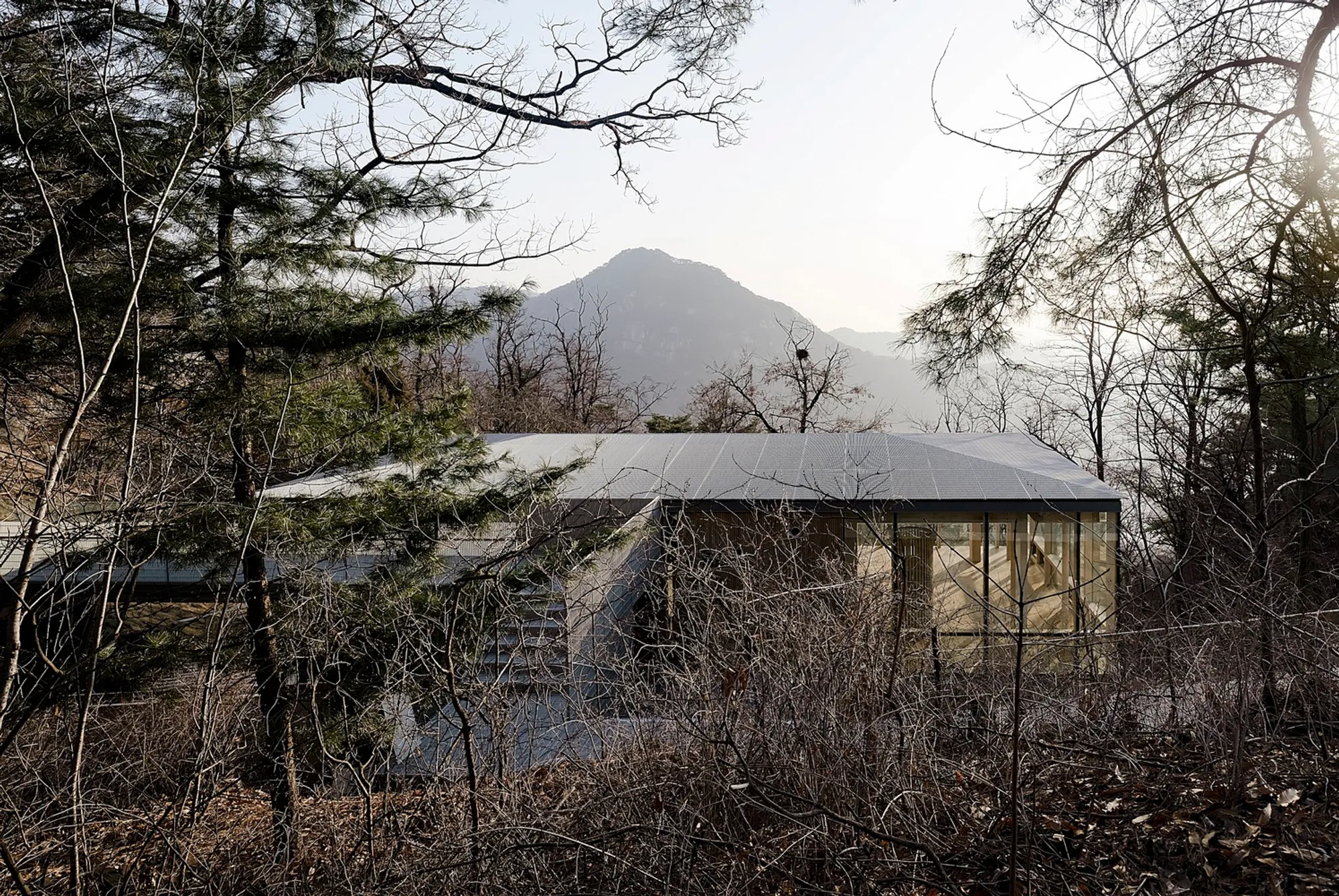
Inwang Guard Post Forest Retreat: Architectural Transformation of a Historical Site
The article explores the transformation of South Korea’s Inwang Guard Post into a cultural retreat, blending historical preservation with modern architecture.


Inwang Guard Post Forest Retreat Architecture
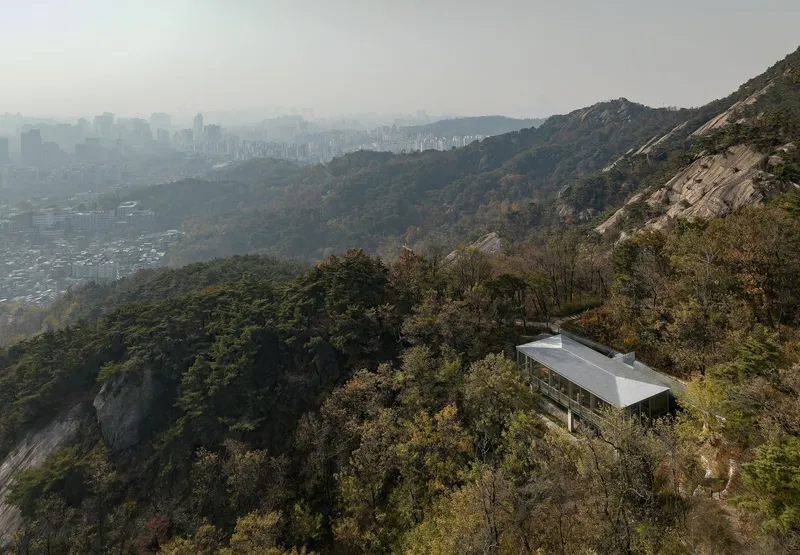
Nestled within the historical Inwangsan Mountain in Jongno-gu, South Korea, the Inwang Guard Post Forest Retreat by Soltozibin Architects and SN Architecture offers a profound transformation of a once-restricted military post into a serene, cultural haven. With a commitment to preserving the history of this area, the architects aimed to reinterpret a space of past conflict as one of peace and community. This new facility, designed to harmonize with nature, serves as a resting spot for hikers and a cultural center for nearby communities, standing as a testament to architectural adaptability and symbolic renewal.


Historical Background of Inwang Guard Post
The history surrounding the Inwang Guard Post is deeply rooted in South Korea's political landscape. Following the 1968 commando attack on Cheongwadae, South Korea’s presidential office, the military established over 30 posts along Seoul’s mountains, including Bugaksan and Inwangsan, to protect the city. These guard posts symbolized national defense, but they also restricted public access to large swaths of Seoul's natural landscapes. However, with recent shifts in policy, Inwangsan has been re-opened, allowing for three of the original 20 guard posts to be preserved. The Inwang Guard Post Forest Retreat is one such preserved structure, now reimagined as a public sanctuary.

Architectural Vision and Concept
Transforming Restriction into Connection
Soltozibin Architects and SN Architecture had a clear purpose: to shift the symbolism of restriction and separation associated with the military post into one of unity and openness. This retreat embodies a spatial paradox — once a restricted area, it now invites public gathering, acting as a shelter, a cultural space, and a serene escape within the natural landscape of Inwangsan Mountain. The architects' aim was to merge the existing structure with nature seamlessly, creating harmony between built and natural elements while offering a culturally resonant space for both locals and visitors.


Inspiration from Korean Cultural Heritage
The design approach draws from Wihang literature, written by the middle class during the Chosun dynasty. The paradox within Wihang literature, in which a lower social class influenced nobility, mirrors the architects’ vision for the Inwang Guard Post Forest Retreat. This paradox is also physically manifested in the retreat’s design, where traditional Korean architectural elements meet modern interpretations, reflecting an intrinsic blend of cultural symbolism and architectural form.
Architectural Design Elements of Inwang Guard Post Forest Retreat
Structural Transformation and Material Use
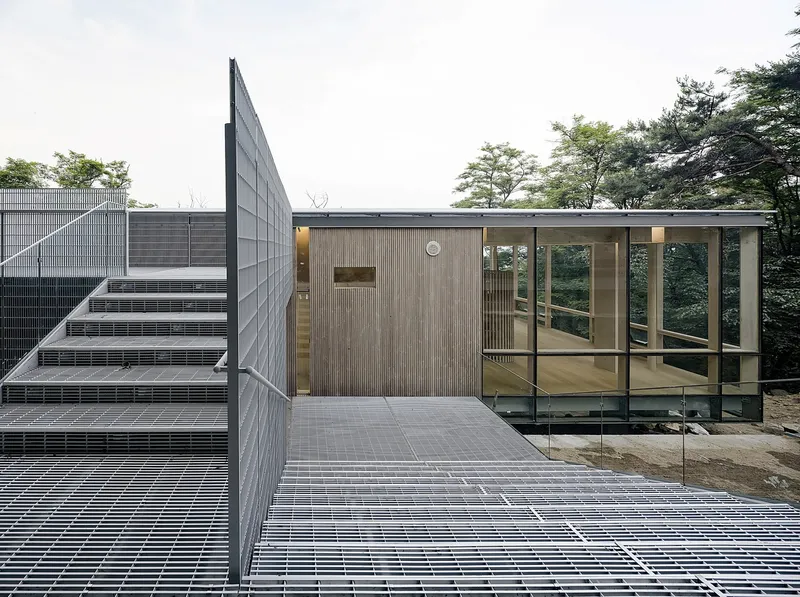
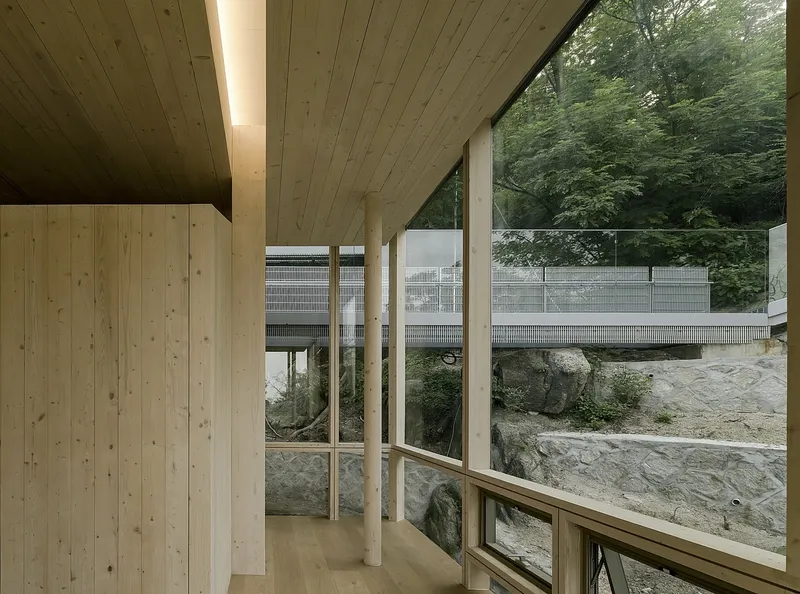
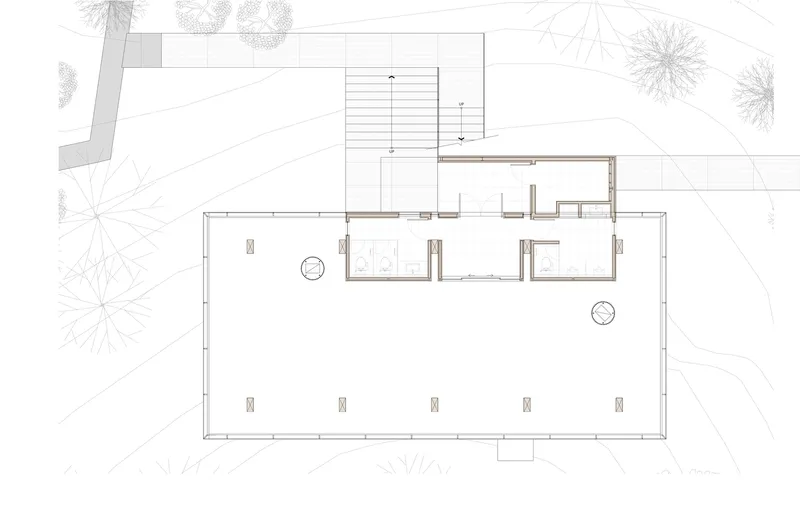
The architects retained the RC (reinforced concrete) pilotis foundation of the original barrack and reconstructed the superstructure with sandwich panels and wooden elements. The decision to incorporate timber architecture, while unconventional in terms of Korean design, allowed the architects to experiment with a tectonic approach. Following Gottfried Semper’s concept of “tectonic” architecture, the design assembles varied elements in a spatial matrix that challenges traditional norms of material gravity.


Floating Timber Panels and Architectural Paradox
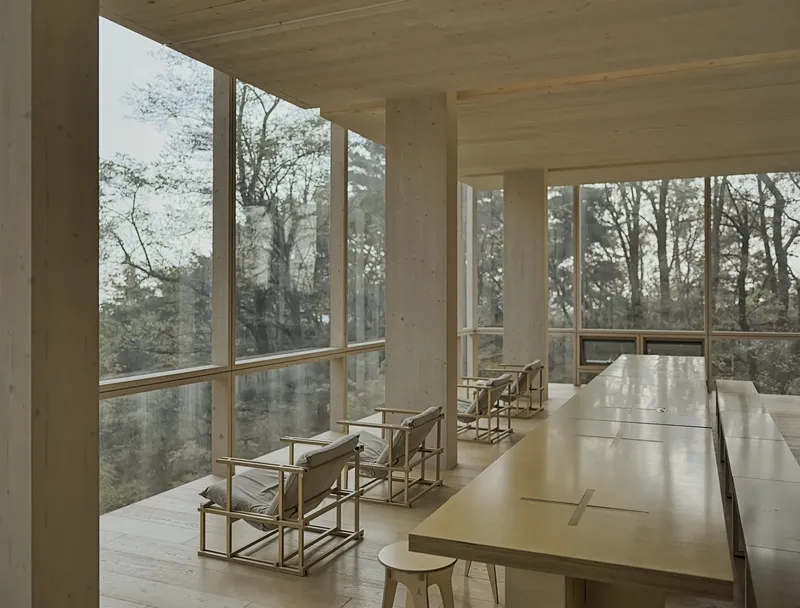
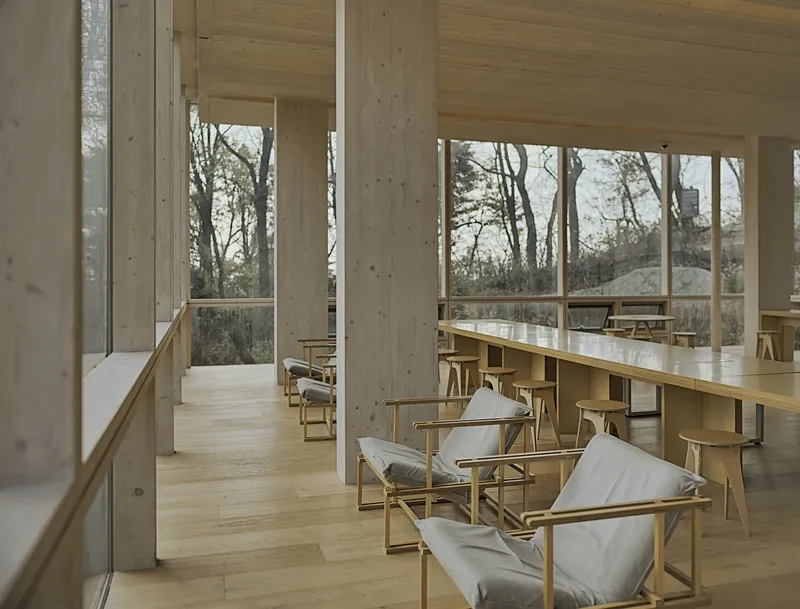
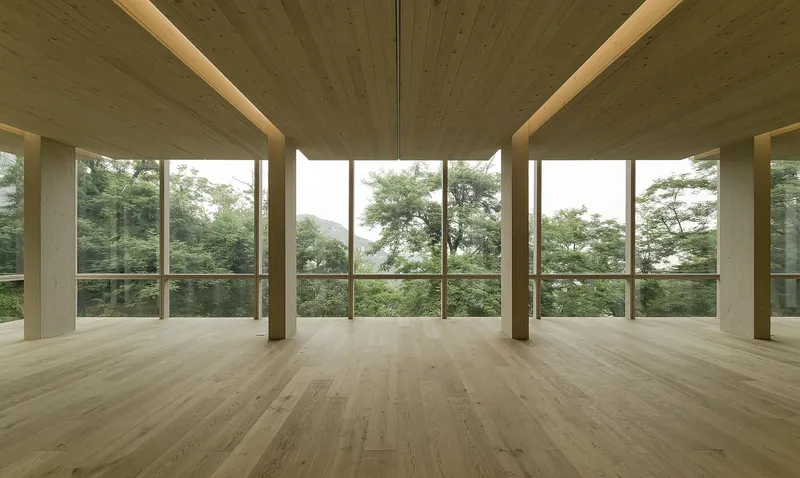
The Guard Post's structure emphasizes paradox. Large wooden panels, measuring 4000 mm x 10000 mm with a thickness of 500 mm, are positioned between slender columns without resting above them. This unique approach creates a sense of suspension, seemingly defying gravity as the thick panels appear to "float." The visual weight of the wood is transformed, creating a lightness that reflects the retreat’s new purpose: from military rigidity to community openness.

Interior Design and Functional Spaces
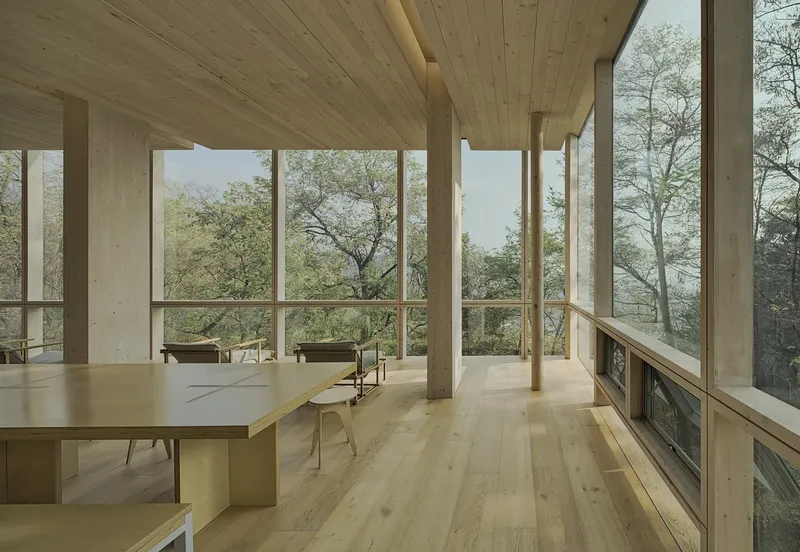
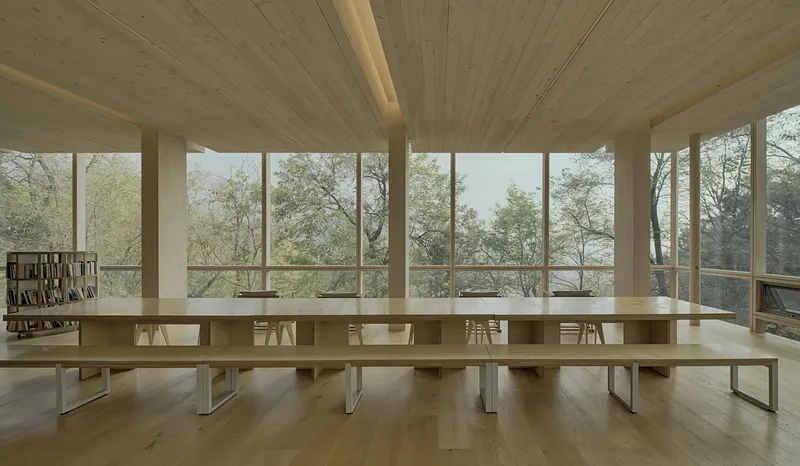
Inside, the Inwang Guard Post Forest Retreat includes multi-functional spaces such as a library, a communal hall, and a resting area for hikers. Indirect lighting within the structure emphasizes subtle separations between the timber columns and panels, creating ambient reflections that harmonize with the surrounding forest. By transforming the harsh, rigid spaces of the military post into warm, inviting areas, the architects successfully reframe the atmosphere of the site, emphasizing peace and contemplation.

Sustainable and Environmental Harmony
This retreat highlights sustainable architectural practices. By repurposing an existing structure and integrating it into its natural surroundings, the architects minimize environmental disruption. The design encourages visitors to engage with nature while fostering a deeper appreciation for the preserved historical site. Through passive design and careful selection of materials, the facility aligns with eco-friendly principles, balancing cultural preservation with environmental respect.

Cultural Significance and Modern Relevance
The Inwang Guard Post Forest Retreat architecture goes beyond physical transformation; it serves as a metaphor for societal evolution. In repurposing a space of conflict into one of community, this project addresses the value of architectural preservation as a means of cultural reflection. Inwang Guard Post now stands as a symbol of regeneration, bringing together history, nature, and architecture to foster a shared sense of identity among Seoul’s residents and visitors.

A New Era for Inwang Guard Post
The Inwang Guard Post Forest Retreat by Soltozibin Architects and SN Architecture embodies a vision of renewal, drawing from Korea's rich history while embracing a future-oriented design. The retreat not only commemorates the past but also welcomes an era of connection and openness, resonating with Seoul's transformation into a modern city of historical preservation and innovative architecture. As both a cultural center and a peaceful retreat, the Inwang Guard Post invites exploration and reflection, bridging past and present in a uniquely symbolic architectural journey.

All photographs are work of KIM Yongsoon



Popular Articles
Popular articles from the community


The Musturak Paradise: Senior Living Architecture for a Connected Future in Temara, Morocco
The Musturak Paradise reimagines senior living architecture in Temara via private homes, social spaces, culture, community, and shared care.

AL-JANNAH: Sustainable Architecture and Permaculture for Afghan Widows
AL-JANNAH uses sustainable architecture and permaculture to create resilient oasis of housing, learning, work and renewal for Afghan widows.

Co-Life: Senior Housing Design That Reconnects Older Adults With the City
Co-Life reimagines senior housing design through healing gardens, shared streets, workshops, and a sustainable community across generations.

Conexión: Biophilic Design Reimagines High-Rise Living in Hong Kong
Conexión reimagines high-rise living in Hong Kong through biophilic design, green facades, shared spaces, daylight, water and nature within.


Similar Reads
You might also enjoy these articles


Hodi-Mandai Geram
Project Function: Preservation and revitalization of the Intangible heritage and socio-spatial identity of the Hodi by Housing, Cultural Memory Center, Sacred Grove, landscape, local tourism economy


Olio Towers: A Mid-Rise for Performers That Fuses Housing, Rehearsal, and Stage
Located blocks from Houston's Theater District, this modular tower stacks living units around a central performance atrium.

Oasis: Modular Green Housing Carved into Dhaka's Urban Fabric
A shortlisted Plugin Housing entry reclaims unauthorized settlements in Dhaka with stepped concrete volumes, green roofs, and ventilation-driven design.

Black Hole: A Floating Megastructure for the Post-Physical Era
Emiliano Mazzarotto envisions a spherical, self-scaling arena where e-sports, digital hotels, and holographic stadiums replace traditional public space.

Explore Cultural Architecture Competitions
Discover active competitions in this discipline



Challenge to reimagine the Iron Throne


Photograph architecture without architects


Illustrate the lost glory of Angkor Wat - Render Challenge


Bring back Drive In's
Comments (0)
Please login or sign up to add comments
No comments yet. Be the first to comment!